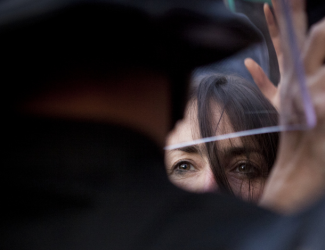
Philippe Leroyer | Flickr (CC BY-NC-ND 2.0)

Special Focus

AWID is an international, feminist, membership organisation committed to achieving gender equality, sustainable development and women’s human rights

Women Human Rights Defenders

WHRDs are self-identified women and lesbian, bisexual, transgender, queer and intersex (LBTQI) people and others who defend rights and are subject to gender-specific risks and threats due to their human rights work and/or as a direct consequence of their gender identity or sexual orientation.

WHRDs are subject to systematic violence and discrimination due to their identities and unyielding struggles for rights, equality and justice.

The WHRD Program collaborates with international and regional partners as well as the AWID membership to raise awareness about these risks and threats, advocate for feminist and holistic measures of protection and safety, and actively promote a culture of self-care and collective well being in our movements.


Risks and threats targeting WHRDs  

WHRDs are exposed to the same types of risks that all other defenders who defend human rights, communities, and the environment face. However, they are also exposed to gender-based violence and gender-specific risks because they challenge existing gender norms within their communities and societies.

By defending rights, WHRDs are at risk of:

  • Physical assault and death
  • Intimidation and harassment, including in online spaces
  • Judicial harassment and criminalization
  • Burnout

A collaborative, holistic approach to safety

We work collaboratively with international and regional networks and our membership

  • to raise awareness about human rights abuses and violations against WHRDs and the systemic violence and discrimination they experience
  • to strengthen protection mechanisms and ensure more effective and timely responses to WHRDs at risk

We work to promote a holistic approach to protection which includes:

  • emphasizing the importance of self-care and collective well being, and recognizing that what care and wellbeing mean may differ across cultures
  • documenting the violations targeting WHRDs using a feminist intersectional perspective;
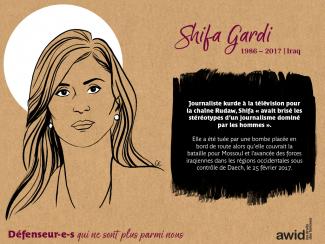
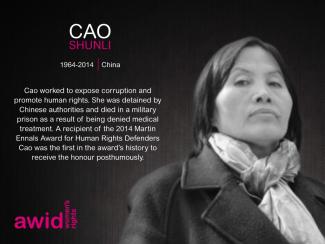
  • promoting the social recognition and celebration of the work and resilience of WHRDs ; and
  • building civic spaces that are conducive to dismantling structural inequalities without restrictions or obstacles

Our Actions

We aim to contribute to a safer world for WHRDs, their families and communities. We believe that action for rights and justice should not put WHRDs at risk; it should be appreciated and celebrated.

  • Promoting collaboration and coordination among human rights and women’s rights organizations at the international level to  strengthen  responses concerning safety and wellbeing of WHRDs.

  • Supporting regional networks of WHRDs and their organizations, such as the Mesoamerican Initiative for WHRDs and the WHRD Middle East and North Africa  Coalition, in promoting and strengthening collective action for protection - emphasizing the establishment of solidarity and protection networks, the promotion of self-care, and advocacy and mobilization for the safety of WHRDs;

  • Increasing the visibility and recognition of  WHRDs and their struggles, as well as the risks that they encounter by documenting the attacks that they face, and researching, producing, and disseminating information on their struggles, strategies, and challenges:

  • Mobilizing urgent responses of international solidarity for WHRDs at risk through our international and regional networks, and our active membership.

Related Content

How can I fund my participation in the AWID Forum? Many activists will not be able to afford the cost of the Forum – is AWID doing anything to provide assistance?

Please visit the "Funding ideas" page to get some ideas and inspiration for how you can fund your participation at the next Forum, including the limited support AWID will be able to provide.

Y a-t-il une préparation particulière à suivre avant de répondre aux questions de l’enquête?

L’enquête WITM portant sur les réalités du financement des organisations féministes, la plupart des questions traitent du financement de votre groupe entre 2021 et 2023. Vous aurez besoin de disposer de ces informations pendant que vous répondez aux questions de l’enquête (vos budgets annuels et principales sources de financement, par exemple)

Snippet FEA Carmen Silva (ES)

Ocupação 9 de Julho

Cuando lleguen al centro de São Paulo, verán el edificio de la Ocupação 9 de Julho, un sitio prominente en la lucha por la vivienda social y un importante espacio cultural. Este es el trabajo del Movimiento de Trabajadores Sin Hogar (Movimento dos Sem-Teto do Centro, MSTC), un movimiento de más de 2000 personas que actúa en el centro de la ciudad y convierte espacios abandonados en viviendas para trabajadorxs de bajos ingresos, niñxs, mujeres, adultos, ancianxs, migrantes y refugiadxs. En este edificio en particular, brindan comida y albergue a 122 familias.

Will there be pre-Forum convenings this time around?

We have been contacted by global and regional partners about some ideas for pre-Forum convenings and we will share more information about these ideas soon.

If you plan to organize a meeting before the Forum please let us know!

Contact us


Many beautiful things emerged from the 2016 Black Feminisms Forum (BFF) that was organized by an Advisory Group and funded by AWID. Some of the independent organizing that arose from the BFF include Black feminist organizing in Brazil. While we won’t have another BFF this year, we remain committed to sharing some key learnings with anyone interested in continuing work around Black feminist organizing.

Why are you asking for the name of the group, organization and/or movement completing the survey and our contact information?

We are asking for this data to facilitate the review of responses, avoid duplication and be able to contact your group in case you have been unable to complete the questionnaire and/or you have doubts or further questions. You can learn more about how we use the personal information we collect through our work here.

Snippet FEA NORTH CAUCA Left (FR)

CAUCA DU NORD, COLOMBIE

Asociación de Mujeres Afrodescendientes del Norte del Cauca (ASOM)


NOUS MÉRITONS

PLUS!

Where and when will the next AWID Forum take place?

The 14th AWID International Forum will take place 20-23 September 2021 in Taipei, Taiwan.

Find out more!

¿Cuánto tiempo permanecerá abierta la encuesta?

La encuesta permanecerá abierta hasta fines de agosto de 2024. Te pedimos que la respondas dentro de dicho lapso para asegurarte de que tus respuestas se incluyan en el análisis.

Snippet FEA Mano Cambiada (EN)

Two hands shaking - lighter skinned hand with a yellow shirt and darker skinned hand with a burgundy shirt. The words "Mano cambiada" are written over in cursive.

MANO CAMBIADA

("exchange hand") 

Term of the black communities of the Northern Cauca for the minga, the collective work based on solidarity and mutual support.

Snippet - Intro WITM - PT

Com base na nossa história de 20 anos de mobilização de mais fundos de melhor qualidade para a mudança social liderada por feministas, a AWID convida a participar da nova edição da nossa pesquisa principal:

"Onde está o dinheiro para a organização feminista?"

(WITM)

PARTICIPE NO INQUÉRITO!Veja o tutorial

Please select your language in the upper right corner of the page.

Snippet FEA Environments Of Shelter (ES)

Metzineres proporciona los siguientes tipos de apoyo, conocidos como

Entornos de Cobijo:

Leticia Eulalia Mary Mukasa- Kikonyogo

Leticia était une avocate et juge ougandaise.

Avant de prendre sa retraite, elle a occupé de nombreux postes de haut niveau, notamment celui de membre de la cour d’appel et juge en chef adjointe de l’Ouganda. Elle a été la première femme ougandaise à occuper le poste de magistrat en chef entre 1973 et 1986 et la première femme à être nommée juge à la Haute Cour de justice en 1986.

Elle fut l'une des premières femmes à recevoir le titre de chevalier pontifical de l'histoire de l'Église catholique en Afrique. Elle est morte d'une crise cardiaque.


Leticia Eulalia Mary Mukasa- Kikonyogo, Uganda

Our Companion Sites

The Young Feminist Wire

An online community for and by young feminists working on women’s human rights, gender equality and social justice around the world.

Visit the site

The Observatory on the Universality of Rights (OURs)

The platform is the go-to place for information and resources on safeguarding the universality of rights in international and regional human rights spaces.

Visit the site

The Young Feminist Fund-FRIDA

Provides funding for young feminist-led initiatives. It aims to strengthen the capacity of young feminist organizations to leverage resources for their work and to increase donors’ and allies’ commitments to resourcing young feminist activism.

Visit the site

Online Directory of Urgent Responses for WHRDs

A go-to site to learn about the urgent responses undertaken to protect women human rights defenders and to find tools and resources to support the work and wellness of WHRDs.

Visit the site

IM-Defensoras (Mesoamerican Initiative for Women Human Rights Defenders)

A regional initiative created to prevent, respond, document and make public all cases of violence against women human rights defenders in the Mesoamerican region.

Visit the site

The WHRD International Coalition

The WHRD IC is a resource and advocacy network for the protection and support of women human rights defenders worldwide.

Visit the site

Post-2015 Women´s Coalition

A Coalition of feminist, women´s rights, women´s development, grassroots and social justice organisations working to challenge and reframe teh global development agenda. 

Visit the site

Women´s Major Group on Development

The role of the Women’s Major Group is to assure effective public participation of women’s non-governmental groups in the UN policy processes on Sustainable Development, Post2015 and Environmental matters. 

Visit the site

Women Working Group on Financing for Development

An alliance of women’s organizations and networks to advocate for the advancement of gender equality, women’s empowerment and human rights in the Financing for Development (FfD) related UN processes.

Visit the site