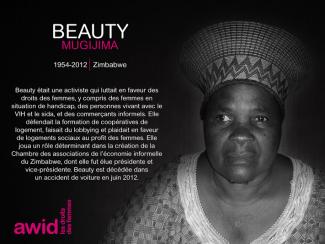
Beauty Mugijima
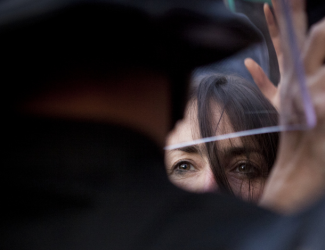
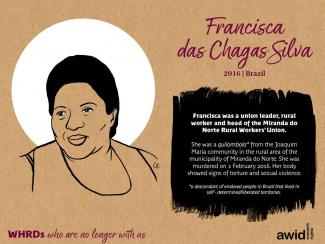
WHRDs are self-identified women and lesbian, bisexual, transgender, queer and intersex (LBTQI) people and others who defend rights and are subject to gender-specific risks and threats due to their human rights work and/or as a direct consequence of their gender identity or sexual orientation.
WHRDs are subject to systematic violence and discrimination due to their identities and unyielding struggles for rights, equality and justice.
The WHRD Program collaborates with international and regional partners as well as the AWID membership to raise awareness about these risks and threats, advocate for feminist and holistic measures of protection and safety, and actively promote a culture of self-care and collective well being in our movements.
WHRDs are exposed to the same types of risks that all other defenders who defend human rights, communities, and the environment face. However, they are also exposed to gender-based violence and gender-specific risks because they challenge existing gender norms within their communities and societies.
We work collaboratively with international and regional networks and our membership
We aim to contribute to a safer world for WHRDs, their families and communities. We believe that action for rights and justice should not put WHRDs at risk; it should be appreciated and celebrated.
Promoting collaboration and coordination among human rights and women’s rights organizations at the international level to strengthen responses concerning safety and wellbeing of WHRDs.
Supporting regional networks of WHRDs and their organizations, such as the Mesoamerican Initiative for WHRDs and the WHRD Middle East and North Africa Coalition, in promoting and strengthening collective action for protection - emphasizing the establishment of solidarity and protection networks, the promotion of self-care, and advocacy and mobilization for the safety of WHRDs;
Increasing the visibility and recognition of WHRDs and their struggles, as well as the risks that they encounter by documenting the attacks that they face, and researching, producing, and disseminating information on their struggles, strategies, and challenges:
Mobilizing urgent responses of international solidarity for WHRDs at risk through our international and regional networks, and our active membership.
AWID proporciona una gran cantidad de recursos que pueden ayudarte en tu investigación. Te invitamos a explorar las Áreas Prioritarias y la sección «Infórmate» de nuestro sitio web, o que utilices la función de búsqueda para encontrar información sobre los temas específicos que estás investigando. .
Recomendamos especialmente que explores nuestro manual «¿Dónde está el dinero para los derechos de las mujeres» (WITM). Este manual es una demostración política y práctica de los recursos y procesos necesarios para llevar a cabo una sólida investigación-acción.
เราทราบดีว่าการเดินทางครั้งแรกอาจจะน่าตื่นเต้นและบางครั้งอาจสร้างความกังวล จากการตระหนักถึงข้อท้าทายต่างๆต่อเรื่องนี้ เราจะจัดเตรียมข้อมูลมากขึ้นกว่านี้สำหรับการเดินทางมายังกรุงเทพฯเมื่อมีการเปิดรับลงทะเบียนในปีหน้า
Related Content
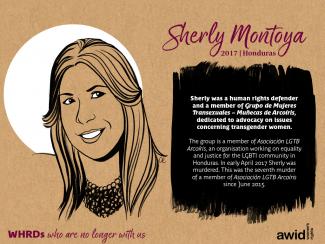
IM Defensoras: Hate crime against Sherly Montoya, LGTTBI defender and member of Transexual Women´s Group “Muñecas de Arcoiris”
Second Dialogue de haut niveau sur le financement du développement
Contenido relacionado
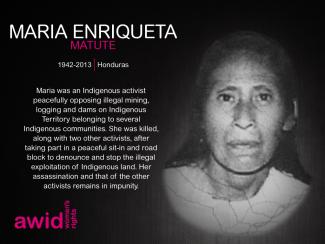
Proceso Digital: Asesinan abogada que fue candidata a diputada en primarias del Partido Nacional

The Sixth High-level Dialogue on Financing for Development, 7-8 October 2013 focused on reviewing the progress of MDG’s, and identifying gaps to be addressed in discussions on the new development framework.
A report by the MDG’s Gap Task Force launched during the session pointed to the failure to meet MDG 8 (Global Partnership for Development) as a major factor in the challenges to meeting the MDGs. The report showed that more focus should be given to developing stronger global partnerships that would ensure binding commitments for the new development framework post 2015.
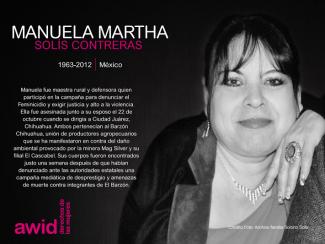
Día 1
For decades, feminist scholars and advocates have articulated important concepts related to gender to understand and challenge oppression and discrimination. Those concepts have now become the target of anti-rights actors who claim that oppressive patriarchal gender roles are “common sense”, strategically painting all other ideas, cultural norms, and forms of social life as a dangerous, conspirative ideology.
Read our Brief on “Gender Ideology” Narratives: A Threat To Human Rights
Sesiones adicionales de consulta sobre el Borrador del Documento Final
(¡con invitades especiales!)
📅Martes 12 de marzo
🕒6:00 p. m. - 9:30 p. m. EST
🏢 Blue Gallery, 222 E 46th St, New York
Entrada solo con confirmación previa
ECONOMIAS DE CUIDADOSAGROECOLOGÍA Y SOBERANÍA ALIMENTARIACOOPERATIVISMO FEMINISTASINDICALISMO FEMINISTA