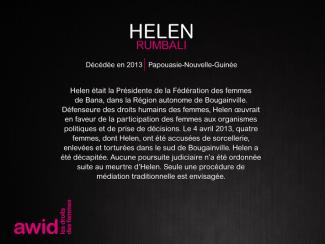
Helen Rumbali
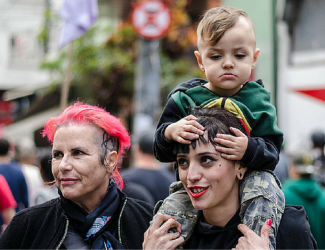
Over the past few years, a troubling new trend at the international human rights level is being observed, where discourses on ‘protecting the family’ are being employed to defend violations committed against family members, to bolster and justify impunity, and to restrict equal rights within and to family life.
The campaign to "Protect the Family" is driven by ultra-conservative efforts to impose "traditional" and patriarchal interpretations of the family, and to move rights out of the hands of family members and into the institution of ‘the family’.
Since 2014, a group of states have been operating as a bloc in human rights spaces under the name “Group of Friends of the Family”, and resolutions on “Protection of the Family” have been successfully passed every year since 2014.
This agenda has spread beyond the Human Rights Council. We have seen regressive language on “the family” being introduced at the Commission on the Status of Women, and attempts made to introduce it in negotiations on the Sustainable Development Goals.
AWID works with partners and allies to jointly resist “Protection of the Family” and other regressive agendas, and to uphold the universality of human rights.
In response to the increased influence of regressive actors in human rights spaces, AWID joined allies to form the Observatory on the Universality of Rights (OURs). OURs is a collaborative project that monitors, analyzes, and shares information on anti-rights initiatives like “Protection of the Family”.
Rights at Risk, the first OURs report, charts a map of the actors making up the global anti-rights lobby, identifies their key discourses and strategies, and the effect they are having on our human rights.
The report outlines “Protection of the Family” as an agenda that has fostered collaboration across a broad range of regressive actors at the UN. It describes it as: “a strategic framework that houses “multiple patriarchal and anti-rights positions, where the framework, in turn, aims to justify and institutionalize these positions.”
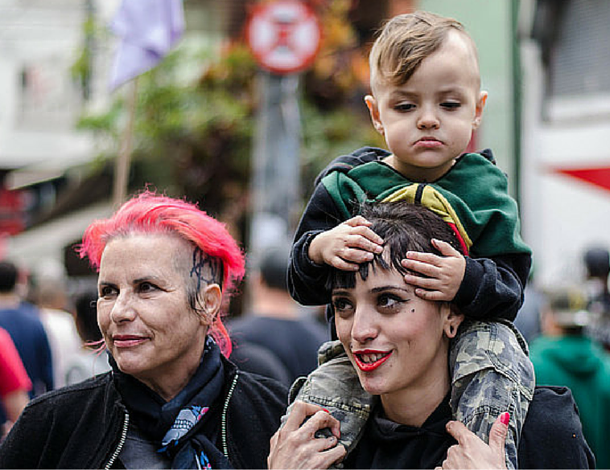
During her 38-year career, Debbie Stothard, has worked with diverse communities and activists to engage states, IGOs and other stakeholders throughout Asia, Africa, Europe, and the Americas on human rights and justice. Her work is focused on the thematic priorities of business and human rights, atrocity prevention, and women’s leadership. Accordingly, she has either facilitated or been a resource person at nearly 300 training events in the past 15 years. Most of these were grassroots-oriented workshops delivered in the field, focused on human rights advocacy, economic literacy and business and human rights, and transitional justice and atrocity prevention. Her work in transitional justice and atrocity prevention has mainly focused on Burma/Myanmar, however she has provided advice on responses to other country situations around the world.
During 1981 – 1996, Debbie worked as a crime reporter, student organizer, policy analyst, academic, government advisor and food caterer in Malaysia and Australia while volunteering for human rights causes. In 1996, she founded ALTSEAN-Burma which spearheaded a range of innovative and empowering human rights programs. This includes ALTSEAN’s ongoing intensive leadership program for diverse young women from Burma, which in the past 22 years, has helped strengthen and expand women’s leadership in conflict-affected zones. She served as a member of the Board of the International Federation for Human Rights (FIDH) for 9 years as Deputy Secretary-General (2010-2013) and Secretary-General (2013 – 2019) during which she promoted the mission and profile of FIDH at approximately 100 meetings and conferences per year.
Não. Tem por base a história de 20 anos da AWID de mobilizar mais financiamento de maior qualidade para mudanças sociais lideradas por feministas e é a terceira edição do nosso inquérito “Onde está o dinheiro para organização feminista?”. O nosso objetivo é repetir o inquérito WITM a cada 3 anos.
De nombreuses participantes vivent les Forums de l’AWID comme un espace de liberté unique où elles sont accueillies et célébrées, telles qu’elles sont. Dans un monde où même les féministes les plus privilégiées ont souvent du mal à s’intégrer, pour celles dont l’identité est criminalisée ou condamnée dans leur contexte quotidien, cette expérience de liberté et de célébration peut être profondément transformatrice (et réparatrice). L’histoire de la façon dont OluTimehin Kukoyi - qui participait pour la première fois - a vécu le Forum des féminismes noirs et le Forum de l’AWID à Bahia (2016) illustre bien cela.

Share your stories and hear from others. By connecting our experiences, narratives and proposals we help co-create and amplify Feminist Realities.
Zita was a women’s rights activist who defended the rights of rural women in Greater Kivu.
She was the first Executive Director of UWAKI - a well known women’s organisation. Through her work with Women's Network for Rights and Peace (RFDP), and the Women's Caucus of South Kivu for Peace, she committed her life to helping to restore peace in the Eastern DRC. She spoke out strongly against the use of sexual violence as a weapon of war.
In 2006, she put herself forward as a candidate in the first democratic elections in the DRC. Although she did not win, she continued to advocate for women’s rights and the South Kivu community remembers her fondly.

Jemimah Naburri-Kaheru est une stratège internationale accomplie en matière de ressources humaines à impact profond dans la région de la Corne de l'Afrique. Jemimah était auparavant responsable régionale des ressources humaines et du bureau de l'Initiative stratégique pour les femmes dans la Corne de l'Afrique (SIHA) . Son influence s’est étendue jusqu’à la direction des ressources humaines de plus de 70 employé·e·s régionaux·ales, alors que l'organisation connaissait une croissance rapide, avec une augmentation de 40 % de ses revenus annuels. Tout au long de sa carrière, Jemimah a orchestré avec succès des efforts de recrutement, introduit des systèmes de performance basés sur le mérite, de même que supervisé les relations avec les employé·e·s et les politiques RH. Elle a joué un rôle central dans le soutien aux stratégies mondiales de personnel. Avec une formation universitaire en Études de Développement de l'Université de Makerere (Ouganda) et un Master en Gestion des Ressources Humaines, Jemimah est évidemment engagée envers le développement professionnel. Sa contribution à des effectifs hautement performants et à un leadership international en matière de ressources humaines la positionne comme un atout inestimable dans toute entreprise mondiale.
إن كانت لديكم/ن أسئلة أو أمور تثير قلقكم/ن، الرجاء التوجه الينا عن طريق هذا النموذج وكتابة "استطلاع أين المال" في العنوان أو راسلنا على witm@awid.org
Nos solidarizamos unxs con otrxs, y con las distintas luchas por la justicia y las libertades. Procuramos movilizar y fortalecer la acción colectiva, y practicamos formas significativas de trabajar en conjunto.
Andaiye was seen as a transformative figure on the frontlines of the struggles for liberation and freedom. She was an early member and active in the leadership of the Working People’s Alliance (WPA), a socialist party in Guyana which fought against authoritarian rule and continued throughout her life to focus on justice for the working-class and rural women’s rights and on bridging ethnic barriers between Indo and Afro-Guyanese women.
Andaiye was a founding member of Red Thread Women, an organization that advocated for women’s care work to be fairly remunerated, worked at the University of the West Indies and with CARICOM. Never afraid to challenge governments, she pointed out gender imbalances in state boards, laws that discriminated against sex workers, called for abortion rights in Jamaica and spoke out against trade agreements such as the Caribbean Single Market and Economy (CSME) that allowed for the free movement of women domestic migrant workers but did not give their children the same rights.
Andaiye published several scholarly essays, wrote newspaper columns and also edited the last books of Walter Rodney, the Guyanese political activist and fellow WPA leader, who was assassinated in 1980. A cancer survivor, Andaiye was one of the founders of the Guyana Cancer Society and the Cancer Survivors’ Action Group. She also served on the executive of the Caribbean Association for Feminist Research and Action (CAFRA), as a Director of Help and Shelter and as Board Member of the Guyana National Commission on Women. She received a number of awards, including the Golden Arrow of Achievement in Guyana (the fourth highest national award).
Andaiye passed away on 31 May 2019 at the age of 77. The subsequent tributes that flowed in from activists, friends and those inspired by her life spoke eloquently to her amazing legacy and her beautiful humanity.
Here are but a few:
“Andaiye had a profound effect on me...she was so many things, an educator, fighter, she taught me to be self-critical, to think more clearly, she taught me about survival, about incredible courage, about compassion, about going beyond external appearances and treating people as people and not being distracted by status, class, race...anything.”
- Peggy Antrobus, Feminist Activist, Author, Scholar, Barbados
“The kind of confident idealism Andaiye expressed, this willingness to confront the world and a stubborn belief that you could actually change it... That politics of hope...How else to honour her life, legacy and memory but to keep doing the work ethically and with ongoing self-critique? And to put women’s caring work at the center of it.”
- Tonya Haynes, Barbados
“I can hear her quip at our collective keening. So through the tears I can laugh. Deep bows to you beloved Andaiye, thank you for everything. Love and light for your spirit’s journey. Tell Walter and all the ancestors howdy.” - Carol Narcisse, Jamaica

Brenda Salas Neves is a feminist queer strategist born and raised in the southern Andes. They organize to shift narratives and mobilize resources to support racial and climate justice movements around the world. They have produced media projects to uplift migrant power and rise against U.S. military intervention across Latin America, with Deep Dish TV and the Portland Central America Solidarity Committee. They are a proud member of the Audre Lorde Project and a graduate of the United World Colleges (UWC) movement.
J’ai l’intime conviction que des femmes puissantes peuvent donner à d’autres femmes la possibilité d’être puissantes, c’est pourquoi je suis ravie d’être membre de l’AWID. La visibilité que j’ai reçue en faisant partie de la Street Team de la communauté AWID a élargi mes connaissances et ma façon d’envisager le Féminisme et l’intersectionnalité. J’espère que davantage de femmes se joindront à nous et porteront des thématiques et des idées qui aideront d’autres femmes..- Loyiso Lindani, Afrique du Sud.

Ce calendrier est un cadeau que nous vous faisons à vous et aux 8 000 membres de notre communauté féministe mondiale. C’est notre promesse de moments d’activisme et de connexion pour l’année à venir. Ces derniers mois ont porté leur lot d’injustices indescriptibles. Cette année encore, continuons à cultiver la puissance du collectif, à établir des stratégies et à trouver des solutions porteuses d’espoir. Pour un monde plus juste pour toustes.
En feuilletant les pages de ce calendrier, vous remarquerez la diversité des œuvres de nos membres artistes, qui se servent de leur travail pour amplifier et relier nos différents mouvements sous le parapluie féministe. Vous retrouvez-vous dans ces pages ? Y retrouvez-vous votre mouvement, vos communautés ? Nous vous encourageons à utiliser ce calendrier utile pour marquer le temps, l’espace, mais aussi pour inscrire les possibilités d’établir des connexions avec les féministes et les activistes.
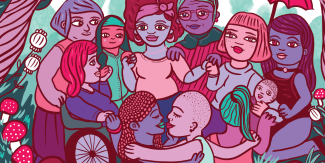
Nous œuvrons en faveur d’un monde fondé sur la justice sociale, environnementale et économique, ainsi que sur l'interdépendance, la solidarité et le respect. Nous travaillons au démantèlement des systèmes de pouvoir oppressif et contre toutes ses manifestations, y compris tout forme de patriarcat, de fondamentalisme, de militarisme et de fascisme, et le pouvoir des entreprises qui menacent nos vies et notre monde. Nous voulons un monde juste où le partage des ressources et celui du pouvoir permettront à chacun·e de s'épanouir.
"[Ella] era una persona que se caracterizaba por su arduo trabajo a favor de la defensa de los derechos humanos y la construcción de la paz en Nariño, especialmente en el municipio de Samaniego-Nariño". - Jorge Luis Congacha Yunda para Página10.
Paula se especializó en los derechos civiles y políticos, las problemáticas de la impunidad y la justicia, y contribuyó a descubrir abusos de poder, incluida la corrupción. Paula participó también en proyectos para la consolidación de la paz en su ciudad natal, Samaniego, a través del Consejo Municipal de Paz y la Junta Municipal de Mujeres.
Paula recibió amenazas de muerte tras exponer el manejo irregular de los recursos y de denunciar actos de corrupción en el Hospital Lorencita Villegas del municipio nariñense. Fue asesinada el 20 de mayo de 2019, cuando dos hombres se acercaron y le dispararon a corta distancia.