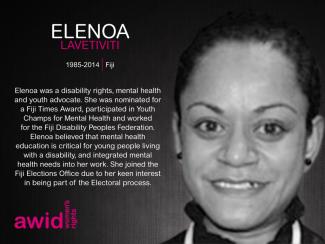
Elenoa Lavetiviti
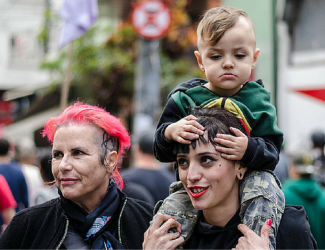
Over the past few years, a troubling new trend at the international human rights level is being observed, where discourses on ‘protecting the family’ are being employed to defend violations committed against family members, to bolster and justify impunity, and to restrict equal rights within and to family life.
The campaign to "Protect the Family" is driven by ultra-conservative efforts to impose "traditional" and patriarchal interpretations of the family, and to move rights out of the hands of family members and into the institution of ‘the family’.
Since 2014, a group of states have been operating as a bloc in human rights spaces under the name “Group of Friends of the Family”, and resolutions on “Protection of the Family” have been successfully passed every year since 2014.
This agenda has spread beyond the Human Rights Council. We have seen regressive language on “the family” being introduced at the Commission on the Status of Women, and attempts made to introduce it in negotiations on the Sustainable Development Goals.
AWID works with partners and allies to jointly resist “Protection of the Family” and other regressive agendas, and to uphold the universality of human rights.
In response to the increased influence of regressive actors in human rights spaces, AWID joined allies to form the Observatory on the Universality of Rights (OURs). OURs is a collaborative project that monitors, analyzes, and shares information on anti-rights initiatives like “Protection of the Family”.
Rights at Risk, the first OURs report, charts a map of the actors making up the global anti-rights lobby, identifies their key discourses and strategies, and the effect they are having on our human rights.
The report outlines “Protection of the Family” as an agenda that has fostered collaboration across a broad range of regressive actors at the UN. It describes it as: “a strategic framework that houses “multiple patriarchal and anti-rights positions, where the framework, in turn, aims to justify and institutionalize these positions.”
con Manal Tamimi, Bubulina Moreno, Karolina Więckiewicz y Anwulika Ngozi Okonjo
Cette politique régit toutes les pages hébergées sur le site www.awid.org, et tout autre site web géré par l'AWID, ainsi que les pages d’inscription à ces sites. Elle ne s'applique pas aux pages hébergées par des organisations autres que l'AWID auxquelles nous pouvons nous associer, et dont les politiques de confidentialité peuvent différer. Veuillez lire le document suivant pour comprendre notre politique de confidentialité concernant la nature, le but, l'utilisation et le partage de vos données personnelles collectées via ce site web.
D’une manière générale, vous pouvez naviguer sur ce site web sans nous soumettre vos informations personnelles. Cependant, dans certaines circonstances, nous vous demanderons de nous fournir certaines données personnelles.
Lorsque vous êtes sur le site web et que nous vous demandons des données personnelles, ces informations ne sont pas partagées en dehors de l’AWID.
1.1.1 Les données que vous fournissez pour obtenir des mises à jour de l'AWID :
Lorsque vous vous inscrivez pour avoir accès au site web - par exemple, que vous vous abonnez pour recevoir des courriels de notre part ou que vous demandez à devenir membre – nous vous demandons de fournir des données personnelles telles que votre nom, pays, langue, courriel pour recevoir les mises à jour. Vous nous transmettez ces informations grâce à des formulaires sécurisés et elles sont stockées sur des serveurs sécurisés.
1.1.2 Les données de paiement que vous envoyez pour devenir membre ou vous inscrire à un événement :
En devenant membre ou en vous inscrivant à des événements, vous devrez peut-être également fournir des données de paiement. L’AWID ne stocke aucune information de carte de crédit sur ses serveurs et utilise des systèmes de paiement sécurisés pour traiter ces informations.
1.1.3 Les informations facultatives que vous avez choisi de nous fournir (avec votre consentement) :
Lorsque vous communiquez avec l’AWID ou que vous fournissez des informations facultatives via des formulaires en-ligne ou utilisez le site pour communiquer avec d'autres membres, nous recueillons ces informations et toute information que vous choisissez de donner.
1.1.4 Les données que nous recueillons via des formulaires de contact ou lorsque vous communiquez directement avec nous :
Lorsque vous communiquez avec nous, nous recueillons ces données ainsi que toute autre information que vous choisissez de nous fournir.
Nous collectons et stockons également certaines autres informations concernant l'utilisation de notre site web par nos utilisateurs-trices afin que des tiers puissent nous fournir des rapports et des analyses concernant l'utilisation et les modes de navigation des utilisateurs-trices.
Pour plus d'informations sur les cookies, veuillez consulter la page suivante : www.allaboutcookies.org/fr/.
Si vous ne souhaitez pas recevoir de cookies, vous pouvez facilement modifier le paramétrage de votre navigateur web pour refuser de recevoir des cookies, ou pour demander d’être informé-e lorsque vous recevez un nouveau cookie. Cliquez ici pour voir comment procéder.
L'AWID utilise les informations collectées à propos de vous pour :
Si vous vous êtes abonné-e aux bulletins électroniques de l'AWID ou à des mises à jour par courrier électronique ou si vous êtes devenu-e membre, nous vous enverrons régulièrement des informations, ainsi qu’indiqué dans la section correspondante du site web. Vous pouvez vous désabonner à tout moment des bulletins électroniques ou des mises à jour par courriel en suivant les liens vers les informations de désabonnement incluses dans nos courriels.
L'exactitude des données vous concernant personnellement est importante pour l'AWID. Nous sommes en permanence à la recherche de moyens pour vous faciliter l’accès aux données que l'AWID conserve à votre sujet via notre site web et à la possibilité et les modifier. Si vous changez votre adresse e-mail, ou si l'une des autres informations que nous détenons est inexacte ou n’est plus d’actualité, merci de nous contacter ici.
Si vous avez consenti à ce que l’AWID utilise vos données personnelles, vous pouvez néanmoins changer d’avis à tout moment en nous contactant et en spécifiant l’autorisation que vous annulez. Veuillez noter que le retrait de votre consentement n'affecte pas la légalité des activités de traitement basées sur ce consentement avant son retrait.
Excepté dans le cas détaillé ci-dessous, l'AWID ne divulgue aucune de vos informations personnelles et ne vend ni ne loue des listes contenant vos informations à des tiers. L'AWID peut divulguer des informations quand elle a votre permission de le faire ou dans des circonstances particulières, par exemple lorsqu’elle croit de bonne foi que la loi l'exige.
Nous mettons continuellement en œuvre et mettons à jour les mesures de sécurité administratives, techniques et physiques afin de protéger vos données contre tout accès non autorisé, perte, destruction ou altération de celles-ci. Certaines des mesures de protection que nous utilisons pour protéger vos informations sont les pare-feu, le cryptage des données et les contrôles d'accès aux informations. Si vous savez, ou avez des raisons de croire, que vos informations d'identification AWID ont été perdues, volées, détournées ou autrement compromises, ou en cas d'utilisation non autorisée réelle ou suspectée de votre compte d'adhésion à l’AWID, veuillez nous contacter.
Cette politique est susceptible d’être modifiée de temps à autre. La dernière version de la politique sera postée sur notre site web, ainsi que la date de sa dernière mise à jour. En cas de modification(s) apportées à cette politique, vous recevrez une mise à jour par courriel. Au cas où vous ne seriez pas d'accord avec la politique ainsi révisée, vous aurez la possibilité d'annuler votre (vos) abonnement(s) chez nous. N’hésitez pas à nous contacter. Tous vos commentaires au sujet de cette politique sont les bienvenus !
Dernière mise à jour : mai 2019
Notre force collective, notre sagesse et notre engagement sont illimités... mais pas nos comptes en banque.
Cette synthèse s’appuie sur les réponses de 1 174 organisations féministes, de défense des droits des femmes, LBTQI+ et alliées (désignées ci-après comme « organisations féministes et de défense des droits des femmes ») issues de 128 pays, ayant participé à l’enquête Où est l’argent pour l’organisation des mouvements féministes ?
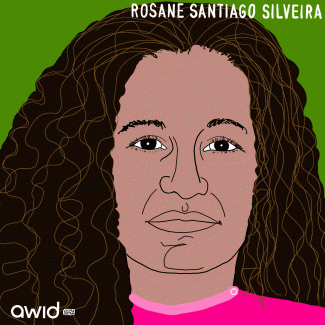
Rosane Santiago Silveira era conocida afectuosamente como «Rô Conceição». Fue una activista ambiental y por los derechos humanos que luchó fervientemente para proteger el medio ambiente en las zonas más amenazadas.
Esta lucha incluyó la defensa así como también la protección ambiental en la isla de Barra Velha, cuando estuvo amenazada por la exploración petrolera, mediante campañas contra la apropiación de tierras y la expansión de las plantaciones de eucaliptus en el Estado de Bahía, donde Rosane integraba el Consejo de la Reserva Extractivista de Cassurubá.
«La Reserva Extractiva es un área protegida donde las familias residentes se ganan la vida con productos naturales extraídos del bosque. Estas actividades ayudan a mantener la integridad del bosque.» - Global Justice Ecology Project (fuente original: Rede Brasil Atual)
Rosane participó en actividades sindicales, y en movimientos culturales y por los derechos humanos. Dedicó gran parte de sí misma, no solamente a las causas que la afectaban directamente, sino a problemas de la tierra, los bosques, los ríos y las comunidades cuyos derechos y vidas están continuamente en riesgo.
Fue torturada y asesinada el 29 de enero de 2019 en Nova Viçosa, una ciudad del sur de Bahía.
«Lamentablemente, hoy existe un sentimiento de inseguridad total, por la ausencia del Estado en la investigación de estos delitos. Estuvimos con ella en Navidad, todos se dieron cuenta de que estaba preocupada, y ahora sabemos que había recibido tres amenazas de muerte.» - Tuian, hijo de Rosane, en una entrevista con Rádio Brasil Atual (fuente original: Rede Brasil Atual)

« Ma mission dans la vie n'est pas simplement de survivre, mais de prospérer; et de le faire avec un peu de passion, un peu de compassion, un peu d'humour et un peu de style. »
Le Forum international de l'AWID est à la fois un événement communautaire mondial et un espace de transformation personnelle radicale. Unique en son genre, le Forum rassemble les mouvements féministes, de défense des droits des femmes, de justice de genre, LBTQI+ et leurs allié.e.s dans toute leur diversité et leur humanité, afin qu'elles.ils se connectent, se soignent et s'épanouissent. Le Forum est un lieu où les féministes du Sud et les communautés historiquement marginalisées occupent le devant de la scène, élaborant des stratégies entre elles et avec les mouvements de justice sociale, afin de modifier le pouvoir, de créer des alliances stratégiques et d'ouvrir la voie à un monde différent et meilleur.
Lorsque les gens se rassemblent à l'échelle mondiale, en tant qu'individus et en tant que mouvements, nous générons une force considérable. Rejoignez-nous à Bangkok, en Thaïlande, en 2024. Venez danser, chanter, rêver et vous élever avec nous.
Quand : du 2 au 5 décembre 2024
Où : Bangkok, Thaïlande; et en ligne
Qui : Environ 2 500 féministes du monde entier participant en personne, et 3 000 participant virtuellement

avec Naike Ledan et Fédorah Pierre-Louis

This calendar is a gift to our global feminist community. It is our promise of future connection and movement moments in the year to come. This past year has seen unspeakable injustices. We welcome a new year full of powerful movement spirit, of hopeful solutions and strategies. For a more just world for all.
As you flip through the pages note the diversity of art from our artist members who use their work to amplify and interlink our different movements under the feminist umbrella. Do you see yourself, your movement, your communities in these pages? We encourage you to use this calendar as a practical tool to mark time and space, but also to pencil in occasions to connect with feminists and activists.
This calendar invites us to immerse ourselves in the inspiring world of feminist artistry. Each month, as it gently unfolds, brings forth the vivid artwork of feminist and queer artists from our communities. Their creations are not mere images; they are profound narratives that resonate with the experiences of struggle, triumph, and undying courage that define our collective quest. These visual stories, bursting with color and emotion, serve to bridge distances and weave together our diverse experiences, bringing us closer in our shared missions.

Là où les organisations de terrain pilotent et les multinationales sont tenues responsables.
📅 Mardi 11 novembre 2025
📍 En ligne et à l'Universidade Federal do Pará, Belém
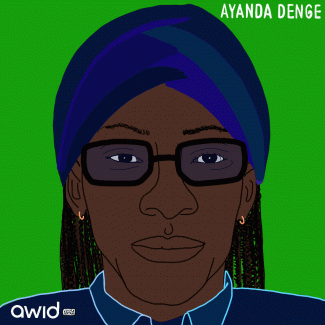
« Je suis un miracle… Je suis donc née d’une mère! Moi qui commence à bégayer, J’ai eu une vie à nulle autre pareille... » - Ayanda Denge (lisez le poème entier ci-dessous)
En tant qu’activiste fervente et engagée de la justice sociale, elle s'est battue pour les droits des travailleures du sexe, des personnes trans et des personnes vivant avec le VIH et le sida. Elle a également été une conférencière motivatrice sur la sensibilisation au cancer ainsi que fait campagne en faveur de logements sociaux et abordables, en particulier au profit des pauvres et des travailleures. Ayanda s'est dressée comme une montagne contre les différents visages souvent violents de la discrimination.
« Lorsque vous êtes transgenre, ce n’est pas une double dose, mais une triple dose de stigmatisation et de discrimination que vous recevez. Vous êtes discriminé·e en raison de votre identité sexuelle, en raison de votre travail et en raison de votre statut sérologique VIH. » - Ayanda Denge, 2016
Elle a été présidente par intérim de la Sex Workers Education and Advocacy Taskforce (SWEAT, groupe de travail sur l’éducation et la défense des travailleures du sexe) et coordonnatrice de liaison pour Sisonke, un mouvement national de travailleures du sexe sud-africain.
« D’ici, de notre siège régional à SWEAT, où je siège au conseil d'administration, en passant par Sisonke, un mouvement de travailleures du sexe au Cap, nous ne faisons qu’un. Nous avons un même cri et c'est un cri qui est reconnu dans le monde entier par les travailleures du sexe de toute la planète. Nous voulons la décriminalisation du travail du sexe ». - Ayanda Denge, 2016
Elle vivait dans la maison Ahmed Kathrada, qui était occupée par la campagne Reclaim the City en faveur de logements sociaux. En 2018, Ayanda avait été élue responsable de la maison. Le 24 mars 2019, elle a été poignardée à mort dans sa chambre. L'année précédente, un autre résident avait été tué.
Reclaim the City fait le lien entre la sécurité des résident·e·s des maisons et le gouvernement de province qui les prive d'électricité et du droit humain à l'eau potable :
« Nous ne pouvons dissocier la sécurité des femmes et des personnes LGBTQI vivant dans le squat du refus du gouvernement de la province du Cap-Occidental de rétablir l'électricité et l'eau potable dans la maison Ahmed Kathrada.
La maison est dans le noir complet le soir. Nous avons besoin de lumière pour nous protéger les un·e·s les autres. On a l'impression que la province veut punir les pauvres et les ouvrier·ère·s, dont le seul crime était d'avoir besoin d'un toit. Certes, ils ont le droit de ne pas être d’accord avec nos raisons de squatter, mais ils devraient avoir honte de faire passer la politique avant la sécurité et la dignité des résident·e·s de cette ville.
Repose en paix, camarade Ayanda Denge, nous reprenons le flambeau et nous nous souviendrons de toi dans cette lutte pour un logement décent et central. »
Poème d’Ayanda :
Je suis un miracle…
Je suis donc née d’une mère!
Moi qui commence à bégayer,
j’ai eu une vie à nulle autre pareille.
Née dans la douleur
Nourrie par la pluie
Pour gagner en hauteur
Je vivais dans les égouts.
Là je verse une larme,
je me relève et brandis ma lance.
Les voix résonnent, n’ayez pas peur
Des défis à relever dans l’année,
Des défis de souffrance dans mon dossier;
La communauté applaudit, croyant que j’ai gagné la course;
Mais en réalité mon travail avance à pas de tortue;
À genoux je m’incline et demande grâce.
Car le Seigneur
Est mon épée;
Pour rappeler à l’humanité
Qu’il apporte la sérénité.
Pourquoi, Seigneur, suis-je ce miracle?
Le Seigneur me répond par la pluie et le tonnerre,
Pour avoir interrogé mon père
Qui a dans le livre des agneaux
Un prénom nommé Ayanda.
Dans la rue ma vie n’a jamais été douce
Les personnes que j’ai dû croiser;
Parfois, je ne les saluais jamais;
Et même lorsque j’avais besoin de manger;
Je préférais tirer ma révérence
Plutôt que de prendre place.
Écoutez le poème de la voix d'Ayanda
« Car ma vie est pareille à celle d’une fleur de lotus, hors des eaux sombres et troubles, j'ai fleuri pour être belle et forte… »- Ayanda Denge, regardez et écoutez
« Ayanda, je voudrais te dire que dans nos coeurs, dans nos esprits, tu es toujours une survivante. Tu n’es plus là mais tu es partout, parce que tu es amour. Comme c’est merveilleux d’être aimé·e, et de donner de l’amour. Et c’est là, Ayanda, le cadeau que tu nous as fait. Merci pour tout cet amour, nous avions vraiment besoin de toi. Je te promets qu’à l’avenir, nous nous engageons tou·te·s à poursuivre la lutte à laquelle tu as consacré tant d’énergie et de temps. Et nous nous engagerons à obtenir justice pour cette fin de vie abominable que tu as connue. » - Transcription d’un message, lors d’un hommage d'adieu à Ayanda
« Ayanda était une activiste par nature. Elle connaissait ses droits et n’hésitait pas à se battre pour les droits des autres. En ce qui me concerne, je n’ai pas été surprise qu’elle s’implique auprès de nombreuses organisations, il était évident qu’elle aimait les gens. Elle ne défendait pas nécessairement les droits des LGBTI, mais les droits de toutes et de tous. » - la soeur d’Ayanda
Le thème du Forum − S'élever ensemble − est une invitation à nous engager avec tout notre être, à nous connecter les un.e.s aux autres de manière ciblée, bienveillante et courageuse, afin que nous puissions sentir le battement de cœur des mouvements mondiaux et nous élever ensemble pour relever les défis de notre époque.
Les mouvements féministes, de défense des droits des femmes, de justice basée sur le genre, LBTQI+ et autres mouvements apparentés du monde entier se trouvent à un tournant décisif, confrontés à un puissant revers/recul sur les droits et libertés précédemment acquis. Ces dernières années ont été marquées par la montée rapide des autoritarismes, la répression violente de la société civile et la criminalisation des femmes et des défenseuses.eurs des droits humains, l'escalade des guerres et des conflits dans de nombreuses régions du monde, la perpétuation des injustices économiques et les crises sanitaires, écologiques et climatiques qui s'entrecroisent.
Nos mouvements sont ébranlés et, en même temps, ils cherchent à construire et à maintenir la force et le courage nécessaires pour le travail à venir. Nous ne pouvons pas faire ce travail seul.e.s, dans nos bulles. La connexion et la guérison sont essentielles pour transformer les déséquilibres de pouvoir persistants et les lignes de faille au sein de nos propres mouvements. Nous devons travailler et élaborer des stratégies de manière interconnectée, afin de pouvoir prospérer ensemble. Le Forum de l'AWID favorise cet ingrédient vital qu'est l'interconnexion dans la pérennité, la croissance et l'influence transformatrice de l'organisation féministe à l'échelle mondiale.
Le 2 septembre 2021, les géniales féministes et activistes pour la justice sociale du festival de l’AWID Crear | Résister | Transform se sont retrouvées, non seulement pour mettre en commun leurs stratégies de résistance, cocréer et transformer le monde, mais également pour parler crûment sur Twitter.
Nana Darkoa Sekyiamah, cofondatrice du blog Adventures From The Bedrooms of African Women et autrice de The Sex Lives of African Women, menait l’exercice, épaulée par la plateforme numérique panafricaine womanist queer AfroFemHub, pour poser la question suivante : Comment pouvons-nous, de manière sûre et consensuelle, explorer notre plaisir, nos désirs et nos fantasmes par textos?
Je pense que c’est une question de très haute importance, parce qu’elle porte sur la question plus large de la navigation en ligne selon un point de vue féministe. Avec le capitalisme, le langage autour des corps et du sexe peut être déshumanisant et perturbant, et aborder le plaisir sexuel sur le numérique peut sembler devoir prendre une tournure performative. Donc, trouver des manières d’examiner comment nous faisons part de notre désir, qu’elles soient à la fois affirmatives et enthousiastes, peut repousser les modèles dominants de présentation et de consommation, et se réapproprier ces espaces comme autant de lieux d’un engagement authentique, prouvant que les sextos devraient tous être justement ça : féministes.
En outre, permettre aux conversations féministes d’incarner leur côté ludique dans les conversations en ligne contribue à recadrer le récit populaire selon lequel les interventions féministes sont tristes et austères. Mais nous le savons bien : s’amuser fait partie de notre politique, et est inhérent à ce qu’être féministe veut dire.
À l’aide du mot-dièse #SextLikeAFeminist des universitaires et des activistes du monde entier se sont donné rendez-vous pour partager leurs tweets féministes les plus affamés, et voici mes dix favoris.
Comme ces tweets le montrent, sextoter comme une féministe est à la fois sexy, drôle – et chaud. Mais sans jamais perdre de vue son engagement en faveur de l’équité et de la justice.

*Website in French
As these tweets show, it turns out that sexting like a feminist is sexy, funny – and horny. Yet, it never loses sight of its commitment to equity and justice.
A hands-on deckgame for collectives to explore feminist economic alternatives and systems of care as crisis response. This deckgame is for all movements navigating global climate crises through play and strategy based on real-life scenarios. A creative avenue to strategize in meetings, workshops, and community gatherings!