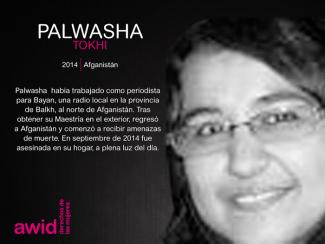
Palwasha Tokhi
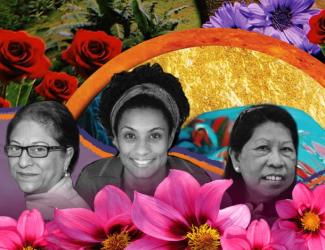
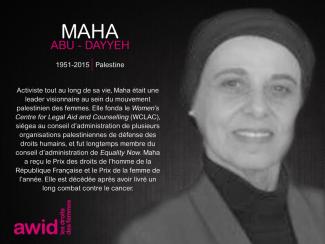
AWID’s Tribute is an art exhibition honouring feminists, women’s rights and social justice activists from around the world who are no longer with us.
This year’s tribute tells stories and shares narratives about those who co-created feminist realities, have offered visions of alternatives to systems and actors that oppress us, and have proposed new ways of organising, mobilising, fighting, working, living, and learning.
49 new portraits of feminists and Women Human Rights Defenders (WHRDs) are added to the gallery. While many of those we honour have passed away due to old age or illness, too many have been killed as a result of their work and who they are.
This increasing violence (by states, corporations, organized crime, unknown gunmen...) is not only aimed at individual activists but at our joint work and feminist realities.
The portraits of the 2020 edition are designed by award winning illustrator and animator, Louisa Bertman.
AWID would like to thank the families and organizations who shared their personal stories and contributed to this memorial. We join them in continuing the remarkable work of these activists and WHRDs and forging efforts to ensure justice is achieved in cases that remain in impunity.
“They tried to bury us. They didn’t know we were seeds.” - Mexican Proverb
It took shape with a physical exhibit of portraits and biographies of feminists and activists who passed away at AWID’s 12th International Forum, in Turkey. It now lives as an online gallery, updated every year.
To date, 467 feminists and WHRDs are featured.
Os dados serão processados para fins estatísticos para esclarecer o estado de financiamento dos movimentos feministas globalmente e serão divulgados apenas em forma agregada. A AWID não divulgará informações sobre uma organização específica ou informações que permitam identificar uma organização através da respetiva localização ou características sem o respetivo consentimento comprovado.
Meet Sabrina Sanchez, remarkable trans migrant woman, sex worker, organizer, transfeminist and one of the founders of the union OTRAS.
Originally from Mexico City, she migrated to Spain 17 years ago after getting a degree in communications and started working as a sex worker.
It didn’t take long before she became involved with trans activism and sex worker activism in Barcelona. After joining the collective Asociación de Profesionales del Sexo (Association of Sex Workers, Aprosex), she started working in its secretariat and founded the Spanish sex workers union OTRAS.
She currently lives in Amsterdam where she works as the coordinator of the European Sex Workers’ Alliance.
Fun fact: she’s also a car mechanic and serious runner!
Nadine was a role model to many for her work supporting women and the most vulnerable in her community. She was committed to helping the poor and homeless in particular.
Though her death was reported as an accident, the Ramaroson family, led by her father, André Ramaroson led an investigation that pointed to evidence that she had been murdered. She is reported to have died in a fatal accident occurred between Soanierano - Ivongo and Ste Marie - a story that has been refuted by her family.
She received numerous death threats for her bold political positions. Her case remains in court in Antananarivo (the capital of Madagascar).

The theme of the 14th AWID International Forum is: “Feminist Realities: our power in action”.
In this Forum, we will celebrate and amplify powerful propositions that are around us, in all stages of development.
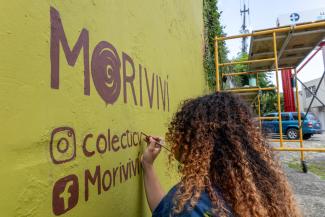
Colectivo Moriviví est un collectif artistique de femmes. Notre production artistique comprend du muralisme, du muralisme communautaire et des performances/actions de manifestation. Notre travail consiste à démocratiser l'art et à amener les récits des communautés portoricaines dans la sphère publique afin de créer des espaces où ils seront validés. Nous croyons qu’à travers l'artivisme, nous pouvons promouvoir la sensibilisation aux questions sociales et renforcer notre mémoire collective.
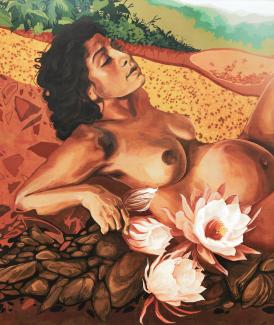
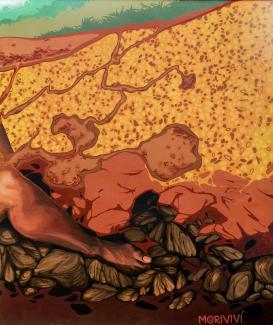
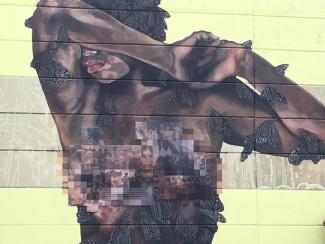
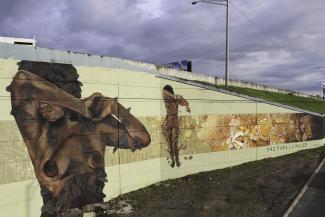
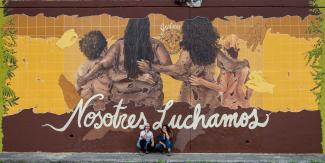
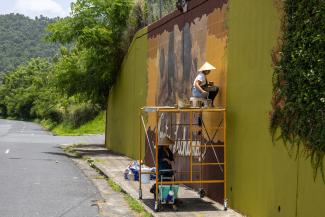
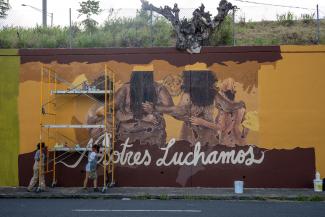
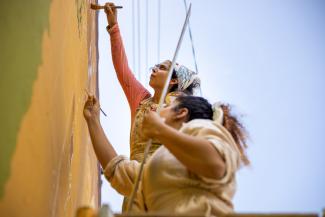
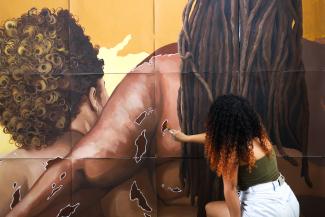
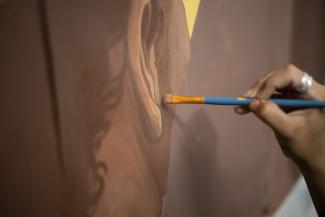
Dans le cadre de sa participation au Groupe de Travail d’Artistes d'AWID, le Colectivo Moriviví a réuni un groupe divers de membres, partenaires et personnel pour faciliter un processus collaboratif visant à imaginer, documenter et déterminer le contenu d'une fresque communautaire par le biais d'un processus de co-création en plusieurs étapes. Le projet a commencé par une conceptualisation à distance avec des féministes de différentes régions du monde réuni·e·s par l'AWID, avant d'évoluer vers sa re-contextualisation et sa réalisation à Porto Rico. Nous avons eu l'honneur de bénéficier de la contribution des artistes locaux·ales Las Nietas de Nonó(@lasnietasdenono), de la participation des femmes locales à la session de peinture communautaire, du soutien logistique de la municipalité de Caguas et du soutien supplémentaire du FRIDA | The Young Feminist Fund.
La fresque explore la transcendance des frontières en présentant les corps tels des cartes, dans une étreinte qui met en évidence l'intersection des différentes manifestations, pratiques et réalités féministes.
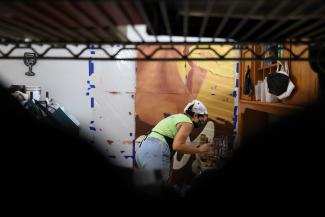
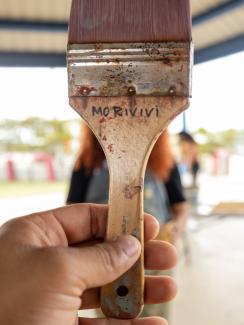
Nous remercions également Kelvin Rodríguez, qui a documenté et capturé les différentes étapes de ce projet à Porto Rico :


كلا. يبني هذا الاستطلاع على المعلومات التي حشدتها جمعية حقوق المرأة في التنمية حول كيفية الحصول على تمويل أكبر وأفضل للحركات النسوية وحركات التغيير الاجتماعي وهذه الدورة الثالثة لاستطلاع "أين التمويل للتنظيمات النسوية". نهدف للقيام بالاستطلاع مرة كل ثلاثة أعوام.
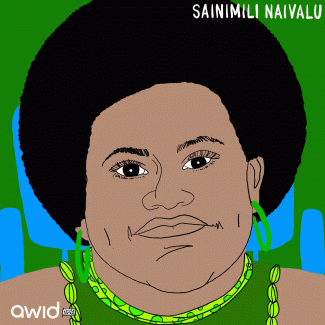
“I’ve witnessed discrimination on the streets, being teased on the streets and verbally abused on the streets. I have also made numerous friends and have met a lot of people. There may be dangers out there but I am a survivor and this is where I will be for now.”
- Sainimili Naivalu
She demanded policy makers and stakeholders provide disability friendly policies and services such as the construction of ramps in towns and cities to increase accessibility. Physical barriers were not the only ones she strived to change. From her own experience, she knew that more difficult changes need to take place in social and economic spheres. Many of the challenges disabled people face are rooted in attitudes that carry discrimination and stigma.
A survivor and a fighter, Sainimili contributed to co-creating feminist realities that foster inclusion and shift attitudes towards disabled people. As a member of the Spinal Injury Association of Fiji (SIA) and through Pacific Disability Forum’s Pacific Enable project she attended the International Labour Organisation “Start Your Business” training in Suva, enabling her to transform her ideas into her own business. She was an entrepreneur at the Suva Market Stall 7, offering manicure services, as well as running SIA’s women’s market stall selling handicrafts, sulus and artifacts. Sainimili’s plan was to expand her business and become a major employer of disabled people.
In addition to her activism, she was also a table tennis medalist and youth champion.
A vivacious personality, Sainimili was one of a kind. You would always know that Sainimili is in a room because her laughter and her stories would be the first thing that you would notice.
- Michelle Reddy
Sainmili passed away in 2019.
Enciende tu fuego feminista leyendo nuestras investigaciones y publicaciones varias sobre financiamiento, defensoras de derechos humanos, construcción de movimientos, fundamentalismos, justicia económica, seguimiento y evaluación feminista y más
In the African Commission and the Inter-American System, anti-rights actors push essentialist notions of culture and gender to hamper progress on rights and undermine accountability. As we see, anti-rights actors are exerting influence in regional human rights systems, as well as international spaces.
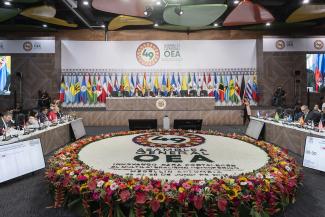
The African Commission on Human and Peoples' Rights has begun framing women’s and sexual rights as jeopardising its ability to deal with “real rights” and contrary to “African values”, setting a worrying anti-rights precedent. The withdrawal of the Coalition of African Lesbians’ observer status is an example of this trend, and points to the way space for feminist, Pan-Africanist engagement is being stifled.
In the Organization of American States (OAS) and the Inter-American Human Rights System, anti-rights strategies include the NGOization of religious groups, the use of secular discourses, and the co-optation of discrimination frameworks. Anti-rights influence has materialized in a number of ways, including the intimidation of trans activists and the blocking the introduction of progressive language in resolutions.
O inquérito destina-se a grupos, organizações e movimentos que trabalham especificamente ou principalmente pelos direitos das mulheres, pessoas LBTQI+ e pela justiça de género, em todos os contextos, em todos os níveis e em todas as regiões. Se este for um dos pilares principais do seu grupo, da sua comunidade, da sua rede ou de qualquer outro tipo de organização, quer esteja registada ou não, seja nova ou já estabelecida, convidamo-lo a participar neste inquérito.

* De momento, não solicitamos respostas de indivídues ou de fundos feministas e de mulheres.
Écoutez cette histoire ici :
Conocida como la Drag Queen de color de Nueva York, Sylvia fue feroz e incansable en su voluntad por cambiar las cosas, y en su defensa de quienes quedaron marginadxs y excluidxs cuando el movimiento por los "derechos de la comunidad gay" se volvió predominante en los Estados Unidos, a principios de los 70.
En 1973, durante un conocido discurso por el día de Christopher Street, Sylvia gritó en medio de la multitud de integrantes de la comunidad LGBT:
"Todos ustedes me dicen, anda y esconde la cola entre las patas.
No voy a seguir aguantando esta mierda.
Me han golpeado.
Me han roto la nariz.
Me han metido en la cárcel.
He perdido mi trabajo.
He perdido mi departamento
por la liberación gay, ¿y todos ustedes me tratan así?
¿Qué carajo les pasa a todos ustedes?
¡Piensen en eso!"
En 1969, a la edad de 17 años, Sylvia participó en los emblemáticos disturbios de Stonewall, al lanzar, presuntamente, el segundo cóctel molotov para protestar por la redada policial en este bar gay de Manhattan. Siguió siendo una figura central en los levantamientos posteriores, organizando mítines y luchando contra la brutalidad policial.
En 1970, Sylvia trabajó junto con Marsha P. Johnson para establecer Street Transvestite Action Revolutionaries [Acción Travesti Callejera Revolucionaria] (S.T.A.R., por sus siglas en inglés), un colectivo político y una organización que establecería proyectos de apoyo mutuo para las personas trans que vivían en la calle, aquellxs que luchaban contra la drogadicción, las que estaban encarceladas y, en particular, para las personas trans de color que vivían en la pobreza.
Desafiante de las etiquetas, Silvia vivió la vida de una manera que retaba a las personas del movimiento de liberación gay a pensar de manera diferente. Ella dijo:
"Me fui de casa a los 10 años, en 1961. Hice la calle en la 42. El inicio de los años 60 no era un buen momento para lxs drag queens, los chicos afeminados o los chicos que usaban maquillaje como nosotrxs. En ese entonces nos golpeaba la policía, y todo el mundo. Yo no salí realmente como drag queen hasta finales de los 60, cuando se arrestaba a lxs drag queens, qué degradación había. Recuerdo que la primera vez que me arrestaron, ni siquiera estaba vestida totalmente en drag. Estaba caminando y los policías me arrebataron de la calle. La gente ahora quiere llamarme lesbiana porque estoy con Julia, y yo digo: "No. Soy sólo yo. No soy lesbiana". Estoy cansada de que me etiqueten. Ni siquiera me gusta la etiqueta transgénero. Estoy cansada de vivir con etiquetas. Sólo quiero ser quien soy. Soy Sylvia Rivera.
A través de su activismo y su coraje, Sylvia ofreció un espejo que reflejaba todo lo que estaba mal en la sociedad, pero también la posibilidad de transformación. Sylvia nació en 1951 y falleció en 2002.
par Maryum Saifee
Lorsqu’on effectue une recherche en ligne sur les « Mutilations génitales féminines » ou « MGF », un schéma en quatre parties sur l’anatomie des femmes apparaît à côté d’une page Wikipédia dédiée. (...)
Illustration : « Rêves », par Neesa Sunar >