Left
Half
Left

Special Focus

AWID is an international, feminist, membership organisation committed to achieving gender equality, sustainable development and women’s human rights

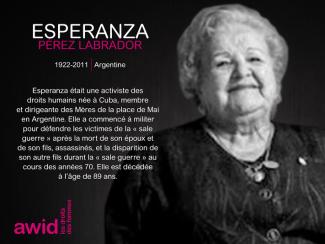
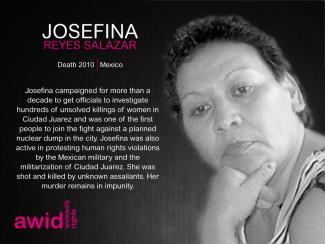
Memory as Resistance: A Tribute to WHRDs no longer with us

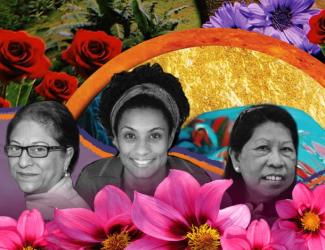
AWID’s Tribute is an art exhibition honouring feminists, women’s rights and social justice activists from around the world who are no longer with us. 


In 2020, we are taking a turn

This year’s tribute tells stories and shares narratives about those who co-created feminist realities, have offered visions of alternatives to systems and actors that oppress us, and have proposed new ways of organising, mobilising, fighting, working, living, and learning.

49 new portraits of feminists and Women Human Rights Defenders (WHRDs) are added to the gallery. While many of those we honour have passed away due to old age or illness, too many have been killed as a result of their work and who they are.

This increasing violence (by states, corporations, organized crime, unknown gunmen...) is not only aimed at individual activists but at our joint work and feminist realities.

The stories of activists we honour keep their legacy alive and carry their inspiration forward into our movements’ future work.

Visit the online exhibit

The portraits of the 2020 edition are designed by award winning illustrator and animator, Louisa Bertman

AWID would like to thank the families and organizations who shared their personal stories and contributed to this memorial. We join them in continuing the remarkable work of these activists and WHRDs and forging efforts to ensure justice is achieved in cases that remain in impunity.

“They tried to bury us. They didn’t know we were seeds.” - Mexican Proverb 


The Tribute was first launched in 2012

It took shape with a physical exhibit of portraits and biographies of feminists and activists who passed away at AWID’s 12th International Forum, in Turkey. It now lives as an online gallery, updated every year.

To date, 467 feminists and WHRDs are featured.

Visit the online exhibit

Related Content

Why are you asking for the name of the group, organization and/or movement completing the survey and our contact information?

We are asking for this data to facilitate the review of responses, avoid duplication and be able to contact your group in case you have been unable to complete the questionnaire and/or you have doubts or further questions. You can learn more about how we use the personal information we collect through our work here.

Defensoras del África subsahariana

En nuestro Tributo Virtual 2015 a las defensoras de derechos humanos que ya no están con nosotros/as recordamos a cuatro mujeres del África subsahariana, tres de las cuales fueron asesinadas por el trabajo que realizaban y/o por su identidad de género y orientación sexual. Sus muertes ponen en evidencia la violencia que suelen enfrentar las personas LGBT en la región y en  el mundo. Únete a AWID para honrar a estas defensoras de derechos humanos, su trabajo y su legado, compartiendo los memes aquí incluidos con tus colegas, amistades y redes; y tuiteando las etiquetas #WHRDTribute y #16Días.


Por favor, haz click en cada imagen de abajo para ver una versión más grande y para descargar como un archivo.  


Snippet FEA Objectives NSS - Traditional Knowledge (ES)

CONOCIMIENTOS TRADICIONALES

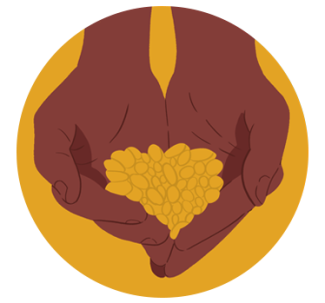
Brown hands with yellow seeds in the palms
Utilizar y promover los conocimientos y prácticas tradicionales transmitidos de generación en generación, que apoyen la soberanía alimentaria y la preservación de las semillas campesinas

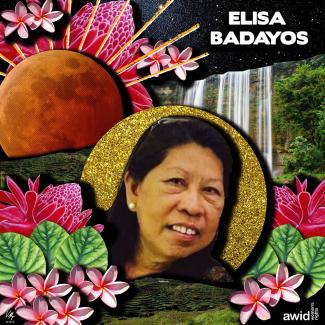
Elisa Badayos

Elisa était la coordinatrice de l'organisation de défense des droits humains Karapatan, dans la province de Negros Oriental aux Philippines.

Elle organisait également les communautés urbaines pauvres dans la province de Cebu et travaillait avec Desaparecidos, une organisation de familles de disparu-e-s.

Le 28 novembre 2017, lors d'une mission d'enquête sur des violations des droits fonciers dans la région, Elisa et deux de ses collègues ont été abattu-e-s par deux hommes non identifiés à Barangay San Ramon, ville de Bayawan, dans la province de Negros Oriental.

Elle laisse quatre enfants derrière elle.


Elisa Badayos, Philippines

¿Cuánto tiempo permanecerá abierta la encuesta?

La encuesta permanecerá abierta hasta fines de agosto de 2024. Te pedimos que la respondas dentro de dicho lapso para asegurarte de que tus respuestas se incluyan en el análisis.

Why and how to renew your AWID membership

Meet Other Members

Our individual and institutional members come from ALL regions of the world and 163 countries. Our latest members join us from France, South Sudan, the United Kingdom, and Lebanon. All of our members bring with them a rich and diverse array of perspectives, experiences, knowledge, energy and inspiration! 

Did you know about our weekly member profiles?

One of the benefits of being an AWID member, is having your story featured on awid.org, in our newsletters which go out to 35,000 subscribers, and via our social media channels which have over 60,000 followers.

Recently featured:

Meet Angila Ashitua, a young woman from Vihiga county in Western Kenya.

Meet other members


Connect, Inspire, Mobilize!

How?

  • By engaging with other members through our online members' forum and directory.
  • By learning more about AWID's work and issues concerning women's rights and social justice through our publications and resources.
  • By participating in our e-learning sessions. Take a look at highlights from our webinar on Data, Resources and Women's Rights!
  • By supporting Women Human Rights Defenders (WHRDs) at risk

And much more!

You can renew your membership for 1, 2 or 3 years and we offer free individual and institutional membership for those with low incomes and budgets.

Renew your membership today

If you have any difficulties and require support with the sign-up process, please do not hesitate to contact us at membership@awid.org


What Our Members Say

"We have found AWID to be a very exciting network and we are involved in many of its platforms." - Engabu Za Tooro (AWID institutional member)

"I am looking forward to a fruitful engagement with the team. Feeling great. Thanks for accepting me as a member." - R. Chakraborty (AWID individual member)

"Thank you so much AWID, your work is tremendous. I really appreciated your efforts." - E. Khan (AWID individual member)

Snippet FEA NSS Quote (FR)

« Les savoirs et pratiques indigènes ont toujours soutenu la souveraineté alimentaire, et ce savoir-faire est entre les mains des femmes [...] L'écoféminisme pour moi, c'est le respect de tout ce que nous avons autour de nous » -

Mariama Sonko

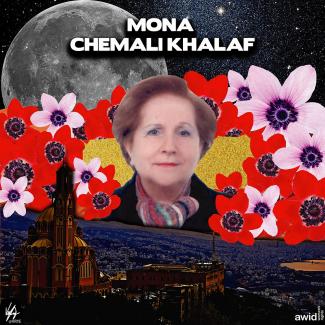
Mona Chemali Khalaf

Mona was an economist and an independent consultant on gender and development issues.

She was  a former Professor of Economics and Director of the Institute for Women's Studies in the Arab World at the Lebanese American University. 

She passed away suddenly on January 6, 2018. 

Friends and former colleagues say of Mona: “When we celebrate her life, the best thing we can do is commit to continuing what she started: gender equality no matter what.”


Mona Chemali Khalaf, Lebanon

Snippet - Intro WITM - PT

Com base na nossa história de 20 anos de mobilização de mais fundos de melhor qualidade para a mudança social liderada por feministas, a AWID convida a participar da nova edição da nossa pesquisa principal:

"Onde está o dinheiro para a organização feminista?"

(WITM)

PARTICIPE NO INQUÉRITO!Veja o tutorial

Please select your language in the upper right corner of the page.

Body

7. Sintetiza los resultados de la investigación

Ahora que has analizado toda la información que recogiste — de la encuesta, las entrevistas, la investigación secundaria y otras fuentes que hayas utilizado — ya puedes generar el producto final.

En esta sección:

El producto final

El producto final será un documento que resume, analiza y critica la información que obtuviste. Será lo que compartas con la audiencia cuando les presentes tu investigación y se la expliques.

En AWID por lo general elaboramos un informe escrito exhaustivo en el que analizamos cada conjunto de información y sintetizamos todos los resultados que encontramos, para luego generar productos más breves como infografías o resúmenes (que explicaremos en la sección siguiente, «Finalización y formato»).

1. Escribe con claridad

  • Organiza la información según cómo te gustaría contar la historia. Puedes respetar el orden de la encuesta. O reagrupar algunas preguntas para que la conclusión surja de manera fluida y siga una progresión lógica.
  • Adapta el lenguaje al público. Utiliza un lenguaje universal y evita las jergas o los términos demasiado técnicos.

La importancia de la edición

El trabajo de edición implica corregir el texto, garantizar que la redacción sea concisa, revisar que los datos proporcionados sean exactos, señalar las inconsistencias que se deben resolver, acomodar el texto para que fluya y posiblemente también sugerir títulos.

Lo ideal es que la persona que haga este trabajo entienda y conozca tu labor en cuanto a WITM pero que no haya participado directamente de la investigación, así puede aportar una perspectiva nueva.

2. Consigue que el producto tenga un aspecto atractivo

  • Utiliza la información recogida para generar gráficos y tablas. Estas herramientas visuales constituyen una forma atractiva de subrayar los principales resultados de la investigación y validar los análisis.
  • Busca imágenes relevantes que puedan ilustrar el informe.
  • Destaca las principales cifras y/o los testimonios de impacto.

Recuerda: Cuanto más accesible sea el producto, más personas querrán leerlo (y compartirlo).

Volver al comienzo


Revisión y comentarios

Cuando llegues a este momento, ya habrás compilado toda la información, la habrás analizado y convertido en un producto final, que probablemente sea un informe extenso.

1. Pule los resultados

Antes de encarar los pasos siguientes deberías compartir el producto final con organizaciones, activistas y donantes que puedan comentarlo (lxs «consultorxs»).

Este es un momento excelente para pedirles que revisen lo siguiente:

  • ¿Hay algo fundamental que esté ausente delanálisis del panorama actual del financiamiento y sus tendencias?
  • ¿Hay algo fundamental que esté ausente de las conclusiones?
  • ¿Hay alguna inexactitud en la información que necesite ser corregida?
  • ¿Tienen alguna sugerencia general sobre cómo fortalecer el informe para que cumpla con las metas que habías mencionado en el marco de la investigación?

Una vez que hayas incorporado todos los comentarios de las personas a las que consultaste, asegúrate de que la persona a cargo de la edición vuelva a revisar el informe.

Con esto ya tendrás la versión final y completa del informe. Si quieres publicarlo en otros idiomas, ahora es el momento de enviarlo a traducir.

2. Facilita los comentarios

  • Es probable que las personas a las que consultes estén ocupadas con su trabajo habitual. Asegúrate de darles un plazo razonable para que te hagan llegar sus comentarios.
  • Pídeles comentarios breves y específicos, para que les resulte fácil responder. Si quieres, puedes simplemente copiar y pegar los puntos que mencionamos en la sección anterior.
  • Si vas a publicar el informe en varios idiomas, asegúrate de contar con personas que también puedan revisar las versiones finales traducidas de el/los producto/s.

Las personas que revisen el informe (lxs «consultorxs») te estarán haciendo un aporte significativo. Considera la posibilidad de otorgarles alguna forma de reconocimiento.

Volver al comienzo


Paso previo

6. Realiza una investigación secundaria

Paso siguiente

8. Finalización y formato

Duración estimada

• 2 - 5 meses

Personas que se necesitan

• 1 persona (o más) de investigación
• 1 Editor (editor web o si crea un producto en línea)
• Traductores (si ofrece encuesta en varios idiomas)

Recursos necesarios

• Lista de organizaciones de asesores, activistas y financiadores.
• Documento de Síntesis (sección de "marco de su investigación")
• Los resultados de su(s) encuesta(s)
• Preguntas de la entrevista
• Resultados de las entrevistas
• Los datos de la investigación secundaria
• Todos otros datos utilizados en el informe


Paso previo

6. Realiza una investigación secundaria

Paso siguiente

8. Finalización y formato


Planilla «¿Estoy listx?»

Descargar el manual en PDF

Snippet FEA argentina history cooperatives (EN)

Argentina has a long history of worker-run cooperatives and workplaces.

In 2001, the country experienced one of the worst economic crises in its history.

As a response to the recession and a form of resistance and resilience, workers across the country started occupying their workplaces.

The Nadia Echazú Textile Cooperative was the first cooperative created by and for trans and travesti people in search of economic autonomy and decent living conditions.

It provides work opportunities, access to social security, sustainable income and economic rights for the communities it serves.

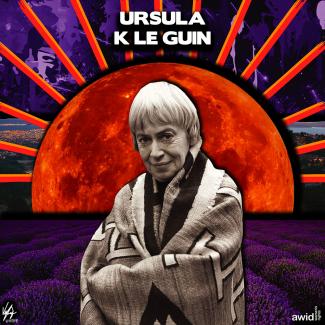
Ursula K Le Guin

Ursula fue una novelista estadounidense que trabajó principalmente con los géneros de fantasía y ciencia ficción.

Encontró la fama con La mano izquierda de la oscuridad, novela en la cual imagina una sociedad futura donde la gente es ambisexual: no tienen un sexo fijo. Indaga en los efectos del género y el sexo en la sociedad, y fue uno de los primeros grandes libros feministas de ciencia ficción. Ursula fue una inspiración por su escritura subversiva y original y también por los temas sobre feminismo y libertad a los que les daba tanta importancia.

En un discurso que pronunció en 1983 en el Mills College, en California, les dijo a las graduadas: «¿Por qué una mujer libre con formación universitaria debería o luchar contra el macho o servirlo? ¿Por qué ella debería vivir su vida en los términos de él? Espero que ustedes vivan sin la necesidad de dominar y sin la necesidad de ser dominadas».


Ursula K Le Guin, USA

Snippet - WITM To make - AR

لجعل الواقع المركّب لتمويل الأشكال المختلفة من التنظيم النسوي، مرئي