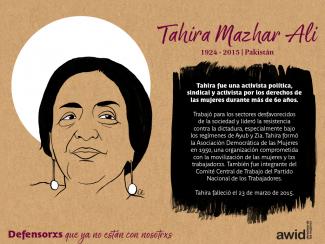
Tahira Mazhar Ali
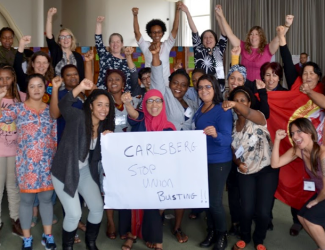
Women human rights defenders (WHRDs) worldwide defend their lands, livelihoods and communities from extractive industries and corporate power. They stand against powerful economic and political interests driving land theft, displacement of communities, loss of livelihoods, and environmental degradation.
Extractivism is an economic and political model of development that commodifies nature and prioritizes profit over human rights and the environment. Rooted in colonial history, it reinforces social and economic inequalities locally and globally. Often, Black, rural and Indigenous women are the most affected by extractivism, and are largely excluded from decision-making. Defying these patriarchal and neo-colonial forces, women rise in defense of rights, lands, people and nature.
WHRDs confronting extractive industries experience a range of risks, threats and violations, including criminalization, stigmatization, violence and intimidation. Their stories reveal a strong aspect of gendered and sexualized violence. Perpetrators include state and local authorities, corporations, police, military, paramilitary and private security forces, and at times their own communities.
AWID and the Women Human Rights Defenders International Coalition (WHRD-IC) are pleased to announce “Women Human Rights Defenders Confronting Extractivism and Corporate Power”; a cross-regional research project documenting the lived experiences of WHRDs from Asia, Africa and Latin America.
"Women Human Rights Defenders confronting extractive industries: an overview of critical risks and Human Rights obligations" is a policy report with a gender perspective. It analyses forms of violations and types of perpetrators, quotes relevant human rights obligations and includes policy recommendations to states, corporations, civil society and donors.
"Weaving resistance through action: Strategies of Women Human Rights Defenders confronting extractive industries" is a practical guide outlining creative and deliberate forms of action, successful tactics and inspiring stories of resistance.
The video “Defending people and planet: Women confronting extractive industries” puts courageous WHRDs from Africa, Asia, and Latin America in the spotlight. They share their struggles for land and life, and speak to the risks and challenges they face in their activism.
Challenging corporate power: Struggles for women’s rights, economic and gender justice is a research paper outlining the impacts of corporate power and offering insights into strategies of resistance.
AWID acknowledges with gratitude the invaluable input of every Woman Human Rights Defender who participated in this project. This project was made possible thanks to your willingness to generously and openly share your experiences and learnings. Your courage, creativity and resilience is an inspiration for us all. Thank you!
El 11 de julio de 2024, tuvimos una conversación increíble con grandes feministas sobre el estado del ecosistema de financiación y el poder de la investigación "¿Dónde está el dinero?".
Le agradecemos de manera especial a Cindy Clark (Thousand Currents), Sachini Perera (RESURJ), Vanessa Thomas (Black Feminist Fund), Lisa Mossberg (SIDA) y Althea Anderson (Hewlett Foundation).
Recuerda: ¡la encuesta permanecerá abierta hasta el 31 de agosto de 2024!

Más que un simple evento, el Foro de AWID es parte de nuestro Viaje de Realidades Feministas, con muchos espacios en los cuales reunirse, en línea o en forma presencial, para compartir, discutir, elaborar estrategias, y crear conjuntamente realidades feministas.
Infórmate sobre el Viaje de Realidades Feministas y sobre todo lo que sucederá en este Viaje antes del Foro. ¡Y mantente sintonizadx para los anuncios post-Foro!
Estamos estudiando opciones para la participación virtual en el Foro, y compartiremos la información cuando sepamos qué podemos ofrecer.
This is an English article
- translated from the French article
AWID está monitoreando de cerca la situación global del COVID-19 y, por ahora, prevé seguir adelante con el Foro según lo planificado.
Si en algún momento la situación exige que hagamos algo diferente, se los comunicaremos inmediatamente.
El 14° Foro Internacional de AWID está programado para realizarse del 20 al 23 de septiembre de 2021 en Taipéi.
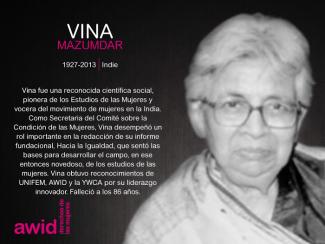
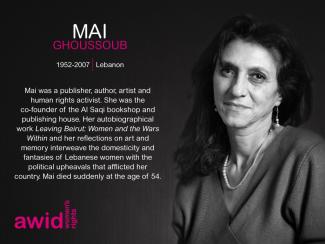
En nuestro Tributo Virtual 2015 honramos a cinco defensoras de derechos humanos asesinadas en la región de Medio Oriente y África del Norte. Estas defensoras trabajaron por los derechos de las mujeres y los derechos civiles, en su rol de abogadas y activistas. Sus muertes ponen en evidencia las condiciones de trabajo peligrosas y difíciles que, a menudo, imperan en sus países. Únete a AWID para honrar a estas mujeres, su activismo y su legado, compartiendo los memes aquí incluidos con tus colegas, amistades y redes; y tuiteando las etiquetas #WHRDTribute y #16Días.
Por favor, haz click en cada imagen de abajo para ver una versión más grande y para descargar como un archivo.


No. Valoramos tu trabajo, pero no estamos buscando respuestas de personas a título individual por el momento.
Escucha esta historia aquí:

A fines de 2019, la situación en Indonesia (en particular, los signos de militarización intensificada y de reacción contra los derechos LGBTQ) nos llevó a cuestionar la capacidad de AWID para sostener un ambiente razonablemente seguro y acogedor para la diversidad de participantes que esperamos reunir en el Foro.
Después de un análisis cuidadoso, en noviembre de 2019 la Junta Directiva de AWID decidió cambiar la sede del 14° Foro Internacional de AWID, de Bali a Taipéi.
Taipéi ofrece un alto nivel de capacidad logística, y resulta accesible para muchxs viajerxs (con la facilitación de un trámite de visa electrónico para conferencias internacionales).
Para más detalles:

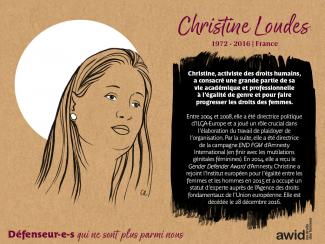
En Europe de l’Ouest et du Sud-Est ces défenseuses des droits humains ont voué leur vie à mener des campagnes ou des recherches. Elles ont été membres de différents mouvements pour la paix ou pour les droits des femmes et ont contribué à les faire évoluer par le biais de l'action politique, de l’activisme social ou à travers la danse. Nous les remercions infiniment pour l'héritage qu'elles nous ont laissé. Nous vous invitons à vous joindre à l’AWID pour rendre hommage à ces femmes, à leur activisme et à l’héritage qu’elles nous ont laissé. Faites ces mèmes auprès de vos collègues et amis ainsi que dans vos réseaux et en twittez en utilisant les hashtags #WHRDTribute et #16Jours.
S'il vous plaît cliquez sur chaque image ci-dessous pour voir une version plus grande et pour télécharger comme un fichier


L’enquête est disponible sur KOBO, une plateforme en source libre de collecte, gestion et visualisation de données. Pour y participer, il vous suffit de cliquer ici sur le lien de l’enquête et de suivre les indications pour répondre aux questions.