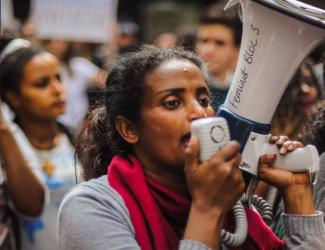
Resourcing Feminist Movements
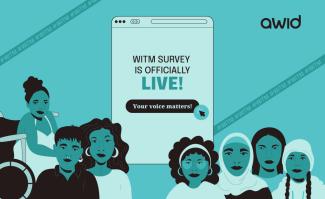
The “Where is the Money?” #WITM survey is now live! Dive in and share your experience with funding your organizing with feminists around the world.
Learn more and take the survey
Around the world, feminist, women’s rights, and allied movements are confronting power and reimagining a politics of liberation. The contributions that fuel this work come in many forms, from financial and political resources to daily acts of resistance and survival.
AWID’s Resourcing Feminist Movements (RFM) Initiative shines a light on the current funding ecosystem, which range from self-generated models of resourcing to more formal funding streams.
Through our research and analysis, we examine how funding practices can better serve our movements. We critically explore the contradictions in “funding” social transformation, especially in the face of increasing political repression, anti-rights agendas, and rising corporate power. Above all, we build collective strategies that support thriving, robust, and resilient movements.
Our Actions
Recognizing the richness of our movements and responding to the current moment, we:
-
Create and amplify alternatives: We amplify funding practices that center activists’ own priorities and engage a diverse range of funders and activists in crafting new, dynamic models for resourcing feminist movements, particularly in the context of closing civil society space.
-
Build knowledge: We explore, exchange, and strengthen knowledge about how movements are attracting, organizing, and using the resources they need to accomplish meaningful change.
-
Advocate: We work in partnerships, such as the Count Me In! Consortium, to influence funding agendas and open space for feminist movements to be in direct dialogue to shift power and money.
Related Content
Publications - Homepage - eng
Publications
Kindle for your feminist fire! Browse AWID’s research on funding, WHRDs, movement building, fundamentalisms, economic justice, feminist monitoring & evaluation and more
Snippet - WITM Our objectives - RU
Задачи исследования «Где деньги?»:
1 |
Предоставить членам AWID, партнерам и донорам обновленный, мощный, основанный на фактических данных и ориентированный на конкретные действия анализ ресурсных реалий феминистских движений, а также текущего состояния экосистемы финансирования феминистских инициатив. |
2 |
Выявить и продемонстрировать возможности для увеличения и улучшения финансирования феминистских организаций, выявить ошибочные решения и препятствовать тенденциям, приводящим к нехватке финансирования и/или противоречащим гендерной справедливости и межсекторальным феминистским повесткам. |
3 |
Сформулировать феминистское видение, предложения и программы по обеспечению ресурсами. |
FRMag - Looking at me Looking at Safe Spaces
Looking at me Looking at Safe Spaces
by Judyannet Muchiri
October last year I left for Kenya to begin what I have come to think of as my most important work yet. (...)
artwork: “Healing Together” by Upasana Agarwal >
لماذا عليّ أن أفكر بتعبئة الاستطلاع؟
هنالك العديد من الأسباب لتعبئة الاستطلاع منها أنه لديك الفرصة لمشاركة تجربتك المعاشة المتعلقة بحشد الموارد لدعم تنظيمك، أن تعمل/ين من منطلق قوة كخبير/ة بما يتعلق بالأموال ولأين تتحرك ولأين تصل وبذلك المشاركة بالجهد المشترك والمناصرة لتحريك التمويلات الأكبر والأفضل. لقد أثبت استطلاع "أين المال" في العشرين عام الأخيرة أنه مصدر أساسي للشركاء/ الشريكات وكذلك للممولين/ات. ندعوك من كل قلبنا للمشاركة بالنسخة الثالثة لتسليط الضوء على الوضع الفعلي للموارد، وتحد الحلول الخاطئة، والإشارة إلى كيفية تغيير التمويل حتى تزدهر الحركات وتواجه التحديات المعقدة في عصرنا.
Ours report 2021 summary
Today, a complex and evolving network of anti-rights actors is exerting more influence in international and regional spaces as well as domestic politics. Anti-rights actors are entering multilateral spaces (spaces where multiple countries come together for international collaboration) to transform and undermine them from the inside out. They employ a range of persuasive discourses to gain legitimacy, often co-opting the language of rights and justice to hide their true agendas.
This report is the second in a series on human rights trends reports produced by the Observatory on the Universality of Rights (OURs). As well as analysis of key anti-rights actors, discourses, strategies, and impacts, the report features inspiring short stories of feminist action, and knowledge-building exercises to help strengthen our collective resistance.
The effect on our rights has already been grave, but this is not a done deal. We can all play a part in resisting anti-rights agendas and reclaiming our rights.
Join the collective call-to-action today!
Наша группа, организация и/или движение не получали и не мобилизовывали финансирование от внешних спонсоров – можем ли мы принять участие в опросе?
Да! Мы признаем и ценим различные причины, по которым феминистки(-ты), работающие в различных контекстах, не имеют внешнего финансирования. Эти причины могут разниться: от невозможности подавать заявки на гранты из-за несоответствия требованиями и/или невозможности получения денег из-за рубежа, до использования генерируемых автономно ресурсов, в качестве самостоятельной политической стратегии. Мы хотим услышать ваше мнение, независимо от наличия или отсутствия у вас опыта работы с внешним финансированием.
فقدان الكلام | كلمة العدد
كلمة العدد
فقدان الكلام
بدأنا التخطيط لعدد المجلّة هذا مع نانا داركوا قُبيل مهرجان «ابدعي، قاومي، غيٍّري: مهرجان للحراكات النسوية» لجمعية «حقوق المرأة في التنمية» AWID، وانطلقنا وقتها من سؤالٍ هو بالأحرى ملاحظة حول حالة العالم، ورغبة في تغيير الاعتقادات السائدة: لماذا لا تزال جنسانيّاتنا وملذّاتنا تخضع للترويض والتجريم مع أنّه يتمّ تذكيرنا مراراً وتكراراً بأنّها لا تأتي بأيّ قيمة أو تطوّر؟ واستنتجنا أنّ جنسانيّاتنا، لمّا تتجسّد، فيها ما يتعارض مع النظام العالمي الذي ما زال يتجلّى من خلال ضوابط الحدود، والتمييز العنصري في توزيع اللقاح، والاستعمار الاستيطاني، والتطهير العرقي، والرأسمالية المُستشرية. هل يمكننا إذاً القول إنّ لجنسانيّاتنا قدرةٌ تعطيليّة؟ وهل يصحّ هذا القول عندما ننظر إلى واقع حركاتنا التي يتمّ الاستيلاء عليها ومأسستها في سعيها للتزوّد بالموارد؟
Quais são os idiomas oficiais do inquérito WITM?
Por enquanto, o inquérito no KOBO está disponível em árabe, inglês, francês, português, russo e espanhol. Terá a oportunidade de selecionar um dos idiomas no início do inquérito.
Sexting Like a Feminist: Humor in the Digital Feminist Revolution Snippet Small
Sexting Like a Feminist: Humor in the Digital Feminist Revolution
by Chinelo Onwualu
On September 2nd, 2021, the amazing feminist and social justice activists of AWID’s Crear | Résister | Transform festival came together not only to share resistance strategies, co-create, and transform the world, but also to talk dirty on Twitter.
هل عليّ القيام بأي تجهيزات قبل تعبئة الاستطلاع؟
يركّز استطلاع "أين المال" على وقائع التمويل للتنظيمات النسوية، تسأل أغلبية الأسئلة عن تمويل مجموعتكم/ن بين الأعوام 2021-2023. سوف تحتاجون أن تكون لديكم/ن معلومات معيّنة عند تعبئة الاستطلاع مثل ميزانيتكم/ن السنوية ومصادر التمويل الأساسية.
Communicating Desire | Content Snippet
Communicating Desire
and Other Embodied Political Praxes
Communicating Desire
Host: We tend to think about communicating desire as something that is limited to the private intimacy of the bedroom and our personal relationships. But can we also think of this kind of communication as a structure, a praxis that informs our work, and how we are, how we do in the world?

Lindiwe
I believe that unfortunately in the past, expressing your sexuality has been limited. You were allowed to express it within the confines of your marriage, which was permitted, there have always been taboo and stigmas attached to expressing it any other way. When it comes to communicating, obviously the fact that certain stigmas are attached to expressing your sexuality or expressing your desire makes it a lot harder to communicate that in the bedroom or intimately with your partner. From my personal experience, I do believe that obviously if I feel more comfortable expressing myself outside of the bedroom on other matters or other topics, it’s easier for me to build that trust, because you understand conflict resolution with that particular person, you understand exactly how to make your communication special towards that particular person. It’s not easy. It’s something that is consistently done throughout whatever your engagement is, whether it’s your relationship or whether it’s casual and just in the moment. But I believe that confidence outside can definitely translate to how you communicate your desire.
Manal
Since childhood, a woman is raised with that, “you’re not allowed to talk about your body, you’re not allowed to talk about your desire,” which puts a heavy responsibility on women, especially girls in their teens when they need to express themselves and talk about these issues. So for me I think this is a big problem. You know, I have been married for more than 25 years, but still, until now, I cannot talk about my desires. I cannot say what I want or what I prefer, because it’s like I’m not allowed to go beyond this line. It’s like haram, despite it being my right. This is the case for all my friends, they just can’t express themselves in the right way.
Louise
Personally, I find that expressing our desires, my desires, however that expression comes in hand, has to do with the other, and the gaze that the other would have on me. So this is also something that we can link to cinema. And the gaze I would have on myself as well: what I think I am as an individual, but also what society expects of me and my sexuality. In the past, I somehow did the analogy between what happens in the bedroom and what happens in the workplace, because there is sometimes this dynamic of power, whether I want it or not. And oftentimes, verbal communication is harder than we think. But when it comes to representation in film, that’s a totally different game. We are very far away from what I guess all of us here would like to see on screen when it comes to just communicating sexual desires inside or outside the bedroom.
Online and Embodied
Host: We can think about the digital world as embodied: while it might be virtual, it is not less real. And this was made clear in the context of AWID’s feminist realities festival, which took place entirely online. What does it mean then to talk about sexuality, collectively, politically, in online spaces? Do we navigate virtual spaces with our bodies and affects, and in this case, what are the different considerations? What does it do to communication and representation?

Lindiwe
Social media makes you feel community-based. When you express what it is that you want or like, there is someone who’s either going to agree or disagree, but those who do agree make you feel that you belong to a community. So it’s easier to throw it out into the universe, or for others to see, and potentially not get as much judgment. And I say this very loosely because sometimes, depending on what it is that you’re expressing, it either will get you vilified or celebrated. But when it comes to the bedroom, there is an intimacy and almost a vulnerability that is exposing you and different parts of you that is not as easy to give your opinion on. When it comes to expressing your desire, speaking it and saying it and maybe putting a Tweet or a social media post, or even liking and reading other communities that are same-minded is a lot easier than telling your partner, “this is how I want to be pleasured” or “this is how what I want you to do next,” because of the fear of rejection. But not only that, just the vulnerability aspect – allowing yourself to be bare enough to let the other person see into what you are thinking, feeling, and wanting – I think this is where the difference would come in for me personally. I feel it is a lot more community-based on social media, and it’s easier to engage in discourse. Whereas in the bedroom, you don’t want to necessarily kill the moment. But I think that also kind of helps you understand going forward, depending on the relationship with the person, how you would engage thereafter. So I always know that if I try to communicate something and I fail to do so in the moment, I can always try to bring it up outside of that moment and see what the reaction would be so I know how to approach it going forward.
Louise
You know the question in films is, I don’t know if the male gaze is done intentionally or not. Like we don’t really know that. What we know is that the reason why sexuality in general has been so heternormative and focused on penetration and not giving any space for women to actually ask for anything in films, is because most of the people who have been working in this industry and making decisions in terms of, you know, storytelling and editing have been white men. So rape revenge is this very weird film genre that was birthed in the 70s, and half of the story would be that a woman is being raped by one or multiple people, and in the other half, she would get her revenge. So usually she would murder and kill the people who have raped her, and sometimes other people next to them. At the beginning of the birth of this genre and for 30 years at least, those films were written, produced, and directed by men. This is why we also want so much representation. A lot of feminists and pioneers in queer filmmaking also used the act of filming in order to do that and to reclaim their own sexuality. I’m thinking about Barbara Hammer, who’s a feminist and queer pioneer in experimental cinema in the U.S. where she decided to shoot women having sex on 16mm, and by doing so reclaimed a space within the narrative that was exposed in film at that time. And there is also then the question of invisibilization: we know now, because of the internet and sharing knowledge, that women and queer filmmakers have been trying and making films since the beginning of cinema. We only realize it now that we have access to databases and the work of activists and curators and filmmakers.
Resisting Colonization
Host: And this opens up the conversation on the importance of keeping our feminist histories alive. The online worlds have also played a crucial role in documenting protests and resistance. From Sudan to Palestine to Colombia, feminists have taken our screens by storm, challenging the realities of occupation, capitalism, and oppression. So could we speak of communicating desire – the desire for something else – as decolonization?
Manal
Maybe because my village is just 600 residents and the whole village is one family – Tamimi – there are no barriers between men and women. We do everything together. So when we began our non-violent resistance or when we joined the non-violent resistance in Palestine, there was no discussion whether women should participate or not. We took a very important role within the movement here in the village. But when other villages and other places began to join our weekly protests, some men thought that if these women participate or join the protests, they will fight with soldiers so it will be like they’re easy women. There were some men who were not from the village who tried to sexually harass the women. But a strong woman who is able to stand in front of a soldier can also stand against sexual harassment. Sometimes, when other women from other places join our protest, they are shy at first; they don’t want to come closer because there are many men. If you want to join the protest, if you want to be part of the non-violent movement, you have to remove all these restrictions and all these thoughts from your mind. You have to focus on just fighting for your rights. Unfortunately, the Israeli occupation realizes this issue. For example, the first time I was arrested, I wear the hijab so they tried to take it off; they tried to take off my clothes, in front of everybody. There were like 300-400 people and they tried to do it. When they took me to the interrogation, the interrogator said: “we did this because we want to punish other women through you. We know your culture.” So I told him: “I don’t care, I did something that I believe in. Even if you take all my clothes off, everybody knows that Manal is resisting.”
Lindiwe
I think even from a cultural perspective, which is very ironic, if you look at culture in Africa, prior to getting colonized, showing skin wasn’t a problem. Wearing animal skin and/or hides to protect you, that wasn’t an issue and people weren’t as sexualized unless it was within context. But we conditioned ourselves to say, “you should be covered up” and the moment you are not covered up you are exposed, and therefore it will be sexualized. Nudity gets sexualized as opposed to you just being naked; they don’t want a little girl to be seen naked. What kind of society have we conditioned ourselves to be if you’re going to be sexualizing someone who is naked outside of the context of a sexual engagement? But environment definitely plays a big role because your parents and your grannies and your aunts say “no, don’t dress inappropriately,” or “no, that’s too short.” So you hear that at home first, and then the moment you get exposed outside, depending on the environment, whether it’s a Eurocentric or more westernized environment to what you are used to, then you are kind of free to do so. And even then, as much as you are free, there’s still a lot that comes with it in terms of catcalling and people still sexualizing your body. You could be wearing a short skirt, and someone feels they have the right to touch you without your permission. There is so much that is associated with regulating and controlling women’s bodies, and that narrative starts at home. And then you go out into your community and society and the narrative gets perpetuated, and you realize that you get sexualized by society at large too, especially as a person of color.

Resistance as Pleasure
Host: And finally, in what ways can our resistance be more than what we are allowed? Is there a place for pleasure and joy, for us and our communities?
Louise
Finding pleasure as resistance and resistance in pleasure, first for me there is this idea of the guerrilla filmmaking or the action of filming when you’re not supposed to or when someone told you not to, which is the case for a lot of women and queer filmmakers in the world right now. For example, in Lebanon, which is a cinema scene that I know very well, most of the lesbian stories that I’ve seen were shot by students in very short formats with “no production value” as the west would say – meaning with no money, because of the censorship that happens on an institutional level, but also within the family and within the private sphere. I would think that filming whatever, but also filming pleasure and pleasure within lesbian storytelling is an act of resistance in itself. A lot of times, just taking a camera and getting someone to edit and someone to act is extremely hard and requires a lot of political stance.
Lindiwe
I have a rape support group. I’m trying to assist women to reintegrate themselves from a sexual perspective: wanting to be intimate again, wanting to not let their past traumas influence so much how they move forward. It’s not an easy thing, but it’s individual. So I always start with understanding your body. I feel the more you understand and love and are proud of it, the more you are able to allow someone else into that space. I call it sensuality training, where I get them to start seeing themselves as not sexual objects, but as objects of pleasure and desire that can be interchangeable. So you’re worthy of receiving as well as giving. But that’s not only from a psychological point of view; it is physical. When you get out of the shower, you get out of the bath, and you’re putting lotion on your body, look at every part of your body, feel every part of your body, know when there are changes, know your body so well that should you get a new pimple on your knee, you are so aware of it because just a few hours ago it wasn’t there. So things like that where I kind of get people to love themselves from within, so they feel they are worthy of being loved in a safe space, is how I gear them towards claiming their sexuality and their desire.
Manal
You know we began to see women coming from Nablus, from Jerusalem, from Ramallah, even from occupied 48, who have to drive for 3-4 hours just to come to join the protests. After that we tried to go to other places, talk with women, tell them that they don’t have to be shy, that they should just believe in themselves and that there is nothing wrong in what we are doing. You can protect yourself, so where is the wrong in participating or in joining? Once I asked some women, “why are you joining?” And they said, “if the Tamimi women can do it, we can do it also.” To be honest I was very happy to hear this because we were like a model for other women. If I have to stand for my rights, it should be all my rights, not just one or two. We can’t divide rights.

Вы просите указать название группы/организации и/или движения и контактную информацию – почему?
Мы запрашиваем эти данные, чтобы облегчить просмотр ответов, избежать дублирования и иметь возможность связаться с вашей организацией в случае, если вы не смогли завершить опрос и/или если у вас возникли сомнения или дополнительные вопросы. Здесь вы можете узнать больше о том, как мы используем личную информацию, которую собираем в ходе нашей работы.
Clone of Mariam Mekiwi | Snippet AR

مريم مكيوي مخرجة أفلام ومصورة من الإسكندرية تعيش وتعمل في برلين.
O questionário está disponível durante quanto tempo?
O questionário está disponível até o final de julho de 2024. Queira preencher o mesmo dentro deste prazo para garantir que as suas respostas são incluídas na análise.
Hospital | Content Snippet AR
مستشفى
ترجمة مارينا سمير
«الآن قد يكون وقتًا مناسبًا لإعادة التفكير في الشكل الذي يمكن للثورة أن تتّخذه. ربما لن تبدو كمسيرةٍ من الأجساد الغاضبة والقادرة في الشوارع. ربما ستبدو وكأنّ العالم واقفٌ في ثباتٍ لأن جميع الأجساد الموجودة فيه منهَكة – حيثُ أنّه يجب إعطاء الأولوية للرعاية قبل فوات الأوان».
- جوانا هيدفا
المستشفيات مؤسسات، ومواقع حيّة للرأسمالية، وما يحدث عندما يكون من المفترض أن يستريح شخصٌ ما ليس إلّا نموذجاً مصغّراً من النظام الأكبر. تَعمَد المؤسسات إلى فصلنا عن أنظمة رعايتنا – نَجِد أنفسنا معزولين في بُنى تراتبية راسخة، وغالبًا ما نشعر وكأنّ الرعاية هي شيء يُفعَل بنا بدلاً من أن تكون شيئًا يُعطى ويؤخَذ كجزء من محادثة. الرعاية المؤسسية معزولة بسبب اندماجها في الطلب الرأسمالي: شخص واحد يعالج رِجلك ورِجلك فقط، شخص آخر يعالج ضغط الدم وهكذا.
المستشفيات مؤسسات، ومواقع حيّة للرأسمالية، وما يحدث عندما يكون من المفترض أن يستريح شخصٌ ما ليس إلّا نموذجاً مصغّراً من النظام الأكبر. تَعمَد المؤسسات إلى فصلنا عن أنظمة رعايتنا – نَجِد أنفسنا معزولين في بُنى تراتبية راسخة، وغالبًا ما نشعر وكأنّ الرعاية هي شيء يُفعَل بنا بدلاً من أن تكون شيئًا يُعطى ويؤخَذ كجزء من محادثة. الرعاية المؤسسية معزولة بسبب اندماجها في الطلب الرأسمالي: شخص واحد يعالج رِجلك ورِجلك فقط، شخص آخر يعالج ضغط الدم وهكذا.
اضطرّت المصوّرة مريم مكيوي لإجراء عملية جراحية الشهر الماضي، ووثّقت هذا المسار. صورها للبيئات المعقّمة بألوانها الباهتة – أضواء نيون بيضاء وصفوف تلو صفوف من التكوينات المتكرّرة – تعكس مكانًا استُنزفت منه الحياة والحركة. كانت هذه إحدى الطرق التي حافظت بها مريم على بقاء روحها. لقد كان أحد أشكال الاحتجاج من داخل حدود مؤسسةٍ كان عليها التعامل معها.
تُشكّل الصور وصفًا لشيءٍ واهنٍ بشدّة، فمشاهدة شخصٍ ما وهو يعايش انهيار جسده هو دائمًا تذكير جليل بهشاشتنا. إنه أيضًا تذكير بهشاشة أنظمة الرعاية هذه، والتي قد تُمنَع عنّا لأسباب متعدّدة – بدايةً من عدم امتلاك الأموال وصولًا إلى عدم التواجد في جسدٍ يُعتبَر ذا قيمة كافية، فربما يكون أنثويًا أكثر مما ينبغي أو كويريًا أكثر مما ينبغي أو ملوَّنًا أكثر مما ينبغي.
الرعاية الانفرادية والمجرّدة من جوهرها والتي قد تُسلَب منّا في أي لحظة لا تساعدنا على الازدهار. وهي مختلفة تمامًا عن الطريقة التي يسلكها البشر عند رعاية بعضهم البعض. كم سيبدو عالمنا مختلفًا إذا التزمنا بتفكيك الهياكل الرأسمالية الحالية حول صحّتنا؟ كيف سيبدو إذا أعَدنا تخيُّلَه بشكل جذريّ؟
Membership why page - Paz Romero
"This community is a place for connections, to understand our individual fights as part of global struggles, and sometimes even dance! There aren’t places like this online where you can meet real grassroots activists from all over the world and build solidarity and sisterhood."
- Paz Romero, Argentina
Snippet Kohl - Panel “un”Inclusive Feminism | AR
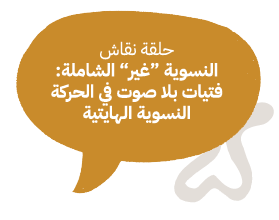
حلقة نقاش | النسوية “غير” الشاملة: فتيات بلا صوت في الحركة النسوية الهايتية
مع نايكي ليدان وفيدورا بيير-لوي
Snippet - Feminist Community Evening - EN
A Feminist Community Evening
✉️ By registration only. Register here
📅 Wednesday, March 12, 2025
🕒 5.00-7.00pm EST
🏢 Chef's Kitchen Loft with Terrace, 216 East 45th St 13th Floor New York
Organizers: Women Enabled International and AWID
#4 - Sexting like a feminist Tweets Snippet AR
ان كنت نسوية عن حق، فإنك سترفضين التحقير الموجّه ضد الممارسات الجنسية الغرائبيّة
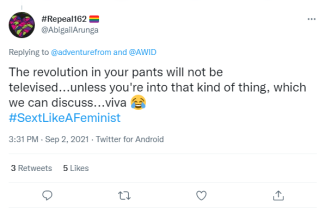
تَلفَزَتُنا للثورة تحت حزامك مشروطة بطبيعة رغباتك
Snippet - if the positions have closed
If the positions advertised have closed, or just don’t match your area of interest and expertise, we suggest the following resources for your job search.