Building Feminist Economies
Building Feminist Economies is about creating a world with clean air to breath and water to drink, with meaningful labour and care for ourselves and our communities, where we can all enjoy our economic, sexual and political autonomy.
In the world we live in today, the economy continues to rely on women’s unpaid and undervalued care work for the profit of others. The pursuit of “growth” only expands extractivism - a model of development based on massive extraction and exploitation of natural resources that keeps destroying people and planet while concentrating wealth in the hands of global elites. Meanwhile, access to healthcare, education, a decent wage and social security is becoming a privilege to few. This economic model sits upon white supremacy, colonialism and patriarchy.
Adopting solely a “women’s economic empowerment approach” is merely to integrate women deeper into this system. It may be a temporary means of survival. We need to plant the seeds to make another world possible while we tear down the walls of the existing one.
We believe in the ability of feminist movements to work for change with broad alliances across social movements. By amplifying feminist proposals and visions, we aim to build new paradigms of just economies.
Our approach must be interconnected and intersectional, because sexual and bodily autonomy will not be possible until each and every one of us enjoys economic rights and independence. We aim to work with those who resist and counter the global rise of the conservative right and religious fundamentalisms as no just economy is possible until we shake the foundations of the current system.
Our Actions
Our work challenges the system from within and exposes its fundamental injustices:
-
Advance feminist agendas: We counter corporate power and impunity for human rights abuses by working with allies to ensure that we put forward feminist, women’s rights and gender justice perspectives in policy spaces. For example, learn more about our work on the future international legally binding instrument on “transnational corporations and other business enterprises with respect to human rights” at the United Nations Human Rights Council.
-
Mobilize solidarity actions: We work to strengthen the links between feminist and tax justice movements, including reclaiming the public resources lost through illicit financial flows (IFFs) to ensure social and gender justice.
-
Build knowledge: We provide women human rights defenders (WHRDs) with strategic information vital to challenge corporate power and extractivism. We will contribute to build the knowledge about local and global financing and investment mechanisms fuelling extractivism.
-
Create and amplify alternatives: We engage and mobilize our members and movements in visioning feminist economies and sharing feminist knowledges, practices and agendas for economic justice.
“The corporate revolution will collapse if we refuse to buy what they are selling – their ideas, their version of history, their wars, their weapons, their notion of inevitability. Another world is not only possible, she is on her way. On a quiet day, I can hear her breathing”.
Arundhati Roy, War Talk
Related Content
Snippet2 - WCFM Explore and share - EN
Explore and share the databases with your network now!
Key opposition strategies and tactics
Despite their rigidity in matters of doctrine and worldview, anti-rights actors have demonstrated an openness to building new kinds of strategic alliances, to new organizing techniques, and to new forms of rhetoric. As a result, their power in international spaces has increased.
There has been a notable evolution in the strategies of ultra conservative actors operating at this level. They do not only attempt to tinker at the edges of agreements and block certain language, but to transform the framework conceptually and develop alternative standards and norms, and avenues for influence.
Strategy 1: Training of UN delegates
Ultra conservative actors work to create and sustain their relationships with State delegates through regular training opportunities - such as the yearly Global Family Policy Forum - and targeted training materials.
These regular trainings and resources systematically brief delegates on talking points and negotiating techniques to further collaboration towards anti-rights objectives in the human rights system. Delegates also receive curated compilations of ‘consensus language’ and references to pseudo-scientific or statistical information to bolster their arguments.
The consolidated transmission of these messages explains in part why State delegates who take ultra-conservative positions in international human rights debates frequently do so in contradiction with their own domestic legislation and policies.
Strategy 2: Holding international convenings
Anti-rights actors’ regional and international web of meetings help create closer links between ultra conservative Civil Society Organizations (CSOs), States and State blocs, and powerful intergovernmental bodies. The yearly international World Congress of Families is one key example.

These convenings reinforce personal connections and strategic alliances, a key element for building and sustaining movements. They facilitate transnational, trans-religious and dynamic relationship-building around shared issues and interests, which leads to a more proactive approach and more holistic sets of asks at the international policy level on the part of anti-rights actors.
Strategy 3: Placing reservations on human rights agreements
States and State blocs have historically sought to undermine international consensus or national accountability under international human rights norms through reservations to human rights agreements, threatening the universal applicability of human rights.
The Convention on the Elimination of Discrimination Against Women (CEDAW) has received by far the most reservations, most of which are based on alleged conflict with religious law. It is well-established international human rights law that evocations of tradition, culture or religion cannot justify violations of human rights, and many reservations to CEDAW are invalid as they are “incompatible with the object and purpose” of CEDAW. Nevertheless, reference to these reservations is continually used by States to dodge their human rights responsibilities.
‘Reservations’ to UN documents and agreements that are not formal treaties - such as Human Rights Council and General Assembly resolutions - are also on the rise.
Strategy 4: Creating a parallel human rights framework
In an alarming development, regressive actors at the UN have begun to co-opt existing rights standards and campaign to develop agreed language that is deeply anti-rights.
The aim is to create and then propagate language in international human rights spaces that validates patriarchal, hierarchical, discriminatory, and culturally relativist norms.
One step towards this end is the drafting of declarative texts, such as the World Family Declaration and the San Jose Articles, that pose as soft human rights law. Sign-ons are gathered from multiple civil society, state, and institutional actors; and they are then used a basis for advocacy and lobbying.
Strategy 5: Developing alternative ‘scientific’ sources
As part of a strategic shift towards the use of non-religious discourses, anti-rights actors have significantly invested in their own ‘social science’ think tanks. Given oxygen by the growing conservative media, materials from these think tanks are then widely disseminated by conservative civil society groups. The same materials are used as the basis for advocacy at the international human rights level.
While the goals and motivation of conservative actors derive from their extreme interpretations of religion, culture, and tradition, such regressive arguments are often reinforced through studies that claim intellectual authority. A counter-discourse is thus produced through a heady mix of traditionalist doctrine and social science.
Strategy 6: Mobilizing Youth
This is one of the most effective strategies employed by the religious right and represents a major investment in the future of anti-rights organizing.
Youth recruitment and leadership development, starting at the local level with churches and campuses, are a priority for many conservative actors engaged at the international policy level.
This strategy has allowed for infiltration of youth-specific spaces at the United Nations, including at the Commission on the Status of Women, and creates a strong counterpoint to progressive youth networks and organizations.

Strategy 7: Defunding and delegitimizing human rights mechanisms
When it comes to authoritative expert mechanisms like the UN Special Procedures and Treaty Monitoring Bodies and operative bodies like the UN agencies, regressive groups realize their potential for influence is much lower than with political mechanisms[1].
In response, anti-rights groups spread the idea that UN agencies are ‘overstepping their mandate,’ that the CEDAW Committee and other Treaty Bodies have no authority to interpret their treaties, or that Special Procedures are partisan experts working outside of their mandate. Anti-rights groups have also successfully lobbied for the defunding of agencies such as the United Nations Population Fund (UNFPA).
This invalidation of UN mechanisms gives fuel to state impunity. Governments, when under international scrutiny, can defend their action on the basis that the reviewing mechanism is itself faulty or overreaching.
Strategy 8: Organizing online
Conservative non-state actors increasingly invest in social media and other online platforms to promote their activities, campaign, and widely share information from international human rights spaces.
The Spanish organization CitizenGo, for example, markets itself as the conservative version of Change.org, spearheading petitions and letter-writing campaigns. One recent petition, opposing the establishment of a UN international day on safe abortion, gathered over 172,000 signatures.
Overarching Trends:
- Learning from the organizing strategies of feminists and other progressives.
- Replicating and adapting successful national-level tactics for the international sphere.
- Moving from an emphasis on ‘symbolic protest’ to becoming subversive system ‘insiders.’
By understanding the strategies employed by anti-rights actors, we can be more effective in countering them.
[1] The fora that are state-led, like the General Assembly, the Human Rights Council, and UN conferences like the Commission on the Status of Women and the Commission on Population and Development
Other Chapters
Snippet - COP30 - Resisting Ecofascisms - EN
Resisting Ecofascisms: A cross-movement dialogue at COP30
How movements are resisting fascist agendas in relation to climate change.
📅 Tuesday, November 11, 2025
📍 Beira Rio Hotel, Belém, Pará
La industria: peligros para el medioambiente
¿Por qué las industrias como la minería son peligrosas para el medioambiente?
Estas industrias 'extraen' materias primas de la tierra: minería, gas, petróleo y madera son algunos ejemplos.
Este modelo económico explota desenfrenadamente la naturaleza e intensifica las desigualdades norte, donde sus grandes corporaciones se benefician y sur, de donde extraen los recursos.
Contaminación del agua, daño irreparable al medioambiente, deforestación de la amazonia, comunidades forzadas a desplazarse son algunas de las consecuencias inmediatas.
Lee nuestro reporte de INDUSTRIAS EXTRACTIVAS
Hay alternativas sostenibles para el medioambiente y los derechos humanos de la mujer. Empecemos por conseguir un tratado vinculante para que las corporaciones extractivas nos respeten.
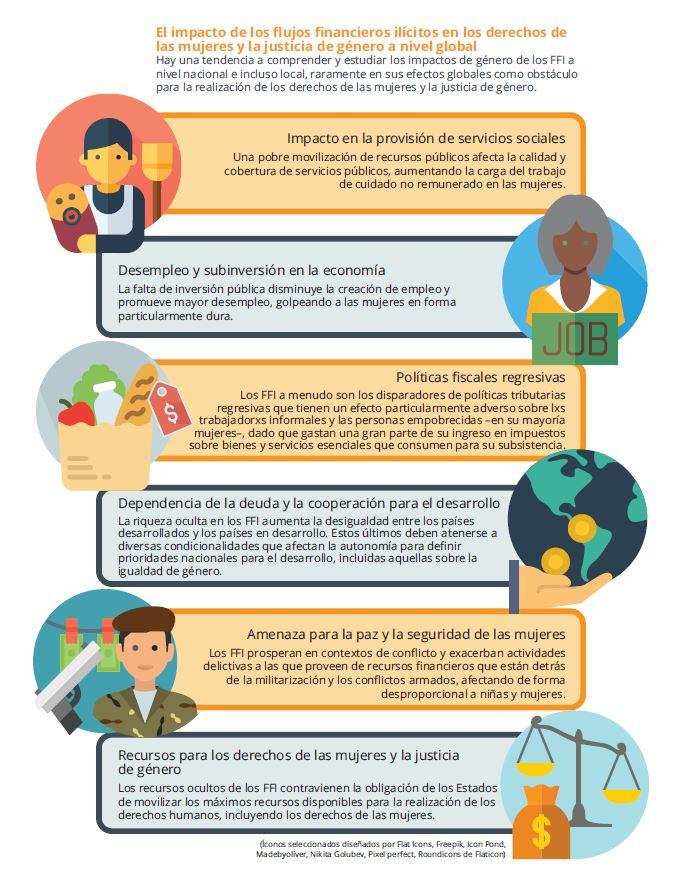
Descubre además cómo nos afecta económicamente
Snippet - COP30 - Feminist Economic Alternatives Brief - EN
📖 Feminist Economic Alternatives Brief
A tool for feminist activists at COP30 fighting for transformative, equitable and community-centred solutions to address the climate crisis.
Freeing the Church, Decolonizing the Bible for West Papuan Women
By Rode Wanimbo (@rodwan986), Jayapura, Papua Province of Indonesia
“Lord, we are unworthy. We are the ones who committed sin for Eve ate the fruit in Eden. We are just women who grow sweet potatoes, look after pigs and give birth to children. We believe you died on the cross to set us free. Thank you, In Jesus’s name Amen.”
This is a typical prayer of women I have heard during my visits to ministries in several villages. Even I said the same prayer for many years.
I was born and grew up in Agamua, the Central Highlands of West Papua. My father belongs to the Lani tribe and my mother comes from Walak.
In Lani and Walak languages - languages spoken in the Central Highlands - tiru means a pillar. There are four tiru (pillars) standing firmly in the middle of the Lani roundhouse (honai), around wun’awe or a furnace. Tiru is always made of the strongest type of wood called a’pe (ironwood tree). The longer the wood gets heated and smoked from the fire in the honai, the stronger it becomes. Without tiru, the honai cannot stand firm. West Papuan women are these tiru.
West Papua is located in the western part of the New Guinea island, containing some of the world’s highest mountains, densest jungle, and richest mineral resources. It is home to over 250 groups and has an incredible biodiversity. Due to its natural wealth, West Papua has, over the centuries, been targeted by foreign occupiers. Until 1963, we were colonized by the Dutch. However in 1969, after a manipulative political act, we were transferred from the Dutch to Indonesia.
The first German missionaries arrived in Mansinam Island, Manokwari, in 1855. Then, in the 1950s, Christianity was brought to the Central Highlands of West Papua by Protestant missionaries of European descent from America, Canada, Australia and New Zealand.
According to Scripture in Genesis 1: 26-27, Man and Woman are created in the image of God. It means all humanity is made with the call and capacity to exercise dominion. Radah, the Hebrew word for dominion, means stewardship. Radah is not a call to exercise imperial power as declared by Pope Nicolas V, granting Catholic nations the right to “discover” and claim dominion over non-Christian lands. To diminish the capacity of humans to exercise dominion, is to diminish the image of God on earth (Lisa Sharon Harper, The Very Good Gospel).
The Evangelical Church of Indonesia (GIDI) was established as an institution in 1963. In the Sunday Service liturgy of GIDI, Women are considered unworthy to take any responsibility except collecting offerings. In 2003, after 40 years, the Department of Women was introduced within the structure of the Synod leadership.
In November 2013, I was entrusted to be a chairperson of the Women’s Department of the GIDI Synod.
Together with several other women leaders, we started a cell group that is committed to “decolonizing the Bible.” We learn together how to reconstruct the interpretation of biblical texts to champion women.
A feminist theologian named Elisabeth S Florenza calls it a feminist hermeneutic theory (Josina Wospakrik, Biblical Interpretation and Marginalization of Woman in the Churches of West Papua).
Besides the cell group, we interview our elderly women to collect our ancestors’ wisdom and values. As Bernard Narakobi in his book The Melanesian Way said: “Our history did not begin with contact with the Western explorers. Our civilization did not start with the coming of the Christian missionaries. Because we have an ancient civilization. It is important for us to give proper dignity and place to our history”.
Yum is a knotted net or woven bag handmade from wood fiber or leaves. Yum is highly valued for it symbolizes life and hope. When women of Lani and Walak get married, our maternal aunts put yum on our heads. It means we bear the responsibility for giving life and for providing food. Yum is used to carry garden produce as well as being used as a container to put a baby to sleep in as it gives warmth and a sense of security.
“West Papuan Women are Yum and Tiru” became the prime references as we contextualized women in the eyes of Jesus Christ in seminar and focus group discussions. From 2013 to 2018, we focused on reconstructing the view of women in GIDI and in gaining a healthy self-image. We are still in the process of understanding who we are to Jesus, rather than who we have been told we are by theologians and the fathers of the early Churches. Josina Wospakrik, a West Papuan Theologian said “The Gospel is incredibly rich but it was impoverished due to human ambitions and agendas.”
Since 2018, the GIDI Women Leadership team and I have formulated four priority programs: Decolonizing the Bible, Storytelling in a circle, Training of trainers for Literacy and Gender. The fourth, supported simple bookkeeping and savings groups workshops facilitated by Yapelin and Yasumat, which are faith based organizations established by GIDI leaders to reach the economic, social and health needs of women in the communities.
Storytelling in a Circle
In this programme we create a safe space for women to talk - each woman has a story. We all sit together and learn how to be good listeners.
“I became Christian and was taught that the government is God’s representative. Why did the government do nothing when the army burnt down my village and killed my relatives?” asked one woman in the storytelling circle. “My aunt was raped.” She stopped for a while. Could not talk. She cried. We all did.
The process of storytelling has driven us into deep conversation. We began to contextualize Biblical texts within our daily realities.
We started asking questions amongst ourselves: Where is God in our toughest times? Does the state government truly represent God on earth? Why does the Creator allow privileged people to destroy His own image in the name of Christianity and Development? During the process, I realized that I have been reading the Bible using somebody else’s glasses.
The church has to be a safe place to share stories and be a place of comfort to be still and rest. As we reflect on the testimonies, those who tell their stories begin the process of recovering from wounds and trauma.
Financial Literacy for Women
Culturally, West Papuans invest in relationships. The concept of saving is understood as an investment in relations, not in a bank account. And while the Indonesian central government has granted special autonomy to respond to West Papuans’ demand for self-determination, many government policies harm the quality of family life and they do not account for women’s lives. High illiteracy rates amongst women mean most women do not have access to a bank account. With no money saved, access to medical services becomes a struggle.
Through the priority programmes, Yapelin, with the active involvement and support of women, created saving groups in Bokondini and Jayapura. The saving groups are chaired by women who have access to a bank.
In coordination with Yayasan Bethany Indonesia (YBI) and Yayasan Suluh, a faith-based organization (FBO) based in Jayapura, we facilitated four literacy workshops. The literacy team facilitated the training of trainers in three different dioceses: Merauke, Sentani, and Benawa. We now have 30 facilitators in different congregations who run literacy programs.
Lack of financial support for our programs will not stop us. Being stigmatized as rebels will not stop us from standing up and speaking in church evaluation meetings and conferences. It is stressful but I am committed together with several women leaders to calling on the power-holders within to free the church.
The Gospel known as Good News should become news that liberates women from a very patriarchal circle of power, liberates women from social stigma and returns women to the original purpose of The Creator.
The Gospel must be a mirror to reflect who we are collectively. As Lisa Sharon Harper, in her book The Very Good Gospel said “The Gospel is not only about an individual’s reconciliation with God, self and communities. But also speaks on systemic justice, peace between people groups and freedom for the oppressed”.
Rode Wanimbo is the chairperson of the Women’s Department of Evangelical Church of Indonesia (GIDI).
“Offerings for Black Life”
By Sokari Ekine (@blacklooks), New Orleans
Coming from a place of healing and self-care is a political act that guides us to be focused and to move as one. In New Orleans, we created and will be creating altars in honour of those murdered by police and white supremacists vigilantes!


< Anatomy of a Survivor's Story
Snippet 6- What's happening at HRC61 Intro
- Interactive dialogue with the Special Rapporteur on Myanmar
Report on the situation of human rights in Myanmar - Interactive dialogue with Special Rapporteur on Occupied Palestinian Territory
- Special Rapporteur on human rights defenders
Report on Defending dignity and claiming rights: human rights defenders hold firm to universal values as others desert them - Special Rapporteur on housing Guiding Principles on Resettlement
Colectivo Morivivi
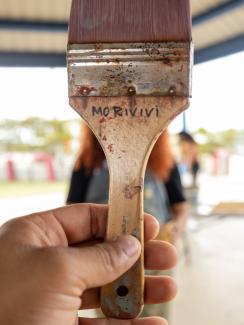
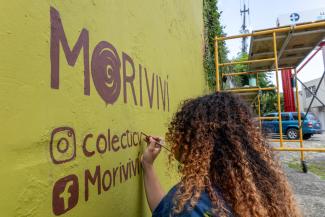
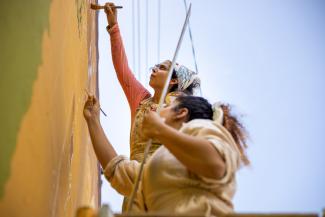
Colectivo Moriviví is an all women artistic collective. Our artistic production consists of muralism, community-led muralism, and protest performance/actions. Our work is about democratizing art and bringing the narratives of Puerto Rican communities to the public sphere to create spaces in which they are validated. We believe that through artivism we can promote consciousness on social issues and strengthen our collective memory.


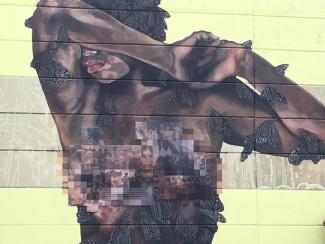
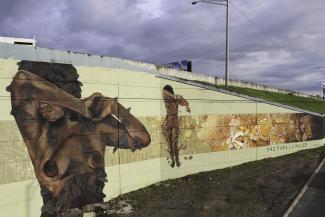

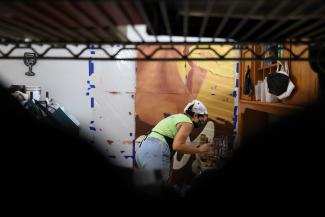
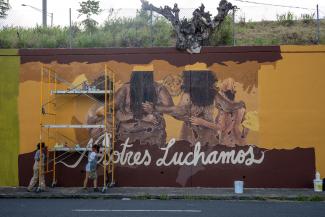
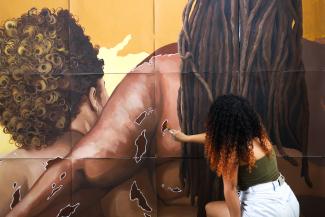
As part of their participation in AWID’s Artist Working Group, Colectivo Morivivi gathered a diverse group of members, partners and staff to facilitate a collaborative process of dreaming into, informing, and deciding on the content for a community mural through a multi-stage co-creation process. The project began with a remote conceptualization with feminists from different parts of the planet brought together by AWID, and then it evolved to its re-contextualization and realization in Puerto Rico. We were honored to have the input of local artists Las Nietas de Nonó(@lasnietasdenono), the participation of local women in the Community Painting Session, the logistics support from the Municipality of Caguas, and FRIDA Young Feminist Fund’s additional support to the collective.
The mural explores the transcendence of borders by presenting bodies like a map, in an embrace that highlights the intersection of the different feminist manifestations, practices and realities.
We also thank Kelvin Rodríguez, who documented and captured the different stages of this project in Puerto Rico:



About Colectivo Morivivi

Moriviví is a collective of young female artists, working on public art since April 2013. Based in Puerto Rico, we’ve gained recognition for the creation of murals and community led arts.
The group started out in local Urban Art Festivals. As our work became more popular, organizations and community leadership started to reach out to us. We began as eight high schoolers who wanted to paint a mural together. However, in eight years of hard work, we’ve faced many challenges. Now we are in a period of transition. During this following year, we aim to restructure the collective internally. Our goal is to open new opportunities for collaborators and back-up our decision making process with a new evaluation system. In the long run, we aspire to become an alternative school of art practice for those interested in immersing themselves in community art production.
Snippet - WD2026 - Rethinking_EN
Rethinking Multilateralism: Building Human Rights Centered Alternatives
📅 Wednesday 29th April
🕒 9:30am – 11:00am
🏢 Melbourne Convention Centre, Room 210
استنارة بضوء البدر: تجربة “بي دي إس إم” أفريقية
ترجمة مارينا سمير
 |
أكوسوا هانسون، فنانة وناشطة مقيمة في أكرا في غانا. تشمل أعمالها على ميادين الإذاعة والتلفزيون ووسائل الإعلام المطبوعة والمسرح والأفلام ومعارض القصص المصورة والأعمال الفنية ثُلاثية الأبعاد والروايات المصورة. تتمحور نشاطية أكوسوا حول قضايا الوحدة الأفريقية والنسوية، مع اهتمام خاص بتقاطع الفن مع الثقافة الشعبية والنشاطية. حائزة على ماجستير في الفلسفة في الدراسات الأفريقية، مع التركيز على الدراسات الجندرية والفكر الفلسفي الأفريقي. أكوسوا مبتكرة مود جيرلز، وهي سلسلة روايات مصورة، تتابع مغامرات أربعة أبطال خارقين يقاتلون من أجل إفريقيا خالية من الفساد والاستعمار الجديد والأصولية الدينية، وثقافة الاغتصاب ورهاب المثلية الجنسية وغير ذلك. تعمل كمذيعة في Y 107.9 FM، غانا. |
هل اختبرتم من قبل لحظات من الصفاء الذهني العميق أثناء أو بعد ممارسة الجنس؟
في هذه الرسومات، تنخرط فتاة القمر وادجيت في ممارسة حميمية مع شيطان ثنائي الجندر. من بين فتيات القمر الأربعة، وادجيت هي المُعالِجة والفيلسوفة ووسيطة العرّافة. هي تقوم بذلك من أجل إطلاق عملية علمية وروحية، تُطلِق عليها تسمية «الاستنارة بضوء البدر». خلال هذه العملية، تشكّل تسلسلاً زمنياً حيّاً بين ذكرياتها وحواسها ومشاعرها ورؤاها وخيالاتها. إنّها أحد أشكال السفر عبر الزمن من خلال الذبذبات، من أجل اكتشاف ما تُسميه «تجلّيات الحقيقة». أثناء التجربة، تتضمّن إحدى رؤى وادجيت الضبابية اقتراب نهاية العالم نتيجة تدمير الناس للبيئة في خدمة الرأسمالية الشرهة؛ وذكرى طفولة حول دخول المستشفى بعد التشخيص بمرض نفسي؛ ورؤية لأصل قصّة فتيات القمر يظهر فيها الرمز التوراتي نوح، كفتاة قمر سوداء من عصر قديم تحذّر من أخطار التلوث البيئي.
تمتدّ ممارسات الـ»بي دي إس إم» إلى أبعد من كونها كينك مرح يقود لاستكشافات حسّية، فبإمكانها أن تكون طريقة للتعامل مع الألم العاطفي والصدمات. لقد كانت وسيلةً للتعافي الجنسي بالنسبة لي، بتقديمها نمط للتحرّر الجذري. تطهيرٌ ما، يحدث، عند وقوع ألمٍ مادّي على الجسد. يقع هذا الألم في وجود تراضٍ، فيستخرج ألمًا عاطفيًا، كما لو كان «يستدعيه». نزول السوط على جسدي يسمح لي بتحرير مشاعر مكبوتة: توتّر، اكتئاب، شعوري بغياب دفاعاتي في وجه ضغوطاتٍ تُغرقني أحيانًا. عند الانخراط في الـ»بي دي إس إم» كسبيل للتعافي، على العشّاق أن يتعلّموا كيف يكونون شديدي الوعي ببعضهم البعض، ومسؤولين عن بعضهم البعض. فحتى لو كانت الموافقة قد أُعطيت في البداية، علينا أن نكون منتبهين لأيّ تغيّرات قد تطرأ أثناء الممارسة، خاصةً مع احتدام المشاعر. أتعامل مع الـ»بي دي إس إم» بفهمٍ لأنه ينبغي أن يكون الحبّ والتعاطف أساسًا لعملية الاستسلام للألم، وبذلك أخلق مساحة أو أنفتح للحبّ.
إن الاهتمام برعاية ما بعد وقوع الألم يُعَدّ استكمالًا للعملية. يمكن لذلك أن يحدث بطُرُقٍ بسيطة جدًا مثل الاحتضان، التأكّد ممّا إذا كان الآخر يرغب في شرب الماء، مشاهدة فيلمٍ معًا، مشاركة عناق أو حتى مشاركة سيجارة حشيش. يمكن لهذه الرعاية أن تمتثل لأيّ ما كانت عليه لغة حبّك المُختارة. مع إدراك أنّ جروحًا قد فُتِحَت، تُعَدّ هذه المساحة من الاحتواء ضرورية من أجل استكمال عملية التعافي. إنّه أكبر درسٍ في ممارسة التعاطف وتعلّم كيف تحتوي شريكك/ شريكتك حقًا، نظرًا لحساسية تمييع الحدود الفاصلة بين الألم والمتعة. بهذه الطريقة، يصبح الـ»بي دي إس إم» أحد أشكال أعمال الرعاية بالنسبة لي.
بعد ممارسة جنسية فيها ممارسات «بي دي إس إم»، أشعر بصفاء ذهني وهدوء يَضَعاني في مساحة إبداعية عظيمة ويمكّناني روحيًا. مشاهدة الألم يتحوّل آنيّاً لشيء آخر هي أشبه بتجربة سحرية. وبالمثل، تجربة الـ»بي دي إس إم» المحرِّرة على المستوى الشخصي تسمح لوادجيت بالوصول إلى المعرفة المُسبَقة والحكمة والصفاء الذهني مما يساعدها في واجباتها كفتاة قمر في مواجهة الأبوية الأفريقية.
وُلِدَت «فتيات القمر» أثناء عملي كمديرة لـ»دراما كوينز»، وهي منظمة فنّية شبابية ناشطة في غانا. منذ تأسيسنا في 2016، استخدمنا وسائط فنّية مختلفة كجزءٍ من عملنا الناشطي النسوي والبيئي والعموم- أفريقي. استخدمنا الشِعر والقصص القصيرة والمسرح والأفلام والموسيقى لمناقشة قضايا مثل الفساد والأبوية والتدهور البيئي ورهاب المثلية الجنسية. ناقَشَت أعمالنا المسرحية الافتتاحية مثل «خَيّاطة شارع سان فرانسيس» و»حتى يفيق أحدهم» مشكلة ثقافة الاغتصاب في مجتمعاتنا. كما يُزعم أن «مثلنا تمامًا» كانت من أوائل الانتاجات المسرحية في غانا التي تناقش بشكل مباشر قضية رهاب المثلية الجنسية المتغلغلة في البلد. كما ساهمت «جامعات غانا الكويرية»، وهي ورشة لصناعة الأفلام الكويرية لتدريب صنّاع الأفلام الأفارقة، في تدريب صنّاع أفلام من غانا ونيجيريا وجنوب أفريقيا وأوغاندا. وعُرِضَت الأفلام المصنوعة في الورشة في مهرجانات، مثل فيلم «فتاة رضيعة: قصة شخص بيني الجنس». ولذلك، فإنّ الانتقال إلى وسيط الروايات المصوّرة هو تطوّر طبيعي.
منذ حوالي سبع سنوات، بدأتُ بكتابة رواية لم أكملها أبدًا عن حياة أربع نساء. في عام 2018، فتحت «مبادرة المجتمع المفتوح لغرب إفريقيا» (OSIWA) فرصة مِنحة أطلقت إنتاج المشروع وتحوّلت روايتي غير المكتملة إلى فتيات القمر. هناك جزءان من فتيات القمر، يتكوّن كلّ منهما من ستّة فصول. الكُتّاب والمحرّرون المساهمون في الموسم الأول هم سوهايدا دراماني، وتسيدي كان تاماكلوي، وجورج هانسون، ووانلوف كوبولور. كتّاب الموسم الثاني هم يابا أرما ونادية أهيدجو وأنا. قام الفنان الغاني كيسوا وستوديو «أنيماكس إف واي بي»، وهو ستوديو رسوم متحرّكة وتصميمات وتأثيرات بصرية، بالرسوم التوضيحية للشخصيات وصياغتها مفاهيميًا.
لقد كانت كتابة فتيات القمر، بين 2018 و2022، عملَ حبٍّ بالنسبة لي، بل بالأحرى، عمل من أجل التحرّر. أهدف أن أكون مجدِّدة في الشكل والأسلوب: لقد اهتممت بتحويل أنماطٍ أخرى من الكتابة، مثل القصص القصيرة والشِعر، لتلائم بنية القصص المصوّرة. تستهدف فتيات القمر مناقشة القضايا الكبرى وتكريم النشطاء الموجودين في الحياة الحقيقية، من خلال إدماج الرسومات والنصوص، كما يحدث في القصص المصوّرة عادةً. قراري بمركزة النساء الكوير كبطلات خارقات، وهو أمر نادر الحدوث في هذا النوع من الفن، أصبح له معنى أكبر بكثير عندما بدأ يتطوّر أمر خطير في غانا في عام 2021.
شهد العام الماضي تصاعد في وتيرة العنف ضد مجتمع الميم عين في غانا، والتي بدأت بإغلاق أحد مراكز مجتمع الميم عين. أعقب ذلك اعتقالات تعسفية وسجن أشخاص مشكوك في انتمائهم للطيف الكويري، كذلك أشخاص متّهمين بالدفع بـ»أجندة مثلية». تُوِّج ذلك بتقديم مشروع قانون ضد الميم عين في البرلمان الغاني تحت إسم «حقوق الإنسان الجنسية اللائقة وقِيَم الأسرة الغانية». يُزعم أن هذا المشروع هو أكثر مشاريع القوانين توحشًا ضد الميم عين كان قد صيغ في المنطقة، وقد أتى لاحقًا على محاولات سابقة في بلاد مثل نيجيريا وأوغندا وكينيا.

أتذكّر بمنتهى الوضوح أول مرّة قرأت فيها مسودة مشروع القانون. لقد كانت ليلة جمعة، والتي عادةً ما أستريح أو أحتفل فيها بعد أسبوع عمل طويل. لحسن الحظ، سُرِّبت المسودّة وتمّت مشاركتها معي على مجموعة واتساب. أثناء القراءة، تسلّل إليّ شعور عميق بالخوف والتوجّس مما أفسد ليلة استراحتي.
اقترح المشروع معاقبة أيّة مناصرة للميم عين بالسجن من خمس لعشرة سنوات، وبتغريم وحبس أي شخص يُعرّف نفسه باعتباره مثلي أو مثلية أو عابر أو عابرة جنسيًا أو ينتمي لأية فئات جنسية أو/وجندرية غير نمطية، إلا إذا «تراجع» وقَبِل الخضوع لعلاج تصحيحي. في مسودة مشروع القانون، حتى اللاجنسيين جُرِّموا. انقضّ مشروع القانون على جميع الحرّيات الأساسية: حرّية الفكر وحرّية الوجود وحرّية أن يتمسّك الشخص بحقيقته ويعيش بها. انقضّ مشروع القانون أيضًا على منصّات التواصل الاجتماعي والفنّ. لو مُرِّر هذا المشروع، ستصبح فتيات القمر عملاً أدبياً محظوراً. ما تقدّم به مشروع القانون كان شرًا خالصًا وبعيد المدى، لقد صُدِمت لدرجة الاكتئاب من عمق الكراهية التي صُنِع منها هذا المشروع. أثناء تصفّحي موقع «تويتر» تلك الليلة، وجدتُ انعكاسًا للرعب الذي شعرت به بداخلي. لقد كان هناك بثًا مباشرًا للمشاعر، حيثُ كان يتفاعل الناس فوريًا مع ما يقرأونه: من عدم تصديق إلى رعب إلى خيبة أمل شديدة وشعور بالأسف عندما أدركنا المدى الواسع الذي رغب المشروع في الانقضاض عليه. البعض غرّدوا عن استعدادهم لجمع ما لديهم والرحيل عن البلاد. بعدها، وكعادة الغانيين، تحوّل الأسف والخوف لدعابة. ومن الدعابة أتى الحماس لتصعيد المقاومة.
لذلك، فالعمل مستمرّ. لقد صنعتُ فتيات القمر لتوفير شكلٍ بديلٍ من التعليم، ولتوفير المعرفة حيثُ قمَعَتها أبوية عنيفة، ولخلق مساحة ظهور لمجتمع الميم عين حيثُ تمّ محوه. من الضروري أيضًا أن يحصل الـ»بي دي إس إم» الأفريقي على منصّة لإظهاره حيثُ أنّ الكثير من الـ»بي دي إس إم» المُمثَّل أبيض. إن المتعة الجنسية، سواء من خلال الـ»بي دي إس إم» أو غيره، مثلها مثل أنماط الحبّ اللامغاير جنسيًا، تتخطى العرق والقارّة، فالمتعة الجنسية وتنوّع خبراتها قديمة بقِدَم الزمن.

Explore Transnational Embodiments
This journal edition in partnership with Kohl: a Journal for Body and Gender Research, will explore feminist solutions, proposals and realities for transforming our current world, our bodies and our sexualities.

التجسيدات العابرة للحدود
نصدر النسخة هذه من المجلة بالشراكة مع «كحل: مجلة لأبحاث الجسد والجندر»، وسنستكشف عبرها الحلول والاقتراحات وأنواع الواقع النسوية لتغيير عالمنا الحالي وكذلك أجسادنا وجنسانياتنا.
Anna Politkovskaya
From the heart of the comuna
Our women ancestors form a circle
Sacred, alive, powerful
We are in the middle
Feeling their strength.
The drum beats a sound of earth
Our skin dresses in colours
We are green, red, orange, blue, violet, black
The drum beats a sound of earth
A voice vibrates, a scream emanates, a song rings out, lulling to sleep, awakening consciousness.
The drum beats a sound of earth
A gaze of complicity, friendship profound.
The drum beats a sound of earth
Ours is but one heart, beating a rhythm of the soul, inviting us to move, inspiring desire, and showing us a path.
One of communal togetherness, power of the people, self-government, a women’s revolution of subversive communal care.
The drum beats a sound of earth
And I invite you to join, to be voice, skin, gaze, seed, fire, song, communion.
The drum beats a sound of earth
And I invite you to discover it, to love it, to know it, and to defend it from the heart of the community
For 25 years they have lived along the same dusty streets, at the top of a hill named after a lion. They come from different places, many from traditional farming communities. Their skin is the colour of rebellion, the colour of a cardon cactus, because in them lives the spirit of the semi-arid Lara State, which is where their love for life comes from, their appreciation, care and protection of water and land. They are heiresses of the Gayon and Ayaman lineages, Indigenous communities that lived and live in the northern part of Lara State.
From the time they were very young they learned that maternity is a role from which it is not easy to escape. Caring for children, home and husband, washing, ironing, cooking, cleaning—everything had to be impeccable, people insisted.
And that was life—that and violence, insults, abuse, hitting, scheming, complaints were to be expected. It seemed almost natural, and that is how they spent their days. Everyday life on those dirt streets living in little houses of tin sheet metal without any electricity or running water. That was poverty, the precarity of when a man would arrive, yes, a man, a project. And then, an unusual revolution because it came about without war.
Then they were invited to go out, they were invited to take to the streets and occupy public space. In the process, the women tore down doors and windows, broke chains, let their hair down and they felt free, free like runaway slaves, Caribbean rebels, freedom fighters.
And those concepts of independence and sovereignty are something that those who had the chance to study had read about, but feeling it, feeling like the protagonists of a process of social transformation—that is an important victory that we have to mention and we cannot forget.
At the top of that hill one can feel the complicity, the shared fire, the years of struggle. They tell of how one of them would go around with her parasol in the afternoons from house to house having coffee and conversing with the people she would invite, convincing them
We are going to make a community council!
Let’s move forward together as a community!
Let’s make plans for education, sports, health, nutrition, a women and gender equality committee, the economy.
We can form our own People’s Government so our Neighbourhood can Be Beautiful!
And that is how the houses came, the doctor’s office, daycare, electricity, potable water. These are some of the community’s achievements, some of our common dreams come true.
And you might ask how a cuentera, a storyteller, made her way to a hill with the name of a lion
And I will tell you: it’s that I was born rowdy, always fighting, I was born a wanderer my grandmother would say, born ready Comandante Chavez would add, from so much walking, grumbling, fighting, and doubting that military man, that I would end up becoming convinced by the community project, by the idea of self-government, of the people managing their own resources, of all the power going to the communities, and so I was convinced.
But I knew something was missing because the women, the women of the community kept building up the people’s power and putting our hearts in the anti-imperialist and anti-capitalist fight, but there is something that hurts and continues to affect us. There are wounds from a patriarchy still present.
So one day, I found myself crying and the drum of the earth beat and our women ancestors spoke.
I found myself surrounded by a group of women who held me up, who contained me as I spilled over in front of them, as it both hurt and liberated me at the same time. That is how I discovered that love among women heals you, saves you, and that our friendship is profoundly political and that sisterhood is a way of being, of living life. From that moment on I never felt alone again, I never felt like an island again, because I know there is a group of women who carry me, bring me, love me, care for me and me for them. I know that this way of becoming a feminist with the mysticism of women loving life is an experience of feeling connected and loved by women, even if you never see them again. How not to want this that happened to me, to happen also to other women, this new beginning, this birth of a new heart is a gift from the goddesses that must be shared.
So I decided to join the women and I began walking from community to community to learn about others’ experiences. We began debating health, education, nutrition, we began preaching the anti-patriarchal word and calling for communities free of machismo. We insisted on recovering ancestral knowledge, intuition, we decided to defend life by talking about abortion and we found ourselves laughing, crying, debating, reflecting. I find myself with Macu, with the China, Yenni, Carolina, Maria, Ramona, Irma, and even with our sister Yenifer who left us not long ago.
This is my homage to them, the women of the hill, the lioness women, the ones who without a doubt have sown a seed in me with so much force it now beats with my heart.
Without a doubt they blaze a path, they are the ones who make caring for a family possible, collective care. They are also a force, a force in a territory that fights to overcome the embargo, the patriarchal violence, the political treason, to overcome the bureaucracy and the corruption.
Without a doubt they blaze a path
Without a doubt they are a compass
Without a doubt they are the heart of the community
Many thanks, I am Maria Bonita, Mharyha Morales from Venezuela. I hope you will continue to enjoy this beautiful festival that brings us women together, in all our diversity, that brings us together from the heart of the community to create, resist, and transform.
Thank you.
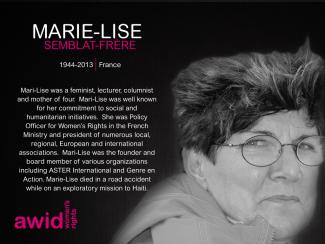
Marie-Lise Semblat-Frere
Love letter to feminist movements: A Letter from Inna and Faye
Dear feminist movements,
Love is what keeps our feminist fire burning. Along with care for our communities, anger and rage in the face of injustice, and the courage to take action.
In September 2022, we stepped with great excitement into our leadership roles at AWID, as Co-Executive Directors. We felt the warmth and embrace of the feminist sisterhood as you welcomed us.
Reflecting on our most precious memories as feminists, we recall powerful moments of togetherness at street protests, sharp analysis, and brave voices shaking the status quo at gatherings. We held those intimate conversations into the night, laughed for hours, and danced at parties together.
Feminist fires need to be fed, especially in difficult times when there is no lack of external challenges, from the climate crisis and the rise of right-wing forces to exploitative economies and persisting patterns of oppression within our own social movements. It's these fires, burning ablaze everywhere, that light our ways and keep us warm, but we can’t disregard the exhausting effects of political violence and repression directed against many of our struggles, movements, and communities.
We understand the desire to change the world as an essential ingredient of feminist organizing. We can never forget that we are the ones we have been waiting for, in building alternatives and shaping our future. Yet, vibrant feminist energy cannot be taken for granted and must be safeguarded in many ways. In this, we will continue to be vigilant. Greater and equal access to care and wellbeing, to healing and pleasure, are not only instruments to prevent burnout and sustain our movements, though that is an important function; first and foremost, they are the way in which we hope to live our lives.
We are thrilled to roll up our sleeves and work with you. AWID’s new strategic plan “Fierce Feminisms: Together We Rise” reflects our conviction that now is the time for us to be fierce and unapologetic in our agendas while making an effort to connect across movements and truly get to know each other’s realities, so that we may rise together - because, for us, this is the only way.
Our plans include the long-awaited AWID Forum! We look forward to meeting you all in person and online in 2024. We are hearing from you the need to connect and recharge, to rest and heal, to be challenged and inspired, to share good food, and to laugh and dance together. Few things in this world are as powerful and transformative, as feminists from all parts of the world coming together, and we truly hold our breath for this moment, because we know the magic that we can create together.
Our membership engagement has taken on a life of its own through the AWID Community (our online platform for members), and our focus on building connection and solidarity resonates with many of you. Please join and connect with us and others in feminist movements around the world. We know the importance of connection in a time and space where the rules are not made for us, and we hold close our community, where each of us matters.
Together with our fantastic AWID colleagues, we promise to do our best to support feminist movements, as is the mission and purpose of AWID. Please hold us to account.
For the past 40 years, you - feminist movements - have shaped AWID’s history, and pushed us to be braver, creative, and radical. 40 is a fabulous age, and we look forward to another 40 years with you all. We are looking forward to the partnerships, calls to justice, collaboration, policy influencing, and badass feminist power that you all bring in navigating the ever-increasing backlash on gender, racial and environmental justice. We have so much to learn from you and from each other, as we collectively build the worlds we believe in.
Cindy Clark and Hakima Abbas, thank you for paving the way for us and preparing us to fill your enormous shoes. We always appreciate all those on whose shoulders we stood and continue to stand. We understand ourselves to be part of a broader movement landscape, feminist histories, presents, and daring futures.
AWID’s Board of Directors, we are grateful to you for the support and feminist love you show us, and for your commitment to Global South leadership and the co-leadership model. We send our love and respect to each and every AWID colleague, we feel honoured to be working with such an exceptional feminist team of dedicated professionals.
This is our first time writing a love letter together, how could we conclude it without expressing love, care, and respect for each other? It’s a pretty intense relationship we’ve stepped into! We both bring our different and diverse perspectives and skills to our work, and as individuals, we also bring our lived experiences and authentic selves.
Together with you all, we are a story in the making, a part of a beautiful woven - and often beautifully challenging - tapestry that continues into the future. We had fun starting this journey together with each other and with you, and we very much hope to keep the romance alive.
In solidarity, with love and care
Inna and Faye
Save the date!
21 February 2023, Member Mixer 5 on Feminist Politics with Faye and Inna.
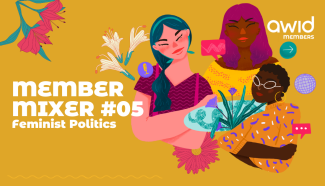
Not a member yet? Find out more about AWID Membership.
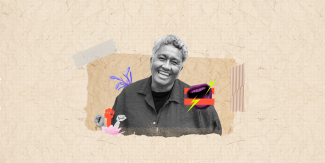

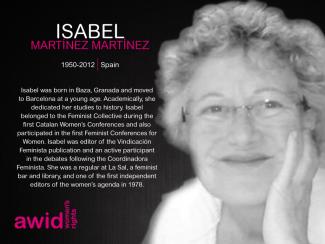
Isabel Martinez Martinez
Clone of Privacy Policy
Effective as of 25 Apr 2023.
Please click here to view the previous version of our Privacy Policy.
This Privacy Policy describes how the Association for Women’s Rights in Development and our subsidiaries and affiliates (“AWID,” “we,” “us” or “our”) handles personal information that we collect through our website that links to this Privacy Policy (the “Site”), as well as through social media, our marketing activities, our live events and other activities described in this Privacy Policy (“Service”).
You can download a printable copy of this Privacy Policy here.
Index
Personal information we collect
How we use your personal information
How we share your personal information
Your choices
Other sites and services
Security
International data transfers
Children
Changes to this Privacy Policy
How to contact us
Notice to European users
Personal information we collect
Information you provide to us. Personal information you may provide to us through the Service or otherwise includes:
- Contact data, such as your first and last name, salutation, email address, billing and mailing addresses, professional title and company name, and phone number.
- Demographic data, such as your city, state, country of residence, postal code, date of birth, gender, pronouns, preferred language of communication, and information about how you identify (race/ethnicity, disabilities, migrant, sex worker, etc.).
- Communications data, based on our exchanges with you, including when you contact us through the Service, social media, or otherwise.
- Marketing data, such as your preferences for receiving our marketing communications and details about your engagement with them.
- User-generated content data, such as profile pictures, photos, images, music, videos, comments, questions, messages, works of authorship, and other content or information that you generate, transmit, or otherwise make available on the Service, as well as associated metadata. Metadata includes information on how, when, where and by whom a piece of content was collected and how that content has been formatted or edited. Metadata also includes information that users can add or can have added to their content, such as keywords, geographical or location information, and other similar data.
- Payment data needed to complete transactions, including payment card information or bank account number.
- Other data not specifically listed here, which we will use as described in this Privacy Policy or as otherwise disclosed at the time of collection.
Automatic data collection. We, our service providers, and our business partners may automatically log information about you, your computer or mobile device, and your interaction over time with the Service, our communications and other online services, such as:
- Device data, such as your computer or mobile device’s operating system type and version, manufacturer and model, browser type, screen resolution, RAM and disk size, CPU usage, device type (e.g., phone, tablet), IP address, unique identifiers, language settings, mobile device carrier, radio/network information (e.g., Wi-Fi, LTE, 3G), and general location information such as city, state or geographic area.
- Online activity data, such as pages or screens you viewed, how long you spent on a page or screen, the website you visited before browsing to the Service, navigation paths between pages or screens, information about your activity on a page or screen, access times and duration of access, and whether you have opened our emails or clicked links within them.
Cookies and similar technologies. Some of the automatic collection described above is facilitated by cookies, which are small text files that websites store on user devices and that allow web servers to record users’ web browsing activities and remember their submissions, preferences, and login status as they navigate a site. Cookies used on our sites include both “session cookies” that are deleted when a session ends, “persistent cookies” that remain longer, “first party” cookies that we place and “third party” cookies that our third-party business partners and service providers place.
How we use your personal information
We may use your personal information for the following purposes or as otherwise described at the time of collection:
Service delivery and business operations. We may use your personal information to:
- provide, operate and improve the Service;
- communicate with you about the Service, including by sending announcements, updates, security alerts, and support and administrative messages;
- communicate with you about events or contests in which you participate;
- understand your needs and interests, and personalize your experience with the Service and our communications; and
- provide support for the Service, and respond to your requests, questions and feedback.
Research and development. We may use your personal information for research and development purposes, including to analyze and improve the Service. As part of these activities, we may create aggregated, de-identified and/or anonymized data from personal information we collect. We make personal information into de-identified or anonymized data by removing information that makes the data personally identifiable to you. We may use this aggregated, de-identified or otherwise anonymized data and share it with third parties for our lawful business purposes, including to analyze and improve the Service and promote our business.
Marketing. We and our service providers may collect and use your personal information to send you direct marketing communications. You may opt-out of our marketing communications as described in the Opt-out of marketing section below.
Compliance and protection. We may use your personal information to:
- comply with applicable laws, lawful requests, and legal process, such as to respond to subpoenas or requests from government authorities;
- protect our, your or others’ rights, privacy, safety or property (including by making and defending legal claims);
- audit our internal processes for compliance with legal and contractual requirements or our internal policies;
- enforce the terms and conditions that govern the Service; and
- prevent, identify, investigate and deter fraudulent, harmful, unauthorized, unethical or illegal activity, including cyberattacks and identity theft.
With your consent. In some cases, we may specifically ask for your consent to collect, use or share your personal information, such as when required by law.
Cookies and similar technologies. In addition to the other uses included in this section, we may use the Cookies and similar technologies described above for the following purposes:
- Technical operation. To allow the technical operation of the Service, such as by remembering your selections and preferences as you navigate the site.
- Functionality. To enhance the performance and functionality of our services.
- Analytics. To help us understand user activity on the Service, including which pages are most and least visited and how visitors move around the Service, as well as user interactions with our emails. For example, we use Google Analytics for this purpose. You can learn more about Google Analytics and how to prevent the use of Google Analytics relating to your use of our sites here: https://tools.google.com/dlpage/gaoptout?hl=en.
Retention. We generally retain personal information to fulfill the purposes for which we collected it, including for the purposes of satisfying any legal, accounting, or reporting requirements, to establish or defend legal claims, or for fraud prevention purposes. To determine the appropriate retention period for personal information, we may consider factors such as the amount, nature, and sensitivity of the personal information, the potential risk of harm from unauthorized use or disclosure of your personal information, the purposes for which we process your personal information and whether we can achieve those purposes through other means, and the applicable legal requirements.
When we no longer require the personal information we have collected about you, we may either delete it, anonymize it, or isolate it from further processing.
How we share your personal information
We may share your personal information with the following parties and as otherwise described in this Privacy Policy or at the time of collection.
Affiliates. Our corporate parent, subsidiaries, and affiliates, for purposes consistent with this Privacy Policy.
Service providers. Third parties that provide services on our behalf or help us operate the Service or our business (such as hosting, information technology, customer support, email delivery, marketing, consumer research and website analytics).
Payment processors. Any payment card information you use to make a purchase on the Service is collected and processed directly by our payment processors, such as Stripe. Stripe may use your payment data in accordance with its privacy policy, https://stripe.com/en-gb/privacy. You may also sign up to be billed by your mobile communications provider, who may use your payment data in accordance with their privacy policies.
Third parties designated by you. We may share your personal data with third parties where you have instructed us or provided your consent to do so. We will share personal information that is needed for these other companies to provide the services that you have requested. Moreover, you may choose to translate user-generated content using Google Translate. Google may use your user-generated content in accordance with its privacy policy, https://policies.google.com.Professional advisors. Professional advisors, such as lawyers, auditors, bankers and insurers, where necessary in the course of the professional services that they render to us.
Authorities and others. Law enforcement, government authorities, and private parties, as we believe in good faith to be necessary or appropriate for the compliance and protection purposes described above.
Other users. Your profile and other user-generated content data (except for messages) may be visible to other users of the Service. For example, other users of the Service may have access to your information if you chose to make your profile or other personal information available to them through the Service, such as when you provide comments, reviews, survey responses, or share other content. This information can be seen, collected and used by others, including being cached, copied, screen captured or stored elsewhere by others (e.g., search engines), and we are not responsible for any such use of this information.
Your choices
In this section, we describe the rights and choices available to all users. Users who are located in the United Kingdom, Switzerland, and the European Economic Area can find additional information about their rights below.
Opt-out of marketing communications. You may opt-out of marketing-related emails by following the opt-out or unsubscribe instructions at the bottom of the email, or by contacting us. Please note that if you choose to opt-out of marketing-related emails, you may continue to receive service-related and other non-marketing emails.
Declining to provide information. We need to collect personal information to provide certain services. If you do not provide the information we identify as required or mandatory, we may not be able to provide those services.
Delete your content or end your membership. You can choose to delete certain content you have provided to us. If you wish to request to end your membership, please contact us.
Other sites and services
The Service may contain links to websites, mobile applications, and other online services operated by third parties. In addition, our content may be integrated into web pages or other online services that are not associated with us. These links and integrations are not an endorsement of, or representation that we are affiliated with, any third party. We do not control websites, mobile applications or online services operated by third parties, and we are not responsible for their actions. We encourage you to read the privacy policies of the other websites, mobile applications and online services you use.
Security
We employ a number of technical, organizational and physical safeguards designed to protect the personal information we collect. However, security risk is inherent in all internet and information technologies and we cannot guarantee the security of your personal information.
International data transfer
We are headquartered in the United States and may use service providers that operate in other countries. Your personal information may be transferred to the United States or other locations where privacy laws may not be as protective as those in your state, province, or country.
Users in the United Kingdom, Switzerland, and the European Economic Area should read the important information provided below about transfer of personal information outside of the European Union.
Children
The Service is not intended for use by anyone under 18 years of age. If you are a parent or guardian of a child from whom you believe we have collected personal information in a manner prohibited by law, please contact us. If we learn that we have collected personal information through the Service from a child without the consent of the child’s parent or guardian as required by law, we will comply with applicable legal requirements to delete the information.
Changes to this Privacy Policy
We reserve the right to modify this Privacy Policy at any time. If we make material changes to this Privacy Policy, we will notify you by updating the date of this Privacy Policy and posting it on the Service or other appropriate means. Any modifications to this Privacy Policy will be effective upon our posting the modified version (or as otherwise indicated at the time of posting). In all cases, your use of the Service after the effective date of any modified Privacy Policy indicates your acknowledgment that the modified Privacy Policy applies to your interactions with the Service and our business.
How to contact us
- Email: Contact Us
- Mail: 192 Spadina Ave, Suite 300, Toronto, ON L1T 0G7
- Phone: 416 594 3773
Notice to European Users
Where this Notice to European users applies. The information provided in this “Notice to European users” section applies only to individuals located in the EEA or the UK (EEA and UK jurisdictions are together referred to as “Europe”).
Personal information. References to “personal information” in this Privacy Policy should be understood to include a reference to “personal data” (as defined in the GDPR) – i.e., information about individuals from which they are either directly identified or can be identified. It does not include “anonymous data” (i.e., information where the identity of individual has been permanently removed). The personal information that we collect from you is identified and described in greater detail in the section “Personal information we collect”.
Controller. AWID is the controller in respect of the processing of your personal information covered by this Privacy Policy for purposes of European data protection legislation (i.e., the EU GDPR and the so-called ‘UK GDPR’ (as and where applicable, the “GDPR”)). See the How to contact us section above for our contact details.
Our legal bases for processing. In respect of each of the purposes for which we use your personal information, the GDPR requires us to ensure that we have a “legal basis” for that use.
Our legal bases for processing your personal information described in this Privacy Policy are listed below.
- Where we need to process your personal information to deliver our Services to you (including our Site) (“Contractual Necessity”).
- Where it is necessary for our legitimate interests and your interests and fundamental rights do not override those interests (“Legitimate Interests”). More detail about the specific legitimate interests pursued in respect of each Purpose we use your personal information for is set out in the table below.
- Where we need to comply with a legal or regulatory obligation (“Compliance with Law”).
- Where we have your specific consent to carry out the processing for the Purpose in question (“Consent”).
We have set out below, in a table format, the legal bases we rely on in respect of the relevant Purposes for which we use your personal information – for more information on these Purposes and the data types involved, see How we use your personal information above.
|
|
|
|
|
|
|
|
|
|
|
|
|
|
|
|
|
|
|
|
Retention. We retain personal information for as long as necessary to fulfill the purposes for which we collected it, including for the purposes of satisfying any legal, accounting, or reporting requirements, to establish or defend legal claims, or for compliance and protection purposes, unless specifically authorized to be retained longer.
To determine the appropriate retention period for personal information, we consider the amount, nature, and sensitivity of the personal information, the potential risk of harm from unauthorized use or disclosure of your personal information, the purposes for which we process your personal information and whether we can achieve those purposes through other means, and the applicable legal requirements.
When we no longer require the personal information, we have collected about you, we will either delete or anonymize it or, if this is not possible (for example, because your personal information has been stored in backup archives), then we will securely store your personal information and isolate it from any further processing until deletion is possible. If we anonymize your personal information (so that it can no longer be associated with you), we may use this information indefinitely without further notice to you.
Other information
No obligation to provide personal information. You do not have to provide personal information to us. However, where we need to process your personal information either to comply with applicable law or to deliver our Services to you, and you fail to provide that personal information when requested, we may not be able to provide some or all of our Services to you. We will notify you if this is the case at the time.
No Automated Decision-Making and Profiling. As part of the Services, we do not engage in automated decision-making and/or profiling, which produces legal or similarly significant effects. We will let you know if that changes by updating this Privacy Policy.
Security. We have put in place procedures designed to deal with breaches of personal information. In the event of such breaches, we have procedures in place to work with applicable regulators. In addition, in certain circumstances (including where we are legally required to do so), we may notify you of breaches affecting your personal information.
Your rights
General. European data protection laws give you certain rights regarding your personal information. If you are located in Europe, you may ask us to take any of the following actions in relation to your personal information that we hold:
- Access. Provide you with information about our processing of your personal information and give you access to your personal information.
- Correct. Update or correct inaccuracies in your personal information.
- Delete. Delete your personal information where there is no lawful reason for us continuing to store or process it, where you have successfully exercised your right to object to processing (see below), where we may have processed your information unlawfully or where we are required to erase your personal information to comply with local law. Note, however, that we may not always be able to comply with your request of erasure for specific legal reasons that will be notified to you, if applicable, at the time of your request.
- Portability. Port a machine-readable copy of your personal information to you or a third party of your choice, in certain circumstances. Note that this right only applies to automated information for which you initially provided consent for us to use or where we used the information to perform a contract with you.
- Restrict. Restrict the processing of your personal information, if, (i) you want us to establish the personal information's accuracy; (ii) where our use of the personal information is unlawful but you do not want us to erase it; (iii) where you need us to hold the personal information even if we no longer require it as you need it to establish, exercise or defend legal claims; or (iv) you have objected to our use of your personal information but we need to verify whether we have overriding legitimate grounds to use.
- Object. Object to our processing of your personal information where we are relying on legitimate interests (or those of a third party) and there is something about your particular situation that makes you want to object to processing on this ground as you feel it impacts on your fundamental rights and freedom – you also have the right to object where we are processing your personal information for direct marketing purposes.
- Withdraw Consent. When we use your personal information based on your consent, you have the right to withdraw that consent at any time. This will not affect the lawfulness of any processing carried out before you withdraw your consent.
Exercising These Rights. You may submit these requests by email. See the How to contact us section above for our contact details. We may request specific information from you to help us confirm your identity and process your request. Whether or not we are required to fulfill any request you make will depend on a number of factors (e.g., why and how we are processing your personal information), if we reject any request you may make (whether in whole or in part) we will let you know our grounds for doing so at the time, subject to any legal restrictions. Typically, you will not have to pay a fee to exercise your rights; however, we may charge a reasonable fee if your request is clearly unfounded, repetitive or excessive. We try to respond to all legitimate requests within a month. It may take us longer than a month if your request is particularly complex or if you have made a number of requests; in this case, we will notify you and keep you updated.
Your Right to Lodge a Complaint with your Supervisory Authority. In addition to your rights outlined above, if you are not satisfied with our response to a request you make, or how we process your personal information, you can make a complaint to the data protection regulator in your habitual place of residence.
- For users in the European Economic Area – the contact information for the data protection regulator in your place of residence can be found here: https://edpb.europa.eu/about-edpb/board/members_en.
- For users in the UK – the contact information for the UK data protection regulator is below:
The Information Commissioner’s Office
Water Lane, Wycliffe House
Wilmslow - Cheshire SK9 5AF
Tel. +44 303 123 1113
Website: https://ico.org.uk/make-a-complaint/
Data Processing outside Europe; we are a US-based company and many of our service providers, advisers, partners or other recipients of data are also based in the US. This means that, if you use the Services, your personal information will necessarily be accessed and processed in the US. It may also be provided to recipients in other countries outside Europe.
It is important to note that that the US is not the subject of an ‘adequacy decision’ under the GDPR – basically, this means that the US legal regime is not considered by relevant European bodies to provide an adequate level of protection for personal information, which is equivalent to that provided by relevant European laws.
Where we share your personal information with third parties who are based outside Europe, we try to ensure a similar degree of protection is afforded to it in accordance with applicable privacy laws by making sure one of the following mechanisms is implemented:
- Transfers to territories with an adequacy decision. We may transfer your personal information to countries or territories whose laws have been deemed to provide an adequate level of protection for personal information by the European Commission or UK Government (as and where applicable) (from time to time).
- Transfers to territories without an adequacy decision.
- We may transfer your personal information to countries or territories whose laws have not been deemed to provide such an adequate level of protection (e.g., the US, see above).
- However, in these cases:
- we may use specific appropriate safeguards, which are designed to give personal information effectively the same protection it has in Europe – for example, standard-form contracts approved by relevant authorities for this purpose; or
- in limited circumstances, we may rely on an exception, or ‘derogation’, which permits us to transfer your personal information to such country despite the absence of an ‘adequacy decision’ or ‘appropriate safeguards’ – for example, reliance on your explicit consent to that transfer.
You may contact us if you want further information on the specific mechanism used by us when transferring your personal information out of Europe.
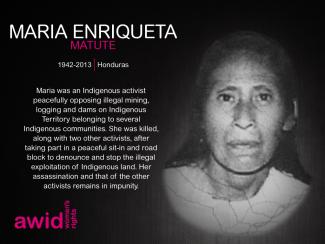
Maria Enriqueta Matute
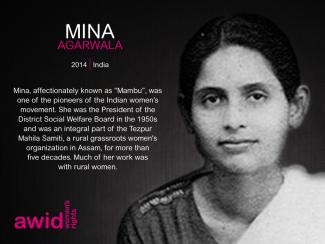
Mina Agarwala
Kazuko Kawaguchi

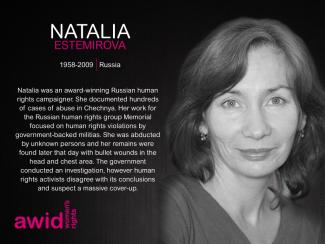
Natalia Estemirova