None On Record

Special Focus

AWID is an international, feminist, membership organisation committed to achieving gender equality, sustainable development and women’s human rights

Young Feminist Activism

Organizing creatively, facing an increasing threat

Young feminist activists play a critical role in women’s rights organizations and movements worldwide by bringing up new issues that feminists face today. Their strength, creativity and adaptability are vital to the sustainability of feminist organizing.

At the same time, they face specific impediments to their activism such as limited access to funding and support, lack of capacity-building opportunities, and a significant increase of attacks on young women human rights defenders. This creates a lack of visibility that makes more difficult their inclusion and effective participation within women’s rights movements.

A multigenerational approach

AWID’s young feminist activism program was created to make sure the voices of young women are heard and reflected in feminist discourse. We want to ensure that young feminists have better access to funding, capacity-building opportunities and international processes. In addition to supporting young feminists directly, we are also working with women’s rights activists of all ages on practical models and strategies for effective multigenerational organizing.

Our Actions

We want young feminist activists to play a role in decision-making affecting their rights by:

  • Fostering community and sharing information through the Young Feminist Wire. Recognizing the importance of online media for the work of young feminists, our team launched the Young Feminist Wire in May 2010 to share information, build capacity through online webinars and e-discussions, and encourage community building.

  • Researching and building knowledge on young feminist activism, to increase the visibility and impact of young feminist activism within and across women’s rights movements and other key actors such as donors.

  • Promoting more effective multigenerational organizing, exploring better ways to work together.

  • Supporting young feminists to engage in global development processes such as those within the United Nations

  • Collaboration across all of AWID’s priority areas, including the Forum, to ensure young feminists’ key contributions, perspectives, needs and activism are reflected in debates, policies and programs affecting them.

Related Content

Snippet - WITM Why now_col 1 - EN

Why should I take it now?

A monochromatic orange illustration of a woman with curly hair with her hand on her chin. She seems to inquisitive or posing a question.

Feminist, women’s rights, gender justice, LBTQI+ and allied movements around the world are at a critical juncture, facing a powerful backlash on previously-won rights and freedoms. Recent years have brought the rapid rise of authoritarianism, violent repression of civil society, criminalization of women and gender-diverse human rights defenders, escalating war and conflict in many parts of our world, continued perpetuation of economic injustices, and the intersecting health, ecology and climate crises.

¿Dónde y cuándo tendrá lugar el próximo Foro de AWID?

El 14o Foro internacional de AWID tendrá lugar del 20 al 23 de septiembre de 2021 en Taipéi, Taiwán.

Descubre más

Snippets FEA EoS The Cover (ES)

Illustration of a pink house with a yellow background

La Cubierta
Cuidados y sanación

Test Page

This is body text

After the gallery

Some English aside content

Snippet - WITM Our objectives - EN

Our research objectives

1

Provide AWID members, movement partners and funders with an updated, powerful, evidence-based, and action-oriented analysis of the resourcing realities of feminist movements and current state of the feminist funding ecosystem.

2

Identify and demonstrate opportunities to shift more and better funding for feminist organizing, expose false solutions and disrupt trends that make funding miss and/or move against gender justice and intersectional feminist agendas.

3

Articulate feminist visions, proposals and agendas for resourcing justice.

Snippet FEA EoS Artisana (FR)

A pink paint palette with a pink brush with yellow details

L’Artisan·e
Art et créativité

Defending LGBTQI Rights

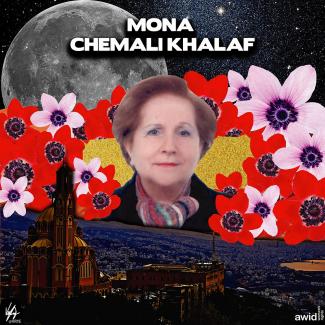
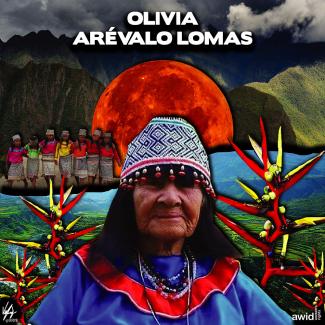
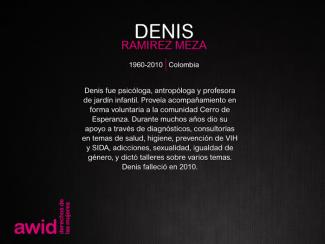
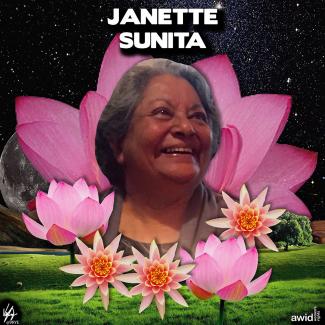
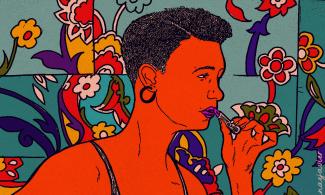
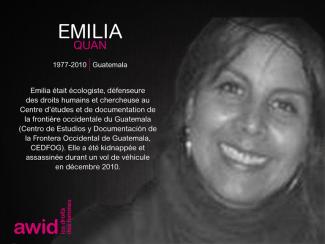
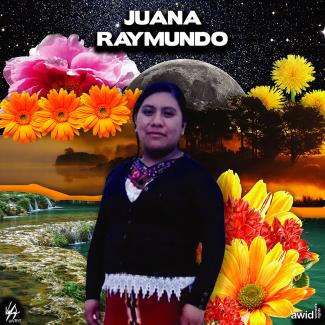
Student, Writer, Leader, Advocate. Each of the four women honored below had their own way of activism but what they had in common is that they all promoted and defended Lesbian Gay Bisexual Transgender Queer and Intersex rights. Join us in remembering and honoring these Women Human Rights Defenders, their work and legacy by sharing the memes below and tweeting by using the hashtags #WHRDTribute and #16Days. 


Please click on each image below to see a larger version and download as a file


Why should I consider responding to the survey?

There are many reasons why your response to the WITM survey matters. The survey offers the opportunity to share your lived experience of mobilizing funding to support your organizing; claim your power as an expert on how money moves and who it reaches; and contribute to collective and consistent advocacy to funders moving more and better funding. Over the last two decades, AWID’s WITM research has proven to be a key resource for activists and funders. We wholeheartedly invite you to join us in its third iteration to highlight the actual state of resourcing, challenge false solutions, and point out how funding must change for movements to thrive and meet the complex challenges of our times.

Snippet FEA NSS has a vision of an Africa (FR)

Nous Sommes la Solution a une vision d'une Afrique où, solidairement, les femmes rurales impliquées dans la prise de décision peuvent cultiver, transformer, vendre et consommer les produits de l'agriculture familiale tout en préservant l'environnement, pour un développement harmonieux et durable”

Los derechos de las personas trans* requieren una mayor protección

Estas mujeres trans* fueron asesinadas por su activismo y por su identidad de género. Son escasas las leyes que reconocen los derechos de las personas trans* e, incluso donde están vigentes, es muy poco lo que se ha hecho para salvaguardar sus derechos. Únete a AWID para honrar a estas defensoras de derechos humanos, su trabajo y su legado, compartiendo los memes aquí incluidos con tus colegas, amistades y redes; y tuiteando las etiquetas #WHRDTribute y #16Días.


Por favor, haz click en cada imagen de abajo para ver una versión más grande y para descargar como un archivo.  


En nuestro caso, reorientamos dinero a nuestros socios beneficiarios y nos identificamos como fondo de mujeres/feminista, ¿deberíamos responder la encuesta?

No. Valoramos muchísimo su trabajo, pero no estamos buscando respuestas de fondos de mujeres/feministas por el momento. Alentamos a compartir la encuesta con sus socios beneficiarios y con sus redes feministas.

Snippet FEA Objectives NSS Family Farming (EN)

FAMILY FARMING, AGROECOLOGY AND FOOD SOVEREIGNTY

Circle in mustard yellow with the illustration of a rural woman with brown skin and a blue dress, with a hoe tool on her left shoulder.
To promote family farming through peasant agroecology.

1. Concentra los recursos

En esta sección se enumeran los principales recursos con los que AWID te recomienda contar para poder realizar la investigación WITM.

En esta sección

Personas que se necesitan

  • 1 o más personas que coordine/n la implementación de la metodología de investigación en general y garanticen que todos los componentes se completen en tiempo y forma (Secciones 2-11);
  • 1 o más personas que formule/n los principales objetivos de la investigación y las preguntas-guía;
  • 1 o más personas que pula/n e implemente/n la metodología de investigación; esto incluye recoger la información;
  • 1 o más personas que realice/n análisis cualitativos y cuantitativos relevantes a partir de la información recogida;
  • 1 o más personas que documente/n los resultados de la investigación y los preparen para presentarlos a la o las audiencias a las que quieras llegar con el mensaje;
  • 1 o más personas que edite/n los productos finales;
  • 1 o más personas que difundan la investigación y hagan incidencia utilizando los resultados.

Volver al comienzo


Gastos posibles

  1. Salarios del personal de la organización y/o personas externas;
  2. Programas para analizar grandes volúmenes de datos si esto va a estar a cargo de la propia organización.
    Las opciones son:
    - SPSS
    - Stata
    - R (gratis)
  3. Costos de producir publicaciones y otros productos de la investigación;
  4. Incentivos que quienes participen en la investigación pueden recibir por haber respondido la encuesta (optativo);
  5. Incentivos para las personas que sean consultadas acerca de la investigación (optativo).

Volver al comienzo


Duración estimada

  • Para el proceso de investigación: 6 a 18 meses, según el volumen de información y la capacidad del personal;
  • Para la incidencia: 1-2 años, según las metas la tu organización.

Volver al comienzo


Recursos necesarios

  • Lista de organizaciones, donantes y activistas a quienes se puede consultar;
  • Lista de espacios virtuales y eventos/redes donde difundir la encuesta y presentar sus resultados;
  • Lista de donantes, activistas y organizaciones por los derechos de las mujeres a quienes entrevistar;
  • Preguntas para las entrevistas preparadas por anticipado;
  • Lista de publicaciones a utilizar para la investigación secundaria.

Volver al comienzo


Recursos con que cuento

Herramientas en línea

Una vez que hayas reunido todos estos recursos, podrás calcular los costos de la investigación utilizando nuestra Planilla «¿Estoy listx?»

Volver al comienzo


Paso previo

Antes de comenzar

Paso siguiente

2. Prepara el marco para la investigación