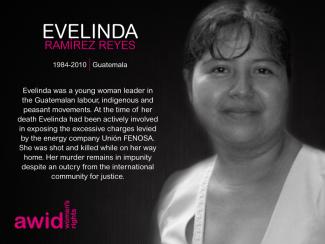
Evelinda Ramirez Reyes
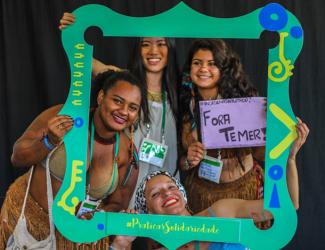
Young feminist activists play a critical role in women’s rights organizations and movements worldwide by bringing up new issues that feminists face today. Their strength, creativity and adaptability are vital to the sustainability of feminist organizing.
At the same time, they face specific impediments to their activism such as limited access to funding and support, lack of capacity-building opportunities, and a significant increase of attacks on young women human rights defenders. This creates a lack of visibility that makes more difficult their inclusion and effective participation within women’s rights movements.
AWID’s young feminist activism program was created to make sure the voices of young women are heard and reflected in feminist discourse. We want to ensure that young feminists have better access to funding, capacity-building opportunities and international processes. In addition to supporting young feminists directly, we are also working with women’s rights activists of all ages on practical models and strategies for effective multigenerational organizing.
We want young feminist activists to play a role in decision-making affecting their rights by:
Fostering community and sharing information through the Young Feminist Wire. Recognizing the importance of online media for the work of young feminists, our team launched the Young Feminist Wire in May 2010 to share information, build capacity through online webinars and e-discussions, and encourage community building.
Researching and building knowledge on young feminist activism, to increase the visibility and impact of young feminist activism within and across women’s rights movements and other key actors such as donors.
Promoting more effective multigenerational organizing, exploring better ways to work together.
Supporting young feminists to engage in global development processes such as those within the United Nations
Collaboration across all of AWID’s priority areas, including the Forum, to ensure young feminists’ key contributions, perspectives, needs and activism are reflected in debates, policies and programs affecting them.
استطلاع "اين المال" (أين التمويل للتنظيمات النسوية) هو ركيزة أساسية للنسخة الثالثة لأبحاثنا الموجهة نحو العمل. سيتم بحث وتوسيع نتائج الاستطلاع من خلال المحادثات العميقة مع النشطاء/ الناشطات والممولين/ات وسيتم مقارنة النتائج مع تحليلات وبحوث أخرى عن وضع التمويل للحركات النسوية وحركات العدالة الجندرية.
سيتم نشر تقرير أين المال للتنظيمات النسوية في العام  2026.
2026.
لمعرفة المزيد عن كيف تسلّط جمعية حقوق المرأة في التنمية الضوء على على تمويل التنظيمات النسوية أو ضدها، انظروا إلى قصة "أين المال" وتقارير سابقة هنا
The solidarity economy (including cooperative economy and gift economy) is an alternative framework that is allowing for different forms in different contexts, open to continual change.
This framework is grounded in the principles of:
The producers in a solidarity economy develop economic processes that are intimately related to their realities, preservation of the environment and mutual cooperation.
According to feminist geographer Yvonne Underhill-Sem, the gift economy is an economic system in which goods and services flow between people without explicit agreement of their value or future reciprocity.
Behind gifting is human relationship, generation of goodwill, and attention to the nurturance of the whole society and not just one’s immediate self and family, it is about the collective.
For example, in the Pacific region, this includes: collecting, preparing, and weaving terrestrial and marine resources for mats, fans, garlands, and ceremonial items; and raising livestock and storing seasonal harvests.
The incentives for women to be involved in economic activities are diverse, ranging from the fulfillment of career aspirations and making money for a long-term comfortable life to making money to make ends meet, paying off debt, and escaping from the drudgery of routine life.
To accommodate the diverse environments that women operate in, the concept of solidarity economy is in continual development, discussed and debated.
María Digna Montero était une défenseuse Garifuna (d’origine africaine et autochtone) du droit à la terre et membre de l’Organisation fraternelle noire hondurienne (OFRANEH), une organisation communautaire oeuvrant à protéger les communautés Garifunas, leurs droits, leur culture, leurs ressources et leur territoire ancestraux.
María a également enseigné dans l'école locale et été membre du groupe de travail sur l'éducation bilingue interculturelle de l'OFRANEH.
Le 12 octobre 2019, jour de la Résistance autochtone, des inconnus ont tiré à plusieurs reprises sur María, alors qu’elle se trouvait dans l’arrière-cour de sa maison.
Elle est l'une des six défenseuses Garifunas à avoir été assassinées entre septembre et octobre 2019 et selon OFRANEH, ces crimes n’ont fait l’objet d’aucune enquête de la part des autorités. Dans une déclaration officielle, l'organisation a également souligné le lien entre la violence à l’encontre des dirigeants Garifunas et le développement des industries extractives qui exploitent les ressources naturelles de leurs communautés, affirmant que cette violence s’inscrivait dans une "stratégie d'intimidation et d'expulsion systématique" menée par l'État hondurien.
“La tension accrue et les risques croissants pour la sécurité et les droits humains des dirigeants des communautés et des territoires ancestraux sont le résultat de la dépossession, du déplacement et de la criminalisation des communautés et des mégaprojets d'extraction promus par l'État en collaboration avec les entreprises nationales et internationales". - Communiqué de l'OFRANEH, 12 octobre 2019
Existem várias razões pelas quais a sua resposta ao inquérito WITM é importante. Por exemplo, tem a oportunidade de partilhar a sua experiência vivida com a mobilização de financiamento para apoiar a sua organização; de reivindicar o seu poder como especialista sobre como o dinheiro circula e os bolsos em que entra; e de contribuir para a defesa coletiva e consistente junto de financiadores para mover mais recursos de maior qualidade. Ao longo das últimas duas décadas, o inquérito WITM da AWID tem-se revelado um recurso fundamental para ativistas e financiadores. Convidamo-lo a juntar-se a nós na sua terceira edição para destacar o estado efetivo do financiamento, desafiar soluções falsas e apontar a forma como o financiamento precisa de mudar para que os movimentos prosperem e enfrentem os desafios complexos do nosso tempo.
La crisis económica global actual ofrece claras evidencias de que las políticas económicas de las últimas tres décadas no han funcionado.
La devastación causada por la crisis en los hogares más vulnerables del Norte y del Sur Globales nos recuerda que la formulación de políticas económicas y la realización de los derechos humanos (económicos, sociales, políticos, civiles y culturales) han estado separados durante demasiado tiempo. Las políticas económicas y los derechos humanos no tienen por qué ser fuerzas opuestas sino que pueden existir de manera simbiótica.
Las políticas macroeconómicas afectan el funcionamiento de la economía en su totalidad, e influyen sobre la disponibilidad y la distribución de los recursos. En este contexto, las políticas fiscales y monetarias son fundamentales.
Estas políticas afectan los principales precios como las tasas de interés y de cambio que a su vez influyen de manera directa sobre otros elementos como el nivel de empleo, el acceso a créditos que se puedan pagar y el mercado de la vivienda.
Aplicar un marco de referencia de derechos humanos a las políticas macroeconómicas les permite a los Estados cumplir mejor con su obligación de respetar, proteger y promover los derechos económicos y sociales. Los derechos humanos son estándares universales que gozan de consenso internacional. Estas normas legales se expresan en tratados de Naciones Unidas como la Declaración Universal de Derechos Humanos (DUDH), el Pacto Internacional sobre Derechos Civiles y Políticos (PIDCP) y el Pacto Internacional sobre Derechos Económicos, Sociales y Culturales (PIDESC).
El artículo 1 de la DUDH dice que «Todos los seres humanos nacemos libres e iguales en dignidad y derechos».
Aunque la DUDH fue escrita hace más de seis décadas, su relevancia perdura. Muchas de las ideas que expresa se refieren a preocupaciones y temáticas centrales a las que continuamos enfrentándonos en todo el mundo: el rechazo a los tratos crueles, inhumanos o degradantes (artículo 5), protección contra toda discriminación (artículo 7), la propiedad (artículo 17), igual salario por trabajo igual. (artículo 23.2) y el acceso a la educación (artículo 26.1) son asuntos pertinentes tanto en países ubicados al norte como al sur del Ecuador.
En un sentido más específico, la legislación internacional obliga a los Estados a respetar, proteger y promover los derechos humanos, que incluyen a los derechos económicos y sociales, de las personas bajo su jurisdicción. Esto cobra una relevancia particular en este momento de crisis financiera. En Estados Unidos, la regulación estatal se desvirtúa en función de intereses particulares. El fracaso en cuanto a extender el rol de supervisión de los gobiernos en el contexto de cambios sociales y económicos es también un fracaso frente a la obligación de proteger los derechos humanos.
Para realizar los derechos económicos y sociales, los Estados deben cumplir con los principios fundamentales de derechos humanos. Algunos de esos principios pueden tener consecuencias importantes para la gobernabilidad de las instituciones y mercados financieros, pero esas posibilidades todavía no se han explorado del todo.
Los derechos económicos y sociales tienen una base institucional y legal concreta. Las declaraciones globales, tratados internacionales, pactos y en varios casos también las constituciones nacionales han incorporado aspectos del marco de referencia de los derechos económicos y sociales, por lo que ofrecen una infraestructura institucional en el derecho doméstico e internacional.
Algunas personas consideran que tal vez no resulte útil pensar en una justicia global por las complejidades institucionales que implica. Sin embargo, esto pasa por alto el hecho de que las instituciones globales ya ejercen impactos tanto positivos como negativos sobre la justicia social.
Resulta útil identificar las consecuencias que tienen algunos elementos de los marcos alternativos para la gobernabilidad económica y específicamente los que cuentan con el apoyo de instituciones existentes. Los derechos económicos y sociales constituyen uno de esos marcos de referencia específicos. Se trata de un marco de referencia en continua evolución que requiere de conversaciones y deliberaciones permanentes para abordar sus áreas aún no desarrolladas y sus potenciales deficiencias.

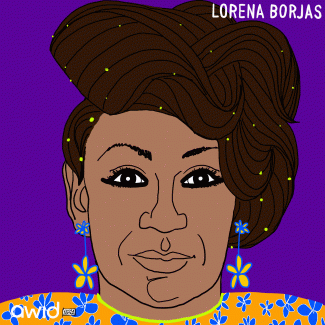
Lorena Borjas, a trans Latina woman and activist, lived and worked in the Jackson Heights neighborhood of Queens, New York City. In those streets, she looked after her community for years, advocating for trans and immigrant rights, supporting survivors of human trafficking and abuse, campaigning for sex workers’ rights and those of people living with HIV and AIDS.
Lorena was strong and tireless in her fight to support, defend, and have the back of those most marginalized and discriminated by transphobia, misogyny and racism.
“She pushed us to shine authentically, to become a scream of subversion that says, ‘I am here, and I deserve happiness, too.’” - Cecilia Gentili, a trans activist and Lorena’s friend
Having faced numerous traumas and hardships herself, as a trans immigrant woman and victim of human trafficking, Lorena pulled knowledge and emotional memory from the well of her experiences in order to help build and strengthen the community she was part of and which was part of her. Some of the ways she did this was to organize and mobilize support ranging from providing condoms and connecting trans women to different services, to setting up an HIV testing clinic in her own home.
"She was such a beautiful soul who helped others when her journey was difficult and painful as an immigrant, as a trans immigrant. She believed the trans community needed love, acceptance, and compassion, and she gave it all.” - Luchia Dragosh, QPTV Supervising producer of a documentary about Lorena
In more than 25 years of activism, she also founded the Lorena Borjas Community Fund together with Chase Strangio (lawyer and trans rights activist). The Fund helps the many different members of her community (and especially trans persons) dealing with immigration challenges to avoid the cycle of arrest-jail-deportation.
Lorena passed away in March 2020 of complications from COVID-19.
Her enormous and beautiful legacy will be taken forward through the streets of Queens by the network and community she co-created.
“We will pick up her work where she left it, work that is essential to the well-being of “mis pajaras” as she called the trans girls of Queens under her wing.” - Cecilia Gentili
"Lorena brought light to us when we were living through a very dark time here in New York. She brought us light when we were dealing with the crack epidemic, when we were dealing with the AIDS crisis, dealing with changes in immigration policies." - Cristina Herrera, founder and CEO of Translatina Network and Lorena’s friend
"Lorena has done more than anyone else I know to shine a light on the epidemic of trafficking in transgender communities and to help other trans women escape exploitation." - Lynly Egyes (represented Borjas on behalf of the Transgender Law Center)
Watch a documentary about Lorena Borjas
Read a postscript in The New Yorker about Lorena Borjas
Read an opinion piece in the New York Times by Cecilia Gentilin
كلا. نقدّر عملكم/ن لكننا لا نطلب في هذه المرحلة من الصناديق النسوية والنسائية تعبئة الاستطلاع. نشجعكم/ن على مشاركة الاستطلاع مع شركائكم/ن و شبكاتكم/ن النسوية.
Lxs actores anti-derechos han logrado ejercer un impacto sustancial sobre nuestro marco de derechos humanos y sobre la interpretación progresiva de estas normas, especialmente las relacionadas con el género y la sexualidad.
Cuando se trata del impacto de lxs actores conservadorxs sobre los espacios políticos internacionales, el panorama general de la situación actual es de inmovilidad y retrocesos.
Hemos visto cómo se diluyen los acuerdos y compromisos existentes; se estancan las negociaciones; o se debilitan en forma sostenida las agencias de Naciones Unidas, los organismos de revisión de los tratados y los Procedimientos Especiales, al mismo tiempo que se logra introducir un lenguaje regresivo en documentos internacionales de derechos humanos.
La CSW, que se celebra anualmente en marzo, ha sido durante mucho tiempo uno de los lugares más en disputa dentro del sistema de las Naciones Unidas. En marzo de 2015, los actores conservadores marcaron el tono ya antes de que comenzaran los eventos o las negociaciones: el documento final de la Comisión fue una Declaración muy débil, consensuada antes de que las activistas por los derechos de las mujeres siquiera hubieran arribado a la sede de la CSW.
En la CSW de 2016, el nuevo Caucus de la Juventud fue infiltrado por un gran número de actores que se hicieron oír contra el aborto, la salud y los derechos sexuales y reproductivos, y que a gritos hicieron callar a las organizaciones juveniles progresistas. Una vez más, las intensas negociaciones dieron como resultado un texto deslucido, que incluía lenguaje regresivo sobre «la familia».
Precisamente ahora que los derechos humanos de las mujeres han cobrado una importancia urgente, la CSW se ha convertido en un espacio despolitizado y debilitado. Utilizarla para lograr avances en los derechos resulta cada vez más difícil, ya que la energía de lxs progresistas se agota tratando de defender los logros obtenidos frente a la reacción conservadora.
Como organismo intergubernamental responsable de la promoción y protección de los derechos humanos en todo el mundo, el CDH es un punto de entrada fundamental para lxs actores conservadores. En los últimos años, este mecanismo ha sido el escenario de una serie de acciones anti-derechos que han resultado perjudiciales.
En concordancia con otrxs actores anti-derechos, una estrategia de los Estados y bloques de Estados conservadores es negociar agresivamente para eliminar lenguaje positivo e introducir enmiendas hostiles a las resoluciones, sobre todo a las que tratan de derechos relacionados con género y sexualidad.
Por ejemplo, durante la sesión de junio de 2016 del CDH, los Estados miembros de la Organización para la Cooperación Islámica y sus aliados atacaron una resolución sobre la discriminación contra las mujeres. Las negociaciones fueron muy tensas y tuvieron como resultado que se eliminaran múltiples referencias a temas como el derecho de las mujeres y las niñas a ejercer control sobre su sexualidad, su salud sexual y reproductiva y sus derechos reproductivos; la necesidad de derogar las leyes que perpetúan la opresión patriarcal hacia las mujeres y las niñas en las familias y aquellas que penalizan el adulterio o perdonan la violación dentro del matrimonio.
El CDH también ha sido el espacio en el que se desplegaron iniciativas conservadoras perniciosas para cooptar las normas de derechos humanos e introducir un lenguaje conservador de «derechos humanos», como ocurrió con las resoluciones sobre «valores tradicionales» lideradas por Rusia y, más recientemente, con toda la agenda sobre «Protección de la Familia».
En 2015 varias organizaciones religiosas y de derecha religiosas decidieron abrir un nuevo frente y comenzaron a hacer incidencia en el Comité de Derechos Humanos, el órgano responsable de la supervisión del cumplimiento del Pacto Internacional de Derechos Civiles y Políticos (PIDCP), un instrumento fundamental de derechos humanos.
Cuando el Comité anunció que estaba redactando una nueva interpretación autorizada sobre el derecho a la vida, grupos anti-derechos se movilizaron con la esperanza de incorporar su discurso anti-aborto en el tratado.
Más de 30 actores no estatales conservadores enviaron aportes escritos, defendiendo que su discurso engañoso sobre el «derecho a la vida» — según el cual la vida comienza con la concepción y el aborto constituye una violación a ese derecho — se incorporara en la interpretación del artículo 6 del Comité.
Esta incidencia de los grupos conservadores frente al Comité de Derechos Humanos constituye un giro estratégico ya que históricamente estos actores han intentado socavar e invalidar la labor esencial de los órganos de monitoreo de los tratados, entre ellos el propio Comité de Derechos Humanos.

Lxs actores anti-derechos participaron en el cabildeo por los nuevos Objetivos de Desarrollo Sostenible (ODS) en 2015, centrándose de nuevo en los derechos relacionados con el género y la sexualidad. Tuvieron un éxito limitado en sus intentos por incorporar lenguaje regresivo en la Agenda 2030.
Aun después de haber logrado rechazar lenguaje progresista en el texto final, lxs actores conservadorxs redefinieron su estrategia. En un intento por evadir la responsabilidad estatal y socavar la universalidad de los derechos, varios estados han formulado diversas reservas a los ODS.
En nombre del Grupo Africano, Senegal afirmó que los estados de esta región solo «implementarían los objetivos en consonancia con los valores culturales y religiosos de sus países».
La Santa Sede también hizo algunas reservas, «confiada en que la promesa de ‘Nadie va a quedarse atrás’» se leería «incluyendo el derecho a la vida de la persona, desde la concepción hasta la muerte natural».
Arabia Saudita dio un paso más, declarando que no seguiría ninguna norma internacional relativa a los ODS que hiciera referencia a la orientación sexual o la identidad de género, que considera «contrarias a la ley islámica».
Lxs actores anti-derechos están ocupando cada vez más espacio en la Asamblea General de la ONU (AG). En su sesión 71 (2016), la AG fue escenario de una ferviente manifestación antiderechos en contra del nuevo mandato creado por la resolución del Consejo de Derechos Humanos sobre la orientación sexual y la identidad de género (OSIG) en junio de 2016: el Experto Independiente sobre esta temática. Hubo cuatro intentos de socavar este mandato en el marco de la AG.
Primero , el Grupo Africano lideró un intento de aprobar una resolución hostil al mandato en el Tercer Comité, que en esencia se proponía aplazar indefinidamente su implementación. Si bien este intento no fue exitoso, constituyó una táctica novedosa y preocupante. Al bloquear retroactivamente desde la AG la implementación de un mandato creado por el Consejo de Derechos Humanos lxs actores anti-derechos buscan socavar directamente la autoridad del CDH frente a la Asamblea General. Después se dirigieron al Quinto Comité (responsable de asuntos administrativos y presupuestarios) para atacar el mandato.
En una acción sin precedentes, varios Estados intentaron (de nuevo, sin éxito) bloquear el financiamiento para todxs lxs expertos en derechos humanos de las Naciones Unidas, incluido el nuevo experto sobre OSIG.
Si bien ninguno de estos esfuerzos logró bloquear la creación e implementación del nuevo mandato, el apoyo significativo que recibieron, lo novedoso de la estrategia empleada y las sólidas alianzas construidas con criterios regionales a través de negociaciones marcan dificultades que habrá que enfrentar en el futuro.
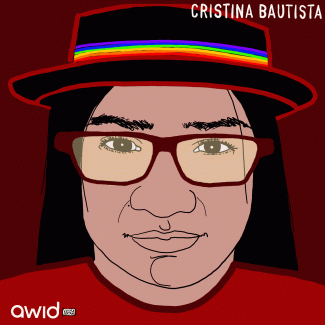
“Si nos mantenemos en silencio, nos matan. Si hablamos (nos matan) también. Así que, hablemos” Cristina Bautista, 2019.
Incansable defensora de los derechos del pueblo Nasa, Cristina habló alto y claro sobre la violencia dirigida contra su comunidad. En un discurso ante las Naciones Unidas, Cristina reclamó la protección de las vidas de las mujeres indígenas, y su participación en las diferentes esferas de la vida. En 2017, Cristina entró en el programa de Becas Indígenas de la Oficina de Derechos Humanos de la ONU y en 2019 recibió una subvención del Fondo de Contribuciones Voluntarias de la ONU para los Pueblos Indígenas.
"Me gustaría sacar a la luz la situación actual de los pueblos indígenas en Colombia, el asesinato de líderes indígenas, la represión de las protestas sociales. El acuerdo de paz, en lugar de ayudar, lo que ha hecho es reforzar el conflicto y la explotación de territorios sagrados en Colombia... En la situación actual, en casi todas las naciones indígenas, como mujeres, estamos trabajando para encontrar un futuro mejor para nuestras familias. No quiero que más mujeres del campo vivan en estas circunstancias. Las mujeres indígenas necesitamos oportunidades para participar en la vida política, económica, en la sociedad y en la cultura. Hoy me da fuerzas ver a todas estas mujeres aquí y ver que no estoy sola". - Cristina Bautista, 2019
El 29 de octubre de 2019, Cristina fue asesinada junto a cuatro guardias indígenas desarmados en un ataque que, supuestamente, fue llevado a cabo por miembros armados del grupo disidente de las FARC "Dagoberto Ramos".
Según Global Witness, "en los últimos años el asesinato de líderes comunitarios y sociales ha aumentado dramáticamente en Colombia".
"La comunidad Nasa ha alertado repetidamente a las autoridades sobre las amenazas que reciben y que ponen en peligro su seguridad. Sin embargo, a pesar de los esfuerzos que ponen los sucesivos gobiernos colombianos, los pueblos indígenas siguen corriendo grandes riesgos, especialmente, las figuras clave religiosas o comunitarias como Cristina Bautista". - Reunión informativa de la ONU para la prensa (en inglés), 1 de noviembre de 2019.