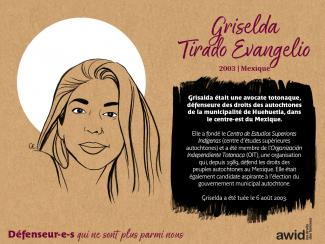
Griselda Tirado Evangelio
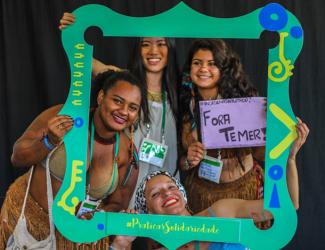
Young feminist activists play a critical role in women’s rights organizations and movements worldwide by bringing up new issues that feminists face today. Their strength, creativity and adaptability are vital to the sustainability of feminist organizing.
At the same time, they face specific impediments to their activism such as limited access to funding and support, lack of capacity-building opportunities, and a significant increase of attacks on young women human rights defenders. This creates a lack of visibility that makes more difficult their inclusion and effective participation within women’s rights movements.
AWID’s young feminist activism program was created to make sure the voices of young women are heard and reflected in feminist discourse. We want to ensure that young feminists have better access to funding, capacity-building opportunities and international processes. In addition to supporting young feminists directly, we are also working with women’s rights activists of all ages on practical models and strategies for effective multigenerational organizing.
We want young feminist activists to play a role in decision-making affecting their rights by:
Fostering community and sharing information through the Young Feminist Wire. Recognizing the importance of online media for the work of young feminists, our team launched the Young Feminist Wire in May 2010 to share information, build capacity through online webinars and e-discussions, and encourage community building.
Researching and building knowledge on young feminist activism, to increase the visibility and impact of young feminist activism within and across women’s rights movements and other key actors such as donors.
Promoting more effective multigenerational organizing, exploring better ways to work together.
Supporting young feminists to engage in global development processes such as those within the United Nations
Collaboration across all of AWID’s priority areas, including the Forum, to ensure young feminists’ key contributions, perspectives, needs and activism are reflected in debates, policies and programs affecting them.
Merci de calculer le coût de votre voyage à Bangkok, vos frais d'hébergement et vos indemnités journalières, le montant de votre visa, vos besoins en matière d'accessibilité et les frais accessoires, en plus des frais d'inscription qui seront annoncés sous peu. Les hôtels du quartier de Sukhumvit à Bangkok coûtent entre 50 et 200 dollars américains par nuit pour une chambre double. Les membres de l'AWID bénéficient d'une réduction lors de l'inscription. Si ce n’est pas encore fait, nous vous invitons à envisager de devenir membre et à rejoindre notre communauté féministe mondiale.

Be it core funding, programmes & projects or rapid response/ emergency grants.
Los actores anti-derechos adoptan una estrategia doble. Además de atacar abiertamente al sistema multilateral, los actores anti-derechos también socavan los derechos humanos desde adentro. Se involucran con el fin de cooptar procesos, consolidar normativas regresivas, y erosionar responsabilidades.
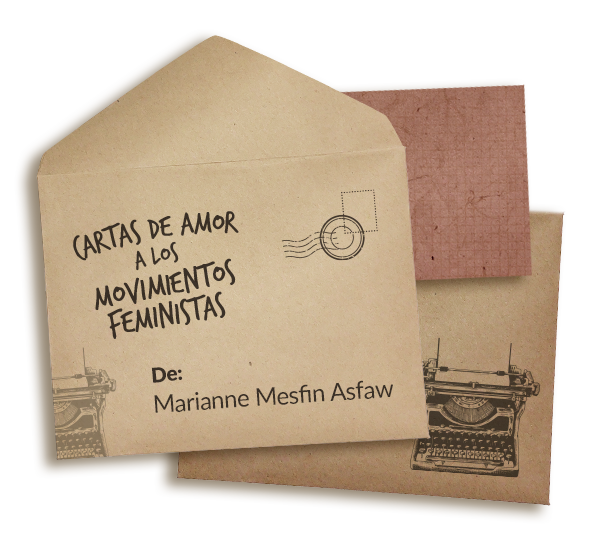
Por Marianne Mesfin Asfaw
Tengo muchos recuerdos queridos de mi recorridofeminista, pero hay uno en particular que se destaca. Fue durante mi época en la escuela de posgrado, una conferencia a la que asistí como parte de un curso de Teoría Feminista. La conferencia trataba sobre feminismo africano y, en ella, la profesora habló de la historia del panafricanismo, de su carácter patriarcal, centrado en los hombres, y de cómo los estudiosos panafricanistas perpetuaban el borramiento de las mujeres africanas. La conferencista señaló que las contribuciones de las mujeres africanas a las luchas anticoloniales y descoloniales en el continente rara vez, o nunca, se analizany no se les da el debido crédito. Leímos acerca de las académicas feministas africanas que desafían ese borramiento y dan a conocer activamente las historias de los movimientos y los esfuerzos de resistencia liderados por mujeres africanas. Parecetan sencillo, pero lo que más me llamó la atención fue que alguien juntara las palabras africana y feminista. Mejor aún: descubrir que había muchas más de nosotras ahí afuera, luchando contra las complicaciones de la historia, la política y las normas sociales en distintos rincones del continente, y que todas estábamos utilizando una perspectiva feminista para hacerlo. Salí de esa conferencia conmovida y completamente alucinada. res de mis amigas (todas feministas africanas) y yo nos quedamos un rato comentando fuera del aula. Todas estábamos impresionadas por la genialidad de la conferencia y su contenido pero, sobre todo, sentimos que estábamos siendo tenidas en cuenta. Ese sentimiento fue el que más me llamó la atención.
Enamorarse del feminismo fue electrizante. Fue como sentir que por fin puedes hablar con la persona que te gusta desde hace mucho tiempo y descubres que también le gustas. Lo llamo mi enamoramiento porque durante la escuela secundaria me consideraba feminista pero sentía que no sabía lo suficiente sobre el tema. ¿Había una forma correcta de ser feminista? ¿Y si no lo estaba haciendo bien? Cuando asistí a mi primera conferencia de Estudios de las Mujeres obtuve respuestas para algunas de estas preguntas. Fue emocionante conocer historias de resistencia feminista y de desmantelamiento del patriarcado. Me sentí muy afirmada y validada, pero también sentí que algo me faltaba.
Profundizar mi relación con el feminismo a través de la academia en una institución en la que el estudiantado y el personal docente eran en su mayoría blancx, significó que, durante esos primeros años, me diera cuenta de que rara vez hablábamos sobre cómo la raza y la antinegritud se ponen en juego en los movimientos feministas hegemónicos. En la mayoría de las asignaturas teníamos tal vez una semana, o peor aún, una clase, dedicada a la raza donde por lo general leíamos algo de bell hooks, el trabajo de Kimberly Crenshaw sobre interseccionalidad, y tal vez, a Patricia Hill Collins. A la semana siguiente volvíamos a dejar de lado el tema. Lidié con todo esto dándole un lugar central a la raza y al feminismo negro en casi todas mis tareas, escribiendo sobre el pelo negro y las políticas de respetabilidad, la hipersexualización de los cuerpos de las mujeres negras, y mucho más. Con el tiempo me di cuenta de que intentaba llenar un vacío, pero no sabía muy bien cuál era.
El momento en que el círculo se cerró de manera perfecta fue cuando descubrí que había un feminismo africano y lo estudié. Me di cuenta de que teníamucho más por aprender, principalmente que mi africanidad y mi práctica feminista no tenían por qué estar separadas. Al contrario: tenían mucho que aprender la una de la otra, y había feministas africanas que ya estaban haciendo este trabajo. Esa era la pieza que faltaba y que me fue tan esquiva durante mi exploración del feminismo a lo largo de mi carrera académica.
Para mí, el feminismo es la antítesis de la apatía social y política. También significa que una vez que adoptas una perspectiva feminista, nada puede ser igual. Con mis amigas solíamos decir que era como ponerse unos anteojos que nunca te puedes quitar porque ahora ves el mundo tal y como es, con todos sus desastres. Desastres que no puedes ignorar ni dejar de lado. Es por eso que mi compromiso con el movimiento feminista es no dejar nunca de aprender, seguir ampliando el alcance de mi empatía y no vivir nunca de forma pasiva. Dedicar más tiempo y espacio en mi vida a los movimientos feministas, y seguir amplificando, celebrando, documentando y citando el trabajo de las feministas africanas. También me comprometo a darle un lugar central al cuidado y a dar prioridad al placer en este recorrido feminista porque no podemos sostener nuestros movimientos sin esto.
We know that first time travel can be exciting but also stressful. In recognition of the many challenges involved, we will be providing more information and details about how to get to Bangkok when Registration opens early next year.
¿Cuánto sabes sobre financiamiento feminista? 📊 Pon a prueba tu conocimiento sobre la movilización de recursos para el financiamiento de la organización feminista, respondiendo al cuestionario "¿Dónde está el dinero?":
Completa el quiz en línea Descarga la versión para imprimir
Queremos expresar nuestro más sincero agradecimiento a todos los diversos grupos, colectivos y organizaciones feministas de todo el mundo que respondieron a la encuesta WITM. Su participación y sus puntos de vista han sido inestimables y enriquecerán enormemente nuestra comprensión colectiva de los recursos feministas a nivel mundial.
Dans cette BD illustrée par Sophia, suivez les aventures de notre super-héroïne féministe qui dément les récits des antidroits dans le monde entier et sauve la mise aux mouvements féministes.
« J’ai subi des violences sexuelles, des blessures physiques et d’autres formes de violence lorsque je manifestais sur les lignes de front. Mais je ne m’arrêterai jamais, tant et aussi longtemps que nous n’aurons pas de régime civil au Soudan. Nous devons arrêter la militarisation de l’État. Nos corps ne doivent plus être traités comme des champs de bataille »
déclarait Amal*, une manifestante de 23 ans**
Les femmes sont à la tête de la révolution au Soudan depuis quatre ans. Leur leadership ne s’est pas limité à la rue : elles étaient la force motrice de la résistance continue à tous les niveaux. Les femmes et les jeunes féministes sont devenues la conscience alerte du mouvement pour le changement et la démocratisation au Soudan. Dès la première manifestation contre l’ancien régime dans la ville d’Aldmazein, dans la région en conflit du Nil Bleu, le 13 décembre 2018, de jeunes écolières sont devenues les porte-voix réclamant la fin de 30 années de dictature militaire et de Frères musulmans.
Le mouvement féministe mené par de jeunes femmes âgées de 16 à 35 ans a créé une révolution au sein de la révolution incessante depuis quatre ans au Soudan. Les voix des jeunes femmes qui occupent l’espace dans les rues, sur les réseaux sociaux, au sein de la société civile et des organisations politiques sont suffisamment fortes pour avoir remodelé l’opinion publique et questionné les normes sociales. Les discussions sur les violences sexuelles et basées sur le genre et les tabous de la violence domestique et des processus décisionnels dominés par les hommes sont devenues des débats courants pour la première fois dans l’histoire du Soudan. Les équipes de football féminines, les femmes porte-parole de comités de la résistance et les syndicats professionnels dirigés par des femmes sont quelques-uns des faits saillants de la nouvelle vague du mouvement féministe au Soudan. Des jeunes femmes se définissant fièrement et publiquement comme féministes est le gain le plus important, dans un pays dirigé depuis trois décennies par un islam fondamentaliste. De jeunes hommes soutenant l’activisme féministe et s’identifiant eux-mêmes comme féministes est un autre progrès qu’il convient de souligner.
Ce progrès n’est pas sans coût, tout comme il n’est pas parfait. Les activistes féministes, les groupes et les activistes se retrouvent face aux difficultés typiques rencontrées dans les contextes conservateurs et affectés par des conflits. Mais l’impact du mouvement des jeunes féministes au Soudan mérite d’être encensé. Dépasser les obstacles internes des différences de culture, de religion et des conflits historiques est un défi en soi, que les jeunes féministes au Soudan semblent relever activement. La création d’écoles féministes au Darfour et dans le Kordofan révèle la trajectoire unique du travail des jeunes féministes au Soudan, dont nous pouvons tirer des enseignements.
Il n’est pas possible de nommer les jeunes femmes à la tête de ces efforts et les groupes de femmes actives sur le terrain, du fait des nombreuses préoccupations sécuritaires suite au coup d’État militaire toujours en cours. Mais leur résilience, leur force et leur courage devront figurer dans les livres d’histoire. Ces jeunes femmes audacieuses à la tête de la résistance dans les rues, derrière leurs écrans, dans différentes professions et sur différents terrains d’activisme façonnent l’avenir du Soudan. Les jeunes féministes au Soudan créent de nouveaux espaces pour que des récits et des discours féministes restructurent la distribution du pouvoir, dans ses aspects politiques, économiques et sociaux.
Malgré l’immensité de la violence, la résurgence d’un islam fondamentaliste, la militarisation et la réduction des espaces civiques, les activistes féministes au Soudan restent ancrées dans leurs sororités. Elles demeurent une incroyable source d’inspiration pour les mouvements féministes à travers le monde.
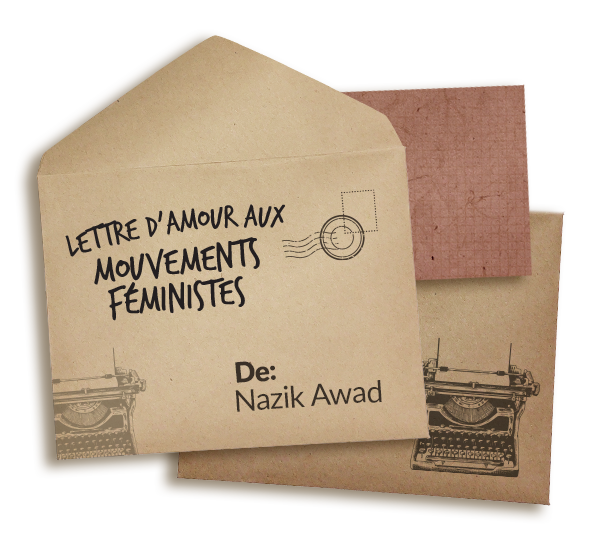
Nazik Awad
* Amal est un pseudonyme afin de protéger la jeune activiste citée.
** Le Soudan vit une révolution constante depuis 2018. Une nouvelle vague a démarré après le coup d’État militaire du 25 octobre 2021.
Los idiomas de trabajo de AWID son inglés, francés y español. El tailandés se agregará como idioma local, al igual que el lenguaje de señas y otras medidas de accesibilidad. Es posible que se añadan otras lenguas si la financiación lo permite, así que mantente atentx a las actualizaciones. Nos importa la justicia lingüística y trataremos de incluir tantos idiomas como sea posible y según nuestros recursos lo permitan. Esperamos crear múltiples oportunidades para que muchxs de nosotrxs podamos participar en nuestras lenguas y comunicarnos entre nosotrxs.
Notre force collective, notre sagesse et notre engagement sont illimités... mais pas nos comptes en banque.
Cette synthèse s’appuie sur les réponses de 1 174 organisations féministes, de défense des droits des femmes, LBTQI+ et alliées (désignées ci-après comme « organisations féministes et de défense des droits des femmes ») issues de 128 pays, ayant participé à l’enquête Où est l’argent pour l’organisation des mouvements féministes ?

بدأنا التخطيط لعدد المجلّة هذا مع نانا داركوا قُبيل مهرجان «ابدعي، قاومي، غيٍّري: مهرجان للحراكات النسوية» لجمعية «حقوق المرأة في التنمية» AWID، وانطلقنا وقتها من سؤالٍ هو بالأحرى ملاحظة حول حالة العالم، ورغبة في تغيير الاعتقادات السائدة: لماذا لا تزال جنسانيّاتنا وملذّاتنا تخضع للترويض والتجريم مع أنّه يتمّ تذكيرنا مراراً وتكراراً بأنّها لا تأتي بأيّ قيمة أو تطوّر؟ واستنتجنا أنّ جنسانيّاتنا، لمّا تتجسّد، فيها ما يتعارض مع النظام العالمي الذي ما زال يتجلّى من خلال ضوابط الحدود، والتمييز العنصري في توزيع اللقاح، والاستعمار الاستيطاني، والتطهير العرقي، والرأسمالية المُستشرية. هل يمكننا إذاً القول إنّ لجنسانيّاتنا قدرةٌ تعطيليّة؟ وهل يصحّ هذا القول عندما ننظر إلى واقع حركاتنا التي يتمّ الاستيلاء عليها ومأسستها في سعيها للتزوّد بالموارد؟
Cuando miles de feministas se unen, creamos una fuerza arrolladora de solidaridad que tiene el poder de cambiar el mundo. El Foro de AWID será un momento para que descansemos y nos recuperemos juntas, nos conectemos más allá de las fronteras y descubramos nuevas y osadas direcciones estratégicas.
La fecha y el lugar se anunciarán el próximo año, tan pronto como podamos. Estamos emocionades y sabemos que ustedes también lo están. ¡Manténganse al tanto!
¡Asegúrate de seguirnos en las redes sociales y suscríbete a nuestra lista de correo para mantenerte al día!

El creciente poder de los actores anti-derechos no se está desarrollando en un vacío. Entender el auge del ultranacionalismo, del poder corporativo irrestricto, del incremento de la represión y de la disminución del espacio cívico resulta clave para contextualizar las amenazas anti-derechos que enfrentamos actualmente.
Là où les organisations de terrain pilotent et les multinationales sont tenues responsables.
📅 Mardi 11 novembre 2025
📍 En ligne et à l'Universidade Federal do Pará, Belém