Alberta "Betty" Cariño

WHRDs are self-identified women and lesbian, bisexual, transgender, queer and intersex (LBTQI) people and others who defend rights and are subject to gender-specific risks and threats due to their human rights work and/or as a direct consequence of their gender identity or sexual orientation.
WHRDs are subject to systematic violence and discrimination due to their identities and unyielding struggles for rights, equality and justice.
The WHRD Program collaborates with international and regional partners as well as the AWID membership to raise awareness about these risks and threats, advocate for feminist and holistic measures of protection and safety, and actively promote a culture of self-care and collective well being in our movements.
WHRDs are exposed to the same types of risks that all other defenders who defend human rights, communities, and the environment face. However, they are also exposed to gender-based violence and gender-specific risks because they challenge existing gender norms within their communities and societies.
We work collaboratively with international and regional networks and our membership
We aim to contribute to a safer world for WHRDs, their families and communities. We believe that action for rights and justice should not put WHRDs at risk; it should be appreciated and celebrated.
Promoting collaboration and coordination among human rights and women’s rights organizations at the international level to strengthen responses concerning safety and wellbeing of WHRDs.
Supporting regional networks of WHRDs and their organizations, such as the Mesoamerican Initiative for WHRDs and the WHRD Middle East and North Africa Coalition, in promoting and strengthening collective action for protection - emphasizing the establishment of solidarity and protection networks, the promotion of self-care, and advocacy and mobilization for the safety of WHRDs;
Increasing the visibility and recognition of WHRDs and their struggles, as well as the risks that they encounter by documenting the attacks that they face, and researching, producing, and disseminating information on their struggles, strategies, and challenges:
Mobilizing urgent responses of international solidarity for WHRDs at risk through our international and regional networks, and our active membership.
Una de las líderes fundadoras de la cooperativa fue Lohana Berkins, activista, defensora y promotora de la identidad trans. Lohana jugó un papel crucial en la lucha por los derechos de las personas trans y travesti.
A través de su lucha se consiguió, entre muchas otras cosas, la aprobación de la Ley de Identidad de Género. Es una de las legislaciones más progresistas del mundo, garantizando derechos fundamentales a las personas trans y travestis. Ahora, las personas pueden cambiar sus nombres y géneros solo con una declaración jurada, y tener acceso a atención médica integral sin intervención/aprobación judicial o médica (Outright International, 2012).
In 2013, we published three global reports. These reports confirm that women’s rights organizations are doing the heavy lifting to advance women’s rights and gender equality by using diverse, creative and long-term strategies, all while being underfunded.
Our 2010 global survey showed that the collective income of 740 women’s organizations around the world totaled only USD 104 million. Compare this with Greenpeace International, one organization with a 2010 budget of USD 310 million1. Imagine the impact these groups could have if they were able to access all the financial resources they need and more?
AWID’s WITM research has catalyzed increased funding for women’s rights organizing. WITM research was a driving force behind the Catapult crowdfunding platform, which has raised USD 6.5 million for women’s rights. The Dutch Government cited WITM research as a reason for its unprecedented MDG 3 Fund of EU 82 million. WITM research has also led to the creation of several new funds: FRIDA – The Young Feminist Fund, the Indigenous Women’s Fund, Fundo Elas, the Mediterranean Women’s Fund and the Rita Fund.
While the WITM research has shed important light on the global funding landscape, AWID and partners have identified the need to dig deeper, to analyze funding trends by region, population and issue. In response, organizations are now using AWID’s WITM research methodology to do their own funding trends analyses. For example, in November 2013, Kosova Women’s Network and Alter Habitus – Institute for Studies in Society and Culture published Where is the Money for Women’s Rights? A Kosovo Case Study.
At the same time, AWID continues to collaborate with partners in Where is the Money for Indigenous Women’s Rights (with International Indigenous Women’s Forum and International Funders for Indigenous Peoples) and our upcoming Where is the Money for Women’s Rights in Brazil? (with Fundo Elas).
Several organizations have also conducted their own independent funding trends research, deepening their understanding of the funding landscape and politics behind it. For example, the South Asian Women’s Fund was inspired by AWID’s WITM research to conduct funding trends reports for each country in South Asia, as well as a regional overview. Other examples of research outside of AWID include the collaboration between Open Society Foundations, Mama Cash, and the Red Umbrella Fund to produce the report Funding for Sex Workers Rights, and the first-ever survey on trans* and intersex funding by Global Action for Trans* Equality and American Jewish World Service.

L'EXCLUSION, LA STIGMATISATION ET LES ABUS INSTITUTIONNELS
auxquels les personnes trans et les travestis continuent de faire face au quotidien
Now that you have analyzed all your data – from your survey, interviews, desk research and potentially other sources – you can create your final product.
In this section:
- Create your final product
1. Write clearly
2. Make it pretty- Gather review and inputs
1. Polish your results
2. Facilitate the feedback
Your final product will be the document that will summarize, analyze and criticize your data. That will be the piece that you will share with your community to present and explain your research to your audience.
At AWID, we often write a comprehensive written report that analyzes each set of data and synthesizes all of our findings, then later create smaller products, such as infographics and summaries (explained in the subsequent section “Finalize and format”).
Importance of the editor
An editor will proofread, ensure concise writing, conduct fact-checking, point out inconsistencies that need to be resolved, arrange the flow of the document and possibly suggest titles.
Your editor should preferably be someone who understands and knows your WITM work but who was not directly involved in the research. This will bring in a fresh perspective.
Use the data collected to create graphs and tables. These type of visuals are a compelling way to highlight the main findings of your research and validate your analysis.
Source relevant images that can illustrate your report.
Highlight key-numbers and/or powerful testimonials.
Remember: The more accessible your product is, the more people will want to read (and share!) it.
At this point, you have collected all your data, analyzed it and transformed it into your final product, likely in a long report.
Before moving on to the next steps – you should share your final research product with your advisor organizations, activists, and donors.
This is a great moment to check the following points:
Once you have inputted all feedback from your advisors, be sure to run it by your editor once more.
This will now be the final, completed version of your report. If you intend to publish the final report in other languages, now is the time to send it for translation.
This is a significant contribution from your advisors. Consider offering them some form of recognition.

• 2 - 5 months
• 1 or more research person(s)
• 1 Editor (or web-editor if you create an online product)
• Translator(s), if done in more than one language
• List of advisor organizations, activists, and donors.
• Concept note (from “Frame your research” section)
• Survey topline results
• Prepared interview questions
• Interview results
• Desk research data
• All other data used in report


Para recolher testemunhos centrados na realidade feminista sobre como o dinheiro circula e os bolsos em que entra;
Related content
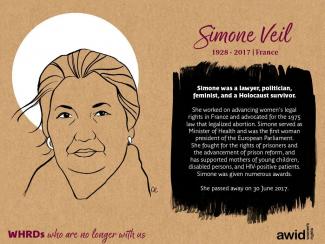
The Guardian: Simone Veil, Auschwitz survivor and abortion pioneer, dies aged 89
BBC: Simone Veil: French politician and Holocaust survivor dies
Reuters: French Holocaust survivor and pro-abortion campaigner Simone Veil dies at 89
The fight for a world full of workplaces that are free from of all forms of discrimination, stigma and exclusion is a worthy one. A world in which sex work is decriminalized and recognized as work is part of this.
A world where all workers have safe working conditions, dignified wages, and can enjoy the same rights like health care, pension pay, sick days, holidays, job security and more, no matter their gender, race, ethnicity, age or ability. Labor rights are feminist issues, and feminist unions play a key role in advancing the legal, labor and economic rights of all workers, especially migrant workers, domestic workers, informal workers and sex workers. These are folks who have most recently been disproportionately affected by the pandemic, its burdens of care, lockdowns, curfews and increased policing. Let us introduce you to the stories of feminists and union organizers that are fighting for better working conditions and better worlds for all.
En el contexto actual, hemos identificado cinco grandes amenazas para la lucha por economías feministas y justas.
«La financialización alude a la importancia creciente de los mercados financieros, los motivos financieros, las instituciones financieras y las elites financieras en el manejo de la economía y las instituciones que la rigen tanto a nivel nacional como internacional» - Gerald Epstein
Epstein Gerald A. 2006: Financialization and the World Economy. Edward Elgar Publishing.
Las instituciones financieras ejercen una fuerte influencia sobre la gobernabilidad económica y la dirección que toman las políticas para el desarrollo. La influencia cada vez más acentuada que tienen el sector corporativo y las instituciones financieras internacionales en la definición de políticas públicas locales y globales ha resultado en Estados cada vez más presos de los intereses del capital. El sistema financiero actual, con sus políticas controversiales de crédito y deuda, juega un rol fundamental para la reproducción y la expansión de los procesos de acumulación de capital.
Esto plantea preguntas importantes acerca de cómo regular y repensar el sistema financiero global, no solo para evitar las graves consecuencias negativas de las crisis causadas por las deudas sino también para permitir medios de vida sostenibles y la realización de los derechos económicos y sociales sin retrocesos.
(Para más detalles, ver el artículo de Balakrishnan y Heintz “Debt, Power, and Crisis: Social Stratification and the Inequitable Governance of Financial Markets”, en inglés [Deuda, poder y crisis: Estratificación social y la gobernabilidad inequitativa de los mercados financieros]
En estos últimos 20 años, los acuerdos comerciales (tanto bilaterales como multilaterales) han expandido su rol mostrando un interés cada vez mayor en el otorgamiento de derechos de propiedad intelectual a las corporaciones.
Estos derechos han beneficiado claramente a las corporaciones transnacionales afectando gravemente la posibilidad de que las naciones y pueblos más empobrecidos puedan realizar sus derechos humanos, en particular
Además, la liberalización de las importaciones agrícolas que resulta en una afluencia de bienes baratos pone en peligro a las mujeres campesinas que trabajan en forma autónoma en países empobrecidos y a la seguridad alimentaria de todxs. Las cláusulas de protección a las inversiones que forman parte de los acuerdos comerciales limitan el espacio político para que los gobiernos nacionales promulguen e implementen regulaciones en asuntos tan críticos como la protección ambiental, los derechos laborales y la duración de las patentes.
Los movimientos feministas han estado, y continúan estando, en la primera línea de resistencia a estos acuerdos, denunciando las trampas que encierran.
(Ver por ejemplo, las reacciones de movimientos sociales y redes feministas de todo el mundo frente a las negociaciones del Tratado Trastlántico de Comercio e Inversiones y del Acuerdo de Asociación Transpacífico)
La mercantilización de los recursos de la Tierra y sus consecuencias — la degradación ambiental y el cambio climático producidos por décadas de industrialización agresiva, despojo y extractivismo de los recursos mundiales — han dañado la biodiversidad y la resiliencia ecológica. Estos daños ya están amenazando la mera existencia de la sociedad humana.
La comunidad internacional no ha logrado enfrentar los patrones de producción y consumo que conforman la raíz misma de este problema. Lo que hicieron los gobiernos — con el apoyo de las grandes empresas a quienes les interesa obtener ganancias — fue optar por el enfoque de la «economía verde» que promueve las «tecnologías energéticamente eficientes» (como la energía nuclear, los biocombustibles, los organismos genéticamente modificados y la geoingeniería) y los esquemas de comercio de emisiones de dióxido de carbono como soluciones mágicas.
Si bien los procesos de apropiación de tierras y recursos no son algo nuevo -de hecho, han sido luchas centrales en la historia colonial- lo que sí es nuevo son los medios de avanzada por los cuales la tierra y los recursos naturales se están volviendo mercancías en nuevos mercados.
Las instituciones financieras internacionales desempeñan un rol central en promover la mercantilización de la tierra en los países en desarrollo. Estas instituciones financian reformas agrarias que les permiten a actores poderosos utilizar la tierra para ganancias especulativas a cambio de magras promesas de empleos y crecimiento. La apropiación de tierras tiene impactos negativos de gran alcance sobre el acceso de los pueblos a bienes y servicios esenciales, además de causar desplazamiento de poblaciones y degradación ambiental.
Quienes se están resistiendo a la apropiación de tierras, incluyendo a las defensoras de derechos humanos, se enfrentan todos los días a distintas formas de violencia que van desde las agresiones físicas a los abusos sexuales.
Esta base patriarcal tiene una hegemonía particular en los modelos neoliberales actuales.
Resulta evidente que la economía política y el desarrollo se vinculan de varias formas con la sexualidad y el género: pensemos en cómo define el capitalismo lo que se puede entender como 'trabajo' y cómo el valor de los seres humanos se define a partir de su productividad en el trabajo rentado.
En la mayoría de los casos, el lugar que ocupan las mujeres en la economía mundial continúa siendo el de trabajadoras explotadas por su género ya que su trabajo está devaluado en los empleos precarios, la subsistencia doméstica, la reproducción y la producción no remunerada en el hogar. Naturalizada como trabajo no remunerado de las mujeres, la labor que permtie la reproducción de la fuerza de trabajo le provee un enorme subsidio al capitalismo a la vez que funciona como fuente de opresión y sometimiento de género.
Esta situación se ve agravada por el hecho de que cuando los mecanismos de protección social comienzan a debilitarse, se incrementa la carga laboral de las mujeres.
El fenómeno de la migración global que encarnan miles de refugiadxs económicxs que escapan de la pobreza que lxs oprime no es ajeno a las relaciones de poder entre los géneros que impone el capitalismo. Las remesas se convierten en una de las principales fuentes del financiación para el desarrollo de familias y comunidades, pero tienen un costo enorme para las mujeres migrantes que se esfuerzan por alcanzar un salario que les permita vivir en su nuevo país.
También estamos viendo cómo los sistemas patriarcales capitalistas están utilizando la violencia y la opresión para mantener su estatus quo. El alza del gasto mundial para sostener el militarismo y la violencia, perpretados ambos por actores estatales y no estatales, se vuelca cada vez más a controlar el disenso, los cuerpos y voces de las mujeres, así como a zanjar disputas económicas, políticas y sociales.
En todo el mundo, la violencia, el encarcelamiento y la discriminación afectan de manera desproporcionada a:
Para confrontar la violencia estructural y sus vínculos con el sistema global capitalista, se necesita un análisis interseccional que relacione entre sí el género, la raza, la etnia, la edad, la capacidad, la nacionalidad, la orientación sexual y la identidad de género entre otras categorías.
La profunda crisis de gobernabilidad mundial que vivimos también se expresa en los débiles acuerdos intergubernamentales a los que se logra llegar y que a menudo carecen de los mecanismos más básicos para la rendición de cuentas. El sistema multilateral que antes le fue útil a la gobernabilidad mundial no está logrando responder a las múltiples crisis actuales. El sistema mismo continúa siendo muy poco democrático, con las corporaciones adquiriendo cada vez más presencia y más poder ya que ocupan los espacios donde antes estaban los Estados.
Estas amenazas nos desafían a lxs feministas a repensar nuestro marco de referencias y nuestras estrategias. Y también a renovar y reactivar nuestro compromiso con la construcción de movimientos junto con otrxs por una economía justa.
Nos desafían a pensar agendas más amplias por las transformaciones socioeconómicas desde una perspectiva feminista, atendiendo a las realidades que viven la mayoría de lxs empobrecidxs. Ahora es el momento de lograr cambios por una economía justa y de hacerle frente a los desafíos sistémicos persistentes.
 توفير الموارد للحركات النسوية هو أمر أساسي لتوفير حاضر أكثر سلماً وعدالة ومستقبل أكثر تحرراً.
في العقد الأخير، خصّص الممولون/ات أموال أكبر للمساواة الجندرية، لكن فقط 1% من التمويل الخيري والتنموي تحرك بشكل مباشر لتمويل حركات التغيير الاجتماعي بقيادة نسوية.
كي نسعى إلى الوفرة، والخروج من هذه الندرة المزمنة، يدعو استطلاع "أين المال" المناصرات/ين النسويات/ين ومناصرات/ين العدالة الجندرية بمشاركتنا في مشوار جمع الإفادات وبناء القضايا لحشد أموال أكثر وأفضل كي نغيرّ موازين القوى في المناخ التمويلي القائم اليوم. يتضامن استطلاع "أين المال" مع الحركات التي يستمر إخفاءها وتهميشها والتي لا يتاح لها تمويلا أساسيا، مرن وطويل الأمد مبن على الثقة. ويسلّط استطلاع "أين المال؟" الضوء على وضع التمويل، يتحدّى الحلول الزائفة ويُظهر كيف تحتاج نماذج التمويل أن تتغير كي تزدهر الحركات وتتعامل مع تحديات الزمن المركبة.
El salario mínimo de Georgia se encuentra en un porcentaje inferior al de todos los países del mundo. Esta realidad afecta mayoritariamente a las mujeres.
El país no solo tiene una brecha salarial de género significativa, sino que las mujeres también trabajan más horas y más horas no reguladas antes de irse a casa para ocuparse de las tareas domésticas y de sus familias. No hay licencia por maternidad, no hay aumentos de salario por horas extras, no hay seguro de desempleo, y no hay licencias por enfermedad u otra protección social. Presionados por organizaciones occidentales, los partidos políticos oligárquicos georgianos han estado implementando reformas que están destruyendo el estado de bienestar, aumentando las medidas de austeridad y empeorando la explotación de lxs trabajadorxs, todo para los beneficios de grandes corporaciones que aplauden al país por su "facilidad para hacer negocios". Los medios de comunicación, cooptados por intereses privados y corporativos, están sesgados sobre estos temas o los silencian. La organización sindical sigue siendo una de las pocas opciones para luchar por los derechos humanos básicos y para hacer que el Estado y las empresas rindan cuentas ante las violaciones y persecuciones diarias y generalizadas contra lxs trabajadorxs, especialmente contra las mujeres.
Fuentes: Minimum-Wage y entrevista con Sopo Japaridze en Democracia Abierta
Comme le remarque l’activiste et chercheuse Soma Kishore Parthasarathy, il existe des conceptualisations diverses de la notion de biens communs.
De manière conventionnelle, ils sont définis comme des ressources naturelles se trouvant en dehors du domaine privé et dont l'usage est affecté à ceux et celles qui en dépendent. Aujourd’hui, ce concept a été élargi pour comprendre, outre les ressources naturelles, les ressources liées aux savoirs, au patrimoine, à la culture, aux espaces virtuels, et même au climat. Le concept de biens communs est antérieur au régime de la propriété privée et il représentait le fondement de l'organisation de la société. Les définitions données actuellement par les entités gouvernementales limitent ce cadre aux ressources foncières et matérielles.
Le concept de biens communs repose sur la pratique culturelle du partage d'espaces de vie et des ressources envisagés comme des cadeaux de la nature, destinés au bien commun et à la viabilité de ces biens communs.
Les biens communs de l’humanité sont de plus en plus menacés par les nations et les forces du marché qui les colonisent, les exploitent et les occupent.
Dans certains contextes favorables, les «biens communs» ont le potentiel d’habiliter les femmes, en particulier les femmes opprimées économiquement, à jouir d’autonomie par rapport à la manière de négocier leurs multiples besoins et aspirations.
Le patriarcat est renforcé lorsque les femmes et d'autres genres opprimés se voient refuser l'accès aux biens communs et au contrôle de ces derniers.
Par conséquent, une économie féministe cherche à rétablir les droits légitimes des communautés vis-à-vis de ces ressources communes. Cette autonomie leur permet de subvenir à leurs besoins, tout en faisant progresser des systèmes de gouvernance plus égalitaires par rapport à l'utilisation de ces ressources. Une économie féministe reconnaît le rôle des femmes et offre l’égalité des chances par rapport à la prise de décision : les femmes ont un accès égalitaire à ces ressources.
(Disponível em inglês)
Abby était une féministe pionnière, militante des droits humains.
Ancienne épidémiologiste de l'Université McGill, Abby était réputée pour défendre les causes sociales et pour ses critiques perspicaces concernant les technologies de procréation humaine assistée et d'autres sujets médicaux. Plus précisément, elle a fait campagne contre ce qu'elle a appelé la « généticisation » des technologies de procréation, contre l'hormonothérapie substitutive et pour des recherches plus qualitatives et plus longues avant l'approbation de nouveaux vaccins comme celui contre le papillomavirus humain.
À la nouvelle de son décès, ses ami-e-s et collègues l'ont décrite avec affection comme une « ardente défenseure » de la santé des femmes.