Contenido relacionado
Greenpeace USA: El precio del activismo (página 8)
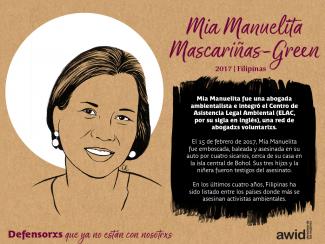
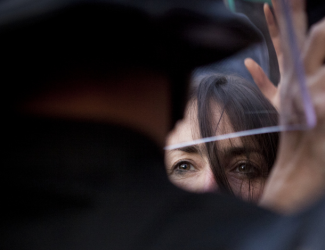
WHRDs are self-identified women and lesbian, bisexual, transgender, queer and intersex (LBTQI) people and others who defend rights and are subject to gender-specific risks and threats due to their human rights work and/or as a direct consequence of their gender identity or sexual orientation.
WHRDs are subject to systematic violence and discrimination due to their identities and unyielding struggles for rights, equality and justice.
The WHRD Program collaborates with international and regional partners as well as the AWID membership to raise awareness about these risks and threats, advocate for feminist and holistic measures of protection and safety, and actively promote a culture of self-care and collective well being in our movements.
WHRDs are exposed to the same types of risks that all other defenders who defend human rights, communities, and the environment face. However, they are also exposed to gender-based violence and gender-specific risks because they challenge existing gender norms within their communities and societies.
We work collaboratively with international and regional networks and our membership
We aim to contribute to a safer world for WHRDs, their families and communities. We believe that action for rights and justice should not put WHRDs at risk; it should be appreciated and celebrated.
Promoting collaboration and coordination among human rights and women’s rights organizations at the international level to strengthen responses concerning safety and wellbeing of WHRDs.
Supporting regional networks of WHRDs and their organizations, such as the Mesoamerican Initiative for WHRDs and the WHRD Middle East and North Africa Coalition, in promoting and strengthening collective action for protection - emphasizing the establishment of solidarity and protection networks, the promotion of self-care, and advocacy and mobilization for the safety of WHRDs;
Increasing the visibility and recognition of WHRDs and their struggles, as well as the risks that they encounter by documenting the attacks that they face, and researching, producing, and disseminating information on their struggles, strategies, and challenges:
Mobilizing urgent responses of international solidarity for WHRDs at risk through our international and regional networks, and our active membership.

Shines a light on the financial status of diverse feminist, women’s rights, gender justice, LBTQI+ and allied movements in all regions and all contexts
Pour toutes questions liées à l’Appel aux propositions d'activités, merci de nous contacter via notre formulaire de contact en choisissant « Proposition d'activité » comme sujet de votre message.
Contenido relacionado
Greenpeace USA: El precio del activismo (página 8)
When you come to the center of São Paulo, you will see the building of the Ocupação 9 de Julho - a landmark in the struggle for social housing and an important cultural site. This is the work of The Homeless Workers Movement (Movimento dos Sem-Teto do Centro, MSTC) a movement of over 2000 people that operates in the city center and converts abandoned spaces into housing for low-income workers, children, women, adults, the elderly, migrants and refugees. In this particular building, they provide food and shelter to 122 families.

Pour collecter des données probantes qui sont centrées sur les réalités des féministes sur la manière dont l’argent est transféré et qui il atteint réellement.
Cette information ne sera disponible qu’à l’ouverture de l’inscription.