Philippe Leroyer | Flickr (CC BY-NC-ND 2.0)

Special Focus

AWID is an international, feminist, membership organisation committed to achieving gender equality, sustainable development and women’s human rights

Women Human Rights Defenders

WHRDs are self-identified women and lesbian, bisexual, transgender, queer and intersex (LBTQI) people and others who defend rights and are subject to gender-specific risks and threats due to their human rights work and/or as a direct consequence of their gender identity or sexual orientation.

WHRDs are subject to systematic violence and discrimination due to their identities and unyielding struggles for rights, equality and justice.

The WHRD Program collaborates with international and regional partners as well as the AWID membership to raise awareness about these risks and threats, advocate for feminist and holistic measures of protection and safety, and actively promote a culture of self-care and collective well being in our movements.


Risks and threats targeting WHRDs  

WHRDs are exposed to the same types of risks that all other defenders who defend human rights, communities, and the environment face. However, they are also exposed to gender-based violence and gender-specific risks because they challenge existing gender norms within their communities and societies.

By defending rights, WHRDs are at risk of:

  • Physical assault and death
  • Intimidation and harassment, including in online spaces
  • Judicial harassment and criminalization
  • Burnout

A collaborative, holistic approach to safety

We work collaboratively with international and regional networks and our membership

  • to raise awareness about human rights abuses and violations against WHRDs and the systemic violence and discrimination they experience
  • to strengthen protection mechanisms and ensure more effective and timely responses to WHRDs at risk

We work to promote a holistic approach to protection which includes:

  • emphasizing the importance of self-care and collective well being, and recognizing that what care and wellbeing mean may differ across cultures
  • documenting the violations targeting WHRDs using a feminist intersectional perspective;
  • promoting the social recognition and celebration of the work and resilience of WHRDs ; and
  • building civic spaces that are conducive to dismantling structural inequalities without restrictions or obstacles

Our Actions

We aim to contribute to a safer world for WHRDs, their families and communities. We believe that action for rights and justice should not put WHRDs at risk; it should be appreciated and celebrated.

  • Promoting collaboration and coordination among human rights and women’s rights organizations at the international level to  strengthen  responses concerning safety and wellbeing of WHRDs.

  • Supporting regional networks of WHRDs and their organizations, such as the Mesoamerican Initiative for WHRDs and the WHRD Middle East and North Africa  Coalition, in promoting and strengthening collective action for protection - emphasizing the establishment of solidarity and protection networks, the promotion of self-care, and advocacy and mobilization for the safety of WHRDs;

  • Increasing the visibility and recognition of  WHRDs and their struggles, as well as the risks that they encounter by documenting the attacks that they face, and researching, producing, and disseminating information on their struggles, strategies, and challenges:

  • Mobilizing urgent responses of international solidarity for WHRDs at risk through our international and regional networks, and our active membership.

Related Content

لا أشعر بالراحة لمشاركة اسمي او اسم مجموعتي، منظمتي و\ أو حركتي مع AWID, هل أستطيع مع ذلك تعبئة الاستطلاع؟

طبعاً! هذه الأسئلة اختيارية. نقدّر جداً حقكم بالسرية. الرجاء تعبئة الاستطلاع دون علاقة بقراركم/ن بمشاركة اسم المجموعة، المنظمة أو الحركة أو تفاصيل التواصل معكم/ن.

Snippet Festival In Review - Presentation (EN)

A Festival For Feminist Movements

Do you want to be inspired by the creative resistance strategies of feminists from all over the world? Do you want to discover feminist initiatives that show us how we can all live in a more just world? Do you want to learn about models of feminist care and healing to bring to your own community? Is that a resounding yes that we hear? YES!

Then check out Crear | Résister | Transform: a festival for feminist movements. This festival took place virtually throughout the month of September 2021 across all of AWID’s platforms, and now you can experience it on your own time.

The Festival was a multicultural and multilingual experience.

The panelists participated in their preferred language and at AWID we included subtitles on the videos for your accessibility.

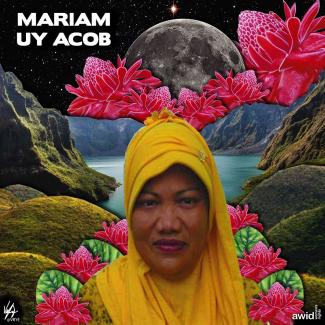
Mariam Uy Acob

Mariam era asistente jurídica en la Alianza Kawagib Moro por los Derechos Humanos.

Fue una acérrima crítica de la militarización de las comunidades moro, y denunció sistemáticamente los bombardeos aéreos y la concentración de campamentos militares. Tuvo que buscar refugio luego de exponer y denunciar las injusticias cometidas contra las comunidades musulmanas en Filipinas.

Se cree que fue asesinada por agentes militares sospechosos debido a su trabajo como defensora de derechos humanos. Los atacantes que mataron a Mariam la esperaron, se pusieron a la par del vehículo en el que se desplazaba y le dispararon siete veces.


Mariam Uy Acob, Philippines

Julio 2015

Foro de Mujeres sobre Financiación para la Igualdad de Género

  • Este Foro se realizó el 10 de julio de 2015 en Adís Abeba y reunió a feministas, mujeres de las bases, activistas de género, académicas/os y representantes de organizaciones/redes por los derechos de las mujeres, además de recibir aportes específicos de representantes de la ONU y otras/os hacedoras/es de políticas públicas.
  • Los objetivos del Foro de Mujeres son: compartir información actualizada sobre el estado de las más recientes negociaciones en torno a la FpD; analizar colectivamente el panorama de la FpD y su seguimiento; acordar una postura en común sobre los derechos de las mujeres; y formular estrategias para participar de manera significativa y sustantiva con una perspectiva feminista en la Conferencia sobre la FpD en Adís Abeba.
  • El WWG organizó el Foro de Mujeres en colaboración con FEMNET, el African Women’s Development Fund [Fondo para el Desarrollo de las Mujeres Africanas, AWDF en inglés] y la Post-2015 Women’s Coalition [Coalición de Mujeres por el Post-2015] con el apoyo de ONU Mujeres.

Foro de las OSC en la Conferencia Internacional sobre la FpD

  • El Foro de las OSC en la Conferencia sobre la FpD tuvo lugar en Adís Abeba el 11 y 12 de julio de 2015 con los siguientes objetivos: informar a las OSC participantes sobre el estado del proceso oficial y coordinar la participación de la sociedad civil en la tercera Conferencia sobre la FpD; redactar colectivamente una Declaración del Foro de OSC, así como los mensajes de las OSC para las Mesas Redondas de la Conferencia sobre la FpD, los eventos paralelos organizados por el Grupo de las OSC y cualquier otra oportunidad que pueda surgir; planificar y organizar las futuras áreas de participación de las OSC en el proceso de Financiación para el Desarrollo más allá de la tercera Conferencia sobre la FpD.
  • Para más información, por favor visita el sitio del Grupo de OSC en la Conferencia Internacional sobre la FpD (en inglés) o contacta al Grupo Coordinador de las OSC en Adís Abeba (addiscoordinatinggroup@gmail.com).

Tercera Conferencia Internacional de la ONU sobre la Financiación para el Desarrollo

  • La tercera Conferencia Internacional de la ONU sobre la Financiación para el Desarrollo se realizó en Adís Abeba, Etiopía, del 13 al 16 de julio de 2015 y estuvo centrada en: evaluar los progresos realizados en cuanto a la aplicación del Consenso de Monterrey (2002) y la Declaración de Doha (2008); abordar temas nuevos y emergentes, incluso en el contexto de los recientes esfuerzos multilaterales por promover la cooperación internacional para el desarrollo, teniendo en cuenta el panorama actual y en permanente evolución de la cooperación para el desarrollo, la interrelación entre todas las fuentes de financiación para el desarrollo, las sinergias entre objetivos de la financiación en las tres dimensiones del desarrollo sostenible (económica, social y ambiental) y la necesidad de apoyar el desarrollo de la agenda de Naciones Unidas más allá de 2015; así como revitalizar y fortalecer el proceso de seguimiento a la financiación para el desarrollo.
  • La Agenda de Acción de Addis Ababa fue adoptada el 15 de julio de 2015 por jefes de estado, de gobierno y altos representantes ante las Naciones Unidas.
  • Sin embargo, los países en desarrollo, las organizaciones de la sociedad civil y, más específicamente, las organizaciones de mujeres consideran que la Agenda de Acción de Addis Ababa no logró cumplir su cometido. El Grupo de Trabajo de Mujeres expresó su fuerte decepción y demandó cambios estructurales en la gobernanza económica mundial y la arquitectura para el desarrollo. Puedes leer aquí la reacción al documento final. Cientos de organizaciones y redes de la sociedad civil de todo el mundo también expresaron sus profundas preocupaciones y reservas. Puedes leer aquí la respuesta al documento final.

Могу ли я поделиться информацией об опросе с другими?

Да, пожалуйста! Мы просим распространить ссылку на опрос среди своих коллег по сети. Чем больше различных точек зрения мы соберем, тем более полным будет наше понимание финансового положения феминистских организаций.

Snippet Relive the Festival_Fest (EN)

Relive the Festival

Florence Adong-Ewoo

Florence était une militante des droits des personnes handicapées qui travaillait avec plusieurs organisations de femmes handicapées en Ouganda.

Elle a également occupé le poste de présidente de l’Association des femmes handicapées du district de Lira, ainsi que du caucus des conseillères du district de Lira. Formée en tant que conseillère pour personnes handicapées et parents d'enfants handicapés, elle a soutenu de nombreux projets appelant à une plus grande représentation des personnes handicapées.

Elle est morte dans un accident de moto.


Florence Adong-Ewoo, Uganda

Quel est le thème du 14e Forum de l’AWID ?

Le 14e Forum a pour thème « Réalités féministes: notre pouvoir en action ».

Nous concevons les Réalités féministes comme différentes façons d’exister et d’être qui nous révèlent ce qui est possible, au mépris et malgré les systèmes de pouvoir dominants, et en résistance à ces derniers. Nous concevons ces réalités féministes comme des revendications et des incarnations d’espoir et de pouvoir, et comme des réalités multidimensionnelles, dynamiques et ancrées dans des contextes et des moments historiques spécifiques. 

En savoir plus sur les réalités féministes

Membership why page - Loyiso Lindani

I believe empowered women empower women and that is why I’ve had an incredible time being an AWID member. My knowledge and understanding of Feminism and intersectionality has been broadened by the exposure I received being part of the AWID Community Street Team. I hope more women join and share topics and ideas that will help other women.

- Loyiso Lindani, South Africa.

Snippet Love Letters from our Co-EDs and the Board (ES)

Cartas de amor de nuestra Junta Directiva y nuestras Co-Directoras Ejecutivas

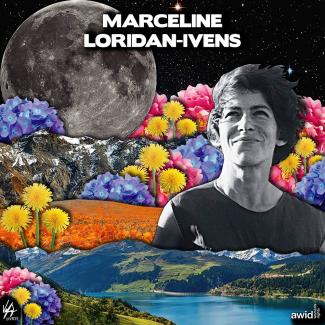
Marceline Loridan-Ivens

Born in 1928, Marceline worked as an actress, a screenwriter, and a director.

She directed The Birch-Tree Meadow in 2003, starring Anouk Aimee, as well as several other documentaries. She was also a holocaust survivor. She was just fifteen when she and her father were both arrested and sent to Nazi concentration camps. The three kilometres between her father in Auschwitz and herself in Birkenau were an insurmountable distance, which she writes about in one of her seminal novels “But You Did Not Come Back.”

In talking about her work, she once said: "All I can say is that everything I can write, everything I can unveil — it's my task to do it.”


Marceline Loridan-Ivens, France

En quoi ce Forum sera-t-il différent?

Nous avons toujours veillé à ce que nos Forums soient développés conjointement avec nos partenaires, nos mouvements et nos groupes prioritaires.

Pour cette édition 2020, nous visons à approfondir et renforcer cet esprit et cette pratique de co-création et de collaboration. Nous reconnaissons également la nécessité d’améliorer l’équilibre entre l’inclusion de nombreuses voix et les expériences, tout en laissant aux participant-e-s et au personnel la possibilité de respirer, faire une pause et profiter de certains temps d’arrêt.

Ce Forum sera différent des diverses façons suivantes: 

  • Nous aurons beaucoup moins d’activités sur le Forum car nous voulons que les personnes aient le temps de s’impliquer, d’expérimenter, d’assimiler, de se parler, etc. C’est un élément fondamental à la communication: vous pouvez venir au Forum, être très impliqué-e et actif-ve et n’animer aucune activité organisée (ou “session”). 
  • Nous aurons des espaces ouverts - au moins une après-midi entière sans activité organisée - mais aussi des espaces physiques disponibles sur toute la durée du Forum pour que les personnes puissent organiser elles-mêmes des réunions, etc.  
  • Nous avons un Comité « contenu et méthodologie » composé de féministes provenant de différentes régions et possédant une expertise sur les méthodologies participatives pour nous soutenir, et encourager tou-te-s ceux-celles menant des activités sur le Forum à utiliser des formats créatifs et attrayants.

Snippet - Intro CSW69_FR

#BloquerLesFascismes

#FreezeFascisms

Depuis l’adoption de la Déclaration et du programme d’action de Beijing il y a 30 ans, les groupes fascistes exercent un pouvoir et une influence croissantes dans les espaces multilatéraux, faisant reculer les acquis en matière d’égalité de genre et de protection des droits humains dans le monde.

À l’approche de la CSW69, nous co-organisons de courageuses initiatives horizontales, sur le terrain et en ligne, pour échanger des stratégies et bâtir un pouvoir féministe au-delà de Beijing+30. Notre présence collective perturbe les mécanismes d’exclusion des institutions dans ces espaces tout en soutenant les mouvements qui s’organisent autour d’alternatives féministes aux systèmes d’oppression.

Participez aux conversations du 10 au 21 mars 2025 pour, collectivement, faire de la CSW69 un espace de résistance et de solidarité.

Snippet FEA Tanta Gente sem casa (FR)

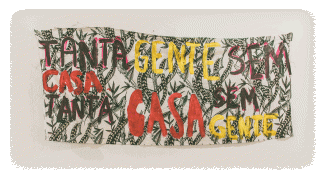
A graphic with green feather patterns on a beige background, text on it in Portuguese says “Tanta Gente sem casa. tanta casa sem gente” which means "So many people without a home,  so many homes without people"

« Tant de gens sans maison, tant de maisons sans personne. »

Dilma Ferreira Silva

Dilma Ferreira Silva was a leading Amazonian rights activist who fought for decades for the rights of people affected by dams.

She herself was among the 32,000 people displaced by the Tucuruí, a mega-hydroelectric power plant, built in Brazil during the 1964-1985 military dictatorship.

In 2005 Dilma was invited to join the Movement of Dam-Affected Peoples in Brazil (MAB), and in 2006 she formed the women’s collective, eventually becoming regional coordinator of the movement.

In speaking about her activism, her colleagues commented:

“She stood out very fast because she was always very fearless in the struggle.” 

Dilma lived in the rural settlement of Salvador Allende,50 kilometers from Tucuruí, and dedicated her life to better protect communities and the land affected by the construction of mega projects. She was especially concerned with the gendered impacts of such projects and advocated for women’s rights.

At a national MAB meeting in 2011, Dilma spoke to women affected by the dams, saying:

“We are the real Marias, warriors, fighters who are there, facing the challenge of daily struggle”.

In the following years, Dilma organized grassroots MAD groups and worked with the community to form farming cooperatives that created a better distribution of food for the community. They improved the commercialization of fishing, and developed a cistern project for safe drinking water. She was also an advocate for farmers whose lands were being coveted by ‘grileiros’ (land grabbers). 

On 22nd March 2019, at the age of 48, Dilma, her husband and their friend were all brutally murdered. The three killings came as part of a wave of violence in the Amazon against the Movimento dos Trabalhadores Sem Terra (translates as ‘landless workers’ movement’), environmental and indigenous activists. 
Comment puis-je financer ma participation au Forum de l’AWID ? De nombreux-ses activistes n’auront pas les moyens de payer les frais relatifs au Forum – l’AWID a-t-elle pris des mesures pour leur fournir de l’assistance ?

Veuillez visiter la page « Financement » pour obtenir des idées et vous inspirer sur les façons dont financer votre participation au prochain Forum, y compris pour vous informer sur le soutien limité que l’AWID sera en mesure de fournir.