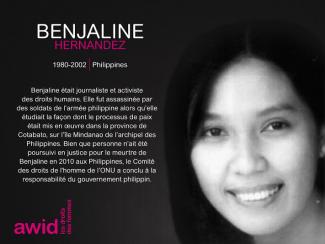
Benjaline Hernandez
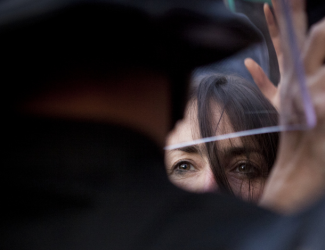
WHRDs are self-identified women and lesbian, bisexual, transgender, queer and intersex (LBTQI) people and others who defend rights and are subject to gender-specific risks and threats due to their human rights work and/or as a direct consequence of their gender identity or sexual orientation.
WHRDs are subject to systematic violence and discrimination due to their identities and unyielding struggles for rights, equality and justice.
The WHRD Program collaborates with international and regional partners as well as the AWID membership to raise awareness about these risks and threats, advocate for feminist and holistic measures of protection and safety, and actively promote a culture of self-care and collective well being in our movements.
WHRDs are exposed to the same types of risks that all other defenders who defend human rights, communities, and the environment face. However, they are also exposed to gender-based violence and gender-specific risks because they challenge existing gender norms within their communities and societies.
We work collaboratively with international and regional networks and our membership
We aim to contribute to a safer world for WHRDs, their families and communities. We believe that action for rights and justice should not put WHRDs at risk; it should be appreciated and celebrated.
Promoting collaboration and coordination among human rights and women’s rights organizations at the international level to strengthen responses concerning safety and wellbeing of WHRDs.
Supporting regional networks of WHRDs and their organizations, such as the Mesoamerican Initiative for WHRDs and the WHRD Middle East and North Africa Coalition, in promoting and strengthening collective action for protection - emphasizing the establishment of solidarity and protection networks, the promotion of self-care, and advocacy and mobilization for the safety of WHRDs;
Increasing the visibility and recognition of WHRDs and their struggles, as well as the risks that they encounter by documenting the attacks that they face, and researching, producing, and disseminating information on their struggles, strategies, and challenges:
Mobilizing urgent responses of international solidarity for WHRDs at risk through our international and regional networks, and our active membership.
During her 38-year career, Debbie Stothard, has worked with diverse communities and activists to engage states, IGOs and other stakeholders throughout Asia, Africa, Europe, and the Americas on human rights and justice. Her work is focused on the thematic priorities of business and human rights, atrocity prevention, and women’s leadership. Accordingly, she has either facilitated or been a resource person at nearly 300 training events in the past 15 years. Most of these were grassroots-oriented workshops delivered in the field, focused on human rights advocacy, economic literacy and business and human rights, and transitional justice and atrocity prevention. Her work in transitional justice and atrocity prevention has mainly focused on Burma/Myanmar, however she has provided advice on responses to other country situations around the world.
During 1981 – 1996, Debbie worked as a crime reporter, student organizer, policy analyst, academic, government advisor and food caterer in Malaysia and Australia while volunteering for human rights causes. In 1996, she founded ALTSEAN-Burma which spearheaded a range of innovative and empowering human rights programs. This includes ALTSEAN’s ongoing intensive leadership program for diverse young women from Burma, which in the past 22 years, has helped strengthen and expand women’s leadership in conflict-affected zones. She served as a member of the Board of the International Federation for Human Rights (FIDH) for 9 years as Deputy Secretary-General (2010-2013) and Secretary-General (2013 – 2019) during which she promoted the mission and profile of FIDH at approximately 100 meetings and conferences per year.
جلسة عامة | التنظيم لتحقيق النصر
مع نازك أبيلجازيفا وأمارانتا جوميز ريجالادو وسيندي ويزنر ولوسينيا فريتا
Jemimah Naburri-Kaheru est une stratège internationale accomplie en matière de ressources humaines à impact profond dans la région de la Corne de l'Afrique. Jemimah était auparavant responsable régionale des ressources humaines et du bureau de l'Initiative stratégique pour les femmes dans la Corne de l'Afrique (SIHA) . Son influence s’est étendue jusqu’à la direction des ressources humaines de plus de 70 employé·e·s régionaux·ales, alors que l'organisation connaissait une croissance rapide, avec une augmentation de 40 % de ses revenus annuels. Tout au long de sa carrière, Jemimah a orchestré avec succès des efforts de recrutement, introduit des systèmes de performance basés sur le mérite, de même que supervisé les relations avec les employé·e·s et les politiques RH. Elle a joué un rôle central dans le soutien aux stratégies mondiales de personnel. Avec une formation universitaire en Études de Développement de l'Université de Makerere (Ouganda) et un Master en Gestion des Ressources Humaines, Jemimah est évidemment engagée envers le développement professionnel. Sa contribution à des effectifs hautement performants et à un leadership international en matière de ressources humaines la positionne comme un atout inestimable dans toute entreprise mondiale.
يتبيّن من هذه التويتات الفكاهة المقرونة بالإثارة والاهتياج الجنسيّ، التي تتّسم بها المقاربة النسوية لكتابة الرسائل ذات المضامين الجنسية، دون أن تُسقط عن نفسها الالتزام بالمساواة والعدالة.
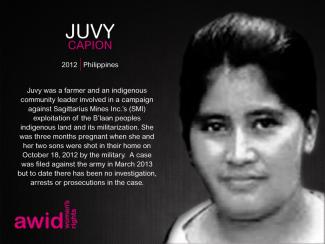
Khaoula Ksiksi is a passionate advocate for justice, equity, and liberation. As a Gender, Equality, Diversity, and Inclusion (GEDI) Advisor, she works to make inclusivity a lived reality, not just a policy, across humanitarian programs and crisis contexts. She collaborates with teams to challenge structural oppression using bold, transformative tools rooted in lived experience.
Her activism began on the frontlines of Tunisia’s anti-racism movement. With Mnemty, she helped push through the country’s first anti-discrimination law, forcing a national reckoning with racial injustice. She later co-founded Voices of Black Tunisian Women to amplify Black women’s leadership, build solidarity networks, and demand visibility in a society that often silences them.
Khaoula is also a founding member of Falgatna, a radical queer-feminist movement fighting for SOGIESC rights and supporting LGBTQI+ communities through direct action, digital resistance, and survivor-centered advocacy.
Previously, she led regional feminist and climate justice projects at the Rosa Luxemburg Foundation in North and West Africa.
At the heart of her work is a deep belief: no one is free until we all are. Her activism is both a fight and a love letter to her people, her communities, and the world we deserve.
L'exposition #MeToo en Chine a été organisée pour la première fois en 2019 et a effectué une tournée dans 5 villes. L'objectif de l'exposition est de mettre davantage en avant les expériences personnelles des victimes et des activistes et, en prenant part à ces histoires, d'inspirer notre public à se joindre à la lutte. L'exposition est elle-même devenue une partie de la lutte #MeToo; elle a fait face à d’innombrables défis lors de sa tournée à travers la Chine et a même risqué la fermeture à plus d'une occasion.
Please refer to the Call for Activities for this information, including the section “What you need to know”.
We work to achieve gender justice and women’s human rights by strengthening the collective voice, impact and influence of global women’s rights advocates, organizations and movements.
Nicole Barakat is a queer femme, SWANA artist born and living on Gadigal Country (so-called Sydney, Australia). She works with deep listening and intuitive processes with intentions to transform the conditions of everyday life. Her work engages unconventional approaches to art-making, creating intricate works that embody the love and patience that characterises traditional textile practices.
Contarás con todos los materiales estándar para talleres y presentaciones: rotafolios, marcadores, notas autoadhesivas, así como proyectores y equipos audiovisuales. Cualquier material adicional será responsabilidad de lxs organizadorxs de la actividad. El equipo de logística de AWID estará disponible para responder preguntas y aconsejar.
Este proyecto se desarrolla en colaboración con:

كل ثلاث إلى أربع سنوات، تستضيف جمعية حقوق المرأة في التنمية حدثها الدولي الرئيسي. إنه أكبر حدث في العالم يركز بكل طاقته على الحركات النسوية والعدالة الجندرية بكل تنوعها. إنه تجمع عالمي للناشطين/ات النسويين/ات والحركات المتحالفة والباحثين/ات والممولين/ات وصانعي/ات السياسات. ويتنقل المنتدى بين مناطق وبلدان مختلفة في الجنوب العالمي.
Notre travail est de portée internationale. Nous collaborons étroitement avec nos membres et d’autres organisations pour les droits des femmes et autres allié-e-s, tant au niveau local que national et régional. Nous faisons en sorte que leurs réalités nourrissent notre travail.
Manal Tamimi Palestine
Bubulina Moreno, Colombia
Karolina Więckiewicz, Poland
Anwulika Ngozi Okonjo, Nigeria