WHRDs are self-identified women and lesbian, bisexual, transgender, queer and intersex (LBTQI) people and others who defend rights and are subject to gender-specific risks and threats due to their human rights work and/or as a direct consequence of their gender identity or sexual orientation.
WHRDs are subject to systematic violence and discrimination due to their identities and unyielding struggles for rights, equality and justice.
The WHRD Program collaborates with international and regional partners as well as the AWID membership to raise awareness about these risks and threats, advocate for feminist and holistic measures of protection and safety, and actively promote a culture of self-care and collective well being in our movements.
Risks and threats targeting WHRDs
WHRDs are exposed to the same types of risks that all other defenders who defend human rights, communities, and the environment face. However, they are also exposed to gender-based violence and gender-specific risks because they challenge existing gender norms within their communities and societies.
By defending rights, WHRDs are at risk of:
Physical assault and death
Intimidation and harassment, including in online spaces
Judicial harassment and criminalization
Burnout
A collaborative, holistic approach to safety
We work collaboratively with international and regional networks and our membership
to raise awareness about human rights abuses and violations against WHRDs and the systemic violence and discrimination they experience
to strengthen protection mechanisms and ensure more effective and timely responses to WHRDs at risk
We work to promote a holistic approach to protection which includes:
emphasizing the importance of self-care and collective well being, and recognizing that what care and wellbeing mean may differ across cultures
documenting the violations targeting WHRDs using a feminist intersectional perspective;
promoting the social recognition and celebration of the work and resilience of WHRDs ; and
building civic spaces that are conducive to dismantling structural inequalities without restrictions or obstacles
Our Actions
We aim to contribute to a safer world for WHRDs, their families and communities. We believe that action for rights and justice should not put WHRDs at risk; it should be appreciated and celebrated.
Promoting collaboration and coordination among human rights and women’s rights organizations at the international level to strengthen responses concerning safety and wellbeing of WHRDs.
Supporting regional networks of WHRDs and their organizations, such as the Mesoamerican Initiative for WHRDs and the WHRD Middle East and North Africa Coalition, in promoting and strengthening collective action for protection - emphasizing the establishment of solidarity and protection networks, the promotion of self-care, and advocacy and mobilization for the safety of WHRDs;
Increasing the visibility and recognition of WHRDs and their struggles, as well as the risks that they encounter by documenting the attacks that they face, and researching, producing, and disseminating information on their struggles, strategies, and challenges:
Mobilizing urgent responses of international solidarity for WHRDs at risk through our international and regional networks, and our active membership.
Related Content
Por qué y cómo renovar tu membresía a AWID
Conoce a otras/os afiliadas/os
Nuestras/os afiliadas/os tanto individuales como institucionales provienen de todas las regiones del mundo y de 163 países; las/os más recientes se nos han unido desde Zimbabue, Turquía y los Estados Unidos. ¡Todas/os nuestras/os afiliadas/os aportan una rica y diversa gama de perspectivas, experiencias, conocimiento, energía e inspiración!
¿Sabías que cada semana publicamos perfiles de afiliadas/os?
Uno de los beneficios de ser afiliada/o de AWID es que tu historia sea destacada en nuestro boletín informativo, el cual llega a 35,000 suscriptoras/es, y a través de nuestros canales en las redes sociales que tienen más de 60,000 seguidores.
Publicaciones recientes:
Conoce a Angila Ashitua, una joven afiliada a AWID que vive en el condado de Vihiga, Kenia Occidental.
Aprendiendo más acerca del trabajo que hace AWID y de temas relativos a los derechos de las mujeres y la justicia social por medio de nuestras publicaciones y recursos, incluyendo el último video "Cambiando sistemas, cambiando vidas". [disponible solo en inglés]
Participando en nuestras sesiones de aprendizaje electrónico. ¡Mira lo más destacado de nuestro seminario en línea sobre justicia fiscal! [disponible solo en inglés]
¡Y mucho más!
Puedes renovar tu membresía por uno, dos o tres años; también ofrecemos membresías individuales e institucionales gratis a quienes tengan bajos ingresos o presupuestos.
Si tienes alguna dificultad y necesitas apoyo con el proceso de inscripción, por favor no dudes en comunicarte conmigo a través de membership@awid.org
Testemonios de nuestras/os afiliadas/os
"AWID nos ha resultado una red muy interesante y estamos participando en muchas de sus plataformas". - Engabu Za Tooro (afiliada/o institucional AWID)
"Espero una colaboración fructífera con el equipo. Me siento excelente. Gracias por aceptarme como afiliada". - R. Chakraborty (afiliada individual AWID)
"Muchas gracias, AWID, pues el trabajo que hacen es formidable. Aprecio realmente sus esfuerzos". - E. Khan (afiliada individual AWID)
Snippet FEA Life expectancy of a trans and travesti (FR)
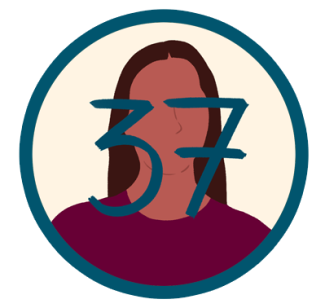
L'espérance de vie d'une personne trans et travesti en Argentine est de 37 ans - l'âge moyen de la population générale est de 77 ans.
¿Puedo contactarme con alguien si tengo alguna pregunta o duda?
Si tienes alguna pregunta o duda, contáctanos a través del formulario disponible aquí, indicando «Encuesta ¿Dónde está el dinero?» en el título del mensaje. También puede escribirnos a witm@awid.org.
Une fois que vous aurez analysé l’ensemble des données issues du sondage, des interviews, de la recherche documentaire et possiblement d’autres sources, vous pourrez créer votre produit final.
Votre produit final sera le document qui synthétisera, analysera et posera un regard critique sur vos données. Ce sera la composante que vous partagerez avec votre communauté afin de présenter et d’expliquer votre recherche à votre auditoire.
À l’AWID, nous rédigeons fréquemment un rapport complet qui analyse chaque ensemble de données et qui synthétise tous nos résultats pour ensuite créer des produits plus concis comme des infographies et des sommaires (expliqué plus loin dans la section « Finalisez et mettez en forme »).
1. Écrivez clairement
Organisez vos données comme si vous vouliez raconter une histoire. Vous pouvez suivre l’ordre de votre sondage. Vous pouvez également regrouper certaines questions qui mènent à votre conclusion de façon cohérente et progressive.
Adaptez votre langage à votre public. Employez un langage universel et évitez le jargon ou les termes trop techniques.
L’importance de la révision
La personne chargée de la révision relira votre document, s’assurera qu’il est rédigé de manière concise, procédera à la vérification des faits, soulèvera les incohérences qui doivent être résolues, assurera la fluidité du texte et suggérera éventuellement des titres.
Il est préférable que cette personne connaisse et comprenne votre travail WITM, sans être engagée dans la recherche. Ainsi, elle apportera au document une nouvelle perspective.
2. Rendez-le attrayant
Créez des tableaux et des graphiques à l’aide des données recueillies. Ce type de documents visuels est très utile pour faire ressortir les principaux résultats de votre recherche et pour valider votre analyse.
Utilisez des images pertinentes qui illustrent vos propos.
Mettez en évidence les principaux chiffres et/ou les témoignages percutants.
Rappel : Plus votre produit est accessible, plus les gens auront envie de le lire…et de le partager!
À cette étape, vous avez recueilli toutes vos données, vous les avez analysées et vous avez transformé ces renseignements en produit final, probablement en un long rapport.
1. Peaufinez vos résultats
Avant de passer à la prochaine étape, vous devriez partager votre produit final avec les organisations, les activistes et les donateurs qui vous conseillent.
C’est le moment idéal pour vérifier les aspects suivants :
Est-ce qu’il manque des points clés à votre analyse des tendances et du panorama actuels du financement ?
Est-ce qu’il manque des points clés à vos conclusions ?
Y a-t-il des données inexactes qui doivent être corrigées ?
Y a-t-il des suggestions de nature générale sur la manière de renforcer le rapport afin d’atteindre les objectifs fixés dans le cadre de référence de la recherche.
Lorsque vous aurez intégré toutes les réactions de vos conseillers et conseillères, assurez-vous de présenter le document à la personne chargée des révisions.
Vous aurez ainsi en main la version finale et complète de votre rapport. Si vous prévoyez de publier votre rapport final en d’autres langues, il est temps de le faire traduire.
2. Encouragez les réactions
Les personnes qui vous conseillent seront probablement très occupées. Assurez-vous de leur accorder un délai raisonnable lorsque vous leur demandez de commenter le texte.
Soyez brefs et spécifiques lorsque vous sollicitez des commentaires, de sorte qu’il leur soit facile d’y répondre. Si vous le souhaitez, vous pouvez simplement copier et coller la liste des points que nous vous avons fournie.
Si vous publiez en plusieurs langues, assurez-vous que vos conseillers et conseillères vérifient la ou les versions finales traduites de vos produits.
Il s’agit d’une contribution considérable de la part de vos conseillers et conseillères. Pensez à leur offrir une forme de reconnaissance.
• 1 personne (ou plus) chargée de la recherche
• 1 éditeur-trice (spécialisé-e web si vous créez des prduits en ligne)
• Traducteur(s)-trice(s), si vous réalisez votre recherche en différentes langues
Ressources requises :
• Liste d’organisations, de donateurs et d’activistes agissant à titre consultatif
• Note conceptuelle (définie par votre cadre de référence)
• Résultats préliminaires de votre sondage
• Questions d'interview
• Résultats de vos interview
• Données de votre recherche documentaire
• Toutes les données utilsées dans le rapport
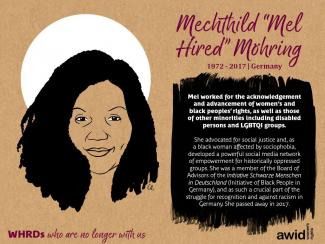
We all can dance by Mechthild Möhring (aka serialmel)
How I punt myself at the narrow hard knitting I once retrieved. I'm dancing in the kitchen when I'm alone. Gracile and powerful. When I'm in company I'm clumsy. My body scandalizes, scandalizes the laws of look I feel, scandalizes the words which banished me. "Of course she can dance, it's in her blood as a Black person." "If she is able to dance nicely she is good in bed" they whisper, they murmur, no - they say it openly into my face. They smirk and rub themselves against me and let me move back. I stumble and fall. My feet reject their duty. Bearish I get out of breath. Smiling I place myself out of events and notice how my face freezes into a mask.
Translated into English by Tsepo Bollwinkel
Original in German
Tanzen können wir alle Von Mechthild Möhring (aka serialmel)
Wie ich mich stosse an den engen, harten Maschen, in die ich mich einst zurückgezogen habe. Ich tanze in der Küche, wenn ich allein bin. Grazil und kraftvoll. Wenn ich in Gesellschaft bin, bin ich unbeholfen. Mein Körper eckt an, an die Gesetze des Blicks, den ich spüre, an die Worte, die mich bannten. „Natürlich kann sie tanzen, als Schwarze hat sie das im Blut.“ „Wenn sie gut tanzen kann, dann ist sie auch gut im Bett“ flüstern sie, raunen sie, nein, sie sagen es mir laut ins Gesicht. Sie grinsen und reiben sich an mir und lassen mich zurückweichen. Ich stolpere und falle. Meine Füsse verweigern ihren Dienst. Tollpatschig gerate ich ausser Atem. Lächelnd setze ich mich an den Rand des Geschehens und bemerke, wie mein Gesicht zur Maske erstarrt.
Создать ориентированную на феминистские реалии доказательную базу движения денег их получателей
Body
Our Vision: Economic Justice in a Feminist World
As feminists struggling for gender, peace, economic, social and environmental justice, we know there is no single recipe for success but an array of possibilities that can and are making change happen. The menu of options is as diverse as our movements and the communities in which we live and struggle.
Before we dare to present some of the feminist imaginations for another world, here are the principles around which we base our propositions:
1. Self-determined development from the local to the global
We believe there is no one model for all and that everyone has a right to claim and contribute to building another world that is possible, as the World Social Forum motto puts it.
This includes the right to participate in democratic governance and to influence one’s future – politically, economically, socially and culturally.
Economic self-determination gives peoples the ability to take control over their natural resources and use those resources for their own ends or collective use. Furthermore, women’s economic agency is fundamental to mitigating the often cyclical nature of poverty, denial of education, safety, and security.
2. Rights, substantive equality and justice are at the core of the economy
The principle of substantive equality is laid out in the Convention on the Elimination of All Forms of Discrimination against Women (CEDAW) and other international human rights instruments. This principle is fundamental for development and achieving a just economy as it affirms that all human beings are born free and equal.
Non-discrimination is an integral part of the principle of equality that ensures that no one is denied their rights because of factors such as race, gender, language, religion, sexual orientation, gender identity, political or other opinion, national or social origin, property or birth.
The inherent dignity of all persons without distinction must be upheld and respected. While States are responsible for ensuring the use of maximum available resources for the fulfilment of human rights, reclaiming rights and dignity is fundamentally a key space for civil society struggle and popular mobilization.
3. Just distribution for all, without monopolization (the anti-greed principle)
This principle, exercised through organized efforts to transform unjust institutions, guides the restoration of balance between "participation" (input) and "distribution" (output) when either principle is violated.
It puts limits on monopolistic accumulations of capital and other abuses of property. This concept is founded on an economy model that is based on fairness, and justice.
4. Feminist and cross-movement solidarity is key
In order to make change happen, we need strong and diverse feminist networks. We need movements building solidarity from the personal to the political, from the local to the global and back.
Building collective power through movements helps convert the struggle for human rights, equality and justice into a political force for change that cannot be ignored.
“Only movements can create sustained change at the levels that policy and legislation alone cannot achieve.”
Os movimentos feministas, de direitos das mulheres, de justiça de género, de LBTQI+ e de aliados em todo do mundo encontram-se num momento crítico, e enfrentam uma forte retaliação contra direitos e liberdades conquistados anteriormente. Os últimos anos trouxeram o crescimento rápido do autoritarismo, a violenta repressão da sociedade civil e a criminalização dos defensores dos direitos humanos das mulheres e de pessoas de género diverso, o aumento da guerra e do conflito em várias partes do nosso mundo, a perpetuação contínua de injustiças económicas e crises de saúde, da ecologia e do clima interligadas.
Cuestionar el modelo de crecimiento económico
Contexto
Las propuestas de decrecimiento cuestionan la premisa de que la economía de los países debe ‘crecer o perecer’ y muestran la falsedad del lugar central que se le otorga al crecimiento medido por un aumento del Producto Bruto Interno (PIB).
Definición
Un modelo de decrecimiento propone un cambio hacia niveles de producción y consumo más bajos y sostenibles. En esencia postula una reducción del sistema económico para dejarle más espacio a la cooperación entre personas y a los ecosistemas humanos.
Esta propuesta incluye:
Reducir la producción superflua de recursos, energías y emisiones, sobre todo en el Norte (p.ej. las industrias automotriz y militar)
Redirigir las inversiones hacia los sectores de cuidados, infraestructura social y restauración del ambiente.
Perspectiva feminista
Las perspectivas feministas dentro de la teoría y práctica del decrecimiento sostienen que también es necesario redefinir y revalidar el trabajo no remunerado y remunerado, de cuidados y en el mercado, para superar los estereotipos tradicionales de género así como las brechas laborales y las desigualdades en el ingreso prevalecientes que devalúan el trabajo de cuidado.
Para leer más acerca de esta propuesta:
En El futuro que queremos: Occupy development Christa Wichterich sostiene que para quebrar la lógica hegemónica del crecimiento sin límites y el rédito rápido para las inversiones, los tres aspectos centrales de un paradigma diferente para el desarrollo deben combinar el cuidado, los bienes comunes y la suficiencia en la producción y el consumo.
Equitable, Ecological Degrowth: Feminist Contributions [Decrecimiento con equidad y ecológico: Aportes feministas] (en inglés) de Patricia Perkins recomienda desarrollar indicadores alternativos eficaces de bienestar, incluyendo información sobre equidad social y económica así como horas dedicadas al trabajo, para mostrar la importancia del trabajo y los servicios no remunerados para la economía y ofrecer un mecanismo para el reconocimiento de quienes los realizan.
Snippet FEA how important essential workers are (FR)
La pandémie de COVID-19 a montré au monde l'importance des travailleur·euses essentiel·les. Nous parlons des personnes qui font le ménage, les travailleur·euses domestiques, les infirmier·ères, les d'ambulancier·ères, les personnes travaillant dans les transports, les supermarchés et autres. Leur travail consiste à prendre soin et à garantir le bien-être des autres et à faire fonctionner nos économies.