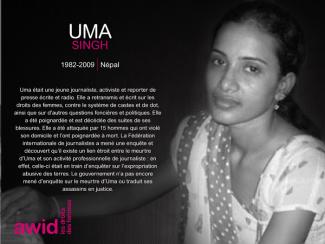
Uma Singh
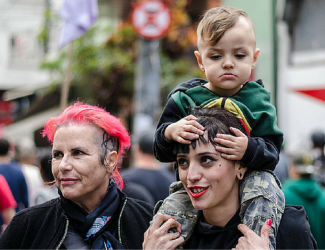
Over the past few years, a troubling new trend at the international human rights level is being observed, where discourses on ‘protecting the family’ are being employed to defend violations committed against family members, to bolster and justify impunity, and to restrict equal rights within and to family life.
The campaign to "Protect the Family" is driven by ultra-conservative efforts to impose "traditional" and patriarchal interpretations of the family, and to move rights out of the hands of family members and into the institution of ‘the family’.
Since 2014, a group of states have been operating as a bloc in human rights spaces under the name “Group of Friends of the Family”, and resolutions on “Protection of the Family” have been successfully passed every year since 2014.
This agenda has spread beyond the Human Rights Council. We have seen regressive language on “the family” being introduced at the Commission on the Status of Women, and attempts made to introduce it in negotiations on the Sustainable Development Goals.
AWID works with partners and allies to jointly resist “Protection of the Family” and other regressive agendas, and to uphold the universality of human rights.
In response to the increased influence of regressive actors in human rights spaces, AWID joined allies to form the Observatory on the Universality of Rights (OURs). OURs is a collaborative project that monitors, analyzes, and shares information on anti-rights initiatives like “Protection of the Family”.
Rights at Risk, the first OURs report, charts a map of the actors making up the global anti-rights lobby, identifies their key discourses and strategies, and the effect they are having on our human rights.
The report outlines “Protection of the Family” as an agenda that has fostered collaboration across a broad range of regressive actors at the UN. It describes it as: “a strategic framework that houses “multiple patriarchal and anti-rights positions, where the framework, in turn, aims to justify and institutionalize these positions.”
Si, quelle qu’en soit la raison, vous souhaitez que votre participation soit annulée et vos réponses supprimées, vous en avez le droit. Merci de nous contacter par le biais de ce formulaire, en indiquant « Enquête WITM (Où est l’argent?) » dans l’objet de votre message. Nous annulerons votre participation et supprimerons vos réponses.
Le produit de l’ensemble de votre recherche est maintenant organisé et révisé. Vous désirez maintenant que les résultats soient visuellement accessibles et attrayants afin d’en faciliter la diffusion.
Dans cette section
- Mettez en forme votre rapport final pour publication
1. Pensez comme pense votre public
2. Collaborez avec un-e graphiste professionnel-le
3. Veillez à la cohérence- Contrôlez la qualité des traductions
Pensez à élaborer des produits plus courts qui accompagnent le rapport complet.
Comme il a été mentionné à la section Synthétisez les résultats de votre recherche, l’AWID tire fréquemment des produits plus succincts du long rapport de recherche. Cela facilite une distribution plus vaste, particulièrement destinée à des publics clés.
Ne perdez jamais de vue votre population cible : qui lira votre rapport ?
Exemples de produits plus courts tirés du long rapport de recherche :
Les gens sont constamment submergés d’information. Votre produit devra être visuellement percutant afin de maintenir l’intérêt de votre public. Ici encore, le fait d’avoir une idée précise de ce que vous souhaitez accomplir et de ceux et celles que vous voulez toucher permettra à la-au graphiste de créer des produits ciblés.
Un très long rapport en format PDF pourrait sembler être la seule façon de présenter votre recherche. Cependant, ce genre de document peut rebuter la plupart des gens, particulièrement s’il est affiché en ligne.
Si vous voulez partager votre produit avec une communauté en ligne, pensez à créer des mèmes (symboles culturels transmis de façon virale) et des infographies à diffuser dans les médias sociaux, les blogs et les plateformes Web.
Lorsque vous devez décider de créer ou non des produits plus courts, considérez la possibilité de diviser vos résultats en produits plus succincts que vous pourrez partager avec les populations ciblées ou encore à différents moments de l’année, pour susciter un intérêt renouvelé à l’égard de votre produit.
Si avez peu de temps et un peu de ressources financières, nous vous recommandons d’embaucher une entreprise de conception graphique.
Pour des raisons économiques, il peut sembler tentant d’avoir recours au personnel interne pour mettre en forme votre produit. Cependant, un-e graphiste professionnel-le peut avoir d’énormes incidences sur l’aspect de votre produit final et sur les retombées qu’il peut avoir !
La-le graphiste (interne ou embauché-e) doit pouvoir :
Ce dont la-le graphiste aura besoin de votre part :
Les graphistes sont des spécialistes du design visuel. Ils/Elles n’ont pas forcément de connaissances dans le domaine des droits des femmes et ne sont pas au fait des résultats de votre recherche, particulièrement si vous travaillez avec un prestataire externe. Indiquez-leur clairement quels sont les éléments importants du rapport et le public que vous ciblez.
En fonction de ces détails, la personne chargée du graphisme suggérera des moyens de mettre en exergue ces éléments et rendra l’ensemble du produit attrayant.
Lorsque vous créez une série de produits plus succincts, n’oubliez pas de les lier les uns aux autres :
Il est également important d’assurer la participation du personnel afin que ses membres puissent garantir que tous les produits dérivés demeurent fidèles aux résultats de la recherche.
Si vous avez modifié le texte une fois que la conception graphique et la mise en forme du rapport de votre recherche ont été finalisées, assurez-vous de faire parvenir ces changements aux traducteurs-trices.
Si vous créez des produits plus succincts, vous devrez aussi les traduire lorsqu’ils auront été conçus et mis en forme. Ces traductions doivent être suffisamment claires pour permettre à la personne chargée du graphisme de la mettre en page, même si elle ne parle pas la langue.
Après la traduction du produit et avant de le partager, assurez-vous de faire revoir le document par une personne dont la langue maternelle est celle dans laquelle le produit est présenté.
7. Synthétisez les résultats de votre recherche

• 2-3 mois
• 1 personne (ou plus) chargée de la recherche
• 1 éditeur-trice (ou plus)
• Graphiste
• Traducteur(s)-trice(s), si nécessaire
• Liste des espaces de publication
7. Synthétisez les résultats de votre recherche
9. Parlez-en au monde entier !
Contenido relacionado
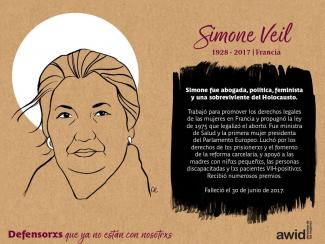
Huffington Post: Muere Simone Veil, la moral de Francia hecha mujer
El Mundo: Muere Simone Veil, superviviente del Holocauso e icono de los derechos de la mujer
EL CUPO LABORAL TRANS
no está siendo respetado por las empresas
If you have any questions or concerns, please contact us via the form here, indicating “WITM Survey” as the title of your message. You can also write to us at witm@awid.org.
The solidarity economy (including cooperative economy and gift economy) is an alternative framework that is allowing for different forms in different contexts, open to continual change.
This framework is grounded in the principles of:
The producers in a solidarity economy develop economic processes that are intimately related to their realities, preservation of the environment and mutual cooperation.
According to feminist geographer Yvonne Underhill-Sem, the gift economy is an economic system in which goods and services flow between people without explicit agreement of their value or future reciprocity.
Behind gifting is human relationship, generation of goodwill, and attention to the nurturance of the whole society and not just one’s immediate self and family, it is about the collective.
For example, in the Pacific region, this includes: collecting, preparing, and weaving terrestrial and marine resources for mats, fans, garlands, and ceremonial items; and raising livestock and storing seasonal harvests.
The incentives for women to be involved in economic activities are diverse, ranging from the fulfillment of career aspirations and making money for a long-term comfortable life to making money to make ends meet, paying off debt, and escaping from the drudgery of routine life.
To accommodate the diverse environments that women operate in, the concept of solidarity economy is in continual development, discussed and debated.
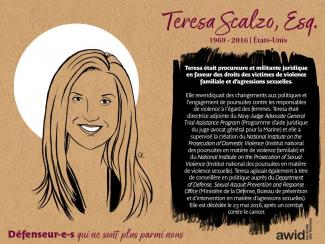
« Mes rêves et mes objectifs ont toujours été les mêmes que ceux de Lohana Berkins : que la coopérative continue à exister et non à fermer. Continuez à offrir cet endroit à nos collègues travesti, à leur donner du travail et un lieu de soutien»
Brisa Escobar,
présidente de la Coopérative

Para partilhar a sua experiência vivida com o financiamento da sua organização;
Como parte del Viaje por las Realidades Feministas de AWID, te invitamos a explorar nuestro nuevo Club de Cine Feminista: una colección de cortometrajes y largometrajes seleccionados por nuestrxs curadorxs y narradorxs feministas de todo el mundo, que incluyen a Jess X. Snow (Asia-Pacífico), Gabrielle Tesfaye (África/Diáspora Africana) y Esra Ozban (Sudoeste Asiático y África del Norte). Alejandra Laprea es la curadora del programa de América Latina y Centroamérica, que inauguraremos en septiembre, durante el evento de AWID Crear, Résister, Transform: un festival para movimientos feministas. Mientras tanto, ¡mantente atentx a los anuncios sobre proyecciones especiales y conversaciones con cineastas!
La crisis económica global actual ofrece claras evidencias de que las políticas económicas de las últimas tres décadas no han funcionado.
La devastación causada por la crisis en los hogares más vulnerables del Norte y del Sur Globales nos recuerda que la formulación de políticas económicas y la realización de los derechos humanos (económicos, sociales, políticos, civiles y culturales) han estado separados durante demasiado tiempo. Las políticas económicas y los derechos humanos no tienen por qué ser fuerzas opuestas sino que pueden existir de manera simbiótica.
Las políticas macroeconómicas afectan el funcionamiento de la economía en su totalidad, e influyen sobre la disponibilidad y la distribución de los recursos. En este contexto, las políticas fiscales y monetarias son fundamentales.
Estas políticas afectan los principales precios como las tasas de interés y de cambio que a su vez influyen de manera directa sobre otros elementos como el nivel de empleo, el acceso a créditos que se puedan pagar y el mercado de la vivienda.
Aplicar un marco de referencia de derechos humanos a las políticas macroeconómicas les permite a los Estados cumplir mejor con su obligación de respetar, proteger y promover los derechos económicos y sociales. Los derechos humanos son estándares universales que gozan de consenso internacional. Estas normas legales se expresan en tratados de Naciones Unidas como la Declaración Universal de Derechos Humanos (DUDH), el Pacto Internacional sobre Derechos Civiles y Políticos (PIDCP) y el Pacto Internacional sobre Derechos Económicos, Sociales y Culturales (PIDESC).
El artículo 1 de la DUDH dice que «Todos los seres humanos nacemos libres e iguales en dignidad y derechos».
Aunque la DUDH fue escrita hace más de seis décadas, su relevancia perdura. Muchas de las ideas que expresa se refieren a preocupaciones y temáticas centrales a las que continuamos enfrentándonos en todo el mundo: el rechazo a los tratos crueles, inhumanos o degradantes (artículo 5), protección contra toda discriminación (artículo 7), la propiedad (artículo 17), igual salario por trabajo igual. (artículo 23.2) y el acceso a la educación (artículo 26.1) son asuntos pertinentes tanto en países ubicados al norte como al sur del Ecuador.
En un sentido más específico, la legislación internacional obliga a los Estados a respetar, proteger y promover los derechos humanos, que incluyen a los derechos económicos y sociales, de las personas bajo su jurisdicción. Esto cobra una relevancia particular en este momento de crisis financiera. En Estados Unidos, la regulación estatal se desvirtúa en función de intereses particulares. El fracaso en cuanto a extender el rol de supervisión de los gobiernos en el contexto de cambios sociales y económicos es también un fracaso frente a la obligación de proteger los derechos humanos.
Para realizar los derechos económicos y sociales, los Estados deben cumplir con los principios fundamentales de derechos humanos. Algunos de esos principios pueden tener consecuencias importantes para la gobernabilidad de las instituciones y mercados financieros, pero esas posibilidades todavía no se han explorado del todo.
Los derechos económicos y sociales tienen una base institucional y legal concreta. Las declaraciones globales, tratados internacionales, pactos y en varios casos también las constituciones nacionales han incorporado aspectos del marco de referencia de los derechos económicos y sociales, por lo que ofrecen una infraestructura institucional en el derecho doméstico e internacional.
Algunas personas consideran que tal vez no resulte útil pensar en una justicia global por las complejidades institucionales que implica. Sin embargo, esto pasa por alto el hecho de que las instituciones globales ya ejercen impactos tanto positivos como negativos sobre la justicia social.
Resulta útil identificar las consecuencias que tienen algunos elementos de los marcos alternativos para la gobernabilidad económica y específicamente los que cuentan con el apoyo de instituciones existentes. Los derechos económicos y sociales constituyen uno de esos marcos de referencia específicos. Se trata de un marco de referencia en continua evolución que requiere de conversaciones y deliberaciones permanentes para abordar sus áreas aún no desarrolladas y sus potenciales deficiencias.

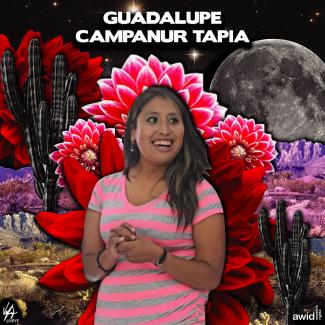
Guadalupe was an environmental activist involved in the fight against crime in Cherán, Mexico.
Guadalupe helped to overthrow the local government in April 2011 and participated in local security patrols including those in municipal forests. She was among the Indigenous leaders of Cherán, who called on people to defend their forests against illegal and merciless logging. Her work for seniors, children, and workers made her an icon in her community.
She was killed in Chilchota, Mexico about 30 kilometers north of her hometown of Cherá.


Феминистские движения, движения за права женщин, гендерную справедливость, ЛГБТКИ+ и смежные движения по всему миру переживают критический момент, сталкиваясь с мощной негативной реакцией на ранее завоеванные права и свободы. Последние годы привели к быстрому росту авторитаризма, жестоким репрессиям в отношении гражданского общества и криминализации правозащитниц(-ков) с разнообразной гендерной самоидентификацией, эскалации войн и конфликтов во многих частях света, продолжающейся экономической несправедливости, – и все это на фоне кризиса в области здравоохранения, экологии и климата.