Over the past few years, a troubling new trend at the international human rights level is being observed, where discourses on ‘protecting the family’ are being employed to defend violations committed against family members, to bolster and justify impunity, and to restrict equal rights within and to family life.
The campaign to "Protect the Family" is driven by ultra-conservative efforts to impose "traditional" and patriarchal interpretations of the family, and to move rights out of the hands of family members and into the institution of ‘the family’.
“Protection of the Family” efforts stem from:
rising traditionalism,
rising cultural, social and religious conservatism and
sentiment hostile to women’s human rights, sexual rights, child rights and the rights of persons with non-normative gender identities and sexual orientations.
Since 2014, a group of states have been operating as a bloc in human rights spaces under the name “Group of Friends of the Family”, and resolutions on “Protection of the Family” have been successfully passed every year since 2014.
This agenda has spread beyond the Human Rights Council. We have seen regressive language on “the family” being introduced at the Commission on the Status of Women, and attempts made to introduce it in negotiations on the Sustainable Development Goals.
Our Approach
AWID works with partners and allies to jointly resist “Protection of the Family” and other regressive agendas, and to uphold the universality of human rights.
In response to the increased influence of regressive actors in human rights spaces, AWID joined allies to form the Observatory on the Universality of Rights (OURs). OURs is a collaborative project that monitors, analyzes, and shares information on anti-rights initiatives like “Protection of the Family”.
Rights at Risk, the first OURs report, charts a map of the actors making up the global anti-rights lobby, identifies their key discourses and strategies, and the effect they are having on our human rights.
The report outlines “Protection of the Family” as an agenda that has fostered collaboration across a broad range of regressive actors at the UN. It describes it as: “a strategic framework that houses “multiple patriarchal and anti-rights positions, where the framework, in turn, aims to justify and institutionalize these positions.”
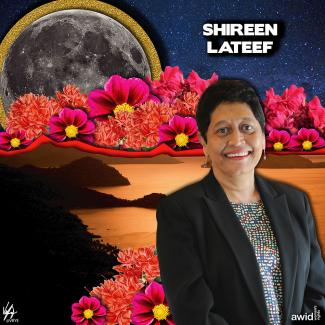
Shireen fue una inspiración para muchas feministas en Fiyi y una aliada poderosa del movimiento de mujeres.
Abogó incansablemente por la igualdad de género tanto a nivel local como regional. Comenzó su carrera como especialista junior en género en el Banco de Desarrollo Asiático e introdujo profundos cambios en las políticas de género de la institución. Su investigación «Gobernar mediante lxs danda: violencia doméstica entre lxs indo-fiyianxs» fue uno de los primeros trabajos de investigación sobre violencia doméstica, matrimonio y mujeres en Fiyi. Este trabajo fundacional ha sido un catalizador para el trabajo feminista en esta área.
El legado de Shireen sigue vivo porque son muchxs lxs que recuerdan su influencia, su compromiso y su apoyo al movimiento de mujeres de Fiyi y del Pacífico.
Snippet FEA Otras Union meetings and demonstrations (FR)
Réunions et manifestations du Syndicat OTRAS
Our values - esponsibility, Accountability, and Integrity
Responsabilité, responsabilisation et intégrité
Nous nous attachons à faire preuve de transparence, à utiliser nos ressources de manière responsable, à être équitables dans nos collaborations et à faire preuve de responsabilité et d'intégrité envers nos membres, nos partenaires, nos bailleurs de fonds et les mouvements avec lesquels nous travaillons. Nous nous engageons à réfléchir sur nos expériences, à partager ouvertement nos connaissances et à nous efforcer de modifier nos pratiques en conséquence.
إن رغبتم/ن في سحب استطلاعكم/ن ومحيه لأي سبب كان، لديكم/ن الحق الكامل بالقيام بذلك. الرجاء التواصل معنا عن طريق هذا النموذج وكتابة "استطلاع المال" في عنوان رسالتكم/ن وسنقوم بسحب ومحي أجوبتكم/ن.
Présentation du salon
Par Alejandra Laprea
Qu’il est difficile de condenser la puissance et la diversité des voix qui s'élèvent en Amérique latine afin de vous présenter les autres réalités qui émergent dans ce vaste territoire, ces réalités féministes que nous construisons à partir du mouvement et des organisations populaires….
Pendant longtemps, j’ai tenté de paramétrer ma recherche et la sélection des films qui vous permettraient d’avoir un aperçu de tous ces rêves et projets qui se matérialisent peu à peu sur les territoires ‘notre-américains’, comme nous aimons à les appeler. La tâche a été ardue : il a fallu tenter d'établir des paramètres tels que la présence géographique, la justice linguistique et la représentation de la diversité des populations : indiennes, afro-descendantes, migrantes, et la multiplicité des drapeaux et des luttes qui découlent de toutes ces voix. Je suis arrivée à la conclusion que la création de cette compilation était un travail qui prendrait plusieurs années, un de ces projets en perpétuelle construction.
Pour ce salon, je suis partie à la recherche d'œuvres liées à la mobilisation et à la militance, ainsi que de documents qui donneront peut-être lieu à de grands débats que nous n'avons pas encore eus.
Dans cette sélection de films, vous découvrirez les voix de réalisatrices qui ne se contentent pas de restituer les réalités féministes palpitant dans chaque recoin de ce territoire vaste et divers, mais explorerez aussi des oeuvres qui, dans leur conception même, s'interrogent sur le pourquoi, le qui et le comment du cinéma ou de l'audiovisuel. Ces femmes comprennent le cinéma comme un outil de lutte, comme quelque chose de plus que de simples images à apprécier sur un écran. Pour ces réalisatrices ou collectifs de cinéastes, le cinéma et l'audiovisuel constituent un outil capable de promouvoir la discussion, d'ouvrir un débat, bref, une ressource pour la pédagogie populaire et féministe.
Ainsi, cette petite présentation est un voyage à travers les réalités féministes à deux niveaux : d’un côté, il y a ces histoires que vous découvrirez, et de l’autre, le travail de ces cinéastes qui cherchent à expérimenter, à créer d’autres réalités féministes dans leur façon de faire de l’audiovisuel et de raconter des histoires.
Bon voyage au gré de ces films de résistance, créatifs et transformateurs !
Lima is Burning
Direction: Giovana García Soto
Docu-fiction
Spanish with English subtitles
In Lima is Burning our work plays with documentary and fiction to take us into the life of Gía, a non-binary person, who uses performance art as a tool to denounce and transgress, as a vital manifesto against transfobia in every space, including gays spaces. With Gía we also take a look at transfeminism as a safe community in which Gía feels embraced, where she shares feelings and affections.
Giovana Garcia Sojo is a young peruvian audiovisual producer, specialized in low-budget production, creation for children and adolescents in cinema and cinematographic script by the International School of Cinema and Television - EICTV in San Antonio de Baños - Cuba. Giovana has developed her path as a director towards women and feminized identities, Lima is Burning is one of her first works.
Yo, Imposible / Being Impossible
Réalisé par Patricia Ortega
Fiction
Sous-titres en anglais
Patricia Ortega, directrice de “Yo Imposible” explore à travers Ariel, une jeune dont l’intersexualité a été violentée chirurgicalement dans son enfance, les multiples façons dont on tente de normaliser la diversité sexuelle et de genre.
Le film nous raconte comment Ariel a découvert qu’elle était née intersexe et qu’elle avait subi plusieurs chirurgies visant à normaliser ses organes génitaux. Cette découverte confronte le personnage à la redécouverte de son corps, à la reconstruction de son identité et nous confronte, nous qui regardons le film, à la remise en question d’une société dominée par l’hétéronormativité qui invisibilise les autres et les condamne au malheur.
Patricia Ortega, cinéaste vénézuélienne vivant en Argentine, a étudié à l’Ecole internationale de Cinéma et Télévision de Cuba et s’est spécialisée dans la réalisation de films. À travers la fiction, elle traite les situations extrêmes que les femmes ou les corps féminisés traversent et leurs façons de les surmonter.
“Yo Imposible” est une prise de position face à la conception d’un monde qui n’est conçu qu’en termes de masculin/féminin et qui invisibilise les autres. «Ces personnes ne sont pas malades, simplement génétiquement différentes. On intervient sur leurs organes génitaux et leur corps au moyen d'hormones sans leur autorisation, ce qui constitue une violation de leurs droits humains et de leur identité, et on cherche à les faire entrer dans les canons établis.» - Patricia Ortega
Cubanas, mujeres en revolución [Cuban Women in Revolution]
Réalisé par Maria Torrellas Liebana
Documentaire
Sous-titres en anglais
María Torrellas nous raconte la révolution cubaine à travers les femmes qui l’ont fait vivre, dont Vilma Espín, Celia Sánchez et Haydee Santamaría, entre autres.
Mais on ne peut pas se limiter à raconter l'histoire de la révolution cubaine par les femmes au passé, et c'est une lutte quotidienne que Torrellas dévoile en donnant la voix aux paysannes cubaines, professionnelles, étudiantes et ouvrières d’aujourd’hui. Dans «Cubanas, mujeres en revolución», nous découvrons les défis actuels des femmes cubaines face aux préjugés persistants, aux nouvelles formes de violence et au défi constant de créer de nouvelles réalités féministes pour celles et celleux qui viendront après elles dans un territoire assiégé depuis plus de soixante-dix ans par l'impérialisme américain.
Maíia Torrellas
María Torrellas est une communicante et documentariste. Elle a une longue carrière cinématographique et a obtenu, entre autres, le prix Santiago Alvarez in Memoriam pour son documentaire : Memoria de una Hija de Oshun (Mémoire d’une fille d’Oshún).
«Dans ce documentaire, j’ai souhaité mêler les luttes des héroïnes d’hier à celles des femmes d’aujourd’hui. Il s’agit d’histoires racontées par les femmes elles-mêmes où elles évoquent également les combattantes qu’elles admirent le plus. J’ai été impressionnée d’entendre “la révolution nous a tout donné” ou “que serait devenue ma famille sans la révolution?” de la bouche de camarades aux origines humbles, paysannes ou noires.» - María Torrellas
Serie documental Cuidadera (Série documentaire Cuidadera)
Réalisé par Gabriela Arnal et Marzel Ávila pour Fondo de Acción Urgente - LAC
Équateur 2019
Sous-titres en anglais
CUIDANDERAS, qui fusionne les mots ‘cuidar’ (prendre soin) et ‘curanderas’ (guérisseuses), est la synthèse d’une série portant sur les femmes en Amérique latine sur leurs territoires, des femmes qui mettent leur corps et toute leur énergie à protéger leurs communes, à protéger ce que nous offre la pachamama en nous engageant à en faire usage avec autant de sagesse que le reste des êtres vivants. Cette mini-série de documentaires nous présente les histoires de trois collectifs de femmes latinoaméricaines qui se dédient à prendre soin de leurs territoires, guérir leurs corps et affronter les modèles extractivistes et racistes en Équateur, en Colombie et en Bolivie.
Guardianas del Amazonas (Gardiennes de l’Amazonie)
Province d’Orellana, Équateur. Depuis plusieurs siècles, les femmes Waorani se battent pour leur territoire amazonien et la préservation de leur culture autochtone. Aujourd’hui, elles sont confrontées aux menaces de l’industrie pétrolière et son modèle de production mortifère. Depuis la jungle, des leaders appartenant à l’Association des femmes Waorani de l’Amazonie équatorienne (AMWAE, d’après son sigle en espagnol) exposent les raisons de leur résistance et nous montrent cette joie inépuisable qui symbolise leur plus grande force.
COMADRES DEL PACÍFICO COLOMBIANO (FEMMES DU PACIFIQUE COLOMBIEN)
Buenaventura, Colombie. Dans le port le plus grand et le plus violent de Colombie, ravagé par des décennies de conflit armé, de racisme et de machisme, un groupe de femmes refuse de sombrer dans la peur et résiste dans l’adversité. La Red Mariposas de Alas Nuevas (Réseau papillons aux ailes nouvelles) réunit des femmes noires de la côte pacifique colombienne qui travaillent de concert pour protéger leur territoire, récupérer leurs traditions ancestrales et guérir les blessures de cette violence systématique et structurelle.
RED NACIONAL DE MUJERES EN DEFENSA DE LA MADRE TIERRA (RÉSEAU NATIONAL DE FEMMES POUR LA DÉFENSE DE LA TERRE MÈRE)
Protéger et prendre soin du corps-terre-territoire est la vocation des femmes autochtones, paysannes et irrigantes (chargées des irrigations) en Bolivie face à un modèle extractiviste qui menace leurs vies, leur santé, leur intégrité physique et sexuelle et la survie de leurs communautés et de leurs territoires. Le Réseau de défenseuses de la Terre Mère a réuni des femmes de plus de 12 communautés autochtones afin de défendre leur droit à l’eau et dénoncer les violations des droits humains et des droits de la nature perpétrées par les industries extractives, tout en récupérant leurs savoirs et pratiques ancestrales de soin collectif.
«CUIDANDERAS, un mot qui combine ‘cuidadoras’ (celles qui prennent soin) et ‘curanderas’ (guérisseuses), présente les histoires de femmes défenseuses latinoaméricaines qui se consacrent à prendre soin de leurs territoires comme de leurs corps. La force collective de ces femmes a changé l’histoire de leurs communautés en Équateur, en Colombie et en Bolivie face à l’extractivisme et au racisme.»
Yo aborto, tú abortas todxs, callamos (J’avorte, tu avortes, on se tait)
Réalisé par Carlina Reynso
Argentine 2013
Espagnol
Si quelque chose a marqué les luttes féministes en Amérique latine, c'est assurément le cri lancé à l'échelle continentale en faveur d’un avortement libre, sûr et gratuit. Du nord au sud, les mouvements féministes se lèvent et descendent dans la rue pour lutter en faveur de la libération de notre premier territoire : notre corps. Ce documentaire sur l'avortement au sein de ce salon s’avère ainsi indispensable à l’heure de comprendre le pouvoir de nos femmes latino-américaines.
“Yo aborto, Tu Abortas Todxs Callamos” raconte l’histoire de sept femmes, dont la réalisatrice du documentaire, issues de classes socioculturelles différentes, qui se penchent sur une problématique dont chacune a, un jour ou l’autre, fait l’expérience dans son propre corps : l’avortement clandestin.
À travers leurs témoignages, la réalisatrice tente de démonter les mythes liés à l’interruption volontaire de grossesse, de déstigmatiser la question et de renouveler notre regard sur l’une des formes de violence les plus courantes dans les Amériques.
Carolina Reynoso
Réalisatrice, chercheuse et productrice de cinéma féministe, c’est aussi une activiste féministe qui anime des ateliers de création de scénarios d’un point de vue du genre afin de multiplier les films illustrant des réalités différentes et des histoires contre-hégémoniques. Carolina Reynoso conjugue de manière équilibrée activisme et création dans chacune de ses œuvres.
«Nous sommes un groupe de réalisateurs·rices audiovisuel·le·s qui avons réalisé ce documentaire pour continuer à lutter en faveur d’un avortement libre, sûr et gratuit en Argentine. Le film présente les témoignages de sept femmes, dont la réalisatrice du documentaire, issues de différentes classes socioculturelles qui se penchent sur une problématique dont chacune a, un jour ou l’autre, fait l’expérience dans son propre corps: l’avortement clandestin.» -L’équipe de tournage
Historias Urgentes: Resistencia en ollas Comunes (Histoires urgentes : la résistance dans les pots communs)
Nosotras Audiovisuales, collectif de réalisatrices chiliennes
Chili 2020
Lien vers le micro documentaire:
Espagnol
"Historias Urgentes" est une série créée par des femmes afin de visibiliser les besoins et les expériences revêtant une importance pour la population des territoires qui composent le Chili d'aujourd'hui. Cette série audiovisuelle est née pour entretenir la flamme ayant attisé la révolte sociale en octobre 2019 dans un Chili diversifié qui s'était réveillé et avait alors déclaré : «ça suffit».
"Resistencia en ollas comunes", la première de ces "Historias urgentes", nous montre, par la voix de quatre femmes d'Iquique, de Valparaíso, de Chillán et de Santiago, comment les soins se trouvent en première ligne de la résistance, créant d'autres réalités féministes pour elles-mêmes et pour les communautés où vivent les femmes d'Amérique latine.
Nosotras audiovisuales
Cette organisation, qui réunit des femmes ayant un lien avec l’audiovisuel chilien, est née en 2017 du besoin de connecter les femmes qui travaillent dans l’audiovisuel. Elle encourage ainsi le réseautagel, la collaboration et l’information entre femmes du secteur audiovisuel, ainsi que leurs travaux et leurs points de vue sur le monde du travail.
Nosotras Audiovisuales participe à la révolte chilienne en enregistrant et créant des contenus de création collective.
Se trata de Mujeres (Il s’agit de femmes)
Micol Metzner
Argentine 2019
Castillan
À partir de son expérience personnelle, la réalisatrice Micol Metzner présente une œuvre qui mêle documentaire et fiction, sa voix de cinéaste engagée à celle de milliers de femmes victimes de la traite sur le continent et démontre enfin que la solidarité entre femmes constitue la meilleure protection.
Micol Metzner
Réalisatrice audiovisuelle et formée à l’Institut d’arts cinématographiques d’Avellaneda, cette directrice artistique et monteuse fait partie du Cluster audiovisual de la Ciudad de Buenos Aires (Cluster audiovisuel de la ville de Buenos Aires), un espace communautaire et coopératif multisectoriel qui réalise des projets indépendants.
Elle anime des ateliers de cinéma dans certains quartiers et dans des contextes carcéraux (institutions pour mineur·e·s et prisons pour femmes). Elle fait partie de la société de production audiovisuelle MVM.
«La société de production MVM est née de la nécessité de pouvoir exprimer beaucoup de choses que nous exprimons habituellement dans la rue et de pouvoir le faire de manière créative à travers le dessin, l'audiovisuel et la photographie.
La société de production MVM est un lieu de recherche sur le langage, le graphisme et l'audiovisuel d’un point de vue féministe. C'est aussi un lieu qui permet de se libérer de tout ce que nous vivons et de générer des productions artistiques, parfois pour guérir, parfois pour créer des espaces de débat, comme c’est le cas de ce court métrage... Je n'imaginais pas que ce serait le cas, mais à chaque fois que le court métrage est diffusé, beaucoup de choses sortent, il engendre des discussions qui sont beaucoup plus enrichissantes que le court métrage en soi. Et le fait que ce soit notre travail qui déclenche ça, c’est formidable...».
Suivez-nous sur les réseaux sociaux pour recevoir des informations sur les prochains événements et projections :
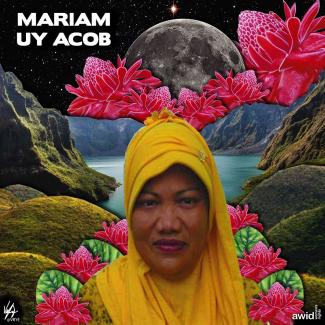
Mariam était assistante juridique à l'Alliance des droits humains Kawagib Moro.
Mariam était une fervente critique de la militarisation imposée aux communautés moro et a constamment dénoncé les bombardements aériens et les cantonnements de troupes. Elle a dû fuir et chercher refuge après avoir révélé et dénoncé des injustices commises à l'encontre des communautés musulmanes aux Philippines.
Il semble que Mariam ait été assassinée par de présumés agents de l'armée à cause de son action en tant que défenseure. Les assaillants qui l‘ont tuée l’ont épiée, ont rattrapé le véhicule dans lequel elle se trouvait et ont fait feu sur elle à sept reprises.
Snippet FEA Union Otras Photo Panel (EN)
Members of the OTRAS union
Join the Feminist Realities journey (Forum page)
Join the Feminist Realities journey
The AWID Forum is just one stop in the Feminist Realities journey. Let’s travel this path together and explore our power in action!
Могу ли я связаться с кем-либо, если у меня возникнут вопросы?
Если у вас есть какие-либо вопросы или сомнения, пожалуйста, свяжитесь с нами через форму здесь, указав «Опрос «Где деньги?» (WITM Survey) в качестве заголовка вашего сообщения. или напишите нам по адресу witm@awid.org
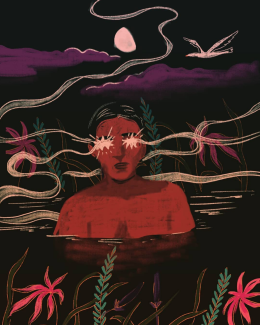
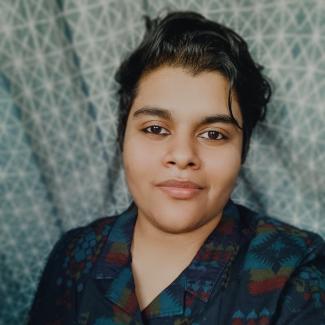
Upasana Agarwal
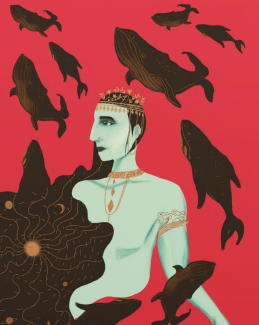
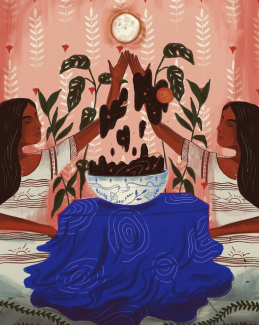
Forgotten SongOde to the MoonVapour and Fire
About Upasana Agarwal
Upasana is a non binary illustrator and artist based out of Kolkata, India. Their work explores identity and personal narratives by using a visual remnant or evidence of the contexts they work with. They are especially drawn to patterns which to them communicate complex truths about the past, present and future. When Upasana is not illustrating they organise and run a queer and trans community art centre in the city.
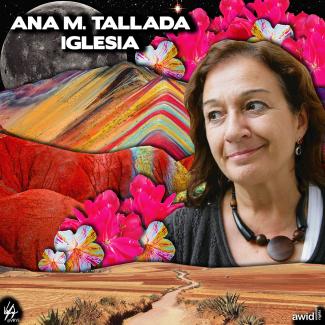
Ana was a strong advocate of women’s rights and worked with a broad cross-section of women, from those in grassroots networks to those in the private sector.
She believed in building bridges across sectors. Ana was a member of the National Network for the Promotion of Women (RNPM), and was active in developing many social programs that address issues such as sexual and reproductive health and rights.
The AWID Community is an online social networking platform specifically for AWID. It is a feminist space for connection, resistance and celebration. A space for critical feminist conversations, collective power and solidarity. It is also a space for post-event dialogues, navigating difficult political learnings and community care.
Join AWID membership to be part of the AWID Community today.