
Giulia Tamayo

In September 2016, the 13th AWID international Forum brought together in Brazil over 1800 feminists and women’s rights advocates in a spirit of resistance and resilience.
This section highlights the gains, learnings and resources that came out of our rich conversations. We invite you to explore, share and comment!
One of the key takeaways from the 2016 Forum was the need to broaden and deepen our cross-movement work to address rising fascisms, fundamentalisms, corporate greed and climate change.
With this in mind, we have been working with multiple allies to grow these seeds of resistance:
And through our next strategic plan and Forum process, we are committed to keep developing ideas and deepen the learnings ignited at the 2016 Forum.
AWID Forums started in 1983, in Washington DC. Since then, the event has grown to become many things to many peoples: an iterative process of sharpening our analyses, vision and actions; a watershed moment that reinvigorates participants’ feminisms and energizes their organizing; and a political home for women human rights defenders to find sanctuary and solidarity.
 |
 |
 |
 |
 |
|
|
|
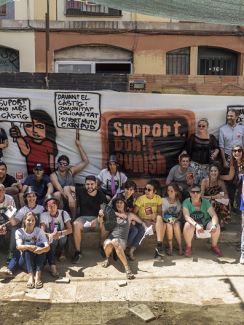
Activistas de Metzineres en acción |

L’enquête s’adresse aux groupes, organisations et mouvements qui travaillent spécifiquement, ou principalement, à la défense des droits des femmes, des personnes LBTQI+ et pour la justice de genre dans tous les contextes, à tous les niveaux, dans toutes les régions. Si c’est un des principaux piliers du travail de votre groupe, collectif, réseau ou tout autre type d’organisation, que votre structure soit déclarée ou non, récemment constituée ou plus ancienne, nous vous invitons à participer à cette enquête.

*Nous ne collectons pas les réponses à titre individuel ou de fonds féministes et pour les femmes à l’heure actuelle.
En savoir plus sur l'enquête :
Consultez la foire aux questions
Vous pouvez suivre le travail de ces collectifs sur les réseaux sociaux et sites internet suivant:

Related content
Reporters without Borders: India: Prominent woman journalist gunned down in Bangalore
BBC: Gauri Lankesh: Indian journalist shot dead in Bangalore
Committee to Protect Journalists: Gauri Lankesh Killed
BBC: Gauri Lankesh: Murdered Indian journalist in her own words
The Guardian: The murder of journalist Gauri Lankesh shows India descending into violence
Financial Times - Gauri Lankesh, journalist and activist, 1962-2017
The New York Times: Why was Gauri Lankesh killed?


Pour revendiquer votre pouvoir en tant qu’experte sur la situation du financement des mouvements féministes.


Contenido relacionado
El Mundo: Muere Edith Windsor, la activista que logró que la Justicia de EEUU reconociera el matrimonio gay

The in-focus section features the pressing issues affecting women, girls and transgender people around the world, and shines a spotlight on the critical work being carried out by women's rights movements.
AWID and Mama Cash are advisory partners who offer ideas to the Guardian editorial team and help link the Guardian team with diverse women’s rights advocates, organizations and movements around the world.
With the Guardian’s global reach of over 82 million unique browsers a month and its position of influence with policy makers, AWID and Mama Cash see this partnership as an important opportunity to:

If you would like to share suggestions for women’s rights issues, strategies, process or events that you would like to see covered by the in-focus section, you can pitch your ideas here. All suggestions collected through this online form will be shared directly with the Guardian editorial team.The Guardian is solely responsible for all journalistic output and all editorial content is strictly independent.
If you have questions about this project, email: contact@awid.org and/or hello@mamacash.org.
 La dotación de recursos de los movimientos feministas es fundamental para garantizar una presencia más justa y pacífica y un futuro en libertad. En las últimas décadas, los donantes comprometieron una cantidad más considerable de dinero para la igualdad de género; sin embargo, apenas el 1% del financiamiento filantrópico y para el desarrollo se ha destinado real y directamente a dotar de recursos al cambio social encabezado por los feminismos.
Para luchar por la abundancia y acabar con esta escasez crónica, la encuesta ¿Dónde está el dinero? es una invitación a lxs promotorxs feministas y por la justicia de género a sumarse al proceso de la construcción colectiva de razones fundadas y evidencias para movilizar más y mejores fondos y recobrar el poder en el ecosistema de financiamiento de hoy. En solidaridad con los movimientos que continúan invisibilizados, marginados y sin acceso a financiamiento básico, a largo plazo, flexible y fiduciario, la encuesta ¿Dónde está el dinero? pone de relieve el estado real de la dotación de recursos, impugna las falsas soluciones y señala cómo los modelos de financiamiento necesitan modificarse para que los movimientos prosperen y puedan hacer frente a los complejos desafíos de nuestro tiempo.
NOUS SOMMES LA SOLUTION
We are the Solution

Vigente desde el 25 de abril de 2023.
Por favor, haga clic aquí para consultar la versión anterior de nuestra Política de Privacidad.
En esta Política de Privacidad se describe de qué manera la Asociación para los Derechos de las Mujeres y el Desarrollo y nuestrxs subsidiarixs y afiliadxs (en adelante, «AWID», «nosotrxs» o «nuestrxs») gestionamos la información que recolectamos por medio de nuestro sitio web y que enlaza con la presente Política de Privacidad (el «Sitio»), así como por medio de las redes sociales, nuestras actividades de marketing, nuestros eventos en vivo y demás actividades descritas en la presente Política de Privacidad («Servicio»).
Puede descargar una copia de la presente Política de Privacidad para imprimir aquí.
Índice
La información personal que recolectamos
Cómo empleamos su información personal
Cómo compartimos su información personal
Sus opciones
Otros sitios y servicios
Seguridad
Transferencias internacionales de datos
Niñxs
Cambios en la Política de Privacidad
Cómo contactarnos
Aviso para usuarixs europexs
La información que usted nos suministra. La información que puede suministrarnos a través del Servicio o por otra vía incluye lo siguiente:
● Datos de contacto, como su nombre y apellido, forma de salutación, dirección de correo electrónico, direcciones postales y de facturación, título profesional y nombre de su empresa y número de teléfono.
● Datos demográficos, como su ciudad, estado/provincia, país de residencia, código postal, fecha de nacimiento, género, pronombres, idioma de comunicación preferido e información relativa a su identidad (raza/origen étnico, condición de discapacidad, estatus migratorio, trabajadxr sexual, etc.).
● Datos para comunicaciones, sobre la base de nuestros intercambios con usted, incluidas aquellas ocasiones en las que nos contacta a través del Servicio, las redes sociales o por cualquier otra vía.
● Datos de marketing, como sus preferencias para recibir nuestras comunicaciones de marketing y detalles acerca de su participación con nosotrxs.
● Datos del contenido generado por lxs usuarixs, como fotos de perfil, fotografías, imágenes, música, videos, comentarios, preguntas, mensajes, obras de autor y demás contenido o información que usted genere, transmita o que de algún otro modo ponga a disposición del Servicio, así como metadatos conexos. Los metadatos incluyen información acerca de cómo, cuándo, dónde y a través de quién se ha recolectado determinado contenido y cómo dicho contenido se formateó o editó. Los metadatos también engloban información que lxs usuarixs pueden agregar o haber agregado a su contenido, como palabras clave, información geográfica o de ubicación y demás datos similares.
● Datos para pagos necesarios para completar transacciones, incluida la información de tarjetas de crédito o números de cuenta bancaria.
● Otros datos que no se han enumerado específicamente aquí, los cuales usaremos según lo descrito en la presente Política de Privacidad o según se indica al momento de recolectarlos.
Recolección automática de datos. Nosotrxs, nuestrxs prestadorxs de servicios y nuestrxs socixs de trabajo pueden, de forma automática, registrar información acerca de usted, su computadora o dispositivo móvil, y sus interacciones sostenidas a lo largo del tiempo con el Servicio, nuestras comunicaciones y otros servicios en línea, como los siguientes:
● Datos del dispositivo, como tipo y versión del sistema operativo de su computadora o dispositivo móvil, fabricante y modelo, tipo de navegador, resolución de pantalla, memoria RAM y tamaño del disco, uso de CPU, tipo de dispositivo (por ejemplo, teléfono o tablet), dirección IP, identificadores unívocos, configuraciones del idioma, operador del dispositivo móvil, información de radio/red (por ejemplo, Wi-Fi, LTE, 3G), e información general de ubicación, como ciudad, estado/provincia o área geográfica.
● Datos sobre actividad en línea, como páginas o pantallas que visitó, cuánto tiempo estuvo en una página o pantalla, el sitio web que visitó antes de navegar en el Servicio, rutas de navegación entre páginas o pantallas, información relativa a su actividad en una página o pantalla, hora y duración del acceso e información acerca de si ha abierto nuestros correos electrónicos o ha hecho clic en los enlaces que figuran en dichos correos electrónicos.
Cookies y tecnologías similares. Las cookies facilitan parte de la recolección automática descrita más arriba; estas consisten en pequeños archivos de texto que los sitios web almacenan en los dispositivos de lxs usuarixs y que permiten a los servidores web registrar las actividades de navegación de lxs usuarixs en la web y recordar envíos, preferencias y estado de conexión cuando navegan en un sitio. Las cookies empleadas en nuestros sitios incluyen tanto «cookies de sesión», que se borran al finalizar una sesión, «cookies persistentes», que se mantienen por más tiempo, «cookies de origen», que colocamos nosotrxs, y «cookies de tercerxs», que colocan nuestrxs socixs de trabajo y prestadorxs de servicios.
Podemos usar su información personal para las siguientes finalidades o como se describa al momento de la recolección:
Prestación de servicios y operaciones de trabajo: Podemos emplear su información personal para:
● brindar, operar y mejorar el Servicio;
● comunicarnos con usted acerca del Servicio, entre otras cosas, mediante el envío de anuncios, información actualizada, alertas de seguridad y mensajes de orden administrativo y de apoyo;
● comunicarnos con usted acerca de eventos o concursos en los que usted haya participado;
● comprender sus necesidades e intereses, para personalizar su experiencia con el Servicio y nuestras comunicaciones, y
● brindar apoyo para el Servicio y responder a sus solicitudes, preguntas y comentarios.
Investigación y desarrollo. Podemos emplear su información personal para fines de investigación y desarrollo, entre otras cosas, para analizar y mejorar el Servicio. Como parte de dichas actividades, podemos crear datos agregados, sin identificación o anónimos a partir de la información personal que recolectamos. Convertimos la información personal en datos sin identificar o anónimos al quitar la información que hace que los datos se puedan asociar personalmente con usted. Podemos usar estos datos agregados, sin identificar o anónimos y compartirlos con tercerxs para nuestros fines de trabajo legítimos, entre otras cosas, para analizar y mejorar el Servicio y promover nuestra actividad.
Marketing. Nosotrxs y nuestrxs prestadorxs de servicios podemos recopilar y usar su información personal para enviarle comunicaciones de marketing directo. Puede renunciar a recibir nuestras comunicaciones de marketing, como se describe en el apartado Renunciar a recibir comunicaciones de marketing que figura más adelante.
Cumplimiento y protección. Podemos emplear su información personal para lo siguiente:
● cumplir con la legislación vigente, peticiones legales y proceso legal como, por ejemplo, para responder a citaciones o pedidos de las autoridades gubernamentales;
● proteger nuestros derechos, privacidad, seguridad o propiedad, los suyos y los de terceras partes (incluidas la presentación y defensa de reclamos judiciales);
● auditar nuestros procesos internos a los fines de cumplir requisitos legales y contractuales o nuestras políticas internas;
● dar cumplimiento a los términos y las condiciones que rigen el Servicio, y
● prevenir, identificar, investigar e impedir actividades fraudulentas, perjudiciales, no autorizadas, poco éticas o ilegales, incluidos los ataques cibernéticos y el robo de identidad.
Con su consentimiento. En algunos casos, podemos solicitar de manera específica su consentimiento para recolectar, usar o compartir su información personal, por ejemplo, cuando nos lo exigen por ley.
Cookies y tecnologías similares. Además de los otros usos enunciados en este apartado, podemos emplear las cookies y tecnologías similares descritas antes para los siguientes fines:
● Operación técnica. Para permitir la operación técnica del Servicio, como por ejemplo, para recordar sus selecciones y preferencias cuando navega en el sitio.
● Funcionalidad. Para mejorar el desempeño y la funcionalidad de nuestros servicios.
● Analíticos. Para que nos ayude a comprender la actividad de lxs usuarixs en el Servicio, entre otras cosas, por ejemplo, qué páginas son las que más y las que menos se visitan y de qué modo lxs visitantes se desplazan por el Servicio, así como las interacciones de lxs usuarixs con nuestros correos electrónicos. Por ejemplo, empleamos Google Analytics para este fin. Puede consultar más información acerca de Google Analytics y de cómo impedir la ejecución de Google Analytics en relación con el uso que usted hace de nuestros sitios aquí: https://tools.google.com/dlpage/gaoptout?hl=en.
Retención. En general, retenemos información personal para cumplir las finalidades para las cuales la recolectamos, entre otras cosas, a los fines de satisfacer todo requerimiento legal, contable o de información, para establecer o defender reclamaciones legales o para prevenir fraudes. A fin de determinar el período de retención apropiado para la información personal, podemos tomar en cuenta factores como la cantidad, naturaleza y sensibilidad de esta, el riesgo potencial de perjuicio derivado del uso o la divulgación no autorizada de su información personal, las finalidades para las que procesamos su información personal, y si podemos alcanzar o no dichos fines por otros medios, y los requisitos legales vigentes.
Cuando ya no necesitamos la información personal que hemos recolectado sobre usted, podemos ya sea eliminarla, convertirla en información anónima o bien separarla de futuros procesamientos.
Podemos compartir su información personal con las siguientes partes interesadas y como se describe en la presente Política de Privacidad o al momento de la recolección.
Afiliadxs. Nuestrx socix corporativo, subsidiarixs y afiliadxs, a los fines compatibles con la presente Política de Privacidad.
Prestadorxs de servicios. Entidades tercerizadas que prestan servicios en nuestro nombre o que nos ayudan a operar el Servicio o nuestras actividades (como alojamiento, tecnología de la información, apoyo al cliente, envío de correos electrónicos, marketing, investigación sobre clientes y análisis de sitio web).
Procesadorxs de pagos. Toda información relativa a la tarjeta de pago que usted use para realizar una compra en el Servicio es recolectada y procesada directamente por nuetro procesador de pago, como Stripe. Stripe puede usar sus datos de pago de acuerdo con su política de privacidad, https://stripe.com/en-gb/privacy. Usted también puede registrarse para que su proveedor de comunicaciones móviles le emita la factura; el proveedor puede usar sus datos de pagos en función de sus políticas de privacidad.
Las terceras partes que usted designó. Podemos compartir sus datos personales con aquellas terceras partes cuando usted nos haya instruido o nos haya dado su consentimiento para hacerlo. Compartiremos la información personal que sea necesaria para estas u otras compañías a los fines de prestar el servicio que usted haya solicitado. Asimismo, usted puede escoger traducir el contenido generado por lxusuarix mediante el uso de Google Translate. Google puede usar su contenido (entendido como aquel generado por lxs usuarixs) de acuerdo con su política de privacidad, https://policies.google.com.
Asesorxs profesionales. Lxs asesorxs profesionales, como abogadxs, auditorxs, funcionarixs bancarixs y aseguradorxs, cuando sea necesario durante el transcurso de los servicios profesionales que nos prestan.
Autoridades y otrxs. Autoridades policiales o gubernamentales y terceras partes del ámbito privado, cuando creamos de buena fe que es necesario o apropiado para los fines de cumplimiento y protección descritos antes.
Otrxs usuarixs. Su perfil y otros datos generados por lxs usuarixs (excepto para mensajes) pueden estar visibles para otrxs usuarixs del Servicio. Por ejemplo, otrxs usuarixs del Servicio pueden tener acceso a su información, si usted escoge que su perfil y demás información personal se encuentre disponible para estxs a través del Servicio, como, por ejemplo, cuando usted brinda comentarios, reseñas, responde a encuestas, o comparte otro contenido. Otrxs pueden ver, recolectar y usar dicha información, incluso a través de el almacenamiento en caché, copia, captura de pantalla o almacenamiento en cualquier otro lugar (por ejemplo, motores de búsqueda), y nosotrxs no nos hacemos responsables ninguno de los usos que se le dé a dicha información.
En este apartado, describimos los derechos y opciones disponibles para todxs lxs usuarixs. Aquellxs usuarixs que viven en el Reino Unido, Suiza y el Espacio Económico Europeo pueden encontrar información adicional acerca de sus derechos más adelante.
Renunciar a recibir comunicaciones de marketing. Usted puede renunciar a recibir correos electrónicos de marketing siguiendo las instrucciones para inhabilitarlos o cancelar la suscripción que figuran al final del correo electrónico o bien poniéndose en contacto con nosotrxs. Tenga en cuenta que si elige renunciar a recibir correos electrónicos de marketing, usted puede continuar recibiendo los correos electrónicos asociados a los servicios y otros de carácter no publicitario.
Negarse a brindar información. Para brindar ciertos servicios, necesitamos recolectar información personal. Si usted no proporciona la información que identificamos como exigida u obligatoria, no podremos brindar dichos servicios.
Eliminar su contenido o cancelar su membresía. Puede escoger eliminar determinado contenido que nos haya proporcionado. Si desea solicitar la cancelación de su membresía, le pedimos que, por favor, se ponga en contacto con nosotrxs.
El Servicio puede contener enlaces a sitios web, aplicaciones móviles y otros servicios en línea que operan terceras partes. Asimismo, nuestro contenido puede estar integrado a páginas web u otros servicios en línea que no están asociados a nosotrxs. Dichos enlaces e integraciones no suponen que respaldemos, ni que estemos afiliadxs, a terceras partes. No controlamos los sitios web, ni las aplicaciones móviles ni los servicios en línea que operan terceras partes, y no somos responsables de las acciones de estas. Le alentamos a leer las políticas de privacidad de los otros sitios web, aplicaciones móviles y servicios en línea que usted utiliza.
Empleamos un número de garantías técnicas, organizacionales y físicas diseñadas para proteger la información personal que recolectamos. Sin embargo, el riesgo para la seguridad es inherente a todas las tecnologías de la información y de Internet y no podemos garantizar la seguridad de su información personal.
Nuestra sede se encuentra en los Estados Unidos y podemos usar prestadorxs de servicios que operan en otros países. Su información personal puede transferirse a los Estados Unidos u otros lugares en los que las leyes de privacidad pueden no brindar tanta protección como su estado, provincia o país.
Lxs usuarixs del Reino Unido, Suiza y el Espacio Económico Europeo deberían leer la información importante que se suministra más adelante concerniente a la transferencia de información personal fuera de la Unión Europea.
El Servicio no está pensado para ser empleado por parte de ninguna persona menor de 18 años de edad. Si usted es madre, padre o tutxr de unx niñx dxl que usted considera que hemos recolectado información personal de un modo prohibido por la ley, le pedimos que se ponga en contacto con nosotrxs. Si usted ha tomado conocimiento de que hemos recolectado información personal a través del Servicio de xn niñx sin el consentimiento del padre, la madre o xl tutxr conforme a lo dispuesto por la ley, cumpliremos los requisitos legales vigentes para eliminar dicha información.
Nos reservamos el derecho a modificar la presente Política de Privacidad en cualquier momento. En caso de hacer cambios materiales en la presente Política de Privacidad, le notificaremos actualizando la fecha de la presente Política de Privacidad y publicándola en el Servicio o por cualquier otro medio que consideremos adecuado. Toda modificación a la presente Política de Privacidad entrará en vigor a partir de la publicación de la versión modificada (o conforme a lo que se indique al momento de su publicación). En todos los casos, el uso que usted haga del Servicio con posterioridad a la fecha efectiva de toda modificación hecha a la Política de Privacidad indica su reconocimiento de que la Política de Privacidad modificada se aplica a sus interacciones con el Servicio y nuestras actividades.
● Email: Contáctenos
● Correo postal: 192 Spadina Ave, Suite 300, Toronto, ON M5T 2C2
● Teléfono: 416 594 3773
Dónde se aplica el presente Aviso para usuarixs europexs. La información suministrada en el presente apartado denominado «Aviso para usuarixs europexs» aplica únicamente para aquellxs personas que viven en el Espacio Económico Europeo o en el Reino Unido (las jurisdicciones del Espacio Económico Europeo y del Reino Unido, en adelante se denominan en conjunto «Europa»)
Información personal. Debe entenderse que las referencias a «información personal» en la presente Política de Privacidad incluyen una referencia a «datos personales» (según se define en el Reglamento General de Protección de Datos, GDPR, por sus siglas en inglés), es decir, información acerca de individuos a partir de la cual se lxs identifica o se lxs puede identificar de forma directa. No incluye «datos anónimos» (es decir, información en la que la identidad de una persona se ha eliminado de forma permanente). La información personal suya que recopilamos se encuentra identificada y descrita en mayor detalle en el apartado «La información personal que recolectamos».
Control. AWID es la entidad que controla el procesamiento de su información personal, cubierta en la presente Política de Privacidad a los fines de la legislación europea de protección de datos (es decir, el Reglamento General de Protección de Datos de la Unión Europea y el denominado «Reglamento General de Protección de Datos del Reino Unido» -como y cuando sea procedente, el «Reglamento General»-). Consulte el apartado «Cómo contactarnos» que figura más arriba para obtener nuestros datos de contacto.
Nuestros fundamentos legales para el procesamiento. Con respecto a cada una de las finalidades para las que usamos su información personal, el Reglamento General nos exige garantizar que contemos con «fundamentos legales» para dicho uso.
Nuestros fundamentos legales para el procesamiento de su información personal que se describen en la presente Política de Privacidad se enumeran a continuación:
● Cuando necesitamos procesar su información personal para prestarle nuestros Servicios (incluido nuestro Sitio) («necesidad contractual»).
● Cuando es necesario para nuestros legítimos intereses y sus intereses y derechos fundamentales no anulan dichos intereses («legítimos intereses»). En el cuadro que sigue a continuación se presenta información más pormenorizada sobre los legítimos intereses específicos que se persiguen con respecto a cada finalidad para la que empleamos su información personal.
● Cuando necesitamos cumplir una obligación legal o normativa («cumplimiento de la ley»).
● Cuando contamos con su consentimiento específico para llevar adelante el procesamiento para la Finalidad en cuestión («consentimiento»).
A continuación incluimos un cuadro con los fundamentos legales en los que nos apoyamos con respecto a las Finalidades pertinentes para las que usamos su información personal; para obtener más información acerca de dichas Finalidades y los tipos de datos involucrados, consulte el apartado «Cómo empleamos su información personal» incluido antes.
|
|
|
|
|
|
|
|
|
|
|
|
|
|
|
|
|
|
|
|
|
|
|
|
Retención. Retenemos la información personal todo el tiempo que sea necesario para cumplir las finalidades para las cuales la recolectamos, entre otras cosas, a los fines de satisfacer todo requerimiento legal, contable o de presentación de informes, para establecer o defender reclamos legales o a los fines de cumplimiento y protección, salvo que se autorice de forma expresa a conservarla por más tiempo.
Para determinar el período de retención apropiado para la información personal, tenemos en cuenta la cantidad, naturaleza y sensibilidad de la información personal, el riesgo potencial de perjuicio derivado del uso o la divulgación no autorizada de su información personal, las finalidades para las que procesamos su información personal y si podemos alcanzar o no dichos fines por otros medios, y los requisitos legales vigentes.
Cuando ya no necesitemos la información personal que hemos recolectado sobre usted, la eliminaremos o bien la convertiremos en datos anónimos o, si esto no fuera posible (por ejemplo, debido a que su información personal ha quedado almacenada en archivos de respaldo), entonces procederemos a almacenar de forma segura su información personal y a separarla de todo otro procesamiento hasta tanto sea posible eliminarla. En caso de convertir su información personal en datos anónimos (de tal modo que ya no sea posible asociarla con usted), podemos usar dicha información de forma indefinida sin previo aviso.
Información adicional
Ausencia de obligación de proporcionar información personal. Usted no tiene que proporcionarnos información personal. Sin embargo, cuando necesitemos procesar su información personal ya sea para cumplir las leyes vigentes o para prestarle nuestros Servicios, y usted no haya suministrado la información personal cuando se la hayamos solicitado, no podremos brindarle parte o la totalidad de nuestros Servicios. Si este fuera el caso, le notificaremos en su momento.
Ausencia de toma de decisiones y de elaboración de perfiles automatizados. Como parte de los Servicios, no tomamos decisiones ni elaboramos perfiles de forma automatizada, lo que produce efectos legales o similarmente importantes. Mediante la actualización de esta Política de Privacidad, le pondremos al tanto si se produce algún cambio en dicho sentido.
Seguridad. Hemos instaurado una serie de procedimientos diseñados para encargarnos de las violaciones a la información personal. De producirse violaciones de este tipo, contamos con procedimientos preparados para trabajar con los organismos reguladores correspondientes. Asimismo, en determinadas circunstancias (entre otras, aquellas en las que tengamos la obligación legal de hacerlo), podemos notificarle de las violaciones que estén afectando su información personal.
Sus derechos
Generales. Las leyes europeas de protección de datos le otorgan ciertos derechos en lo relativo a su información personal. Si usted vive en Europa, puede solicitarnos que adoptemos cualquiera de las siguientes medidas que tenemos asociadas con su información personal:
● Acceso. Suministrarle información acerca de nuestro procesamiento de su información personal y otorgarle acceso a su información personal.
● Corregir. Actualizar o corregir inexactitudes en su información personal.
● Eliminar. Eliminar su información personal cuando no tengamos legítimas razones para continuar almacenando o procesándola, cuando usted haya ejercido efectivamente su derecho a objetar el procesamiento (consulte más adelante), cuando podamos haber procesado su información personal de manera indebida, o bien cuando se nos requiera borrar su información personal para cumplir con las leyes locales. Nótese, sin embargo, que no siempre podemos cumplir con su solicitud de proceder a borrar, debido a razones legales específicas sobre las cuales le notificaremos, cuando corresponda, al momento de su solicitud.
● Portabilidad. Transferir a usted o a una tercera parte de su elección una copia legible por máquina de su información personal, en determinadas circunstancias. Nótese que este derecho aplica únicamente a aquella información automatizada para la que usted nos prestó su consentimiento inicialmente a fin hacer uso de ella o bien cuando usemos la información para celebrar un contrato con usted.
● Restringir. Restringir el procesamiento de su información personal, cuando (i) usted desee establecer la exactitud de la información personal; (ii) cuando nuestro uso de la información personal sea indebida, pero usted no desee que la borremos; (iii) cuando usted necesite que conservemos la información personal aun cuando ya no la necesitemos ya que usted necesita establecer, ejercer o defender reclamos legales, o (iv) cuando usted se haya opuesto a nuestro uso de su información personal, pero nosotrxs necesitemos verificar si tenemos legítimas razones imperiosas para usarla.
● Objetar. Objetar nuestro procesamiento de su información personal cuando nos basemos en legítimos intereses (nuestros o de terceras partes) y exista algo de su situación particular que haga que desee oponerse al procesamiento por dicho motivo pues, en su opinión, este afecta sus derechos y libertades fundamentales; usted también tiene derecho a oponerse a que procesemos su información personal para fines de marketing directo.
● Revocar el consentimiento. Cuando utilicemos su información personal sobre la base de su consentimiento, usted tiene derecho a revocar dicho consentimiento en cualquier momento. Esto no afectará la legitimidad de ningún procesamiento realizado con anterioridad a la cancelación del consentimiento.
Ejercer estos derechos. Puede enviar estas solicitudes por correo electrónico. Consulte el apartado «Cómo contactarnos» que figura antes para obtener nuestros datos de contacto. Podemos solicitarle información específica que nos ayude a confirmar su identidad y procesar su solicitud. El hecho de que estemos obligadxs o no a cumplir una solicitud de su parte dependerá de varios factores (por ejemplo, por qué y cómo estamos procesando su información personal), si rechazamos cualquier solicitud que usted pueda hacer (ya sea en su totalidad o en parte), le informaremos los motivos para proceder de ese modo en su momento, sujeto a cualquier restricción legal. Usualmente, usted no tendrá que pagar ninguna tasa para ejercer sus derechos; sin embargo, podemos cobrar una tasa razonable si su solicitud carece a todas luces de fundamentos, es repetitiva o excesiva. Intentamos responder a todas las solicitudes legítimas en el plazo de un mes. Puede tomarnos más de un mes si su solicitud es particularmente compleja o si usted ha hecho varias solicitudes; en dicho caso, le notificaremos y le mantendremos al tanto.
Su derecho a presentar un reclamo ante su autoridad de control. Además de los derechos enunciados antes, si no está satisfechx con nuestra respuesta a su solicitud, o con el modo en que procesamos su información personal, puede elevar un reclamo al organismo regulador para la protección de datos de su lugar de residencia habitual.
● Lxs usuarixs del Espacio Económico Europeo pueden encontrar la información de contacto del organismo regulador para la protección de datos de su lugar de residencia aquí: https://edpb.europa.eu/about-edpb/board/members_en.
● Para usuarixs del Reino Unido, la información de contacto del organismo regulador para la protección de datos es la que figura a continuación:
The Information Commissioner’s Office
Water Lane, Wycliffe House
Wilmslow - Cheshire SK9 5AF
Tel. +44 303 123 1113
Sitio web: https://ico.org.uk/make-a-complaint/
Procesamiento de datos fuera de Europa: somos una compañía con sede en los Estados Unidos y muchxs de nuestrxs prestadorxs de servicios, asesorxs, asociadxs y demás destinatarixs de datos también se encuentran en los Estados Unidos. Esto implica que, si usted utiliza los Servicios, se accederá a sus datos y se los procesará necesariamente en los Estados Unidos. Asimismo, es posible suministrarlos a otrxs destinatarixs de otros países fuera de Europa.
Es importante tener en cuenta que los Estados Unidos no está sujeto a una «decisión de adecuación» a tenor del Reglamento General de Protección de Datos; en concreto, esto significa que los organismos europeos competentes consideran que el régimen legal de los Estados Unidos no brinda un nivel adecuado de protección para la información personal, lo que es equivalente a la prevista en las leyes europeas pertinentes.
Cuando compartimos su información personal con terceras partes residentes fuera de Europa, intentamos garantizar un grado de protección similar conforme a la ley de privacidad aplicable, al asegurarnos de que se implemente alguno de los siguientes mecanismos:
● Transferencias a territorios con una decisión de adecuación. Podemos transferir su información personal a países o territorios sobre cuyas leyes la Comisión Europea o el Gobierno del Reino Unido hayan considerado que brindan un nivel de protección adecuado para su información personal (según proceda) (de vez en cuando).
● Transferencias a territorios sin una decisión de adecuación.
o Podemos transferir su información personal a países o territorios cuyas leyes se considera que no brindan un nivel adecuado de protección (por ejemplo, los Estados Unidos, consúltese en los puntos anteriores).
o No obstante, en dichos casos,
▪ podemos usar garantías apropiadas específicas, todas diseñadas para conferir a la información personal de forma efectiva la misma protección de la que goza en Europa, por ejemplo, contratos estándar aprobados por las autoridades competentes a tal efecto, o
▪ en determinadas circunstancias, podemos basarnos en una excepción, o «derogación», lo cual nos permite transferir su información personal al país en cuestión a pesar de la ausencia de una «decisión de adecuación» o «garantías adecuadas», por ejemplo, confianza en su consentimiento expreso para realizar dicha transferencia.
Puede contactarnos si desea ampliar la información acerca del mecanismo específico que empleamos para transferir su información personal fuera de Europa.