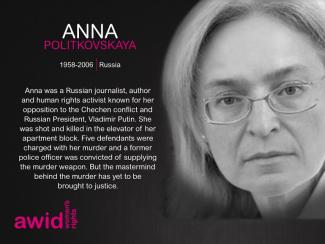
Anna Politkovskaya
Esta sección de análisis especial ofrece un análisis feminista crítico y acceso a los recursos clave relacionados con la «protección de la familia» en los espacios internacionales de derechos humanos.
Durante los últimos años, venimos observando una nueva y preocupante tendencia en el ámbito internacional de derechos humanos, donde se están empleando discursos sobre la «protección de la familia» para defender violaciones cometidas contra miembros de la familia, de modo de reforzar y justificar la impunidad y para coartar la igualdad de derechos en el seno de la familia y la vida familiar.
La campaña para «proteger a la familia» es impulsada por proyectos conservadores que tienen como fin imponer interpretaciones «tradicionales» y patriarcales de familia; quitando los derechos de las manos de sus miembros para ponerlos en las de la institución «familia».
Desde 2014 un grupo de estados opera como bloque en espacios de derechos humanos, bajo el nombre «Group of Friends of the Family» [Grupo de amigos de la familia], y a partir de entonces se han aprobado resoluciones sobre la «Protección de la familia» todos los años.
Esta agenda se ha extendido más allá del Consejo de Derechos Humanos (HRC, por sus siglas en inglés). Hemos visto cómo el lenguaje regresivo sobre «la familia» se ha introducido en la Comisión de la Condición Jurídica y Social de las Mujeres (CSW, por sus siglas en inglés), y hemos asistido a intentos por incluir este lenguaje en las negociaciones sobre los Objetivos de Desarrollo Sostenible.
AWID trabaja con asociadxs y aliadxs para resistir conjuntamente las agendas regresivas de «Protección de la familia» y otras, y para defender la universalidad de los derechos humanos.
En respuesta a la creciente influencia de actores regresivos en los espacios de derechos humanos, AWID se ha unido con aliadxs para formar el Observatorio de la Universalidad de los Derechos (OURs, por sus siglas en inglés). OURs es un proyecto colaborativo que monitorea, analiza y comparte información sobre iniciativas anti-derechos tales como la «Protección de la familia».
Derechos en Riesgo, el primer informe de OURs, traza un mapa de los actores que conforman el cabildeo global anti-derechos e identifica sus discursos y estrategias principales, señalando los efectos que estos discursos y estrategias están teniendo sobre nuestros derechos humanos.
El informe expone a la «Protección de la familia» como una agenda que ha promovido la colaboración entre una amplia gama de actores regresivos en las Naciones Unidas. La describe como un marco estratégico que aloja «múltiples posiciones patriarcales y anti-derechos, cuyo marco, a su vez, apunta a justificar e institucionalizar estas posiciones».
Les hôpitaux sont des institutions, des sites vivants du capitalisme, et ce qui se joue lorsque quelqu’un est censé se reposer est un microcosme du système lui-même.
María es diseñadora gráfica y comunicadora visual. Ha trabajado con ONG e instituciones por los derechos humanos como Profamilia y OXFAM. Como mujer del Sur Global, se siente especialmente atraída a usar sus competencias para trabajar con organizaciones que ayudan a proteger el bienestar, así como los derechos de millones de niñas y mujeres de América Latina.
مع استمرار الرأسمالية الأبوية الغيريّة في دَفعِنا نحو الاستهلاكية والرضوخ، نجد نضالاتنا تُعزَل وتُفصَل عن بعضها الآخر من خلال الحدود المادّية والحدود الافتراضية على حدٍّ سواء. ومع تحدّياتٍ إضافية يفرضها علينا وباءٌ عالميٌّ علينا تجاوزه، أصبحت سياسة فرِّق تَسُد مواتية للاستغلال المتزايد في مجالات عدّة.
ومع ذلك، أخذَنا «ابدعي، قاومي، غيٍّري: مهرجان للحراكات النسوية»، الذي نظّمته جمعية «حقوق المرأة في التنمية» AWID في الفترة ما بين 1 أيلول/ سبتمبر وحتى 30 أيلول/ سبتمبر 2021، في رحلةٍ حول ما يعنيه تجسّد حيواتنا في المساحات الافتراضية. اجتمعَت معنا في المهرجان ناشطات نسويات من حول العالم، لأجل مشاركة خبراتهن حول المقاومة والحرّيات المُنتَزَعة بصعوبة، والتضامن العابر للحدود، وكذلك لتوضيح الشكل الذي يمكن أن يبدو عليه التكاتف العابر للحدود القومية.
يحمل هذا التكاتف إمكانية مقاومة الحدود، ناسجاً رؤية لمستقبل تحويلي، لأنه سيكون إلغائيًا ومناهضًا للرأسمالية. على مدار شهر، وعبر البُنى التحتية الرقمية التي احتللناها بكويريّتنا ومقاومتنا وخيالاتنا، بيّن لنا المهرجان طريقةً للانحراف عن الأنظمة التي تجعلنا متواطئات في قهر أنفسنا وأخريات/ آخرين.
بالرغم من أن أودري لورد علّمتنا أنّ أدوات السيّد لن تهدم أبدًا منزله، بيّنت لنا سارة أحمد أنه بإمكاننا إساءة استخدام تلك الأدوات عن سبق إصرار. أصبح من الممكن تخيّل خلخلة في واقع الرأسمالية الأبوية الغيريّة، لأننا خلقنا مساحة للاحتشاد، بالرغم من كلّ الأشياء الأُخرى التي تتطلّب وقتنا.
إذا أدركنا الاحتشاد باعتباره أحد أشكال التمتّع، عندها سيصبح من الممكن خلق الرابط بين المتعة المتجاوزة والمقاوَمة العابرة للحدود القومية/ الرقمية. بين أنواع التمتّع التي تتحدّى الحدود من ناحية، والكويرية والبهرجة والأرض ونضالات السكّان الأصليين ومناهضة الرأسمالية والتنظيم المناهض للاستعمار من ناحية أخرى.
حاول هذا العدد التقاط كيفية اتخاذ ممارسة الاحتشاد في المهرجان لأشكالٍ وتخيّلات متعدّدة. إلى جانب التعاون المباشر مع بعض الحالمات/ين والمتحدّثات/ين في المهرجان، دعَونا عدداً كبيراً من أصوات أخرى من الجنوب العالمي لنكون في نقاش جماعي حول الكثير من الثيمات والموضوعات المرتبطة بالجنوب. فيما يلي خريطة لبعض جلسات المهرجان التي كانت أكثر إلهامًا لنا.
Leila est une dirigeante, défenseuse et conseillère féministe transnationale qui compte plus de 25 ans d'expérience dans la promotion des droits humains, de l'égalité des genres et de la santé et des droits sexuels et reproductifs, ainsi que de la justice au niveau local et mondial. Née en Algérie, Leila a fait ses études aux États-Unis, en France et au Maroc. Au cours de sa carrière professionnelle, elle a vécu et travaillé en Afrique, en Europe et aux États-Unis.
Elle a occupé le poste de vice-présidente des programmes au Fonds mondial pour les femmes (GFW) pendant plus de cinq ans, où elle a supervisé son octroi de subventions stratégiques, le renforcement des mouvements, le plaidoyer mondial et les collaborations philanthropiques. Au sein du GFW, elle a doublé le montant de ses subventions pour atteindre plus de 17 millions de dollars, a lancé son travail sur les mouvements et les crises féministes et axées sur le genre, a créé un programme pour les adolescentes dirigé par un conseil consultatif de filles et a dirigé son travail de plaidoyer philanthropique. Avant cela, elle a fait partie de l'équipe de direction d'Ipas de 2002 à 2016, où elle a publié de nombreux articles sur le droit à l'avortement et la justice, dirigé des actions de plaidoyer mondiales et établi des partenariats avec des groupes féministes travaillant sur l'autogestion, la mobilisation communautaire et la réduction de la stigmatisation autour de l'intégrité corporelle et des droits sexuels et reproductifs. Alors qu’elle était basée en Afrique du Nord, elle a cofondé une société de conseil féministe intersectionnelle, Strategic Analysis for Gender Equality (SAGE), qui travaillait sur les intersections entre l'économie, le genre et les droits sexuels et reproductifs, et a dirigé le travail national, régional et mondial sur le genre du bureau du Caire de la Fondation Ford pendant 5 ans.
Leila dispose d'une vaste expérience dans les domaines de l'éducation populaire, le plaidoyer, l'organisation à but non lucratif, le développement de conseils d'administration, la philanthropie et le suivi et l'évaluation. C'est une communicatrice compétente qui privilégie une approche intersectionnelle pour centrer et amplifier les voix et les expériences des personnes les plus marginalisées. Elle a reçu la bourse Op-ed Public Voices de la Fondation Ford et a été boursière Fulbright au Maroc. Ses publications couvrent un large éventail de sujets, notamment les approches féministes et décoloniales de la philanthropie, la promotion des droits humains des femmes dans les contextes majoritairement musulmans, les stratégies féministes visant à promouvoir la justice reproductive, la promotion du recours des femmes aux avortements autogérés et la lutte contre la stigmatisation et la discrimination.
Leila est actuellement coprésidente du conseil du Center for Constitutional Rights et membre du conseil de Highlander Research and Education. Elle fait également partie du conseil de responsabilité du Numun Feminist Technology Fund et du comité consultatif de la Plateforme des femmes défenseuses des droits humains d'Afrique. Elle a précédemment siégé aux conseils d'administration de SisterSong Women of Color Reproductive Justice Collective, du Réseau mondial des femmes pour les droits sur la reproduction, du Fonds mondial pour les femmes, du Safe Abortion Access Fund et du Reproductive Health Technologies Project. Elle a été élue trésorière et membre du comité exécutif du conseil d'administration de Prospera et a siégé au comité directeur du Fonds Fenomenal pendant quatre ans. Leila est titulaire d'une maîtrise en santé publique et d'une maîtrise en études sur la région du Moyen-Orient et de l'Afrique du Nord, a étudié le droit islamique au Maroc et a poursuivi des études doctorales en sociologie en France. Elle a étudié l'arabe et l'allemand et parle couramment le français et l'anglais.
في الثاني من أيلول/ سبتمير 2021، التمّ شمل مجموعة رائعة من الناشطات النسويات والمناديات بالعدالة الاجتماعية ضمن فعاليات مهرجان (AWID Crear | Résister | Transform). لم يقتصر هدف اجتماعهنّ على مشاركة استراتيجيات المقاومة وعمليات الابتكار الخلّاقة المشتركة التي ترمي إلى تغيير العالم. لقد اجتمعت الناشطات ليتبادلن الغزَل الإباحي على «تويتر». قادت نانا سيكياما النشاط.
نانا من مؤسسي «مغامرات من مضاجع النساء الإفريقيات» وهي كاتبة «حيوات النساء الافريقيات الجنسيّة». لقد جمعت عملها مع عمل المنبر النسائيّ الكويري المنادي بالوحدة الإفريقية (AfroFemHub) للبحث في جواب السؤال التالي: ما هي الصياغات النسوية للرسائل النصّية ذات المحتوى الجنسي؟
أعتقد أن هذا سؤال مهمّ للغاية، لأنه يبحث في القضية الأكبر المتعلّقة بالمقاربة النسوية لكيفية تنقّل المرء في عالم الإنترنت. في ظل الرأسمالية، يمكن للخطاب المُنتَج حول الجسد والجنس، أن يكون مجرّدًا من الإنسانية ومُشوّهًا. كما أن مساحات المتعة الجنسية في الفضاء الافتراضي لها طابع آدائي مبتذل. لذا، فإن البحث عن طرق تُمكّننا من استكشاف رغباتنا باستحسان، يمكن أن تولّد مقاومة للسائد من نماذج العرض والاستهلاك. تباعًا، تُستعاد هذه المساحات كمواقع للتشابك الحَقّ، ويتبيّن أنّ الرسائل النصّية ذات المحتوى الجنسي لا بد وأن تكون نسويّة.
بالإضافة إلى ذلك، فإن السماح للخطاب النسوي بتجسيد وجهه المرِح في فضاء الإنترنت، يساعد على مقارعة السردية الذائعة ومفادها أن التشابك في الفلك النسوي غير مرح وقاسٍ في طابعه العام. ولكن كما نعلم، فإن المتعة والمرح هي من صلب سياستنا وجزء متأصّل مما يعنيه أن يكون المرء نسويًا.
باستخدام وسم #SextLikeAFeminist، تقدَّم الناشطون والأكاديميون من حول العالم بـ»تويتات» تحمل نهمًا نسويًا كبيرًا. أورد لكم في هذا النص التويتات العشرة المفضّلة لدي.
يتبيّن من هذه التويتات الفكاهة المقرونة بالإثارة والاهتياج الجنسيّ، التي تتّسم بها المقاربة النسوية لكتابة الرسائل ذات المضامين الجنسية، دون أن تُسقط عن نفسها الالتزام بالمساواة والعدالة.
Alexandra es una feminista anglo-colombiana con más de 20 años de experiencia en programas locales, nacionales e internacionales sobre VIH y salud y derechos sexuales y reproductivos. Posee amplia experiencia en movilización de recursos y en relaciones con los donantes con fundaciones filantrópicas privadas y organismos multilaterales en nombre de ONG internacionales, nacionales y locales, sobre todo en América Latina y el Caribe. Antes de AWID, Alexandra trabajó en la Fundación Si Mujer, que presta servicios de aborto feminista, y como educadora en Colombia, RedTraSex y la International HIV/AIDS Alliance.
Es Licenciada en Relaciones Internacionales y Estudios para el Desarrollo de la Universidad de Sussex y posee un Máster en Salud Pública de la Escuela de Higiene y Medicina Tropical de Londres. En los pocos momentos en que no está trabajando o maternando, adora practicar natación, comer y, recientemente, comenzó a jugar al Zelda: Breath of the Wild con su hijo.
La exhibición «#MeToo in China» fue inaugurada en 2019 y recorrió cinco ciudades. Su objetivo es dar mayor prominencia a las experiencias personales de lxs víctimas y lxs activistas, para inspirar al público a unirse a la lucha a través del contacto con estas historias. La exposición misma se ha convertido en parte de la lucha #MeToo: ha debido enfrentar desafíos en su itinerario por toda China y, en más de una ocasión, fue amenazada con la clausura.
Jemutai es una apasionada amante de las plantas que encuentra inspiración en el mundo natural y su intrincada red de interconexiones. Esta fascinación con las interrelaciones del universo se refleja en su abordaje del trabajo, la construcción de comunidad, el cuidado y el apoyo. Cree en la vibrante presencia de sus ancestres dentro de sí misme, y vive para experimentar, recordar, sostener, apreciar y celebrar sus luchas, triunfos y valores.
Como activista queer, interseccional, feminista y por los derechos humanos, Jemutai ha dedicado su carrera a abogar por la equidad y la inclusividad. Es une apasionade del desarrollo organizacional, con formación en otorgamiento de subvenciones y administración, y ahora está dedicade a crear experiencias de impacto para encuentros y a brindar liderazgo y apoyo operacionales, garantizando que los espacios sean inclusivos, seguros y organizados con precisión y cuidado.
Jemutai también es une firme creyente en la filosofía de Ubuntu: la idea de que «yo soy porque nosotres somos». Esta creencia en nuestra humanidad compartida y en nuestra mutua interdependencia configura su enfoque colaborativo y su compromiso con la promoción de un ambiente inclusivo y que fomenta el apoyo para todes y, en especial, para gente silenciada y marginada.
You can expect all the standard materials for workshops and presentations: flip charts, markers, sticky notes, in addition to projectors and audio-visual equipment. Any additional materials are the responsibility of the activity organizers. AWID’s logistics team will be available to answer questions and advise.
Ika Vantiani est une artiste, conservatrice et créatrice indonésienne basée à Jakarta. Ses œuvres explorent l'idée d'être une femme dans la société d'aujourd'hui où médias et consommation sont inextricablement liés. Ika utilise le principe du collage et l'étend à des ateliers, des installations et au street art. Ika est membre de collectifs d'artistes dont Micro Galleries, The Collage Club et It's In Your Hands Collective.
L’AWID a fait ses débuts en 1982 et s’est transformée au fil du temps.
Lire « From WID to GAD to Women's Rights: The First 20 Years of AWID » (disponible uniquement en anglais).

ทุกสามถึงสี่ปี AWID จะเป็นเจ้าภาพงานประชุมนานาชาติที่สำคัญ โดยจะเป็นการประชุมขนาดใหญ่ระดับโลกที่หัวใจหลักอยู่ที่ขบวนการเฟมินิสต์และความเป็นธรรมทางเพศที่หลากหลาย เป็นการรวมตัวกันระดับโลกของนักกิจกรรมเฟมินิสต์ เครือข่ายพันธมิตร นักวิชาการ แหล่งทุน และผู้กำหนดนโยบาย โดยฟอรัมเปลี่ยนสถานที่จัดหมุนเวียนไปในต่างภูมิภาคและในประเทศต่างๆทั่วซีกโลกใต้