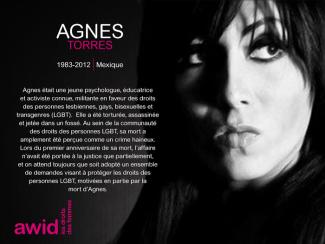
Agnes Torres
Esta sección de análisis especial ofrece un análisis feminista crítico y acceso a los recursos clave relacionados con la «protección de la familia» en los espacios internacionales de derechos humanos.
Durante los últimos años, venimos observando una nueva y preocupante tendencia en el ámbito internacional de derechos humanos, donde se están empleando discursos sobre la «protección de la familia» para defender violaciones cometidas contra miembros de la familia, de modo de reforzar y justificar la impunidad y para coartar la igualdad de derechos en el seno de la familia y la vida familiar.
La campaña para «proteger a la familia» es impulsada por proyectos conservadores que tienen como fin imponer interpretaciones «tradicionales» y patriarcales de familia; quitando los derechos de las manos de sus miembros para ponerlos en las de la institución «familia».
Desde 2014 un grupo de estados opera como bloque en espacios de derechos humanos, bajo el nombre «Group of Friends of the Family» [Grupo de amigos de la familia], y a partir de entonces se han aprobado resoluciones sobre la «Protección de la familia» todos los años.
Esta agenda se ha extendido más allá del Consejo de Derechos Humanos (HRC, por sus siglas en inglés). Hemos visto cómo el lenguaje regresivo sobre «la familia» se ha introducido en la Comisión de la Condición Jurídica y Social de las Mujeres (CSW, por sus siglas en inglés), y hemos asistido a intentos por incluir este lenguaje en las negociaciones sobre los Objetivos de Desarrollo Sostenible.
AWID trabaja con asociadxs y aliadxs para resistir conjuntamente las agendas regresivas de «Protección de la familia» y otras, y para defender la universalidad de los derechos humanos.
En respuesta a la creciente influencia de actores regresivos en los espacios de derechos humanos, AWID se ha unido con aliadxs para formar el Observatorio de la Universalidad de los Derechos (OURs, por sus siglas en inglés). OURs es un proyecto colaborativo que monitorea, analiza y comparte información sobre iniciativas anti-derechos tales como la «Protección de la familia».
Derechos en Riesgo, el primer informe de OURs, traza un mapa de los actores que conforman el cabildeo global anti-derechos e identifica sus discursos y estrategias principales, señalando los efectos que estos discursos y estrategias están teniendo sobre nuestros derechos humanos.
El informe expone a la «Protección de la familia» como una agenda que ha promovido la colaboración entre una amplia gama de actores regresivos en las Naciones Unidas. La describe como un marco estratégico que aloja «múltiples posiciones patriarcales y anti-derechos, cuyo marco, a su vez, apunta a justificar e institucionalizar estas posiciones».
An economic system in which production and consumption patterns are based on profit using privately owned capital goods and wage labour. The system builds on individual wealth and capital accumulation at the lowest cost to the investor, with little regard for the societal costs and exploitation of the workforce - both paid and unpaid.
The conversion of land and activities related to it (like agriculture) into commodities that can be bought or sold for profit.
Institutions (like the World Bank, International Monetary Fund, or regional development banks) that provide loans to countries lacking sufficient money to cover funding shortfalls or to finance development projects. Historically, the lending policies of these institutions have been determined by economically powerful Western countries and private enterprises. Loans to low-income countries in particular typically include conditionalities that prompt economic reforms in these countries to support neo-liberalism.
A set of economic and political theories in which market forces, rather than governments, determine key aspects of the economy with governments acting to support globalized markets and the interests of capital. Neo-liberal economic policies typically include promotion of free trade, privatisation, reduced government spending on social programs, subsidies and tax exemptions for business, deregulation of financial sector and foreign investments, low taxes on the wealthy and corporations, flexible labour and weak environmental protection.
Refers to systemic and institutionalized male domination embedded in and perpetuated by cultural, political, economic and social structures and ideologies. Hetero-patriarchy in addition, is a patriarchal system that is also based on the belief that heterosexuality is the only normal and acceptable sexual orientation.
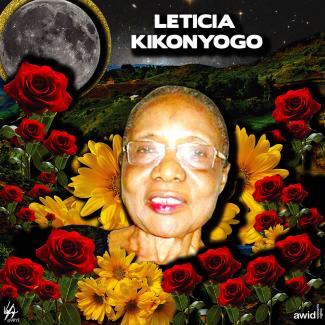
Avant de prendre sa retraite, elle a occupé de nombreux postes de haut niveau, notamment celui de membre de la cour d’appel et juge en chef adjointe de l’Ouganda. Elle a été la première femme ougandaise à occuper le poste de magistrat en chef entre 1973 et 1986 et la première femme à être nommée juge à la Haute Cour de justice en 1986.
Elle fut l'une des premières femmes à recevoir le titre de chevalier pontifical de l'histoire de l'Église catholique en Afrique. Elle est morte d'une crise cardiaque.
The AWID international Forum is a gathering of 2,000 women’s rights leaders and activists from around the world. The AWID Forum is the largest recurring event of its kind, and every Forum takes place in a different country in the global South.
The AWID International Forum is both a global community event and a space of radical personal transformation. A one-of-a-kind convening, the Forum brings together feminist, women’s rights, gender justice, LBTQI+ and allied movements, in all our diversity and humanity, to connect, heal and thrive.
When people come together on a global scale, as individuals and movements, we generate a sweeping force.
Join us in Bangkok, Thailand and online in December 2024.
Si vous avez des questions ou des inquiétudes, merci de nous contacter par le biais de ce formulaire, en indiquant « Enquête WITM » dans l’objet de votre message. Vous pouvez également nous écrire à witm@awid.org.

We are witnessing an unprecedented level of engagement of anti-rights actors in international human rights spaces. To bolster their impact and amplify their voices, anti-rights actors increasingly engage in tactical alliance building across sectors, regional and national borders, and faiths.
This “unholy alliance” of traditionalist actors from Catholic, Evangelical, Mormon, Russian Orthodox and Muslim faith backgrounds have found common cause in a number of shared talking points and advocacy efforts attempting to push back against feminist and sexual rights gains at the international level.
Key activities: As the government of the Roman Catholic Church, the “Holy See” uses its unique status as Permanent Observer state at the UN to lobby for conservative, patriarchal, and heteronormative notions of womanhood, gender identities and “the family”, and to propagate policies that are anti-abortion and -contraception
Based in: Vatican City, Rome, Italy.
Religious affiliations: Catholic
Connections to other anti-rights actors: US Christian Right groups; interfaith orthodox alliances; Catholic CSOs
Key activities: Self-described as the “collective voice of the Muslim world”, the OIC acts as a bloc of states in UN spaces. The OIC attempts to create loopholes in human rights protection through references to religion, culture, or national sovereignty; propagates the concept of the “traditional family”; and contributes to a parallel but restrictive human rights regime (e.g. the 1990 Cairo Declaration on Human Rights in Islam).
Based in: Jeddah, Saudi Arabia
Religious affiliations: Muslim
Connections to other anti-rights actors: Ultra conservative State missions to the UN, such as Russia
Key activities: International and regional conferences; research and knowledge-production and dissemination; lobbying at the United Nations “to defend life, faith and family”
Based in: Rockford, Illinois, U.S.
Religious affiliation: Predominantly Catholic and Christian Evangelical
Connections to other anti-rights actors: Sutherland Institute, a conservative think-tank; the Church of Latter-Day Saints; the Russian Orthodox Church’s Department of Family and Life; the anti-abortion Catholic Priests for Life; the Foundation for African Culture and Heritage; the Polish Federation of Pro-Life Movements; the European Federation of Catholic Family Associations; the UN NGO Committee on the Family; and the Political Network for Values; the Georgian Demographic Society; parliamentarians from Poland and Moldova, etc; FamilyPolicy; the Russian Institute for Strategic Studies; and HatzeOir; C-Fam; among others
Key activities: Lobbying at the United Nations, particularly the Commission of the Status of Women to “defend life and family”; media and information-dissemination (Friday Fax newsletter); movement building; trainings for conservative activists
Based in: New York and Washington D.C., U.S.
Religious affiliations: Catholic
Connections to other anti-rights actors: International Youth Coalition; World Youth Alliance; Human Life International; the Holy See; coordinates the Civil Society for the Family; the Family Research Council (U.S.) and other Christian/Catholic anti-rights CSOs; United States CSW delegation
Key activities: Lobbying in international human rights spaces for “the family” and anti-LGBTQ and anti-CSE policies; training of civil society and state delegates (for example, ‘The Resource Guide to UN Consensus Language on Family Issues’); information dissemination; knowledge production and analysis; online campaigns
Based in: Gilbert, Arizona, U.S.
Religious affiliations: Mormon
Connections to other anti-rights actors: leader of the UN Family Rights Caucus; C-Fam; Jews Offering New Alternatives to Homosexuality (JONAH); the National Association for Research and Therapy of Homosexuality (NARTH); World Congress of Families; CitizenGo; Magdalen Institute; Asociación La Familia Importa; Group of Friends of the Family (25 state bloc)
Key activities: Advocacy in international policy spaces including the United Nations, the European Union, and the Organization of American States for “the family”, against sexual and reproductive rights; training youth members in the use of diplomacy and negotiation, international relations, grassroots activities and message development; internship program to encourage youth participation in its work; regular Emerging Leaders Conference; knowledge production and dissemination
Based in: New York City (U.S.) with regional chapter offices in Nairobi (Kenya), Quezon City (The Philippines), Brussels (Belgium), Mexico City (Mexico), and Beirut (Lebanon)
Religious affiliations: primarily Catholic but aims for interfaith membership
Connections to other anti-rights actors: C-Fam; Human Life International; the Holy See; Campaign Life coalition
Key Activities: The Russian Orthodox Church (ROC), capitalizing on its close links to the Russian state, has operated as a “norm entrepreneur” in human rights debates. Russia and the ROC have co-opted rights language to push for a focus on “morality” and “traditional values” as supposed key sources of human rights. Russia led a series of “traditional values” resolutions at the Human Rights Council and has been at the forefront of putting forward hostile amendments to progressive resolutions in areas including maternal mortality, protection of civil society space, and the right to peaceful protest.
Connections to other anti-rights actors: Organization of Islamic Cooperation; Eastern European and Caucasus Orthodox churches, e.g. Georgian Orthodox Church; U.S. Christian Right including U.S. Evangelicals; World Congress of Families; Group of Friends of the Family (state bloc)
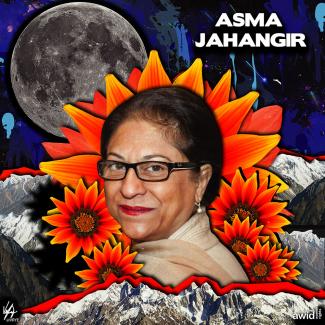
Asma was a leading Pakistani rights activist, fearless critic of the military’s interference in politics and a staunch defender of the rule of law.
She was the founding chairwoman of the Human Rights Commission of Pakistan, an independent group, and was a trustee of the International Crisis Group. She won international awards and served as the United Nations rapporteur on human rights and extrajudicial killings.
She is remembered fondly by colleagues and friends at AWID
“With her life, Asma rewrote the history that many of us were told as women. Asma changed the world. She changed it in Pakistan, and she changed it in our imaginations."
La Conferencia de Monterrey sobre la Financiación para el Desarrollo marcó el comienzo de las conversaciones acerca de una agenda de Financiación para el Desarrollo.
Para saber más sobre los seis temas centrales de Monterrey los mecanismos de seguimiento a esta conferencia, consulta Género y financiación para el desarrollo, de Maria Floro, Nilufer Çagatay, John Willoughby y Korkut Ertürk (INSTRAW, 2004).

لبناء وقائع نسوية ترتكز على الأدلة عن كيف يتحرك المال ولمن يصل

Este modelo económico explota desenfrenadamente la naturaleza e intensifica las desigualdades norte, donde sus grandes corporaciones se benefician y sur, de donde extraen los recursos.
Lee nuestro reporte de INDUSTRIAS EXTRACTIVAS
Hay alternativas sostenibles para el medioambiente y los derechos humanos de la mujer.
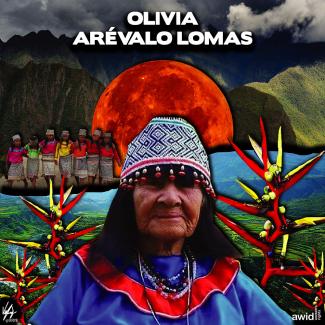
Olivia era la líder espiritual del pueblo indígena Shipibo Konibo.
Sabia mujer indígena y abuela, era conocida por practicar la medicina tradicional y cantar las canciones sagradas de su pueblo (Íkaros). Olivia Arévalo fue una activa defensora de los derechos culturales y ambientales de su pueblo. Su asesinato tuvo lugar en un contexto de conflicto territorial entre la comunidad shipibo y las empresas que quieren apropiarse de sus tierras para cultivar palma aceitera.
Integrantes de su comunidad han dicho: «Su muerte es una agresión contra toda la comunidad shipibo. Ella era la memoria viviente de su pueblo».
La Conférence des Nations Unies de 2009 sur la crise financière et économique mondiale et son incidence sur le développement

تتواجد الحركات النسوية، حركات حقوق النساء، حركات العدالة الجندرية، حركات مجتمع الميم - عين وحلفاءها/ يفاتها في مفترق شديد الأهمية وتواجه هجمات عصيبة على حقوق وحريات حصلت عليها. فتصاعد الاستبداد في الأعوام الأخيرة، وكذلك القمع العنيف للمجتمع المدني وتجريم النساء والأشخاص المتنوعين/ات جندرياً المدافعين عن حقوق الإنسان، تصاعد الحروب والأزمات في الكثير من أنحاء العالم، استمرار الظلم الاقتصادي والتقاطع بين الصحة، البيئة والأزمة المناخية.

In our 14th Forum, we will celebrate and amplify Feminist Realities that are around us, in all stages of development.
We want to make this Forum our Feminist Reality - a place where you can inhabit a different world, where you bring your victories, the solutions you have devised; what makes you feel stronger, hopeful and ready to go on. It will be different from any other convening you have previously attended.
We urge you to join us in co-creating this world. It will be worth it!
Each Forum has a theme that reflects the needs of our membership and movements, and responds to our analysis of the current context.
Currently fascisms, fundamentalisms, authoritarianism and unfettered corporate power are gaining momentum globally. We see these threats converging with the State to shape public norms, narratives, and policies, entrenching a culture of fear, hate and incitement to violence in public discourse. States, previously the target of advocacy and rights claims, in many cases no longer feel accountable and in some cases themselves don’t have the power to uphold rights.
AWID’s 2016 Forum centered on Feminist Futures and the conditions needed to bring such futures about. It was clear then, and remains evident now, the enormous challenge for many social justice movements to think outside of the current system for structural solutions. Imaginations can become narrowed from long experiences of inequality and oppression. But what we also heard then and we see all around us is that feminist movements are indeed living and promoting rights-and justice-oriented realities and solutions in big and small ways.
Indeed we see an urgency to mobilize from a place of hope, rather than from a lowest common denominator - hope that is grounded in the certainty that across the globe, however imperfectly, are experiences and practices that embody more just ways of being in the world and that by sharing, strengthening and building on these experiences, we can help them grow their influence.
These are not impossible dreams, but lived realities. This sense of possibility is a spark to re-examine and re-appreciate the transformative dimensions in our work.
At AWID, we understand feminist realities as the living, breathing examples of the worlds we know are possible. We understand these diverse feminist realities as reclamations and embodiments of hope and power. They are embedded in the multiple ways that show us that there is a different way of living, thinking and doing-- from the daily expressions of how we live and relate to each other, to alternative systems of governance and justice. Feminist Realities resist dominant power systems such as patriarchy, capitalism, and white supremacy.
These are powerful propositions that orient us toward a vision of what is possible, and show how feminist organizing is blazing a path toward justice in movements and communities around the world.
In a deeply marginalized Black community in Jackson, Mississippi, an experiment in solidarity and cooperative economics is taking place through Cooperation Jackson. An ambitious plan to build community ownership outside of capitalist modes of production.
In West Africa, women farmers are resisting land grabbing and refusing industrialized agriculture projects, boldy claiming We Are The Solution, in a campaign to build agro-ecological solutions that center women farmers and their knowledges as the solutions to feed communities and mitigate climate change
Similarly, in India, 5,000 women have come together to develop community-based food sovereignty systems based on local knowledge, including grain and seed banks
Women in Mexico have created a moneyless economy project created by and for women and everyone they know. In El Cambalache everything has the same value: people exchange things they no longer need for things they want as well as knowledge, abilities and mutual aid that people would like to share. El Cambalache was built on the anti-systemic, anti-capitalist values of local social movements
In Rojava, Kurdish people are building democracy without the state and Kurdish women offer Jineology as a framework for challenging patriarchy, capitalism and the state, creating systems and institutions to put this framework into practice
In the UK, Anarcho Agony Aunts are a sex and dating advice show, covered from a feminist, antifascist, anarchist perspective. Hosts Rowan and Marijam are reclaiming space from the alt-right in giving people (mostly men) a space to ask tricky questions in a judgment-free zone.
The African Feminist Judgment Project drafts and disseminates alternative judgments for important African landmark cases on a range of legal issues. At the heart of the project is propositional feminist judicial practice and alternative feminist judgments that contribute to African jurisprudence, legal practice and judicial decision-making
The Usha Cooperative in India was founded when mainstream banks refused services to sex workers in Sonagachi. Sex workers self-organized to prioritize their economic concerns and set up their own financial institution. The Usha Cooperative is cooperative bank of over 20,000 sex workers and has provided over USD 4.7M in loans to 7,231 sex workers in a span of one year. With a membership entirely of sex workers, the bank provides real ownership and influence over the cooperative’s governance and management, pioneering ways for individuals and communities on the margins to build economic power on their own terms.
In Puerto Rico, a community land trust is helping to transform an informal settlement around a polluted and flood prone river channel into a sustainable community. It provides a new model for improving informal settlements in cities without them then becoming unaffordable for the original residents.
In several Latin American countries activists are providing peer-to-peer counselling and accompaniment on medical abortion, reclaiming women´s right to decide over their bodies as well as to medical knowledgde. (for safety reasons, no links are provided.
Learn more about these anchors
Building on those realities, we expect the 2020 Forum to:
The Forum is more than a four-day convening. It is one more stop on a movement strengthening journey around Feminist Realities that has already begun and will continue well beyond the Forum dates.
We bring you an inspiring curated collection of powerful stories and images of transformation and resistance created by feminist activists, writers and artists from all over the world.