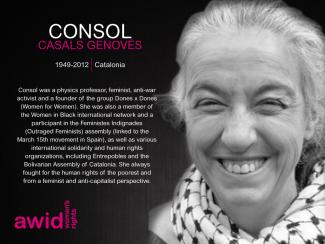
Clara Luper
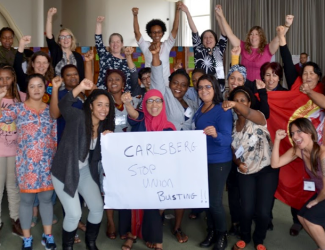
Defensoras de derechos humanos de todo el planeta defienden sus tierras, medios de subsistencia y sus comunidades ante las industrias extractivas y el poder corporativo. Ellas hacen frente a fuertes intereses económicos y políticos que promueven el robo de tierras, el desplazamiento de comunidades, la pérdida de los medios de subsistencia y la degradación del medioambiente.
El extractivismo es un modelo económico y político de desarrollo que mercantiliza la naturaleza y prioriza la ganancia por sobre los derechos humanos y el medioambiente. Arraigado en la historia colonial, refuerza las desigualdades sociales y económicas tanto a nivel local como global. Muchas veces, las mujeres negras, rurales e indígenas son las más afectadas por el extractivismo, y además son notablemente excluidas de la toma de decisiones. Desafiando estas fuerzas patriarcales y neocoloniales, las mujeres se alzan en defensa de los derechos, las tierras, las personas y la naturaleza.
Las defensoras que enfrentan a las industrias extractivas, experimentan una diversidad de riesgos, amenazas y violaciones, incluidas la criminalización, la estigmatización, la violencia y laintimidación. Sus historias dan cuenta de marcados aspectos de violencia sexual y de género. Entre los perpetradores se incluyen autoridades estatales y locales, las corporaciones, la policía, el ejército, las fuerzas paramilitares y de seguridad privada, y en algunos casos, sus propias comunidades.
AWID y la Coalición Internacional de Mujeres Defensoras de Derechos Humanos (WHRDIC por su sigla en inglés) tienen el placer de anunciar «Defensoras de derechos humanos confrontado al extractivismo y al poder corporativo»; un proyecto interregional de investigación que documenta las experiencias vividas por las defensoras de Asia, África y América Latina.
Alentamos a activistas, integrantes de movimientos sociales, la sociedad civil organizada, donantes y responsables de políticas públicas, a leer y utilizar estas producciones para el trabajo de incidencia, con fines educativos y como fuente de inspiración:
«Defensoras de derechos humanos confrontando a las industrias extractivas: un panorama de los riesgos críticos y las obligaciones en materia de derechos humanos» es un informe sobre políticas desde la perspectiva de género (en inglés, pronto disponible en español). Analiza las formas de violaciones y los tipos de perpetradores, hace referencia a las obligaciones relevantes en derechos humanos e incluye recomendaciones de políticas para los estados, corporaciones, la sociedad civil y donantes.
«Tejiendo la Resistencia a través de la Acción: Las Estrategias de las Defensoras de Derechos Humanos contra a las Industrias Extractivas» es una guía práctica que expone formas creativas y deliberadas de acción, tácticas exitosas e inspiradoras historias de resistencias.
El video «Defendiendo a las Personas y al Planeta: Mujeres Confrontando a las Industrias Extractivas» está protagonizado por defensoras de derechos humanos de África, Asia y América Latina, que comparten sus luchas por la tierra y la vida, y hablan de los riesgos y desafíos que enfrentan en su activismo.
«Desafiar al poder corporativo: Las luchas por los derechos de las mujeres, la justicia económica y de género» es un informe de investigación que explica los impactos del poder corporativo y ofrece ideas sobre estrategias de resistencia.
AWID reconoce con gratitud las invaluables contribuciones de cada Defensora de Derechos Humanos que ha sido parte de este proyecto. Esta guía ha sido posible gracias su generosidad y apertura al compartir sobre sus experiencias y lecciones. Su coraje, creatividad y resiliencia son una inspiración para todxs nosotrxs. ¡Muchas gracias!
如有其他疑問,請使用我們的聯繫表,然後從下拉選單中選擇「第14屆AWID論壇」。
English body
Nous Sommes la Solution es un movimiento de mujeres rurales por la soberanía alimentaria en África Occidental. Originalmente fundada como una campaña contra la agricultura hiper-industrializada, Nous Sommes la Solution se ha convertido en un movimiento de más de 500 asociaciones de mujeres rurales de Burkina Faso, Senegal, Ghana, Gambia, Guinea Bissau, Malí y Guinea.
Este movimiento liderado por mujeres está construyendo y fortaleciendo la soberanía alimentaria y de semillas en África Occidental. Alimentan a las comunidades, fortalecen las economías locales, amplían el conocimiento de las mujeres agricultoras y mitigan los efectos devastadores de la crisis climática a través de las prácticas agroecológicas. También organizan talleres, foros y transmisiones de radio comunitarias para compartir sus mensajes, conocimientos tradicionales y prácticas agroecológicas en las comunidades rurales.
En colaboración con universidades y centros públicos de investigación, Nous Sommes la Solution trabaja para restaurar las variedades indígenas de arroz (un alimento esencial de África Occidental) y promover economías alimentarias locales basadas en principios agroecológicos para influir en la formulación de políticas nacionales, mientras apoya a las mujeres en la creación de asociaciones agrícolas y su acceso a la propiedad y gestión colectiva de las tierras agrícolas.
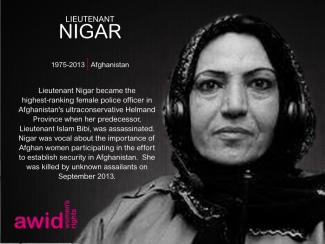
我們認為在亞太區域,台北最能讓我們為全球女性主義社群打造一個安全又可「造反」的空間。
即將召開的論壇與會者多元,台北提供了相當穩定與安全的環境。同時也具備穩健的勤務服務能力,方便許多旅客來往(提供國際論壇與會者便利的電子簽證流程)
當地的女性主義運動社群也歡迎論壇到來並積極與全球女性主義者串連。
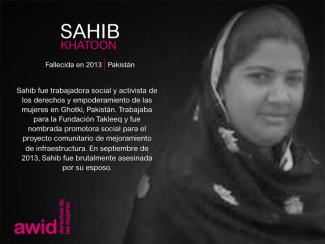
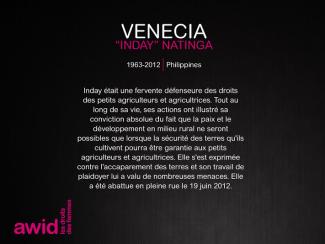
Une étudiante, une scénariste, une leader, une avocate. Les quatre femmes auxquelles nous rendons hommage ci-dessous avait toutes leur propre façon de vivre leur activisme, mais elles avaient en commun la promotion et la défense des droits des personnes lesbiennes, gaies, bisexuelles, trans*, queer et intersexes. Nous vous invitons à vous joindre à nous pour commémorer ces défenseuses, leur travail et l'héritage qu’elles nous ont laissé. Faites circuler ces mèmes auprès de vos collègues et amis ainsi que dans vos réseaux et twittez en utilisant les hashtags #WHRDTribute et #16Jours.
S'il vous plaît cliquez sur chaque image ci-dessous pour voir une version plus grande et pour télécharger comme un fichier


The AWID Forum has always been a space that doesn’t shy away from much needed and difficult conversations. We welcome these submissions when the organizers can carefully hold a respectful and safer space for the participants.
6 Women Human Rights Defenders (WHRDs) across Western and Southeastern Europe have in their lifetime researched, campaigned, participated in and advanced peace and women’s rights movements be it through political and social activism or through dance. We are grateful for the legacy they have left. Please join AWID in honoring these women, their activism and legacy by sharing the memes below with your colleagues, networks and friends and by using the hashtags #WHRDTribute and #16Days.
Please click on each image below to see a larger version and download as a file


“It’s the indigenous knowledge and the practices that have always supported food sovereignty and this knowhow is in the hands of the women … Ecofeminism for me is the respect for all that we have around us.”
Mariama Sonko
Interview to The Guardian
¡Sí! En este momento el formulario requiere que se completen los nombres de lxs presentadorxs aun si no están confirmadxs todavía. Entendemos que es probable que se produzcan cambios durante el año.
A framework for your research will guide throughout your research process, and the framing document you develop can also serve as a concept note to advisors and partners, and a funding proposal to potential donors.
Before conducting any research:
- Set the goals of your research
- List the key questions you want your research to answer
- Write out the type of data you will need to obtain and review to answer your key questions
- Define the final products you will produce with your research
Your research framing may evolve over time as you refine your questions and gather new information. However, building an initial research framing will allow you to work from a solid foundation.
To create a strong foundation for your WITM research, it is important to clarify what you hope to accomplish.
For example, one goal of AWID’s WITM global research was to provide rigorous data to prove what we already knew anecdotally: that women’s rights organizations are discrepantly underfunded. With this data, we felt we would be better positioned to influence funders in their decision-making.
Your goals could be to:
Frame your research process with key questions that only your research can answer and limit those questions to a specific time frame (e.g. past five years, past year, etc.).
Consider the following points:
Choosing a specific timeframe for your research can result in more precise findings than working with an open-ended timeframe. Also, deciding whether you will repeat this research at regular intervals will allow you to set up data collection benchmarks for easy replication and comparison over time.
These were the key questions that guided AWID’s WITM research process:
Now that you determined your key questions, you can determine what kind of data will help you answer your key questions. This will allow you to plan the rest of your schedule for your WITM research.
For example, will you conduct a survey that covers an extensive portion of your priority population? Will you analyze the applications that funders are receiving from a certain region? Will you also conduct interviews (recommended)? By determining the types of data you need, you can reach out to external parties who will provide this data early on, and plot out your full schedule accordingly. Some suggested sources of data could be:
Diverse data sets are a great way to create robust and rich analysis.
The data from AWID’s 2011 Global Survey formed the backbone of our analysis in Watering the Leaves, Starving the Roots report. However, we also collected data from interviews and interactions with several actors in the field, ranging from donors to activists and women’s rights organizations.
In addition to allowing you to set your schedule, creating an initial plan of what products you will develop will also allow you to work out what resources you need.
For example, will you only produce a long research report or will you also create infographics, brochures and presentations? Depending on your products, you may need to hire a design firm, plan events and so on.
These products will also be the tools you use to achieve your goals, so it is important to keep those goals in mind. For example, is your WITM research exclusively intended as an advocacy tool to influence funders? In that case, your products should allow you to engage with funders at a deep level.
Some sample products:
Framing your research to cover goals, key questions, types of data, and final products will allow you to create a well-planned schedule, prepare your resources in advance, and plan a realistic budget.
This will make interactions with external partners easier and allow you to be nimble when unexpected setbacks occur.

• 1 month
• 1 or more Research person(s)
• AWID Research Framing: sample 1
• AWID Research Framing: sample 2
Un lugar de trabajo no tiene que operar sobre la base de la competencia y las ganancias. No tiene que explotar a la gente en beneficio de unx dueñx o pequeña élite.
Las comunidades vulnerabilizadas al margen de las economías formales han ido construyendo modelos cooperativos alternativos basados en la autonomía, la cooperación, la corresponsabilidad, la autogestión y la solidaridad.
Las cooperativas y lugares de trabajo autogestionados por lxs trabajadorxs siempre han ofrecido formas alternativas de generar oportunidades de empleo, ingresos, seguridad social y ahorros y, al mismo tiempo, distribuir los ingresos de formas más comunitarias, sostenibles y seguras.
Pero es más que una oportunidad de empleo: es hacer realidad los sueños y construir economías feministas basadas en la solidaridad y el cuidado mutuo. Es crear un mundo donde nuestras vidas, nuestro trabajo y nuestras comunidades importen.
Esta es la historia de la Cooperativa Textil Nadia Echazú, la primera cooperativa creada y dirigida por y para personas travesti y trans en Argentina.