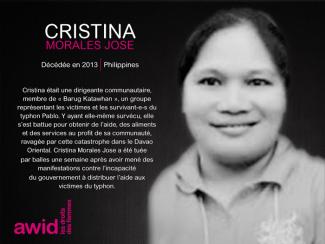
Cristina Morales Jose

In September 2016, the 13th AWID international Forum brought together in Brazil over 1800 feminists and women’s rights advocates in a spirit of resistance and resilience.
This section highlights the gains, learnings and resources that came out of our rich conversations. We invite you to explore, share and comment!
One of the key takeaways from the 2016 Forum was the need to broaden and deepen our cross-movement work to address rising fascisms, fundamentalisms, corporate greed and climate change.
With this in mind, we have been working with multiple allies to grow these seeds of resistance:
And through our next strategic plan and Forum process, we are committed to keep developing ideas and deepen the learnings ignited at the 2016 Forum.
AWID Forums started in 1983, in Washington DC. Since then, the event has grown to become many things to many peoples: an iterative process of sharpening our analyses, vision and actions; a watershed moment that reinvigorates participants’ feminisms and energizes their organizing; and a political home for women human rights defenders to find sanctuary and solidarity.
AWID正在努力使論壇成為一個真正的全球性聚會,保障來自不同運動、地區和年齡層的參會者都可以參與。鑑於此,AWID為參與者調集資源並提供有限數量的機會補助金,以幫助她們支付參加論壇的費用。
第14屆AWID國際論壇將於2021年1月11日至14日在台灣台北舉行。
對於此AWID論壇來說,機會補助金不需要任何額外申請的過程。
此外,AWID將補助論壇所在地區近100名參與者之論壇參與經費。本論壇的各委員會之成員(內容與方法委員會、障礙消弭委員會和在地委員會)和藝術工作群組,也將是我們參與經費補助的被補助者之一。
我們在資助建議頁面上列出了有關如何資助您參加AWID論壇的其他資源。
La mayoría de los Estados miembros de la Unión Europea tienen leyes y prácticas que penalizan o controlan a las trabajadoras sexuales de formas inaceptables para ellas. La criminalización de las trabajadoras sexuales y/o sus clientes solo contribuye a aumentar la vulnerabilidad de las trabajadoras sexuales, que ya enfrentan el estigma, la discriminación y la exclusión por parte del Estado y de la sociedad a diario, especialmente las mujeres trabajadoras, lxs trabajadorxs trans, migrantes y/o racializadxs. En España por ejemplo, el gobierno esta actualmente intentando pasar una Ley Orgánica para la Abolición de la Prostitución, que resultara en mas clandestinidad y violencia. Ven a conocer las historias de trabajadoras sexuales y organizadores sindicales que luchan para decriminilizar el trabajo sexual y promover derechos laborales y condiciones de trabajo digno para lxs trabajadxs sexuales.
Sostenemos la completa aplicación del principio de derechos, incluidos aquellos consagrados en leyes internacionales, y afirmamos la convicción de que todos los derechos humanos están interrelacionados y son interdependientes e indivisibles. Estamos comprometidxs a trabajar por la erradicación de todas las discriminaciones basadas en el género, la sexualidad, la religión, la edad, la capacidad, la etnia, la raza, la nacionalidad, la clase, u otros factores.
Pedimos estes dados para facilitar a revisão das respostas, para evitar respostas duplicadas e para poder entrar em contacto com o seu grupo caso não tenha conseguido completar o inquérito e/ou tenha dúvidas ou perguntas adicionais. Para mais informações sobre como utilizamos as informações pessoais que recolhemos através do nosso trabalho, clique aqui.
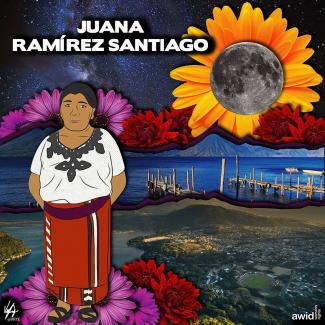
Ayant co-fondé le réseau Red de Mujeres Ixiles de Nebaj, une organisation de défense des droits des femmes autochtones, membre de l’Initiative mésoaméricaine des femmes défenseur-e-s des droits humains (IM-Defensoras en espagnol), Juana était actuellement membre de son conseil d’administration.
Elle était également sage-femme et mère de 7 enfants. Juana avait reçu des menaces de mort qui avaient été signalées au bureau du procureur. Juana est la troisième défenseure autochtone assassinée dans la région en 2018. L'Ombudsman pour le Guatemala a signalé qu'au total 20 défenseur-e-s ont été tué-e-s dans le pays cette année.
Juana Ramírez Santiago a été abattue par des assaillants non identifiés alors qu'elle traversait un pont à Nebak, Quiché, au Guatemala. Les enquêtes visant à identifier les auteurs sont en cours.
En participant à une activité exclusive pour les membres, j'ai été particulièrement touchée de voir que chacun·e y avait sa place et qu’il n’y avait pas le moindre jugement. Toute la session a été dynamique et vivante.- Kirthi Jayakumar, Fondatrice, The Gender Security Project, Inde
وسيكون التحقيق مفتوحًا حتى 31 أغسطس 2024. الرجاء تكملته خلال هذا الوقت للتأكد بأن تشمل ردودكم/ن في التحليل.
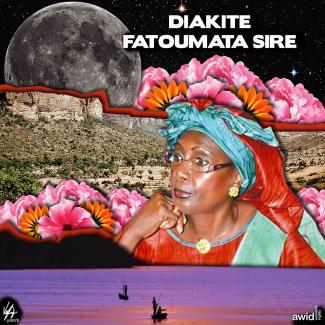
Diakite was actively involved in advocating for women in political and public life in Mali.
She worked to support training of women candidates in elections, and spoke out against the practice of Female Genital Mutilation (FGM). She was a strong proponent of reproductive health and rights.
Por Alejandra Laprea
Que difícil condensar la potencia y diversidad de voces que se levantan en América Latina para contar las otras realidades que se gestan en este vasto territorio, las realidades feministas que construimos desde el movimiento y las organizaciones populares.
Por mucho tiempo traté de establecer parámetros para la búsqueda y selección de esas películas que les permitieran a ustedes asomarse un poco a tantos sueños y proyectos que se materializan de a poco en los territorios Nuestroamericanos, como nos gusta llamarnos. Fue un trabajo arduo que pasó por intentar establecer parámetros como presencia geográfica, justicia lingüística, representación de la diversidad de pueblos: indios, afrodescendientes, migrantes y la multiplicidad de banderas y luchas que se levantan desde todas esas voces. Llegué a la conclusión de que construir ese compilado era un trabajo de años, uno de esos proyectos de perpetua construcción.
Para esta muestra me incliné por buscar trabajos que nacieran de la organización y de la militancia así como realizaciones que son quizá las iniciadoras de grandes debates que aún nos quedan por dar.
En esta selección de películas encontrarán las voces de realizadoras que no solo se contentan con plasmar las realidades feministas que palpitan en cada rincón de este vasto y diverso territorio sino también trabajos que desde su gestación misma están cuestionando el para qué, quién y cómo se hace cine o audiovisual. Que entienden al cine como una herramienta de lucha, como algo más que imágenes que se disfrutan en una pantalla. Realizadoras o colectivos de realización que ven al cine y al audiovisual como instrumentos para potenciar una discusión o abrir un debate; en fin, como un recurso para la pedagogía popular y feminista.
Es así que esta pequeña muestra es un viaje por realidades feministas en dos niveles; por un lado el de las historias que verán y por otro el de las cineastas que están buscando, experimentando, creando otras realidades feministas en las formas de hacer audiovisual y de contar las historias.
Disfruten este viaje por películas que Resisten, Crean y Transforman.
Dirección: Giovana García Soto
Docu-ficción
Español con subtítulos Inglés
En Lima is Burning tenemos un trabajo que juega con la ficción y el documental para introducirnos en la vida de Gía, una persona de género no binario, que utiliza el arte del performance como herramienta de transgresión y denuncia, como un manifiesto vital contra la transfobia en todos los espacios. incluso en ámbitos gays. Con Gia también nos asomamos al transfeminismo una comunidad segura en la que Gia se siente acogida y con la que comparte sentires y querencias.
Giovana Garcia Sojo joven Productora visual/audiovisual peruana. Especializada en producción de bajo presupuesto, creación para infancias y adolescencias en la cinematografía y guión cinematográfico por la Escuela Internacional de Cine y Tv – EICTV en San Antonio de Baños – Cuba. Giovana ha desarrollado su desarrollo como cineasta en las mujeres y las identidades feminizadas, Lima is Burning es uno de sus primeros trabajos
Dirección Patricia Ortega
Ficción
Títulos en Inglés
Patricia Ortega, directora de «Yo Imposible», explora a través de Ariel — una joven cuya intersexualidad fue violentada quirúrgicamente cuando niñe — las múltiples formas en que se intenta normalizar la diversidad sexual y de género.
La película nos narra cómo Ariel descubre que nació intersexual y que fue sometida a varias cirugías de normalización de sus genitales. Este descubrimiento enfrenta al personaje al redescubrimiento de su cuerpo y la reconstrucción de su identidad y a quienes miramos el film al cuestionamiento de una sociedad dominada por la heteronormatividad que invisibiliza a otres y les condena a la infelicidad.
Patricia Ortega, cineasta venezolana residenciada en Argentina, estudió en la Escuela Internacional de Cine y Televisión de Cuba, especializándose en dirección de cine. Patricia aborda desde la ficción situaciones límites por las que pasan las mujeres o los cuerpos feminizados y cómo se sobreponen a ellas.
«Yo Imposible» es una postura ante la concepción de un mundo concebido solo desde lo masculino y lo femenino que hace invisible a otres. «No están enfermos. Solo son genéticamente diferentes. Se les intervienen sus genitales y sus cuerpos a través de hormonas sin pedirles permiso, siendo una violación a los derechos humanos y a su identidad, buscando que encajen en los cánones establecidos». - Patricia Ortega
Dirección: Maria Torrellas Liebana
Documental
Títulos en inglés
María Torrellas nos narra la revolución cubana a través de las mujeres que le dieron vida: Vilma Espín, Celia Sánchez y Haydee Santamaría, entre otras. Pero contar la revolución cubana para las mujeres no puede quedar solo en el pasado, es una lucha cotidiana que Torrellas muestra a través de las voces de campesinas, profesionales, estudiantes y obreras cubanas del presente. En «Cubanas, mujeres en revolución» encontramos los retos actuales de las cubanas frente a prejuicios que perduran, nuevas formas de violencia y el desafío constante por crear nuevas realidades feministas para ellas y quienes vienen después de ellas en un territorio asediado desde hace más de setenta años por el imperialismo norteamericano.
María Torrellas es comunicadora y documentalista. Cuenta con una larga trayectoria fílmica y ha obtenido, entre otros, el premio Santiago Álvarez in Memoriam por su documental «Memoria de una hija de Oshun».
«En el documental he querido hilvanar las luchas de las heroínas de ayer con las mujeres actuales. Son historias contadas por ellas mismas en las que también describen a aquellas luchadoras que más admiran. Me impresionó escuchar de ellas: ‘La Revolución nos ha dado todo’ o ‘¿Qué sería de mi familia sin la Revolución?’, en la voz de compañeras de origen humilde, campesino o negras». - María Torrellas
Gabriela Arnal y Marzel Ávila para Fondo de Acción Urgente - LAC
Ecuador 2019
Títulos en Inglés
CUIDANDERAS, junta las palabras ‘cuidar’ y ‘curanderas’ es una síntesis de lo que son una serie de mujeres en Latinoamérica en sus territorios: mujeres que ponen el cuerpo y toda su energía para la protección de los Comunes, de lo que nos ofrece la Pachamama con el compromiso de que lo usemos tan sabiamente como el resto de los seres vivos. Esta mini serie de documentales nos presenta las historias de tres colectivos de mujeres latinoamericanas, comprometidas con cuidar sus territorios, curar sus cuerpos y enfrentar los modelos extractivistas y racistas en Ecuador, Colombia y Bolivia.
Provincia de Orellana, Ecuador. Las mujeres Waorani sostienen hace siglos una lucha por su territorio amazónico y por la preservación de su cultura indígena. En la actualidad hacen frente a las amenazas de la industria petrolera y su modelo de producción de muerte. Desde la selva, líderes pertenecientes a la Asociación de Mujeres Waorani de la Amazonía Ecuatoriana (AMWAE), relatan la motivación detrás de su resistencia y muestran su más grande poder: su alegría inagotable.
Buenaventura, Colombia. En el puerto más grande y violento de Colombia, azotado por décadas de conflicto armado, racismo y machismo, un grupo de mujeres se niegan a sucumbir ante el miedo y resisten a pesar de las adversidades. La Red Mariposas de Alas Nuevas reúne a mujeres negras de la costa pacífica colombiana, que trabajan juntas para proteger su territorio, recuperar sus tradiciones ancestrales y sanar las heridas de esta violencia sistemática y estructural.
El cuidado y la protección del cuerpo-tierra-territorio es el llamado de indígenas, campesinas y regantes (encargadas del riego de agua) en Bolivia frente a un modelo extractivo que atenta contra sus vidas, su salud, su integridad física y sexual, la pervivencia de sus comunidades y territorios. La Red de Defensoras de la Madre Tierra ha reunido mujeres de 12 comunidades originarias para defender el derecho al agua y denunciar las violaciones de derechos humanos y derechos de la naturaleza por parte de las empresas extractivas, a la vez que recuperan sus saberes y prácticas ancestrales de cuidado colectivo.
«CUIDANDERAS, una palabra que junta “cuidadoras” y “curanderas”, presenta historias de mujeres defensoras latinoamericanas, dedicadas a cuidar sus territorios y curar sus cuerpos. La fuerza colectiva de estas mujeres, ha cambiado la historia de sus comunidades en Ecuador, Colombia y Bolivia, enfrentadas a modelos extractivistas y racistas.»
Dirección Carolina Reynoso
Argentina 2013
Español
Si algo ha marcado las luchas feministas en América latina es el grito de todo el continente por aborto libre, seguro y gratuito. De norte a sur los movimientos feministas se levantan y toman las calles luchando por la liberación de nuestro primer territorio: nuestros cuerpos. Es así que tener en esta muestra un documental sobre el aborto es indispensable para entender la potencia de las mujeres nuestramericanas.
«Yo aborto, Tu Abortas, Todxs Callamos» nos presenta las historias de siete mujeres, incluída la directora del documental, provenientes de distintas clases socioculturales que reflexionan sobre una problemática que todas vivieron en sus cuerpos: el aborto clandestino.
A través de sus testimonios se intenta derribar mitos en relación a la interrupción voluntaria del embarazo, desestigmatizar el tema y renovar la mirada sobre una de las violencias más cotidianas en las Américas.
Directora, investigadora y productora de cine feminista. A su vez, es militante feminista, realiza talleres de creación de guión con perspectiva de género para generar mas películas que muestren otras realidades e historias contrahegemónicas. Carolina Reynoso conjuga equilibradamente militancia y creación en cada una de sus obras.
«Somos un grupo de realizadorxs audiovisuales que realizamos un documental para seguir luchando por lograr que el aborto sea libre, seguro y gratuito en Argentina. El film trata sobre los testimonios de siete mujeres, incluida la directora del documental, provenientes de distintas clases socioculturales que reflexionan sobre una problemática que todas vivieron en sus cuerpos: el aborto clandestino.» El equipo de realización
Nosotras Audiovisuales, colectiva de cineastas chilenas
Chile 2020
Enlace al micro documental:
Español
«Historias Urgentes» es una serie creada por mujeres para visibilizar necesidades y vivencias de importancia para la población de los territorios que conforman el Chile actual. Esta serie audiovisual nace para mantener viva la llama que encendió la revuelta social en octubre de 2019 del Chile diverso que despertó y dijo basta.
«Resistencia en ollas comunes» es la primera de estas “«Historias Urgentes» y nos muestra desde las voces de cuatro mujeres de Iquique, Valparaíso, Chillán y Santiago cómo desde los cuidados están en la primera línea de resistencia creando otras realidades feministas para ellas y las comunidades donde habitan las mujeres latinoamericanas.
Nosotras audiovisuales
Organización que surge en el 2017 y agrupa a mujeres vinculadas al audiovisual chileno desde la necesidad de conectar a las mujeres que trabajan en el mundo audiovisual. Es así que impulsa redes de trabajo, espacios de colaboración e información para mujeres del audiovisual, sus trabajos y puntos de vista sobre el campo laboral .
Nosotras Audiovisuales se suma a la revuelta en Chile desde el registro y la generación de materiales de creación colectiva.
Micol Metzner
Argentina 2019
Castellano
A partir de su experiencia personal la directora Micol Metzner presenta un trabajo que mezcla el documental y la ficción, con su voz como realizadora comprometida con la de miles de mujeres que son víctimas de la trata en el continente y finalmente muestra cómo la solidaridad entre las mujeres es la mejor protección.
Realizadora audiovisual, formada en el Instituto de Arte Cinematográfico de Avellaneda. Directora de Arte y montajista. Forma parte del Cluster audiovisual de la Ciudad de Buenos Aires, espacio comunitario y cooperativo multisectorial para llevar a cabo proyectos independientes.
Es docente de talleres de cine en barrios y dentro de contextos de encierro (Institutos de menores y cárceles de mujeres). Forma parte de la productora audiovisual MVM.
«La productora MVM nació de esa importancia de poder expresar un montón de cosas que habitualmente manifestamos en las calles y también poder hacerlo de una manera creativa desde el dibujo, el audiovisual, la fotografía. La productora MVM es un lugar de investigación del lenguaje, lo gráfico, el audiovisual desde el feminismo. Es también un lugar para la catarsis de todo lo que vivimos y para generar a partir del arte cosas a veces para sanar, a veces para generar espacios para el debate como sucede con el corto. .. No me imaginé que iba a suceder eso, pero cuando se presenta el corto salen un montón de cosas, se generan charlas que son mucho más enriquecedoras que el corto en sí, entonces que eso pueda provocarse a partir de lo que realizamos está buenísimo...» - Micol Metzner
Facebook: @AWIDWomensRights
Instagram: @awidwomensrights
Twitter ENG: @awid
Twitter ES: @awid_es
Twitter FR: @awid_fr
LinkedIn: Association for Women's Rights in Development (AWID)
Do you have questions regarding the AWID Forum or related activities? We have answers!
En s’appuyant sur nos 20 années d’efforts pour la mobilisation de davantage de financements de meilleure qualité pour des changements sociaux menés par des féministes, l’AWID vous invite à répondre à la nouvelle version de notre enquête phare intitulée WITM
Andaiye was seen as a transformative figure on the frontlines of the struggles for liberation and freedom. She was an early member and active in the leadership of the Working People’s Alliance (WPA), a socialist party in Guyana which fought against authoritarian rule and continued throughout her life to focus on justice for the working-class and rural women’s rights and on bridging ethnic barriers between Indo and Afro-Guyanese women.
Andaiye was a founding member of Red Thread Women, an organization that advocated for women’s care work to be fairly remunerated, worked at the University of the West Indies and with CARICOM. Never afraid to challenge governments, she pointed out gender imbalances in state boards, laws that discriminated against sex workers, called for abortion rights in Jamaica and spoke out against trade agreements such as the Caribbean Single Market and Economy (CSME) that allowed for the free movement of women domestic migrant workers but did not give their children the same rights.
Andaiye published several scholarly essays, wrote newspaper columns and also edited the last books of Walter Rodney, the Guyanese political activist and fellow WPA leader, who was assassinated in 1980. A cancer survivor, Andaiye was one of the founders of the Guyana Cancer Society and the Cancer Survivors’ Action Group. She also served on the executive of the Caribbean Association for Feminist Research and Action (CAFRA), as a Director of Help and Shelter and as Board Member of the Guyana National Commission on Women. She received a number of awards, including the Golden Arrow of Achievement in Guyana (the fourth highest national award).
Andaiye passed away on 31 May 2019 at the age of 77. The subsequent tributes that flowed in from activists, friends and those inspired by her life spoke eloquently to her amazing legacy and her beautiful humanity.
Here are but a few:
“Andaiye had a profound effect on me...she was so many things, an educator, fighter, she taught me to be self-critical, to think more clearly, she taught me about survival, about incredible courage, about compassion, about going beyond external appearances and treating people as people and not being distracted by status, class, race...anything.”
- Peggy Antrobus, Feminist Activist, Author, Scholar, Barbados
“The kind of confident idealism Andaiye expressed, this willingness to confront the world and a stubborn belief that you could actually change it... That politics of hope...How else to honour her life, legacy and memory but to keep doing the work ethically and with ongoing self-critique? And to put women’s caring work at the center of it.”
- Tonya Haynes, Barbados
“I can hear her quip at our collective keening. So through the tears I can laugh. Deep bows to you beloved Andaiye, thank you for everything. Love and light for your spirit’s journey. Tell Walter and all the ancestors howdy.” - Carol Narcisse, Jamaica


Bunga ou fleur en francais est un symbole qui est souvent associé aux femmes en Indonésie. Ce qui signifie qu'une fleur peut également être associée aux femmes transgenres. Parce que les femmes transgenres sont des femmes. Aussi belles, aussi fortes, l’une comme l’autre a vécu sans attendre d'être "cueillie", mais en grandissant, en s'épanouissant et en mourant à sa guise. Cette œuvre est un hommage à mes ami·e·s transgenres à l'occasion de la Journée Internationale de la Visibilité des Personnes Transgenres.