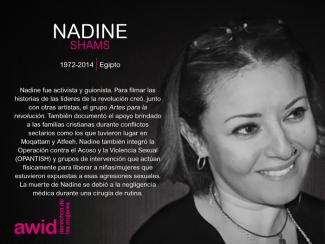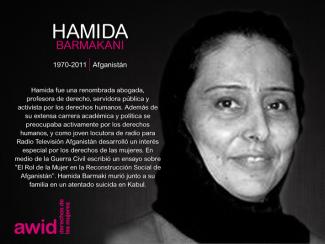
Hamida Barmakani

In September 2016, the 13th AWID international Forum brought together in Brazil over 1800 feminists and women’s rights advocates in a spirit of resistance and resilience.
This section highlights the gains, learnings and resources that came out of our rich conversations. We invite you to explore, share and comment!
One of the key takeaways from the 2016 Forum was the need to broaden and deepen our cross-movement work to address rising fascisms, fundamentalisms, corporate greed and climate change.
With this in mind, we have been working with multiple allies to grow these seeds of resistance:
And through our next strategic plan and Forum process, we are committed to keep developing ideas and deepen the learnings ignited at the 2016 Forum.
AWID Forums started in 1983, in Washington DC. Since then, the event has grown to become many things to many peoples: an iterative process of sharpening our analyses, vision and actions; a watershed moment that reinvigorates participants’ feminisms and energizes their organizing; and a political home for women human rights defenders to find sanctuary and solidarity.
Le produit de l’ensemble de votre recherche est maintenant organisé et révisé. Vous désirez maintenant que les résultats soient visuellement accessibles et attrayants afin d’en faciliter la diffusion.
Dans cette section
- Mettez en forme votre rapport final pour publication
1. Pensez comme pense votre public
2. Collaborez avec un-e graphiste professionnel-le
3. Veillez à la cohérence- Contrôlez la qualité des traductions
Pensez à élaborer des produits plus courts qui accompagnent le rapport complet.
Comme il a été mentionné à la section Synthétisez les résultats de votre recherche, l’AWID tire fréquemment des produits plus succincts du long rapport de recherche. Cela facilite une distribution plus vaste, particulièrement destinée à des publics clés.
Ne perdez jamais de vue votre population cible : qui lira votre rapport ?
Exemples de produits plus courts tirés du long rapport de recherche :
Les gens sont constamment submergés d’information. Votre produit devra être visuellement percutant afin de maintenir l’intérêt de votre public. Ici encore, le fait d’avoir une idée précise de ce que vous souhaitez accomplir et de ceux et celles que vous voulez toucher permettra à la-au graphiste de créer des produits ciblés.
Un très long rapport en format PDF pourrait sembler être la seule façon de présenter votre recherche. Cependant, ce genre de document peut rebuter la plupart des gens, particulièrement s’il est affiché en ligne.
Si vous voulez partager votre produit avec une communauté en ligne, pensez à créer des mèmes (symboles culturels transmis de façon virale) et des infographies à diffuser dans les médias sociaux, les blogs et les plateformes Web.
Lorsque vous devez décider de créer ou non des produits plus courts, considérez la possibilité de diviser vos résultats en produits plus succincts que vous pourrez partager avec les populations ciblées ou encore à différents moments de l’année, pour susciter un intérêt renouvelé à l’égard de votre produit.
Si avez peu de temps et un peu de ressources financières, nous vous recommandons d’embaucher une entreprise de conception graphique.
Pour des raisons économiques, il peut sembler tentant d’avoir recours au personnel interne pour mettre en forme votre produit. Cependant, un-e graphiste professionnel-le peut avoir d’énormes incidences sur l’aspect de votre produit final et sur les retombées qu’il peut avoir !
La-le graphiste (interne ou embauché-e) doit pouvoir :
Ce dont la-le graphiste aura besoin de votre part :
Les graphistes sont des spécialistes du design visuel. Ils/Elles n’ont pas forcément de connaissances dans le domaine des droits des femmes et ne sont pas au fait des résultats de votre recherche, particulièrement si vous travaillez avec un prestataire externe. Indiquez-leur clairement quels sont les éléments importants du rapport et le public que vous ciblez.
En fonction de ces détails, la personne chargée du graphisme suggérera des moyens de mettre en exergue ces éléments et rendra l’ensemble du produit attrayant.
Lorsque vous créez une série de produits plus succincts, n’oubliez pas de les lier les uns aux autres :
Il est également important d’assurer la participation du personnel afin que ses membres puissent garantir que tous les produits dérivés demeurent fidèles aux résultats de la recherche.
Si vous avez modifié le texte une fois que la conception graphique et la mise en forme du rapport de votre recherche ont été finalisées, assurez-vous de faire parvenir ces changements aux traducteurs-trices.
Si vous créez des produits plus succincts, vous devrez aussi les traduire lorsqu’ils auront été conçus et mis en forme. Ces traductions doivent être suffisamment claires pour permettre à la personne chargée du graphisme de la mettre en page, même si elle ne parle pas la langue.
Après la traduction du produit et avant de le partager, assurez-vous de faire revoir le document par une personne dont la langue maternelle est celle dans laquelle le produit est présenté.
7. Synthétisez les résultats de votre recherche

• 2-3 mois
• 1 personne (ou plus) chargée de la recherche
• 1 éditeur-trice (ou plus)
• Graphiste
• Traducteur(s)-trice(s), si nécessaire
• Liste des espaces de publication
7. Synthétisez les résultats de votre recherche
9. Parlez-en au monde entier !
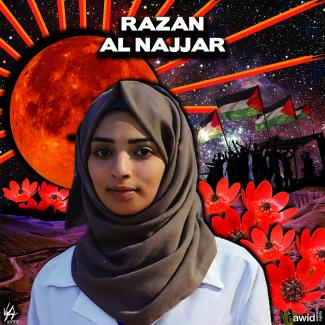
Razan era una médica voluntaria de 21 años en Palestina.
Le dispararon cuando corría hacia un muro fronterizo fortificado, en un intento por llegar hasta una persona herida en el este de la ciudad de Khan Younis, en el sur de Gaza.
En su última publicación en Facebook, Razan dijo: «Estoy volviendo y no retirándome», y añadió: «Denme con sus balas, no tengo miedo».
 |
 |
 |
 |
 |
 |
 |
 |
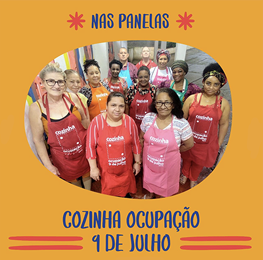
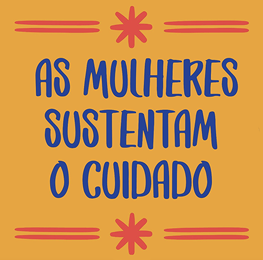
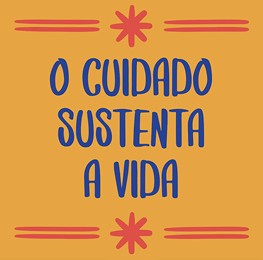
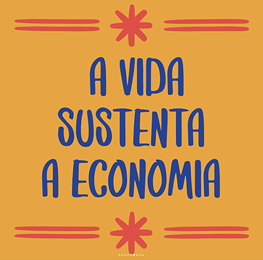
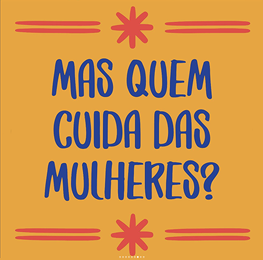
Women sustain Care | Care Sustains Life | Life Sustains Economy | Who takes care of women? | Not one less1 | Together | Sunday lunch
1Nenhuna a menos literally translates as “not one woman less” or “ni una menos” in Spanish - a famous feminist slogan in Latin America that emerged in Argentina as a response to increasing gender-based violence.
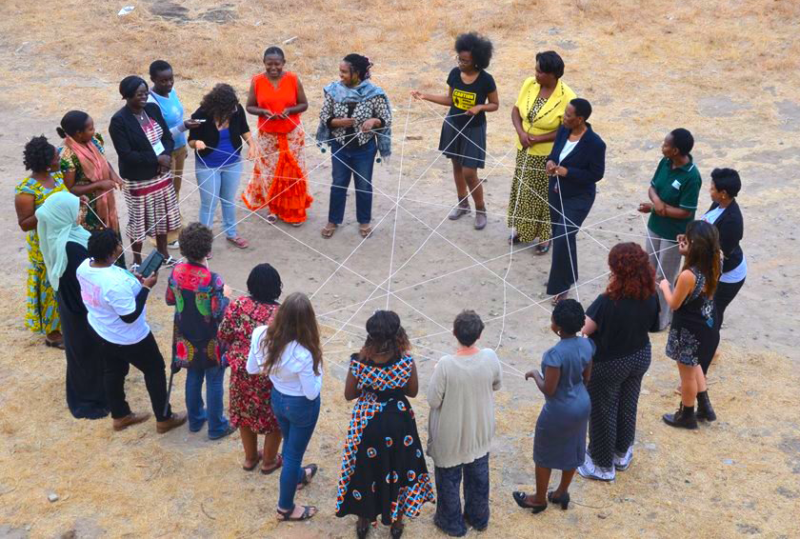
The solidarity economy (including cooperative economy and gift economy) is an alternative framework that is allowing for different forms in different contexts, open to continual change.
This framework is grounded in the principles of:
The producers in a solidarity economy develop economic processes that are intimately related to their realities, preservation of the environment and mutual cooperation.
According to feminist geographer Yvonne Underhill-Sem, the gift economy is an economic system in which goods and services flow between people without explicit agreement of their value or future reciprocity.
Behind gifting is human relationship, generation of goodwill, and attention to the nurturance of the whole society and not just one’s immediate self and family, it is about the collective.
For example, in the Pacific region, this includes: collecting, preparing, and weaving terrestrial and marine resources for mats, fans, garlands, and ceremonial items; and raising livestock and storing seasonal harvests.
The incentives for women to be involved in economic activities are diverse, ranging from the fulfillment of career aspirations and making money for a long-term comfortable life to making money to make ends meet, paying off debt, and escaping from the drudgery of routine life.
To accommodate the diverse environments that women operate in, the concept of solidarity economy is in continual development, discussed and debated.

La encuesta está disponible en árabe, español, francés, inglés, portugués y ruso.
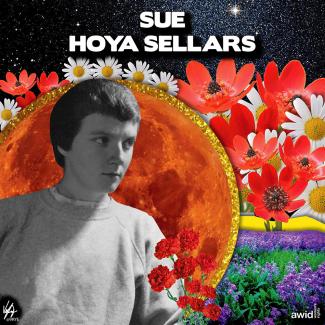
Née en 1936 dans le Maryland aux États-Unis, Sue était artiste, activiste et enseignante.
Son art était destiné aux femmes et parlait des femmes. En tant que féministe lesbienne, pendant un temps séparatiste, elle s'est engagée à créer des espaces réservés aux femmes. En 1976, elle a acheté un terrain qui est toujours géré par des femmes qui y séjournent pour créer de l'art. Sue a pris une position farouche sur la question de la protection des femmes et des filles.
Avec son approche révolutionnaire, futuriste et anthropologique, elle remplissait chaque pièce dans laquelle elle entrait avec une intelligence et une excentricité authentiques, ainsi qu’un humour et un esprit impitoyable. Ses idées sur la conscience et la créativité continuent à inspirer beaucoup de gens.
 |
Derechos humanos y etnico-territoriales Asegurar la defensa de los derechos humanos y los derechos de la Naturaleza a través de la construcción de alianzas con actores y organizaciones locales, nacionales, regionales y globales. |
 |
Desarrollo Sostenible Garantizar que todas las actividades económicas, culturales y ambientales contribuyan al desarrollo sostenible, la seguridad alimentaria y la generación de ingresos, respetando la libre determinación y el autogobierno de las comunidades afrodescendientes. |
 |
Educación y formación Capacitar y empoderar mujeres para que defiendan sus derechos en diferentes espacios políticos, sociales y económicos. ¡Para obtener más información, puedes ver más aquí! |
La crisis económica global actual ofrece claras evidencias de que las políticas económicas de las últimas tres décadas no han funcionado.
La devastación causada por la crisis en los hogares más vulnerables del Norte y del Sur Globales nos recuerda que la formulación de políticas económicas y la realización de los derechos humanos (económicos, sociales, políticos, civiles y culturales) han estado separados durante demasiado tiempo. Las políticas económicas y los derechos humanos no tienen por qué ser fuerzas opuestas sino que pueden existir de manera simbiótica.
Las políticas macroeconómicas afectan el funcionamiento de la economía en su totalidad, e influyen sobre la disponibilidad y la distribución de los recursos. En este contexto, las políticas fiscales y monetarias son fundamentales.
Estas políticas afectan los principales precios como las tasas de interés y de cambio que a su vez influyen de manera directa sobre otros elementos como el nivel de empleo, el acceso a créditos que se puedan pagar y el mercado de la vivienda.
Aplicar un marco de referencia de derechos humanos a las políticas macroeconómicas les permite a los Estados cumplir mejor con su obligación de respetar, proteger y promover los derechos económicos y sociales. Los derechos humanos son estándares universales que gozan de consenso internacional. Estas normas legales se expresan en tratados de Naciones Unidas como la Declaración Universal de Derechos Humanos (DUDH), el Pacto Internacional sobre Derechos Civiles y Políticos (PIDCP) y el Pacto Internacional sobre Derechos Económicos, Sociales y Culturales (PIDESC).
El artículo 1 de la DUDH dice que «Todos los seres humanos nacemos libres e iguales en dignidad y derechos».
Aunque la DUDH fue escrita hace más de seis décadas, su relevancia perdura. Muchas de las ideas que expresa se refieren a preocupaciones y temáticas centrales a las que continuamos enfrentándonos en todo el mundo: el rechazo a los tratos crueles, inhumanos o degradantes (artículo 5), protección contra toda discriminación (artículo 7), la propiedad (artículo 17), igual salario por trabajo igual. (artículo 23.2) y el acceso a la educación (artículo 26.1) son asuntos pertinentes tanto en países ubicados al norte como al sur del Ecuador.
En un sentido más específico, la legislación internacional obliga a los Estados a respetar, proteger y promover los derechos humanos, que incluyen a los derechos económicos y sociales, de las personas bajo su jurisdicción. Esto cobra una relevancia particular en este momento de crisis financiera. En Estados Unidos, la regulación estatal se desvirtúa en función de intereses particulares. El fracaso en cuanto a extender el rol de supervisión de los gobiernos en el contexto de cambios sociales y económicos es también un fracaso frente a la obligación de proteger los derechos humanos.
Para realizar los derechos económicos y sociales, los Estados deben cumplir con los principios fundamentales de derechos humanos. Algunos de esos principios pueden tener consecuencias importantes para la gobernabilidad de las instituciones y mercados financieros, pero esas posibilidades todavía no se han explorado del todo.
Los derechos económicos y sociales tienen una base institucional y legal concreta. Las declaraciones globales, tratados internacionales, pactos y en varios casos también las constituciones nacionales han incorporado aspectos del marco de referencia de los derechos económicos y sociales, por lo que ofrecen una infraestructura institucional en el derecho doméstico e internacional.
Algunas personas consideran que tal vez no resulte útil pensar en una justicia global por las complejidades institucionales que implica. Sin embargo, esto pasa por alto el hecho de que las instituciones globales ya ejercen impactos tanto positivos como negativos sobre la justicia social.
Resulta útil identificar las consecuencias que tienen algunos elementos de los marcos alternativos para la gobernabilidad económica y específicamente los que cuentan con el apoyo de instituciones existentes. Los derechos económicos y sociales constituyen uno de esos marcos de referencia específicos. Se trata de un marco de referencia en continua evolución que requiere de conversaciones y deliberaciones permanentes para abordar sus áreas aún no desarrolladas y sus potenciales deficiencias.

L’enquête WITM mondiale est un des piliers essentiels de la troisième édition de notre recherche orientée sur l’action, intitulée Où est l’argent pour l’organisation des mouvements féministes? (abrégé en Où est l’argent ou WITM, pour l’acronyme en anglais). Les résultats de l’enquête seront développés et approfondis à l’occasion de conversations profondes avec des activistes et des financeurs, et les références seront croisées avec d’autres analyses et études existantes sur la situation du financement des mouvements féministes et de l’égalité des genres à travers le monde.
Le rapport complet de la recherche Où est l’argent pour l’organisation des mouvements féministes sera publié en 2026.
 Pour en apprendre davantage sur la manière dont l’AWID met en lumière l’argent utilisé pour et contre les mouvements féministes, consultez notre dossier WITM et nos précédents rapports à ce sujet ici.
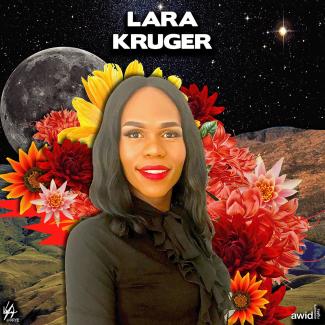
Lara was a well-known and loved radio DJ on Motsweding FM in South Africa.
Lara was one of the first openly-transgender radio hosts on a mainstream station. She worked hard to shine a light on LGBTI issues.
Lara’s activism started at a young age when she would vocally defend her right to dress and behave as she felt comfortable to members of her community who didn’t yet understand what it meant to be transgender.
En vous promenant dans le quartier du Raval à Barcelone, vous croiserez peut-être Metzineres, une coopérative féministe par et pour les femmes et personnes trans et non-binaires qui consomment de la drogue.
Imaginez un endroit sans stigmatisation, où les femmes et personnes trans et non-binaires peuvent consommer des drogues en toute sécurité. Un lieu qui offre sécurité, soutien et accompagnement aux femmes et personnes trans et non-binaires dont les droits sont systématiquement bafoués par la guerre contre la drogue et qui subissent violence, stigmatisation et répression en conséquence.
Juste à l'extérieur de l'entrée, les passant·es et les visiteur·euses sont accueilli·e·s par un immense tableau noir où figurent des conseils, des astuces, des souhaits et des dessins de personnes qui consomment de la drogue. Il existe également un calendrier qui présente une série d'activités auto-organisées par la communauté Metzineres. Qu'il s'agisse d'ateliers coiffure et cosmétique, des émissions radio, des pièces de théâtre, de repas communs offerts à la communauté ou des cours d'autodéfense, il y a toujours quelque chose à faire!
La coopérative offre des sites de consommation sûrs ainsi que des services qui couvrent les besoins de base des gens. Il y a des lits, des casiers, des douches, des toilettes, des machines à laver et une petite terrasse extérieure où les gens peuvent se détendre ou jardiner.
Metzineres opère dans un cadre de réduction des méfaits, qui tente de réduire les conséquences négatives de la consommation de drogue. Mais la réduction des méfaits est bien plus qu'un ensemble de pratiques: c'est une politique ancrée dans la justice sociale, la dignité et les droits des personnes qui consomment des drogues.