AWID es un organización feminista internacional de membresía, que brinda apoyo a los movimientos que trabajan para lograr la justicia de género y los derechos de las mujeres en todo el mundo.
En septiembre de 2016, 1800 feministas y activistas por los derechos de las mujeres de todos los rincones de nuestros movimientos se congregaron en las costas de Bahia, en el 13º Foro Internacional de AWID.
En esta sección se destacan los logros, los aprendizajes y los recursos que surgieron de las ricas conversaciones mantenidas. Te invitamos a analizar, compartir y comentar.
¿Qué ha pasado desde 2016?
Uno de los aportes más importantes del Foro fue la necesidad de ampliar y profundizar nuestro trabajo entre movimientos, frente a la confluencia de los fascismos en auge, fundamentalismos, codicia corporativa y cambio climático.
Con esto en mente, AWID, en asociación con múltiples aliadxs, ha estado trabajando para que estas semillas de resistencia:
AWID se ha comprometido, mediante su próximo plan estratégico y su proceso del Foro, a continuar y profundizar las relaciones, las lecciones y los procesos iniciados en el Foro 2016 y basándonos en el momento actual.
¿Que pasa ahora?
El mundo es un lugar muy diferente de lo que era un año atrás, y seguirá cambiando en los próximos años.
El próximo Foro de AWID se realizará en la región del Pacífico Asiático (el lugar y la fecha exactos serán anunciados en 2018). Esperamos que te unas a nosotrxs.
Sobre el Foro de AWID
Los Foros de AWID comenzaron en 1983 en Washington DC. Desde entonces, el evento ha crecido hasta convertirse en muchas cosas para muchas personas: un proceso iterativo para darle forma a nuestros análisis, objetivos y acciones; un hito crucial que fortalece los feminismos de lxs participantes e infunde energías a sus procesos de organización; un hogar político donde lxs defensoras de derechos humanos encuentran un santuario y solidaridad.
Los actores anti-derechos adoptan una estrategia doble. Además de atacar abiertamente al sistema multilateral, los actores anti-derechos también socavan los derechos humanos desde adentro. Se involucran con el fin de cooptar procesos, consolidar normativas regresivas, y erosionar responsabilidades.
El involucramiento de los actores anti-derechos en espacios internacionales de derechos humanos tiene un objetivo principal: socavar el sistema y su capacidad de respetar, proteger y satisfacer los derechos humanos para todas las personas, y de exigir rendición de cuentas a los Estados miembro por su violación. Algunas tácticas anti-derechos operan por fuera de la ONU, e incluyen la deslegitimación y la presión política para desfinanciar a la ONU, o para que ciertos Estados miembro se retiren de acuerdos internacionales sobre derechos humanos. En los últimos años, algunos actores antiderechos han logrado una creciente influencia dentro de la ONU. Sus tácticas internas incluyen la capacitación de representantes, la distorsión de los marcos de derechos humanos, el debilitamiento de acuerdos sobre derechos humanos, la infiltración en comités de organizaciones no gubernamentales, las solicitudes de ingreso al Consejo Económico y Social bajo nombres neutrales, la infiltración en los espacios de la juventud, y las presiones para ubicar a actores antiderechos en posiciones clave.
Índice de contenidos
Institucionalización de actores anti-derechos en los mecanismos de la ONU
Exclusión y deslegitimación
Disminución de los estándares de derechos humanos
Cooptación - Construcción de un marco paralelo de derechos humanos
Ejercicio: Sí, ellos son fuertes, ¡pero también nosotrxs somos fuertes!
Florence était une militante des droits des personnes handicapées qui travaillait avec plusieurs organisations de femmes handicapées en Ouganda.
Elle a également occupé le poste de présidente de l’Association des femmes handicapées du district de Lira, ainsi que du caucus des conseillères du district de Lira. Formée en tant que conseillère pour personnes handicapées et parents d'enfants handicapés, elle a soutenu de nombreux projets appelant à une plus grande représentation des personnes handicapées.
Además de las seis mesas redondas tradicionales, cada una centrada en uno de los capítulos del Consenso de Monterrey, se produjo un diálogo interactivo informal en el que participaron muchos actores, incluyendo a grupos por los derechos de las mujeres.
Las naciones ‘en desarrollo’ exhortaron a que se tuvieran en cuenta los desafíos globales así como las necesidades y posibilidades locales en la interacción con diferentes grupos (mujeres, jóvenes, personas con discapacidad, etc.) para abordar las temáticas identificadas en el Consenso de Monterrey.
Snippet FEA We are living in a world right (EN)
Even in times of climate crisis, governments continue to encourage large-scale agriculture industries to expand. These activities poison the land, threaten biodiversity, and destroy local food production and livelihoods. Meanwhile, while women produce the majority of our food in the world, they own almost none of the land.
What if we perceived land and Nature not as private property to exploit, but as a whole to live in, learn from, and harmoniously coexist with? What if we repaired our relationships with the land and embraced more sustainable alternatives that nurture both the planet and its communities?
Nous Sommes la Solution (We Are the Solution, NSS) is one of many women-led movements striving to do this. This is their story.
FRMag - Resistance from the Kitchen
Our arepa: Resistance from the Kitchen
by Alejandra Laprea
I live in a country of the impossible, where there are no bombs yet we are living in a war. (...)
L’histoire derrière Crear, Résister, Transform par Coumba Toure
Une expérience magique de narration féministe animée par la féministe panafricaine Coumba Touré, dans la tradition séculaire des griots d’Afrique de l’Ouest
Et nous nous réunissons à nouveau
Nous avons rassemblé nos histoires, notre force
nos chansons
nos larmes
notre rage
nos rêves
nos succès
nos échecs
nous les avons rassemblés dans un grand bol pour le partage
pendant une lune de pensées
Aussi, nous restons en contact
Nous nous secouons l'esprit
nous nous caressons l'âme
Alors que nos mains sont toujours liées
Et que nos baisers et nos câlins sont interdits
Pourtant, nous nous renforcons d’heure en heure
Tissant ensemble nos voix
Franchissant les barrières sonores
comme nous parlons en langues
Nous sommes de plus en plus fortes
Nous connaissons ce qui nous différencie des autres
et les différences entre nous,
alors nous cousons nos beautés en patchwork de pensées
De nos apprentissages les plus profonds
de nos pouvoirs
Parfois, nous sommes entourées de terreur,
Par la confusion, la malhonnêteté
Mais nous nous purifions dans l'océan de l'amour
Nous sommes des tisserands de rêves
Pour vêtir un nouveau monde
Fil après fil
Aussi petites que nous soyons,
comme de petites fourmis construisant nos mouvements
comme de petites gouttes construisant nos rivières
Nous faisons des pas en avant et des pas en arrière
dansons notre chemin de retour à un mental sain
Nous soutenons le rythme de nos coeurs
Continuez à battre,
s'il vous plaît, ne vous arrêtez pas
ainsi nous sommes les transmetteurs d'une générosité oubliée
Goutte après gouttes, grandissant comme l'océan
grandissant comme la rivière qui coule de nos âmes
montrant notre force pour être l'eau qui lavera ce monde
et nous nous rassemblons à nouveau,
peux-tu nous sentir ?
Je mentirais si je disais que ça va
Que cela ne me dérange pas de ne pas vous voir.
Vos voix non filtrées et non enregistrées me manquent
Nos murmures et nos cris me manquent.
Nos cris de la révolution avortée
Nous voulonsêseulement donner naissance à de nouveaux mondes
Alors luttons pour effacer les frontières entre nous
Sil vous plait n’arrêtez pas
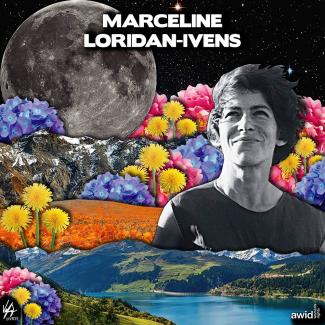
Born in 1928, Marceline worked as an actress, a screenwriter, and a director.
She directed The Birch-Tree Meadow in 2003, starring Anouk Aimee, as well as several other documentaries. She was also a holocaust survivor. She was just fifteen when she and her father were both arrested and sent to Nazi concentration camps. The three kilometres between her father in Auschwitz and herself in Birkenau were an insurmountable distance, which she writes about in one of her seminal novels “But You Did Not Come Back.”
In talking about her work, she once said: "All I can say is that everything I can write, everything I can unveil — it's my task to do it.”
2011: le cinquième Dialogue de haut niveau lance les discussions sur l´agenda de développement de l´après-2015
Lecinquième Dialogue de haut niveau sur le financement du développement, organisé les 7 et 8 décembre 2011, a marqué le début des discussions relatives au programme de développement de l’après-2015 et aux liens entre ce programme et le financement du développement. La conférence a accordé une attention particulière à la question de l’accroissement de l’aide au financement des OMD. Dans ses observations finales, le Secrétaire général a appelé les membres à commencer à réfléchir sur le cadre de développement de l’après-2015.
Snippet - That Feminist Fire Podcast Trailer (FR)
FRMag - Armenians
Armenixs: el feminismo es nuestro pasado y nuestro futuro
por Sophia Armen
Guste o no, lxs férrexs ungerhouis han sido parte esencial de nuestras historias de resistencia y están aquí para quedarse. (...)
Jurema Araújo es una profesora y poeta de Río de Janeiro. Colaboró con la revista Urbana, editada por los poetas Brasil Barreto y Samaral (que en paz descanse) y con el libro Amor e outras revoluções con una variedad de escritorxs. En colaboración con Angélica Ferrarez y Fabiana Pereira, coeditó O livro negro dos sentidos, una antología creativa sobre la sexualidad de las mujeres negras de Brasil. Jurema tiene 54 años, tiene una hija, tres perras, una gata y un montón de amistades.
¿Lo chupas conmigo?
El mango es mi fruta favorita.
Abro la boca
y lo chupo todo,
su pulpa atrapada entre mis dientes,
mordidas suaves para no lastimarla;
la aprieto entre la lengua y el paladar,
después lo saco para chuparle cada parte
con el jugo chorreando por mi boca
empapándome en este néctar sabroso
y lo meto todo de nuevo en mi boca
porque el mango es semilla y miel,
es fibra y sabor.
Y cuando se termina, estoy en trance,
pegajosa, endulzada,
con los labios todos mojados.
Oooh, para qué es el mango si no es para embadurnarse
Chupa Comigo?
A fruta que eu mais gosto é manga!
Porque eu abro a boca
E meto toda pra chupar!
Se os dentes a prendem
Fazem macio para não machucar
E eu pressiono entre minha língua e meu céu
Depois tiro pra sugar cada parte
Sentindo o caldo escorrer boca afora
Me molhando com esse néctar gostoso
E metendo toda na boca de novo
Pois manga é caroço e é mel,
É fiapo e sabor
E quando acaba, estou extasiada
Melada, docinha
Com os lábios molhados!
Aaahhh, manga é pra se lambuzar!
Presentando El libro negro de los sentidos
Lo voy a admitir: cuando Angélica y Fabi me invitaron a ser curadora de una colección de textos eróticos de mujeres negras, no sabía qué era la curaduría. Entendía bien lo erótico, pero la curaduría… Sonreí, sintiéndome cohibida y halagada. Creo que les agradecí –al menos espero haberlo hecho– y pensé: ¡¿qué mierda es eso?! Esta palabra elegante de la que tendría que aprender el significado mientras lo hacía, ¿qué es?
A estas alturas, ya sé qué significa ser curadora: es hacer el amor con los textos de otra persona, con el arte de otra persona, con la intención de armar un libro. Y eso es exactamente lo que hice. Desnudé cada texto de cada autora de este libro con lascivia literaria. Y me involucré en las palabras y los sentidos de otras. Fui penetrada por poemas que no escribí; historias que ni siquiera me atrevía a imaginar me dieron vuelta, metiéndose con mis sentimientos, con mi libido. Y fue un maravilloso y extraordinario orgasmo: etéreo, corporal, sublime, al mismo tiempo intelectual y sensible.
Estos textos palpitaban como un clítoris endurecido por el deseo, empapados, chorreando placer en cada lectura. Palabras que me tragaron con su significado pícaro, haciéndome sumergirme más profundamente en este universo húmedo.
Estas mujeres negras fueron hasta el fondo de su excitación y convirtieron en arte sus fantasías eróticas más profundas. Estos trabajos están impregnados con la forma propia de cada escritora de vivir la sexualidad: libremente, negra, para nosotras, a nuestra manera, empoderadas.
Elegí desplegar los textos a lo largo de diferentes partes del libro, cada una organizada de acuerdo al contenido más delicado, explosivo, evidente o implícito que presentaban.
Para abrir la puerta a esta «esencia negra invulvolucrada» tenemos nuestra sección Preliminares, con textos que introducen a lxs lectorxs a este mundo de deleites. Es una caricia delicada general para presentar los temas abordados por los textos en el resto del libro.
Luego viene el calor de Tacto, abordando lo que puede sentir la piel. Esa energía que quema o congela nuestros cuerpos, hace que nuestras hormonas exploten y comienza a despertar a los otros sentidos. Y aunque muchxs somos voyeurs, el contacto de la piel con una boca húmeda y cálida es excitante, como recorrer la suavidad de quien sea que esté contigo. Nos seduce un contacto firme o suave que nos produce piel de gallina y esa hermosa incomodidad que corre desde el cuello bajando por la espalda y sólo se detiene al día siguiente. Y el calor de los labios, la boca, la lengua húmeda en la piel –oh, la lengua en la oreja, hmmm– o piel sobre piel, las ropas moviéndose sobre el cuerpo, casi como una extensión de la mano de lx otrx. Si no hay urgencia, esa excitación más salvaje de la presión de un agarre fuerte, un poco de dolor, o mucho, quién sabe.
La sección Sonido –¿o melodía?– nos muestra que la atracción también sucede a través de oir: la voz, los susurros, la música que permite la conexión entre los cuerpos y puede convertirse en tema de deseo. Para algunxs, alguien con una voz hermosa sólo necesitaría sus cuerdas vocales, porque ese sonido áspero, o pesado o melodioso sería sexo auditivo. Sus insultos en voz alta o sus palabras dulces susurradas al oído serían suficiente para darnos escalofríos desde el cuello al coxis.
En Sabor, sabemos que la lengua hace un buen trabajo saboreando los lugares más escondidos y recorriendo el cuerpo para deleitarse. A veces este órgano es utilizado, descaradamente, para saborear el néctar de lx otrx. La idea de alguien compartiendo su frutilla o un delicioso mango jugoso a mordiscos y lamidas –o lamidas y mordiscos– nos derrite. Pero nada es más delicioso que saborear las cuevas y colinas de la persona con la que estás. Hundir la lengua hasta el fondo para saborear un trozo de fruta… o pasar horas saboreando la cabeza de una verga en tu boca, o chupar un pecho delicioso para saborear los pezones. Se trata de memorizar a alguien por su Sabor.
Hay textos en los cuales es la nariz lo que dispara el deseo. El Aroma, mis queridxs lectorxs, puede despertarnos a los deleites del deseo. A veces conocemos a una persona que huele tan bien que queremos tragarla directamente por la nariz. Cuando recorres el cuerpo de la otra persona con tu nariz, comenzando por el cuello, ¡guau, qué escalofrío deliciosamente incómodo que corre por la espalda y desnuda el alma! La desvergonzada nariz entonces va hacia la parte de atrás del cuello y captura la esencia de lx otrx de tal manera que en ausencia de esa persona, oler su misma esencia evoca, o al contrario, nos invade con memorias olfativas que traen de nuevo el excitante aroma de esa persona.
Después llegamos a Mirada –para mí, el traidor de los sentidos–, en el cual percibimos el deseo desde un punto de «vista». Es a través de la vista que los textos presentan el deseo y la excitación, a través de los cuales se provocan los otros sentidos. A veces una sonrisa es todo lo que hace falta para enloquecernos. ¿El intercambio de miradas? Esa mirada que dice «Te quiero». Esa mirada de posesión que llega a su fin cuando dejas de coger, o no. Esa es muy especial; atrae a lx otrx que no será capaz de apartar la mirada por mucho tiempo. ¿O la mirada de reojo, cuando unx mira para otro lado cuando lx otrx gira su cabeza, como un juego del gato y el ratón? Una vez que nos atrapan con las manos en la masa, no hay nada más que hacer salvo desplegar una amplia sonrisa.
Finalmente, la explosión. Recorriendo Todos los sentidos, los textos mezclan sentimientos que parecen como una alerta, así que ahí está el mayor placer, ese orgasmo.
Por supuesto, no hay nada que separe explícitamente estos poemas y relatos. Algunos son sutiles. La excitación involucra a todos nuestros sentidos y, lo más importante, a nuestras cabezas. Ahí es donde sucede, y conecta todo nuestro cuerpo. Organicé los poemas según cómo me llegaron en cada lectura. Sientan la libertad de no estar de acuerdo. Pero para mí, hay un sentido a través del cual va el deseo y luego explota. Es exquisito darse cuenta de cuál es.
Ser capaz de convertir la excitación en arte significa liberarnos de todo el prejuicio, prisiones, y estigma en los que nos ha atrapado esta sociedad centrada en la blanquitud.
Cada vez que una escritora negra transforma lo erótico en arte, rompe estas dañinas cadenas racistas que paralizan su cuerpo, reprimen su sexualidad y nos convierten en el objeto de la codicia de otrxs. Escribir poesía erótica es recuperar el poder sobre su propio cuerpo y pasear sin miedo por los placeres del deseo por sí misma, por otrxs, por la vida.
Lo erótico literario es quiénes somos convertido en arte. Aquí mostramos lo mejor de nosotrxs, nuestras visiones del amor empapado por el placer, sazonado por lo erógeno, extendido por nuestros cuerpos y traducido por nuestra conciencia artística. Somos múltiples y compartimos esta multiplicidad de sensaciones en palabras que chorrean excitación. Sí, incluso nuestras palabras chorrean nuestro deseo sexual, empapando nuestros versos, convirtiendo nuestras urgencias sexuales en párrafos. Acabar/correrse, para nosotras, es un descubrimiento.
Es necesario hacer que nuestras mentes, nuestros cuerpos y nuestra sexualidad sean negras, restaurar nuestro placer, y recuperar nuestros orgasmos. Solo entonces seremos libres. Todo este proceso es un descubrimiento y tiene lugar dolorosamente. Pero hay felicidad en descubrir que somos muy diferentes del lugar donde nos habían puesto.
Siento que soy de ustedes, que soy nuestra. Saboreen, deleitense, tengan un festín con estas hermosas palabras junto a nosotras.
Este texto es una adaptación de la introducción a “O Livro Negro Dos Sentidos” [El libro negro de los sentidos], una colección de poemas eróticos de 23 escritoras negras.
ExplorarCorporalidades Transnacionales
Esta edición en alianza con Kohl: una publicación para Body and Gender Research analizará soluciones, propuestas y realidades feministas para transformar nuestro mundo actual, nuestros cuerpos y nuestras sexualidades.
نصدر النسخة هذه من المجلة بالشراكة مع «كحل: مجلة لأبحاث الجسد والجندر»، وسنستكشف عبرها الحلول والاقتراحات وأنواع الواقع النسوية لتغيير عالمنا الحالي وكذلك أجسادنا وجنسانياتنا.
Dilma Ferreira Silva was a leading Amazonian rights activist who fought for decades for the rights of people affected by dams.
She herself was among the 32,000 people displaced by the Tucuruí, a mega-hydroelectric power plant, built in Brazil during the 1964-1985 military dictatorship.
In 2005 Dilma was invited to join the Movement of Dam-Affected Peoples in Brazil (MAB), and in 2006 she formed the women’s collective, eventually becoming regional coordinator of the movement.
In speaking about her activism, her colleagues commented:
“She stood out very fast because she was always very fearless in the struggle.”
Dilma lived in the rural settlement of Salvador Allende,50 kilometers from Tucuruí, and dedicated her life to better protect communities and the land affected by the construction of mega projects. She was especially concerned with the gendered impacts of such projects and advocated for women’s rights.
At a national MAB meeting in 2011, Dilma spoke to women affected by the dams, saying:
“We are the real Marias, warriors, fighters who are there, facing the challenge of daily struggle”.
In the following years, Dilma organized grassroots MAD groups and worked with the community to form farming cooperatives that created a better distribution of food for the community. They improved the commercialization of fishing, and developed a cistern project for safe drinking water. She was also an advocate for farmers whose lands were being coveted by ‘grileiros’ (land grabbers).
On 22nd March 2019, at the age of 48, Dilma, her husband and their friend were all brutally murdered. The three killings came as part of a wave of violence in the Amazon against the Movimento dos Trabalhadores Sem Terra (translates as ‘landless workers’ movement’), environmental and indigenous activists.
May 2015: Consultations on the Draft Outcome document are held
Additional consultation sessions on the Draft Outcome Document
On 7 May, the revised outcome document for the 3rd FfD conference in Addis was released by the co-facilitators
In support of continued progress on the Outcome Document, ad hoc additional sessions for consultations on the Draft Outcome Document took place from 12-15 May 2015 and 26-29 May 2015 at UN headquarters in New York