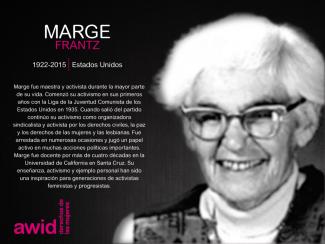
Marge Frantz
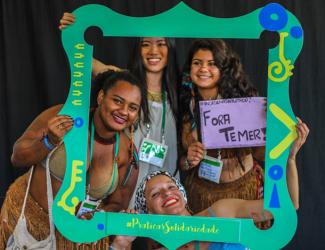
Young feminist activists play a critical role in women’s rights organizations and movements worldwide by bringing up new issues that feminists face today. Their strength, creativity and adaptability are vital to the sustainability of feminist organizing.
At the same time, they face specific impediments to their activism such as limited access to funding and support, lack of capacity-building opportunities, and a significant increase of attacks on young women human rights defenders. This creates a lack of visibility that makes more difficult their inclusion and effective participation within women’s rights movements.
AWID’s young feminist activism program was created to make sure the voices of young women are heard and reflected in feminist discourse. We want to ensure that young feminists have better access to funding, capacity-building opportunities and international processes. In addition to supporting young feminists directly, we are also working with women’s rights activists of all ages on practical models and strategies for effective multigenerational organizing.
We want young feminist activists to play a role in decision-making affecting their rights by:
Fostering community and sharing information through the Young Feminist Wire. Recognizing the importance of online media for the work of young feminists, our team launched the Young Feminist Wire in May 2010 to share information, build capacity through online webinars and e-discussions, and encourage community building.
Researching and building knowledge on young feminist activism, to increase the visibility and impact of young feminist activism within and across women’s rights movements and other key actors such as donors.
Promoting more effective multigenerational organizing, exploring better ways to work together.
Supporting young feminists to engage in global development processes such as those within the United Nations
Collaboration across all of AWID’s priority areas, including the Forum, to ensure young feminists’ key contributions, perspectives, needs and activism are reflected in debates, policies and programs affecting them.
A fines de 2019, la situación en Indonesia (en particular, los signos de militarización intensificada y de reacción contra los derechos LGBTQ) nos llevó a cuestionar la capacidad de AWID para sostener un ambiente razonablemente seguro y acogedor para la diversidad de participantes que esperamos reunir en el Foro.
Después de un análisis cuidadoso, en noviembre de 2019 la Junta Directiva de AWID decidió cambiar la sede del 14° Foro Internacional de AWID, de Bali a Taipéi.
Taipéi ofrece un alto nivel de capacidad logística, y resulta accesible para muchxs viajerxs (con la facilitación de un trámite de visa electrónico para conferencias internacionales).
Para más detalles:
Por Alejandra Laprea
Que difícil condensar la potencia y diversidad de voces que se levantan en América Latina para contar las otras realidades que se gestan en este vasto territorio, las realidades feministas que construimos desde el movimiento y las organizaciones populares.
Por mucho tiempo traté de establecer parámetros para la búsqueda y selección de esas películas que les permitieran a ustedes asomarse un poco a tantos sueños y proyectos que se materializan de a poco en los territorios Nuestroamericanos, como nos gusta llamarnos. Fue un trabajo arduo que pasó por intentar establecer parámetros como presencia geográfica, justicia lingüística, representación de la diversidad de pueblos: indios, afrodescendientes, migrantes y la multiplicidad de banderas y luchas que se levantan desde todas esas voces. Llegué a la conclusión de que construir ese compilado era un trabajo de años, uno de esos proyectos de perpetua construcción.
Para esta muestra me incliné por buscar trabajos que nacieran de la organización y de la militancia así como realizaciones que son quizá las iniciadoras de grandes debates que aún nos quedan por dar.
En esta selección de películas encontrarán las voces de realizadoras que no solo se contentan con plasmar las realidades feministas que palpitan en cada rincón de este vasto y diverso territorio sino también trabajos que desde su gestación misma están cuestionando el para qué, quién y cómo se hace cine o audiovisual. Que entienden al cine como una herramienta de lucha, como algo más que imágenes que se disfrutan en una pantalla. Realizadoras o colectivos de realización que ven al cine y al audiovisual como instrumentos para potenciar una discusión o abrir un debate; en fin, como un recurso para la pedagogía popular y feminista.
Es así que esta pequeña muestra es un viaje por realidades feministas en dos niveles; por un lado el de las historias que verán y por otro el de las cineastas que están buscando, experimentando, creando otras realidades feministas en las formas de hacer audiovisual y de contar las historias.
Disfruten este viaje por películas que Resisten, Crean y Transforman.
Dirección: Giovana García Soto
Docu-ficción
Español con subtítulos Inglés
En Lima is Burning tenemos un trabajo que juega con la ficción y el documental para introducirnos en la vida de Gía, una persona de género no binario, que utiliza el arte del performance como herramienta de transgresión y denuncia, como un manifiesto vital contra la transfobia en todos los espacios. incluso en ámbitos gays. Con Gia también nos asomamos al transfeminismo una comunidad segura en la que Gia se siente acogida y con la que comparte sentires y querencias.
Giovana Garcia Sojo joven Productora visual/audiovisual peruana. Especializada en producción de bajo presupuesto, creación para infancias y adolescencias en la cinematografía y guión cinematográfico por la Escuela Internacional de Cine y Tv – EICTV en San Antonio de Baños – Cuba. Giovana ha desarrollado su desarrollo como cineasta en las mujeres y las identidades feminizadas, Lima is Burning es uno de sus primeros trabajos
Dirección Patricia Ortega
Ficción
Títulos en Inglés
Patricia Ortega, directora de «Yo Imposible», explora a través de Ariel — una joven cuya intersexualidad fue violentada quirúrgicamente cuando niñe — las múltiples formas en que se intenta normalizar la diversidad sexual y de género.
La película nos narra cómo Ariel descubre que nació intersexual y que fue sometida a varias cirugías de normalización de sus genitales. Este descubrimiento enfrenta al personaje al redescubrimiento de su cuerpo y la reconstrucción de su identidad y a quienes miramos el film al cuestionamiento de una sociedad dominada por la heteronormatividad que invisibiliza a otres y les condena a la infelicidad.
Patricia Ortega, cineasta venezolana residenciada en Argentina, estudió en la Escuela Internacional de Cine y Televisión de Cuba, especializándose en dirección de cine. Patricia aborda desde la ficción situaciones límites por las que pasan las mujeres o los cuerpos feminizados y cómo se sobreponen a ellas.
«Yo Imposible» es una postura ante la concepción de un mundo concebido solo desde lo masculino y lo femenino que hace invisible a otres. «No están enfermos. Solo son genéticamente diferentes. Se les intervienen sus genitales y sus cuerpos a través de hormonas sin pedirles permiso, siendo una violación a los derechos humanos y a su identidad, buscando que encajen en los cánones establecidos». - Patricia Ortega
Dirección: Maria Torrellas Liebana
Documental
Títulos en inglés
María Torrellas nos narra la revolución cubana a través de las mujeres que le dieron vida: Vilma Espín, Celia Sánchez y Haydee Santamaría, entre otras. Pero contar la revolución cubana para las mujeres no puede quedar solo en el pasado, es una lucha cotidiana que Torrellas muestra a través de las voces de campesinas, profesionales, estudiantes y obreras cubanas del presente. En «Cubanas, mujeres en revolución» encontramos los retos actuales de las cubanas frente a prejuicios que perduran, nuevas formas de violencia y el desafío constante por crear nuevas realidades feministas para ellas y quienes vienen después de ellas en un territorio asediado desde hace más de setenta años por el imperialismo norteamericano.
María Torrellas es comunicadora y documentalista. Cuenta con una larga trayectoria fílmica y ha obtenido, entre otros, el premio Santiago Álvarez in Memoriam por su documental «Memoria de una hija de Oshun».
«En el documental he querido hilvanar las luchas de las heroínas de ayer con las mujeres actuales. Son historias contadas por ellas mismas en las que también describen a aquellas luchadoras que más admiran. Me impresionó escuchar de ellas: ‘La Revolución nos ha dado todo’ o ‘¿Qué sería de mi familia sin la Revolución?’, en la voz de compañeras de origen humilde, campesino o negras». - María Torrellas
Gabriela Arnal y Marzel Ávila para Fondo de Acción Urgente - LAC
Ecuador 2019
Títulos en Inglés
CUIDANDERAS, junta las palabras ‘cuidar’ y ‘curanderas’ es una síntesis de lo que son una serie de mujeres en Latinoamérica en sus territorios: mujeres que ponen el cuerpo y toda su energía para la protección de los Comunes, de lo que nos ofrece la Pachamama con el compromiso de que lo usemos tan sabiamente como el resto de los seres vivos. Esta mini serie de documentales nos presenta las historias de tres colectivos de mujeres latinoamericanas, comprometidas con cuidar sus territorios, curar sus cuerpos y enfrentar los modelos extractivistas y racistas en Ecuador, Colombia y Bolivia.
Provincia de Orellana, Ecuador. Las mujeres Waorani sostienen hace siglos una lucha por su territorio amazónico y por la preservación de su cultura indígena. En la actualidad hacen frente a las amenazas de la industria petrolera y su modelo de producción de muerte. Desde la selva, líderes pertenecientes a la Asociación de Mujeres Waorani de la Amazonía Ecuatoriana (AMWAE), relatan la motivación detrás de su resistencia y muestran su más grande poder: su alegría inagotable.
Buenaventura, Colombia. En el puerto más grande y violento de Colombia, azotado por décadas de conflicto armado, racismo y machismo, un grupo de mujeres se niegan a sucumbir ante el miedo y resisten a pesar de las adversidades. La Red Mariposas de Alas Nuevas reúne a mujeres negras de la costa pacífica colombiana, que trabajan juntas para proteger su territorio, recuperar sus tradiciones ancestrales y sanar las heridas de esta violencia sistemática y estructural.
El cuidado y la protección del cuerpo-tierra-territorio es el llamado de indígenas, campesinas y regantes (encargadas del riego de agua) en Bolivia frente a un modelo extractivo que atenta contra sus vidas, su salud, su integridad física y sexual, la pervivencia de sus comunidades y territorios. La Red de Defensoras de la Madre Tierra ha reunido mujeres de 12 comunidades originarias para defender el derecho al agua y denunciar las violaciones de derechos humanos y derechos de la naturaleza por parte de las empresas extractivas, a la vez que recuperan sus saberes y prácticas ancestrales de cuidado colectivo.
«CUIDANDERAS, una palabra que junta “cuidadoras” y “curanderas”, presenta historias de mujeres defensoras latinoamericanas, dedicadas a cuidar sus territorios y curar sus cuerpos. La fuerza colectiva de estas mujeres, ha cambiado la historia de sus comunidades en Ecuador, Colombia y Bolivia, enfrentadas a modelos extractivistas y racistas.»
Dirección Carolina Reynoso
Argentina 2013
Español
Si algo ha marcado las luchas feministas en América latina es el grito de todo el continente por aborto libre, seguro y gratuito. De norte a sur los movimientos feministas se levantan y toman las calles luchando por la liberación de nuestro primer territorio: nuestros cuerpos. Es así que tener en esta muestra un documental sobre el aborto es indispensable para entender la potencia de las mujeres nuestramericanas.
«Yo aborto, Tu Abortas, Todxs Callamos» nos presenta las historias de siete mujeres, incluída la directora del documental, provenientes de distintas clases socioculturales que reflexionan sobre una problemática que todas vivieron en sus cuerpos: el aborto clandestino.
A través de sus testimonios se intenta derribar mitos en relación a la interrupción voluntaria del embarazo, desestigmatizar el tema y renovar la mirada sobre una de las violencias más cotidianas en las Américas.
Directora, investigadora y productora de cine feminista. A su vez, es militante feminista, realiza talleres de creación de guión con perspectiva de género para generar mas películas que muestren otras realidades e historias contrahegemónicas. Carolina Reynoso conjuga equilibradamente militancia y creación en cada una de sus obras.
«Somos un grupo de realizadorxs audiovisuales que realizamos un documental para seguir luchando por lograr que el aborto sea libre, seguro y gratuito en Argentina. El film trata sobre los testimonios de siete mujeres, incluida la directora del documental, provenientes de distintas clases socioculturales que reflexionan sobre una problemática que todas vivieron en sus cuerpos: el aborto clandestino.» El equipo de realización
Nosotras Audiovisuales, colectiva de cineastas chilenas
Chile 2020
Enlace al micro documental:
Español
«Historias Urgentes» es una serie creada por mujeres para visibilizar necesidades y vivencias de importancia para la población de los territorios que conforman el Chile actual. Esta serie audiovisual nace para mantener viva la llama que encendió la revuelta social en octubre de 2019 del Chile diverso que despertó y dijo basta.
«Resistencia en ollas comunes» es la primera de estas “«Historias Urgentes» y nos muestra desde las voces de cuatro mujeres de Iquique, Valparaíso, Chillán y Santiago cómo desde los cuidados están en la primera línea de resistencia creando otras realidades feministas para ellas y las comunidades donde habitan las mujeres latinoamericanas.
Nosotras audiovisuales
Organización que surge en el 2017 y agrupa a mujeres vinculadas al audiovisual chileno desde la necesidad de conectar a las mujeres que trabajan en el mundo audiovisual. Es así que impulsa redes de trabajo, espacios de colaboración e información para mujeres del audiovisual, sus trabajos y puntos de vista sobre el campo laboral .
Nosotras Audiovisuales se suma a la revuelta en Chile desde el registro y la generación de materiales de creación colectiva.
Micol Metzner
Argentina 2019
Castellano
A partir de su experiencia personal la directora Micol Metzner presenta un trabajo que mezcla el documental y la ficción, con su voz como realizadora comprometida con la de miles de mujeres que son víctimas de la trata en el continente y finalmente muestra cómo la solidaridad entre las mujeres es la mejor protección.
Realizadora audiovisual, formada en el Instituto de Arte Cinematográfico de Avellaneda. Directora de Arte y montajista. Forma parte del Cluster audiovisual de la Ciudad de Buenos Aires, espacio comunitario y cooperativo multisectorial para llevar a cabo proyectos independientes.
Es docente de talleres de cine en barrios y dentro de contextos de encierro (Institutos de menores y cárceles de mujeres). Forma parte de la productora audiovisual MVM.
«La productora MVM nació de esa importancia de poder expresar un montón de cosas que habitualmente manifestamos en las calles y también poder hacerlo de una manera creativa desde el dibujo, el audiovisual, la fotografía. La productora MVM es un lugar de investigación del lenguaje, lo gráfico, el audiovisual desde el feminismo. Es también un lugar para la catarsis de todo lo que vivimos y para generar a partir del arte cosas a veces para sanar, a veces para generar espacios para el debate como sucede con el corto. .. No me imaginé que iba a suceder eso, pero cuando se presenta el corto salen un montón de cosas, se generan charlas que son mucho más enriquecedoras que el corto en sí, entonces que eso pueda provocarse a partir de lo que realizamos está buenísimo...» - Micol Metzner
Facebook: @AWIDWomensRights
Instagram: @awidwomensrights
Twitter ENG: @awid
Twitter ES: @awid_es
Twitter FR: @awid_fr
LinkedIn: Association for Women's Rights in Development (AWID)
No, you don't have to be an AWID member to participate but AWID members receive a discounted registration fee as well as a number of other benefits. Learn more on how to become an AWID member.
À la Commission africaine et au Système interaméricain, les antidroits promeuvent les notions essentialistes de culture et de genre pour miner les avancées en matière de droits et décrédibiliser la redevabilité. Les antidroits gagnent en influence dans les systèmes de protection des droits humains régionaux et internationaux.
Dénoncer l’emprise des multinationales. Comprendre les fausses solutions. Construire des alternatives. Tout ce qu’il vous faut pour mener votre propre campagne « À qui appartient vraiment la COP ? ».

Bunga ou fleur en francais est un symbole qui est souvent associé aux femmes en Indonésie. Ce qui signifie qu'une fleur peut également être associée aux femmes transgenres. Parce que les femmes transgenres sont des femmes. Aussi belles, aussi fortes, l’une comme l’autre a vécu sans attendre d'être "cueillie", mais en grandissant, en s'épanouissant et en mourant à sa guise. Cette œuvre est un hommage à mes ami·e·s transgenres à l'occasion de la Journée Internationale de la Visibilité des Personnes Transgenres.
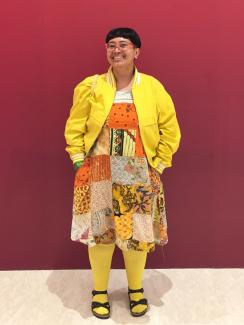
¡Sí! Actualmente estamos explorando tecnologías innovadoras que permitan una conexión y participación significativas.

Want to bring people together to strengthen resistance? This methodology for workshops offers group exercises to increase collective knowledge and power, with options to adapt to your needs.
Les afiliades de AWID analizarán y evaluarán críticamente el rol que la ayuda mutua puede cumplir en la dotación de recursos de nuestros movimientos, a través de la creación de collages colectivos.
📅 Miércoles, 12 de noviembre de 2025
📍 Espacio de la COP Popular
While fundamentalisms, fascisms and other systems of oppression shapeshift and find new tactics and strategies to consolidate power and influence, feminist movements continue to persevere and celebrate gains nationally and The rising power of anti-rights actors is not happening in a vacuum. Understanding the rise of ultra-nationalism, unchecked corporate power, growing repression, and diminishing civic space is key to contextualize the anti-rights threats we face today.
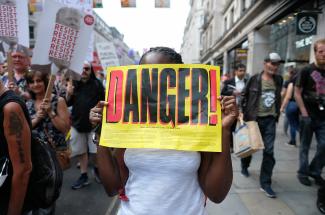
Today, considerably more than half of the world’s population is governed by far-right leaders. Against this backdrop, human rights defenders and feminists are working hard to “hold the line” and protect multilateralism and the international human rights system. They also face the risk that their engagement may bring with it violent reprisals. At the same time, these institutions are increasingly subject to private sector interests. Large businesses, particularly transnational corporations, are occupying seats at the negotiating table and leadership positions in a number of multilateral institutions, including the UN. This nexus of ultra-nationalism, closing civic space, and corporate capture is having a tremendous impact on whether human rights for all can ever be achieved.
Nous nous posons la même question et nous pensons qu'elle n’admet pas de réponse simple. Le Forum de l’AWID pourrait être, pour de nombreux participant·e·s, l'un des rares voyages internationaux qu'ils·elles effectueront au cours de leur vie. La pandémie nous a révélé les possibilités mais aussi les limites des espaces virtuels pour la construction de mouvements : rien ne vaut une rencontre en personne. Les mouvements ont besoin de connexions transfrontalières pour renforcer leur pouvoir collectif face aux menaces qui pèsent sur eux, notamment la crise climatique. Nous sommes d'avis que le prochain Forum de l'AWID pourrait ouvrir un espace stratégique afin d'organiser ces conversations et explorer les alternatives qui se posent aux voyages internationaux. L'élément hybride du Forum est une composante importante de cette exploration.
As heteropatriarchal capitalism continues to force us into consumerism and compliance, we are finding that our struggles are being siloed and separated by physical as well as virtual borders.
And with the additional challenges of a global pandemic to overcome, this divide-and-conquer strategy has been favorable for the proliferation of exploitation across many areas.
Yet, From September 1 to September 30, 2021, Crear | Résister | Transform: a festival for feminist movements! took us on a journey of what it means to embody our realities in virtual spaces. At the festival, feminist activists from across the world came together, not only to share experiences of hard-won freedoms, resistances, and cross-borders solidarities, but to articulate what a transnational form of togetherness could look like.
It is this togetherness that has the potential to defy borders, weaving a vision for a future that is transformative because it is abolitionist and anti-capitalist. Spread out over a month, across digital infrastructures that we occupied with our queerness, our resistance, and our imaginaires, the festival showed a way to deviate from the systems that make us complicit in the oppression of others and ourselves.
Though Audre Lorde taught us that the master’s tools will never dismantle the master’s house, Sara Ahmed showed us that we can misuse them. Because we had to make space for assembly, in spite of all the other demands on our time, it became possible to imagine a disruption to the reality of heteropatriarchal capitalism.
Now, if we understand assembly as a form of pleasure, then it becomes possible to make the link between transgressive pleasure and transnational/transdigital resistance. Between the kinds of pleasure that challenges borders on the one hand, and queerness, campiness, land and indigenous struggle, anti-capitalism, and anti-colonial organizing on the other.
This issue attempted to capture a sense of how the festival’s exercise in assembly took on multiple shapes and imaginations. Beyond direct collaborations with some of its speakers and dreamers, we brought on a plethora of other voices from the Global South to be in conversation with many of its themes and subjects. Below is a map of some of the festival’s panels that most inspired us.
Cette année, aux côtés de militant.e.s féministes du monde entier, nous serons à la CSW68 à New York. Nous serons là pour contester les discours capitalistes et néolibéraux et les fausses solutions autour de la pauvreté, du développement et de la finance. À travers des événements en présentiel, des lives sur nos réseaux sociaux, un stand d'exposition et bien plus encore, nous visons à nous rassembler, amplifier et soutenir les voix et la participation de nos membres et allié.e.s.
Apprenez-en davantage sur notre programme cette année ci-dessous.
Mientras los fundamentalismos, los fascismos y otros sistemas de opresión cambian de forma y encuentran nuevas tácticas y estrategias para consolidar su poder e influencia, los movimientos feministas siguen perseverando y celebrando logros a nivel nacional y en espacios regionales e internacionales.
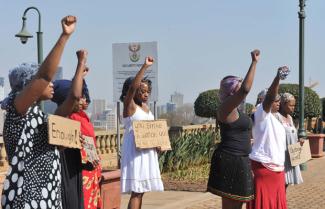
Por ejemplo, en 2019, se dio un paso significativo en el Consejo de Derechos Humanos, cuando la ONU reconoció por primera vez el derecho a la integridad y autonomía corporal. Varias resoluciones del Consejo sobre la discriminación contra mujeres y niñas también reconocen que la reacción está vinculada con grupos de presión regresivos, con perspectivas ideológicas o con el uso inapropiado de la cultura o la religión para oponerse a los derechos igualitarios de mujeres y niñas. También hemos visto progresos feministas en el trabajo de Procedimientos Especiales de la ONU (funcionarixs independientes), tales como enfatizar la obligación de los Estados de oponerse a las narrativas de ideología de género, denunciar el uso inapropiado por parte de los actores antiderechos de referencias a la «cultura», y enfatizar que las creencias religiosas no pueden ser utilizadas como justificación de la violencia o la discriminación.