
Sonia Pierre
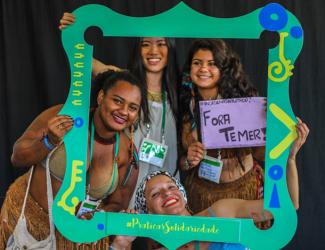
Young feminist activists play a critical role in women’s rights organizations and movements worldwide by bringing up new issues that feminists face today. Their strength, creativity and adaptability are vital to the sustainability of feminist organizing.
At the same time, they face specific impediments to their activism such as limited access to funding and support, lack of capacity-building opportunities, and a significant increase of attacks on young women human rights defenders. This creates a lack of visibility that makes more difficult their inclusion and effective participation within women’s rights movements.
AWID’s young feminist activism program was created to make sure the voices of young women are heard and reflected in feminist discourse. We want to ensure that young feminists have better access to funding, capacity-building opportunities and international processes. In addition to supporting young feminists directly, we are also working with women’s rights activists of all ages on practical models and strategies for effective multigenerational organizing.
We want young feminist activists to play a role in decision-making affecting their rights by:
Fostering community and sharing information through the Young Feminist Wire. Recognizing the importance of online media for the work of young feminists, our team launched the Young Feminist Wire in May 2010 to share information, build capacity through online webinars and e-discussions, and encourage community building.
Researching and building knowledge on young feminist activism, to increase the visibility and impact of young feminist activism within and across women’s rights movements and other key actors such as donors.
Promoting more effective multigenerational organizing, exploring better ways to work together.
Supporting young feminists to engage in global development processes such as those within the United Nations
Collaboration across all of AWID’s priority areas, including the Forum, to ensure young feminists’ key contributions, perspectives, needs and activism are reflected in debates, policies and programs affecting them.
Partagez vos histoires et écoutez celles des les autres. En reliant nos expériences, nos récits et nos propositions, nous aidons à co-créer et à amplifier les Réalités Féministes.
在您計劃將要在論壇上開展的活動時,請同時考慮如何為參加論壇提供資金支持。典型的費用支出包括:住宿、旅行、簽證、論壇註冊費等。
重要的是請注意,該論壇將有很多“開放空間”和學習、交流運動的機會,而正式會議的數量則少很多。(請參閱下面的“在籌款中如何描述我們的論壇”,以瞭解在您的宣傳中可使用的語言。)
首先聯繫您當前的資助者:最好的選擇始終是求助於當前的捐助者。
請確保提前準備:我們建議最晚在2020年初與這些資助方聯繫。許多支持女權組織的資助者為論壇旅行分配了一些預算。其他的資助方也可能將其囊括在續訂補助金中或包含在其他旅行基金裡。
如果貴組織有資助者,請告訴他們您想參加AWID論壇並學習、體驗、交流和建立網絡,即使您的活動還未被選中。為了能夠支持您的參與,您的捐助者需要提前了解此事,因此請立即告訴她們吧!(她們已經在決定將在2020年分配哪些資金)。
如果您目前沒有捐助者的支持或無法獲得論壇旅行的贈款,請考慮與新的捐助者聯繫。
各個資助方的申請截止日期和要求不盡相同,並且撥款審查過程可能需要數月的時間。如果您正在考慮申請新的資金,請盡快開始申請。
女權主義運動長期以來在資助我們自己的行動方面保持著創造力。以下是我們收集的一些想法,用於啟發不同的籌款方式:
想瞭解更多靈感,請參閱AWID正在進行的關於自主資源的系列文章,其中包括有關籌集參會資金的具體想法。(in English)
AWID正在努力使論壇成為一個真正的全球性聚會,保障來自不同運動、地區和年齡層的參會者都可以參與。鑑於此,AWID為參與者調集資源並提供有限數量的機會補助金,以幫助她們支付參加論壇的費用。
AWID的機會補助金將為部分論壇參與者和會議/活動的主持人提供支持。您可以在申請過程中指出是否要申請AWID機會補助金。我們無法保證您能否申請到,所以我們強烈建議您為自己參加會議和論壇尋求其他資助。
即使您已申請了AWID的機會補助金,我們仍鼓勵您繼續探索其他的選擇來資助您參加論壇。機會補助金的申請結果將在2020年6月結束之前得到確認。請記住,這些資源非常有限,我們無法為所有申請人提供支持。
當您與資助方或您自己的網絡聯繫時,這裡的一些示例信息可能會有所幫助。您可以隨時以對您有用的任何方式進行調整!
AWID論壇是一個聯合創建的女權運動空間,可激發參與者自身的行動積極性,並在多種權利和正義運動中加強與他人的聯繫。參與者可以從希望、能量和激進的想像力中汲取靈感,加深共享的分析和學習,建立跨領域的運動團結,以製定更加綜合的議程並推進聯合戰略。
我們的組織正在尋求資金參加論壇,以便與來自世界各地的其他活動家和運動聯繫在一起,加強我們的戰略並分享工作成果。我們受到過往參與者的啟發,她們描述了這場全球女權主義聚會的力量:
“在四天的時間裡……各種聲音交織在一起,形成了關於性別平等狀況的全球視角。當我說“全球”一詞時,我是指同時翻譯成七種不同的語言……”
“它提醒著我們,我們並不孤單。論壇提供了必要的途徑幫助我們將集體力量轉化為運動。無論是何種意識形態、身份或邊界,我們的力量都體現在我們的願景和對彼此的支持中。”
重要的是請注意,該論壇將有很多“開放空間”和學習、交流運動的機會,而正式會議的數量則少很多。儘管很多與會者不會參加正式的會議,但仍有寶貴的空間來學習、制定戰略和體驗女權運動在行動中的集體力量。
在計算花費以及思考需要募集多少款項時,最重要的是要考慮可能出現的成本。以下是要考慮的關鍵項目支出的示例:
該論壇不僅僅是一個四天的會議。它更為女權主義現實實踐的運動增強之旅提供了另一個驛站,該旅程早已開始也將在論壇結束後繼續。
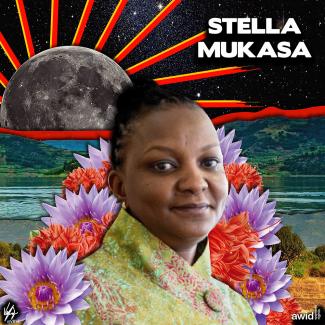
Stella comenzó su carrera en el Ministerio de Género y Desarrollo Comunitario en Uganda colaborando con lxs legisladores en reformas legales, incluida la Constitución de Uganda de 1995, que estableció algunas de las reformas más progresistas para las mujeres en la región.
Stella es respetada y admirada en toda la región por sus incansables esfuerzos para crear y hacer cumplir leyes y políticas que tomen en cuenta cuestiones de género. También desempeñó un papel clave en la redacción de la Ley de Violencia Doméstica de Uganda y en la movilización de apoyo para las constituciones sensibles al género tanto en Uganda como en Ruanda.
A través de su trabajo con el Centro Internacional para la Investigación sobre la Mujer (ICRW, por sus siglas en inglés), abordó la violencia contra lxs niñxs y trabajó para fortalecer las capacidades de las organizaciones de base que abordan la violencia de género. Stella fue profesora en cursos sobre derechos de género y la ley, en la Universidad Makerere, y formó parte de las juntas directivas de Akina Mama wa Afrika, ActionAid International Uganda y Open Society Initiative para África Oriental.
Most Member States of the European Union have laws and practices that either criminalize or control sex workers in ways unacceptable to them. Criminalization of sex workers and/or their clients only contributes to increase the vulnerability of sex workers, who are already facing stigma, discrimination and exclusion from society on a daily basis. In Spain for example, the government is currently trying to pass an Organic Law for the Abolition of Prostitution, which will result in more clandestiny and violence. Let’s dive into the stories of sex workers and union organizers fighting to decriminilaze sex work and advance their labor rights.
We believe in a full application of the principle of rights including those enshrined in international laws and affirm the belief that all human rights are interrelated, interdependent and indivisible. We are committed to working towards the eradication of all discriminations based on gender, sexuality, religion, age, ability, ethnicity, race, nationality, class or other factors.

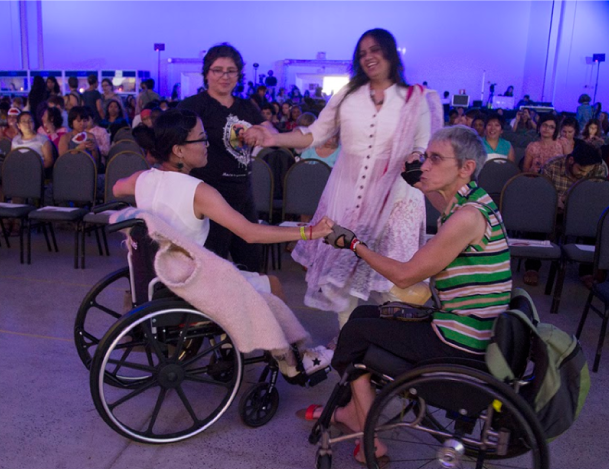
For each AWID Forum we call for contributions from a wide range of feminist and social justice movements to propose activities and create the Forum program.
For the 14th AWID international Forum, we want to make the program truly representative of the diversity of the movements.
That is why we put in place a new and engaging way to choose the proposals that will generate the final Forum program: the Participatory Selection Process (PSP).
The Participatory Selection Process is the final step in reviewing the activity proposals and selecting those that will be part of the official Forum program.
|
Step
|
Step 1: Call for Forum Activities: Application submissions |
Step 2:
|
Step 3:
|
Step 4:
|
| Timeline |
December 2019 - mid.February 2020
|
January-February 2020
|
Summer 2020
|
timeline to be adjusted
|
| People involved | Everyone interested in co-creating the Forum program |
AWID staff
|
AWID staff; Content and Methodology Committee; Access Committee |
Shortlisted applicants
|
| Number of activities involved |
838 activities submitted
|
306 applications selected
|
126 activities selected
|
50-60 most voted activities selected for the final Forum program |
We think a PSP is relevant for the AWID Forum because:
It places at the centre of the decision making process the communities who live the feminist realities that will be showcased and discussed at the Forum
It is consistent with our identity and our role as a movement support/ accompaniment organization.
It is in line with our vision of the Forum as co-created with different feminist and social justice movements, who shape the Forum through their participation in committees (content and methodology, access, artivist and host country), creating and facilitating activities as partners with AWID and also making decisions about the Program through the PSP.
It allows for greater diversity in the textures that will make up the Forum fabric (or in the voices that will compose the Forum song). It ensures we go beyond AWID itself and the movement partners that we already know and work with. It opens the door to the unexpected.
The initial idea came from AWID’s Co-EDs and staff. Before committing to a decision, we consulted some of the community funds that have been implementing participatory selection processes for years. These included FRIDA: The Young Feminists Fund, the International Trans Fund, UHAI - East Africa’s fund for sexual minorities and sex workers - and the Central American Women’s Fund. We consulted them to learn from their extensive experiences and get their feedback.
Financial autonomy, breaker of silence
ORGANISATION DES FEMMES AFRICAINES DE LA DIASPORA (OFAD) ASSOCIATION LES PETITES MERES PRODADPHE ASSOCIATION AMBE KUNKO (AAK)
Contribution of feminist organisations to the fight against violent extremism in Niger
Femmes Actions et Développement (FAD)
Self-financing: home banking for women
Rassemblement des Femmes pour le développement endogène et solidaire RAFDES
Food and food sovereignty for rural women
Association Song-taaba des Femmes Unies pour le Développement (ASFUD)
Feminist leaders, investing in positive masculinity, creating a new balanced social order: how to change mentalities?
Une societe cooperative, la chefferie traditionnelle des localites, les autorites administratives et les autres associations feminines ONG Centre Solidarite "Investir dans les Filles et les Femmes
Co-creating the sponsorship methodology.
NEGES MAWON
Millennium of opportunities to save the earth (MOST) by supporting climate justice for local and Indigenous communities in Congo Basin.
Jeunesse Congolaise pour les Nations Unies (JCNU), Association Genre et Environnement pour le Développement (AGED)
Envisioning an Asian Queer Feminist Politics
ASEAN Feminist LBQ Womxn Network Sayoni
Supporting the Self-Managed: Abortion Doulas, Acompanantes, and Radical Networks of support
inroads
Online Feminisms: How Women Are Taking Back The Tech
Feminism In India
Committee on the Elimination of Discrimination Against Sex Workers
Asia Pacific Network of Sex Workers (APNSW), The International Women's Rights Action Watch Asia Pacific (IWRAW AP)
Sustainable Feminist Leadership and Organizing - Personal and Collective Experiences
HER Fund, Institute for Women's Empowerment (IWE) ,Kalyanamita, AAF
Caribbean Realities: Black Sauna Radio
WE-Change Jamaica
Telephone Helplines Care and Women Experience
Generation Initiative for Women and Youth Network (GIWYN),Youth Network for Community and Sustainable Development (YNCSD), Community Health Rights Network (CORENET)
Sensuality as resistance; body movement workshop
UHAI EASHRI
Lesbian Disco Eastern European Style
Sapfo Collective
FitcliqueAfrica Feminist Utopia Installation, Trauma Healing and Self Defense Camp
FitcliqueAfrica (Fitclique256 Uganda Limited)
Queering Communications for an Open Internet
Astraea Lesbian Foundation for Justice
Is the Way you Think about Sexual and Reproductive Health (SRHR) Ableist? Good Practices for Disability Inclusive SRHR Programmes and Advocacy.
Asia Pacific Network of Women with Disabilities and Allies
Decolonizing Non-Violent Communication
API Equality-LA, Sayoni, ASEAN Feminist LBQ Womxn Network
Feminist centred approaches to prosecuting sexual harassment in the world of work
Women's Legal Centre
Women in Conflict in Myanmar
Women's League of Burma, Rainfall
Caribbean Feminist Spaces, Creative Expressions & Spiritual Practices for Community Transformation
CAISO: Sex and Gender Justice
POP-UPS: Just Power: Popular Education Tools for a Feminist Future
JASS/Just Associates
UnAnonYmous: Queering Black African Diaspora Feminist Practices Sobriety
Digital Witchcraft: Magical Thinking for Cyberfeminist Futures
The Digital Witchcraft Institute
Building Womanifestos: Grassroot Women's Agenda for Change in Asia Pacific
Asia Pacific Forum on Women Law and Development
Designing your astral travels
EuroNPUD, narcofeminists as a loose group
Collective Care
RENFA Rede Nacional de Feministas Antiproibicionistas
Music of our movements
Radical imagination
From waste to Ecofriendly coal
KEMIT ECOLOGY SARL
Collective care and insurgency of feminist antiracist movements under authoritarian and violent contexts
CFEMEA - Feminist Center of Studies and Advisory Services, CRIOLA - black women`s organization, Iniciativa Mesoamericana de Mujeres Defensoras
Breaking Patriarchal Religion's Stranglehold on Family Laws that Affect Our Lives #FreeOurFamilyLaws
Musawah
Feminist approach to claim and control over lands within investment
Badabon Sangho, APWLD
Women's Global Strike: Our resistance, our future
Asia Pacific Forum on Women, Law & Development, ESCR-Net, Women's March Global
Towards an Inclusive ‘Mother Earth’
Disability Rights Fund, Open Society Foundation
From Inclusion to Infiltration: Strategies for Building Intersectional Feminist Movements
Mobility International USA (MIUSA)
The hidden stories of women with invisible disabilities: Art in action
The Red Door, Merchants of Madness, Improving Mental Wellbeing through Art
Public-Private Partnership and Women´s Human Rights: learnings from case studies in the Global South
Development Alternatives with Women for a New Era (DAWN)
The Interconnected Journey: Our Bodies, Our Sci-Fi! <3
The Interconnected Journey Project, Laboratorio de Interconectividades
Compiling and Building: Alternative feminist vision to challenge the dominant world economic order
IWRAW Asia Pacific
Self-publication as a feminist act
International Women* Space
Good Practices of legal protection for gender & sexual minorities in Pakistan and their Intersectionality
Activists Alliance Foundation, Khawja Sirah Society, Wajood Society, Wasaib Sanwaro
Feminist Approaches to Counter Trafficking
IWRAW Asia Pacific, Business & Human Rights Resource Center
Critiquing individualism and state policies: transnational organizing against targeted violence
Masaha: Accessible Feminist Knowledge
Decolonizing Intimacy: How Queer Identities Challenge Heteronormative Family Structures
WOMANTRA
Yeki Hambe - Sex worker theatre
Sex Worker Education and Advocacy Task Force
Creating the Indigenous feminist reality: honoring the sacred feminine and building new paths for Indigenous women
Cultural Survival, International Funders in Indigenous Peoples
Eyes on Anti-prohibitionism by Brazillian Women
Mulheres Cannabicas, Tulipas do Cerrado
Black Feminist Truth Commission: Addressing Injustices to Revolutionize Intersectional Feminism as the New Reality
Black Women in Development
Community care is self care: true stories are told in safer spaces
Eurasian Harm Reduction Association, Metzineres, Urban Survivor’s Union, Salvage women and children from drug abuse
NO MOVES BARRED:Dancing connections between Disability,trans & sexual rights against violence
National Forum of Women with Disabilities, Autonomy foundation, Nazyk kyz
The Impact of Corporate Capture on Feminist Realities: Developing Tools for Action
ESCR-Net | Economic, Social, Cultural Rights Network
Reimagining AIDS: building a feminist HIV response
Frontline AIDS, Aidsfonds, IPPI (Indonesian Network of Women Living with HIV), UHAI-EASHRI (East African Sexual Health and Rights Initiative)
Advancing Economic Justice towards Realizing Our Vision of a Feminist Planet
International Network for Economic, Social and Cultural Rights, ESCR-Net
Sex Workers Cafe
Hydra e.V.
Adopting an ecofeminist approach in dealing with climate change and food security
Umphakatsi Peace Ecovillage, Human Rights Educational Centre
Connecting the grassroots with the international: experience from creative sex worker mobilisation in Europe
International Committee on the Rights of Sex Workers in Europe, STRASS - French Sex Worker Union, APROSEX, Red Edition
Experiment with how innovative tech can help us feel safer when navigating our cities
Soul City Institute for Social Justice, Safetipin, Womanity Foundation
question “Are hierarchies within organisations UNfeminist?”
Gay and Lesbian Coalition of Kenya National, Gay and Lesbian Human Rights Commission
We all are different, but we do have joint shared values
UNWUD (Ukrainian network of women who use drugs), JurFem Association, Women's Prospects
A World Without Class
Bunge La Wamama Mashinani (Grassroots Women's Parliament)
Women Empower the Community
Institute for Women's Empowerment (IWE), Solidaritas Perempuan, ASEC Indonesia, Komunitas Swabina Pedesaan Salassae (KSPS)
Feminist Organizing: Transformational Leadership - Women Workers in Latin America Creating a Feminist Labor Movement and a Feminist World of Work
Solidarity Center
Acting Out, Acting Up : Disability-Feminism decolonising narratives of Stigma thro' Participatory theatre
Rising Flame, National Indigenous Disabled Women Association, Nepal, The Spectrum & Union of Abilities, The Red Door
Valuing and centering rest, pleasure and play
ATHENA Network
The African feminist judgment project
The Initiative for strategic Ligation in Africa (ISLA)
Voices from the frontlines: Bolstering collective power to end the incarceration of women worldwide
International Drug Policy Consortium, Equis Justicia para las Mujeres, National Council for Incarcerated and Formerly Incarcerated Women and Girls, Women and Harm Reduction International Network
Queer Youth Organising: imagining in an era of human rights and sustainable development
African Queer Youth Initiative, Success Capital Organisation
Our Struggles Our Stories Our Strengths
Oriang Lumalaban, Pambansang Koalisyon ng Kababaihan sa Kanayunan
Breaking barriers for collective Indigenous climate action in Southeast Asia
Cuso International, Asia Indigenous Peoples' Pact
Love Positive Women: Going beyond romantic love to deep community love and social justice
Eurasian Women's Network on AIDS
Intersex and Feminism
Intersex Russia
Understanding the reproductive health experiences and needs of transgender and gender diverse people
Asia Pacific Transgender Network (APTN)
Because She Cares: Critical conversations on HIV activism as (un)caring work
Because We Care Collaborative
The Mississippi Food Systems Manifesto
Center for Ideas, Equity & Transformative Change, National Council of Appropriate Technology - Gulf South, MS Food Justice Collaborative, Malcolm X Grassroots Movement
Kurdish Women's Movement co-presidency experience as an example of a radical feminist realization: Co-presidency is our PURPLE line!
The Free Women’s Movement (TJA)
WOES -"Walking on Egg Shells"
Eldoret Women For Development (ELWOFOD), Mama Cash, Young women against Women Custodial Injustices Network
FREEDOM
Prison Isn’t Feminist: Exploring the impact and alternatives to reliance on police and incarceration
Migrant Sex Workers Project, Showing Up For Racial Justice
Bondo without Blood: A Feminist Reimagining of Sierra Leonean Rites of Passage
Purposeful
Liberated Land & Territories: A Pan-African Conversation
Thousand Currents (USA), Abahlali baseMjondolo (South Africa), Nous Sommes la Solution (west Africa/regional), Movilización de Mujeres Negras por el Cuidado de la Vida y los Territorios Ancestrales (Colombia), and Articulation of Black Rural Quilombola Communities (Brazil)
Popular Education and Organizing for a Feminist Economy
Jamaica Household Workers Union (JHWU), United for a Fair Economy, Centro de Trabajadores Unidos en la Lucha (CTUL)
So You Wish To Mobilise With An Empty Wallet? Let’s Make It Happen!
Breakthrough India
Experience sharing establishing a network for women human rights defenders in East Africa: Ugandan perspective
Women Human Rights Defenders Network Uganda
Tech clinic
Stichting Syrian Female Journalists Netowrk
Building Inclusive Movements: Going Beyond Tokenism
Rising Flame
Justice & Healing for Survivors of GBV: an interactive debate on restorative justice and the anatomy of an apology
One Future Collective
Collective actions to ending transphobia through a feminist lens
Asia Pacific Transgender Network, Iranti, Transgender Europe
LBQ women & Asylum
Sehaq
Abortion and Disability: Towards an Intersectional Human Rights-Based Approach
Women Enabled International
Learn how to support the self-organizing of undocumented, migrant, and criminalized and sex workers communities
Buttrerfly (Asian and Migrant Sex Workers Support Network)
Self Care: A Fundamental Tool for Sustaining LGBTQI & Feminist Organizing
United and Strong Inc., S.H.E Barbados, Lez Connect
Reclaiming Young African Feminist VOICES-REALITIES-POWER for climate justice
Young Feminist organization Gasy Youth Up, Young African Feminist Dialogues
Women in action & solidarity: performing our realities (Asia & Africa)
Young Feminist organization Gasy Youth Up ( co-founder) , Young African Feminist Dialogues ( member)
Women in action & solidarity: performing our realities (Asia & Africa)
Women Performing the World (Asia/Africa)
Challenging patriarchy: Workers in entertainment sector
Women Forum for Women in Nepal (WOFOWON)
The non-citizens: issues of women's citizenship in the context of migrant, vulnerable communities in South Asia
NEthing
Visioning for voice in migration and climate crises
Women's Refugee Commission, The Feminist Humanitarian Network, ActionAid
In It Together: Women's Funds and Feminist Movements Co-Creating Feminist Realities
Mama Cash, Global Fund for Women, Urgent Action Fund - Africa
Co-creating magic with young feminist movements - participatory practices that spark joy
Feminist organizing, FRIDA The Young Feminist Fund (Community), Teia
Protection right of woman’s in difficult realities 3 organizations of women from marginally communities
NGO Asteria, Ermolaeva Irena and Bayazitova Renata. NGO Ganesha Musagalieva Tatiana. NGO Ravniy Ravnomu Kucheryavyh Tanya
Feminnale - traditions against art and expression
Bishkek Feminist Initiatives
Resistance through knowledge, arts and activism: creation of a feminist library in Armenia
FemHouse, Armenia
Conquering the UN System with Feminist Strategies (You Don’t Need to be a Lawyer to Have Fun)
Kazakhstan Feminist Initiative "Feminita", IWRAW Asia Pacific, ILGA World
Data. Huh. What is it good for? Feminist data and organizing for feminist outcomes
International Women's Development Agency, Women's Rights Action Movement, Fiji Women's Rights Movement
Criminalized Women’s voice, leadership and influence on laws, policies and practices in Kenya
Keeping Alive Societies Hope-KASH, Katindi Lawyers and Advocates, Vocal Kenya
From Colombia to the world, African women's changing force
Proceso de Comunidades Negras en Colombia -PCN, Solidarité Féminine por la Paix el le Develppment Integral -SOFEPADI,
Afro Queer Listening Lounge and Story-Telling Booth
AQ Studios, None on Record, AfroQueer Podcast
Reclaiming Bodily Integrity
GBV Prevention Network : Coordinated by Raising Voices
Learning from diversity
Circulo de Mujeres con Discapacidad -CIMUDIS, Alianza Discapacidad por nuestros Derechos -ADIDE, Fundación Dominicana de Ciegos -FUDCI, Filial Puerto Rico de Mujeres con Discapacidad
Football as a feminist tool
Fundación GOLEES (Género, Orgullo, Libertad y Empoderamiento de Ellas en la Sociedad)
Migratory constellations
LasVanders
Ecofeminist dialogues to defend territories
CIEDUR (Centro Interdisciplinario de Estudios sobre el Desarrollo), Equit, Foro permanente de Manaos y Amazonia
La Frida BikesMoviment
La Frida Bike
Witchcraft, shamanism and other insurgent knowledge against patriarchy.
Colectiva Feminista MAPAS-Mujeres Andando Proceso por Autonomías Sororales
Experiences, learnings and challenges in managing holistic security of horizontal feminist organisations and of gender-dissidence in times of social and political crisis. The experience of the popular uprising in Chile of 18 October.
Fudación Comunidades en Interfaz
Food that we all know about
Las Nietas de Nonó, Parceleras Afrocaribeñas por la Transformación barrial (PATBA)
Practices of resistance against climate change of Indigenous women in Peru and Guatemala
Thousand Currents, Red de Mujeres Productoras de la Agricultura Familiar, Asociación de Mujeres Ixpiyakok (ADEMI, Ixpiyakok Women's Association)
Building Feminist Cities
CISCSA, Articulacion Feminista Marcosur
Stand in my place
Alianza Discapacidad por nuestros Derechos - ADIDE, Circulo de Mujeres con Discapacidad -CIMUDIS
Clearing the way for women's fullness of life, healing collective and historical traumas
Grupo de Mujeres Mayas Kaqla
Zapoteca Indigenous women challenged by nature
Houses of Care and Healing for Women Human Rights Defenders as part of Integral Feminist Protection: A Feminist Reality
Iniciativa Mesoamericana De Defensoras de Derechos Humanos, Consorcio Oaxaca para el Diálogo Parlamentario y la Equidad A.C, Red Nacional De Defensoras De Derechos Humanos en Honduras, Coletivo Feminista de Autocuidado
Healing your unicornix voice: Weaving ancient and digital technologies to sharpen the tongue
Feminist trajectories for an assisted motherhood protocol for women with disabilities
Circulo emancipador de mujeres y niñas con discapacidad de Chile, CIMUNIDIS, WEI
School for trans feminist children
Fundación Selena
REDTRASEX: Experience of Organization and Struggle for the Rights of Women Sex Workers in Latin America and the Caribbean
RedTraSex Red de mujeres trabajadoras sexuales LAC
Gender based violence and the world of sex work in Mexico
Brigada Callejera de Apoyo a la Mujer, "Elisa Martínez", A.C., Red Mexicana de Organizaciones Contra la Criminalización del VIH. Red Mexicana de Trabajo Sexual
Migration forces us to draw the path as we walk
Asociación de Trabajadoras del Hogar a Domicilio y de Maquila. ATRAHDOM
New narratives for Black women: body, healing and pleasure
Weaving memories and networks - Black Feminists strengthening Black feminisms in LAC
Red de Mujeres Afrolatinoamericanas, Afrocaribeñas y de la Diáspora, Articulação de Organizações de Mulheres Negras Brasileiras (AMNB), Voces Caribeñas
Всего 47 вопросов, из которых 27 являются обязательными*, а остальные 20 – дополнительными. Большинство вопросов – это вопросы с множественным выбором. Мы надеемся, что вы ответите на все вопросы.
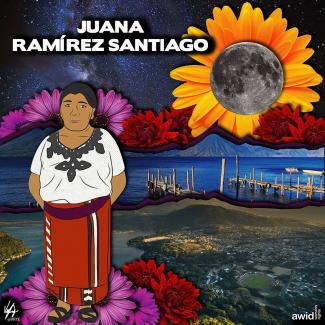
Ayant co-fondé le réseau Red de Mujeres Ixiles de Nebaj, une organisation de défense des droits des femmes autochtones, membre de l’Initiative mésoaméricaine des femmes défenseur-e-s des droits humains (IM-Defensoras en espagnol), Juana était actuellement membre de son conseil d’administration.
Elle était également sage-femme et mère de 7 enfants. Juana avait reçu des menaces de mort qui avaient été signalées au bureau du procureur. Juana est la troisième défenseure autochtone assassinée dans la région en 2018. L'Ombudsman pour le Guatemala a signalé qu'au total 20 défenseur-e-s ont été tué-e-s dans le pays cette année.
Juana Ramírez Santiago a été abattue par des assaillants non identifiés alors qu'elle traversait un pont à Nebak, Quiché, au Guatemala. Les enquêtes visant à identifier les auteurs sont en cours.
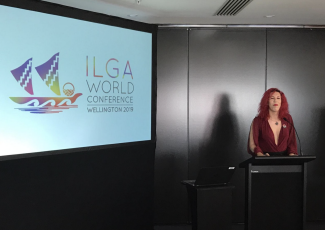
Participé en una actividad solo para afiliadxs, y lo que me conmovió en particular fue ver cómo había espacio para que todas compartieran, y que no había ningún juicio al respecto. Toda la sesión fue enérgica y vibrante.- Kirthi Jayakumar, fundadora de The Gender Security Project, India
The menstrual cycle usually lasts between 27 and 30 days. During this time, the period itself would only go on for five to seven days. During the period, fatigue, mood swings, and cramps are the result of inflammation.
In traditional Javanese culture, this is the moment for women to rest and take care of themselves. During this moment, a woman would take Kunyit Asam, a jamu or herbal drink to soothe the inflammation. This elixir consists of turmeric and tamarind boiled together in a pot.
I still remember my first period - it was one day before graduation day in elementary school. I remember pedaling my bike feeling something warm running between my thighs. When I arrived home I did all I could to clean myself and then put on a menstrual pad. My mother came home from work about four hours later. I told her what had happened. She looked me in the eye and asked how I felt. I told her that it was painful, that my body was swollen in every place. Then she asked me to go with her to the backyard. I followed her to our little jungle, my mother sat down on the soil and smiled.
“See this slender leaf? This is the leaf of Kunyit, *empon-empon that leaves the yellow stain on your fingers. What’s most important is not the leaf, but the roots. You dig the soil and slowly grab the roots.”, my mother showed me how to pick Kunyit or Turmeric roots. Then we went to the kitchen where she boiled water along with some tamarind. While waiting for it to boil, she showed me how to wash and grate the orangey-yellow root. Then, we put the grated turmeric into the boiling tamarind water. “Tomorrow, you can make it for yourself. This will help you to feel better!”.
I remember the first time I tasted it - a slightly bitter taste but also sour. My mother always served it warm. She would also put some in a big bottle which I would place on my stomach or lower back for further relief. For days after, my mother’s hands and mine were yellow. My friends could always tell every time I got period because my hands would be yellow.
A year after my first period, I found out that you could get the bottled version in convenience stores. Still, I made my own Kunyit Asam every time I had my period because the one in the convenience stores was cold. It did not smell of wet soil and warm kitchen.
Fast forward, I am a 26 year old woman who casually makes this drink for friends when they have their periods. I’ve made some for my housemates and I’ve delivered some for friends who live in different towns. I do not grow turmeric roots in my garden, but I have grown and shared the love from my mom. What was once from garden to cup is now from *pasar to cup.
A couple of days ago, I asked my mother who taught her how to make the jamu.
“Who else? Yang Ti*! Your grandmother was not just a teacher”, said my mom. I was never close to my grandmother. She passed away when I was eight. All I knew from my mom was that she was a math teacher who had to teach courses after work. I had this image of my grandmother as a hard worker who was kind of distant with her children. My mom did not disagree with that but explained it came from her survival instinct as a mother. “She tried to make time. She tried. She taught me how to make jamu so I could take care of myself and my sisters”.
My mother is the second child out of seven, six of whom are girls. The reason my grandmother taught her is so that all of her children could take care of each other. While my mother was taught how to make the drink, my mother’s older sister was taught how to plant turmeric. Yang Ti knew which one loved the smell of soil more and which one loved the smell of the kitchen. My mother was the latter. She learned how to plant from my aunt, her older sister.
My grandfather worked in a bank but he got laid off when he was in his 40s. So, my grandmother had to do a side-hustle to support their children. My mother was in high school at that time when Yang Ti woke her and her older sister up at dawn. “Would you help me to pick some roots?”. Of course nobody said no. Especially if it was your mother, especially if you were born in Javanese culture where saying “no” sounded like a bad word. Together, the three of them went to the backyard, and they harvested empon - empon, rhizome, that was buried inside the soil. She grew many kinds of rhizome; temu lawak, temu putih, ginger, galangal, kunci, kencur, and kunyit. That was the day where my mother realized that her mother was never far away from her.
That was the day where she could spend more time with her mother. There, in the garden. There, in the kitchen.
“We’re sending these for Ibu Darti, the lady who lives across the river. Kunyit Asam for her and her daughters.”, said my grandmother to my mother and my aunt that day. They poured the Turmeric-Tamarind warm drink into a tall thermos and later my grandmother would deliver it on the way to school.
Over time, my grandmother got more orders for jamu. Everybody in the family helped her to make and deliver her jamu. The small business lasted only a few years, but that was what paid for my mother and her siblings’ education.
Today, my mother, who got laid off just a few days before I wrote this piece, harvested Turmeric and other roots. She’s making her Turmeric Tamarind drink from her kitchen.
My phone rang in the middle of this afternoon, a couple minutes after I boiled the rest of my grated turmeric. Today is one day after my period.
“Ingka, have you washed your pot after boiling those turmeric? It would forever be yellow if you don’t wash it right away!”
*empon-empon = roots like ginger, turmeric, etc. coming from the Javanese word “Empu” which means, something or someone that has deep knowledge.
*jamu = Indonesia’s traditional elixir made of roots, barks, flowers, seeds, leaves, and fruits.
*Yang Ti = Javanese term for grandmother, taken from the term “Eyang Putri” the female you look up to.
*pasar = the word for traditional market in Indonesian.
The more women support other women, the quicker we’ll see progress. Together we are stronger and make even more impact.

Se quiser guardar as suas respostas e voltar ao inquérito mais tarde, pode fazê-lo sempre que precisar.