UN Women / Flickr (CC BY-NC-ND 2.0)
Guatemala - Rural Women Diversify Incomes and Build Resilience
Left
Half
Left

Priority Areas

Supporting feminist, women’s rights and gender justice movements to thrive, to be a driving force in challenging systems of oppression, and to co-create feminist realities.

Building Feminist Economies

Building Feminist Economies is about creating a world with clean air to breath and water to drink, with meaningful labour and care for ourselves and our communities, where we can all enjoy our economic, sexual and political autonomy.


In the world we live in today, the economy continues to rely on women’s unpaid and undervalued care work for the profit of others. The pursuit of “growth” only expands extractivism - a model of development based on massive extraction and exploitation of natural resources that keeps destroying people and planet while concentrating wealth in the hands of global elites. Meanwhile, access to healthcare, education, a decent wage and social security is becoming a privilege to few. This economic model sits upon white supremacy, colonialism and patriarchy.

Adopting solely a “women’s economic empowerment approach” is merely to integrate women deeper into this system. It may be a temporary means of survival. We need to plant the seeds to make another world possible while we tear down the walls of the existing one.


We believe in the ability of feminist movements to work for change with broad alliances across social movements. By amplifying feminist proposals and visions, we aim to build new paradigms of just economies.

Our approach must be interconnected and intersectional, because sexual and bodily autonomy will not be possible until each and every one of us enjoys economic rights and independence. We aim to work with those who resist and counter the global rise of the conservative right and religious fundamentalisms as no just economy is possible until we shake the foundations of the current system.


Our Actions

Our work challenges the system from within and exposes its fundamental injustices:

  • Advance feminist agendas: We counter corporate power and impunity for human rights abuses by working with allies to ensure that we put forward feminist, women’s rights and gender justice perspectives in policy spaces. For example, learn more about our work on the future international legally binding instrument on “transnational corporations and other business enterprises with respect to human rights” at the United Nations Human Rights Council.

  • Mobilize solidarity actions: We work to strengthen the links between feminist and tax justice movements, including reclaiming the public resources lost through illicit financial flows (IFFs) to ensure social and gender justice.

  • Build knowledge: We provide women human rights defenders (WHRDs) with strategic information vital to challenge corporate power and extractivism. We will contribute to build the knowledge about local and global financing and investment mechanisms fuelling extractivism.

  • Create and amplify alternatives: We engage and mobilize our members and movements in visioning feminist economies and sharing feminist knowledges, practices and agendas for economic justice.


“The corporate revolution will collapse if we refuse to buy what they are selling – their ideas, their version of history, their wars, their weapons, their notion of inevitability. Another world is not only possible, she is on her way. On a quiet day, I can hear her breathing”.

Arundhati Roy, War Talk

Related Content

ماذا لو لم أتمكن من الحضور شخصيا؟ هل ستكون الفعالية هجينة؟

نعم! نحن نستكشف حاليًا تقنيات مبتكرة للسماح بالاتصال والمشاركة الهادفين.

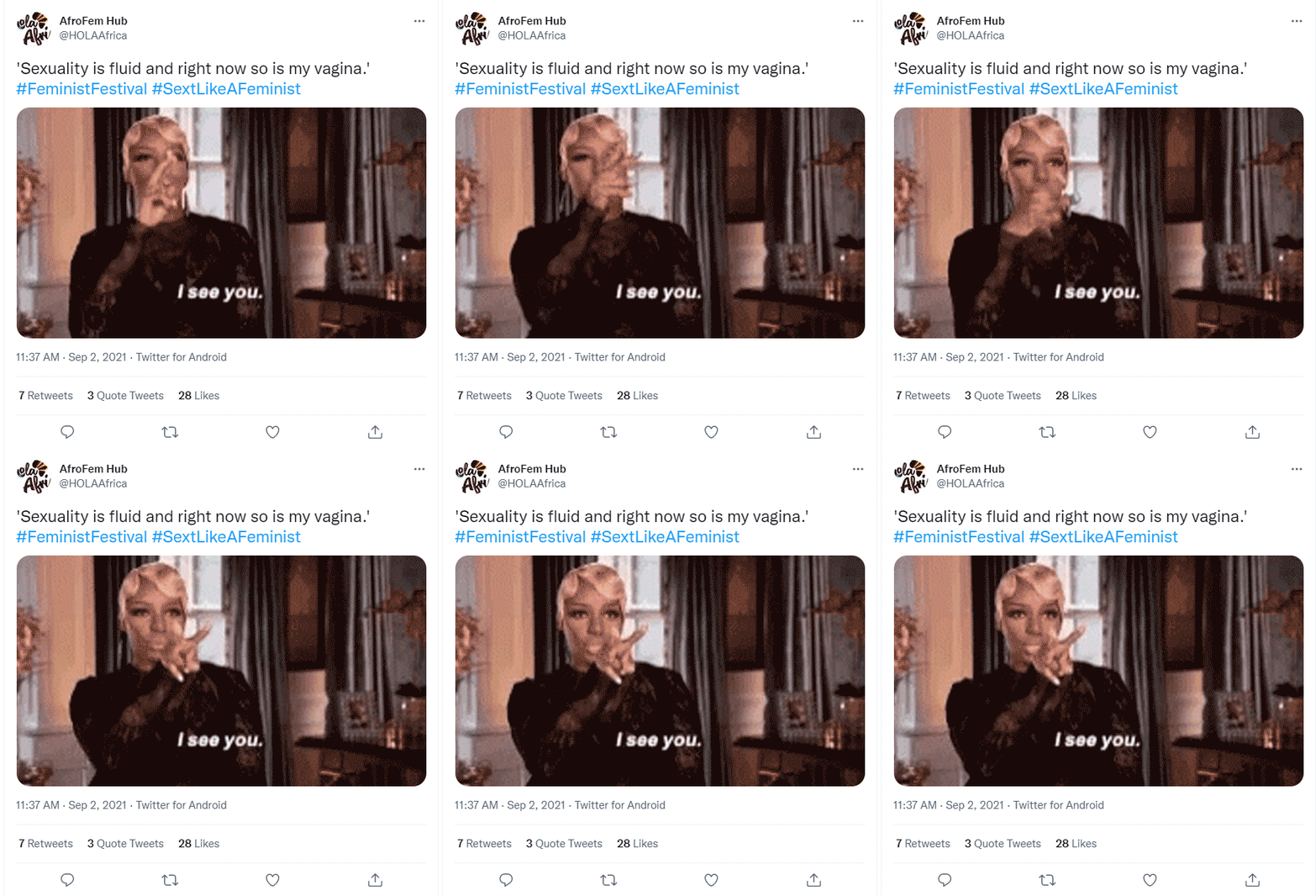
#9 - Sexting like a feminist Tweets Snippet EN

Always good to establish ground rules.

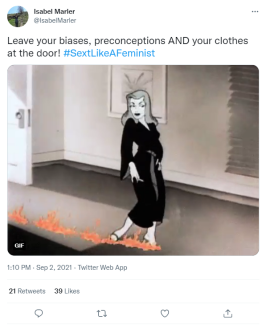
Leave your biases, preconception, and your clothes at the door!

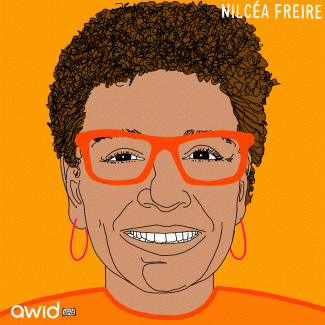
Nilcéa Freire

Nilcéa Freire was a Brazilian feminist activist, politician and academic. A persevering advocate for women’s rights and those of underrepresented minorities in the country, her life and work carried a long history of struggles and victories.

"While resisting we have to keep pushing for progress, and what we can achieve at this time, in my view, will be through the stupendous organization of young white women, and especially black women, in all of the state capitals and large cities of Brazil." - Nilcéa Freire

In 1999 she became the first woman to occupy the position of Dean at the State University of Rio de Janeiro. Here, she spearheaded the implementation of the first affirmative action policy for students graduating from public schools, requiring reserved places specifically for low-income black students in a public university. This system was adopted in dozens of other public universities. 

Some years later, Nilcéa headed the Special Secretariat of Policies for Women in the government of former president Luiz Inácio Lula da Silva. In this capacity, she led the first National Women’s Conference. Over 12,000 women from across the country participated and the result of this collective work was embodied in the National Plan for Policies for Women. 

Her commitment to women, Afro-Brazilians and indigenous peoples was also strongly reflected in her work to promote their rights through initiatives of the Brazil Ford Foundation office where she was a regional director. 

The feminist activist Manoela Miklos recounted Nilcéa to be "a woman without equal". 

At the age of 66, Nilcéa passed away in Rio de Janeiro on 29 December 2019 of cancer.


"Without words for the news of the death of dear Nilcea Freire. It is too sad to know that she left so early. She was always part of the ranks of those who do not settle for the injustices of the world. She was the Minister of Women, an activist, always active in the feminist cause. Much missed!” - Jandira Feghali, Federal Deputy

Watch Brazilian feminist Nilcea Freire on why we need to show solidarity with Brazil
Rising together - Logo and Button - EN

Call for Activities: Deadline extended to February 1st 2024!

AWID Forum - Rising together

Co-create the The 15th AWID International Forum in Bangkok, Thailand.

Submit your activity now!

Celluloid Ishtar | Small Snippet

Celluloid Ishtar

When I was 6, I learned that my grandfather owned a movie theater. My mother recounted to me how it had opened in the early 1960s, when she was also about 6 years old. She remembered that they screened The Sound of Music on the first night...

Read more

Illustration of film reel

Snippet - Intro WITM - EN

Where is the Money for Feminist Organizing? Survey Results

Thanks to our global feminist community! From May to August 2024, nearly 1,200 organizations working for Women's rights, gender justice, and LBTQI+ equality shared their experiences in the WITM survey. The results offer a unique picture of how feminist movements are resourced and where gaps remain.

Stay tuned for the upcoming report for more analysis!
 

Learn more about the insights

El Nemrah | Snippet AR

El Nemrah Avatar

النمرة.

Snippet - WITM about research col 2 - EN

 The full “Where is the Money for Feminist Organizing” report will be published in 2026.

To learn more how AWID has been shining a light on money for and against feminist movements check out the work of our Resourcing Feminist Movements Initiative here.

Hospital | Small snippet AR

مستشفى

المستشفيات مؤسسات، ومواقع حيّة للرأسمالية، وما يحدث عندما يكون من المفترض أن يستريح شخصٌ ما ليس إلّا نموذجاً مصغّراً من النظام الأكبر.

قرأ أكثر

How do you define external funding?

External funding includes grants and other forms of funding from philanthropic foundations, governments, bilateral, multilateral or corporate funders and individual donors – from both within your country or abroad. It excludes resources that groups, organizations and/or movements generate autonomously such as, for example, membership fees, the voluntary contributions of staff, members and/or supporters, community fundraisers, venue hires or sale of services. For ease and clarity, definitions of the different types of funding as well as short descriptions of different donors are included in the survey.

Crear | Résister | Transform: A Walkthrough of the Festival - smaller snippet AR

“ابدعي، قاومي، غيّري”: جولة في المهرجان

مع استمرار الرأسمالية الأبوية الغيريّة في دَفعِنا نحو الاستهلاكية والرضوخ، نجد نضالاتنا تُعزَل وتُفصَل عن بعضها الآخر من خلال الحدود المادّية والحدود الافتراضية على حدٍّ سواء.

اقرأ أكثر

I don't feel comfortable sharing the name of my group and our contact information with AWID, should I still fill out the survey?

Absolutely. These questions are optional, we value your right to remain anonymous. Please fill the survey regardless of your decision to share the name and contact information of your group, organization and/or movement.

#2 - Sexting like a feminist Tweets Snippet AR

ما الضير في وصف مُتقَن للمشهديّة؟

للجنسانيّة تدفّقات متعدّدة ومتبدّلة كحال الغمد الملتهب بين فخذَيّ

Snippet - WITM why - PT

Por Que Devo Realizar Este Inquérito?

Snippet - WITM Start the survey 1 - RU


Globe

Опрос доступен на английском, арабском, испанском, португальском, русском и французском языках!


Snippet - WITM about research - RU

Об исследовании «Где же деньги для феминистских объединений?»

Глобальный опрос «Где деньги для феминистских объединений?» является ключевым элементом третьего этапа нашего исследования, ориентированного на конкретные действия: «Где деньги для феминистских объединений» (короткое название – «Где деньги?»). Результаты опроса будут доработаны и обстоятельно изучены в ходе бесед с активистами и донорами, а также сопоставлены с другими имеющимися аналитическими материалами и исследованиями о состоянии ресурсов феминистских движений и инициатив по достижению гендерного равенства во всем мире.

Полный отчет организации «Где деньги для феминистских объединений?» будет опубликован в 2026 году.

Чтобы узнать больше о том, как AWID освещает вопросы финансирования феминистских движений, ознакомьтесь с историей инициативы «Где деньги?» и нашими предыдущими отчетами здесь.
Почему мне стоит принять участие в опросе?

Есть много причин, по которым ваше участие в опросе очень важно. Это возможность поделиться своим опытом привлечения финансирования для деятельности вашей организации; заявить о себе как об эксперте в вопросах движения денежных средств и их получателей; внести свой вклад в коллективную и последовательную адвокацию среди доноров, чтобы привлечь более объемное и эффективное финансирование. За последние два десятилетия исследования AWID в этой области зарекомендовали себя как ключевой ресурс для активисток(-тов) и доноров. Мы приглашаем вас присоединиться к нам в реализации третьей части инициативы «Где деньги?», чтобы осветить реальное состояние ресурсного обеспечения, оспорить ошибочные решения и указать на то, как необходимо изменить финансирование, чтобы движения процветали и реагировали на сложные вызовы нашего времени.

Nós redistribuímos recursos para os nossos parceires beneficiários e identificamo-nos como um fundo feminista e/ou de mulheres. Devemos participar no inquérito?

Não, apreciamos muito o vosso trabalho, mas atualmente não solicitamos respostas de fundos feministas e de mulheres. Encorajamos-vos a partilhar o inquérito com os vossos parceires beneficiários e as vossas redes feministas.

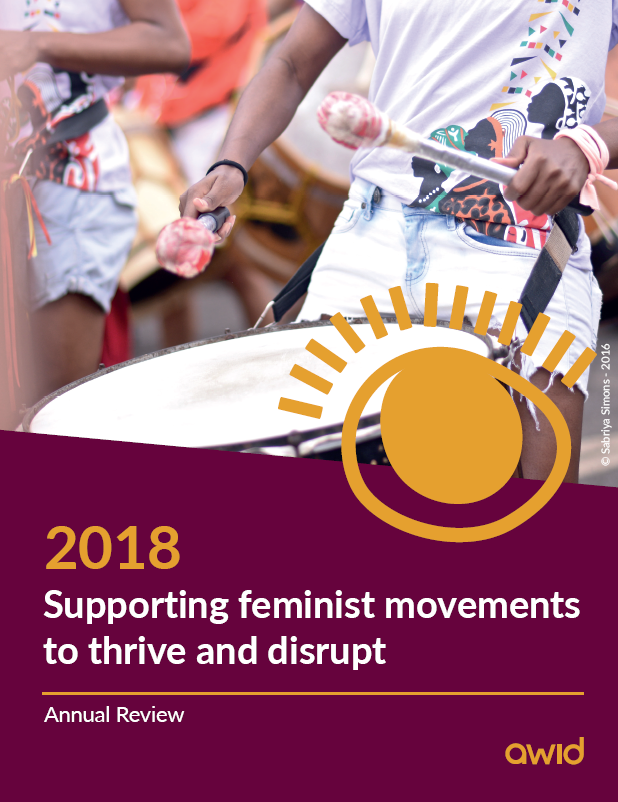
2018: Supporting feminist movements to thrive and disrupt

This report looks back and celebrates the first year of AWID’s new strategic plan as we took our first steps towards our desired outcomes of supporting feminist movements to thrive, challenging anti-rights agendas and co-creating feminist realities.

Download the full report


We worked with feminists to disrupt anti-rights agendas, achieving important victories fought and won within the United Nations system when ground-breaking language on structural discrimination, sexual rights, and states’ obligations were included in a number of resolutions. Yes, the multilateral system is in crisis and in need of serious strengthening but these victories are important as they contribute to the legitimacy of feminist demands, providing feminist movements with more pressure points and momentum to advance our agendas.

We tried and tested different ways to build knowledge with feminist movements through webinars, podcasts and ‘live’ conversations. We developed facilitation guides with popular educators to reclaim knowledge in the interest of social and gender justice, even about a topic as seemingly opaque as illicit funding flows. We commissioned blogs and opinions about how feminist groups fund and resource themselves and threw light on the threats facing our human rights systems.

Within AWID, we practiced and learned from our shared leadership approach, and told the story of the trials and tribulations of co-leading a global, virtual organization. We don’t have a definitive answer to what feminist leadership looks like, but we know, a year on, that a continued commitment to collective experimentation and learning has enabled us to keep building an organization that we are all excited to contribute to.

As we look back on this year, we want to thank all our friends and supporters, colleagues and companions, who have given their time and shared their wealth of knowledge and wisdom with us. We want to thank our members who helped frame our strategic plan and joined us to make feminist demands. We could not do this work without you.

Download the full report

هل استطيع الوصول للاستطلاع وتعبئته من هاتفي؟

نعم، يمكن تعبئة الاستطلاع من خلال الهاتف الذكي.