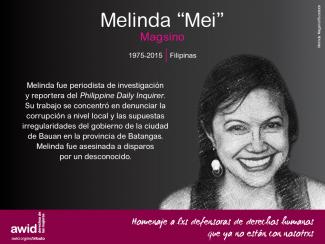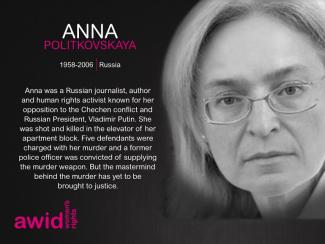
Anna Politkovskaya
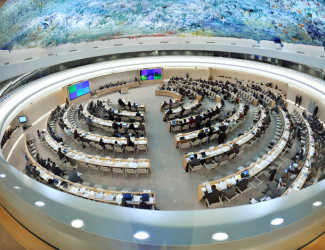
Le Conseil des droits de l'homme (CDH) est un organe intergouvernemental clé du système des Nations Unies, responsable de la promotion et la protection des droits humains autour du globe. Il se réunit trois fois par an en session ordinaire, en Mars, Juin et Septembre. Le Bureau du Haut-Commissariat des Nations Unies aux Droits de l’Homme (HCDH) constitue le secrétariat pour le CDH.
Débat et adopte des résolutions sur les questions globales des droits humains ainsi que sur la situation des droits humains dans des pays particuliers
Examine les plaintes des victimes de violations des droits humains et des organisations activistes, au nom des victimes de violations des droits humains
Nomme des experts indépendants (que l'on connaît sous le nom de « Procédures Spéciales ») pour réviser les cas de violation des droits humains dans des pays spécifiques, ainsi que pour examiner et suivre des questions globales relatives aux droits humains
Prend part à des discussions avec les experts et les gouvernements sur les questions de droits humains
Évalue les bilans des États membres de l'ONU en matière de droits humains tous les quatre ans et demi, dans le cadre de l'examen périodique universel.
La prochaine session du CDH a lieu à Genève, en Suisse, du 30 juin au 17 juillet 2020.
AWID travaille avec des partenaires féministes, progressistes et du domaine des droits humains pour partager nos connaissances clé, convoquer dialogues et évènements avec la société civile, et influencer les négociations et les résultats de la session.
Estas obras son un trabajo colaborativo de fotografías e ilustraciones realizadas por Siphumeze y Katia durante el confinamiento. Muestran narrativas negras queer de sexo y placer, bondage, sexo seguro, juguetes, salud mental y sexo, y mucho más. Fueron creadas para acompañar la antología Touch.
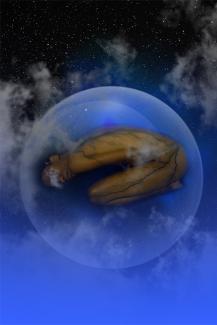
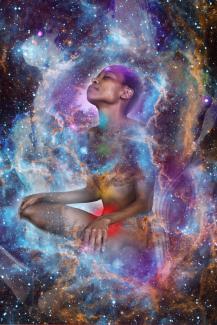



مع استمرار الرأسمالية الأبوية الغيريّة في دَفعِنا نحو الاستهلاكية والرضوخ، نجد نضالاتنا تُعزَل وتُفصَل عن بعضها الآخر من خلال الحدود المادّية والحدود الافتراضية على حدٍّ سواء.
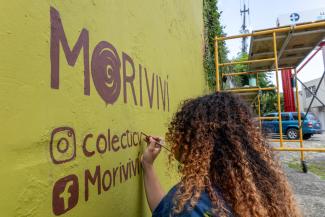
Colectivo Moriviví est un collectif artistique de femmes. Notre production artistique comprend du muralisme, du muralisme communautaire et des performances/actions de manifestation. Notre travail consiste à démocratiser l'art et à amener les récits des communautés portoricaines dans la sphère publique afin de créer des espaces où ils seront validés. Nous croyons qu’à travers l'artivisme, nous pouvons promouvoir la sensibilisation aux questions sociales et renforcer notre mémoire collective.
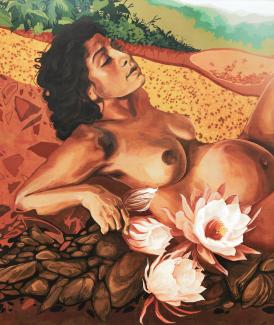
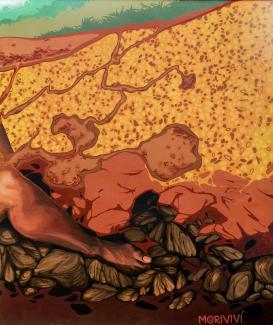
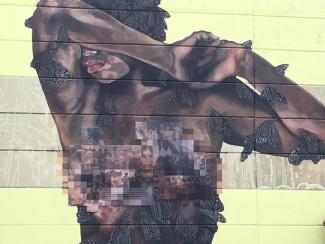
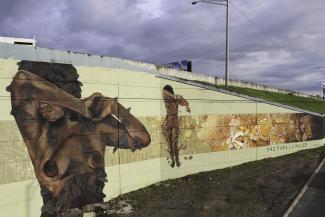
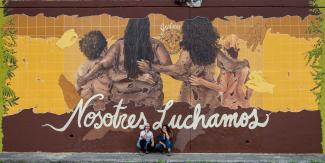
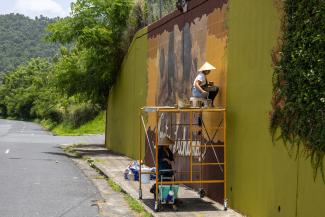
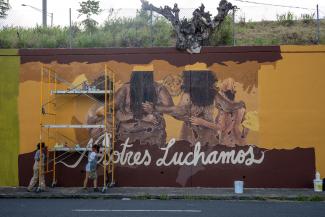
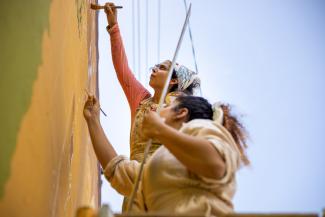
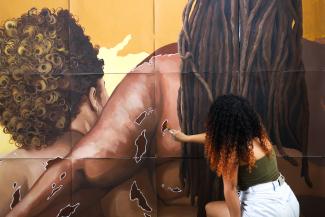
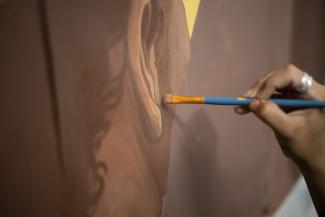
Dans le cadre de sa participation au Groupe de Travail d’Artistes d'AWID, le Colectivo Moriviví a réuni un groupe divers de membres, partenaires et personnel pour faciliter un processus collaboratif visant à imaginer, documenter et déterminer le contenu d'une fresque communautaire par le biais d'un processus de co-création en plusieurs étapes. Le projet a commencé par une conceptualisation à distance avec des féministes de différentes régions du monde réuni·e·s par l'AWID, avant d'évoluer vers sa re-contextualisation et sa réalisation à Porto Rico. Nous avons eu l'honneur de bénéficier de la contribution des artistes locaux·ales Las Nietas de Nonó(@lasnietasdenono), de la participation des femmes locales à la session de peinture communautaire, du soutien logistique de la municipalité de Caguas et du soutien supplémentaire du FRIDA | The Young Feminist Fund.
La fresque explore la transcendance des frontières en présentant les corps tels des cartes, dans une étreinte qui met en évidence l'intersection des différentes manifestations, pratiques et réalités féministes.
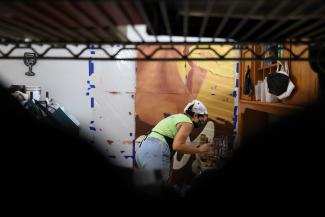
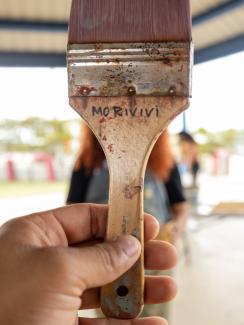
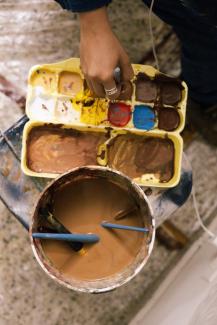
Nous remercions également Kelvin Rodríguez, qui a documenté et capturé les différentes étapes de ce projet à Porto Rico :

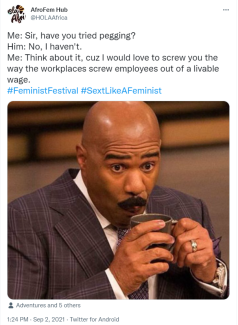
أنا: هل سبق أن ثبتّ شيئاً بقضيب؟
هو: لا، لم أفعل
أنا: تمَعَّن بالعمليّة الآن، لأنني سأُريك شخصيًا، كيف تضع الرأسمالية قضيب
استغلالها في أجساد العمّال
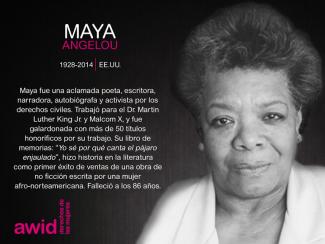
In the African Commission and the Inter-American System, anti-rights actors push essentialist notions of culture and gender to hamper progress on rights and undermine accountability. As we see, anti-rights actors are exerting influence in regional human rights systems, as well as international spaces.
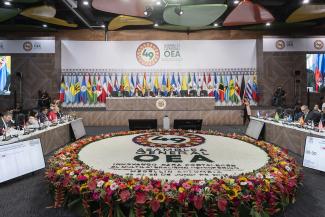
The African Commission on Human and Peoples' Rights has begun framing women’s and sexual rights as jeopardising its ability to deal with “real rights” and contrary to “African values”, setting a worrying anti-rights precedent. The withdrawal of the Coalition of African Lesbians’ observer status is an example of this trend, and points to the way space for feminist, Pan-Africanist engagement is being stifled.
In the Organization of American States (OAS) and the Inter-American Human Rights System, anti-rights strategies include the NGOization of religious groups, the use of secular discourses, and the co-optation of discrimination frameworks. Anti-rights influence has materialized in a number of ways, including the intimidation of trans activists and the blocking the introduction of progressive language in resolutions.
Dans le cadre de notre engagement à nouer des liens plus profonds avec des artistes via nos pratiques de co-création de Réalités Féministes, AWID a collaboré avec un Groupe de Travail Artistique visant à faire progresser et à renforcer les programmes et réalités féministes, dans les communautés et mouvements via l’expression créative. Notre intention ici est de rassembler des féministes créatifs·ves dans un espace puissant et audacieux pour grandir et vivre librement, et briser les récits toxiques en les remplaçant par des alternatives transformatrices.
Cette exposition rassemblera le travail d’artistes et de collectifs du monde entier, de celle.ux qui créent activement la différence que nous voulons voir dans ce monde. Ces féministes créatifs·ves comprennent Upasana Agarwal, Nicole Barakat, Siphumeze Khundayi, Katia Herrera, Ali Chavez Leeds, Colectivo Morivivi, Ika Vantian, ainsi que les organisateurs·rices de l’exposition #MeToo en Chine. Leurs voix résonnent avec force dans leur refus d'accepter les limites imposées par le patriarcat, et amplifient leurs engagements envers les communautés dans lesquelles, et avec lesquelles, i.elles travaillent. Chaque œuvre représente, à sa façon, des actes de résistance quotidienne, des histoires et des identités inédites, des liens avec la terre et nos ancêtres et, plus important encore, la solidarité qui existe au sein et entre les mouvements et luttes féministes. Ces artistes inspirent et sont inspiré·e·s par des stratégies créatives de résistance et d'initiatives féministes qui nous montrent comment nous pouvons vivre ensemble dans un monde plus juste - un monde qui place au centre le soin et la guérison.
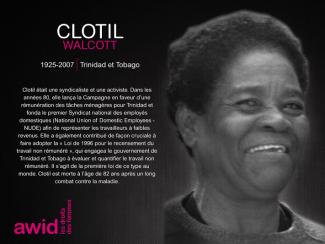
In collaboration with artist Naadira Patel, we created a scrapbook that highlights a handful of snapshots from AWID’s last four decades of feminist movement support.
Ces informations sont disponibles dans notre Appel à activités, et notamment sa section intitulée « Ce qu’il faut savoir ».
ترجمة رولا علاء الدين
 |
جوريما آراوْخو، معلّمة وشاعرة من ريو دي جانيرو. ساهمت في مجلة Urbana التي حرّرها الشاعران برازيل باريتو وسامارال، وفي كتاب Amor e outras revoluções “الحب والثورات الأخرى” مع العديد من الكتّاب الآخرين. بالتعاون مع أنجليكا فيراريس وفابيانا بيريرا، شاركت في تحرير O livro negro dos sentidos “الكتاب الأسود للحواس”، وهو مختارات إبداعية عن الحياة الجنسية للمرأة السوداء في البرازيل. جوريما عمرها 54 سنة. لديها ابنة وثلاثة كلاب وقطة والعديد من الأصدقاء. |
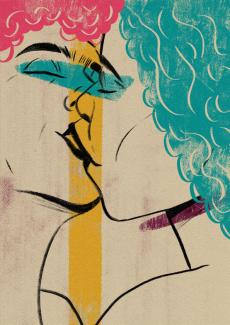
مَن يودّ المصّ معي؟المانغو هي الثمرة المفضّلة عندي. |
يومَ دعتني أنجليكا وفابي لأكون القَيِّمة على تشكيلة نصوص شبقية من تحرير نسوة سود لم أكن أعرف ما يعنيه عملُ القيِّم. الشبق ومشتقاته، هذه فهمتها جيداً، لكن عمل القَيِّم... ابتسمت تحت وطأة الخجل والإطراء. أظن أنّي شكرتهما، على الأقلّ آمل أنّي شكرتهما، وقلت في ذاتي: ماذا تعني هذه الكلمة اللعينة؟! حسناً، سأضطر إلى سَبر معاني هذا اللقب المُبهرَج وأنا أطبّقه.
اليوم، أنا على دراية بما يعينه عمل القيِّم. هو بمثابة ممارسة الحبّ مع نصوص شخصٍ آخر، مع فنّ شخصٍ آخر، بغية تجميع كتاب وتنظيمه. وهذا تماماً ما قمت به. عرّيت بشهوانية أدبية كلّ نصّ لكلٍّ من الكاتبات. تعمّقت في كلمات وحواس الآخرين. ولَجَتني قصائدُ لم أكتبها. حكايات ما كنت لأجرؤ على تخيّلها قلبتني رأساً على عقب وأربكت مشاعري وعبثت بشهوتي الجنسية. وكانت نشوةٌ رائعة وفريدة: سماويّة وجسمانيّة وسامية في آنٍ واحد، فكريّة وحسّيّة.
تنبض هذه النصوص كالبظر المنتصب رغبةً، رطبةٌ، ينسال منها الفرح مع كلّ قراءة. كلمات ابتلعتني بإيحاءتها اللعوبة، تأخذني أعمق فأعمق في هذا العالم الرّطب.
غطست هذه النسوة السود إلى قعرِ هَيْجِهنّ وحوّلن أعمق تخيّلاتهنّ الشبقيّة إلى فنٍّ.
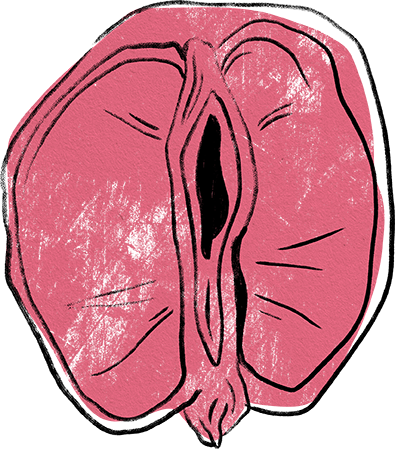
أُخْصِبَت هذه الأعمال بأسلوبِ كلٍّ من الكاتبات الخاصّ في التجربة الجنسانية، بحريّة، بسوداوية، بأنفسنا، بطريقتنا الخاصّة، بتمكّن.
اخترت أن أوزّع هذه النصوص في مختلف أجزاء الكتاب ونظّمتها بحسب محتواها الأكثر رقّة أو انفعالية أو بديهية أو ضمنيّة.
استهلالاً لهذا «اللبّ الأسود المفترج»، تأتي أقسام ’التمهيدات‘ (Preliminaries) بنصوصها التي تقدّم لمحةً للقرّاء عن عالم الأطايب هذا، وهي بمثابة لمسَة شاملة رقيقة تُعرِّف بالمواضيع التي تطرحها النصوص في باقي الكتاب.
يلي ذلك لهيبُ ’اللمس‘ (Touch) وهو جزءٌ يُعنى بكلّ ما تشعر به البشرة. تلك الطاقة التي تحرق أو تُثلِج أجسادنا، التي تفجّر هُرموناتنا وتوقظ حواسنا الأخرى. صحيحٌ أنّ كثيرين بيننا يستمتعون بشهوة التلصُّص، لكنّ ملامسة البشرة بالفم الدافئ والرّطب مثيرٌ، وهو كالتطواف في نعومة الآخر. تُغرينا اللمسة اللطيفة أو الحازمة وتجتاحنا القشعريرة، وذلك التوتّر الجميل الذي يسري من العنق إلى الظهر ولا يختفي إلا اليومَ التالي. ودفء الشفاه والفم واللسان الرّطب على البشرة، آه من حلاوة لسانٍ ينساب داخل الأذن، أو احتكاك الجلد بالجلد، والملابس تتموّج على الجسد وكأنّها امتدادٌ لليدّ. ولمّا يكون التروّي جزءاً من المتعة، وتعصف بك الإثارة بفعل قبضة مُحْكَمة وبعضٍ من الألم – أو الكثير منه، من يدري؟
أمّا ’الصوت‘ (Sound) – أو اللحن؟ – فيبيّن لنا أنّ الانجذاب يحصل أيضاً عبر حاسّة السمع: صوت الشخص، الهمسات، الموسيقى التي تشعل التواصل بين جسدٍ وآخر وقد تمسي محورَ الرغبة. فبالنسبة لبعضٍ منّا، لا يتطلّب الأمر إلّا الأوتار الصوتية لشخصٍ ذي صوتٍ جميل، فذاك الصوت الأجشّ أو العميق أو الرخيم يكون كممارسة الجنس سمعياً. أن نسمع سِبابَهم الصارخ أو كلامهم المعسول همساً في الأذن يكفي لتجتاحنا قشعريرة الإثارة من الرأس إلى أخمص القدميْن.
في ’المذاق‘ (Flavor)، نأتي إلى اللسان وهو الخبير في استكشاف الخبايا يجول هائماً على جسد الآخر ويتلذّذ. وأحياناً يُقحَم اللسان قحماً لتذوُّق رحيق الآخر. فكرة أن يُشاركنا أحدٌ فراولته أو مانغته الشهيّة الملأى، بالعضّ واللحس، أو اللحس ثم العضّ، فكرةٌ كفيلة بإذابتنا. لكن لا شيء يعلو على حلاوة تذوُّق جسد الآخر بكهوفه وتلاله. إقحامُ اللسان في العمق لتذوُّق الثمرة، أو قضاءُ ساعاتٍ في تذوُّق رأس القضيب في الفم، أو رضعُ ثدي شهيّ لتذوُّق الحلمة... كلّها أفعال تسعى إلى حفظ ’مذاق‘ الآخر في الذاكرة.
نجد أيضاً نصوصاً تصف كيف تُستثار الرغبة عبر الأنف. ’الرائحة‘ (Smell)، أعزائي القرّاء، قد توقظ فينا شهوات الرغبة. أحياناً نلتقي شخصاً رائحته عبقة لدرجة أننا نودّ التهامه بأنفنا. يريد الأنف أن يجول في أنحاء الجسد ويبدأ من العنق وآهٍ من الرعشة الحلوة التي تصيبنا وتعرّي الروح! يقلّ حياء الأنف فيتعمَّق ويلفّ حول العنق ليلتقط عَبَق رائحة الآخر فيحفظها. وفي غياب هذا الشخص، إن إلتقط الأنف رائحة شبيهة يحضر الشخص في ذاكرتنا، أو إن استحضرته الذاكرة تجتاحنا الرائحة والإثارة.
نصل إلى ’النظر‘ (Look)، وهو برأيي غدّار الحواس، ومن خلاله ندرك الرغبة من وجهة «نظر». هنا النصوص تصف الرغبة والإثارة عبر حاسة النظر التي توقظ باقي الحواس. أحياناً، ابتسامةٌ تكفي لِنُصاب بالجنون. تبادُل النظرات؟ تلك النظرة التي تقول «أريدك الآن». نظرة التملّك تلك التي لا تنكسر إلا مع انتهاء المضاجعة، وقد تدوم بعدها. هذه نظرة فريدة من نوعها، تجذب الآخر فيعجز عن إشاحة نظره لوقتٍ طويل. والنظرات المُسترَقة حيث يشيح واحدٌ بنظره ما أن يلتفت إليه الآخر كأنّهما في مطاردة كالقط والفأر. وما أن تلتقي الأعين وينفضح أمرنا جُلّ ما يمكننا فعله هو أن تنفرج أساريرنا بابتسامة فاغرة.
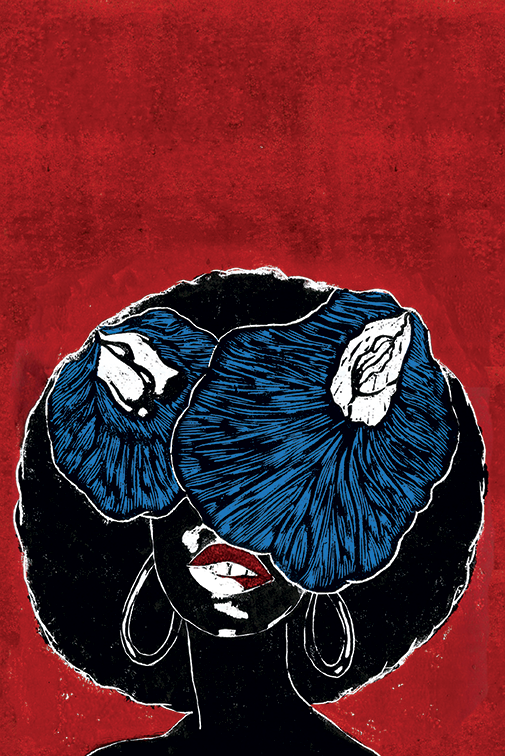
ختاماً، يأتي الانفجار في جزء ’الحواس كافة‘ (All Senses) حيث النصوص تمزج المشاعر لتبدو كحالة تأهّب لنصل إلى اللذة القصوى، إلى النشوة.
طبعاً، لا شيء يفصل بوضوح بين هذه القصائد والحكايات. بعضها رقيقٌ بتلميحه. الإثارة تُشغِل الحواس كافّة، والأهمّ أنّها تُشغِل الرأس، فهُنا مقام كلّ ما يحدث والجسد بكامله يستجيب. لقد نظَّمتُ القصائد وفقاً لما أثارته فيّ عند قراءتها، ولكم الحريّة في مخالفة رأيي هذا. لكن بالنسبة لي، الرغبة تنبع من حاسّة معيّنة ومن ثم تنفجر، وثمّة لذّة في تتبّع مسار الرغبة وتحديد أيٍّ من الحواس استقلّت.
إنّ القدرة على تحويل الإثارة إلى فنّ تعني تحرير أنفسِنا من الأحكام المسبقة والسجون ووصمات العار كلّها التي حبَسَنا فيها هذا المجتمع المُتمَحوِر حول العرق الأبيض.
كلّما تقوم كاتبة سوداء بتحويل الشبقيّ إلى فنّ فهي تخلع السلاسل العنصرية المؤذية التي تشلّ جسدها وتقمع جنسانيتها وتجعل منّا غرضاً لجشع الآخرين. إنّ كتابة الشعر الشبقيّ هي استعادة لسلطتها على جسدها وهي التنقّل بلا خوف بين ملذّات الرغبة من أجل ذاتها ومن أجل الآخرين ومن أجل الحياة.
الكتابات الأدبية الشبقيّة هي نحن عندما نتّخذ الشكل الفنّي. الشكل الذي يتيح لنا إظهار أفضل ما لدينا وآرائنا في الحبّ الملأى لذّة والمتبّلة بشهوة أجسادنا والتي تُترجَم عبر وَعْينا الفنّي. نحن متنوّعات، وهنا نشارككم هذا التنوّع في الأحاسيس عبر الكلمات المُشبَعَة إثارة. صحيح، حتّى كلماتنا ترشَح برغبتنا الجنسية وترطّب آياتنا وتجعل من شهواتنا قصائدَ. النشوة، بالنسبة لنا، إنجاز.
أن تكون عقولنا وأجسادنا وجنسانياتنا سوداء هو أمرٌ ضروري لاستئناف لذّتنا واستعادة نشوتنا. عندها فحسب نصير أحراراً. هذه العملية برمّتها إنجازٌ وهي لا تخلو من الألم. لكنّه من المفرح أن نجد أنفسنا في مكان مختلف جداً عن حيث تمّ وضعنا.
أشعر أنّي لكنّ/لكم، أنّي لنا. تذوّقوا هذه الكلمات العذبة معنا، تلذّذوا بها، ولْتَكُن وليمة.
هذا النص مقتبس من مقدمة كتاب «O Livro Negro Dos Sentidos» وهي تشكيلة قصائد شبقيّة لثلاثٍ وعشرين كاتبة سوداء.

This journal edition in partnership with Kohl: a Journal for Body and Gender Research, will explore feminist solutions, proposals and realities for transforming our current world, our bodies and our sexualities.

نصدر النسخة هذه من المجلة بالشراكة مع «كحل: مجلة لأبحاث الجسد والجندر»، وسنستكشف عبرها الحلول والاقتراحات وأنواع الواقع النسوية لتغيير عالمنا الحالي وكذلك أجسادنا وجنسانياتنا.
AWID, el Center for Women’s Global Leadership [CWGL, Centro por el Liderazgo Global de las Mujeres], y la African Women's Development and Communication Network [FEMNET, Red de Desarrollo y Comunicación de las Mujeres Africanas], presentan esta plataforma como aporte para cuestionar las nociones dominantes acerca del desarrollo y poner sobre la mesa propuestas iniciales para una agenda feminista para el desarrollo y la justicia económica y de género.
¿Cómo se originó este proyecto?
Estas propuestas son exactamente eso: se ideas y experiencias a ser conversadas, debatidas, para que les sumemos elementos, las desmenucemos, las adaptemos, las adoptemos e incluso para que inspiren otras propuestas.