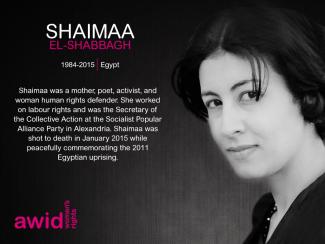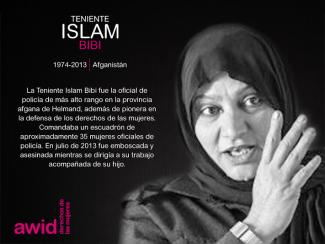
Islam Bibi
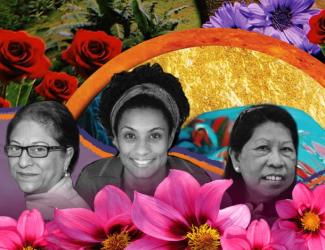
El Tributo de AWID es una exhibición de arte que honra a feministas, a activistas por los derechos de las mujeres y de la justicia social de todo el mundo que ya no están con nosotrxs.
El Tributo de este año cuenta y comparte las historias y narraciones de quienes crearon conjuntamente realidades feministas, ofrecieron visiones de alternativas a los sistemas y actores que nos oprimen, y propusieron nuevas formas de organizarnos, de movilizarnos, de luchar, de trabajar, de vivir y de aprender.
Se agregan a la galería 49 retratos nuevos de feministas y defensorxs de derechos humanos. Aunque muchxs feministas y defensorxs han fallecido debido a edad avanzada o enfermedad, muchísimxs han sido asesinadxs debido a su trabajo y por ser quienes eran.
Esta violencia creciente (de parte de Estados, empresas transnacionales, crimen organizado, sicarios no identificados, etc.) no se dirige solo a activistas individuales sino a nuestro trabajo común y a las realidades feministas.
Visita nuestra exhibición en línea
Lors retratos de 2020 fueron diseñados por la ilustradora y animadora galardonada, Louisa Bertman.
En AWID nos gustaría agradecer a las familias y organizaciones que nos compartieron sus historias personales, y así haber contribuido a este memorial. Nos unimos a ellxs para continuar el extraordinario trabajo de estxs activistas y defensorxs, y en el esfuerzo para asegurarnos de que se logre justicia en los casos que permanecen en la impunidad
"Ellos trataron de enterrarnos pero no sabían que éramos semillas."‐ Proverbio Mexicano
Primero tomó forma como una exposición física de retratos y biografías de feministas y activistas que habían fallecido, en el 12º Foro Internacional de AWID, en Turquía. Ahora vive como una galería en línea, que actualizamos cada año.
Desde 2012 hemos presentado más de 467 feministas y defensorxs.
by Esra Ozban
In a product-obsessed world, prioritizing process is a fundamental feminist method. Processes matter, and curation is no exception. While figuring out which of the films from the SWANA region would speak the loudest to the Feminist Realities theme, the global pandemic we are still facing shifted our everyday lives tremendously. Even to think, write, or express myself has become an everyday struggle. I kept missing all of my deadlines and sending apology emails to Kamee Abrahamian, whom I was working with as an independent curator for AWID’s Feminist Film Club. Kamee’s invaluable support, understanding, and suggestions reminded me that even in two different parts of the world, as colleagues who never met in person, we can co-create micro versions of the Feminist Realities for which we live and yearn.
Feminist Realities for me have a lot to do with sisterhoods. Sisterhoods that help womxn clearing mines in Artsakh/Nagorno-Karabakh. Sisterhoods baked in Vegan Inclusive Trans Cake by young trans feminists in Ankara that remind cis-ters that they are not welcomed by the Z generation. Sisterhoods that are growing into the mint on Dragica Alafandi’s rooftop in the Dheisheh Refugee Camp in Occupied Palestine in Sowing seeds of resistance. Sisterhoods that embrace intimate, sexual, and revolutionary proximities in Gezi Park in #resistayol. Sisterhoods that unearth an imagined encounter between two generations of womxn in exile in the streets of Haifa in Your father was born 100 years old and so was the Nakba. Cross-species sisterhoods that build in a fictional (brave) space created by Mounia Akl in Submarine for her rebel character Hala, who refuses to evacuate from a city full of garbage and is left behind with a dog friend.
This selection gathers bits and pieces of many Feminist Realities that have been realized in the SWANA region over the last couple of years. We will continue to imagine, learn, and share feminist embodiments of hope and power. In the meantime, let’s immerse ourselves in the powerful alternatives brought to life by the filmmakers and protagonists of these films. We may co-create every step, every act, and every attempt as we continue to cohabitate this world with others who are living Feminist Realities and continue to dream more of them into existence.
By Emily Mkrtichian& Jesse Soursourian
“With beautiful visuals paired with compelling verité scenes, Motherland is a show of female camaraderie and strength… The film is a testament of women around the world who are willing to work harder to overcome any obstacle they meet.”
- Nosarieme Garrick, award winning filmmaker
“Motherland is an inspiring visualization of solidarity, courage, and grit…”
- Hers is Ours Collective, organizers of the Outsider Moving Art & Film Festival
Motherland from jesse soursourian on Vimeo.
Emily Mkrtichian on Feminist Realities and Artsakh/NKR:
We shot the short film, Motherland, in the Republic of Artsakh in 2018. I was drawn to each of these women for their strength, their resilience and their humor -- despite the context in which they lived. In 2018, that context was the aftermath of a brutal war in the 1990’s, after which their country remained an unrecognized (or, in the international community, disputed) territory that was not given the autonomy and independence so many other countries enjoy. Artsakh was also deeply affected by the consequences we see in almost all places that go through violent conflict -- consequences that so often fall on women to bear: PTSD, high rates of alcoholism, high rates of domestic abuse, less equality and freedoms granted to women, little to no representation of women in politics and civil service. In the face of all these challenges, this film tries to capture the fire and power of the women of Artsakh, one that might not fit the traditional Western feminist paradigm, but one they have created for themselves through deep community ties, care for their families, hard work, and the ability to laugh with eachother through it all. Today, the Republic of Artsakh has been newly devastated by another war that left it without 70% of the lands these women grew up understanding were theirs. Yet, I can promise you that these women, and thousands of others, continue to pull their families, communities, and culture together through the same networks of care, commitment to hard work, and deep riotous laughter in the face of an uncertain future.
By Baladi-Rooted Resistance
“A timely film to watch after having born witness to the latest bombardment of Gaza by Israeli Defence Forces. A glimpse into the way that women in Palestinian communities survive structural oppression, through the story of a library of traditional seeds.. and the women that sustain them as a form of nourishing rebellion.”
- Jessica Horn, PanAfrican feminst strategist, writer and co-creator of the temple of her skin
“Watching women coming together and working collectively for food autonomy is both therapeutic and empowering for me.”
- Hers is Ours Collective, organizers of the Outsider Moving Art & Film Festival
Baladi-Rooted Resistance Team on Feminist Realities:
How to talk about Feminist Realities when you live in Deheisheh, a Palestinian refugee camp, built 70 years ago to serve 3000 refugees, but now home to 15000 people, in the occupied West Bank? Or when the land you farm is under constant threat by illegal settlers.
If you’re a woman in occupied Palestine you will have to struggle not only against patriarchy but also against colonialism and a brutal military occupation.
Dragiča and Vivien are fighting these multiple systems of domination in their own way.
Vivien uses native seeds to help Palestinians maintain their identity. Growing traditional food in traditional ways has great significance: “If you’re not a producer anymore, you’re a consumer, and what better way to enslave someone than turning them into your consumer. This is happening all around the world, but here you have it doubled with the military occupation.”
31.5% of households in the West Bank are food insecure. Through a rooftop edible garden, Dragiča managed to increase her family’s food autonomy. In the crowded camp, where the Israeli army conducts regular nighttime incursions to arrest and harass residents, Dragiča’s rooftop garden not only nourishes her family, but it especially nourishes her soul.
By Ruzgar Buski
Ruzgar Buski on Feminist Realities:
I don’t know what to say about Feminist Realities but as a trans artist, an activist from Turkey, I know our realities are harsh. We live with violences- physical, emotional, economical, sexual! That is why we have to build our own networks, and co-creating micro realities for each other is a Feminist Reality for me. #resistayol is my first film, and at the beginning I was planning to make a film by/for/with trans people that does not try to convince anyone to the fact that trans people are human or focuses on raising awareness on trans issues. However, Gezi Uprising, one of the biggest uprising in the history of Turkey, happened and the film became something different.
I believe the production process really affects what the film is. We tried very hard for women, trans and non-binary people to work on every step of the film. This film is made by people who gathered with camaraderie and friendship. Kanka Productions is founded on transfeminist comradeship. I want the film to give hope, to heal because we carry a lot of traumas in our bodies- this is what makes us and what bonds us. Healing is a never-ending process and we have to create spaces to breath. #resistayol is an hour of breathing collectively.
Boysan Yakar in #resistayol:
Well lubunyas (queers) were sitting in the park, all of a sudden bulldozers arrived and everyone got pissed off. Actually in summary this is it. It's Lubunya's park,and we had thirty days to explain that to this huge city. Everyone acknowledged that at night ibnes (faggots) fuck in that park...LGBTI Block carried our commune there. We already didn't trust the state and police and didn't have any security, we've established our own ways of doing things, our own laws and customs to survive... We carried our law to Gezi rapidly...With an effort to establish some common language and understanding among all these groups, the LGBT language of togetherness spread all through the park. Every day was a Pride march, everyone was continuously saying ‘ayol’. We spruced up the stinky, fusty language of the left. I guess we had such an impact because we've been disowned for all these years. From the most radical ones to the most conservative and nationalist ones, they all needed us, because everyone got used to being confronted with everything. Τhey were not used to such energy, our energy. That’s why it was a great political space for us. Every day, we actualized our biggest and main struggle there, that is, a struggle for visibility and recognition. That’s why we left Gezi with a huge gain.
By Pembe Hayat
“...a multifaceted statement, showing the joy that exists in the friendships within the queer community in Turkey as a display of rebellion and resistance.”
- Nosarieme Garrick, award winning filmmaker
“...fun, light, and random. In a world constantly marked and scarred by violence against the trans community, nothing, no action, is (unfortunately) deprived of meaning. So to more joy, love, and meaningful randomness!”
- Hers is Ours Collective, organizers of the Outsider Moving Art & Film Festival
Cayan Azadi in Vegan Inclusive Trans Cake:
Hello Barbies, Kens, porcelain dolls, Olive Oyls, cabbage dolls. Brides of Chucky, sisters of Chucky, brother-in-laws of Chucky and last but not least, esteemed brother-in-law lovers.
So why did we make this cake.
Now we got the news that a trans woman sex worker has attempted suicide due to the violence from street-guards and police on the street. She’s being kept at a police station now and that’s exactly why we made this cake. This transvestite cake is baked to show that we exist in every part of life, that we exist persistently and this cake shows that won’t be wiped off or ignored in this society.
Yes, there is violence in our lives, yes there is a lot of shade as well but despite all of that, we can still have fun, enjoying life as much as we can. Bon appetit, sis!
By Razan AlSalah
By Mounia Akl
“It is directed as a poem is written… simple, a touch abstract, and moving.”
- Hers is Ours Collective, organizers of the Outsider Moving Art & Film Festival
Esra Ozban:
Esra Ozban is a film programmer and filmmaker from Turkey. Their artistic, curatorial, and scholarly work intersects critical archival practices, sex work, pornography, feminist/queer film cultures among others.
Мы проанализируем ответы, чтобы получить представление о тенденциях, и представим результаты на 15-м Международном форуме AWID в Бангкоке, а также в режиме онлайн, в декабре 2024 года. Зарегистрируйтесь для участия в Форуме здесь!
¿Tienes preguntas sobre el Foro de AWID o sobre las actividades relacionadas? ¡Tenemos respuestas!
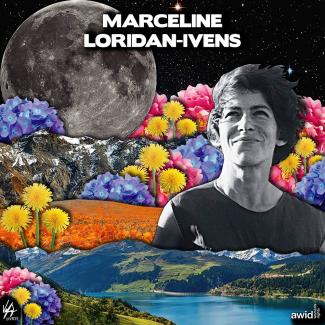
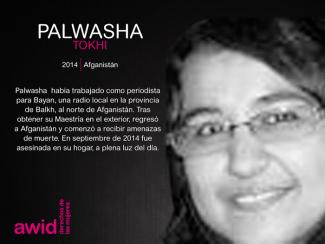
Nacida en 1928, Marceline trabajó como actriz, guionista y directora.
Dirigió The Birch-Tree Meadow en 2003, protagonizada por Anouk Aimee, así como varios otros documentales. También fue una sobreviviente del Holocausto. Tenía solo quince años cuando ella y su padre fueron arrestadxs y enviadxs a campos de concentración nazis. Los tres kilómetros entre su padre en Auschwitz y ella en Birkenau eran una distancia infranqueable, sobre la cual escribió en una de sus novelas más influyentes: Pero no regresaste.
Al hablar sobre su trabajo, una vez afirmó: «Todo lo que puedo decir es que todo lo que pueda escribir, todo lo que pueda develar, es mi tarea hacerlo».
Los discursos anti-derechos continúan evolucionando. Además de utilizar argumentos relacionados con la religión, la cultura y la tradición, los actores antiderechos cooptan el lenguaje de la justicia social y los derechos humanos para ocultar sus verdaderas agendas y ganar legitimidad.

Hace tres décadas, un evangelista televisivo estadounidense candidato del Partido Republicano dijo una célebre frase: el feminismo es «un movimiento político antifamilia que alienta a las mujeres a dejar a sus maridos, matar a sus hijos, practicar brujería, destruir el capitalismo y convertirse en lesbianas». Hoy en día, esta idea conspirativa ha logrado un alcance y una legitimidad sin precedentes bajo la forma del discurso de la «ideología de género», un término genérico que, cual enemigo imaginario, ha sido creado por los actores antiderechos para oponerse a él.
Dentro de la serie de discursos empleados por los actores antiderechos (que incluyen nociones de «imperialismo cultural» y «colonización ecológica», apelaciones a la «objeción de conciencia» y la idea de un «genocidio prenatal»), un tema clave es la cooptación. Los actores antiderechos se apropian de problemáticas legítimas, o seleccionan partes de estas, y las distorsionan al servicio de sus agendas opresivas.

"This community is a place for connections, to understand our individual fights as part of global struggles, and sometimes even dance! There aren’t places like this online where you can meet real grassroots activists from all over the world and build solidarity and sisterhood."
- Paz Romero, Argentina
Les Réalités féministes consistent en une invitation chaleureuse et bienveillante, une sorte d’acte de préservation et de soins massifs (versus un soin individuel), une invitation à archiver et à faire l’inventaire de tout le travail réalisé, sous peine de le voir disparaître. (...)
Ella misma fue una de las 32.000 personas desplazadas por el Tucuruí, una mega central hidroeléctrica, construida en Brasil durante la dictadura militar de 1964-1985.
En 2005 Dilma fue invitada a unirse al Movimiento de los Pueblos Afectados por las Represas en Brasil (MAB), y en 2006 formó el colectivo de mujeres, y eventualmente se convirtió en coordinadora regional del movimiento.
Al hablar de su activismo, sus colegas comentaban:
"Se destacó muy rápido porque siempre fue muy intrépida en la lucha".
Dilma vivió en el asentamiento rural de Salvador Allende, a 50 kilómetros de Tucuruí, y dedicó toda su vida a proteger a las comunidades y las tierras afectadas por la construcción de mega proyectos. Dilma se preocupaba especialmente por el impacto de género que esos proyectos podrían causar, y defendía los derechos de las mujeres.
En una reunión nacional del MAB en 2011, Dilma, dirigiéndose a las mujeres afectadas por las represas, dijo:
"Somos las verdaderas Marías, guerreras, luchadoras que están allí, enfrentando el desafío de la lucha diaria".
En los años siguientes, Dilma organizó grupos de base del MAB y trabajó con la comunidad para formar cooperativas agrícolas que condujeron a una mejor redistribución de los alimentos entre la comunidad. Conjuntamente, mejoraron la comercialización de la pesca y desarrollaron un proyecto de cisternas para el agua potable. También fue defensora de la comunidad de agricultores cuyas tierras eran codiciadas por los "grileiros" (acaparadores de tierras).
El 22 de marzo de 2019, a la edad de 48 años, Dilma, su marido y su amigo fueron brutalmente asesinados. Los tres asesinatos fueron parte de una ola de violencia en la Amazonia contra el Movimento dos Trabalhadores Sem Terra (traducido como 'Movimiento de los Trabajadores Sin Tierra') y lxs activistas medioambientales e indígenas.
 |
Hind and Hind fue la primera pareja queer documentada en la historia árabe. En el mundo de hoy, es unx artista queer del Líbano. |
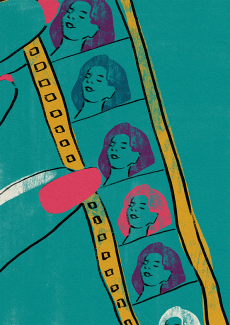
A los seis años, me enteré de que mi abuelo tenía una sala de cine. Mi madre me contó que la había abierto a principios de la década de 1960, cuando ella también tenía unos seis años. Recordaba que la primera noche proyectaron La novicia rebelde / Sonrisas y lágrimas.
Yo pasaba por el cine todos los fines de semana, y miraba a mi abuelo jugar al backgammon con sus amigos. No sabía que él estaba viviendo en la sala, en una habitación que estaba justo debajo de la cabina de proyección. Supe más tarde que se había mudado ahí después de que él y mi abuela se separaran, cuando el cine cerró, en los años 1990, poco después de que terminara la guerra civil en el Líbano.
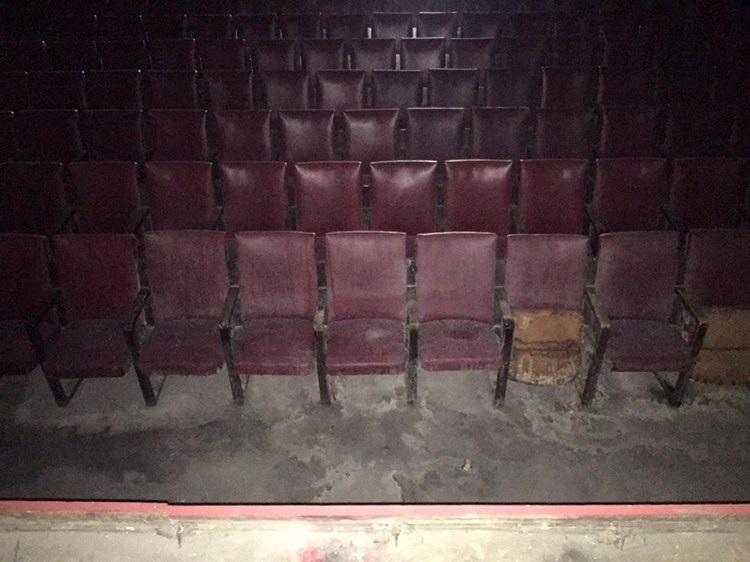
Durante años, y hasta que él falleció, casi siempre veía a mi abuelo jugando al backgammon en el descuidado vestíbulo del cine. Esas escenas repetidas son todo lo que recuerdo de él. Nunca llegué a conocerlo bien, nunca hablamos de cine, aunque él pasaba todo su tiempo en una sala de cine destartalada. Nunca le pregunté cómo era vivir en un lugar como ese. Murió cuando yo tenía doce años, en Nochebuena, a causa de una caída por la escalera caracol que llevaba a la cabina de proyección. Resulta casi poético que haya fallecido en movimiento, en un edificio donde las imágenes animadas están permanentemente suspendidas en el tiempo.

En la primavera de 2020, mi primo me llamó para decirme que había limpiado el cine de mi abuelo, y me pidió que fuera allí para encontrarme con él. Lxs dos siempre habíamos soñado renovarlo. Llegué antes que él. En el vestíbulo seguían estando los marcos de los afiches de las películas, pero faltaban los afiches. Yo sabía que debían haber quedado talonarios de entradas en algún lado; los encontré apilados en una pequeña caja de latón oxidada, sobre un estante de la boletería, y me guardé algunos.
Empecé a dar vueltas por el cine. En el escenario principal, la pantalla de proyección estaba muy sucia y un poco rota en un costado. Deslicé mi dedo índice sobre la pantalla para quitar una mancha de polvo, y vi que, debajo, la pantalla todavía era blanca. La tela también parecía estar en buenas condiciones. Miré hacia arriba para ver si el telón de mi abuela todavía estaba colocado. Estaba hecho de satén blanco, con un pequeño emblema bordado que representaba al cine. Había una sala principal y una galería de palcos. Los asientos parecían muy desgastados.
Noté que el proyector asomaba por una ventanita al fondo del área de los palcos. Subí los escalones en espiral que llevaban a la cabina de proyección.
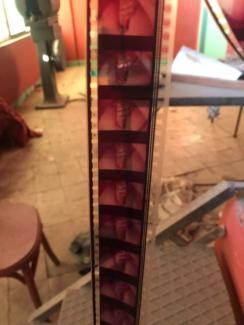
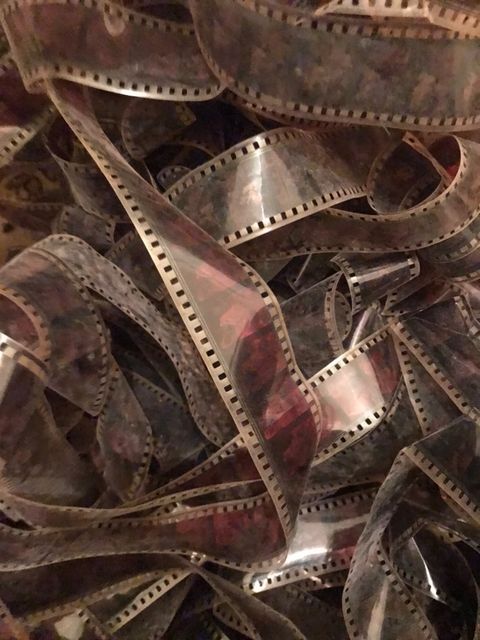
La habitación estaba a oscuras, pero un haz de luz, que entraba por las ventanas polvorientas, mostraba un montón de rollos de película arrojados en un rincón. Había cintas de celuloide inertes enredadas contra el pie del proyector. Los rollos polvorientos eran películas de género: westerns, cine de Bollywood y ciencia ficción con títulos malos como El meteorito que destruyó la Tierra o algo por el estilo. Me llamaron la atención las tiras de película polvorientas que, en su mayoría, eran fragmentos recortados de los rollos. Una por una, las tiras cortas mostraban diferentes escenas de besos, algo que parecía ser una danza sugerente, una escena indefinida de una reunión, un primer plano de una mujer acostada con la boca abierta, los créditos de apertura de una película de Bollywood, y una etiqueta de «Ahora en cartelera» que ocupaba varios fotogramas.
Los créditos de la película de Bollywood me recordaron a mi madre. Ella solía contarme que a la salida entregaban al público pañuelos de papel. Me guardé una escena de besos y las tiras de danza sugerente; supuse que habían sido cortadas por motivos de censura. El primer plano de la mujer me hizo pensar en los libros de Béla Balázs Visible Man, or The Culture of Film, The Spirit of Film y Theory of the Film. Él decía que en el cine los primeros planos proporcionan un
soliloquio silencioso, en el que un rostro puede hablar con los más sutiles matices de significado sin parecer antinatural y provocar la distancia de lxs espectadores. En este monólogo silencioso, la solitaria alma humana puede encontrar una lengua más sincera y desinhibida que en cualquier soliloquio hablado, porque habla instintivamente, en forma inconsciente.
Balázs estaba principalmente describiendo los primeros planos de Juana en la película muda La passion de Jeanne d’Arc. Señalaba cómo «... en la [película] muda, la expresión facial, aislada de su entorno, parecía penetrar en una nueva y extraña dimensión del alma».
Examiné más a fondo la tira de la película. La mujer parecía muerta, su cara era casi como una máscara. Me recordó al cuadro Ophelia del pintor John Everett Millais. En su libro Sobre la fotografía, Susan Sontag dice que una fotografía es «un rastro, algo directamente tomado de lo real, como una huella o una máscara mortuoria». Estas máscaras mortuorias son como una presencia que recuerda una ausencia.
Recordé haber encontrado un diálogo entre la muerte y la fotografía en la olvidada película de Roberto Rossellini La macchina ammazzacattivi [La máquina que mata a los malos]. En esta película, un camarógrafo va por ahí tomando fotos de personas, que a su vez se congelan, y luego quedan suspendidas en el tiempo. El crítico francés de cine André Bazin decía que la fotografía arrebata a los cuerpos del flujo de la muerte y los almacena embalsamándolos. Describía esta momificación fotográfica como «la preservación de la vida mediante la representación de la vida».
Esta cabina de proyección, toda su configuración, todas las cosas que parecían haber sido movidas, las tiras de celuloide en el piso, todo aquello en lo que mi abuelo había dejado una marca... sentí que debía protegerlo.
Debajo de las cintas había un rollo de película polvoriento y desarmado. Parecía que alguien había estado mirando el rollo manualmente. En ese momento, mi primo subió por la escalera caracol y me encontró estudiándolo. Se frotó el mentón con los dedos, y en tono muy objetivo dijo —Encontraste el porno.

Miré la tira de película que tenía en la mano, y me di cuenta de que no era una escena de muerte. La cinta había sido cortada del rollo porno. La mujer estaba gimiendo de éxtasis. Los primeros planos sirven para transmitir sentimientos de intensidad, de clímax, pero en realidad yo nunca había usado las teorías de Balázs para describir una escena porno. Él escribió que «el clímax dramático entre dos personas siempre será mostrado como un diálogo de expresiones faciales en primer plano». Me puse la tira de película en el bolsillo, y decidí llamar a la mujer Ishtar. Desde entonces, Ishtar ha vivido siempre en mi billetera. Parecía extraño comparar la minuciosa descripción de los miedos y el coraje de Juana de Arco con la expresión facial de Ishtar en éxtasis.
Según mi primo, el hermano de mi abuelo esperaba hasta que mi abuelo dejaba el cine y, en lugar de cerrar, invitaba a sus amigos para proyecciones privadas fuera de horario. No me pareció gran cosa. Era una práctica común, especialmente durante y después de la guerra civil del Líbano. Después de la guerra, había aparatos de televisión en casi todas las casas libanesas. Incluso recuerdo que había un televisor en mi dormitorio a finales de la década de 1990, cuando yo tenía unos seis años. Me han contado que comprar películas porno en VHS era algo generalizado en esa época. Mohammed Soueid, un escritor y cineasta libanés, me dijo una vez que, entre mediados de la década de 1980 y mediados de la de 1990, los cines solían proyectar tanto películas artísticas como pornográficas, para poder sobrevivir. También he oído que los proyeccionistas cortaban los rollos de porno para hacer diferentes montajes, y así poder proyectar algo distinto cada noche. Con el tiempo, la gente comenzó a quedarse dentro de la comodidad de sus propios hogares para mirar películas en VHS en sus televisores, y el negocio de los cines comenzó a declinar.

Mi primo volvió abajo para revisar un archivo de papeles que había en la oficina.
Yo me quedé en la cabina y empecé a pasar la tira de película entre mis dedos índice y medio, deslizándola hacia arriba con los pulgares y haciendo correr lentamente los fotogramas por mis manos. Alcé la tira contra la ventana polvorienta, y entrecerré los ojos para entender las viñetas monocromas. En esta serie de fotogramas había un primerísimo primer plano de una verga metida en una vagina. La imagen seguía durante varios fotogramas hasta que llegué a un nudo en la película, y me imaginé el resto.
Hank exhibe su erección frente a Veronika, quien está acostada en la cama al lado de un secrétaire imitación Luis XIV. Ella se levanta lentamente, y desliza el fino bretel de su negligé transparente para que le caiga del hombro izquierdo. Hank le desata la bata de velos, la gira, le da unas palmadas en el culo, y la empuja contra el secrétaire. Le mete la verga en el coño repetidamente, mientras la parte trasera del mueble golpea contra la pared empapelada.
Siempre presté atención a la decoración de interiores, desde la vez que mi profesora de Estudios sobre las Mujeres en la Pornografía dijo que los más grandes archivos de pornografía de América del Norte son utilizados, curiosamente, para examinar el amoblado de la clase media de la época. De modo que, mientras Veronika se agacha y es penetrada desde atrás por Hank, una asistente de investigación universitaria bien podría estar tratando de adivinar el diseño de la decoración dorada del secrétaire, o estudiando el relieve rococó de una silla de madera en algún rincón.
Por un momento, la cabina se convirtió en un espacio para la imaginación sexual femenina, desestabilizando un espacio que, de lo contrario, prometía la libertad de la sexualidad masculina. Estaba segura de que solo los hombres podían acceder a las salas de cine que proyectaban películas porno. El rollo de película estaba demasiado enredado como para arreglarlo en una cabina de proyección donde el polvo se había acumulado durante más de una década, así que lo metí en mi bolso de lona y me fui del cine.
No estoy segura de qué es lo que me ocurrió, pero me sentí obligada a conservarlo. Quería sentir la excitación de salvaguardar algo misterioso, algo no ortodoxo. Mientras iba por la calle, mentalmente estaba segura de que la gente sabía que yo estaba escondiendo algo. Me sobrevino un sentimiento de culpa mezclado con placer. Era algo perverso.
Entré en la casa, preocupada por la idea de tener un rollo pornográfico en mi bolsa de lona y por el fluir de los pensamientos que había tenido en el camino. Fui inmediatamente a mi dormitorio. En algún lugar lejano de mi mente, recordé que compartía una pared con la habitación de al lado, que era de Layla. Probablemente ella no estaba en casa, pero la posibilidad de que me oyeran me excitó. Cerré la puerta de mi dormitorio y saqué la tira de la película de Ishtar.
La imaginé con un vestido transparente color verde claro, bailando seductoramente frente a mí, sacudiendo sus caderas hacia los costados y sonriendo con los ojos. Me metí en la cama. Deslicé los dedos dentro de las bragas. Levanté mis caderas. Pasé la mano por mis muslos, hacia abajo, hasta separarlos, y me metí dos dedos. Me tensé, palpando mis diferentes pliegues. Empecé a gemir antes de poder detenerme. Jadeaba y me mecía. Los rayos de sol que entraban por mi ventana me daban besos renuentes sobre la piel. Aguanté la respiración, y mis brazos y mis piernas se estremecieron. Tragué el aliento y me quedé tumbada sobre el colchón.
Cuando era estudiante universitaria, tomé clases de introducción a la cinematografía. La profesora Erika Balsom había programado una proyección de Variety, de Bette Gordon. Estaba entusiasmada por ver la primera película de la productora Christine Vachon, quien después pasó a producir películas que ahora son parte del movimiento del Nuevo Cine Queer. Variety se describía como una película feminista sobre Christine, una mujer que comienza a trabajar en la boletería de un cine porno de Nueva York, llamado The Variety Theater. Christine oye las películas que se proyectan, pero nunca entra a la sala. Con el tiempo, se siente atraída por un cliente habitual, a quien observa atentamente. Lo sigue hasta una tienda de material pornográfico, en donde se aparta y hojea revistas para adultos por primera vez.
El voyeurismo de Christine se muestra de diferentes maneras a lo largo de la película. El guión también estaba plagado de excesos y de monólogos eróticos que podrían ser considerados obscenos o vulgares.
En una escena ambientada en una sala de juegos, ella le lee un texto erótico a su novio. La cámara va y viene entre un primer plano del culo de Mark mientras él juega al pinball, sacudiendo sus caderas hacia adelante y hacia atrás contra la máquina, y un primer plano del rostro de Christine mientras ella recita su monólogo.

«Sky estaba viajando a dedo y lo levantó una mujer en una pick-up. Era de noche tarde y él necesitaba un lugar donde quedarse, de modo que ella le ofreció su casa.
Ella le acompañó a su habitación y le ofreció un trago. Bebieron y hablaron, y decidieron ir a acostarse. Él no podía dormir, por lo que se puso los pantalones y fue por el pasillo hasta la sala de estar. Casi no podía ser visto, pero sí podía ver. La mujer estaba desnuda y extendida sobre la mesita baja, con las piernas colgando. Todo su cuerpo era de un blanco excitante, como si nunca hubiera estado expuesto al sol. Sus pezones eran color rosa brillante, como de fuego, casi de neón. Tenía los labios abiertos. Su largo cabello cobrizo lamía el suelo, los brazos estirados, los dedos cosquilleando el aire. Su cuerpo aceitado era redondo, sin puntas, sin bordes. Deslizándose entre sus senos había una gran serpiente que se curvaba hacia arriba alrededor de uno, y hacia abajo por el otro. La lengua de la serpiente lamía hacia el coño, tan abierto, tan rojo bajo la luz de la lámpara. Excitado y confundido, el hombre volvió a su habitación, y con gran dificultad logró dormirse. A la mañana siguiente, mientras comen frutillas, la mujer le pide que se quede otra noche. Otra vez, él no podía dormir […]»
Cuando tenía veintitrés años, Lynn, la chica del curso de cine con quien estaba saliendo, me sorprendió llevándome a mirar cortos eróticos el Día de San Valentín. El evento tenía lugar en el Mayfair Theater, un viejo cine independiente. La arquitectura del cine recordaba a los nickelodeons de América del Norte, pero con un toque exagerado. Los palcos estaban decorados con figuras de cartón de tamaño real de El monstruo del pantano y Aliens.
Ese año el jurado del festival era la estrella de cine para adultos Kacie May, y el programa consistía en una hora y media de cortometrajes. El contenido iba desde cortos machistas soft-core hasta películas de coprofilia. Miramos algunos minutos de lo que parecía ser porno suave heterosexual. La filmación mostraba a una pareja que empieza a hacer el amor en una sala de estar moderna, y luego pasa al dormitorio. Eran casi todas imágenes de ellxs besándose, tocándose, y haciendo el amor en la posición del misionero. Después, una mujer con cabello castaño corto se subió a la cama en cuatro patas, lamiendo el dorso de su propia mano a pequeños lengüetazos. Maullaba y se arrastraba sobre la despreocupada pareja. Continuaron haciendo el amor. Ella gateó hasta la cocina, levantó con los dientes su cuenco vacío, y lo colocó sobre una almohada. Siguió caminando encima de ellxs hasta el final del corto. Parecía bastante absurdo. Empecé a reírme, pero a Lynn se la veía un poco incómoda. Entonces, miré a nuestra izquierda, y vi a otras personas del público bebiendo cerveza a borbotones y atragantándose con palomitas de maíz mientras se reían como histéricxs. Sus risas ininterrumpidas y sus comentarios en voz bien alta eran lo que en verdad marcaban el tono del festival. Mirar al público resultó más interesante que mirar las películas eróticas. El Mayfair Theater a menudo proyectaba películas de culto, y mirar películas de culto es una experiencia comunitaria.
No es exactamente la forma en que yo me imaginaba al tío de mi madre mirando pornografía en el cine de mi abuelo. Los cines proyectaban abiertamente películas porno en esa época pero yo no podía imaginar eso sucediendo en el pueblo de mi madre. Lo imaginaba mirando la película desde el proyector de la cabina, para poder detener la proyección rápidamente en el caso de tener alguna visita inesperada. Sus amigos se sentaban en el palco del fondo. Nadie podía entrar por ahí a menos que tuviera una llave, así que era seguro. Tenían que pensar en todo. Era un barrio cristiano conservador, y no habrían querido causar problemas. Lo más probable era que estuvieran abrumados por la excitación y la culpa. Las voces de las bromas homoeróticas en voz alta se mezclaban con los audios de gruñidos y gemidos, pero cada pocos minutos se recordaban unos a otros que debían bajar la voz. Se turnaban para controlar las ventanas, asegurándose de que el sonido no fuera lo suficientemente alto como para alarmar a lxs vecinxs. A veces, apagaban el parlante y no había sonido.
En 2019, después de una protesta política, me encontré un puesto de libros en la calle Riad El Solh, cerca de la Plaza de los Mártires, en el centro de Beirut. Cerca del borde de la mesa, detrás de los libros de Víctor Hugo y Simone de Beauvoir, encontré una pila de novelas eróticas y revistas para adultos. Eran todas traducciones de publicaciones occidentales. En realidad no me importaba cuál elegir; solo sabía que quería tener un ejemplar, por la pura emoción. Busqué el arte de portada más interesante.
Mientras me daba el cambio, el vendedor me preguntó —¿No te conozco de algún lado? Me miró los pechos, deslizando los ojos hacia abajo. Probablemente supuso que yo trabajaba en la industria del porno o del sexo. Lo miré a los ojos y dije —No. Me di vuelta, lista para irme caminando con mi compra. Entonces, él me detuvo para decirme que tenía un gran archivo en su sótano, y que vendía regularmente colecciones y publicaciones porno en EBay a Europa y a los Estados Unidos. Si bien me interesaba revolver ese archivo, no me sentía lo suficientemente cómoda como para aceptar su oferta. No parecía seguro. Le pregunté dónde encontraba esas novelas. Para mi sorpresa, las editaban en el Líbano.
Caminando hacia la estatua de Riad El Solh, miré la publicación que había comprado y vi que el texto estaba algo torcido, con las letras un poco borroneadas, haciéndolas ilegibles. Las fotos internas eran collages pornográficos descoloridos. Parecía algo crudo; me gustaba. El título de la novela era Marcel’s Diaries [Los diarios de Marcel].
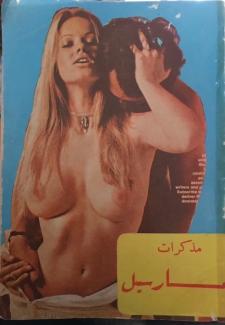
El arte de portada era claramente un recorte de una revista pegado sobre una hoja azul. En la ilustración, una mujer sin camisa está agarrando la cabeza de su amante, hundiendo los dedos en el cabello de él, mientras él le besa el cuello desde atrás. La falda de ella tiene el cierre abierto. Su amante tiene la mano apoyada en la zona inferior de su cadera derecha. La mano de ella está sobre la de él. Los labios de la mujer están fruncidos y abiertos, casi como si estuviera gimiendo de placer, y su cabello rubio y liso, al estilo de los años 1970, cae sobre su pecho y le cubre parcialmente los pezones.
Abrí el libro en la primera página. El prefacio decía:
que se puede traducir como
«Deseo
y desviación»
o como
«Deseo
y perversión»
Leí el primer capítulo, y descubrí que quien había traducido el texto había cambiado el nombre del protagonista a Fouad, que es un nombre árabe. Supuse que querían que su público masculino libanés se identificara. Continuando la lectura, vi que todas sus amantes tenían nombres extranjeros como Hanna, Marla, Marcel, Marta.
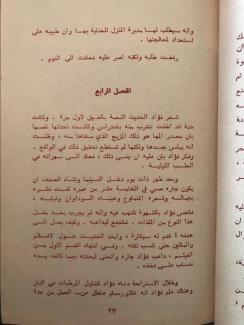
En la página 27, capítulo cuatro, me di cuenta de que Marcel era uno de los amantes de Fouad.

The scene took place in a movie theater. Movie theaters were often spaces for sexual freedom in North America, especially since the 1970s after the sexual revolution.
También supuse que habían mantenido todos los otros nombres extranjeros para que el texto sonara exótico y fuera por lo tanto menos tabú. La pornografía y las novelas eróticas eran atribuidas a West Hollywood, a pesar de que históricamente el mundo árabe haya producido textos eróticos. La literatura erótica se convirtió en tabú, y la única manera segura de editarla era comercializarla como extranjera, como exótica.
Es interesante cómo lo exótico encubre a lo erótico. La diferencia entre los dos adjetivos tiene su raíz en las etimologías griegas de las palabras: exótico viene de exo, «afuera», lo que significa extraño o extranjero. Erótico deriva de Eros, el dios del amor sexual. De modo que lo exótico es misterioso y extranjero, y lo erótico es sensual.
En el Líbano existe una línea delgada entre lo exótico y lo erótico en el cine, como la delgada línea entre las películas artísticas y las películas pornográficas. En 2015, durante una conversación con la cineasta Jocelyne Saab en un restaurante vietnamita de París, me enteré de que ella había tenido que filmar su película artística Dunia dos veces, para cambiar el dialecto del egipcio al libanés. Me contó que sus actorxs eran egipcixs, y que ella no era estricta respecto del guión. Pero no le permitieron usar el dialecto egipcio: tenía que ser en libanés, porque a los productores les preocupaban ciertas escenas de la película que bordeaban lo erótico. De modo que lo convirtieron en un film extranjero.
Se rassembler à l’échelle mondiale, en tant qu’individus et mouvements, nous permet de générer une force considérable. Rejoignez-nous à Bangkok, en Thaïlande et en ligne en décembre 2024.
by Prinka Saraswati
The menstrual cycle usually lasts between 27 and 30 days. During this time, the period itself would only go on for five to seven days. During the period, fatigue, mood swings, and cramps are the result of inflammation. (...)
< artwork: “Feminist Movement” by Karina Tungari
« Mais quand le maître
s’est-il laissé éloigner du pouvoir?
Quand un système a-t-il jamais été brisé
par l’acceptation?
Quand le CHEF te remettra-t-il le pouvoir avec amour?
À Jobourg, à Cancun, à l’ONU? », Molara Ogundipe.
À travers les continents et les pays, la professeure Ogundipe a enseigné la littérature comparée, l’écriture, le genre et les études anglaises, se servant de la littérature comme outil de transformation sociale, de même que pour revisiter les relations de genre.
Penseuse, écrivaine, rédactrice, critique sociale, poète et activiste féministe, Molara Ogundipe est parvenue à allier le travail théorique et l’action créative et la créativité. Elle est considérée comme l’une des principales voix critiques du(des) féminisme(s) africain(s), des études de genre et de la théorie littéraire.
Molara est connue pour avoir créé le concept de « stiwanisme », à partir de l’acronyme STIWA, pour Social Transformations in Africa Including Women (transformations sociales en Afrique incluant les femmes), reconnaissant la nécessité de « s’éloigner de la définition du ou des féminismes en lien avec l’Euro-Amérique ou avec toute autre région, et de la déclamation de loyautés ou déloyautés ».
Avec son ouvrage fondateur « Re-creating Ourselves » de 1994 (publié sous le nom de Molara Ogundipe-Leslie), Molara Ogundipe a laissé derrière elle un immense éventail de connaissances qui ont décolonisé le discours féministe et « recentré les femmes africaines sur leurs récits entiers et complexes... menées par une exploration de la libération économique, politique et sociale des femmes africaines et la restauration de la capacité d’agir féminine dans plusieurs cultures en Afrique ».
À propos des difficultés rencontrées en tant que jeune universitaire :
« Lorsque j’ai commencé à parler et à écrire sur le féminisme à la fin des années soixante et soixante-dix, on me considérait comme une bonne et admirable fille qui s’était égarée, une femme dont l’esprit avait été gâté par trop d’apprentissages ».
Molara Ogundipe s’est démarquée grâce à son leadership alliant activisme et université. En 1977, elle comptait parmi les fondatrices de l’AAWORD (Association of African Women for Research and Development). En 1982, elle fonde WIN (Women in Nigeria) pour défendre des « droits économiques, sociaux et politiques » entiers pour les Nigérianes. Elle crée et dirige ensuite la Foundation for International Education and Monitoring, et passe plusieurs années à oeuvrer au comité de rédaction de The Guardian.
Ayant grandi avec les Yoruba, leurs traditions, leur culture et leur langue, elle a un jour déclaré :
« Je pense que célébrer la vie, célébrer les personnes qui décèdent après une vie bien remplie est l’un des plus beaux aspects de la culture yoruba ».
Le nom de fête « oiki » de Molara en yoruba était Ayike. Née le 27 décembre 1940, Molara est décédée à l’âge de 78 ans, le 18 juin 2019 à Ijebu Igbo, dans l’État d’Ogun au Nigeria.

 |
Tshegofatso Senne est un·e féministe noir·e atteint·e d’une maladie chronique et genderqueer qui fait le maximum. Une grande partie de son travail est axée sur le plaisir, la communauté et le rêve et s’alimente de l’abolitionnisme somatique et du handicap, de la guérison et des justices transformatives. Tshegofatso écrit, fait des recherches et s’exprime sur des questions concernant le féminisme, la communauté, la justice sexuelle et reproductive, le consentement, la culture du viol et la justice, et élabore depuis 8 ans des théories sur la façon dont le plaisir recoupe ces différents thèmes. Tandis qu’iel dirige sa propre entreprise, Thembekile Stationery, sa plateforme communautaire Hedone rassemble les gens pour explorer et comprendre le pouvoir du plaisir et de la prise de conscience de traumatismes dans leur vie quotidienne. |
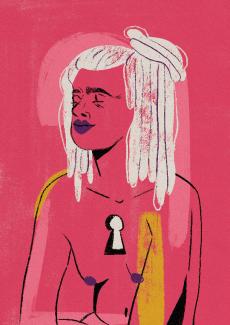
C’est dans notre corps, et non dans notre cerveau pensant, que nous expérimentons la plupart de nos douleurs, nos plaisirs, nos joies, et là où nous traitons la majeure partie de ce qui nous arrive. C’est également là que nous faisons la plupart de notre travail de guérison, et notamment notre guérison émotionnelle et psychologique. Et c’est là où nous faisons l’expérience de la résilience et d’une sorte de flux.
Ces mots, ceux de Resmaa Menakem dans son roman My Grandmother’s Hands résonnent toujours en moi
Le corps contient nos expériences. Nos mémoires. Notre résilience. Et comme l’a écrit Menakem, le corps contient également nos traumatismes. Il emploie des mécanismes spontanés de protection pour arrêter ou prévenir les dommages supplémentaires. Le pouvoir du corps. Le traumatisme, ce n’est pas l’événement, c’est la manière dont nos corps répondent aux événements qui nous semblent dangereux. Et le trauma reste souvent coincé dans notre corps, jusqu’à ce que nous l’abordions. Il n’est pas possible de faire autrement – c’est ainsi que notre corps l’entend.
En utilisant l’appli Digital Superpower de Ling Tan, j’ai observé les réactions de mon corps alors que je me promenais dans différents quartiers de ma ville, Johannesburg, en Afrique du Sud. L’appli est une plateforme en ligne pilotée par le mouvement qui permet de suivre nos perceptions pendant que l’on se déplace dans un lieu, en saisissant et en enregistrant les données. Je m’en suis servie pour faire le suivi de mes symptômes psychosomatiques – les réactions physiques connectées à une cause psychologique. Il pouvait s’agir de flash-backs. D’attaques de panique. De serrement de poitrine. L’accélération du rythme cardiaque. De maux de tête dus à la tension. De douleurs musculaires. D’insomnie. De difficulté à respirer. J’ai suivi ces symptômes tout en marchant et en me déplaçant dans différents coins de Johannesburg. Et je me suis demandé.e :
Où pouvons-nous être en sécurité? Peut-on être en sécurité?
Les réponses psychosomatiques peuvent avoir plusieurs causes, certaines moins sévères que d’autres. Lorsque l’on a vécu un traumatisme, on peut être dans une détresse très intense lors d’événements ou de situations similaires. J’ai fait le relevé de mes sensations, sur une échelle de 1 à 5, où 1 correspond aux cas où je n’ai ressenti presque aucun de ces symptômes – plutôt à l’aise que sur mes gardes et à fleur de peau, ma respiration et mon rythme cardiaque étaient stables, je ne regardais pas par-dessus mon épaule – et 5 à l’opposé : des symptômes qui me rapprochaient de l’attaque de panique.
En tant que personne noire. En tant que personne queer. En tant que personne de genre queer qui pouvait être perçue comme une femme, selon mon expression de genre ce jour-là.
Je me suis demandé.e :
Où pouvons-nous être en sécurité?
Même dans les quartiers que l’on pourrait considérer comme « sûrs », je me sentais constamment en panique. Je regardais autour de moi pour vérifier que je n’étais pas suivie, ajustant la manière dont mon T-shirt tombait pour que mes seins ne soient pas trop moulés, regardant autour de moi pour m’assurer que je connaissais plusieurs sorties, si je sentais tout à coup un danger là où j’étais. Une route sans personne fait monter l’anxiété. Une route bondée aussi. Prendre un Uber aussi. Marcher dans une rue publique également. Et être dans mon appartement aussi. Tout comme de récupérer une livraison au pied de mon immeuble.
Peut-on être en sécurité?
Pumla Dineo Gqola parle de l’usine de peurs féminines. Vous en avez peut-être une vague idée, mais si vous êtes une personne socialisée en tant que femme, vous connaîtrez très bien ce sentiment. Ce sentiment d’avoir à planifier chaque pas que vous faites, que vous vous rendiez au travail, à l’école, ou fassiez simplement une course. Ce sentiment d’avoir à surveiller la manière dont on s’habille, on parle, on s’exprime en public et dans les espaces privés. Ce sentiment au creux de l’estomac si on doit se déplacer la nuit, aller chercher une livraison, ou avoir affaire à toute personne qui continue à se socialiser en tant qu’homme cis. Harcelées dans la rue, toujours sous la menace de la violence. Exister pour nous, quel que soit l’espace, s’accompagne d’une peur innée.
La peur est un phénomène à la fois individuel et sociopolitique. Au niveau individuel, la peur peut faire partie d’un système d’avertissement sain qui se développe bien […] Lorsque l’on pense à la peur, il est important de prendre en compte à la fois les notions d’expérience émotive individuelle et les modalités politiques par lesquelles la peur a été utilisée à des fins de contrôle à diverses époques.
- Pumla Dineo Gqola, dans son ouvrage Rape: A South African Nightmare
En Afrique du Sud, les femmes cis, les femmes et les queers savent que chaque pas que nous faisons à l’extérieur – des pas pour faire des choses ordinaires comme se rendre dans un magasin, prendre un taxi jusqu’au travail, un Uber pour rentrer d’une fête – toutes ces actions sont une négociation avec la violence. Cette peur, elle fait partie du traumatisme. Pour s’adapter au traumatisme que l’on porte dans nos corps, nous élaborons des réponses à la détection du danger – on examine les réactions émotives des personnes autour de nous, à la recherche d’« amabilité ». Nous sommes constamment sur nos gardes.
Jour après jour. Année après année. Vie après vie. Génération après génération.
L’auteur de The Body Keeps the Score, Bessel van der Kolk, explique à propos de la difficulté supplémentaire que pose ce système de défense acquis, que
Elle perturbe la capacité à correctement lire les autres, ce qui rend les survivant·e·s de traumatisme moins à même de détecter le danger, ou plus à même de croire avoir perçu un danger là où il n’y en a pas. Il faut une énergie considérable pour continuer à fonctionner tout en portant la mémoire de la terreur, et la honte d’une faiblesse et d’une vulnérabilité infinie.
Comme le dit Resmaa Menakem, le traumatisme est partout; il s’infiltre dans l’air que nous respirons, l’eau que nous buvons, la nourriture que nous ingérons. Il est présent dans les systèmes qui nous gouvernent, l’institution qui nous enseigne et qui nous traumatise aussi, et au sein des contrats sociaux que nous concluons les un·e·s avec les autres. Plus important encore, nous prenons le traumatisme avec nous partout où nous allons, dans nos corps, nous épuisant et sapant notre santé et notre bonheur. Nous portons cette vérité dans nos corps. Des générations d’entre nous l’ont fait.
Alors, pendant que je marche dans ma ville, que ce soit dans un quartier considéré « sûr » ou non, je porte les traumatismes de générations dont les réactions sont intégrées dans mon corps. Mon cœur palpite, je commence à avoir du mal à respirer, ma poitrine se resserre – parce que mon corps a l’impression que le traumatisme a lieu exactement à ce moment-là. Je vis avec une hypervigilance. Au point où l’on est soit trop sur ses gardes pour profiter de la vie sans souci, soit trop engourdi·e pour absorber de nouvelles expériences.
Pour que nous commencions à guérir, nous devons reconnaître cette vérité.
Ces vérités qui vivent dans nos corps.
Ce traumatisme est ce qui empêche nombre d’entre nous de vivre les vies que nous voulons. Demandez à n’importe quelle femme ou personne queer à quoi ressemble la sécurité pour elle, et elle vous donnera principalement des exemples de tâches très simples – pouvoir simplement vivre une vie joyeuse, sans la menace constante de la violence.
Les sentiments de sécurité, de confort et d’aise sont spatiaux. Incarner nos traumatismes influence la manière dont nous percevons notre propre sécurité, affecte les manières dont nous interagissons avec le monde et modifie les possibilités pour nous de vivre et d’incarner toute chose plaisante ou joyeuse.
Nous devons refuser cette encombrante responsabilité et nous battre pour un monde sûr pour nous toutes et tous. Nous, qui nous déplaçons avec nos blessures, sommes des battantes. Le patriarcat peut nous terroriser et nous brutaliser, nous ne cesserons pas le combat. Alors que nous continuons à descendre dans la rue, en défiant la peur de manière spectaculaire et apparemment insignifiante, nous nous défendons et parlons en notre propre nom.
- Pumla Dineo Gqola, dans son ouvrage Rape: A South African Nightmare
Où pouvons-nous être en sécurité? Comment commencer à se défendre, pas simplement physiquement mais également émotionnellement, psychologiquement et spirituellement?
« Le traumatisme nous transforme en armes » déclarait Adrienne Maree Brown dans un entretien mené par Justin Scott Campbell. Et son ouvrage, Pleasure Activism, propose plusieurs méthodes pour guérir ce traumatisme et nous ancrer dans la compréhension que la guérison, la justice et la libération peuvent également être des expériences plaisantes. Et particulièrement pour celles d’entre nous qui sont les plus marginalisées, qui ont peut-être été éduquées à faire rimer souffrance avec « ce travail ». Ce travail que tant d’entre nous ont entamé en tant qu’activistes, bâtisseuses communautaires et travailleuses, celles qui sont au service des plus marginalisées, ce travail que nous souffrons à réaliser, nous épuisant et ne prenant que rarement soin de nos esprits et de nos corps. L’alternative est d’être mieux informées à propos de nos traumatismes, capables d’identifier nos propres besoins et de devenir profondément incarnées. Cette incarnation signifie que nous sommes tout simplement plus à même de faire l’expérience du monde à travers les sens et les sensations de notre corps, en reconnaissant ce qu’ils nous disent plutôt qu’en supprimant et en ignorant l’information qu’ils nous communiquent.
Être en conversation continue avec notre corps vivant et pratiquer ces conversations avec intention nous connecte plus profondément à l’incarnation. Cela nous permet de rendre tangibles les émotions que nous ressentons lorsque nous interagissons avec le monde, que nous apprenons à apprivoiser notre corps et que nous comprenons tout ce qu’il essaie de nous enseigner. En comprenant le traumatisme et l’incarnation de pair, nous pouvons commencer à débuter la guérison et à accéder au plaisir de manière plus holistique, sainement et dans notre vie de tous les jours sans honte ou culpabilité. Nous pouvons commencer à accéder au plaisir en tant qu’outil de changement individuel et social, en puisant dans le pouvoir de l’érotique, comme le décrivait Audre Lorde. Un pouvoir qui nous permet de partager la joie à laquelle nous accédons et dont nous faisons l’expérience, élargissant notre capacité à être heureuses et à comprendre que nous le méritons, même avec notre traumatisme.
Puiser dans le plaisir et incarner l’érotique nous gratifie de la possibilité d’être délibérément vivantes, de nous sentir ancrées et stables et de comprendre notre système nerveux. Cela nous permet de comprendre et de nous défaire des bagages générationnels que nous portions sans le réaliser; nous pouvons acquérir du pouvoir grâce à la connaissance que même aussi traumatisées que nous le sommes, aussi traumatisées que nous pourrions potentiellement l’être à l’avenir, nous méritons tout de même des vies plaisantes et joyeuses, et que nous pouvons partager ce pouvoir avec nos gens. C’est l’aspect communautaire qui manque aux manières dont nous prenons soin de nous-mêmes; l’autosoin ne peut exister sans soin communautaire. Nous sommes en mesure de sentir une confiance interne plus profonde, une sécurité et un pouvoir en nous-mêmes, particulièrement face à des traumatismes ultérieurs qui déclencheraient des réactions en nous, car nous savons comment nous apaiser et nous stabiliser. Toute cette compréhension nous mène à un pouvoir interne profond et nourri, qui nous permet de relever tous les défis qui se présentent à nous.
Comme celles qui vivent avec des traumatismes générationnels profonds, nous en sommes venues à perdre confiance, voire à penser que nous sommes incapables de contenir et d’accéder au pouvoir que nous avons. Dans « Uses of the Erotic: The Erotic as Power », Lorde nous enseigne que l’érotique offre une source de régénération, une manière d’exiger mieux pour nous-mêmes et pour nos vies.
Car l’érotique n’est pas simplement une question de ce que nous faisons; c’est de savoir dans quelle mesure nous pouvons précisément et entièrement ressentir le faire. Dès lors que nous connaissons la mesure dans laquelle nous sommes capables de ressentir ce sens de satisfaction et de complétude, nous pouvons alors observer quelle activité dans notre vie nous rapproche le plus de cette complétude.
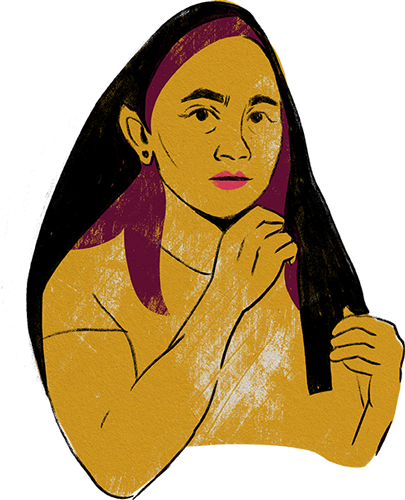
Je ne dis rien de tout ça à la légère – je sais que c’est plus facile à dire qu’à faire. Je sais que nombre d’entre nous sont empêchées de comprendre ces réalités, de les internaliser, voire de les guérir. La résistance s’accompagne d’actes où l’on se sent en insécurité, mais elle n’est pas impossible. Résister à des structures de pouvoir qui maintiennent les plus puissants en sécurité mettra toujours en danger celles d’entre nous qui sont poussées dans la marge. Reconnaître les traumatismes que vous avez affrontés, c’est réclamer vos expériences vécues, celles qui sont passées et celles qui suivront; c’est la résistance qui incarne cette connaissance que nous méritons, plutôt que les miettes que ces systèmes nous ont obligées à avaler. C’est une résistance qui comprend que le plaisir est compliqué par le traumatisme, mais que l’on peut y accéder de manière arbitraire et puissante. C’est une résistance qui reconnaît que notre traumatisme est une ressource qui nous connecte les unes aux autres et qui peut nous permettre de nous sentir mutuellement en sécurité. C’est une résistance qui comprend que même avec le plaisir et la joie, ce n’est pas une utopie; nous blesserons encore et serons de nouveau blessées, mais nous serons mieux outillées pour survivre et nous épanouir dans une communauté de soins et de gentillesse diversifiés. Une résistance qui fait de la place à la guérison et à la connexion à notre être humain en entier. La guérison ne sera jamais une balade agréable, mais elle commence avec la reconnaissance de la possibilité. Lorsque l’oppression nous fait croire que le plaisir est quelque chose auquel tout le monde a un accès égal, une des manières par lesquelles nous commençons à faire le travail de réclamation de nos êtres entiers – nos êtres entiers libérés et libres – est de réclamer notre accès au plaisir.
Leah Lakshmi Piepzna-Samarasinha a écrit dans sa contribution à Pleasure Activism,
Je sais que, pour la plupart des gens, les mots « soins » et « plaisir » ne peuvent absolument pas faire partie d’une même phrase. Nous nageons toutes dans la haine validiste de nos corps qui ont des besoins, et on nous propose un choix vraiment merdique : n’avoir aucun besoin et obtenir l’autonomie, la dignité et le contrôle de notre vie ou admettre que nous avons besoin de soins et perdre tout cela.
Le pouvoir que cela a? Nous comprenons nos traumatismes, donc nous comprenons ceux des autres; nous incarnons les sensations que nous vivons et y prêtons attention plutôt que de les négliger ou les éviter. Les manières dont nous accédons au plaisir nous donnent envie de partager cette joie dans nos communautés. En tenant compte des traumatismes, on se donne davantage de place pour faire l’expérience de tout cela et on se donne à nous-mêmes, et aux autres, la permission de guérir. Imaginez une communauté dans laquelle tout le monde a accès à des ressources et a le temps de vivre une vie plaisante, de la manière dont toutes et tous le veulent et le méritent. Dans laquelle les traumatismes spatiaux sont atténués parce que les personnes qui occupent ces espaces ont conscience des traumatismes, sont pleines d’attention bienveillante. N’est-ce pas ça, la guérison? N’est-ce pas un travail au niveau des traumatismes générationnels? N’est-ce pas la base pour un avenir plus sain et durable pour tout le monde?
Il est temps de nous reconnecter à cette sagesse ancestrale selon laquelle nous méritons de vivre des vies pleines. Nous devons reprendre contact avec notre droit naturel à la joie et à l’existence pour nous-mêmes. De ressentir du plaisir pour le simple plaisir. De ne pas vivre des vies de terreur. Cela paraît radical ; cela semble radical. Dans un monde où nous avons été socialisées et traumatisées à taire, à avoir peur, à ressentir et à rester impuissantes, à être cupides et à vivre avec ces problèmes structurels qui entraînent des maladies mentales, quel cadeau et quel émerveillement que de commencer à ressentir, d’être dans une communauté avec celles qui ressentent, dans laquelle nous sommes sainement interdépendantes, de s’aimer mutuellement et complètement. La sensation est radicale. Le plaisir est radical. La guérison est radicale.
Vous avez la permission de ressentir du plaisir. Vous avez la permission de danser, créer, faire l’amour à vous-même et à d’autres, célébrer et cultiver la joie. Vous êtes encouragées à le faire. Vous avez la permission de guérir. Ne le retenez pas à l’intérieur, n’essayez pas de traverser cela toute seule. Vous avez la permission de faire le deuil. Et vous avez la permission de vivre.
- Adrienne Marre Brown « You Have Permission »
L’incarnation somatique nous permet d’explorer notre traumatisme, d’y travailler et de faire des connexions significatives avec nous-mêmes et avec le collectif. Faire cela sur la durée entretient notre guérison. Tout comme le traumatisme, la guérison n’est pas un événement à occurrence unique. Cette guérison nous aide à aller vers la libération individuelle et collective.
Dans « A Queer Politics of Pleasure », Andy Johnson parle de la manière dont le fait de rendre le plaisir queer nous apporte des sources de guérison, d’acceptation, de relâchement, de jeu, d’entièreté, de défiance, de subversion et de liberté. Quelle ouverture! En incarnant le plaisir de manière si holistique, si queer, nous sommes en mesure de reconnaître la limite.
Rendre le plaisir queer nous pose également les questions à l’intersection de nos rêves et de nos réalités vécues.
Qui est assez libre ou considéré assez méritant pour ressentir du plaisir? Quand sommes-nous autorisés à ressentir le plaisir ou à être satisfaits? Avec qui pouvons-nous faire l’expérience du plaisir? Quel type de plaisir est accessible? Qu’est-ce qui nous limite dans notre accès total à notre potentiel érotique et de satisfaction?
- Andy Johnson, « A Queer Politics of Pleasure »
Lorsque nos pratiques de plaisir, qui prennent en compte le traumatisme, sont ancrées dans les soins communautaires, nous commençons à répondre à quelques-unes de ces questions. Nous commençons à en comprendre le potentiel libérateur. En tant qu’activistes du plaisir, c’est la réalité au sein de laquelle nous nous ancrons. La réalité qui dit : « mon plaisir peut-être fractal, mais il a le potentiel de guérir non seulement moi et ma communauté, mais des lignées futures ».
Je suis un système entier; nous sommes des systèmes entiers. Nous ne sommes pas que nos douleurs, que nos peurs, et que nos pensées. Nous sommes des systèmes entiers prévus pour le plaisir et nous pouvons apprendre comment dire oui depuis l’intérieur.
- Prentis Hemphill, entretien mené par Shar Jossell
Il y a un monde de plaisir qui nous permet de commencer à nous comprendre de manière holistique, avec des façons qui nous donnent la place de reconstruire les réalités qui affirment que nous sommes capables et que nous méritons du plaisir quotidien. Le BDSM, un de mes plaisirs les plus profonds, me permet d’entrevoir ces réalités où je peux sentir et guérir mon traumatisme, tout en sentant les incommensurables possibilités de dire oui depuis l’intérieur. Alors que le traumatisme me bloque dans un cycle de combat ou de fuite, le bondage, l’agenouillement, l’impact et les jeux de respiration m’encouragent à rester ancrée et connectée, me reconnectant à ma restauration. Le plaisir ludique me permet de guérir, d’identifier où l’énergie traumatique est emmagasinée dans mon corps et d’y centrer mon énergie. Il me permet d’exprimer les sensations que ressent mon corps avec des cris de douleur et de satisfaction, d’exprimer mon « non » sans aucune peur et de me délecter dans le « oui, carrément ». Avec un plan de sécurité, des soins après la pratique et une compréhension approfondie du traumatisme, la perversion offre un lieu de plaisir et de guérison d’une valeur inestimable.
Donc, que votre plaisir prenne la forme de la préparation d’un repas à votre rythme, d’avoir des relations sexuelles, de rester au lit plusieurs jours avec vos partenaires, de participer à des collectifs de soins adaptés aux situations de handicap, d’avoir quelqu’un qui vous crache dans la bouche, de faire des sorties accessibles, d’avoir des rendez-vous de câlins, de participer à une soirée dansante en ligne, de passer du temps dans votre jardin, d’être étouffée dans un donjon,
J’espère que vous prenez le plaisir avec vous partout où vous allez. J’espère qu’il vous guérit, vous et celleux qui vous entourent.
Reconnaître le pouvoir de l’érotique au sein de nos vies peut nous donner l’énergie de poursuivre le véritable changement au sein de notre monde.
- Audre Lorde, « Uses of the Erotic: The Erotic as Power »

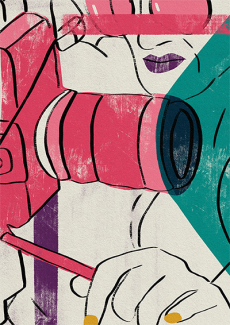
Cette édition du journal, en partenariat avec Kohl : a Journal for Body and Gender Research (Kohl : une revue pour la recherche sur le corps et le genre) explorera les solutions, propositions et réalités féministes afin de transformer notre monde actuel, nos corps et nos sexualités.

نصدر النسخة هذه من المجلة بالشراكة مع «كحل: مجلة لأبحاث الجسد والجندر»، وسنستكشف عبرها الحلول والاقتراحات وأنواع الواقع النسوية لتغيير عالمنا الحالي وكذلك أجسادنا وجنسانياتنا.