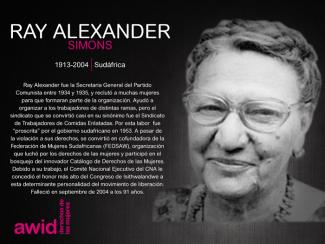
Ray Alexander Simons
Defensoras de derechos humanos de todo el planeta defienden sus tierras, medios de subsistencia y sus comunidades ante las industrias extractivas y el poder corporativo. Ellas hacen frente a fuertes intereses económicos y políticos que promueven el robo de tierras, el desplazamiento de comunidades, la pérdida de los medios de subsistencia y la degradación del medioambiente.
El extractivismo es un modelo económico y político de desarrollo que mercantiliza la naturaleza y prioriza la ganancia por sobre los derechos humanos y el medioambiente. Arraigado en la historia colonial, refuerza las desigualdades sociales y económicas tanto a nivel local como global. Muchas veces, las mujeres negras, rurales e indígenas son las más afectadas por el extractivismo, y además son notablemente excluidas de la toma de decisiones. Desafiando estas fuerzas patriarcales y neocoloniales, las mujeres se alzan en defensa de los derechos, las tierras, las personas y la naturaleza.
Las defensoras que enfrentan a las industrias extractivas, experimentan una diversidad de riesgos, amenazas y violaciones, incluidas la criminalización, la estigmatización, la violencia y laintimidación. Sus historias dan cuenta de marcados aspectos de violencia sexual y de género. Entre los perpetradores se incluyen autoridades estatales y locales, las corporaciones, la policía, el ejército, las fuerzas paramilitares y de seguridad privada, y en algunos casos, sus propias comunidades.
AWID y la Coalición Internacional de Mujeres Defensoras de Derechos Humanos (WHRDIC por su sigla en inglés) tienen el placer de anunciar «Defensoras de derechos humanos confrontado al extractivismo y al poder corporativo»; un proyecto interregional de investigación que documenta las experiencias vividas por las defensoras de Asia, África y América Latina.
Alentamos a activistas, integrantes de movimientos sociales, la sociedad civil organizada, donantes y responsables de políticas públicas, a leer y utilizar estas producciones para el trabajo de incidencia, con fines educativos y como fuente de inspiración:
«Defensoras de derechos humanos confrontando a las industrias extractivas: un panorama de los riesgos críticos y las obligaciones en materia de derechos humanos» es un informe sobre políticas desde la perspectiva de género (en inglés, pronto disponible en español). Analiza las formas de violaciones y los tipos de perpetradores, hace referencia a las obligaciones relevantes en derechos humanos e incluye recomendaciones de políticas para los estados, corporaciones, la sociedad civil y donantes.
«Tejiendo la Resistencia a través de la Acción: Las Estrategias de las Defensoras de Derechos Humanos contra a las Industrias Extractivas» es una guía práctica que expone formas creativas y deliberadas de acción, tácticas exitosas e inspiradoras historias de resistencias.
El video «Defendiendo a las Personas y al Planeta: Mujeres Confrontando a las Industrias Extractivas» está protagonizado por defensoras de derechos humanos de África, Asia y América Latina, que comparten sus luchas por la tierra y la vida, y hablan de los riesgos y desafíos que enfrentan en su activismo.
«Desafiar al poder corporativo: Las luchas por los derechos de las mujeres, la justicia económica y de género» es un informe de investigación que explica los impactos del poder corporativo y ofrece ideas sobre estrategias de resistencia.
AWID reconoce con gratitud las invaluables contribuciones de cada Defensora de Derechos Humanos que ha sido parte de este proyecto. Esta guía ha sido posible gracias su generosidad y apertura al compartir sobre sus experiencias y lecciones. Su coraje, creatividad y resiliencia son una inspiración para todxs nosotrxs. ¡Muchas gracias!
By joining AWID, you are becoming part of worldwide feminist organizing, a collective power that is rooted in working across movements and is based on solidarity.
The information contained in this communication is confidential and is intended solely for the addressee.
This communication may contain information proprietary to the Association for Women’s Rights in Development (AWID), and may not be reproduced or disseminated in whole or in part without AWID's written consent.
AWID does not warrant that any information contained herein is complete or correct. This communication is not an offer to enter into any agreement and is not a confirmation of any agreement described herein unless the context clearly indicates the contrary.
AWID is not acting as your adviser in any agreement that may be proposed herein, and this communication does not constitute a recommendation, guidance or proposal to enter into any agreement.
AWID does not guarantee or otherwise assure the expected results of any agreement. This communication may contain views or opinions that are not necessarily those of AWID.
You shall not be entitled to place any reliance on the information contained in this communication for the purposes of entering into any proposed agreement or otherwise.
Да, опрос доступен людям с различными нарушениями слуха, зрения, движений и когнитивных способностей.
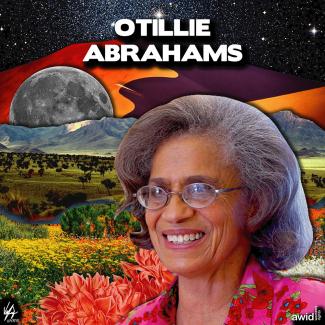
Ottilie fue una activista feminista, educadora y política de Namibia.
Fue una de las fundadoras de la Organización Popular del Sudoeste Africano (SWAPO), del Club Yu Chi Chan (un grupo armado revolucionario) y del Frente Nacional de Liberación del Sudoeste Africano (SWANLIF). También fue una de las fundadoras de la Asociación de Mujeres de Namibia y del Proyecto Niñas. A lo largo de su vida, Ottilie defendió el derecho a discutir, a pensar, a disputar y a exigir. Movilizó a las mujeres, organizó a estudiantes y docentes y criticó a otrxs camaradas por su elitismo y su corrupción.
Ottilie trabajó intensamente para desmantelar el patriarcado y para crear una democracia participativa concreta, feminista, transformadora y liberadora.
A menudo decía: «Descansaré cuando muera».
Luchar contra viento y marea: la historia de la victoria sin precedentes de la Red de Solidaridad
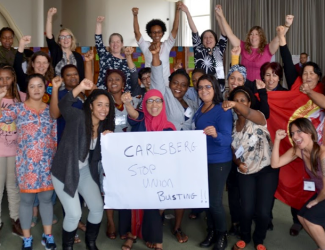
En enero de 2022, la Red de Solidaridad organizó una huelga con 400 trabajadorxs. ¿Su principal demanda? Aumentar los salarios. La huelga fue convocada después de meses de conversaciones fracasadas con el Ministerio de Asuntos Sociales de Georgia como parte de un conflicto laboral.
Después de semanas de protestar, negociar, hablar con la prensa, resistir represalias y soportar el frío del invierno georgiano, lxs trabajadorxs obtuvieron concesiones sin precedentes del gobierno: aumento de los salarios, prestaciones por maternidad, cobertura de los costos de transporte, el cese de despidos, la compensación por los días de huelga, y más.
La huelga no solo resultó en ganancias materiales, sino que también hizo que lxs trabajadorxs se sintieran unidxs y empoderadxs para defenderse y luchar por condiciones de trabajo dignas ahora y en el futuro. Se convirtieron en una fuente de inspiración para todxs lxs trabajadorxs del país.
Puedes leer más sobre su victoria aquí.
Expande tus fronteras. Lxs afiliadxs de AWID representan de forma creciente una intersección diversa y vibrante de feministas que trabajan, entre otras cosas, en temáticas asociadas a la tierra, los derechos de lxs trabajadorxs, los derechos sexuales y la autonomía corporal. Al afiliarte, puedes conectar tus luchas con las de otros movimientos.
Our thoughts are with the many people all around the world who are most affected by the repercussions of the global COVID-19 pandemic, especially marginalised communities that are historically oppressed.
This is an invitation for artists and creative activists to join a virtual space to connect, build community, and support each other through these challenging times. For this we have created a new Slack community to safely share insights, learnings, life-hacks, resources, advice, fears and anxieties, hopeful and joyful reminders, and in general chat about how we’re doing.
After filling out the form, we will send you a personal invitation to the community.

For those who are new to Slack, we’ll have orientation sessions and materials available after you sign up.
Since we are working in three languages (English, Spanish, French) we invite you to write in the language you are the most comfortable with and use online translation tools (Google Translate or others) to participate in discussions.
Please refer to the Community Guidelines
The co-creation of our feminist realities starts with ourselves and how we treat each other. We are dedicated to creating and protecting safe and supportive spaces for our communities both online and in person. We also consider that safe and welcoming spaces are co-owned and co-created. We expect our members to act in a manner that is ethical, responsible and consistent with the values of AWID and assume collective responsibility to ensure an atmosphere of mutual respect and solidarity.
As part of our ongoing discussions, we will offer weekly prompts in Slack with the intention to gently facilitate dialogue and inspire art-making processes. This can be an introspective process, but to make the most out of this community, we welcome you to interact with other community members and share thoughts as part of our discussions. The intention is to invite folks to respond freely and gradually by writing or making art in whatever way feels best.
We hope to have relevant and timely discussions with you, so we invite your suggestions and feedback. In general, the themes will center the experiences and perspectives of artists, writers, and creators -- and they will make space for folks to vision into and beyond the current global climate through the lens of feminist realities.
O tempo estimado para preencher o inquérito é 30 minutos.
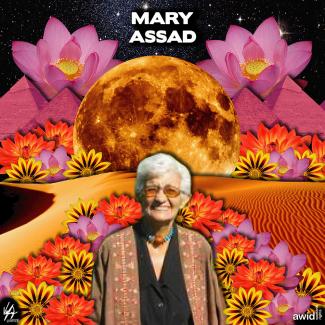
Experte en développement social et anthropologue de formation, Mary était surtout connue pour être une pionnière de la lutte contre les mutilations génitales féminines (MGF).
Née au Caire en 1922, les travaux de Mary en matière de développement ont commencé tôt, dès son adhésion à la YWCA (Association chrétienne des jeunes femmes). Mary était membre du Conseil œcuménique des Églises et s'est progressivement intéressée aux questions relatives à la santé des femmes. Sa longue lutte contre les MGF a porté ses fruits en 2008, lorsque l'Egypte a finalement criminalisé cette pratique.
On se souvient d'elle comme d'une mentor pour de nombreuses féministes et militant-e-s égyptien-ne-s
L’Organisation Sindicale des Travailleur·euses du Sexe (Organización Sindical de Trabajadoras del Sexo, OTRAS) est le premier syndicat de travailleur·euses du sexe de l'histoire de l'Espagne. Le syndicat est née de la nécessité de garantir les droits sociaux, juridiques et politiques des travailleur·euses du sexe dans un pays où les mouvements d'extrême droite se renforcent au jour le jour.
Après des années de lutte contre le système juridique espagnol et les groupes abolitionnistes du travail du sexe qui ont appelé à sa fermeture, OTRAS a finalement obtenu son statut légal de syndicat en 2021.
Son objectif? Décriminaliser le travail du sexe et garantir des conditions et des environnements de travail décents pour tous·tes les travailleur·euses du sexe.
Le syndicat représente plus de 600 travailleur·euses du sexe, dont beaucoup de personnes immigrantes, racialisées, trans, queer, ou de genre non-conforme.
Nous célébrons le droit de chacun·e à choisir son identité, ses relations, ses objectifs, son travail, ses rêves et ses plaisirs, et ce qu'iel fait de son esprit, de son corps et de son âme. Nous croyons qu'il est nécessaire de travailler à l'accès aux ressources, aux informations et à des environnements sûrs et favorables qui permettent d'atteindre cet objectif.
por Gabrielle Tesfaye
Cuando creé mi cortometraje animado The Water Will Carry Us Home [El agua nos llevará a casa], mi mente estaba conectada con un mundo mágico de resiliencia intrépida y sirenas ancestrales que transformaban sus cicatrices más profundas en una nueva generación de vida. Ambientada durante la época del comercio de esclavxs transatlántico, sentí el impulso de mostrar esta historia de esclavización africana en forma diferente de cómo se la ha mostrado siempre en pantalla. Quería dar a mis ancestrxs la conmemoración que nunca recibieron. Mi motivación era recuperar la historia que continúa pintándonos como víctimas impotentes. Esencialmente, quería contar la verdad. Recuperar y reimaginar nuestra historia y nuestra perspectiva significa sanar simultáneamente nuestros traumas generacionales, que existen todavía hoy. Este importante trabajo es lo que están haciendo hoy tantas mujeres a través del continente africano y la diáspora africana, encendiendo nuestras realidades feministas colectivas.
Para hacer la película investigué religiosamente y, en lo que estaba escrito, vi lo que faltaba. Muchas veces sentí que estaba chocando contra una pared, al tratar de encontrar algo que no estaba ahí, y fue en esos espacios anulados en los que me di cuenta de que lxs narradorxs de hoy están llenando esos vacíos. Encontré las historias más útiles en las artes visuales, la cinematografía y el folklore de la diáspora africana contemporáneos.
The Water Will Carry Us Home viajó por el mundo hasta los corazones de la diáspora africana. También me trajo aquí, como curadora de las proyecciones de películas de África y la diáspora de la iniciativa de AWID «Creación conjunta de realidades feministas». Para organizar esta colección de películas, busqué historias que fueran totalmente únicas, crudas, y representativas del poder feminista en acción. Esta serie de tres cortometrajes y un largometraje revela historias provenientes de muchas comunidades de África y la diáspora, incluyendo Etiopía, Uganda, la República Democrática del Congo, Sudáfrica y Kenia. Las películas reposicionan a las mujeres africanas como lo que verdaderamente son: personas autónomas y empoderadas a través de la lente sin filtros de su trabajo.
«Una narración increíblemente hermosa, atenta y de fina observación sobre la conexión entre África y su Diáspora, constituida por el comercio transatlántico de esclavxs. El universo visual que crea es magnífico... un eco de la fusión de las tradiciones espirituales y el tiempo no lineal que habla de cómo todavía seguimos experimentando los momentos del pasado que formaron “nuevos” mundos de negritud diaspórica.»
- Jessica Horn, activista feminista panafricana, escritora y co-creadora del sitio web the temple of her skin
«... una representación cruda y realmente única del poder feminista en acción.»
- Hers is Ours Collective, organizadorxs del Outsider Moving Art & Film Festival
El cortometraje documental Women Hold Up the Sky [Las mujeres sostienen el cielo], creada por la WoMin African Alliance, cuenta la historia de mujeres activistas de Uganda y la República Democrática del Congo que están reclamando activamente sus derechos sobre la tierra, que se ven amenazados en sus hogares por la minería y otras industrias extractivas. La película no solo expone la corrupción del extractivismo, sino que finalmente muestra lo que nos ha estado faltando en las pantallas: cómo las mujeres africanas de las bases se están organizando activamente, formulando estrategias y realizando análisis dentro de sus comunidades para crear alternativas centradas en las mujeres e impulsadas por la comunidad. Margaret Mapondera de WoMin explica con gran belleza que ellas son «las custodias de tierras, bosques, aguas, ríos y territorios, las formas en que las mujeres guardan y transmiten las historias/herstorias [historias de ellas] de nuestro pasado y nuestros futuros; las formas de ser, poderosas y transformadoras, que las mujeres corporizan en sus relaciones con las demás, con el medio ambiente, y consigo mismas.»
«Una pieza cinematográfica refrescante y muy necesaria, que muestra los muchos modos en los que las mujeres africanas se están uniendo para crear alternativas lideradas por mujeres e impulsadas por la comunidad... La lucha continúa, y las mujeres tienen la clave.»
- Hers is Ours Collective, organizadorxs del Outsider Moving Art & Film Festival
Pumzi, creada por la cineasta aclamada por la crítica, Wanuri Kahiu, vincula África con la ciencia ficción en torno al clima y el ambientalismo. Pumzi imagina un mundo futurista en el cual la humanidad ha sido forzada a establecerse en otro planeta. Si bien Pumzi parece superficialmente afrofuturista y nueva para África, Kahiu muestra la verdad: que la ciencia ficción y la fantasía siempre existieron en la narrativa africana, pero nunca fueron reconocidos. Kahiu crea un mundo donde las mujeres son las buscadoras de la verdad y las heroínas que nos abren el camino hacia un nuevo mundo, lo opuesto a las imágenes que colocan a lxs africanxs como víctimas de la guerra y la destrucción. Por el contrario, Pumzi escribe la narrativa de mujeres africanas que son sus propias salvadoras, que resuelven sus propios problemas y que no se detienen ante nada con tal de seguir las crípticas visiones que canalizan en sus sueños.
«Una pionera película africana de ciencia ficción, que sitúa a las mujeres como escribas del futuro y expande nuestras visiones sobre otros mundos, otros universos, que podríamos ocupar como africanxs. Este es siempre un ejercicio importante para imaginar nuestra salida de las crisis actuales.»
- Jessica Horn, activista feminista panafricana, escritora y co-creadora del sitio web the temple of her skin
El largometraje de nuestro programa, Finding Sally [Encontrando a Sally], está ambientado en la Etiopía de la década de 1970, en la época de la guerra del Terror Rojo, y documenta la impactante historia de Sally Dawit, la tía activista de la directora Tamara Mariam Dawit. A lo largo de la película, vemos el increíble viaje de Sally, como activista joven y valiente que transita uno de los períodos más violentos de la historia de Etiopía. La historia de Sally no solo revela la gravedad de esta época: refleja también su propia evolución personal como mujer joven. De manera intencional, Dawit realiza la película a través de la perspectiva de las mujeres, sin utilizar voces masculinas. Dado que la mayor parte de la historia etíope es contada por varones, esta potente historia preservó su realidad, honrando la perspectiva feminista. Dawit explica que «en las revoluciones y las guerras, las mujeres a menudo son incluidas solamente como la esposa de alguien o como la persona que cocinaba o escribía a máquina. Yo quería mirar el activismo relacionado con la revolución solo a través de los recuerdos y las voces de las mujeres.» Finding Sally manifiesta la recuperación de la historia que actualmente buscan lxs cineastas. Es un estallido de poder feminista y de nuestras realidades conectadas a través del tiempo.
«Sobre nosotrxs recae la responsabilidad de recordar a aquellas mujeres que nos precedieron y a su brillante trabajo, para que no queden en el olvido como los miles de mujeres ya han sido olvidadas, mientras libraban batallas justas. Sally es una de esas mujeres, y no debemos olvidarla jamás.»
- Hers is Ours Collective, organizadorxs del Outsider Moving Art & Film Festival
Inscríbete aquí para ver esta película del 18 al 22 de junio
Estas películas se han convertido en parte de mi propia psiquis, empoderándome para continuar construyendo alternativas poderosas, para lograr la justicia desde adentro. Afirman que soy una mujer en un mundo de mujeres, que sostienen los cielos y crean activamente realidades feministas indestructibles. Estas películas son más que historias de mujeres africanas: permiten identificarse con ellas, inspirarse en ellas, y son ejemplos de realidades feministas para todxs nosotrxs, en todo el mundo.
Facebook: @AWIDWomensRights
Instagram: @awidwomensrights
Twitter ENG: @awid
Twitter ES: @awid_es
Twitter FR: @awid_fr
LinkedIn: Association for Women's Rights in Development (AWID)
طبعاً! هذه الأسئلة اختيارية. نقدّر جداً حقكم بالسرية. الرجاء تعبئة الاستطلاع دون علاقة بقراركم/ن بمشاركة اسم المجموعة، المنظمة أو الحركة أو تفاصيل التواصل معكم/ن.
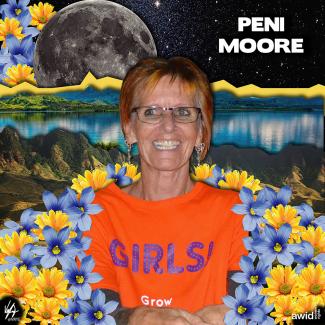
Peni was a radical feminist philosopher, poet, writer, playwright and songwriter.
As the first coordinator for the Fiji Women’s Rights Movement, she left a legacy that was infused with her deep concern for women’s human rights, justice and peace. Peni’s commitment to social, economic and ecological justice and her outstanding work gained local and international respect. She was one of the first in mainstream feminist movements in Fiji to work with, and beside LGBTQI people as a real accomplice, and provided practical assistance to the early Fiji sex worker movement.
Her colleagues described her as a formidable individual and visionary leader for change. She inspired many by her creativity and courage. Her work provided platforms for people to be heard, attain new skills and forge new pathways both at the personal and community level.