.
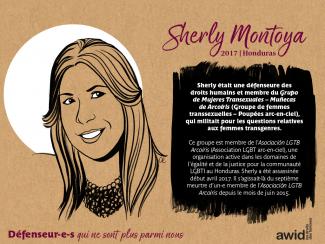
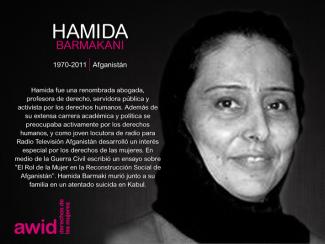
Defensoras de derechos humanos de todo el planeta defienden sus tierras, medios de subsistencia y sus comunidades ante las industrias extractivas y el poder corporativo. Ellas hacen frente a fuertes intereses económicos y políticos que promueven el robo de tierras, el desplazamiento de comunidades, la pérdida de los medios de subsistencia y la degradación del medioambiente.
El extractivismo es un modelo económico y político de desarrollo que mercantiliza la naturaleza y prioriza la ganancia por sobre los derechos humanos y el medioambiente. Arraigado en la historia colonial, refuerza las desigualdades sociales y económicas tanto a nivel local como global. Muchas veces, las mujeres negras, rurales e indígenas son las más afectadas por el extractivismo, y además son notablemente excluidas de la toma de decisiones. Desafiando estas fuerzas patriarcales y neocoloniales, las mujeres se alzan en defensa de los derechos, las tierras, las personas y la naturaleza.
Las defensoras que enfrentan a las industrias extractivas, experimentan una diversidad de riesgos, amenazas y violaciones, incluidas la criminalización, la estigmatización, la violencia y laintimidación. Sus historias dan cuenta de marcados aspectos de violencia sexual y de género. Entre los perpetradores se incluyen autoridades estatales y locales, las corporaciones, la policía, el ejército, las fuerzas paramilitares y de seguridad privada, y en algunos casos, sus propias comunidades.
AWID y la Coalición Internacional de Mujeres Defensoras de Derechos Humanos (WHRDIC por su sigla en inglés) tienen el placer de anunciar «Defensoras de derechos humanos confrontado al extractivismo y al poder corporativo»; un proyecto interregional de investigación que documenta las experiencias vividas por las defensoras de Asia, África y América Latina.
Alentamos a activistas, integrantes de movimientos sociales, la sociedad civil organizada, donantes y responsables de políticas públicas, a leer y utilizar estas producciones para el trabajo de incidencia, con fines educativos y como fuente de inspiración:
«Defensoras de derechos humanos confrontando a las industrias extractivas: un panorama de los riesgos críticos y las obligaciones en materia de derechos humanos» es un informe sobre políticas desde la perspectiva de género (en inglés, pronto disponible en español). Analiza las formas de violaciones y los tipos de perpetradores, hace referencia a las obligaciones relevantes en derechos humanos e incluye recomendaciones de políticas para los estados, corporaciones, la sociedad civil y donantes.
«Tejiendo la Resistencia a través de la Acción: Las Estrategias de las Defensoras de Derechos Humanos contra a las Industrias Extractivas» es una guía práctica que expone formas creativas y deliberadas de acción, tácticas exitosas e inspiradoras historias de resistencias.
El video «Defendiendo a las Personas y al Planeta: Mujeres Confrontando a las Industrias Extractivas» está protagonizado por defensoras de derechos humanos de África, Asia y América Latina, que comparten sus luchas por la tierra y la vida, y hablan de los riesgos y desafíos que enfrentan en su activismo.
«Desafiar al poder corporativo: Las luchas por los derechos de las mujeres, la justicia económica y de género» es un informe de investigación que explica los impactos del poder corporativo y ofrece ideas sobre estrategias de resistencia.
AWID reconoce con gratitud las invaluables contribuciones de cada Defensora de Derechos Humanos que ha sido parte de este proyecto. Esta guía ha sido posible gracias su generosidad y apertura al compartir sobre sus experiencias y lecciones. Su coraje, creatividad y resiliencia son una inspiración para todxs nosotrxs. ¡Muchas gracias!
نحن ندرك تمامًا العقبات العملية والضغوط العاطفية المرتبطة بالسفر الدولي، وخاصة من الجنوب العالمي. تعمل جمعية حقوق المرأة في التنمية مع TCEB (مكتب تايلاند للمؤتمرات والمعارض) لدعم المشاركين/ات في المنتدى في الحصول على التأشيرات. سيتم توفير المزيد من المعلومات حول هذه المساعدة للحصول على التأشيرة عند التسجيل، بما في ذلك معلومات الاتصال الخاصة بمكان وكيفية التقديم.
.
Elina est une jeune avocate des droits humains afro-dominicaine et féministe intersectionnelle, engagée à utiliser sa voix et ses compétences pour construire un monde plus juste, empathique et inclusif. Elle a commencé la faculté de droit à 16 ans, convaincue que cela lui donnerait les outils nécessaires pour comprendre et promouvoir la justice sociale. Après un JD (doctorat en droit) en République dominicaine, elle a poursuivi un LL.M. (maîtrise en droit) en droit international public et droits humains au Royaume-Uni en tant que boursière Chevening. Seule femme latino-caribéenne de sa classe, elle a obtenu son diplôme avec distinction.
Elina a travaillé à l'intersection des droits humains, du genre, de la migration et de la politique et ceci à plusieurs niveaux : des instances étatiques aux collectifs de base aux organisations internationales. Elle a aidé à plaider des cas de violence sexiste devant la Cour interaméricaine des droits de l'homme. En tant que membre du Groupe consultatif des jeunes du FNUAP, elle a contribué au renforcement des droits sexuels et reproductifs en République dominicaine. Elle a codirigé la première campagne d'Amnesty International sur les droits des travailleur.euse.s du sexe dans les Amériques, développant des partenariats solides avec des organisations dirigées par des travailleur.euse.s du sexe et utilisant la position d'Amnesty pour amplifier la voix des femmes défenseurs des droits humains et des travailleur.euse.s du sexe. Elina fait partie de Foro Feminista Magaly Pineda et de la Global Shapers Community. Elle parle espagnol, français et anglais.
Grâce à la richesse de son expérience, Elina apporte à l’AWID de solides compétences de gouvernance et de planification stratégique et un savoir-faire éprouvé en matière de mécanismes des Nations Unies et des droits humains régionaux. Elle affirme également très clairement sa détermination à continuer de faire de l’AWID une organisation inclusive pour toutes les femmes, et particulièrement les jeunes féministes et celles des Caraïbes. C’est avec la diversité de ces apports qu’Elina rejoint une sororité de féministes internationales qui ont du mordant. Elle pourra continuer à y développer son leadership féministe, pour ne plus jamais se sentir seule dans cette voie.
Related content
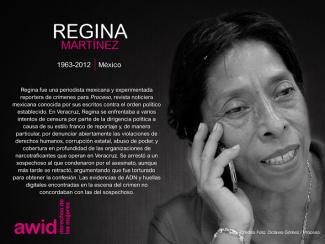
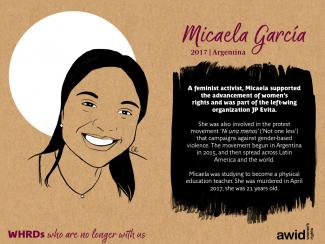
TeleSUR: Outrage Shakes Argentina After Murder of Anti-Femicide Activist
Maria is a graphic designer and visual communicator. Maria has worked with NGOs and Human Rights like Profamilia and OXFAM. As a woman of the Global South, she feels especially called to use her skills to work with organizations that help protect the wellbeing, as well the rights of millions of girls and women in Latin America.
For decades, feminist scholars and advocates have articulated important concepts related to gender to understand and challenge oppression and discrimination. Those concepts have now become the target of anti-rights actors who claim that oppressive patriarchal gender roles are “common sense”, strategically painting all other ideas, cultural norms, and forms of social life as a dangerous, conspirative ideology.
Read our Brief on “Gender Ideology” Narratives: A Threat To Human Rights
📅Lundi 11 mars
🕒16 h 30 - 18 h HNE
Organisateurs : AWID, IJSC et NAWI
🏢 Church Center des Nations Unies, 777 United Nations Plaza, New York, 11e étage
(Interprétation en français et en espagnol disponible)
Leila es una líder, defensora y consultora feminista transnacional, con más de veinticinco años de experiencia en la promoción de los derechos humanos, la igualdad de género y la justicia sexual y reproductiva en salud, derechos y justicia a nivel local y global. Leila nació en Argelia y se educó en Estados Unidos, Francia y Marruecos; a lo largo de su carrera profesional, ha vivido y trabajado en África, Europa y Estados Unidos.
Durante más de cinco años fue Vicepresidenta de Programas en el Fondo Global de Mujeres (GFW), supervisando el otorgamiento estratégico de subvenciones, el fortalecimiento de los movimientos, la incidencia global y las colaboraciones filantrópicas. En GFW duplicó las subvenciones otorgadas a más de 17 millones USD, inauguró el trabajo sobre movimientos feministas y de género en las crisis, creó un programa para niñas adolescentes liderado por un consejo asesor de niñas, y dirigió su trabajo de incidencia filantrópica. Antes de eso, entre 2002 y 2016 se desempeñó en el equipo de dirección de Ipas, donde publicó extensamente sobre derecho al aborto y justicia, lideró tareas de incidencia globales, y se asoció con grupos feministas que trabajan sobre gestión autónoma, movilización comunitaria y reducción de estigmas respecto de la integridad corporal y de los derechos sexuales y reproductivos. Mientras vivió en África del Norte, cofundó una empresa consultora feminista interseccional, Strategic Analysis for Gender Equality (SAGE), que trabajaba en las intersecciones de los derechos económicos, de género y sexuales y reproductivos, y dirigió el trabajo nacional, regional y mundial sobre género de la oficina de El Cairo de la Fundación Ford durante cinco años.
Leila tiene una vasta experiencia en educación popular, incidencia, organizaciones sin fines de lucro, juntas de desarrollo, filantropía, y monitoreo y evaluación. Es una hábil comunicadora comprometida con la utilización del enfoque interseccional para priorizar y difundir las voces y las experiencias de las personas más marginadas. Ha recibido la beca «Op-ed Public Voices» de la Fundación Ford, y fue becaria Fulbright en Marruecos. Sus publicaciones cubren una amplia gama de tópicos, incluyendo enfoques feministas y decoloniales a la filantropía, la promoción de los derechos humanos de las mujeres en contextos mayoritariamente musulmanes, estrategias feministas para impulsar la justicia reproductiva, el fomento de los abortos autogestionados, y la lucha contra los estigmas y la discriminación.
Actualmente Leila se desempeña como Copresidenta de la Junta Directiva del Centro por los Derechos Constitucionales (CCR), e integra la Junta Directiva del Highlander Research and Education Center. Es también funcionaria del consejo de rendición de cuentas del Numun Feminist Technology Fund y del comité asesor de la African Women’s Human Rights Defenders Platform. Anteriormente ha integrado las Juntas de la SisterSong Women of Color Reproductive Justice Collective, de la Red Mundial de Mujeres por los Derechos Reproductivos (WGNRR), del Fondo Global de Mujeres (GFW), del Fondo de Acción para el Aborto Seguro (SAAF), y del Proyecto de Tecnologías para la Salud Reproductiva (RHTP). Fue elegida Tesorera e integrante del Comité Ejecutivo de la Junta Directiva de Prospera, y del Comité de Dirección de Fenomenal Funds por cuatro años. Leila tiene una Maestría en Salud Pública, y una Maestría en Estudios de Medio Oriente y Norte de África; ha estudiado derecho islámico en Marruecos, y cursó estudios doctorales en sociología en Francia. Ha estudiado árabe y alemán, habla francés e inglés en forma fluida.
ECONOMIAS DE CUIDADOSAGROECOLOGÍA Y SOBERANÍA ALIMENTARIACOOPERATIVISMO FEMINISTASINDICALISMO FEMINISTA

Jour 3
Alexandra is an anglo-colombian feminist with over 20 years of experience in local, national and international HIV and sexual and reproductive health and rights programming. She has extensive experience in resource mobilization and donor relations with private philanthropic foundations and multilateral agencies on behalf of international, national and local NGOs, predominantly in Latin America and the Caribbean. Prior to AWID, Alexandra worked at Fundación Si Mujer, a feminist abortion provider and educator in Colombia, RedTraSex and the International HIV/AIDS Alliance.
Alexandra has a BA in International Relations and Development Studies from Sussex University and a MSc in Public Health from the London School of Hygiene and Tropical Medicine. In rare moments when she is not working or parenting, she loves to swim, eat and has recently begun to play Zelda: Breath of the Wild with her son.
 |
 |
 |
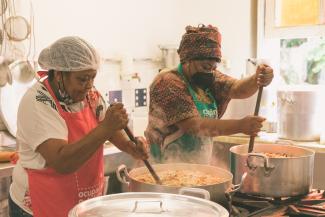
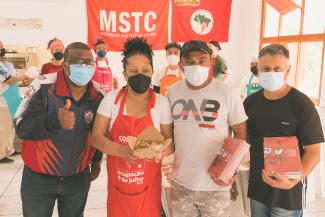 Femmes et collaborateurs à la cuisine de l'Ocupação 9 de Julho |
 |