.
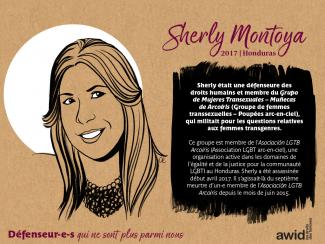
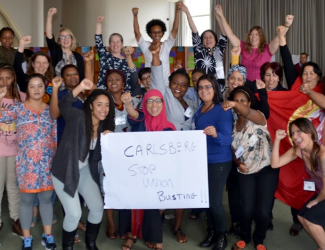
Defensoras de derechos humanos de todo el planeta defienden sus tierras, medios de subsistencia y sus comunidades ante las industrias extractivas y el poder corporativo. Ellas hacen frente a fuertes intereses económicos y políticos que promueven el robo de tierras, el desplazamiento de comunidades, la pérdida de los medios de subsistencia y la degradación del medioambiente.
El extractivismo es un modelo económico y político de desarrollo que mercantiliza la naturaleza y prioriza la ganancia por sobre los derechos humanos y el medioambiente. Arraigado en la historia colonial, refuerza las desigualdades sociales y económicas tanto a nivel local como global. Muchas veces, las mujeres negras, rurales e indígenas son las más afectadas por el extractivismo, y además son notablemente excluidas de la toma de decisiones. Desafiando estas fuerzas patriarcales y neocoloniales, las mujeres se alzan en defensa de los derechos, las tierras, las personas y la naturaleza.
Las defensoras que enfrentan a las industrias extractivas, experimentan una diversidad de riesgos, amenazas y violaciones, incluidas la criminalización, la estigmatización, la violencia y laintimidación. Sus historias dan cuenta de marcados aspectos de violencia sexual y de género. Entre los perpetradores se incluyen autoridades estatales y locales, las corporaciones, la policía, el ejército, las fuerzas paramilitares y de seguridad privada, y en algunos casos, sus propias comunidades.
AWID y la Coalición Internacional de Mujeres Defensoras de Derechos Humanos (WHRDIC por su sigla en inglés) tienen el placer de anunciar «Defensoras de derechos humanos confrontado al extractivismo y al poder corporativo»; un proyecto interregional de investigación que documenta las experiencias vividas por las defensoras de Asia, África y América Latina.
Alentamos a activistas, integrantes de movimientos sociales, la sociedad civil organizada, donantes y responsables de políticas públicas, a leer y utilizar estas producciones para el trabajo de incidencia, con fines educativos y como fuente de inspiración:
«Defensoras de derechos humanos confrontando a las industrias extractivas: un panorama de los riesgos críticos y las obligaciones en materia de derechos humanos» es un informe sobre políticas desde la perspectiva de género (en inglés, pronto disponible en español). Analiza las formas de violaciones y los tipos de perpetradores, hace referencia a las obligaciones relevantes en derechos humanos e incluye recomendaciones de políticas para los estados, corporaciones, la sociedad civil y donantes.
«Tejiendo la Resistencia a través de la Acción: Las Estrategias de las Defensoras de Derechos Humanos contra a las Industrias Extractivas» es una guía práctica que expone formas creativas y deliberadas de acción, tácticas exitosas e inspiradoras historias de resistencias.
El video «Defendiendo a las Personas y al Planeta: Mujeres Confrontando a las Industrias Extractivas» está protagonizado por defensoras de derechos humanos de África, Asia y América Latina, que comparten sus luchas por la tierra y la vida, y hablan de los riesgos y desafíos que enfrentan en su activismo.
«Desafiar al poder corporativo: Las luchas por los derechos de las mujeres, la justicia económica y de género» es un informe de investigación que explica los impactos del poder corporativo y ofrece ideas sobre estrategias de resistencia.
AWID reconoce con gratitud las invaluables contribuciones de cada Defensora de Derechos Humanos que ha sido parte de este proyecto. Esta guía ha sido posible gracias su generosidad y apertura al compartir sobre sus experiencias y lecciones. Su coraje, creatividad y resiliencia son una inspiración para todxs nosotrxs. ¡Muchas gracias!
لمزيد من الأسئلة، يرجى استخدام نموذج الاتصال. سنستمر في تحديث هذه الوثيقة بناءً على الاستفسارات التي نتلقاها منك!
.
Juhi es una entusiasta de las tecnologías. Posee una licenciatura en Ingeniería Informática de la Universidad Tecnológica de Gujarat y formación de posgrado en Telecomunicaciones Inalámbricas y Gestión de Proyectos del Instituto Universitario Humber. Apasionada de la resolución de problemas y de mantenerse a la vanguardia en el panorama tecnológico en constante evolución, Juhi se ha encontrado recorriendo diversas industrias como técnica en Tecnologías de la Información. Ha tenido oportunidad de aplicar sus competencias técnicas en distintos entornos, siempre abrazando los nuevos desafíos con entusiasmo. Más allá de los códigos y los circuitos, le encantan las aventuras de la vida. Explorar nuevos lugares y culturas es para ella una bocanada de aire fresco. Ya sea que se trate de descubrir alguna joya oculta en la ciudad, de probar algún plato exótico o de embarcarse en algún deporte de aventura, Juhi siempre está predispuesta a vivir nuevas experiencias.
5 pm, tonight.


The handwriting on the invitation—
coily and brusque—
I’ve seen it five times in five years.
My body rouses,
feverish.
I need to fuck myself first.
The tide is high tonight and
I get
off.
I want to slow everything down,
taste time and space, etch them
into memory.
*
I’ve never been to this part of town before.
Unknown places excite me,
the way limbs and veins and bones
resist decay,
their fate uncertain.
At the door, I think twice.
The hallway is pitch black
and it makes me pause.
On the other side,
a portal of smell and color
opens like a curse,
into a sunny afternoon.

The breeze
makes my hair dance,
piques its curiosity,
compels it to move.
I hear the wheelchair whirring,
shaping the shadows.
Then I see them:
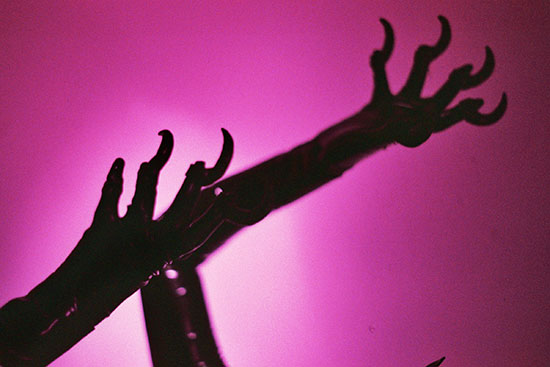
a lynx face
and a body like mine
and I find myself desiring both
again.
The creature motions me closer.
Their gestures write a sentence;
as I move toward them,
I notice its details:
wither, flesh, bliss
On their command, the vine that covers the hallway
hugging warm stones,
snakes up the wall.
It becomes a verb,
“to climb,”
and I’m reorientated when their claws point
to the vine-bed in the center.
I hear the wheels behind me,
then that sound.
It reverberates
like no other.
Their long black wings
elevate toward the ceiling
then they lunge forward.
The feline vision scans every detail,
every change,
every longing.
Can desire liquefy your muscles?
Can it act sweeter than the strongest
of tranquilizers?


A lynx sews the world
across our differences,
weaving lace around my knees.
Can desire crush the distance of the world,
compressing the seconds?
They come closer still,
lynx eye meeting human eye,
sniffing the air,
turning body into
urgency.
They beat down their wings.
Stirred,
the vines tangle around my waist/waste.
Their tongue thins time,
shifting grounds,
soothes, with their magic,
what stirs beneath.
I see the world in you, and the
world is exhausted.
Then they plead:
Let me feast on you.
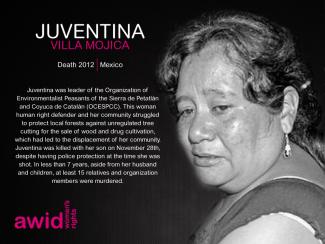
📅Monday, March 11
🕒4:30 - 6pm EST
Organisers: AWID, IJSC and NAWI
🏢 Church Center of the United Nations, 777 United Nations Plaza, New York, 11th Floor
(French and Spanish interpretation available)
Related content
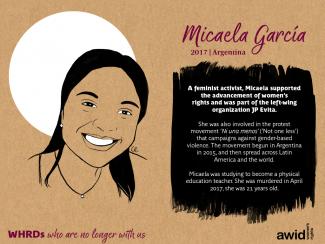
TeleSUR: Outrage Shakes Argentina After Murder of Anti-Femicide Activist
Jessica est une artiste-activiste queer de Toronto, au Canada, mais qui vit actuellement en Bulgarie. Elle a plus de 15 ans d'expérience dans la riposte au VIH, travaillant aux intersections du genre et du VIH auprès de populations clés (travailleurs·ses du sexe, femmes consommatrices de drogues, communautés LGBTQI, personnes incarcérées et, bien sûr, personnes vivant avec le VIH). Jessica aime créer du mouvement et réfléchir/entreprendre/élaborer des stratégies sur des interventions basées sur les arts. L'un des projets amusants qu'elle a lancé en 2013 était LOVE POSITIVE WOMEN (Femmes positives à l’amour), qui implique plus de 125 groupes et organisations communautaires du monde entier, du 1er au 14 février, pour célébrer les femmes vivant avec le VIH dans leurs communautés.
Ce qui m’a aidée, c’est que j’adorais le travail qui consiste à aller dans les terres et à documenter les connaissances des gens. Donc j’ai quitté le confort...
Day 3
Leila is a transnational feminist leader, strategist, and advisor with over 25 years of organizing, advocacy and philanthropic experience advancing human rights, gender equality, and sexual and reproductive rights and justice. She was born in Algeria and educated in the U.S., France, and Morocco; over her professional career, she has lived and worked in forty countries across Africa, Europe, Latin America and Asia. Leila currently serves as a Senior International Fellow at the Asfari Institute for Civil Society and Citizenship at the American University of Beirut in Lebanon and as Senior Strategist for various feminist movements and organizations as well as the the Urgent Action Fund-Africa and Trust Africa on an initiative on Reimagining Feminist and Pan-African Philanthropies.
From 2017-2023, Leila held the position as Vice-President of Programs at Global Fund for Women where she oversaw its strategic grantmaking, movement-strengthening, global advocacy and philanthropic collaborations. At GFW, she doubled its grantmaking to over $17 million, launched its feminist and gender-based movements and crises work, created an adolescent girls program led by a girls’ advisory council and led its philanthropic advocacy work. Prior to that she served on the senior leadership team of Ipas from 2002 to 2016 where she published extensively on abortion rights and justice, lead global advocacy efforts and partnered with feminist groups working on self-management, community strategies and stigma reduction around bodily integrity and sexual and reproductive rights.
Leila is currently researching shifts in the philanthropic sector including recognizing non-institutional practices of giving resources in the Global South and efforts to decolonize practices in the Global North. She has written extensively on the political nature of veiling across North Africa and the Middle East, abortion practices in majority Muslim contexts and feminist approaches to sexual and reproductive health, rights and justice.
Leila holds an MPH in public health and a MA in Middle Eastern and North African Studies, studied Islamic law in Morocco and pursued doctoral studies in sociology in France. She studied Arabic and speaks French and English fluently. She is a mother of two feminist young women, an avid scuba diver, mountain bike rider, skier, and outdoor enthusiast.
بالنسبة إليّ، هذه الأنواع من الدردشات كانت ضمن تعابير الحبّ التي أتاحت لي الحياة أن أستمتع بها حديثًا فقط. ما كنت أعرف أن هذه الأشكال الأخرى ممكنة – تلك التي توجَد خارج نطاق ورشات العمل، أو أماكن الناشطين أو غرف الصفّ أو أماكن العمل.
Thanks to our global feminist community! From May to August 2024, nearly 1,200 organizations working for Women's rights, gender justice, and LBTQI+ equality shared their experiences in the WITM survey. The results offer a unique picture of how feminist movements are resourced and where gaps remain.
Culturellement nomade, née à Hong Kong et enracinée dans un héritage turco-pakistanais, l'amour de Fatima pour les récits - tant pour les lire que pour les cocréer - a alimenté sa passion pour l'activisme à travers la communication. Forte de sa formation en journalisme, Fatima a travaillé pendant 7 ans dans les domaines de la communication numérique et médiatique avec des ONG qui offrent des opportunités d'éducation et de l’aide juridique aux réfugié·e·s et demandeur·se·s d'asile, ainsi qu'avec le mouvement féministe musulman qui applique une perspective féministe et fondée sur les droits dans la compréhension et la quête d’égalité et de justice au sein de la tradition juridique musulmane. Elle rédige régulièrement des tribunes sur les questions féministes dans les pays du Sud.
Grâce à la narration dans cette ère ultra digitale des réseaux sociaux, Fatima continue de collaborer avec des animateur·rice·s communautaires et des activistes de terrain pour créer du contenu audiovisuel dans le but de cultiver des ponts de compréhension vers la libération collective et la décolonisation. Les jours où elle ne travaille pas, elle regarde attentivement des films féministes indépendants venant d’Iran, du Maroc et du Pakistan, et les autres jours elle interprète de la poésie orale avec ses camarades à Kuala Lumpur.
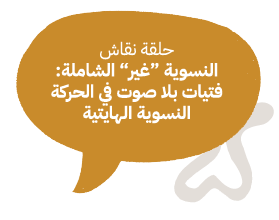
حلقة نقاش | النسوية “غير” الشاملة: فتيات بلا صوت في الحركة النسوية الهايتية
مع نايكي ليدان وفيدورا بيير-لوي
