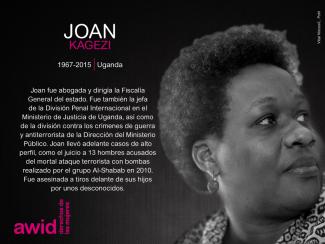
Joan Kagezi
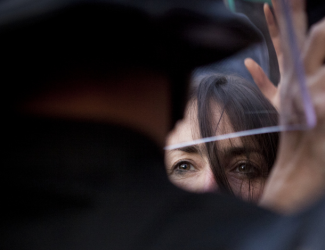
WHRDs are self-identified women and lesbian, bisexual, transgender, queer and intersex (LBTQI) people and others who defend rights and are subject to gender-specific risks and threats due to their human rights work and/or as a direct consequence of their gender identity or sexual orientation.
WHRDs are subject to systematic violence and discrimination due to their identities and unyielding struggles for rights, equality and justice.
The WHRD Program collaborates with international and regional partners as well as the AWID membership to raise awareness about these risks and threats, advocate for feminist and holistic measures of protection and safety, and actively promote a culture of self-care and collective well being in our movements.
WHRDs are exposed to the same types of risks that all other defenders who defend human rights, communities, and the environment face. However, they are also exposed to gender-based violence and gender-specific risks because they challenge existing gender norms within their communities and societies.
We work collaboratively with international and regional networks and our membership
We aim to contribute to a safer world for WHRDs, their families and communities. We believe that action for rights and justice should not put WHRDs at risk; it should be appreciated and celebrated.
Promoting collaboration and coordination among human rights and women’s rights organizations at the international level to strengthen responses concerning safety and wellbeing of WHRDs.
Supporting regional networks of WHRDs and their organizations, such as the Mesoamerican Initiative for WHRDs and the WHRD Middle East and North Africa Coalition, in promoting and strengthening collective action for protection - emphasizing the establishment of solidarity and protection networks, the promotion of self-care, and advocacy and mobilization for the safety of WHRDs;
Increasing the visibility and recognition of WHRDs and their struggles, as well as the risks that they encounter by documenting the attacks that they face, and researching, producing, and disseminating information on their struggles, strategies, and challenges:
Mobilizing urgent responses of international solidarity for WHRDs at risk through our international and regional networks, and our active membership.
Il n'y a rien de tel que d'être dans un espace partagé, d'échanger des énergies corporelles, de regarder dans les yeux de quelqu'un et de tisser des liens, de voir le monde et de faire quelque chose ensemble. Des événements comme le Forum sont parmi les plus forts du mouvement féministe mondial...
- Jac s m Kee, Malaisie
«Mientras estaba en la primera línea de la protesta, fui sometida a violencia sexual, a lesiones físicas y a otras formas de violencia. Pero no me detendré hasta que logremos pleno gobierno civil en Sudán. Debemos impedir la militarización del Estado. Nuestros cuerpos no deben seguir siendo tratados como campos de batalla»
dijo Amal,1 una manifestante de 23 años.2
Durante los últimos cuatro años, las mujeres lideraron la revolución en Sudán. Su liderazgo no fue solo callejero, sino que constituyó el poder que impulsó la resistencia constante en todos los niveles. Las mujeres y las jóvenes feministas se convirtieron en la conciencia alerta del movimiento de cambio y democratización sudanés. Desde la primera protesta del 13 de diciembre de 2018 contra el régimen anterior, en la ciudad de Aldmazein, en el área de conflicto del Nilo Azul, las jóvenes estudiantes fueron las voces que demandaron el fin de la dictadura de los militares y los Hermanos Musulmanes, que ya lleva treinta años en el poder.
El movimiento feminista, liderado por mujeres de entre 16 y 35 años, ha entablado una revolución dentro de la revolución en Sudán durante los últimos cuatro años de lucha ininterrumpida. Las potentes voces de las jóvenes que ocupan espacios en las calles, las redes sociales, la sociedad civil y las organizaciones políticas se elevaron lo suficiente como para reconfigurar la opinión pública y desafiar las normas sociales. Por primera vez en la historia de Sudán, las discusiones sobre violencia sexual y de género y sobre los tabúes de la violencia doméstica y los procesos de toma de decisiones dominados por los hombres se convirtieron en debates generalizados. Los equipos de fútbol de mujeres designaron voceras ante los comités de resistencia, y los sindicatos profesionales liderados por mujeres son parte de la expresión de la nueva ola del movimiento feminista de Sudán. El logro más importante es que las jóvenes se identifican como feministas en forma orgullosa y pública, en un país regido por el fundamentalismo islámico durante tres décadas. Los jóvenes varones que apoyan el activismo feminista -y se identifican como feministas- son otra señal de progreso notable.
Bajo el actual régimen del golpe militar, las jóvenes que lideran estas iniciativas y los grupos de mujeres que trabajan en el territorio no pueden mencionarse aquí debido a varios problemas de seguridad. Pero su resiliencia, su fuerza y su valentía serán incluidas en los libros de historia. Las audaces jóvenes que encabezan la resistencia en las calles y detrás de las pantallas, y que trabajan en diferentes profesiones y áreas de activismo están dando forma al futuro de Sudán. Las jóvenes feministas de Sudán están creando nuevos espacios para que las narrativas y los discursos feministas reestructuren la distribución del poder a nivel político, económico y social.
A pesar de la inmensa violencia, del resurgimiento del islamismo fundamentalista, de la militarización y de la reducción de los espacios cívicos, las activistas feministas de Sudán se mantienen arraigadas en su sororidad. Siguen siendo una gran inspiración para los movimientos feministas de todo el mundo.
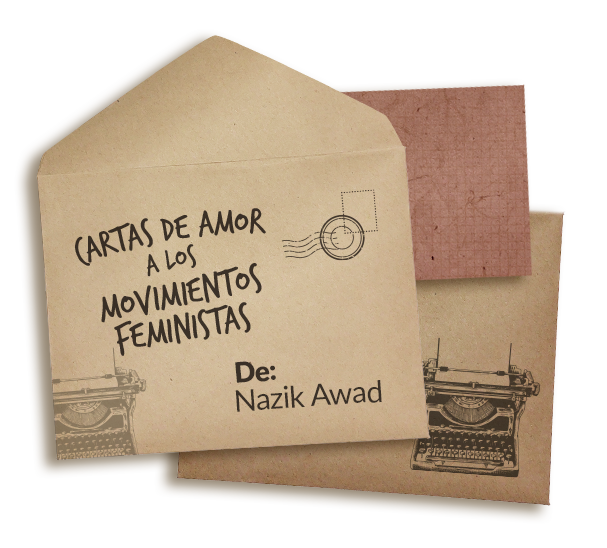
Nazik Awad
1 «Amal» es un seudónimo utilizado para proteger a la joven activista citada.
2 Desde 2018, Sudán vive en una revolución constante. Una nueva ola opositora arrancó a partir del golpe militar del 25 de octubre de 2021.
A personal investigation into the mysterious life of the director's Aunt Sally, an Ethiopian aristocrat-turned-communist-rebel who disappeared after the revolution that lead to the overthrow of Emperor Haile Selassie.
June 23 at 12:30pm EST on IG Live
A Critical Dialogue on Gender Equality and Human Rights
✉️ Online registration available. Register here
📅 Friday, March 21, 2025
🕒 2.30pm EST
🏢 Church Center of the United Nations, 11th Floor. 777 United Nations Plaza, New York, NY 10017
🎙️AWID speaker: Anissa Daboussi, Manager, Advancing Universal Rights and Justice team
Organizer: IWRAW AP, OURs, AWID, SRI
Each Forum takes place in a different region, and it is time for the AWID Forum to come back to Asia! We visited many countries in the region, consulted feminist movements, and conducted detailed assessments of logistics, accessibility, safety, visas and more. Eventually, the AWID Board enthusiastically approved Bangkok, Thailand, as the best option. We are excited to come back to Bangkok, where we held the AWID Forum in 2005.

When thousands of feminists come together, we create a sweeping force of solidarity that has the power to change the world. The AWID Forum will be a moment for us to rest and heal together, connect across borders, and discover brave new strategic directions.
The date and location will be announced next year, as soon as we can. We’re excited and we know you’re excited too. Stay tuned!
Make sure to follow us on social media and subscribe to our mailing list to stay informed!
some text some text some text some text some text some text some text some text some text some text some text some text

Be it core funding, programmes & projects or rapid response/ emergency grants.
Por favor, calcula los costos de viaje a Bangkok, alojamiento y viáticos, visado, cualquier necesidad de accesibilidad y gastos incidentales, además de la tarifa de inscripción que se anunciará próximamente. Los hoteles en la zona de Sukhumvit en Bangkok tienen un rango de precios de USD$50 a $200 por noche en ocupación doble.
Lxs afiliadxs de AWID reciben un descuento al registrarse, por lo tanto, si aún no te has sumado a la membresía, te invitamos a considerar unirte y formar parte de nuestra comunidad feminista global.
Esta historia es sobre la manera en que un grupo cada vez más diverso de feministas del Pacífico se organizaron a lo largo de los años para asistir a los Foros de AWID, y el modo en que ese proceso lxs transformó en forma personal, como organizaciones y como movimiento a través de lo que aprendieron, descubrieron y experimentaron. Ilustra la importancia de los Foros como espacio que permitió que una región que tiende a ser marginada o ignorada a nivel global pueda construir una presencia sólida en el movimiento feminista, que luego es replicada en otros espacios internacionales de derechos de las mujeres.
Anti-rights actors adopt a double strategy. As well as launching outright attacks on the multilateral system, anti-rights actors also undermine human rights from within. Anti-rights actors engage with the aim of co-opting processes, entrenching regressive norms, and undermining accountability.
ECONOMIAS DE CUIDADOSAGROECOLOGÍA Y SOBERANÍA ALIMENTARIACOOPERATIVISMO FEMINISTASINDICALISMO FEMINISTA
Nous avons parfaitement conscience des obstacles pratiques et de la détresse émotionnelle générés par les voyages internationaux, en particulier pour les personnes originaires des pays du Sud mondial. L'AWID collabore avec le TCEB (Thailand Convention and Exhibition Bureau) afin d'aider les participant·e·s au Forum à obtenir un visa. De plus amples informations concernant l'aide à l'obtention de visas seront disponibles au moment de l'inscription, y compris les coordonnées indiquant où et comment déposer votre demande.
De nombreuses participantes vivent les Forums de l’AWID comme un espace de liberté unique où elles sont accueillies et célébrées, telles qu’elles sont. Dans un monde où même les féministes les plus privilégiées ont souvent du mal à s’intégrer, pour celles dont l’identité est criminalisée ou condamnée dans leur contexte quotidien, cette expérience de liberté et de célébration peut être profondément transformatrice (et réparatrice). L’histoire de la façon dont OluTimehin Kukoyi - qui participait pour la première fois - a vécu le Forum des féminismes noirs et le Forum de l’AWID à Bahia (2016) illustre bien cela.
En esta historieta de la ilustradora Sophia, se puede seguir a nuestra superheroína feminista que recupera las narrativas capturadas por lxs actores anti-derechos en distintos lugares y salva al mundo.