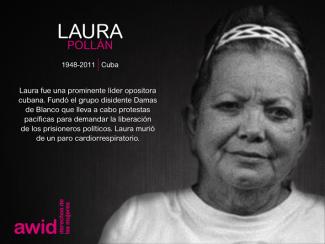
Laura Pollán
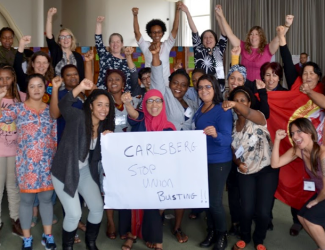
Women human rights defenders (WHRDs) worldwide defend their lands, livelihoods and communities from extractive industries and corporate power. They stand against powerful economic and political interests driving land theft, displacement of communities, loss of livelihoods, and environmental degradation.
Extractivism is an economic and political model of development that commodifies nature and prioritizes profit over human rights and the environment. Rooted in colonial history, it reinforces social and economic inequalities locally and globally. Often, Black, rural and Indigenous women are the most affected by extractivism, and are largely excluded from decision-making. Defying these patriarchal and neo-colonial forces, women rise in defense of rights, lands, people and nature.
WHRDs confronting extractive industries experience a range of risks, threats and violations, including criminalization, stigmatization, violence and intimidation. Their stories reveal a strong aspect of gendered and sexualized violence. Perpetrators include state and local authorities, corporations, police, military, paramilitary and private security forces, and at times their own communities.
AWID and the Women Human Rights Defenders International Coalition (WHRD-IC) are pleased to announce “Women Human Rights Defenders Confronting Extractivism and Corporate Power”; a cross-regional research project documenting the lived experiences of WHRDs from Asia, Africa and Latin America.
"Women Human Rights Defenders confronting extractive industries: an overview of critical risks and Human Rights obligations" is a policy report with a gender perspective. It analyses forms of violations and types of perpetrators, quotes relevant human rights obligations and includes policy recommendations to states, corporations, civil society and donors.
"Weaving resistance through action: Strategies of Women Human Rights Defenders confronting extractive industries" is a practical guide outlining creative and deliberate forms of action, successful tactics and inspiring stories of resistance.
The video “Defending people and planet: Women confronting extractive industries” puts courageous WHRDs from Africa, Asia, and Latin America in the spotlight. They share their struggles for land and life, and speak to the risks and challenges they face in their activism.
Challenging corporate power: Struggles for women’s rights, economic and gender justice is a research paper outlining the impacts of corporate power and offering insights into strategies of resistance.
AWID acknowledges with gratitude the invaluable input of every Woman Human Rights Defender who participated in this project. This project was made possible thanks to your willingness to generously and openly share your experiences and learnings. Your courage, creativity and resilience is an inspiration for us all. Thank you!
@shalinikonanur sharing a comment by her colleague debbie @salco "we can talk about shattering the glass ceiling, but we have to talk about who are sweeping those broken glasses?" challenging the #G7 to truly see who's vulnerable domestically & globally #W7Canada @kramdas @AWID pic.twitter.com/1rs0SpLYHp
— Tenzin Dolker cyclone (@T_Dolker) 25 de abril de 2018
Нет, мы очень ценим вашу работу, но в данный момент мы не собираем информацию об отдельных активистках(-тах).
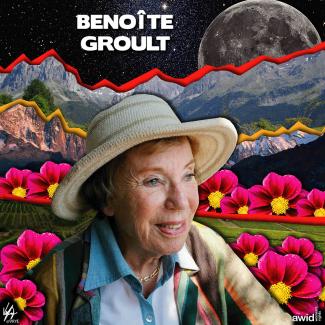
Benoîte fue una periodista, escritora y activista feminista francesa.
Benoîte publicó más de 20 novelas y numerosos ensayos sobre feminismo.
En 1975 se publicó su primer libro, Ainsi Soit-Elle (que podría traducirse «Como ella es»). En él analizaba la historia de los derechos de las mujeres, así como la misoginia y la violencia contra las mujeres.
En su último libro, Ainsi Soit Olympe de Gouges, analizaba los derechos de las mujeres durante la Revolución Francesa, centrándose en la pionera feminista francesa. Olympe de Gouges fue guillotinada en 1793 por desafiar la autoridad masculina; dos años antes había publicado una declaración sobre los derechos de las mujeres («Déclaration Des droits de la Femme et de la Citoyenne»).
Nous avons le plaisir de vous présenter Sopo Japaridze, féministe féroce, dirigeante syndicale et présidente du syndicat de service indépendant Réseau de Solidarité.
Elle a quitté le pays très jeune pour les États-Unis, où elle est devenue politiquement active en tant qu'organisatrice syndicale. Elle a toujours gardé la Géorgie à l'esprit pendant tout ce temps, jusqu'au jour où, 20 ans plus tard, elle a décidé de revenir.
La confédération syndicale géorgienne existante à cette époque était loin d'être idéale. C’est pourquoi, armée de ses compétences, de ses connaissances et de son expérience en matière de syndicalisation, Sopo est retournée en Géorgie et a formé son propre syndicat.
Elle est aussi une chercheuse passionnée et une écrivaine. Elle étudie les relations de travail et les relations sociales, écrit pour diverses publications et est co-éditrice de Left East, une plate-forme analytique d'Europe de l'Est. Elle a également cofondé l'initiative et le podcast d'histoire politique, Réimaginer la Géorgie Soviétique, où elle explore les complexités et les nuances des expériences du pays sous l'Union soviétique, pour mieux comprendre son passé et construire un avenir meilleur.
Voyez grand ! Notre rayonnement international nous permet de combiner notre travail analytique avec des outils politiques et pratiques de plaidoyer et de transformation afin de faire avancer la cause des mouvements féministes à tous les niveaux.
As you plan the activity you would like to do at the Forum, please also consider how you will fund your participation. Typical Costs include: accommodation, travel, visa, forum registration fees, etc.
It is important to note that this Forum will have many ‘open spaces’ and moments for movements to learn and exchange, but fewer formal sessions. (See “Ways to describe the Forum in your fundraising” below for language to use in your outreach.)
Reach out to your current donors first : Your best option is always a current funder that you have.
Make sure to do it in advance : We recommend contacting them by early 2020 at the latest. Many funders who support feminist organizations have some budget allocated for Forum travel. Others may be able to include it in renewal grants or through other travel funds.
If your group has funders, tell them that you want to attend the AWID Forum to learn, experience, exchange and network- even if your activity does not get selected for the final program. In order to be able to support your participation, your donors will need to know about it well in advance so tell them right away! (they are already deciding which funds they will distribute in 2020).
If you do not currently have donor support or are not able to secure grants for Forum travel, consider reaching out to new donors.
Deadlines and requirements vary by funder, and a grant review process can take many months. If you’re considering applying for new grants, do so as soon as possible.
Feminist movements have long gotten creative with funding our own activism. Here are some ideas that we have gathered to inspire alternative ways of fundraising:
For more inspiration, see AWID’s ongoing series on autonomous resourcing, including specific ideas for conference raising participation funds.
AWID strives to make the Forum a truly global gathering with participation from diverse movements, regions and generations. To this end, AWID mobilizes resources for a limited Access Fund (AF) to assist Forum participants with the costs of attending the Forum.
AWID’s Access Fund will provide support to a limited number of Forum participants and session/activity facilitators. You can indicate in your application if you would like to apply to the AWID Access Fund. This is not guaranteed, and we strongly encourage you to seek alternative funding for your participation and travel to the Forum.
Even if you apply for the AWID Access Fund, we encourage you to continue to explore other options to fund your participation in the Forum. Access Fund decisions will be confirmed by the end of June 2020. Please remember that these resources are very limited, and we will be unable to support all applicants.
As you reach out to funders or your own networks, here is some sample messaging that may be helpful. Feel free to adapt it in whatever way is useful for you!
The AWID Forum is a co-created feminist movement space that energizes participants in their own activism, and strengthens connections with others across multiple rights and justice movements. Participants get to draw from wells of hope, energy and radical imagination, as well as deepen shared analysis, learning, and build cross-movement solidarity to develop more integrated agendas and advance joint strategies.
Our organization is seeking funds to attend the Forum in order to connect with other activists and movements from around the world, strengthen our strategies, and share our work. We are inspired by past participants, who have described the power of this global feminist gathering:
“Over four days … voices weaved together into a global perspective on the state of gender equality. And when I say global, I mean simultaneous translation into seven languages kind of global ....”
“It was reminding us that we are not alone. The Forum provided a means of translating collectivity into our movements. Whether across ideologies, identities or borders, our strength is in our vision and our support of one another.”
It is important to note that this Forum will have many ‘open spaces’ and moments for movements to learn and exchange, but fewer formal sessions. While many attendees will not be presenting in formal sessions, there will be invaluable space to learn, strategize, and experience feminist movements’ collective power in action.
When calculating your costs and how much you need to raise, it is important to factor in costs that may come up. Here’s an example of key items to consider:
The AWID Forum will now take place 11-14 January 2021 in Taipei .
It is more than a four-day convening. It is one more stop on a movement strengthening journey around Feminist Realities that has already begun and will continue well beyond the Forum dates.
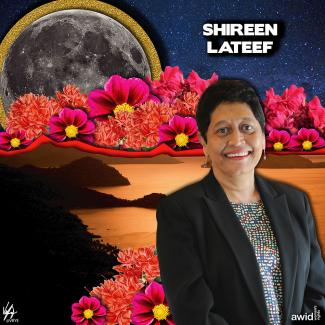
Figure inspirante pour de nombreux-ses féministes aux Fidji, Shireen était une alliée de poids du mouvement des femmes. Elle a plaidé sans relâche pour l'égalité de genre aux niveaux local et régional.
Ayant débuté sa carrière en tant que spécialiste de l’égalité de genre à la Banque asiatique de développement, elle a apporté des changements radicaux en matière d’égalité de genre aux politiques de l’institution. Sa recherche, intitulée « La règle des Danda : la violence domestique chez les Indo-Fidjiens », est l'une des premières recherches sur la violence domestique, le mariage et les femmes aux Fidji. Ce travail précurseur a servi de catalyseur pour la militance féministe dans ce domaine.
L’héritage de Shireen lui survit et beaucoup se souviennent de son influence, de son engagement et de son soutien au mouvement des femmes aux Fidji et dans le Pacifique.
The Sex Workers' Trade Union Organisation (Organización de Trabajo Sexual, OTRAS) is the first union of sex workers in the history of Spain. It was born out of the need to ensure social, legal and political rights for sex workers in a country where far-right movements are on the rise.
After years of struggles against the Spanish legal system and anti-sex workers groups who petitioned to shut it down, OTRAS finally obtained its legal status as a union in 2021.
Its goal? To decriminalize sex work and to ensure decent working conditions and environments for all sex workers.
The union represents over 600 professional sex workers, many of whom are migrant, trans, queer and gender-diverse.
We celebrate everyone's right to choose their identities, relationships, goals, work, dreams and pleasures, and what they do with their mind, body and spirit. We believe in working towards access to resources, information and safe and enabling environments that allow this to happen.

Sobre la base de una investigación documental inicial y de consultas con aliadxs (que nos llevaron a eliminar muchas otras opciones de la región), organizamos una serie de visitas exhaustivas a Nepal, Malasia, Sri Lanka, Tailandia, Indonesia y, más tarde, Taiwán.
Cada visita incluyó, no solo la evaluación de la infraestructura logística, sino también encuentros con grupos y activistas feministas locales para entender mejor el contexto y conocer su percepción de las oportunidades y los riesgos potenciales de organizar un Foro de AWID en sus contextos.
Estos movimientos expresaron, en varias ocasiones, sentimientos encontrados respecto de las oportunidades y los riesgos que podría acarrearles la visibilidad de un evento como el Foro. En una de las visitas, durante los primeros treinta minutos de la reunión, escuchamos a lxs activistas presentes decir, en forma unánime, que un Foro de AWID sufriría una enorme reacción, que los derechos LGBTQ son un asunto particularmente candente, y que los grupos fundamentalistas aparecerían con toda su fuerza a interrumpir el evento.
Cuando respondimos, «De acuerdo, entonces ustedes no creen que sea una buena idea», nuevamente la respuesta unánime fue «Por supuesto que es una buena idea, ¡queremos cambiar la narrativa!». En algunos de estos lugares nos resultó difícil oír y ver que muchxs activistas feministas querían aprovechar la oportunidad de un evento grande y visible, y que estaban preparadxs a enfrentar los riesgos locales; pero nuestras consideraciones, como anfitrionxs de casi dos mil personas de todo el mundo, nos imponen un cálculo distinto del riesgo y la factibilidad.
También tuvimos que analizar qué significa organizar un foro feminista que a sea coherente con los principios de inclusión, reciprocidad y autodeterminación, en aquellos casos en que la política y la práctica de Estado son, en general, contrarias a estos principios (aunque lxs funcionarixs de los ministerios de turismo hayan trabajado arduamente para atenuar estas características).
En muchos de estos lugares, monitorear el contexto nos resultó un ejercicio pendular: de un momento abierto y seguro para los debates feministas podíamos pasar a otro de brutal represión y xenofobia, capaz de sacrificar las prioridades feministas como piezas de negociación política para tranquilizar a las fuerzas antiderechos del ala derechista.
Nuestras dificultades en la región Asia-Pacífico nos llevaron a preguntarnos si no sería más fácil mover el Foro a una región distinta. Sin embargo, hoy en día no podríamos organizar un Foro de AWID en Estambul como lo hicimos en 2012, ni podríamos hacerlo en Brasil como lo hicimos en 2016.
Al organizar el Foro de AWID, estamos tratando de construir y sostener, de la mejor manera posible, un espacio para las diversas expresiones de solidaridad, indignación, esperanza e inspiración que son el núcleo de los movimientos feministas.
En este momento, creemos que Taipéi es la sede, dentro de la región Asia-Pacífico, que mejor nos permitirá construir ese espacio seguro y rebelde para nuestra comunidad feminista global.
De hecho, en el mundo contemporáneo no existe una ubicación ideal para un Foro centrado en las Realidades Feministas. Donde sea que vayamos, ¡debemos construir ese espacio juntxs!
نعم، انه متاح للأشخاص أصحاب/ صاحبات الإعاقات السمعية، البصرية، النظرية والفكرية المختلفة.
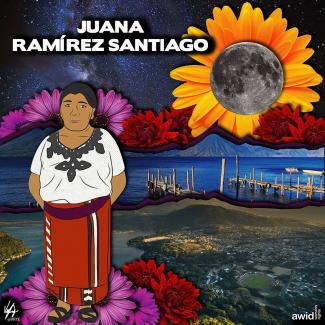
Juana was one of the founders and current Board Member of Red de Mujeres Ixiles de Nebaj, an Indigenous women’s rights organization that is a member of the Mesoamerican Initiative of WHRDs (IM-Defensoras).
She was also a midwife and a mother of 7 children. Juana had received death threats that were reported to the Prosecutor’s office. Juana is the third Indigenous WHRD murdered in the area during 2018. The Guatemala Ombudsman reports that a total of 20 HRDs were killed in the country this year.
Juana Ramírez Santiago was shot dead by unidentified attackers while crossing a bridge in Nebak, Quiché, Guatemala. Investigations to identify the perpetrators are ongoing.