Confronting Extractivism & Corporate Power

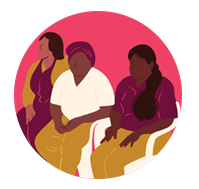
Women human rights defenders (WHRDs) worldwide defend their lands, livelihoods and communities from extractive industries and corporate power. They stand against powerful economic and political interests driving land theft, displacement of communities, loss of livelihoods, and environmental degradation.


Why resist extractive industries?

Extractivism is an economic and political model of development that commodifies nature and prioritizes profit over human rights and the environment. Rooted in colonial history, it reinforces social and economic inequalities locally and globally. Often, Black, rural and Indigenous women are the most affected by extractivism, and are largely excluded from decision-making. Defying these patriarchal and neo-colonial forces, women rise in defense of rights, lands, people and nature.

Critical risks and gender-specific violence

WHRDs confronting extractive industries experience a range of risks, threats and violations, including criminalization, stigmatization, violence and intimidation.  Their stories reveal a strong aspect of gendered and sexualized violence. Perpetrators include state and local authorities, corporations, police, military, paramilitary and private security forces, and at times their own communities.

Acting together

AWID and the Women Human Rights Defenders International Coalition (WHRD-IC) are pleased to announce “Women Human Rights Defenders Confronting Extractivism and Corporate Power”; a cross-regional research project documenting the lived experiences of WHRDs from Asia, Africa and Latin America.

We encourage activists, members of social movements, organized civil society, donors and policy makers to read and use these products for advocacy, education and inspiration.

Share your experience and questions!

Tell us how you are using the resources on WHRDs Confronting extractivism and corporate power.

◾️ How can these resources support your activism and advocacy?

◾️ What additional information or knowledge do you need to make the best use of these resources?

Share your feedback


Thank you!

AWID acknowledges with gratitude the invaluable input of every Woman Human Rights Defender who participated in this project. This project was made possible thanks to your willingness to generously and openly share your experiences and learnings. Your courage, creativity and resilience is an inspiration for us all. Thank you!

Related Content

Snippet - Intro WITM - EN

Where is the Money for Feminist Organizing? Survey Results

Thanks to our global feminist community! From May to August 2024, nearly 1,200 organizations working for Women's rights, gender justice, and LBTQI+ equality shared their experiences in the WITM survey. The results offer a unique picture of how feminist movements are resourced and where gaps remain.

Stay tuned for the upcoming report for more analysis!
 

Learn more about the insights

Aïssata Kane

Aïssata Kane, also fondly known as “Yaye Kadia” (Mother Kadia), was a feminist with a lifelong committment in advocating for African and especially Mauritanian women’s rights.

In her career as a politician, she was appointed Minister of Family Protection and Social Affairs in 1975, the first time a woman held such a position and in which Aïssata fervently worked to improve the status of women in her country.  

This work included advancing girls’ and women’s education, fighting against the practice of force-feeding of young women, lobbying for an inclusion of a marital rights provision, and advocating for a female representation quota to be created in the Parliament. 

“[Aïssata] realized all her passions with humility, courage and determination. She didn’t want to disturb anyone by her fight on all these fronts at the same time.” Ball Halimata Dem, Aïssata’s niece

She founded the National Union of Women of Mauritania (UNFM), co-creating and publishing Marienou for them, a magazine dedicated to the emancipation of Mauritanian women. Aïssata also directed several sub-regional and local organizations, including as the President of the International Association of Francophone Women (AIFF) and as a resolute ecologist, she was President of the Association for the Protection of the Environment in Mauritania (APEM). 

In 2018 she received the Pioneer Woman Award. It honors her work in advancing Mauritania’s women’s status and recognizes her strong leadership and sense of innovation.

Aïssata passed away on 10 August 2019. 

Snippet FEA Housing is a right (ES)

Three-fold horizontal graphic: 1st of a brown-skinned woman on the right side, she is sitting on a pink carpet and is wearing a pink shirt and yellow dress; 2nd two women of color looking at each other and touching their shoulders, they are on a pink background; 3rd - graphic version of three women cooking.

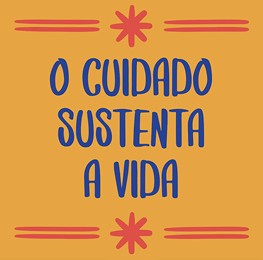
La vivienda es un derecho | El cuidado sostiene la vida

註冊費包括什麼?

所有參與者的AWID論壇註冊費包括:

  • 可自由參加所有四天的論壇
  • 論壇期間的午餐和咖啡/茶歇
  • 材料資源
  • 全體會議期間和部分選定的分組討論/活動(英語、法語、西班牙語和當地語言)的同聲傳譯
  • 參加慶祝晚宴/派對
  • 具有最終程序和聊天功能的移動應用
  • 論壇場所提供免費Wi-Fi服務
  • 機場接送和酒店與會場之間的交通

Snippet - WITM To make - ES

Para darle visibilidad a la complejidad de la dotación de recursos para las diversas formas de organización feministas.

Cristina Bautista

“Si nos mantenemos en silencio, nos matan. Si hablamos (nos matan) también. Así que, hablemos” Cristina Bautista, 2019.

Cristina Bautista fue una integrante de la comunidad Indígena Nasa, cuyo hogar se sitúa en la región del norte del Cauca, en Colombia. Cristina formó parte de la resistencia Nasa como líder y defensora de los derechos de la tierra, pero también como trabajadora social y gobernadora de la reserva Indígena Nasa Tacueyó.

Incansable defensora de los derechos del pueblo Nasa, Cristina habló alto y claro sobre la violencia dirigida contra su comunidad. En un discurso ante las Naciones Unidas, Cristina reclamó la protección de las vidas de las mujeres indígenas, y su participación en las diferentes esferas de la vida. En 2017, Cristina entró en el programa de Becas Indígenas de la Oficina de Derechos Humanos de la ONU y en 2019 recibió una subvención del Fondo de Contribuciones Voluntarias de la ONU para los Pueblos Indígenas.

"Me gustaría sacar a la luz la situación actual de los pueblos indígenas en Colombia, el asesinato de líderes indígenas, la represión de las protestas sociales. El acuerdo de paz, en lugar de ayudar, lo que ha hecho es reforzar el conflicto y la explotación de territorios sagrados en Colombia... En la situación actual, en casi todas las naciones indígenas, como mujeres, estamos trabajando para encontrar un futuro mejor para nuestras familias. No quiero que más mujeres del campo vivan en estas circunstancias. Las  mujeres indígenas necesitamos oportunidades para participar en la vida política, económica, en la sociedad y en la cultura. Hoy me da fuerzas ver a todas estas mujeres aquí y ver que no estoy sola". - Cristina Bautista, 2019

El 29 de octubre de 2019, Cristina fue asesinada junto a cuatro guardias indígenas desarmados en un ataque que, supuestamente, fue llevado a cabo por miembros armados del grupo disidente de las FARC "Dagoberto Ramos".

Según Global Witness, "en los últimos años el asesinato de líderes comunitarios y sociales ha aumentado dramáticamente en Colombia".

"La comunidad Nasa ha alertado repetidamente a las autoridades sobre las amenazas que reciben y que ponen en peligro su seguridad. Sin embargo, a pesar de los esfuerzos que ponen los sucesivos gobiernos colombianos, los pueblos indígenas siguen corriendo grandes riesgos, especialmente, las figuras clave religiosas o comunitarias como Cristina Bautista". - Reunión informativa de la ONU para la prensa (en inglés), 1 de noviembre de 2019.

Puede ver un discurso de Cristina Bautista de agosto de 2019 en el que Cristina denuncia otros casos precedentes de asesinatos a guardias indígenas

Snippet FEA LINES OF ACTION (FR)

Sur quoi travaillent-iels?
Illustration of a hand with a pencil writing on white paper

Droits humains et ethno-territoriaux

Assurer la défense des droits humains et des droits de la Nature par la construction d'alliances avec des acteur·rices et organisations locales, nationales, régionales et mondiales.

A person holding a plant in a pink pot in their hands

Développement Durable

Garantir que toutes les activités économiques, culturelles et environnementales contribuent au développement durable, à la sécurité alimentaire et à la génération de revenus, dans le respect de l'autodétermination et de l'autonomie gouvernementale des communautés afro-descendantes.

Three women sitting next to each other

Education and training

Former les femmes et leur donner les moyens d'exercer la défense de leurs droits dans différents espaces politiques, sociaux et économiques.

Pour plus d'informations, cliquez ici!

I can’t attend the Forum in person, how else can I participate?

More than just an event, the AWID Forum is part of our Feminist Realities Journey, with many spaces to come together, online and offline, for sharing, discussing, strategizing and co-creating feminist realities.

Learn more about the Feminist Realities Journey and everything that will happen before the Forum. Join our mailing list to stay tuned for Post-Forum announcements!

We are exploring options to participate virtually at the Forum and we will share information when we know what we can offer.

Snippet - WITM Why now_col 2 - EN

Resourcing feminist movements is fundamental to securing a more just and peaceful present and liberated future.

While funders committed significantly more money to gender equality over the last decade, still only 1% of philanthropic and development funding has actually been moved to directly resource feminist-led social change. 

In solidarity with movements that continue to be invisibilized, marginalized and without access to core, long-term, flexible and trust-based funding, the WITM survey highlights the actual state of resourcing, challenges false solutions, and points to how funding models must change for movements to thrive and meet the complex challenges of our times.

Paulina Cruz Ruiz

Paulina Cruz Ruiz, originaire de Rabinal dans la région de Baja Verapaz au Guatemala, était une défenseuse des droits humains au pouvoir ancestral Maya Achí (autochtone). Elle participait activement à la mobilisation et à la résistance communautaires, notamment via des mesures juridiques contre des projets miniers sur des territoires autochtones, aux effets sévères et néfastes pour leur tissu socioenvironnemental. 

« Le modèle d’industrie extractive promu par le gouvernement guatémaltèque et la construction de projets de développement à grande échelle sur des terres autochtones, sans le consentement des communautés, est source de litiges constants avec les mouvements de résistance. » - Minority Rights Group International (groupe international pour les droits des minorités)

Paulina a également participé à la Marche pour la dignité, la vie et la justice, durant laquelle des milliers de guatémaltèques ont initié, le 1er mai 2019, une marche de huit jours contre la corruption et l’impunité face aux poursuites et aux assassinats de défenseur·e·s des droits humains, des terres ainsi que de leaders paysan·ne·s et autochtones.   

Paulina a été assassinée le 14 septembre 2019 près de chez elle, dans le village de Xococ. 

D’après Minority Rights Group International, « l’une des problématiques constantes qui affecte le plus les communautés mayas tient dans l’accroissement des activités de l’industrie minière. »


En savoir plus sur les mayas au Guatemala (en anglais)

En savoir plus sur la Marche pour la dignité, la vie et la justice (en anglais)

Snippet FEA Metzineres activists (EN)

 
A crowd of people sitting in front of a banner which says ‘support, don't punish”;
Photo of two women talking to each other, one of them is holding a handheld fan.
Crowd of people with a black banner that says Metzineres in yellow.
Photo of four people sitting on the ground and talking
Photo people with plants around them, most of them sitting and clapping to a person who is walking in the middle

Metzineres activists in action

Who we are & what we do

Strategic Plan 2023-2027

Fierce Feminisms: Together We Rise

We are excited to share our new Strategic Plan (2023-2027) with the world.

Fierce Feminisms is our way forward, acknowledging both the multiplicity of feminisms and the value of fierce and unapologetic drive for justice. The state of the world and of feminist movements calls for brave conversations and action. We look forward to working together with our members, partners and funders in creating the worlds we believe in, celebrating the wins and speaking truth to power in service of feminist movements globally.

Download: Fierce Feminisms: Together We Rise


The Association for Women's Rights in Development (AWID) is a global, feminist, membership, movement-support organization.

For 40 years, AWID has been a part of an incredible ecosystem of feminist movements working to achieve gender justice and women’s human rights worldwide.

Our vision

GGAADD | Flickr (CC BY-SA 2.0) - modified

AWID envisions a world where feminist realities flourish, where resources and power are shared in ways that enable everyone, and future generations, to thrive and realize their full potential with dignity, love and respect, and where Earth nurtures life in all its diversity.

Our mission

Our mission is to support feminist, women’s rights and gender justice movements to thrive, to be a driving force in challenging systems of oppression, and to co-create feminist realities.


Our tactics

We advance our work through these tactics:

Influencing, advocacy and campaigning

We collaboratively leverage our access, power, resources and relationships to strategically influence policy and practice. We aim to advance feminist agendas through our work with policy makers, funders and activists in regional and global spaces. We also work to influence feminist and women’s rights movements to centre historically oppressed movements as part of efforts to strengthen our collective power and influence.

Convening and connecting

We use our convening power to facilitate dialogue and strategize on key issues. We connect our members and allies with one another, sharing and exchanging resources, ideas and action across relevant issues. We organize and facilitate spaces to strengthen and engage across movements, to imagine and envisage new futures, to develop effective influencing tactics and to co-create powerful agendas and processes.  

Solidarity and bridge-building

We work to mobilize our members and the movements we support to strengthen collective action in solidarity with feminist causes and defenders at risk. We build partnerships, engage in active listening and ongoing, long-term, solidarity. We work with defenders to build a body of knowledge and support networks of solidarity on protection and wellbeing.

Arts and creative expression

We recognize the unique and strategic value of cultural and creative strategies in the struggle against oppression and injustice. We work with artists who centre feminist voices and the narratives of historically oppressed communities. In this emerging tactic, we see art and creative expression helping us envision a world where feminist realities continue to flourish and be celebrated. 


Marcha da Mulheres negras - 2016

Our initiatives

Our initiatives work at the intersections of the sites of change we work to address, the movements we prioritize, and the tactics we use​:

Advancing Universal Rights and Justice

We monitor, document and make visible how anti-rights actors are operating and colluding in multilateral spaces and support feminist, women’s rights and gender justice movements and allies to counter their influence and impact.

Building Feminist Economies

Working on extractivism, tax justice and corporate accountability, we build knowledge on corporate power and influence; advocate for corporate accountability and equitable distribution of wealth; and amplify feminist proposals for just economies. 

Resourcing Feminist Movements

We develop accessible, action-oriented analysis on the state of resourcing for feminist movements. We aim to influence funders’ policies and practices, deepen and sustain funding for feminist social change, and support movements’ needs and strategies. 

In addition to the impact we aim to have in the world, AWID is expressly committed to strengthening our own organizational learning and resilience in order to further strengthen global feminist movements. 


Our donors

Thank you!

Without the generous funding and support from our donors, our work would not be possible

Wellspring Philanthropic Fund
Ford Foundation
Open Society Foundations
 
Sida
Government of The Netherlands
Foundation For A Just Society
 
 
Disability Rights Advocacy Fund
   

Will the AWID Forum still be in Taipei in light of the COVID-19?

AWID is closely monitoring the global COVID 19 situation and for now anticipates continuing with the Forum as planned.

If at any moment the situation demands  something different, we  will let you know right away.

The 14th AWID International Forum is scheduled to take place 20-23 September 2021 in Taipei,.

More information

Snippet - WITM Provide members - EN

Provide AWID members, movement partners and funders with an updated, powerful, evidence-based, and action-oriented analysis of the resourcing realities of feminist movements and current state of the feminist funding ecosystem.

Identify and demonstrate opportunities to shift more and better funding for feminist organizing, expose false solutions and disrupt trends that make funding miss and/or move against gender justice and intersectional feminist agendas.

Articulate feminist visions, proposals and agendas for resourcing justice.

START THE SURVEY

Snippet FEA Get Involved 1 (ES)

¡INVOLÚCRATE!

Siga el trabajo de estos colectivos en sus cuentas de redes sociales y sitios internet:

Recordando a lxs defensorxs que ya no están con nosotrxs

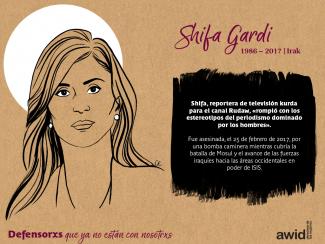
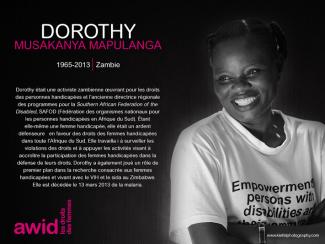
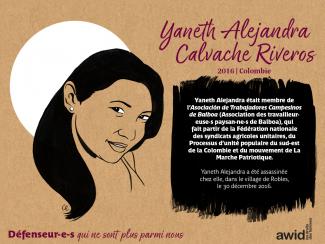
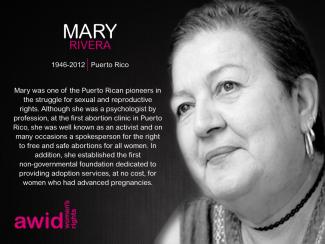
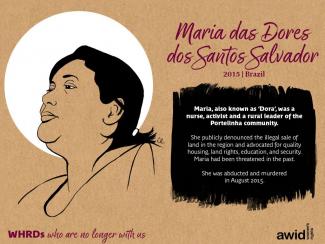
AWID honra a lxs feministas y defensoras de los derechos humanos que han muerto y cuyas contribuciones al progreso de los derechos humanos se echa mucho en falta. 


Celebrando a lxs activistxs y las defensoras de derechos humanos 

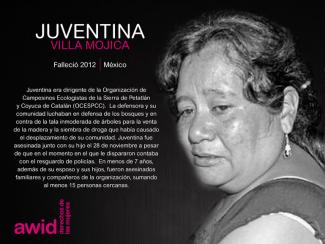
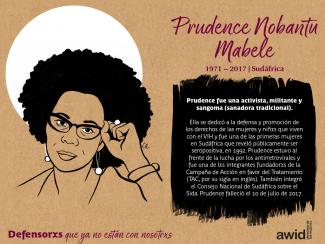
El Tributo de AWID a las defensoras de derechos humanos es una exhibición fotográfica que presenta a activistxs del feminismo, de los derechos de las mujeres y de la justicia social de todo el mundo que ya no están con nosotrxs. 

El Tributo fue lanzado por primera vez en 2012, en el 12º Foro Internacional de AWID, en Turquía. Tomó la forma de una exposición física de retratos y biografías de feministas y activistxs que fallecieron. La iniciativa fue descrita por lxs participantes del Foro como una manera única, emotiva y energizante de conmemorar nuestra historia colectiva.  

En el 13º Foro Internacional, en Brasil, honramos a lxs activistas y a las defensoras de derechos humanos con una ceremonia de inauguración de un mural en cuatro idiomas, un espectáculo de danza y un ritual brasileño.

Entre los eventos, el Tributo permanece como una galería en línea que se actualiza cada año como parte de la Campaña de los 16 Días de Activismo Contra la Violencia de Género (25 de noviembre al 10 de diciembre).

Contribuciones de todo el mundo

Desde 2012, a través de nuestro Tributo anual a las defensoras de derechos humanos que ya no están con nosotrxs, hemos presentado más de 400 feministas y defensorxs de 11 regiones y 80 países.

AWID quiere agradecer a las familias y organizaciones que compartieron sus historias personales y contribuyeron a este homenaje. Nos unimos a ellxs para continuar con el notable trabajo de estas mujeres y redoblar esfuerzos para asegurar que se logre justicia en los casos que permanecen en la impunidad.

Visite la exhibición en línea del Tributo a las Defensoras de Derechos Humanos

La violencia y las amenazas contra las defensoras de derechos humanos persisten

Además de rendir homenaje a estxs increíbles activistas, el Tributo arroja luz sobre la gravedad de la situación de las defensoras de derechos humanos que han sido asesinadas o están desaparecidas.

 Un tercio de las personas presentadas en el Tributo fueron activistas asesinadxs o están desaparecidxs en circunstancias sospechosas. Fueron atacadxs específicamente por ser quiénes eran y por haber desafiado:

  • El poder del Estado
  • La heteronormatividad
  • Los fundamentalismos
  • Las corporaciones
  • El patriarcado
  • La delincuencia organizada
  • La corrupción
  • La militarización…

Mujeres como Agnes Torres, de México, fueron asesinadas debido a su identidad de género y orientación sexual; o Cheryl Ananayo, una activista ambientalista de Filipinas que fue asesinada mientras luchaba contra una compañía minera; o Ruqia Hassan, una periodista y bloguera independiente siria asesinada por sus críticas al Estado Islámico de Iraq y Levante (EIIL, ISIS en inglés). Y muchas otras.

Con el Tributo a las defensoras de derechos humanos lxs traemos a todxs a nuestra memoria colectiva y llevamos su legado de lucha como nuestra antorcha en los movimientos feministas y por los derechos de las mujeres. Reconocemos que la seguridad y el autocuidado deben ser una prioridad en todas nuestras agendas políticas. Y hacemos un llamamiento a los gobiernos y a los organismos internacionales para que aborden colectivamente la violencia contra lxs feministas y las defensoras de derechos humanos.

Creemos que este es un paso crítico para asegurar la sostenibilidad de nuestros movimientos por la igualdad de género, por los derechos de las mujeres y por justicia para todxs.

Visite la exhibición en línea del Tributo a las Defensoras de Derechos Humanos