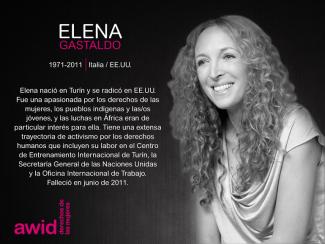
Elena Gastaldo
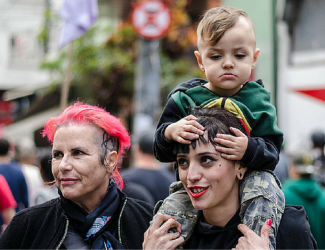
Over the past few years, a troubling new trend at the international human rights level is being observed, where discourses on ‘protecting the family’ are being employed to defend violations committed against family members, to bolster and justify impunity, and to restrict equal rights within and to family life.
The campaign to "Protect the Family" is driven by ultra-conservative efforts to impose "traditional" and patriarchal interpretations of the family, and to move rights out of the hands of family members and into the institution of ‘the family’.
Since 2014, a group of states have been operating as a bloc in human rights spaces under the name “Group of Friends of the Family”, and resolutions on “Protection of the Family” have been successfully passed every year since 2014.
This agenda has spread beyond the Human Rights Council. We have seen regressive language on “the family” being introduced at the Commission on the Status of Women, and attempts made to introduce it in negotiations on the Sustainable Development Goals.
AWID works with partners and allies to jointly resist “Protection of the Family” and other regressive agendas, and to uphold the universality of human rights.
In response to the increased influence of regressive actors in human rights spaces, AWID joined allies to form the Observatory on the Universality of Rights (OURs). OURs is a collaborative project that monitors, analyzes, and shares information on anti-rights initiatives like “Protection of the Family”.
Rights at Risk, the first OURs report, charts a map of the actors making up the global anti-rights lobby, identifies their key discourses and strategies, and the effect they are having on our human rights.
The report outlines “Protection of the Family” as an agenda that has fostered collaboration across a broad range of regressive actors at the UN. It describes it as: “a strategic framework that houses “multiple patriarchal and anti-rights positions, where the framework, in turn, aims to justify and institutionalize these positions.”
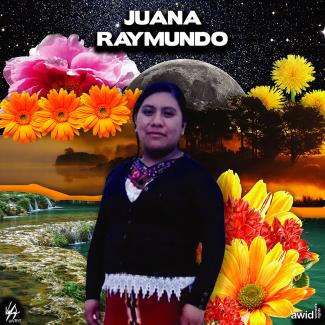
Membre de la communauté autochtone maya ixil, Juana était infirmière professionnelle et coordinatrice du Comité de développement des agriculteurs (CODECA)
CODECA est une organisation de défense des droits humains composée d'agriculteurs autochtones et vouée à la promotion des droits à la terre et du développement rural pour les familles autochtones dans la microrégion de Nebaj Quiché. Elle a d'abord rejoint le CODECA en tant que membre de la Juventud de CODECA (branche de la jeunesse).
Au moment de son décès, elle venait d’être élue membre du Comité exécutif du Mouvement de libération des peuples (MLP).
Le corps de Juana a été retrouvé par des voisins au bord d’une petite rivière sur la route située près de Nebaj et du village d’Acambalam, au Guatemala. Selon le CODECA, son corps portait des traces de torture.
Sim, o inquérito pode ser acedido através de um smartphone.

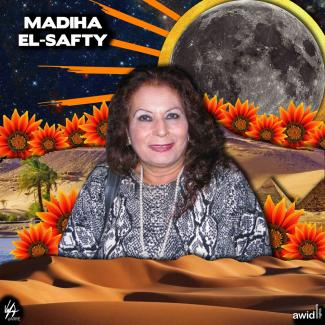
Madiha was a prominent Professor of Sociology who actively engaged with civil society as an advocate for women’s rights in the Arab region.
She chaired the Alliance for Arab Women and was a member of the Committee on Civil Society and the Committee on the Development of Minia Governorate with the National Council for Women. She produced numerous papers that shed light on, and analyzed, gender inequalities and discrimination against women.
She is remembered fondly by colleagues, students and friends.
نعم. ندعوكم/ن لمشاركتنا بالأمور التي تجدونها مهمة بالنسبة لكم/ن عن طريق الإجابة على الأسئلة المفتوحة في نهاية الاستطلاع.
COZINHA OCUPAÇÃO 9 DE JULHO

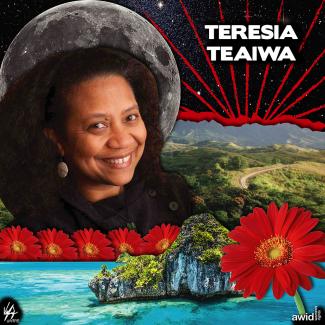
Retratada en The Guardian como uno de los íconos nacionales de Kiribati, Teresia fue una valiente activista.
Trabajó estrechamente con los grupos feministas en Fiji y que puso sus investigaciones al servicio de las cuestiones feministas y de género en el Pacífico. Además, fue coeditora de la publicación International Feminist Journal of Politics. Su influencia se extendió desde la frontera académica hasta los movimientos por la justicia social en la región de Oceanía.
Да. Ваши ответы будут удалены по окончании обработки и анализа данных и будут использованы исключительно в исследовательских целях. Данные НИКОГДА не будут переданы за пределы AWID и будут обрабатываться только сотрудниками AWID и консультантками(-тами), работающими с нами над проектом «Где деньги?». Для нас ваша конфиденциальность и безопасность– приоритет. С нашей политикой конфиденциальности можно подробно ознакомиться здесь.
C'est un centre communautaire, où l'on peut suivre des cours et se former à des activités créatives génératrices de revenus comme la coiffure, la cuisine et la création artistique. Les enfants peuvent également profiter d'activités culturelles et éducatives.
Le MSTC ne travaille pas seul. Iels collaborent avec des institutions et des collectifs artistiques pour produire des expériences culturelles, sportives et éducatives, ainsi qu'un accès critique à des services de santé. Depuis sa création, ce projet participatif a été porté essentiellement par des femmes, sous la direction de l'activiste afro-brésilienne Carmen Silva, autrefois sans abri.
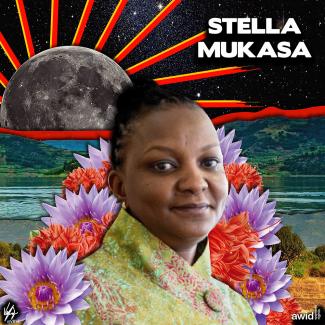
Stella a commencé sa carrière au ministère du Genre et du Développement communautaire en Ouganda. Elle œuvrait auprès des décideurs-euses politiques, pour encourager des réformes législatives, dont celle de la Constitution ougandaise en 1995 qui a entériné certaines des réformes les plus progressives pour les femmes dans la région.
Elle était adorée dans la région tout entière pour ses incessants efforts pour la création et l’application de lois et politiques sensibles au genre. Elle a joué un rôle clé dans l’ébauche de la loi sur les violences domestiques en Ouganda. Elle a aussi contribué à une mobilisation importante en faveur de Constitutions sensibles au genre à la fois en Ouganda et au Rwanda.
Par son travail au Centre international de recherches sur les femmes (International Center for Research on Women, ICRW), elle a abordé les thématiques de la violence à l’égard des enfants. Stella s’est attachée à renforcer les organisations locales qui luttent contre les violences basées sur le genre. Conférencière en Droits genrés et loi à l’université Makerere, elle a également siégé aux conseils d’administration d’Akina Mama wa Afrika, ActionAid International Uganda et l’Open Society Initiative for Eastern Africa.
O nosso objetivo é alcançar um total de 2000 respostas, quase o dobro do último questionário WITM em 2011.
The AWID International Forum is both a global community event and a space of radical personal transformation. A one-of-a-kind convening, the Forum brings together feminist, women’s rights, gender justice, LBTQI+ and allied movements, in all our diversity and humanity, to connect, heal and thrive.
The Forum theme – Rising Together – is an invitation to engage with our whole selves, to connect with each other in focused, caring and brave ways, so that we can feel the heartbeat of global movements and rise together to meet the challenges of these times.
For the first time, the AWID Forum offered three modes of participation:
 |
 |
 |
|
In Person at the Queen Sirikit National Convention Centre in Bangkok, Thailand. |
Online in Virtual Space (Capacity: 3000 participants). |
Hubs Connected in Cross Border Space. |
With over 4,000 participants, 15th AWID International Forum in 2024 created a sweeping force to resist oppression towards collective healing and liberation. Keep watching this space for more forum stories and future forums updates!
The past Forums
In December 2020, the AWID board took the difficult decision to cancel the 14th AWID International Forum which had been scheduled to take place from September 20-23, 2021, in the City of Taipei.
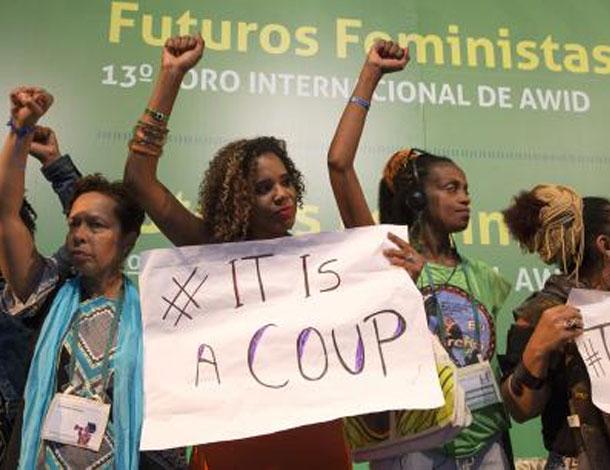
Given the complex world that we face today, the 2016 AWID Forum did not focus on a particular “issue”, but rather on creating more effective ways of working together!
Despite the challenging contexts in which the 2016 Forum took place (the Zika epidemic, a strike by Brazilian foreign-service workers, the impeachment of President Dilma Rousseff and subsequent turmoil), it succeeded in bringing together over 1800 participants from 120 countries and territories across all regions of the world.
For 96% of participants who responded to the post Forum evaluation survey, the Forum was a major source of inspiration and energy.
98% of participants considered it an important convening space for feminist movements and expressed hope that AWID continues to organize forums.
59% of Forum evaluation survey respondents declared to be very satisfied with the Forum and 34% somewhat satisfied.
Over 150 sessions were delivered in different formats on a variety of topics ranging from bodily integrity and freedoms, to gender-based violence in the workplace, to strategies for building collective power.
The first-time Black Feminisms Forum (BFF), held just before the main AWID Forum, brought together 250 Black feminists from all over the world to co-create a powerful space to build and strengthen ongoing, intergenerational, transnational connections
Download the Forum evaluation report
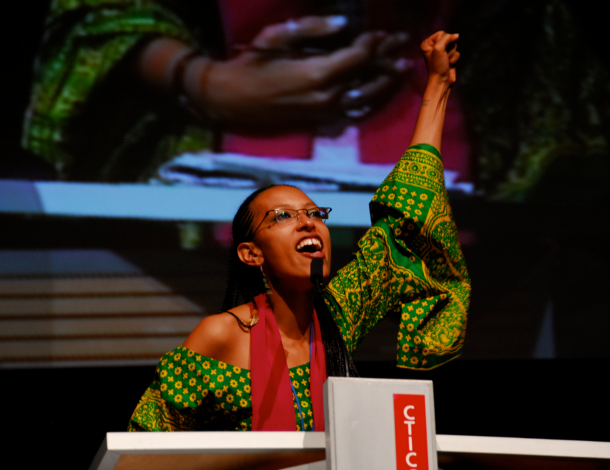
The 12th AWID Forum was the largest and most diverse AWID Forum to date, bringing together 2239 women’s rights activists from 141 countries. Of these participants, around 65% were from the Global South and close to 15% were young women under 30, and 75% attended an AWID Forum for their first time.
The Forum program focused on transforming economic power to advance women’s rights and justice and featured over 170 different kinds of sessions including feminist economics toolbox skills-building sessions, breakout sessions representing all 10 Forum themes, in-depth sessions, and solidarity roundtables.
Building on the momentum of the 2012 Forum, we transformed the website into a resource and learning Hub, which builds on the content generated by participants by featuring multi-media resources on all Forum components.
Visit the 2012 Forum web archive
Every three to four years, AWID hosts its flagship international event. It is the world’s largest event that wholeheartedly centers feminist and gender justice movements in all their diversity. It is a global gathering of feminist activists, allied movements, scholars, funders and policymakers. The Forums rotate between different regions and countries in the global South.
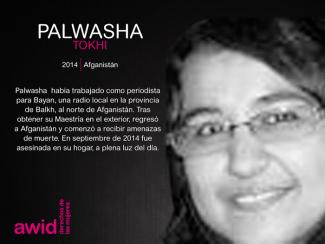
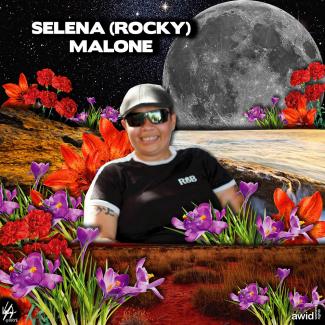
Rocky showed inspirational leadership and direction in working with Lesbian, Gay, Bisexual, Transgender, Intersex, Queer, Brotherboy and Sistergirl (LGBTIQBBSG) youth at risk.
Rocky started her career with the Queensland Police Service as a Police Liaison Officer. Making a difference was important to her. She led an impressive career working with young LGBTIQBBSG people as the Manager of Open Doors Youth Service.
Rocky worked through complex situations with clients relating specifically to gender and sexual identity. She was a natural in this line of work - a strong community leader, a quiet achiever, a loyal friend, a compassionate nurturer, and a change maker. Rocky was a founding member of IndigiLez Leadership and Support Group.
In 2016 at the Supreme Court in Brisbane, Former High Court Justice Michael Kirby mentioned Rocky by name when praising the work of the LGBTI Legal Service over the years. Rocky fought extremely hard for the human rights of the LGBTIQBBSG community, pushed boundaries and created change in a respectful, loving way.