
Ana Lucia Herrera Aguirre
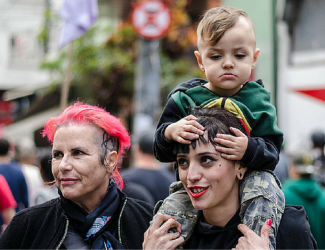
Over the past few years, a troubling new trend at the international human rights level is being observed, where discourses on ‘protecting the family’ are being employed to defend violations committed against family members, to bolster and justify impunity, and to restrict equal rights within and to family life.
The campaign to "Protect the Family" is driven by ultra-conservative efforts to impose "traditional" and patriarchal interpretations of the family, and to move rights out of the hands of family members and into the institution of ‘the family’.
Since 2014, a group of states have been operating as a bloc in human rights spaces under the name “Group of Friends of the Family”, and resolutions on “Protection of the Family” have been successfully passed every year since 2014.
This agenda has spread beyond the Human Rights Council. We have seen regressive language on “the family” being introduced at the Commission on the Status of Women, and attempts made to introduce it in negotiations on the Sustainable Development Goals.
AWID works with partners and allies to jointly resist “Protection of the Family” and other regressive agendas, and to uphold the universality of human rights.
In response to the increased influence of regressive actors in human rights spaces, AWID joined allies to form the Observatory on the Universality of Rights (OURs). OURs is a collaborative project that monitors, analyzes, and shares information on anti-rights initiatives like “Protection of the Family”.
Rights at Risk, the first OURs report, charts a map of the actors making up the global anti-rights lobby, identifies their key discourses and strategies, and the effect they are having on our human rights.
The report outlines “Protection of the Family” as an agenda that has fostered collaboration across a broad range of regressive actors at the UN. It describes it as: “a strategic framework that houses “multiple patriarchal and anti-rights positions, where the framework, in turn, aims to justify and institutionalize these positions.”
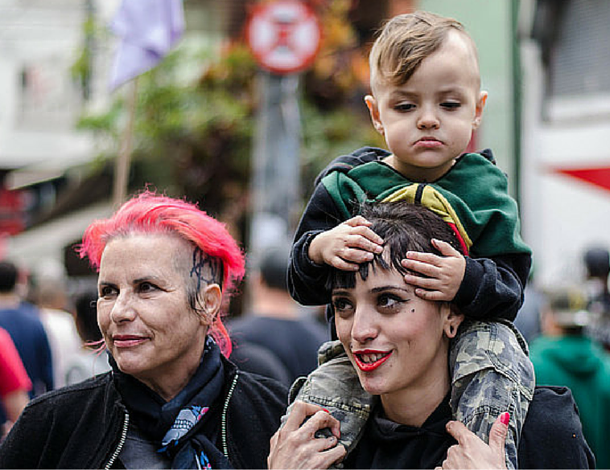
« Je n’y connais pas grand-chose sur la spiritualité ou sur ce qui se passe lorsqu’on meurt, mais ma vie de queer crip coréenne me laisse penser que notre esprit corporel terrestre n’est qu’une petite partie du tout. En ne considérant pas nos ancêtres, nous choisissons de ne voir qu’un aperçu de qui nous sommes. » - Stacey Park Milbern
Stacey a cofondé avec quelques ami·e·s le club de culture sur la justice liée au handicap, un groupe de travail en soutien aux diverses communautés, notamment les plus vulnérables, aidant entre autres les personnes sans-abri à accéder aux ressources durant la pandémie de COVID-19.
Elle a également coproduit une campagne impactante pour le documentaire « Crip Camp » de Netflix. Elle était membre du conseil d’administration de la WITH Foundation et a dirigé plusieurs organisations aux niveaux local, régional et national. Stacey écrivait joliment et vigoureusement :
« Mes ancêtres sont des personnes déchirées de leurs amours par la guerre et les déplacements. C’est grâce à elleux que je connais le pouvoir de construire un foyer avec tout ce que l’on trouve, peu importe l’endroit et les personnes qui sont avec nous. Mes ancêtres sont des queers qui vivaient au Sud américain. Grâce à elleux, j’ai compris l’importance des relations, des lieux et d’une vie vécue en grand, même lorsque cela peut être dangereux. Tou·te·s mes ancêtres connaissent le désir. Ce désir est souvent notre espace de connexion... » - Stacey Park Milbern
Elle est née à Séoul, en Corée, a grandi en Caroline du Nord et continué son parcours dans la région de la baie de San Francisco. Stacey est décédée à la suite de complications chirurgicales le jour de son 33ème anniversaire, le 19 mai 2020.
Lisez un essai écrit par Stacey Park Milbern (en anglais)
Écoutez un entretien avec Stacey Park Milbern (en anglais)
#StaceyTaughtUs : enregistrez votre histoire pour le projet Disability Visibility
« Beaucoup de gens le diraient : c’était une leader. Elle couvrait tous les aspects de ce rôle. Vous savez, parfois il y a des conduites de premier rang, de milieu ou de l’arrière. Et elle était d’une certaine façon capable de mener tous ces rangs. » - Andraéa LaVant, activiste pour les droits des personnes handicapées
« Perdre Stacey au moment où nos communautés ont le plus besoin de son leadership est une réelle épreuve, surtout dans un contexte où sa force, sa vision et son cran étaient de plus en plus reconnus dans des milieux autres que ceux du handicap, lui offrant des leviers plus importants pour faire progresser le travail de toute une vie… Nous n’aurons pas la chance de savoir où son leadership charismatique nous aurait mené·e·s. Mais une chose est sûre : ce que Stacey nous a donné, en un temps relativement court, continuera de bénéficier à d’autres dans les prochaines années. » - Disability Rights Education and Defense Fund (Fonds de défense et d’éducation sur les droits liés au handicap)
Là où les organisations de terrain pilotent et les multinationales sont tenues responsables.
📅 Mardi 11 novembre 2025
📍 En ligne et à l'Universidade Federal do Pará, Belém
Más que una divertida excentricidad para explorar las sensaciones, el BDSM puede ser una forma de abordar el dolor y el trauma emocionales. Ha sido un medio de sanación sexual para mí, pues me ha permitido una forma radical de liberación.
Lancement du processus préparatoire intergouvernemental de la troisième Conférence sur le financement du développement, octobre 2014
*Website in French
5 pm, tonight.


The handwriting on the invitation—
coily and brusque—
I’ve seen it five times in five years.
My body rouses,
feverish.
I need to fuck myself first.
The tide is high tonight and
I get
off.
I want to slow everything down,
taste time and space, etch them
into memory.
*
I’ve never been to this part of town before.
Unknown places excite me,
the way limbs and veins and bones
resist decay,
their fate uncertain.
At the door, I think twice.
The hallway is pitch black
and it makes me pause.
On the other side,
a portal of smell and color
opens like a curse,
into a sunny afternoon.

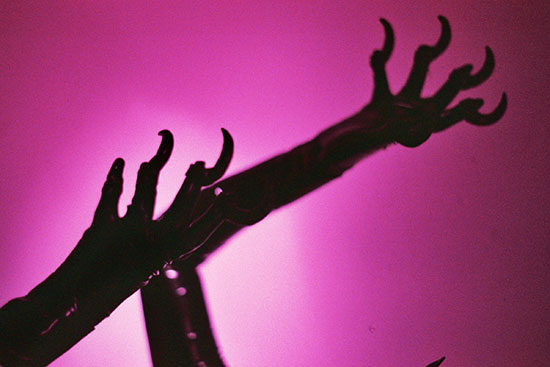
The breeze
makes my hair dance,
piques its curiosity,
compels it to move.
I hear the wheelchair whirring,
shaping the shadows.
Then I see them:
a lynx face
and a body like mine
and I find myself desiring both
again.
The creature motions me closer.
Their gestures write a sentence;
as I move toward them,
I notice its details:
wither, flesh, bliss
On their command, the vine that covers the hallway
hugging warm stones,
snakes up the wall.
It becomes a verb,
“to climb,”
and I’m reorientated when their claws point
to the vine-bed in the center.
I hear the wheels behind me,
then that sound.
It reverberates
like no other.
Their long black wings
elevate toward the ceiling
then they lunge forward.
The feline vision scans every detail,
every change,
every longing.
Can desire liquefy your muscles?
Can it act sweeter than the strongest
of tranquilizers?


A lynx sews the world
across our differences,
weaving lace around my knees.
Can desire crush the distance of the world,
compressing the seconds?
They come closer still,
lynx eye meeting human eye,
sniffing the air,
turning body into
urgency.
They beat down their wings.
Stirred,
the vines tangle around my waist/waste.
Their tongue thins time,
shifting grounds,
soothes, with their magic,
what stirs beneath.
I see the world in you, and the
world is exhausted.
Then they plead:
Let me feast on you.
Women's Forum on Financing for Gender Equality
The Third UN International Conference on Financing for Development
A hands-on deckgame for collectives to explore feminist economic alternatives and systems of care as crisis response. This deckgame is for all movements navigating global climate crises through play and strategy based on real-life scenarios. A creative avenue to strategize in meetings, workshops, and community gatherings!
Ce qui m’a aidée, c’est que j’adorais le travail qui consiste à aller dans les terres et à documenter les connaissances des gens. Donc j’ai quitté le confort...
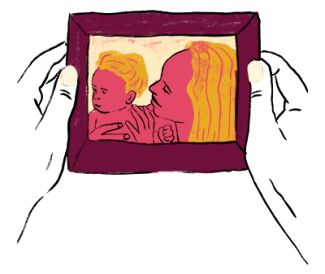
El tema del 14° Foro Internacional de AWID es «Realidades feministas: nuestro poder en acción».
Entendemos las realidades feministas como los diferentes modos de existir y ser que nos muestran lo que es posible, a pesar de los sistemas de poder dominantes, y en desafío y resistencia contra ellos. Entendemos estas realidades feministas como recuperaciones y corporizaciones de esperanza y poder, multidimensionales, dinámicas, y arraigadas en contextos y momentos históricos específicos.
Suivez la campagne:
Rejoignez-nous
Devenir membre| Rejoignez notre communauté
Ne ratez rien des actualités
Abonnez-vous pour les actualités
Des questions ?
Contactez : communications @ awid.org
Graphismes basés sur des illustrations de Vectorarte.
بالنسبة إليّ، هذه الأنواع من الدردشات كانت ضمن تعابير الحبّ التي أتاحت لي الحياة أن أستمتع بها حديثًا فقط. ما كنت أعرف أن هذه الأشكال الأخرى ممكنة – تلك التي توجَد خارج نطاق ورشات العمل، أو أماكن الناشطين أو غرف الصفّ أو أماكن العمل.
Siempre hemos trabajado para garantizar que nuestros Foros sean desarrollados conjuntamente con nuestrxs afiliadxs, los movimientos, y nuestros colectivos prioritarios.
Para el Foro 2020 queremos profundizar y fortalecer este espíritu y esta práctica de creación conjunta y colaboración. También reconocemos la necesidad de mejorar el equilibrio entre la inclusión de muchas voces y experiencias y el espacio para que lxs participantes y el equipo respiren, se tomen una pausa, y disfruten de un poco de tiempo de inactividad.
Este Foro será diferente en cuanto a que:
The rights of the child (EU & GRULAC)
Birth registration and the right of all to recognition as a person before the law (Mexico, Turkiye)
Adequate housing as a component of the right to an adequate standard of living and the right to non-discrimination in this context (Germany, Finland)
Negative impact of unilateral coercive measures on the enjoyment of human rights (Non-Aligned Movement)
Effects of foreign debt and other international financial obligations on the enjoyment of human rights (mandate renewal) (Cuba)
Rights of persons with disabilities, digital technologies, and inclusive disability infrastructure (Mexico, New Zealand)
Rights of the child (focus: Children in armed conflict) (Uruguay on behalf of a group of States from Latin America and the Caribbean and European Union)
Right to work (Egypt, Greece)
Right to food (Cuba)
Promotion of the enjoyment of cultural rights of all and respect for cultural diversity (Cuba)
Human rights situation in the Occupied Palestinian Territory, including East Jerusalem and the obligation to ensure accountability and justice (Organisation of Islamic Cooperation)
Right of the Palestinian people to self-determination (Organisation of Islamic Cooperation)
Israeli settlements in the Occupied Palestinian Territory, including East Jerusalem and in the occupied Syrian Golan (Organisation of Islamic Cooperation)
حلقة نقاش | النسوية “غير” الشاملة: فتيات بلا صوت في الحركة النسوية الهايتية
مع نايكي ليدان وفيدورا بيير-لوي