La mémoire comme forme de résistance : un hommage
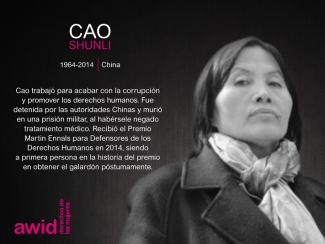
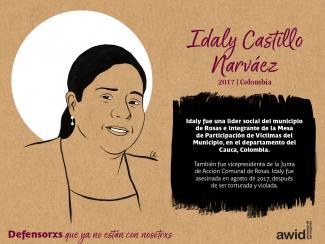
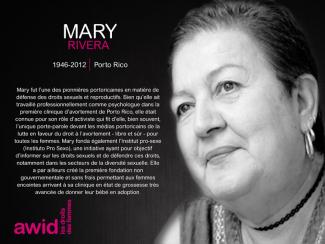
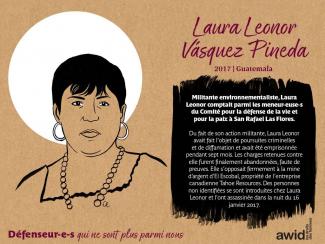
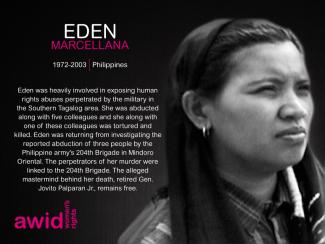
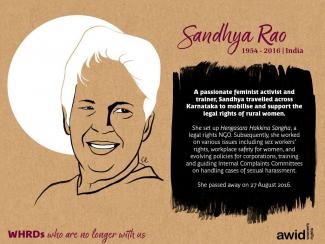
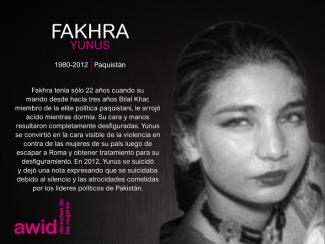
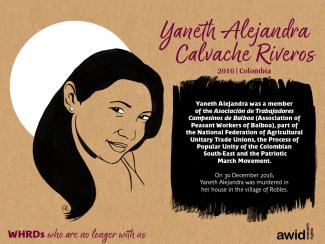
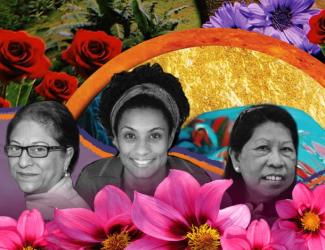
L’hommage se présente sous forme d’une exposition de portraits d’activistes du monde entier qui ne sont plus parmi nous qui ont lutté pour les droits des femmes et la justice sociale.
En 2020, nous adoptons une démarche légèrement différente
Cette année, tout en continuant à convoquer la mémoire de celleux qui ne sont plus parmi nous, nous souhaitons célébrer leur héritage et souligner les manières par lesquelles leur travail continue à avoir un impact sur nos réalités vécues aujourd’hui.
49 nouveaux portraits de féministes et de défenseur·e·s viennent compléter la gallerie. Bien que de nombreuses des personnes que nous honorons dans cet hommage sont décédé·e·s du fait de leur âge ou de la maladie, beaucoup trop d’entre iels ont été tué·e·s à cause de leur travail et de qui iels étaient.
Les histoires des activistes à l'honneur dans cet Hommage font vivre leur héritage et continuent d'inspirer le travail et l’action de nos mouvements.
Visiter notre exposition virtuelle
Les portraits de l'édition 2020 ont été illustrés par Louisa Bertman, artiste et animatrice qui a reçu plusieurs prix.
L’AWID tient à remercier nos membres, les familles, les organisations et les partenaires qui ont contribué à cette commémoration. Nous nous engageons auprès d’elleux à poursuivre le travail remarquable de ces féministes et défenseur·e·s et nous ne ménagerons aucun effort pour que justice soit faite dans les cas qui demeurent impunis.
« Ils ont essayé de nous enterrer. Ils ne savaient pas que nous étions des graines » - Proverbe mexicain
L'Hommage a été inauguré en 2012
Le premier hommage aux défenseur-e-s des droits humains a pris la forme d’une exposition de portraits et de biographies de féministes et d’activistes disparu·e·s lors du 12e Forum international de l’AWID en Turquie. Il se présente maintenant comme une gallerie en ligne, mise à jour chaque année.
Depuis, 467 féministes et défenseur-e-s des droits humains ont été mis·es à l'honneur.
Contenu lié
Может ли одна группа заполнить несколько опросов?
Нет, мы просим только один заполненный опрос от каждой группы.
Snippet FEA Map of Spain Union Otras (EN)

Solidarity: membership why page
Solidarity
We take a position in solidarity with each other and diverse struggles for justice and freedoms. We strive to mobilize and strengthen collective action and practice meaningful ways of working with each other.
Efua Dorkenoo
Affectueusement connue sous le nom de « Mama Efua », Efua a lutté contre les mutilations génitales féminines (MGF) pendant trois décennies et a contribué à attirer l'attention et l'action de la communauté internationale pour mettre fin à cette pratique néfaste.
En 1983, Efua a cofondé FORWARD (fondation pour la santé, la recherche et le développement des femmes), qui est devenue une organisation de premier plan dans la lutte contre les MGF. Son livre intitulé « Cutting the Rose: Female Genital Mutilation » (couper la rose), publié en 1994, est considéré comme le premier ouvrage sur les mutilations génitales féminines. Il figure parmi « Les 100 meilleurs livres africains du XXe siècle » de l’Université de Columbia.
Originaire du Ghana et infirmière de formation, Efua a rejoint l'OMS en 1995 et a réussi à faire en sorte que les mutilations génitales féminines fassent partie des agendas politiques des États membres de l'OMS. Elle a également travaillé en étroite collaboration avec le gouvernement nigérian pour élaborer une politique nationale globale qui servirait de base légale aux lois nigérianes contre les mutilations et qui est toujours en vigueur à ce jour.
Son travail de pionnière a abouti à une campagne menée par l'Afrique intitulée « The Girl Generation », qui s'est engagée à mettre fin aux MGF en une génération. Efua a montré comment une seule personne peut devenir la voix unificatrice d'un mouvement : « Une identité partagée peut aider à rassembler des activistes d'horizons différents dans un but commun ». Ces mots, emplis de sagesse, sont plus pertinents que jamais.
Why did AWID choose Taipei as the location for the Forum?
AWID spent close to two years working to identify a Forum location in the Asia Pacific region (the Forum location rotates regions).
Building on initial desk research and consultations with allies that led us to rule out many other options in the region, we organized a thorough round of site visits to Nepal, Malaysia, Sri Lanka, Thailand, Indonesia and (later) Taiwan.
Each site visit included not just scoping the logistical infrastructure but meeting with local feminist groups and activists to better understand the context, and their sense of potential opportunities and risks of an AWID forum in their context.
In our site visits, we found incredibly vibrant, diverse local feminist movements.
They often expressed conflicted feelings about the opportunities and risk that the visibility of an event like the Forum could bring to them. In one, during the first 30 minutes of our meeting we heard unanimously from the activists gathered that an AWID Forum would be subject to huge backlash, that LGBTQ rights were a particular political hot-button and that fundamentalist groups would turn out in full force to interrupt the event. When our response was “ok, then you don’t feel it’s a good idea”, again the unanimous response was “of course it is, we want to change the narrative!”.
It was difficult to hear and see in some of these places how many feminist activists wanted to leverage the opportunity of a visible big event and were prepared to face the local risks; but our considerations as hosts of close to 2,000 people from around the world impose a different calculation of risk and feasibility.
We also grappled with questions of what it means to organize a feminist forum that is aligned to principles around inclusion, reciprocity and self-determination, when state policy and practice is usually directly counter to that (although officials in the ministries of Tourism work very hard to smooth that over).
We weighed considerations of infrastructure, with potential opportunity to tip momentum on some national level feminist agendas, and national political context.
In many of these places, monitoring the context felt like an exercise on a pendulum that could swing from open and safe for feminist debates in one moment to stark repression and xenophobia the next, sacrificing feminist priorities as political bargaining chips to pacify right wing, anti-rights forces.
The process has been a sobering reflection on the incredibly challenging context for women’s rights and gender justice activism globally.
Our challenges in Asia Pacific led us to consider: would it be easier if we moved the Forum to a different region? Yet today, we would not be able to organize an AWID Forum in Istanbul as we did in 2012; nor would we be able to do one in Brazil as we did in 2016.
With all of this complexity, AWID selected Taipei as the Forum location because:
- It offers a moderate degree of stability and safety for the diversity of Forum participants we will convene.
- it also has strong logistical capacities, and is accessible for many travellers (with a facilitated e-visa process for international conferences).
- The local feminist movement is welcoming of the Forum and keen to engage with feminists from across the globe.
In organizing the AWID Forum, we are trying to build and hold space as best we can for the diverse expressions of solidarity, outrage, hope and inspiration that are at the core of feminist movements.
At this moment, we see Taipei as the location in the Asia Pacific region that will best allow us to build that safe and rebelious space for our global feminist community.
The fact is, there is no ideal location in today’s world for a Forum that centers Feminist Realities. Wherever we go, we must build that space together!
Fidan Dogan
Posso realizar o inquérito fora do KOBO e partilhar as minhas respostas convosco por e-mail?
Somente no caso de problemas de acessibilidade e/ou se realizar o inquérito noutro idioma; caso contrário, encorajamo-lo a utilizar o KOBO para a recolha e análise padronizadas de dados do WITM.
Snippet FEA Union Otras Photo 1 (ES)

Our values - Justice and systemic change
Justicia y cambio sistémico
Trabajamos por un mundo basado en la justicia social, ambiental y económica; y por la interdependencia, la solidaridad y el respeto. Trabajamos para desmantelar los sistemas de poder opresivo y contra todas sus manifestaciones, incluidos el patriarcado, los fundamentalismos, los militarismos, los fascismos y el poder corporativo que amenazan nuestras vidas y nuestro mundo. Queremos un mundo justo en el que los recursos y el poder sean compartidos en formas que permitan que todas las personas prosperen.
Su’ad Al-Ali
Su’ad was a strong advocate of women’s and children’s rights, and was the head of Al-Weed Al-Alaiami - an Iraqi human rights organisation.
She participated in the July 2018 demonstrations that took place in Basra and several other Iraqi cities protesting unemployment and demanding jobs and proper public services for citizens, as well as calling for the elimination of rampant corruption.
On 25 September 2018, Su’ad was assassinated in the Al-Abbasiyah district in downtown Basra. A video of the incident showed a person approaching her as she was getting into her car, firing a bullet at the back of her head and pointing another bullet at her driver Hussain Hassan, who was injured in the shoulder. Al-Ali was 46 and the mother of four children.
Вместе под Зонтом: Феминизм и Права Секс-Работниц/ков
Ассоциация «Права женщин в развитии» и Фонд «Красный зонт» приглашают Вас принять участие в диспуте-семинаре на тему феминизма и секс-работы.
Вместе под Зонтом: Феминизм и Права Секс-Работниц/ков

10 ноября 2020г. в 14:00 по UTC (сверьтесь с вашим местным временем)
В рамках данной сессии, сотрудницы (-ки) Ассоциации «Права женщин в развитии» будут делиться своими знаниями и опытом работы в условиях виртуального общения. Мы поговорим об основных сложностях и интерсекциональности в работе секс-работниц (-ков) и феминисток (-ов).
Подумайте над своими вопросами!
Для участниц (-ков) будет предоставлен перевод на испанский, французский и русский языки.
Спикеры

Кей Тхи Вин
Кей Тхи является секс-работницей и с 2007 года лоббирует вопросы здоровья и прав секс-работниц (-ков). За последние девять лет она участвовала в программе по предупреждению ВИЧ среди женщин, работающих в секс-индустрии, и мужчин, имеющих половые связи с мужчинами, в Мьянме. В настоящее время Кей Тхи является региональной координаторкой Азиатско-Тихоокеанской сети секс-работниц (-ков) (АТССР) и работает с партнерами по всему Азиатско-Тихоокеанскому региону.

Гитанджали Мишра
Гитанджали является соосновательницей и исполнительной директоркой организации CREA (Нью-Дели). Она феминистка и любительница кино, работала по вопросам сексуальности, репродуктивного здоровья, гендера, прав человека и насилия в отношении женщин на различных уровнях - в качестве активистки, грантодательницы и на директивном уровне.
Вера Родригез

Вера присоединилась к фонду «Красный зонт» в августе 2017 года в качестве сотрудницы по программам. Вера родилась в Испании, где окончила факультет журналистики Университета Сан Пабло в Валенсии. Последние 7 лет она является активной участницей организации «X-talk», очень вовлечена в работу Коллектива Стриптизерш (-ров) Восточного Лондона, а также является участницей съемочной группы «Опера секс-работниц (-ков)».
Заинтересованы в том, чтобы вскоре стать частью этого диспут-семинарa и других обучения?!
Camille Lepage
كم سؤال في الاستطلاع؟
هنالك 47 سؤال في الاستطلاع، منها 27 سؤال اجباري* والعشرين الباقين هي أسئلة اختيارية. أغلب الأسئلة هي أسئلة متعددة الخيارات. ندعوكم/ن للإجابة على جميع الأسئلة.
Snippet FEA Union Otras Photo Panel (FR)

Membres du syndicat OTRAS
Join the Feminist Realities journey (Forum page)
Rejoignez l'aventure des réalités féministes
Le Forum de l’AWID n’est qu’une étape dans l’aventure des Réalités féministes. Parcourons ce chemin ensemble et explorons notre pouvoir en action !
Fahmida Riaz
“Afterwards
After love the first time,
Our naked bodies and minds
A hall of mirrors,
Wholly unarmed, utterly fragile,
We lie in one another's arms
Breathing with care,
Afraid to break
These crystal figurines.” - Fahmida Riaz
Fahmida Riaz broke social taboos by writing about female desire in her poetry, creating alternative narratives about women’s bodies and sexuality, and setting new standards in Urdu literature.
Her work faced harsh criticism from conservatives, who accused her of using erotic and “pornographic” expressions in her poetic language.
Fahimida was eventually blacklisted and charged with sedition under Section 124A of the Pakistan Penal Code) during the dictatorship of Zia Ul Haq. Forced into exile in 1981, she spent almost seven years in India before returning to Pakistan.
As part of the preface to “Badan Dareeda” ('The Torn-Bodied'), a collection of poetry published in 1974, she wrote:
The brilliance of Fahmida was in defying any singular logic or categories of gender, nation, religion or culture. She refused to be put in the role of a ‘woman poet’, breaking with traditional definitions of feminine poetry and concepts and themes (ranging from political consciousness, body, culture, desire, religion, home) and knocking down inhibitions put on her gender.
“You have to understand that culture can have no essence. Cultures move, flowing into one another, forming new cultures. Culture is born this way. There is no clash of cultures.”
Fahmida authored more than 15 books on poetry and fiction including her poem ‘Taaziyati Qaraardaaden’ (‘Condolence Resolutions’) that might serve as an appropriate tribute to her life and legacy and a collection of poems (Apna Jurm To Saabit He ‘My Crime Stands Proven’) published in 1988 during her time in exile.
Fahmida Riaz was born in Meerut, India on 28 July 1946 and passed away on 21 November 2018 in Lahore, Pakistan.