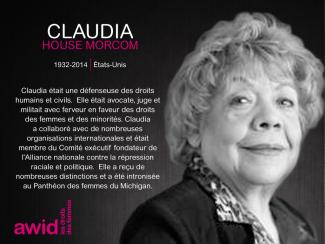
Claudia House Morcom

En septembre 2016, 1800 féministes et défenseur-e-s des droits des femmes venu-e-s des quatre coins de nos mouvements se réunissaient sur les côtes de Bahia à l’occasion du 13ème Forum international de l’AWID.
Cette section met l’accent sur les victoires, les enseignements et les ressources qui ont couronné nos conversations. Nous vous invitons à l’explorer, la partager et laisser vos impressions.
L’un des principaux éléments à retenir de ce Forum a été la nécessité d’élargir et d’approfondir notre travail de collaboration entre mouvements pour faire face à une montée des fascismes et des fondamentalismes, une exacerbation de la cupidité des entreprises et un changement climatique en progression.
Nos Initiatives Jeunes-pousses ont aidé 20 idées émérgées au Forum à évoluer en actions concrètes
La vidéo « Protéger les personnes et la planète » et le guide « Arrimer la résistance à l'action » mettent en lumière le courage des défenseur-e-s des droits humains et présentent des stratégies concrètes pour résister au pouvoir des entreprises
Avec nos animations L'état de nos mouvements féministes et La justice climatique et environnementale, les mouvements ont maintenant des outils créatifs pour appuyer leur travail de plaidoyer.
La compilation des expressions artistiques des mouvements continue d’inspirer une organisation plus forte et plus créative dans le monde entier.
Les mouvements peuvent aussi bénéficier d’une nouvelle méthodologie pour envisager nos horizons féministes. (à venir bientôt !)
A travers son prochain plan stratégique et le processus de son Forum, l’AWID s’engage à poursuivre et approfondir les rapports, les apprentissages et les processus amorcés lors du Forum 2016, tout en s’inspirant de l’actualité.
Les Forums de l’AWID ont vu le jour en 1983, à Washington DC. Depuis, ils revêtent de nombreux aspects et incarnent, selon les personnes, tantôt un processus itératif visant à affiner nos analyses, notre vision et nos actions, un évènement clé galvanisant les féminismes des participant-e-s et leurs organisations ou un espace politique offrant refuge et solidarité aux défenseur-se-s des droits humains.
I believe empowered women empower women and that is why I’ve had an incredible time being an AWID member. My knowledge and understanding of Feminism and intersectionality has been broadened by the exposure I received being part of the AWID Community Street Team. I hope more women join and share topics and ideas that will help other women.
- Loyiso Lindani, South Africa.
Lost For Words |
 |
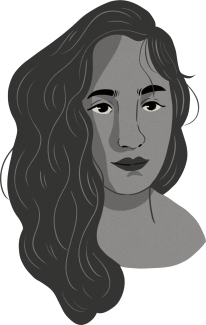 |
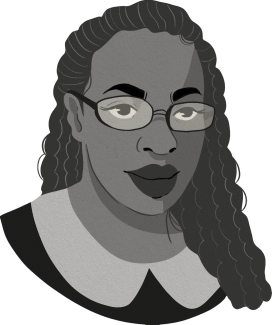
| Chinelo Onwualu | Ghiwa Sayegh |
When we are desperate for change, as we are both in illness and insurrection, our language drains of complexity, becomes honed to its barest essentials... As illness and revolution persist, though, the language made in them and about them deepens, lets in more nuance, absorbed in the acutely human experience of encountering one’s limits at the site of the world’s end.
Johanna Hedva
When we began scheming for such an issue with Nana Darkoa, ahead of AWID’s Crear | Résister | Transform: a festival for feminist movements!, we departed from a question that is more of an observation of the state of the world – a desire to shift ground: why do our sexualities and pleasures continue to be tamed and criminalized even as we are told, over and over again, that they bring neither value nor progress? We came to the conclusion that when they are embodied, something about our sexualities works against a world order that continues to manifest itself in border controls, vaccine apartheids, settler colonialism, ethnic cleansing, and rampant capitalism. Could we speak, then, of the disruptive potential of our sexualities? Could we still do that when, in order to be resourced, our movements are co-opted and institutionalized.
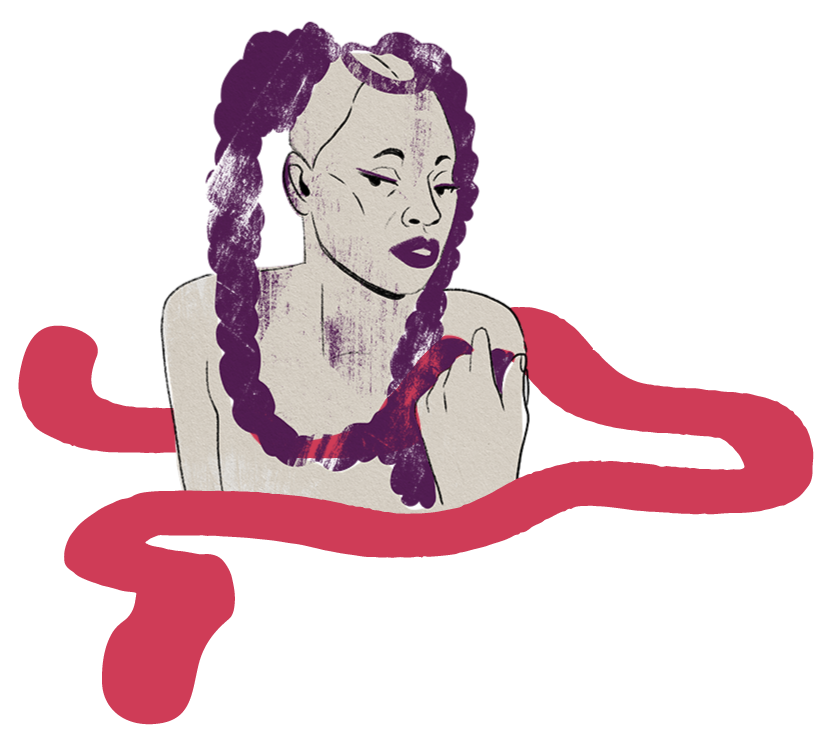
When our embodied labor becomes profit in the hands of the systems we seek to dismantle, it is no wonder that our sexualities and pleasures are once again relegated to the sidelines – especially when they are not profitable enough. In many instances during the production of this issue, we asked ourselves what would happen if we refused to accommodate the essential services of capitalism. But can we dare ask that question when we are exhausted by the world? Perhaps our sexualities are so easily dismissed because they are not seen as forms of care. Perhaps what we need is to reimagine pleasure as a form of radical care – one that is also anti-capitalist and anti-institutional.
As we enter our second full year of a global pandemic, our approach to transnational embodiments has had to focus on a single political realization: that taking care is a form of embodiment. And because right now so much of our work is being done without consideration for the borders between and within ourselves, we are all Transnationally Embodied – and we are all failing. We are failing to take care of ourselves and more critically, to take care of each other.
This failure is not of our own making.
Many of our parents thought of labor as transactional, something to be given in exchange for compensation and a guarantee of care. And while that exchange was not always honored, our parents did not expect that their work would provide them fulfillment. They had their leisure, their hobbies, and their communities for that. Today, we their children, who have been conditioned to think of our labor as intertwined with our passion, have no such expectations. We think of work and leisure as one and the same. For too many of us, work has come to embody our whole selves.
However, heteropatriarchal capitalism doesn’t value us, let alone our labor or our sexualities. This is a system that will only demand more and more until you die. And when you die, it will replace you with somebody else. Expectations to be online round the clock mean we simply can’t get away from work, even when we want to. This commercialization of labor, divorcing it from the person, has infiltrated every aspect of our lives and is being perpetuated even in the most feminist, the most radical and revolutionary circles.
Capitalist expectations have always been particularly pernicious to bodies who don’t fit its ideal. And those seeking to consolidate their powers have used the pandemic as an opportunity to target women, sexual minorities, and any others that they see as less than.
This special issue exists because of, and certainly in spite of this.
Almost every contributor and staff member was pushing themselves past their capacity. Every single piece was produced from a place of passion, but also incredible burnout. In a very real way, this issue is an embodiment of transnational labor – and in the digital world we live in, all labor has become transnational labor. As we have to contend with new borders that do not break an old order but reify it, we experienced firsthand, alongside our contributors, how capitalism drains our limits – how it becomes difficult to construct cohesive arguments, especially when these come with a deadline. We collectively became lost for words – because we are lost for worlds.
Feeling lost and alone in the world of heteropatriarchal capitalism is exactly why we need to re-evaluate and rethink our systems of care. In many ways, we turned this issue into a mission of finding pleasure in care. Because it has become more difficult to construct cohesive arguments, visual and creative mediums have come to the forefront. Many who used to write have turned to these mediums as ways to produce knowledge and cut through the mental fog that’s enveloped us all. We brought into the issue other voices, in addition to many whom you heard at the festival, as a way of opening up new conversations, and extending our horizons.
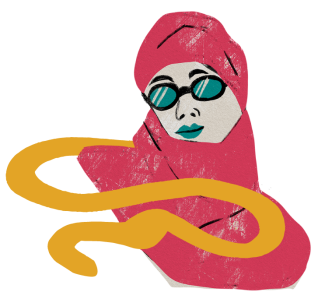
As we are robbed of our words, it is our political duty to continue to find ways to maintain and care for ourselves and each other. So much of our current realities are trying to erase and displace us, while still exploiting our labor. Our embodiment, therefore, becomes a form of resistance; it is the beginning of us finding our way out and into ourselves.

Affectionately known as “Mama Efua”, her work to end Female Genital Mutilation (FGM) movement spanned three decades and helped bring international attention and action to end this harmful practice.
In 1983 Efua co-founded FORWARD (The Foundation for Women’s Health, Research and Development), which became a leading organisation in the battle to raise awareness about FGM. Her 1994 book, “Cutting the Rose: Female Genital Mutilation,” is considered the first on FGM and, featured in Columbia University’s “Africa’s 100 Best Books for the 20th Century”.
Originally from Ghana and a nurse by training, Efua joined the WHO in 1995 and successfully pushed for FGM to go on the agendas of WHO member states. She also worked closely with the Nigerian government in formulating a comprehensive National Policy that laid the groundwork for Nigeria’s anti-FGM laws, still in place today.
Her ground breaking work culminated in an Africa-led campaign, “The Girl Generation,” which is committed to ending FGM within a generation. Efua demonstrated how one person can become the unifying voice for a movement, and her wise words - “shared identity can help bring activists from different backgrounds together with a common sense of purpose” – are more relevant than ever.

#FreezeFascisms
Depuis l’adoption de la Déclaration et du programme d’action de Beijing il y a 30 ans, les groupes fascistes exercent un pouvoir et une influence croissantes dans les espaces multilatéraux, faisant reculer les acquis en matière d’égalité de genre et de protection des droits humains dans le monde.
À l’approche de la CSW69, nous co-organisons de courageuses initiatives horizontales, sur le terrain et en ligne, pour échanger des stratégies et bâtir un pouvoir féministe au-delà de Beijing+30. Notre présence collective perturbe les mécanismes d’exclusion des institutions dans ces espaces tout en soutenant les mouvements qui s’organisent autour d’alternatives féministes aux systèmes d’oppression.
Participez aux conversations du 10 au 21 mars 2025 pour, collectivement, faire de la CSW69 un espace de résistance et de solidarité.
Entrevista realizada por Chinelo Onwualu
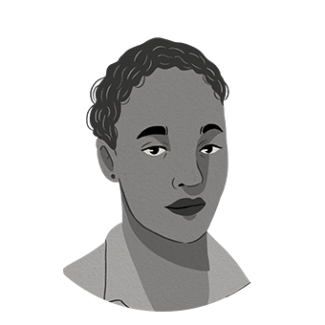 |
Naike Ledan es una defensora de la justicia social, una feminista comprometida y con 20 años de experiencia en la defensa de los derechos humanos y la justicia social, el empoderamiento de las mujeres, la lucha por el acceso universal a los servicios básicos y la inclusión social, así como por el desarrollo de las capacidades de la sociedad civil. Tiene una vasta trayectoria de trabajo en Canadá, en África occidental y meridional, y en Haití, en la promoción de los derechos civiles, el desarrollo de las capacidades de las organizaciones de la sociedad civil, enfocada sobre todo en los determinantes sociales de la exclusión estructural. Valora los principios de un liderazgo compartido, anticolonial, contra la opresión y los espacios antipatriarcales. |
Chinelo Se te conoce como activista por los derechos trans; me intriga cómo fue tu recorrido hasta allí.
Naike Crecí en Haití donde viví hasta los 18 años y luego me fui a vivir a Montreal donde pasé 19 años. Cuando volví a Haití, en 2016, pensaba que estaba regresando a casa pero el lugar había cambiado y tuve que readaptarme. No volví a conectarme como había esperado hacerlo con la familia y las amistades de mi infancia. Volví habiendo vivido en el exterior, con una situación laboral cómoda y durante mucho tiempo me sentí bastante extranjera. Y a la vez me sentía muy en casa por el idioma, los silencios entendidos, no tener que explicar nada cuando empezamos a cantar un anuncio publicitario. Ya sabes: esas cosas que compartimos, esa energía, ese espacio, ese espíritu.
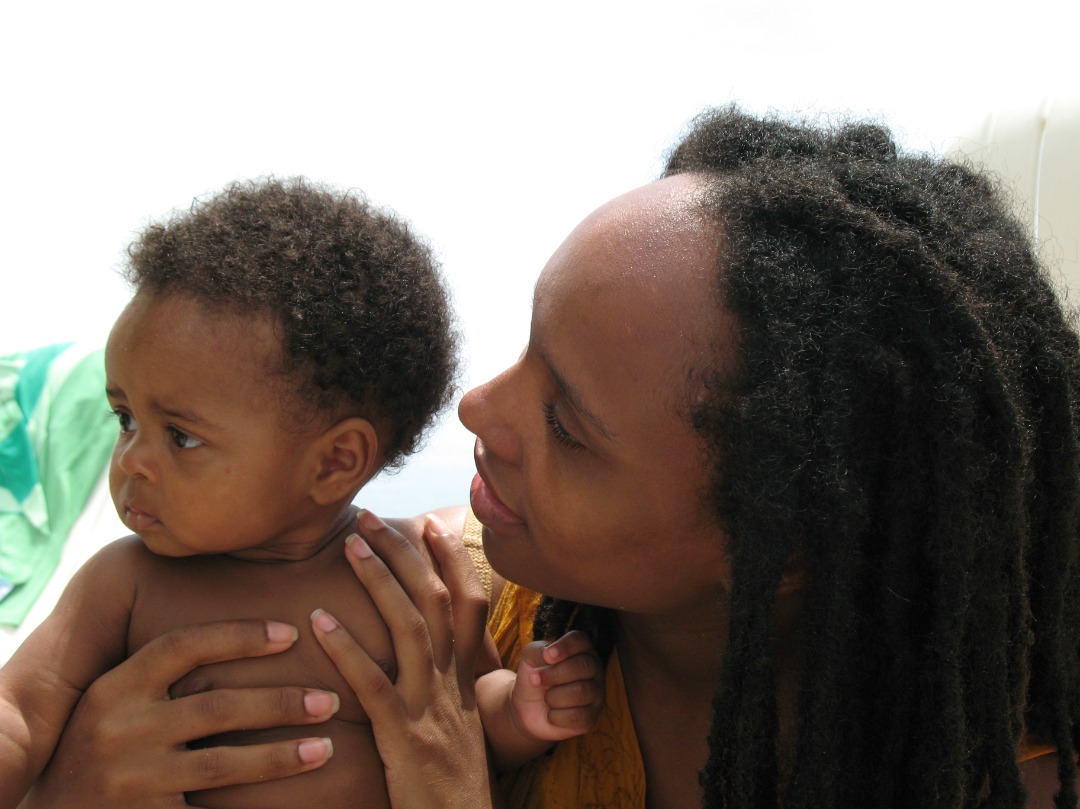
Lo que me ayudó fue que me gustó mucho la tarea de andar por el país y documentar lo que la gente sabía. Entonces, dejé la comodidad de lado. Me convertí en directora nacional de una organización regional que era completamente queer. Mi trabajo consistía sobre todo en conseguir recursos y desarrollar capacidades en la sociedad civil. Mi estrategia era salir a las zonas rurales, buscar a todas las organizaciones pequeñas que había ahí, ayudarlas a desarrollar su capacidad y financiarlas. No me interesaban lxs polítiquxs, ni andar a los apretones de manos o sacarme fotos (risas). Tuve un muy buen aliado: Charlot Jeudy, el activista (queer) que fue asesinado hace tres años en su casa. Nos acercamos mucho después de que se prohibió en Haití un festival de cine afro-queer que habíamos planeado juntxs. La prohibición hizo mucho ruido y logró que se hablara de ser queer en todas partes, entonces Charlot me presentó a todas las OSC pequeñitas que había en cada rincón del país. Y ahí estaba yo para ayudarlas a registrarse o a elaborar sus planes estratégicos. Fue esa clase de trabajo la que me convirtió en activista queer y, por extensión, en activista trans. Aunque yo no me defino como activista. Es una palabra con mucho peso, ¿no crees? Es algo que otrxs dicen de ti. Yo creo que solo soy amante y luchadorx (risas).
Chinelo Cuéntame sobre el taller que facilitaste durante el Festival de AWID. ¿De qué se trataba y en qué contexto surgió?
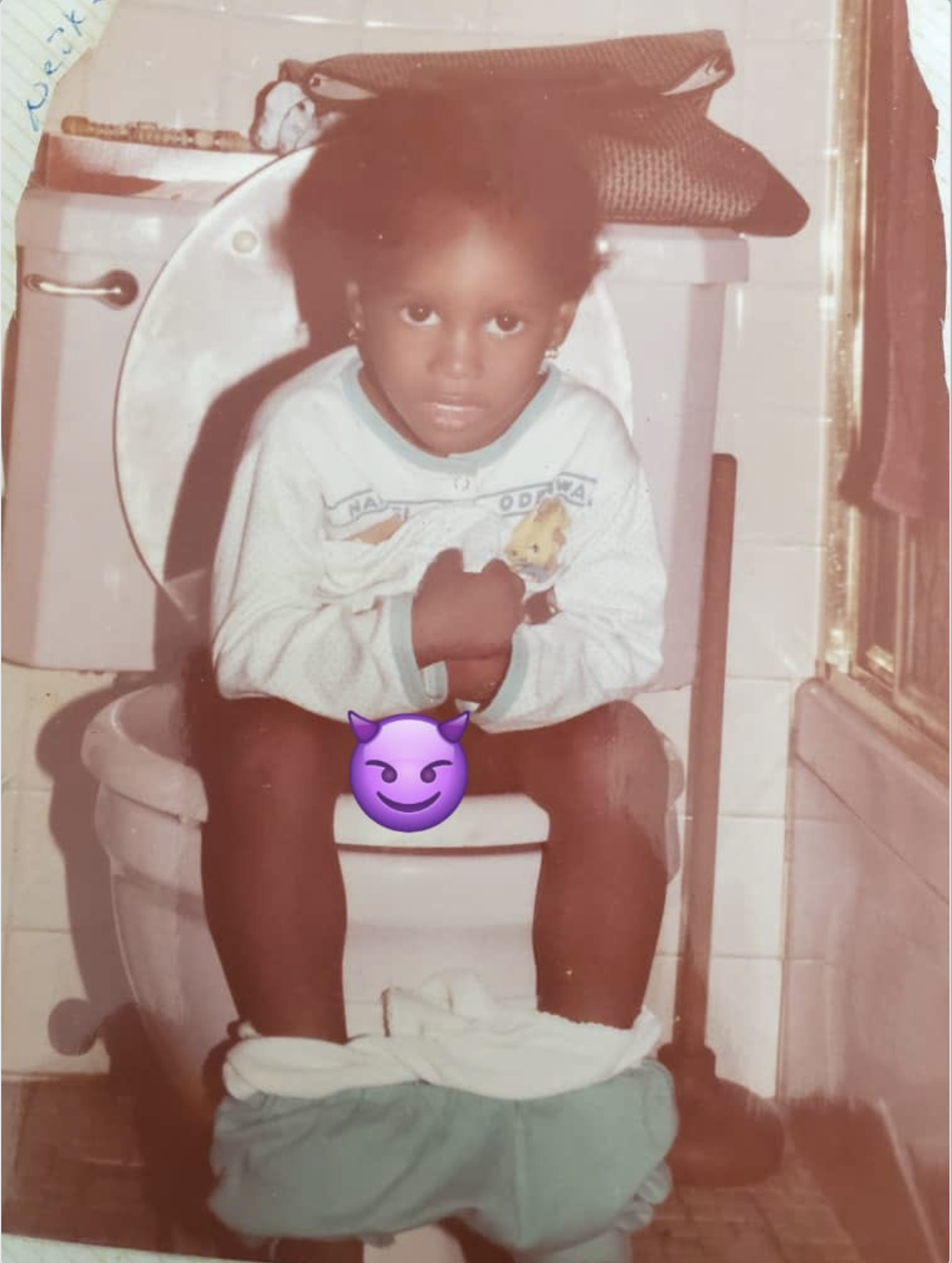
Naike Los medios internacionales no hablan en serio sobre Haití, pero en un ambiente político tan malo como el que estamos viviendo, el ambiente económico se torna aún más catastrófico. Como haitianx más bien de clase media, que habla otros idiomas, que tiene otros pasaportes, al principio dudé de si yo debía ocupar ese espacio o no. Pero muchas veces me veo como un puente más que como alguien que va a hablar de sí mismx. Entonces decidí invitar a Semi, una joven mujer trans brillante que vive fuera de Puerto Príncipe, para que tomara el espacio y la palabra, y nos trazara un recorrido sobre el ecosistema de las realidades que viven las mujeres trans en Haití. Terminamos creando una sesión sobre el feminismo que no incluye — o, diría yo, los espacios feministas formales (que no lo hacen) — y cómo en Haití las chicas trans no cuentan con espacios donde puedan contribuir al conocimiento de las mujeres y compartir sus realidades. Por eso el Festival de AWID me dio la oportunidad de ceder el espacio a las mujeres que deben ocuparlo. Lo pasamos muy bien, tomamos vino en línea mientras charlábamos. Mi cofacilitadora, Semi, contó cómo fue haber sido unx niñx/niña/mujer trans en distintas etapas de su vida. También habló de los peligros de la calle, de la pobreza, la exclusión, lo que ocurre cuando «se te nota», así como de sus victorias.
Chinelo ¿Qué relación existe en Haití entre las mujeres trans y las organizaciones feministas? ¿Cómo ha sido tu experiencia en este sentido?
Naike La experiencia de las mujeres trans en Haití ha sido realmente difícil; devastadora en realidad. Pasaron de la invisibilidad absoluta a estar extremadamente sexualizadas. Otra cosa que sucede es que las están matando y los medios no informan acerca de esos asesinatos. Así de inexistentes, de borradas son y están las mujeres trans. Están en todas partes pero no en los espacios laborales, ni en los espacios feministas ni en las organizaciones. Ni siquiera en las organizaciones LGBT. Solo muy recientemente, y gracias a mucha presión del activismo, algunas de estas organizaciones de alguna manera se están readaptando, pero en los espacios feministas esto sigue estando fuera de toda consideración. Todavía tenemos que escuchar el viejo discurso excluyente que dice «No son mujeres. Por supuesto, si no se les nota … » La cultura de que no se note es una conversación sobre gestión de riesgos: cuánto se te nota y cuánto no se te nota, y lo que eso implica para tu cuerpo y en términos de la violencia que causa. En las realidades trans-excluyentes que vivimos, que se reproducen en muchos espacios feministas, a las que no «se les nota» en absoluto tal vez se las considere chicas, pero solo hasta cierto punto. Pero, ¿qué pasa cuando se enamoran, cuando quieren conversar, cuando están en el armario, cuando quieren adoptar una determinada estética o seguir una carrera? La conversación sobre la terapia hormonal termina centrándose en la reducción de riesgos, como lo dijo la propia Semi en el taller. Pero no tenemos la opción de las terapias hormonales, no tenemos ni el marco médico ni un sistema que apoye a las que quieran tomar por ese camino.
Chinelo Cuando hablas de lo que piensa la sociedad acerca de las personas trans y las personas queer, suena bastante similar a lo que ocurre en Nigeria que puede ser un ambiente profundamente homofóbico.
Naike Haití es un país muy complejo de maneras muy hermosas. Aquí nada es simple, ¿sabes?, las cosas nunca son de una sola forma. La gente es muy tolerante, y también muy homofóbica. Hay zonas rurales en las que la gente no es para nada homofóbica porque allí hay muchos templos vudús y esa es una religión que respeta la vida. Un principio básico de la religión vudú es que todxs lxs niñxs son niñxs. Por eso es una religión que no define lo que está bien ni lo que está mal. Durante muchísimo tiempo la gente pensó en Haití como un refugio, un lugar donde había tolerancia — estamos hablando de los setenta, ochenta, antes del VIH, inclusive los noventa. Luego vino el terremoto (en 2010) donde murieron casi 300 000 personas. Y entonces llegó todo ese dinero de las iglesias evangélicas del sur de Estados Unidos para reconstruir el país y encontrar a Jesús. Por eso la homofobia en Haití es algo muy reciente. En lo profundo, en el corazón del alma de su cultura, no puedo realmente decir que sea un país homofóbico. Pero en la vida cotidiana no hay duda de que esa violencia lastima la piel de las personas queer. Y de las mujeres, de las mujeres empobrecidas, las mujeres de piel oscura, porque el colorismo está muy arraigado en el Caribe.
Chinelo ¿Cómo te has enfrentado a esto? ¿Cuál ha sido tu estrategia para sobrevivir?
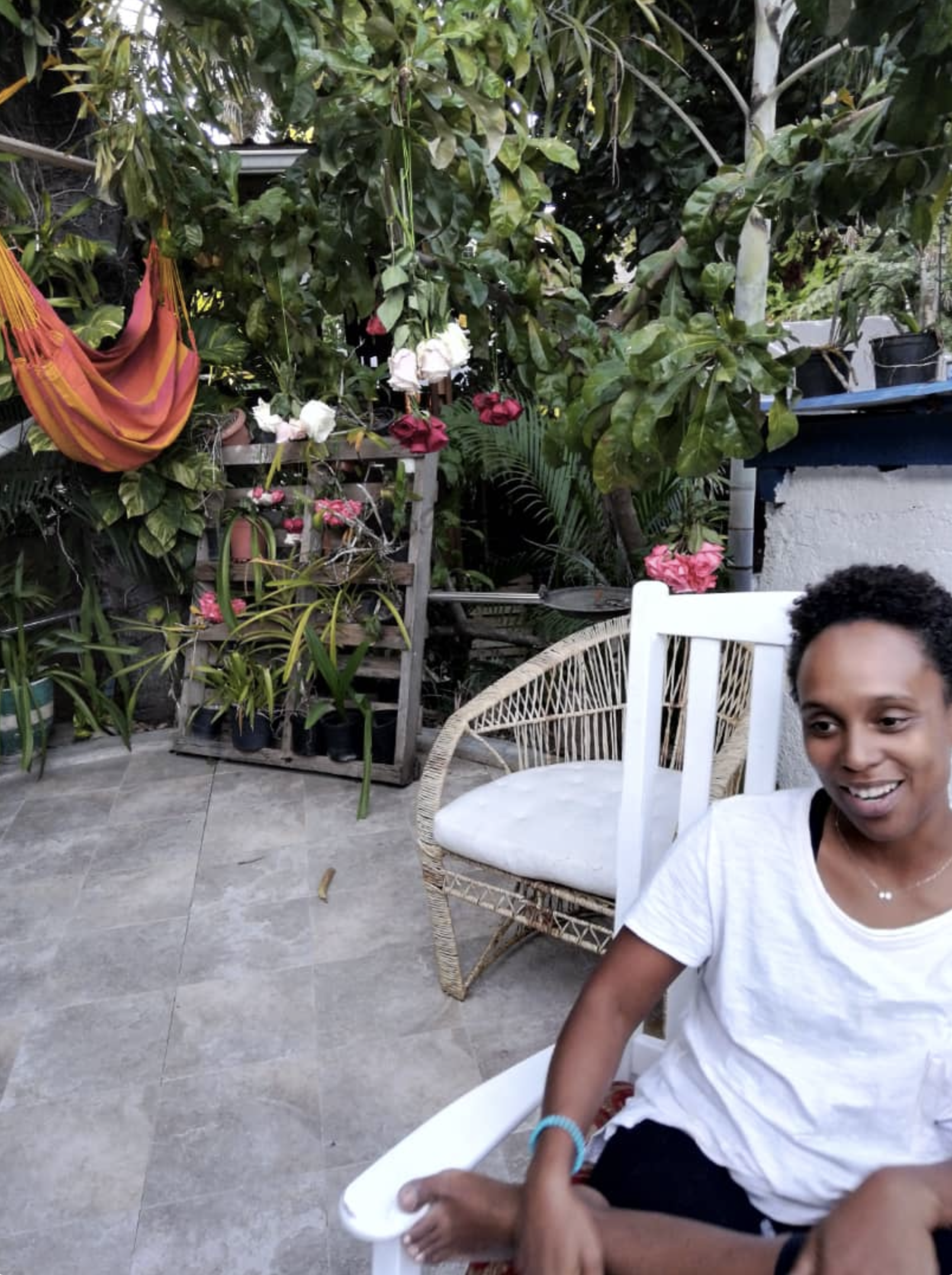
NaikeEstoy enamoradx de mi trabajo. Me encanta trabajar. Cuando recién llegué trabajaba en una ONG horrible pero el trabajo que hacía era maravilloso. Estaba siempre en zonas rurales, conversando y aprendiendo de la gente, de las mujeres. Y eso me colmó el corazón durante mucho tiempo porque adoro mi cultura, a la gente negra, a las mujeres negras, a las ancianas negras, lxs bebés negrxs. Es algo que me colma espiritualmente. Cuando vivíamos en Canadá, mis hijxs iban a esas escuelas sólo de blanquxs donde lxs trataban como mascotas. No hablaban creole ni francés. Y ahora corren libres por el jardín y ya están empezando a pelearse en creole. También encontré espacios de supervivencia en la gente a la que conocí. Forjé lazos con gente queer y con otra gente rara como yo, y eso ha sido realmente maravilloso. Pero ahora todo se ha vuelto más difícil porque ya no me siento segurx en Haití. En Puerto Príncipe ocurren casi 40 secuestros por semana, y esto es así desde 2018. Ahora tengo ataques de ansiedad y de pánico. Entonces, es hora de irme y he comenzado a preguntarme dónde está mi hogar. Pasé 19 años en Montreal pero allí nunca sentí que estuviera en mi casa. Desde que me fui, nunca lo extrañé y por eso no quiero volver. Últimamente estoy llorando mucho porque siento como que está comenzando mi segundo exilio.
Chinelo ¿Cómo es tu relación con el placer, el tiempo libre y el descanso?
Naike Mi relación con el placer, el tiempo libre y el descanso es la misma, porque para mí son una sola cosa. Son esos momentos vividos en los que disfruto del sol sobre mi rostro, por ejemplo. Es placer, tiempo libre y descanso a la vez.
Placer: Es el espacio al que siempre voy, casi siempre como refugio donde puedo celebrarme a mí mismx. Me reservo el poder y el derecho de hacer mucho ruido o nada de ruido cuando disfruto del placer que siento — de todo el placer en el que me deleito en abundancia, viciosamente, que incluye el placer de la soledad y el silencio pero no se limita a eso.
Tiempo libre: andar en bicicleta, ir a festivales de música, comer, descubrir vinos, bailar las danzas vudús tradicionales de Haití son algunas de las muchas opciones que se me ocurren en este momento.
Descanso: Para eso vivo. Como persona que sobresale en su trabajo y que está literalmente enamorada de él, es una paradoja lo haraganx que soy. Nadie lo sabe porque lo que todo el mundo ve es una persona que trabaja muchísimo y es muy exitosa. No saben que puedo ser inflexible en cuanto a disfrutar profundamente de no hacer nada.
Esta edición en alianza con Kohl: una publicación para Body and Gender Research analizará soluciones, propuestas y realidades feministas para transformar nuestro mundo actual, nuestros cuerpos y nuestras sexualidades.

نصدر النسخة هذه من المجلة بالشراكة مع «كحل: مجلة لأبحاث الجسد والجندر»، وسنستكشف عبرها الحلول والاقتراحات وأنواع الواقع النسوية لتغيير عالمنا الحالي وكذلك أجسادنا وجنسانياتنا.
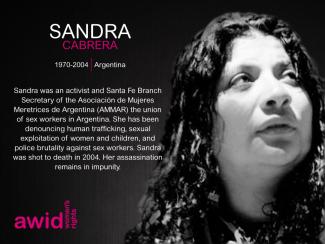
Zita fue una activista por los derechos de las mujeres que defendió los derechos de las mujeres rurales en el Gran Kivu.
Fue la primera directora ejecutiva de UWAKI, una organización de mujeres muy conocida. A través de su trabajo con la Red de Mujeres por los Derechos y la Paz (RFDP) y el Foro de Mujeres por la Paz de Kivu del Sur, dedicó su vida a ayudar a restablecer la paz en la zona oriental de la República Democrática del Congo. Se manifestó firmemente en contra del uso de la violencia sexual como arma de guerra.
En 2006, se propuso como candidata en las primeras elecciones democráticas del país. Aunque no ganó, siguió defendiendo los derechos de las mujeres y la comunidad de Kivu del Sur la recuerda con cariño.

por Rode Wanimbo
«Señor, somos indignas. Somos las que pecaron, porque Eva comió el fruto en el Edén. Solo somos mujeres que cultivan batatas, cuidan cerdos y dan a luz niñxs. Creemos que tú moriste en la cruz para liberarnos. Gracias, en el nombre de Jesús, amén». (...)
< arte: «Offerings for Black Life» [Ofrendas para las vidas negras], Sokari Ekine
Sin palabras |
|
|
| Chinelo Onwualu | Ghiwa Sayegh |
«Cuando estamos desesperadxs por el cambio, como sucede tanto en la enfermedad como en la insurrección, nuestro lenguaje se vacía de complejidad, se queda con sus componentes más esenciales… Sin embargo, a medida que la enfermedad y la revolución persisten, el lenguaje que se hizo en ellas y sobre ellas se profundiza, admite más matices, inmerso en la aguda experiencia humana de encontrar los propios límites en el lugar del fin del mundo».
Cuando comenzamos a delinear este número con Nana Darkoa, antes de Crear | Résister | Transform: un festival para movimientos feministas! de AWID, partimos de una pregunta que es más bien una observación sobre el estado del mundo, un deseo de cambiar el terreno: ¿por qué nuestras sexualidades y placeres siguen siendo domesticados y criminalizados incluso cuando nos dicen, una y otra vez, que no tienen valor ni contribuyen al progreso? Llegamos a la conclusión de que cuando se corporizan, hay algo en nuestras sexualidades que opera contra un orden del mundo que sigue manifestándose en los controles fronterizos, los apartheids en relación a las vacunas, el colonialismo de asentamiento, la limpieza étnica, y el capitalismo descontrolado. ¿Podemos hablar, entonces, del potencial disruptivo de nuestras sexualidades? ¿Podemos seguir haciendo eso cuando, para poder obtener recursos, nuestros movimientos deben ser cooptados e institucionalizados?
Cuando el trabajo de nuestros cuerpos se convierte en ganancias en las manos de los sistemas que buscamos desmantelar, no sorprende que nuestras sexualidades y placeres queden relegados una vez más a las márgenes, especialmente cuando no son lo suficientemente rentables. En muchos momentos durante la producción de este número, nos preguntamos qué sucedería si nos negáramos a dar cabida a los servicios esenciales del capitalismo. Pero ¿podemos atrevernos a hacer esa pregunta cuando estamos agotadxs por el mundo? Quizás nuestras sexualidades son desestimadas con tanta facilidad porque no son vistas como formas de cuidado. Quizás lo que necesitemos sea reimaginar el placer como una forma radical de cuidado, una que también es anticapitalista y anti-institucional.
Estamos entrando en nuestro segundo año completo de pandemia global y nuestro abordaje de la corporalidad transnacional ha tenido que concentrarse en un único descubrimiento político: que cuidar es una forma de habitar la corporalidad. Y como ahora tanto de nuestro trabajo se hace sin tomar en cuenta los límites entre y dentro de nosotrxs, todxs somos Corporalidades Transnacionales, y eso a todxs nos sale mal. Estamos fallando en cuanto a cuidarnos y, lo que es más grave, en cuidar a lxs otrxs.
Ese fracaso no es producto de nuestras acciones.
Muchxs de nuestras madres y padres pensaban que el trabajo era transaccional, algo que debía darse a cambio de una compensación y una garantía de cuidado. Y si bien ese intercambio no siempre se cumplió, nuestrxs madres y padres no esperaban que su trabajo les diera satisfacción. Para eso tenían su ocio, sus pasatiempos, y sus comunidades. Hoy, nosotrxs, sus hijxs, que hemos sido condicionadxs para pensar en nuestro trabajo como entrelazado con nuestra pasión, no tenemos esas expectativas. Pensamos el trabajo y el ocio como una sola y misma cosa. Para demasiadas personas, el trabajo ha llegado a encarnar todo lo que somos.
Sin embargo, el capitalismo heteropatriarcal no nos valora, ni hablar de que valore nuestro trabajo o nuestras sexualidades. Este es un sistema que solo te exigirá más y más hasta que mueras. Y cuando mueras, te reemplazará por otra persona. Que se espere que estemos en línea todo el día significa que simplemente no podemos tomar distancia del trabajo, ni siquiera cuando queremos hacerlo. Esta comercialización del trabajo, divorciándolo de la persona, ha permeado cada aspecto de nuestras vidas y está siendo perpetuado incluso en los círculos más feministas, más radicales y más revolucionarios.
Las expectativas capitalistas siempre han sido particularmente dañinas para los cuerpos que no se ajustan a su ideal. Y quienes buscan consolidar sus poderes han utilizado la pandemia como una oportunidad para concentrar sus ataques en las mujeres, las minorías sexuales y cualquier otrx a quien subestimen.
Este número especial existe debido a eso y ciertamente a pesar de eso.
Casi todxs lxs colaboradorxs e integrantes del equipo se estaban presionando para ir más allá de su capacidad. Cada una de las colaboraciones fue producida desde un lugar de pasión, pero también de un increíble agotamiento. De una forma muy real, este número encarna el trabajo transnacional y, en el mundo digital en el cual vivimos, todo trabajo se ha convertido en trabajo transnacional. A medida que nos enfrentamos a nuevas fronteras que no han roto un viejo orden sino que lo reifican, experimentamos de primera mano, junto a nuestrxs colaboradorxs, cómo el capitalismo vacía nuestros límites, cómo se hace difícil construir argumentos coherentes, especialmente cuando tenemos una fecha límite para hacerlo. Nos quedamos colectivamente sin palabras, porque nos quedamos sin mundos.
Es precisamente porque nos sentimos perdidxs y solxs en el mundo del capitalismo heteropatriarcal que tenemos que reevaluar y repensar nuestros sistemas de cuidado. En muchos sentidos, hicimos de este número una misión de encontrar placer en el cuidado. Porque se ha vuelto más difícil construir argumentos coherentes, los medios visuales y creativos han pasado al primer plano. Muchas personas que solían escribir se han volcado a estos medios como una vía para producir conocimiento y atravesar la niebla mental que nos ha envuelto a todxs. Trajimos otras voces a este número, además de muchxs a quienes ya escucharon en el Festival, como una manera de abrir nuevas conversaciones y ampliar nuestros horizontes.
Dado que nos roban nuestras palabras, es nuestro deber político seguir encontrando maneras de mantenernos y cuidarnos a nosotrxs mismxs y a lxs otrxs. Muchas de nuestras realidades actuales están tratando de borrarnos y desplazarnos, mientras que siguen explotando nuestro trabajo. Nuestra corporización, por lo tanto, se convierte en una forma de resistencia; es el comienzo de que encontremos nuestro camino hacia afuera y hacia nosotrxs mismxs.
Nous sommes ravi.es d'annoncer le lancement du nouveau podcast de l'AWID, NOTRE FLAMME FÉMINISTE. Notre série narrative dévoile plus de 40 ans de mouvements féministes et réinvente une voie à suivre.
Dans notre saison pilote, vous entendrez cinq histoires captivantes qui font partie d'une constellation d'activisme féministe aujourd'hui. Animé par Gopika Bashi, notre directrice adjointe des programmes à l'AWID, chaque épisode explore des réalités féministes uniques mais interconnectées qui améliorent la justice de genre et les droits humains.
Produit par notre partenaire de podcast Webby Hueman Group Media, vous pouvez vous abonner à NOTRE FLAMME FÉMINISTE et écouter notre premier épisode ici.
Retrouvez-nous sur Apple Podcasts, Spotify ou partout où vous obtenez vos podcasts. Partagez avec votre réseau ! Aidez-nous à diffuser des histoires qui allument notre feu féministe et nous poussent à l'action.
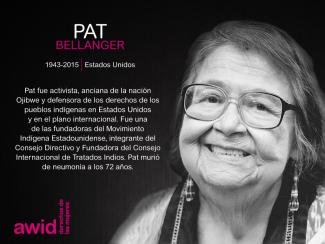
Bessy también fue integrante de Arcoíris, una organización que apoya a la comunidad LGBTI+. También fue una persona de referencia para la Plataforma Derechos Aquí y Ahora de Honduras, y abogó enérgicamente por la ciudadanía plena de las personas trans, y por la aprobación de una ley de identidad de género que permitiera a las personas trans cambiar su identidad de género legalmente.
"Desde principios de año [2019] la comunidad trans ha sufrido una serie de ataques, por defender, por reivindicar derechos". - Rihanna Ferrera (hermana de Bessy)
Bessy era una trabajadora sexual, y a principios de julio de 2019, fue asesinada a tiros por dos hombres mientras trabajaba en las calles de Comayagüela. Quienes la asesinaron fueron posteriormente arrestados.
Bessy es una de las muchxs defensorxs de los derechos LGBTI+ en Honduras que fueron asesinadxs por su identidad y su trabajo. Otras compañeras han sido: Cynthia Nicole, Angy Ferreira, Estefanía "Nia" Zúñiga, Gloria Carolina Hernández Vásquez, Paola Barraza, Violeta Rivas y Sherly Montoya.
El caso de Bessy es emblemático por su injusticia y por reflejar un problema mucho más amplio, que es el de la violencia sistemática a la que se enfrenta la comunidad LGBTI+ en Honduras, ya que el Estado ni garantiza los derechos que ofrece y ni brinda protección. Esto ha creado una cultura de impunidad.
A pesar de los riesgos a los que se enfrentan lxs defensorxs LGBTI+ en Honduras, continúan a diario con su trabajo para desafiar y resistir la violencia, y luchar contra el estigma y la discriminación.
"Si muero, que sea por algo bueno y no por algo inútil. No quiero morir huyendo, como unx cobarde. Si muero, quiero que la gente diga que morí luchando por lo que es mío". - integrante de Arcoíris.
par Marta Plaza Fernández
Le pouvoir de tisser des réseaux où nous nous soutenons les unes les autres: telle est la réalité féministe dont je veux vous faire part. (...)
illustration : « Guérir ensemble », par Upasana Agarwal >
Por Michel’le Donnelly
El Festival Feminista Crear | Resister | Transform de septiembre fue una bocanada de aire fresco en estos tiempos tan inciertos, turbulentos y dolorosos.
El espacio que creó este festival era muy necesario. Necesario para el alma de quienes buscamos consuelo en estas horas sombrías. Necesario para esas ansias de comunidad en un mundo que se siente cada vez más aislado y, sobre todo, necesario para quienes luchamos contra los mismos sistemas que nos han puesto a muchxs de nosotrxs de rodillas, en especial durante los últimos dos años.
«Las crisis no son un fenómeno nuevo para los movimientos feministas y sociales; tenemos una dilatada historia de supervivencia ante la opresión y de construcción de nuestras comunidades y de nuestras propias realidades».
Defender visiones alternativas y realidades alternativas a la que estamos viviendo ahora es la piedra basal de la agenda feminista. Hay muchísimas personas maravillosas que están abocadas a explorar distintas formas de existencia para nosotrxs en el mundo. Son alternativas centradas en las personas. Son equitativas y justas. Son mundos colmados de amor, ternura y cuidados. Las visiones descritas son prácticamente demasiado bellas para imaginar, pero debemos forzarnos a imaginar porque es la única forma de seguir.
Durante los últimos 10 años, he tenido la increíble fortuna de trabajar con un colectivo feminista que no solo está imaginando una realidad alternativa, sino que está viviendo en ella activamente. Nos inspira la labor de tantos otros movimientos feministas de todo el globo que no han permitido que el patriarcado blanco supremacista y capitalista los disuadan de su visión. Este colectivo me mantuvo en pie cuando todo lo que deseaba era desmoronarme. Muy similar a la historia que relató María Bonita el cuarto día del festival; la liberación que he encontrado en los movimientos feministas es demasiado potente como para que solo yo la experimente. Es algo para compartir, algo que tenemos que gritarlo a los cuatro vientos para invitar a otras personas a sumarse.
El cuarto día del festival nos trajo una conversación cautivante entre Felogene Anumo, la Dra. Dilar Dirik, Nana Akosua Hanson y Vandana Shiva, quienes alentaron a quienes asistimos al festival a creer no solo que un futuro alternativo es posible, sino que se hace imperiosamente necesario. Los feminismos venimos hablando de mundos alternativos desde hace muchos años, y escuchar hablar sobre ellos en el panel no solo nos abrió los ojos, sino que además nos reconfortó. Cuando digo que nos reconfortó quiero decir que me hizo sentir seguridad al saber que ciertamente existen sólidas redes feministas globales que trabajan en las fronteras nacionales e internacionales para descolonizar los marcos establecidos de nuestras realidades actuales.
Durante la sesión, la Dra. Dirik destacó el hecho de que la convicción, el sacrificio y la paciencia son lo más necesario para abolir los sistemas opresivos en los que vivimos hoy. La colaboración, el compañerismo, la creatividad, la solidaridad y la autonomía. Estos son los pilares fundamentales para erigir una sociedad global feminista a los que todos los movimientos feministas del mundo deberíamos aferrarnos.
En todo el globo se pueden encontrar varios ejemplos prácticos de estas realidades, incluido el Movimiento Soulaliyate para los Derechos de las Mujeres al Uso de la Tierra. En referencia a las mujeres tribales de Marruecos que viven en tierras colectivas, el Movimiento de Mujeres Soulalyate es la primera movilización nacional de base por los derechos a la tierra de ese país. Si bien, en un principio, el movimiento era bastante pequeño, este creció hasta convertirse en una agenda de orden nacional que desafió la naturaleza de género de las leyes que rigen el uso de la tierra en Marruecos. En 2019, el grupo contribuyó a modificar el marco legislativo nacional sobre la gestión de los bienes comunitarios a través de la adopción de tres conjuntos de leyes que garantizan la igualdad entre mujeres y hombres.
Otro ejemplo práctico es el de Casa Trans Zuleymi de Perú. La casa, que funciona desde 2016, es un refugio para mujeres, niñas y adolescentes migrantes trans a quienes el Estado ha dejado atrás. Ha brindado albergue seguro a 76 mujeres migrantes trans de Venezuela, junto a 232 de zonas selváticas, comunidades indígenas y la costa norte de Perú.
Saber de estos movimientos feministas que están haciendo su parte para convertir en realidad los futuros alternativos es sumamente inspirador y necesario, en especial cuando me cuesta tanto lidiar con la sucesión interminable de malas noticias que parecen fluir sin interrupción.
«El patriarcado capitalista es como un cáncer. No se sabe cuándo para de crecer». Dra. Vandana Shiva
Desde siempre, AWID ha sido un movimiento inspirado en las realidades feministas que podemos vivir. Con sus festivales, así como con la revista y la caja de herramientas sobre las realidades feministas, nos ha mostrado otro modo de hacer las cosas. Podemos imaginar un mundo donde el cuidado sea prioridad, donde las economías feministas y la justicia de género sean la norma. La creación de futuros alternativos es nuestra forma de devolver el golpe, es nuestra forma de resistir a la violencia que se perpetra contra nuestros cuerpos todos los días.
El Festival Crear | Resister | Transform me permitió sentirme muy conectada con una comunidad global, a muchxs de lxs cuales nunca voy a conocer. Saber que todxs estamos reclamando y trabajando en pos de otro mundo encendió una llama en mi alma y no veo la hora de conocer qué nos traerá el próximo festival.
Si te lo perdiste, cerciórate de ver la sesión «Otro mundo está en camino: alternativas, feminismos y otro mundo» celebrada el cuarto día del festival. Y recuerda, como expresó la Dra. Shiva de modo tan elocuente: «La energía de las mujeres mantendrá la vida en la tierra. No nos vencerán».