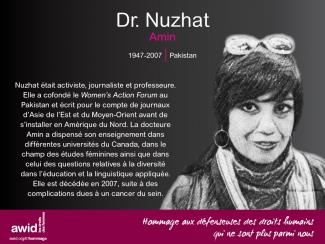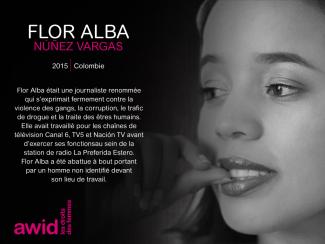
Flor Alba Nunez Vargas

En septembre 2016, 1800 féministes et défenseur-e-s des droits des femmes venu-e-s des quatre coins de nos mouvements se réunissaient sur les côtes de Bahia à l’occasion du 13ème Forum international de l’AWID.
Cette section met l’accent sur les victoires, les enseignements et les ressources qui ont couronné nos conversations. Nous vous invitons à l’explorer, la partager et laisser vos impressions.
L’un des principaux éléments à retenir de ce Forum a été la nécessité d’élargir et d’approfondir notre travail de collaboration entre mouvements pour faire face à une montée des fascismes et des fondamentalismes, une exacerbation de la cupidité des entreprises et un changement climatique en progression.
Nos Initiatives Jeunes-pousses ont aidé 20 idées émérgées au Forum à évoluer en actions concrètes
La vidéo « Protéger les personnes et la planète » et le guide « Arrimer la résistance à l'action » mettent en lumière le courage des défenseur-e-s des droits humains et présentent des stratégies concrètes pour résister au pouvoir des entreprises
Avec nos animations L'état de nos mouvements féministes et La justice climatique et environnementale, les mouvements ont maintenant des outils créatifs pour appuyer leur travail de plaidoyer.
La compilation des expressions artistiques des mouvements continue d’inspirer une organisation plus forte et plus créative dans le monde entier.
Les mouvements peuvent aussi bénéficier d’une nouvelle méthodologie pour envisager nos horizons féministes. (à venir bientôt !)
A travers son prochain plan stratégique et le processus de son Forum, l’AWID s’engage à poursuivre et approfondir les rapports, les apprentissages et les processus amorcés lors du Forum 2016, tout en s’inspirant de l’actualité.
Les Forums de l’AWID ont vu le jour en 1983, à Washington DC. Depuis, ils revêtent de nombreux aspects et incarnent, selon les personnes, tantôt un processus itératif visant à affiner nos analyses, notre vision et nos actions, un évènement clé galvanisant les féminismes des participant-e-s et leurs organisations ou un espace politique offrant refuge et solidarité aux défenseur-se-s des droits humains.
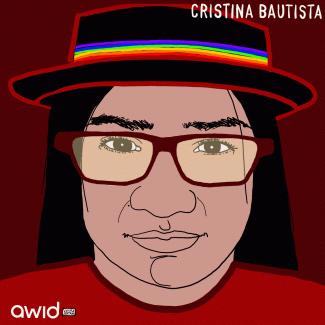
“If we stay quiet they kill us and if we talk [they kill us] too. So, let’s talk.” - Cristina Bautista, 2019
A tireless defender of the rights of Nasa people, Cristina spoke strongly and loudly against the violence directed at her community. In a speech before the United Nations, she called for the protection of Indigenous women’s lives and their involvement in different spheres of life. In 2017, Cristina was a UN Human Rights Office Indigenous fellow and she was awarded a grant from the UN Voluntary Fund for Indigenous Peoples in 2019.
“I would like to bring to light the current situation of the Indigenous people in Colombia, the killing of Indigenous leaders, the repression of social protest. Instead of helping, the peace deal has increased war and the exploitation of sacred territories in Colombia… In the current situation, in almost all Indigenous nations as women we have been working to find a better future for our families. I don’t want more women from the countryside to continue living under these circumstances. We need opportunities for Indigenous women to participate in politics, in the economy, in society and in culture. Today gives me true strength, to see all these women here and that I am not alone.” - Cristina Bautista, 2019
On 29 October 2019, Cristina was murdered along with four unarmed Indigenous guards in an attack which was allegedly carried out by armed members of “Dagoberto Ramos”, a FARC dissident group.
According to Global Witness, “the murder of community and social leaders has risen dramatically in Colombia in recent years.”
“The Nasa community has repeatedly raised the alarm with the authorities about threats to their safety. Despite efforts by successive Colombian Governments, indigenous peoples continue to face great risks, especially religious or community leaders like Cristina Bautista.” - UN press briefing, 1 November 2019
Watch a speech by Cristina Bautista in August 2019 in which she denounced previous murders of Indigenous guards (Spanish only)
*Website in French
Les agradecemos su interés por visitar el sitio web de AWID. Para obtener más información sobre nuestro trabajo, visiten https://www.awid.org/es
Nous sommes en communication avec les rassemblements régionaux et thématiques ainsi que les rencontres entre bailleurs de fonds prévus pour 2023-2024, afin d'assurer le bon déroulement des conversations et des connexions. Si vous organisez un événement et souhaitez le mettre en relation avec le Forum de l'AWID, n'hésitez pas à prendre contact avec nous !

We ramped up preparations for the 13th AWID international Forum, focused a lot of energy on the Post 2015 Development Agenda and Financing for Development processes, and continued the core work of our priority areas:
In response, we are moving out of our silos.
Increasingly, women’s rights and other movements worldwide are articulating the systemic and intersectional nature of these and other problems. We are making better connections with the agendas of other social and environmental movements for solidarity, alliance building and collective responses. We are also seeing greater visibility of these movements fighting for justice on the ground.

El primer informe del Observatorio sobre la Universalidad de los Derechos funciona como un compendio de información sobre tendencias anti-derechos en espacios internacionales. Este informe permite conocer mejor a los principales actores anti-derechos religiosos, sus discursos y tácticas dentro de la ONU.
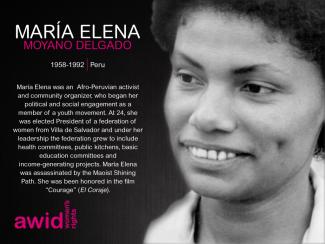
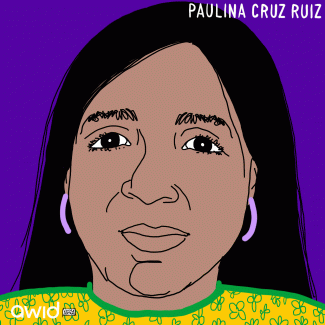
Paulina Cruz Ruiz, de la región de Rabinal, Baja Verapaz, en Guatemala, fue una autoridad ancestral Maya Achí (Indígena) y una defensora de los derechos humanos. Paulina se involucró activamente en la organización comunitaria y la resistencia, lo cual incluyó la adopción de medidas legales contra los proyectos mineros en territorios Indígenas, proyectos que afectarían y perjudicarían severamente el tejido socio ambiental.
"El modelo de industria extractiva promovido por el gobierno guatemalteco y la construcción de proyectos de desarrollo a gran escala en tierras indígenas, sin el consentimiento de la comunidad afectada, ha sido una fuente de disputas permanentes con los movimientos de resistencia". - Minority Rights Group International
Paulina también formó parte de la Marcha por la Dignidad, la Vida y la Justicia, del 1º de mayo de 2019, en la cual miles de guatemaltecxs iniciaron una marcha de ocho días contra la corrupción y la impunidad en la persecución y el asesinato de dirigentes de derechos humanos, líderes campesinxs e indígenas y defensorxs de la tierra.
Paulina fue asesinada el 14 de septiembre de 2019 cerca de su casa en la aldea de Xococ.
Según el Grupo Internacional de Derechos de las Minorías: "actualmente, uno de los principales problemas que afectan a las comunidades mayas es la creciente actividad de la industria minera".
Para leer más sobre la comunidad Maya en Guatemala
Para leer más sobre la Marcha por la Dignidad, la Vida y la Justicia
A hands-on deckgame for collectives to explore feminist economic alternatives and systems of care as crisis response. This deckgame is for all movements navigating global climate crises through play and strategy based on real-life scenarios. A creative avenue to strategize in meetings, workshops, and community gatherings!
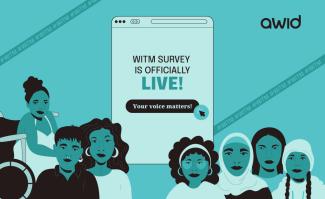
The “Where is the Money?” #WITM survey is now live! Dive in and share your experience with funding your organizing with feminists around the world.
Learn more and take the survey
Around the world, feminist, women’s rights, and allied movements are confronting power and reimagining a politics of liberation. The contributions that fuel this work come in many forms, from financial and political resources to daily acts of resistance and survival.
AWID’s Resourcing Feminist Movements (RFM) Initiative shines a light on the current funding ecosystem, which range from self-generated models of resourcing to more formal funding streams.
Through our research and analysis, we examine how funding practices can better serve our movements. We critically explore the contradictions in “funding” social transformation, especially in the face of increasing political repression, anti-rights agendas, and rising corporate power. Above all, we build collective strategies that support thriving, robust, and resilient movements.
Create and amplify alternatives: We amplify funding practices that center activists’ own priorities and engage a diverse range of funders and activists in crafting new, dynamic models for resourcing feminist movements, particularly in the context of closing civil society space.
Build knowledge: We explore, exchange, and strengthen knowledge about how movements are attracting, organizing, and using the resources they need to accomplish meaningful change.
Advocate: We work in partnerships, such as the Count Me In! Consortium, to influence funding agendas and open space for feminist movements to be in direct dialogue to shift power and money.
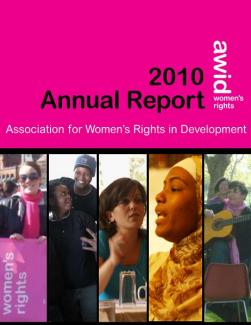
Our 2010 Annual Report highlights the major accomplishments of each of our strategic initiatives during the year.
Along with activity highlights, we include a brief analysis of the impact of our initiatives as well as reflections from our members and partners that further illustrate the relevance of AWID’s work and its connection to broader women’s rights movements.
This interactive document is complete with links to our websites and recent publications with in-depth information on the issues we address in the report.
con Manal Tamimi, Bubulina Moreno, Karolina Więckiewicz y Anwulika Ngozi Okonjo
Suivez la campagne:
Rejoignez-nous
Devenir membre| Rejoignez notre communauté
Ne ratez rien des actualités
Abonnez-vous pour les actualités
Des questions ?
Contactez : communications @ awid.org

« Ma mission dans la vie n'est pas simplement de survivre, mais de prospérer; et de le faire avec un peu de passion, un peu de compassion, un peu d'humour et un peu de style. »
Le Forum international de l'AWID est à la fois un événement communautaire mondial et un espace de transformation personnelle radicale. Unique en son genre, le Forum rassemble les mouvements féministes, de défense des droits des femmes, de justice de genre, LBTQI+ et leurs allié.e.s dans toute leur diversité et leur humanité, afin qu'elles.ils se connectent, se soignent et s'épanouissent. Le Forum est un lieu où les féministes du Sud et les communautés historiquement marginalisées occupent le devant de la scène, élaborant des stratégies entre elles et avec les mouvements de justice sociale, afin de modifier le pouvoir, de créer des alliances stratégiques et d'ouvrir la voie à un monde différent et meilleur.
Lorsque les gens se rassemblent à l'échelle mondiale, en tant qu'individus et en tant que mouvements, nous générons une force considérable. Rejoignez-nous à Bangkok, en Thaïlande, en 2024. Venez danser, chanter, rêver et vous élever avec nous.
Quand : du 2 au 5 décembre 2024
Où : Bangkok, Thaïlande; et en ligne
Qui : Environ 2 500 féministes du monde entier participant en personne, et 3 000 participant virtuellement

avec Naike Ledan et Fédorah Pierre-Louis