AWID es un organización feminista internacional de membresía, que brinda apoyo a los movimientos que trabajan para lograr la justicia de género y los derechos de las mujeres en todo el mundo.
Esta sección de análisis especial ofrece un análisis feminista crítico y acceso a los recursos clave relacionados con la «protección de la familia» en los espacios internacionales de derechos humanos.
Durante los últimos años, venimos observando una nueva y preocupante tendencia en el ámbito internacional de derechos humanos, donde se están empleando discursos sobre la «protección de la familia» para defender violaciones cometidas contra miembros de la familia, de modo de reforzar y justificar la impunidad y para coartar la igualdad de derechos en el seno de la familia y la vida familiar.
La campaña para «proteger a la familia» es impulsada por proyectos conservadores que tienen como fin imponer interpretaciones «tradicionales» y patriarcales de familia; quitando los derechos de las manos de sus miembros para ponerlos en las de la institución «familia».
Los proyectos de «protección de la familia» tienen su origen en los siguientes fenómenos:
el auge del tradicionalismo,
el auge del conservadurismo cultural, social y religioso, y
posturas hostiles a los derechos humanos de las mujeres, los derechos sexuales, los derechos de las niñas y los niños y los derechos de las personas con identidades de género y orientaciones sexuales no normativas.
Desde 2014 un grupo de estados opera como bloque en espacios de derechos humanos, bajo el nombre «Group of Friends of the Family» [Grupo de amigos de la familia], y a partir de entonces se han aprobado resoluciones sobre la «Protección de la familia» todos los años.
Esta agenda se ha extendido más allá del Consejo de Derechos Humanos (HRC, por sus siglas en inglés). Hemos visto cómo el lenguaje regresivo sobre «la familia» se ha introducido en la Comisión de la Condición Jurídica y Social de las Mujeres (CSW, por sus siglas en inglés), y hemos asistido a intentos por incluir este lenguaje en las negociaciones sobre los Objetivos de Desarrollo Sostenible.
Nuestro enfoque
AWID trabaja con asociadxs y aliadxs para resistir conjuntamente las agendas regresivas de «Protección de la familia» y otras, y para defender la universalidad de los derechos humanos.
En respuesta a la creciente influencia de actores regresivos en los espacios de derechos humanos, AWID se ha unido con aliadxs para formar el Observatorio de la Universalidad de los Derechos (OURs, por sus siglas en inglés). OURs es un proyecto colaborativo que monitorea, analiza y comparte información sobre iniciativas anti-derechos tales como la «Protección de la familia».
Derechos en Riesgo, el primer informe de OURs, traza un mapa de los actores que conforman el cabildeo global anti-derechos e identifica sus discursos y estrategias principales, señalando los efectos que estos discursos y estrategias están teniendo sobre nuestros derechos humanos.
El informe expone a la «Protección de la familia» como una agenda que ha promovido la colaboración entre una amplia gama de actores regresivos en las Naciones Unidas. La describe como un marco estratégico que aloja «múltiples posiciones patriarcales y anti-derechos, cuyo marco, a su vez, apunta a justificar e institucionalizar estas posiciones».
Contenido relacionado
Les défenseuses mexicaines
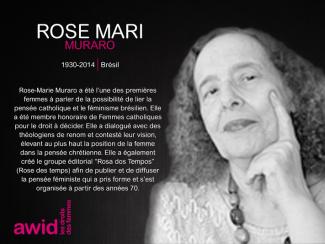
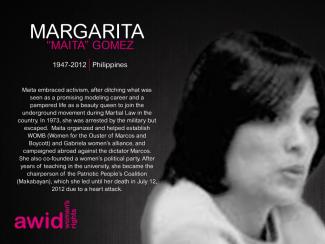
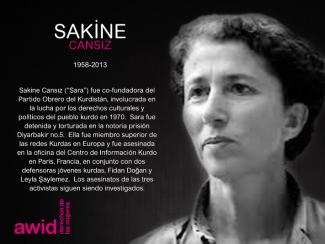
Les données que nous avons recueillies pour élaborer notre hommage montrent à quel point le Mexique est un pays dangereux pour les défenseuses. Sur les 12 femmes mexicaines défenseuses des droits humains que nous commémorons cette année, 11 ont été assassinées. Elles étaient des journalistes ou des activistes, des défenseuses des droits des femmes ou de ceux des personnes trans*. Nous vous invitons à vous joindre à nous pour rendre hommage à ces défenseuses, à leur travail et à l’héritage qu’elles nous ont laissé. Faites circuler ces mèmes auprès de vos collègues et amis ainsi que dans vos réseaux et twittez en utilisant les hashtags #WHRDTribute et #16Jours.
S'il vous plaît cliquez sur chaque image ci-dessous pour voir une version plus grande et pour télécharger comme un fichier
Nos solicitan el nombre de la agrupación, organización o movimiento que está respondiendo la encuesta, así como nuestra información de contacto, ¿por qué?
Solicitamos estos datos para facilitar el análisis de las respuestas, para evitar duplicaciones y para contactar a su organización en caso de que no hayan podido completar el cuestionario o de que tengan dudas u otras preguntas. Puedes consultar más detalles acerca de cómo utilizamos la información personal que recolectamos a través de nuestro trabajo aquí.
Asma was a leading Pakistani rights activist, fearless critic of the military’s interference in politics and a staunch defender of the rule of law.
She was the founding chairwoman of the Human Rights Commission of Pakistan, an independent group, and was a trustee of the International Crisis Group. She won international awards and served as the United Nations rapporteur on human rights and extrajudicial killings.
“With her life, Asma rewrote the history that many of us were told as women. Asma changed the world. She changed it in Pakistan, and she changed it in our imaginations."
Snippet FEA Agroecology And Food (EN)
AGROECOLOGY AND FOOD SOVEREIGNTY AS RESISTANCE
Today, large-scale industrial food production uses single-crop plantations, genetically modified organisms and other pesticides that destroy the land and knowledge of local communities.
The role of women, indigenous and rural communities and people of color from the Global South is absolutely essential when it comes to food systems. Feminist agroecologists are working to dismantle oppressive gender roles and systems of patriarchy embedded within food production. As shown by the heroines of NSS, they are generating a liberatory agroecology by strengthening community resilience, empowering women peasants and farmers, and preserving local traditions, territories, and knowledge of food-producing communities.
Margo Okazawa-Rey is an activist-educator and transnational feminist working on issues of militarism for nearly 30 years. She is a founder member of the International Women’s Network against Militarism and Women for Genuine Security, the US group of the Network. She has long-standing activist commitments with Du Re Bang/My Sisters Place in South Korea and Women’s Centre for Legal Aid and Counselling in Palestine. She also serves on the International Board of PeaceWomen Across the Globe in Bern, Switzerland and is President of the Board of Directors of Association for Women’s Rights in Development (AWID). Her foundational activist/life principle is that love is a radical act. She is also known as DJ MOR Love and Joy.
Match up your favourite messages below with these images for Facebook. These messages may also be used on Twitter via private Direct Messages, which don’t have character limits.
Facebook messages for your personal profile
The wait is over! We can all register for the 2016 AWID Forum. So excited to reconnect with fellow activists and re-imagine our feminist futures. See you there, in Brazil!http://forum.awid.org/forum16/
Loving the thought of re-imagining feminist futures with 2,000 people from lots of amazing women's rights and social justice movements at the AWID Forum. Register and meet me in Brazil!http://forum.awid.org/forum16/
Facebook messages for your organization’s page
Registration is now open for the 2016 AWID Forum in Costa do Sauípe, Brazil! This is not just any event - it’s a key space for women’s rights and social justice activists to come together and re-imagine our feminist futures. You won’t want to miss it!http://forum.awid.org/forum16/
Join us at the 2016 AWID Forum in Brazil! Activists and movements from all over the world will come together to celebrate, strategize, inspire and renew ourselves and our collective struggles. Register now!http://forum.awid.org/forum16/
The 2016 AWID Forum will be a historic global gathering of women’s rights and social justice activists and movements. Join us there to break the silos, strengthen solidarity and leverage our collective power. Register now!http://forum.awid.org/forum16/
The 2016 AWID Forum will be a historic global gathering of women’s rights and social justice activists and movements. Join us to celebrate, strategize, inspire and renew ourselves and leverage our collective power. Registration is now open!http://forum.awid.org/forum16/
Olivia era la líder espiritual del pueblo indígena Shipibo Konibo.
Sabia mujer indígena y abuela, era conocida por practicar la medicina tradicional y cantar las canciones sagradas de su pueblo (Íkaros). Olivia Arévalo fue una activa defensora de los derechos culturales y ambientales de su pueblo. Su asesinato tuvo lugar en un contexto de conflicto territorial entre la comunidad shipibo y las empresas que quieren apropiarse de sus tierras para cultivar palma aceitera.
Integrantes de su comunidad han dicho: «Su muerte es una agresión contra toda la comunidad shipibo. Ella era la memoria viviente de su pueblo».
Claudia es Maestra en Igualdad y Equidad para el Desarrollo, psicóloga feminista, activista por la defensa de los derechos humanos desde hace 30 años y por los derechos de las mujeres desde hace 24 años.
Trabajando en El Salvador, Claudia está cofundadora y directora Ejecutiva de la Asociación Mujeres Transformando, desde hace 16 años es defensora de derechos laborales de las trabajadoras del sector maquila textil y confecciones. Ha colaborado en la formulación de iniciativas de Ley, propuestas de políticas públicas e investigaciones tendientes a mejorar la calidad del empleo para las trabajadoras de este sector, además de trabajar incansablemente en el fortalecimiento organizativo y empoderamiento de las obreras de la maquila textil y bordadoras a domicilio.
Participa activamente en acciones de incidencia a nivel nacional, regional e internacional por la defensa y reivindicación de los derechos laborales de la clase trabajadora del Sur Global desde una perspectiva, feminista, anticapitalista, antipatriarcal y desde la toma de conciencia de clase y de género. Es parte del Consejo Directivo de la Iniciativa Spootlithg y del Grupo Nacional de Referencia de la minsma. Tambien es parte del Grupo Asesor de la Sociedad Civil de ONUMujeres.
Position
Copresidenta
Add to stories
Off
Pourquoi et comment renouveler votre adhésion de l'AWID
Rencontrez d'autres membres
Nos membres individuel-le-s et institutionnels viennent de 163 pays situés dans TOUTES les régions du monde. Les dernier-ère-s membres à avoir rejoint notre association viennent de l’Inde, du Royaume-Uni, du Sri Lanka et du Kirghizistan. Nos membres contribuent un éventail riche et diversifié de perspectives, d’expériences, de connaissances, d’énergie et d’inspiration !
Connaissez-vous nos profils hebdomadaires de membres ?
En tant que membre de l’AWID, vous pourrez, entre autres avantages, voir votre propre histoire figurer dans la newsletter que nous envoyons à 35,000 abonné-e-s et que nous diffusons par le biais des médias sociaux auprès de 60,000 personnes.
Récemment en vedette :
Rencontrez Angila Ashitua, une jeune femme du comté de Vihiga, situé dans l’ouest du Kenya.
en entrant en contact avec d’autres membres par le biais de notre forum des membres et de notre annuaire en ligne.
en en apprenant davantage sur le travail de l’AWID et sur les questions relatives aux droits des femmes et à la justice sociale grâce à nos publications et ressources, et notamment grâce à notre dernière vidéo en date “Changing Systems, Changing Lives“.(uniquement disponible en anglais).
en prenant part à nos sessions de formation en ligne. Vous pouvez consulter ici les points principaux de notre webinaire sur la Puissance des entreprises et la justice de genre. (uniquement disponible en anglais)
Et bien plus encore !
Vous pouvez renouveler votre adhésion pour une période d’1, 2 ou 3 ans. Nous offrons la possibilité d’une adhésion individuelle ou institutionnelle gratuite à ceux et celles dont les revenus ou budgets sont restreints.
Si vous rencontrez des difficultés lors de votre identification en ligne et avez besoin d’aide, n’hésitez pas à me contacter à l’adresse suivante : membership@awid.org
Les témoignages de nos membre
«Nous trouvons que l’AWID est un réseau particulièrement stimulant et nous nous impliquons dans beaucoup de ses plateformes. » – Engabu Za Tooro (membre institutionnel de l’AWID)
« Je me réjouis d’entamer une collaboration fructueuse avec l’équipe. J’en suis très heureuse. Merci de m’avoir acceptée parmi vos membres. » – R. Chakraborty (membre individuelle de l’AWID)
« Je tiens à remercier infiniment l’AWID ! Vous accomplissez un travail gigantesque. Vos efforts sont grandement appréciés. » – E. Khan (membre individuelle de l’AWID)
Опрос предназначен для групп, организаций и движений, работающих исключительно или главным образом по вопросам защиты прав женщин, ЛГБТКИ+, гендерной справедливости во всех контекстах, на всех уровнях и во всех регионах. Если одно из этих направлений является основным видом деятельности вашей группы, коллектива, сети или любого другого типа организации – независимо от того, зарегистрирована она или нет, недавно создана или существует уже давно, мы приглашаем вас принять участие в этом опросе.
* На данном этапе мы не ожидаем ответов от частных лиц или женских и феминистских фондов.
Originaire d'Inde, Janette était une personne formidable, fougueuse, bienveillante et aimante.
Son intolérance à l’égard de l’injustice et sa ferme volonté de défendre les droits de toutes les personnes l’ont amenée à travailler pour TARSHI (une ONG qui travaille sur la sexualité et la santé sexuelle et reproductive) pendant plus de 15 ans. Janette a géré et dirigé avec compétence les aspects financiers, les ressources humaines et les aspects opérationnels de TARSHI, naviguant adroitement dans la bureaucratie labyrinthique à laquelle sont soumises les ONG indiennes.
Son équipe se souvient « elle assurait nos arrières pour que nous puissions naviguer en eaux libres. Femme aux multiples talents, Janette nous a non seulement aidés à acquérir nos propres bureaux, mais elles les a également aménagés pour leur utilisation optimale. Elle aimait les voyages et les animaux et s'intéressait à la thérapie assistée par les animaux ».
Gopika est une activiste et campaigner féministe indienne du secteur de la justice de genre et des droits humains. Son expérience s’ancre dans le travail auprès de femmes et d’une diversité de jeunes sur des questions telles que l'accès à la justice, la violence sexuelle basée sur le genre, le genre et la sexualité, le financement de l'activisme féministe et les droits du travail. Gopika a fourni des conseils dans le financement des mouvements féministes, notamment à FRIDA | Le Fonds de Jeunes Féministes et au Fond Mondial pour la Résilience. Auparavant, elle a également dirigé le programme Ressources des Mouvements Féministes à l'AWID. Elle est passionnée par l'intersection de l'activisme féministe et de la pratique créative, et a été rédactrice et responsable des pratiques équitables pour « Bystander Anthology », un groupe de narration graphique sud-asiatique du collectif Kadak. Elle s’est récemment découverte un profond amour pour l’escalade en plein air et continue d’apprendre et de grandir tout au long de cette aventure. Gopika est basée à Bangalore, en Inde.
Position
Directrice des Programmes
Add to stories
Off
8. Finalize and format
Your comprehensive research product is now all organized and edited. You now want to ensure your findings are visually accessible and appealing to facilitate the dissemination.
Consider developing smaller products along with your long report.
As mentioned in the “Synthesize your research findings,” AWID often pulls smaller products from the lengthy research report. This allows for wider and easier distribution specialized for key audiences.
Always keep your targeted population in mind: who will read your report?
Examples of smaller products distilled from a larger report:
Infographics
Online gallery
An animation presenting your arguments
1. Think as your audience thinks
People are bombarded with information constantly. Your product will have to be visually compelling to maintain the interest of your audience. Again, having an idea of what you hope to accomplish and who you hope to reach, will allow the designer to create targeted products.
A lengthy written PDF report may seem the only way to present your research, but it could appear overwhelming to most people – especially online.
If you want to share your product with an online community, think about creating memes and infographics to use on social media, blogs and web platforms.
When deciding whether to create smaller products, consider dividing your results into several smaller products that you could share with targeted populations or at different times of the year to reactivate the interest on your product.
2. Work with a professional designer
If you have limited time and a little bit of budget, we recommend hiring a design firm.
It can be tempting for economic reasons to use in-house staff to package your report. However, a professional graphic designer can make a huge difference on how your final product looks and thus on how much impact it will have!
The designer (in-house or hired) must be able to:
Show you samples of their previous work that is similar to what you seek.
Provide you clear advice on how to present your research based on the content you provide and the audience you are targeting.
Suggest additional or different pieces to package your product.
What the designer will need from you:
A general idea on what you would like the lengthy report to highlight through visuals and graphics (what are the most important pieces of information, the key findings, for example) and some ideas on the types of smaller products you want to create (brochure, an infographic, a series of viral memes, for example). If possible, show the designer examples of similar documents developed by other organizations.
Your budget and time frame.
Your organization’s visual guidelines if you have any (logo, official colours, fonts, etc...).
A few photos copyright free or access to your photo bank if you have one.
Key visuals that need to be included – graphs, tables and other visual graphics drawn from your research.
The designer is a graphic expert. S/he is not necessarily familiar with women’s issues and does not know the results of your research, especially if you hire an external firm.
Communicate what elements of this report is important to you and who is your target. The designer will propose a way to highlight these elements and make the whole piece appealing to your users.
3. Make sure it's consistent
While creating a set of smaller information products, do not forget to link them all together:
A shorter version of the report that focuses only on your final results and recommendations should present a link to the final, full report
A visually compelling infographic that sends a message on the state of funding for your particular research can link to your website and the related section of the full report. It should be associated with a call to share on social media.
A short animation video that uses the data, findings and recommendations from your report should link back to your organization website and social media
A series of viral memes that can be distributed online should link back to your report, infographic, shorter report, etc.
It is also important to keep the research staff involved, so they can ensure any offshoot products stay true to the actual findings of the research.
After the design and packaging of the final research report is complete, if any of the wording of content was changed, be sure to re-send to translators.
If you create smaller products, once designed and packaged, you will also need to get the copy translated for those pieces. The translations should be clear enough so the designer can apply to the design, even if she/he does not speak the language.
Once translated, make sure to have your design proofread by a native speaker before sharing it!