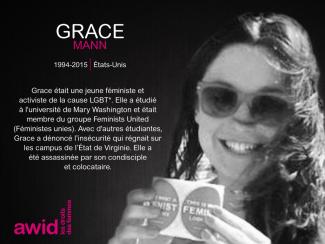
Grace Mann
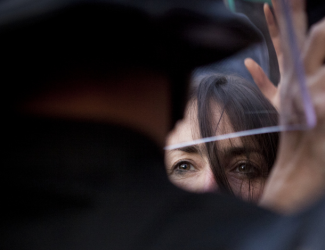
Lxs defensorxs se identifican a sí mismas como mujeres y personas lesbianas, bisexuales, transgénero, queer e intersex (LBTQI) y otrxs que defienden derechos y que debido a su trabajo en derechos humanos están bajo riesgos y amenazas específicos por su género y/o como consecuencia directa de su identidad de género u orientación sexual.
Lxs defensorxs son objeto de violencia y discriminación sistemáticas debido a sus identidades y su inclaudicable lucha por derechos, igualdad y justicia.
El Programa Defensorxs colabora con contrapartes internacionales y regionales así como con lxs afiliadxs de AWID para crear conciencia acerca de estos riesgos y amenazas, abogar por medidas de protección y de seguridad que sean feministas e integrales, y promover activamente una cultura del autocuidado y el bienestar colectivo en nuestros movimientos.
lxs defensorxs enfrentan los mismos tipos de riesgos que todxs lxs demás defensorxs de derechos humanos, de comunidades y del medio ambiente. Sin embargo, también están expuestas a violencia y a riesgos específicos por su género porque desafían las normas de género de sus comunidades y sociedades.
Nos proponemos contribuir a un mundo más seguro para lxs defensorxs, sus familias y comunidades. Creemos que actuar por los derechos y la justicia no debe poner en riesgo a lxs defensorxs, sino que debe ser valorado y celebrado.
Promoviendo la colaboración y coordinación entre organizaciones de derechos humanos y organizaciones de derechos de las mujeres en el plano internacional para fortalecer la capacidad de respuesta en relación a la seguridad y el bienestar de lxs defensorxs.
Apoyando a las redes regionales de defensorxs y de sus organizaciones, tales como la Iniciativa Mesoamericana de Mujeres Defensorxs de Derechos Humanos y la WHRD Middle East and North Africa Coalition [Coalición de Defensorxs de Derechos Humanos de Medio Oriente y África del Norte], promoviendo y fortaleciendo la acción colectiva para la protección, poniendo el énfasis en establecer redes de solidaridad y protección, promover el autocuidado y la incidencia y movilización por la seguridad de lxs defensorxs.
Aumentando la visibilidad y el reconocimiento de lxs defensorxs y sus luchas, así como de los riesgos que enfrentan, a través de la documentación de los ataques que sufren, e investigando, produciendo y difundiendo información sobre sus luchas, estrategias y desafíos.
Movilizando respuestas urgentes de solidaridad internacional para lxs defensorxs que están en riesgo a través de nuestras redes internacionales y regionales y de nuestrxs afiliadxs activxs.
Mobilizing working-class transgender hairdressers and beauty queens, the dynamic leaders of the world’s only LGBT political party wage a historic quest to elect a trans woman to the Philippine Congress.
Chaque année à l’AWID, nous visons à renouveler et enrichir les points de vue et expériences que reflète notre Conseil d’administration (CA) en accueillant de nouvelles et nouveaux membres.
Nous sommes actuellement à la recherche de personnes pour servir des mandats d’une durée de trois ans au Conseil de l’AWID à compter du début de l’année 2023. Il s’agit d’une occasion de contribuer à la gouvernance de notre organisation et d’intégrer un groupe extraordinaire de féministes du monde entier.
Merci de nous aider à identifier des candidatures de féministes à la fois réfléchi·e·s et audacieux·ses pour l’élection d’ici le 29 juillet 2022.
Merci de partager également cette invitation à candidatures au sein de vos réseaux !
Nous recherchons avant tout des candidat·e·s engagé·e·s en faveur de la mission de l’AWID capables de faire le lien entre les luttes locales et mondiales. Ces personnes seront également en mesure de nous aider à tirer, avec attention, le meilleur parti du positionnement et des atouts de l’AWID dans un contexte en constante évolution. Les candidat·e·s doivent être disposé·e·s à assumer les fonctions et endosser les responsabilités juridiques du CA de l’AWID, dans l’intérêt supérieur de l’organisation.
Il s’agit d’une fonction bénévole qui nécessite une implication et un engagement tout au long de l’année. Les membres du CA doivent s'engager à consacrer au moins 10 à 15 jours par an à des rencontres en personne et virtuelles, et à contribuer à d'autres communications.
Nous souhaitons que notre CA reflète la diversité sous toutes ses formes, et particulièrement en ce qui concerne l’identité de genre, l’orientation sexuelle, l’âge, le lieu géographique et le milieu socio-économique. Nous recherchons, enfin, des membres de CA ayant une expérience dans l’un des principaux domaines de travail de l’AWID.
Candidat·e·s bénéficiant d'une expérience de travail aux intersections des droits des femmes/de la justice de genre et :
Candidat·e·s originaires des régions suivantes :
Le Conseil d’administration joue un rôle clé dans la définition de l’orientation stratégique de l’AWID et le soutien de notre organisation dans l’accomplissement de sa mission, en cohérence avec le monde dans lequel nous vivons et les besoins de nos mouvements.
Les membres du CA contribuent au fonctionnement de l’organisation de diverses manières : ils et elles apportent une expérience d’autres espaces, des perspectives de divers secteurs des mouvements féministes et un savoir-faire conséquent dans des domaines pertinents alignés sur la stratégie de l’AWID.
Les candidat·e·s qui seront finalement élu·e·s intégreront le CA de l'AWID en 2023 et nous accompagneront dans le lancement de notre nouveau plan stratégique dirigé par les nouvelles co-directrices exécutives de l'AWID, ainsi que dans la planification de notre prochain Forum international.
(Vous pouvez déposer votre candidature ou celle d’une autre personne, avec son consentement.)
Merci de partager également cette invitation à candidatures au sein de vos réseaux !
Merci d’avance de nous aider à trouver nos prochain·e·s merveilleux·ses membres du Conseil d’administration, qui soutiendront l’AWID lors des étapes à venir !
Claudia es Maestra en Igualdad y Equidad para el Desarrollo, psicóloga feminista, activista por la defensa de los derechos humanos desde hace 30 años y por los derechos de las mujeres desde hace 24 años.
Trabajando en El Salvador, Claudia está cofundadora y directora Ejecutiva de la Asociación Mujeres Transformando, desde hace 16 años es defensora de derechos laborales de las trabajadoras del sector maquila textil y confecciones. Ha colaborado en la formulación de iniciativas de Ley, propuestas de políticas públicas e investigaciones tendientes a mejorar la calidad del empleo para las trabajadoras de este sector, además de trabajar incansablemente en el fortalecimiento organizativo y empoderamiento de las obreras de la maquila textil y bordadoras a domicilio.
Participa activamente en acciones de incidencia a nivel nacional, regional e internacional por la defensa y reivindicación de los derechos laborales de la clase trabajadora del Sur Global desde una perspectiva, feminista, anticapitalista, antipatriarcal y desde la toma de conciencia de clase y de género. Es parte del Consejo Directivo de la Iniciativa Spootlithg y del Grupo Nacional de Referencia de la minsma. Tambien es parte del Grupo Asesor de la Sociedad Civil de ONUMujeres.
2-5 December, 2024, Bangkok, Thailand! We will gather at the Queen Sirikit National Convention Center (QSNCC) as well as virtually online.
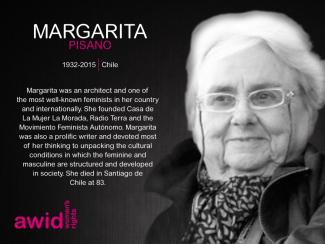
Conoce el programa del Club de Cine Feminista de AWID «Holding up the Skies» [«Sosteniendo los cielos»], una serie de películas sobre realidades feministas de África y la Diáspora Africana, curada por Gabrielle Tesfaye.
If the positions advertised have closed, or just don’t match your area of interest and expertise, we suggest the following resources for your job search.
"I have been subjected to sexual violence, physical injuries and other forms of violence while protesting at the frontlines. But I will never stop until we achieve complete civilian rule in Sudan. We must stop militarization of the state. Our bodies should not be treated as battlegrounds any longer."
Said Amal*, a 23 years old woman protester.**
During the last 4 years women led the revolution in Sudan. Their leadership wasn't just on streets, but they were the power driving the consistent resistance at all levels. Women and young feminists became the alerted consciousness of the Sudanese change and democratization movement. Since the first protest against the former regime in Aldmazein town in the conflict area of Blue Nile on December 13th, 2018, young school girls were the voices demanding the end of the rule of the 30 years dictatorship of military and Muslim Brotherhood.
The feminist movement led by young women aging 16 to 35, has established a revolution within the revolution in Sudan in the last 4 years of non stop revolution. The strong voices of young women occupying spaces on streets, social media, civil society and political organizations were high enough to reshape the public opinion and challenge social norms. Discussions of sexual and gender based violence and taboos of domestic violence and male dominant decisions making process became mainstream debates for the first time in Sudan history. Women Football teams appointed spokeswomen for resistance committees, and women led professional unions are part of the manifestation of the new wave of feminist movement in Sudan. Young women identifying as feminist proudly and publicly is the most important achievement in a country ruled by fundamentalist Islam for 3 decades. Young men supporting feminist activism, and identifying as feminist is another progress worth noting.
This progress is not cost free, it is also not perfect. Feminist activists, groups and activists face the same challenges we expect in a conservative, and conflict affected contexts. But the impact of the young feminists movement in Sudan is worth of looking up to. Overcoming internal boundaries of diverse cultures, religions, and conflicts history is a challenge, but young feminists in Sudan seems to work hard to bridge the gaps. Creation of feminist schools in Darfur and Kordofan is something that makes the work of young feminists in Sudan a unique journey worth to learn from.
The young women leading these efforts and the women groups working on the ground cannot be mentioned here due to several security concerns under the current military coup. But their resilience, strength and courage is one for the history books. The audacious young women leading resistance on streets, behind screens, and working in different professions and activism fields are shaping the future of Sudan. The young feminists in Sudan are creating new spaces for a feminist narratives and discourses to restructure the distribution of power at political, economical and social aspects.
Despite the immense violence, reemergence of fundamentalist Islam, militarization and shrinking civic spaces, feminist activists in Sudan remain rooted in their sisterhood. They remain a great inspiration for the feminist movements globally.
Nazik Awad
* Amal is a pseudonym used to protect the young activist quoted.
** Sudan is living under constant revolution since 2018. A new wave started after the military coup on October 25th 2021.
Sanyu est une féministe panafricaine basée à Nairobi, au Kenya. Elle a passé la dernière décennie à soutenir les mouvements syndicaux, féministes et de défense des droits humains en faveur de la redevabilité des entreprises, de la justice économique et de la justice de genre. Elle a travaillé avec le Business & Human Rights Resource Centre, IWRAW Asia Pacific et la Commonwealth Human Rights Initiative. Elle est titulaire d’un master en droits humains et d’une licence en droit de l’Université de Nottingham. Ses écrits ont été publiés dans le Business and Human Rights Journal, Human Rights Law Review, Open Global Rights, Open Democracy et d’autres encore. Pendant son temps libre, elle adore se promener en forêt et chasser les papillons.
Las inscripciones comenzarán a principios de 2024. Pronto anunciaremos la fecha exacta de inscripción y el valor correspondiente. La inscripción incluirá la participación en el Foro, así como almuerzo y refrigerios (el desayuno se proporcionará en los hoteles) y una cena en el lugar.
A complex and evolving network of anti-rights actors is exerting increasing influence in international spaces as well as domestic politics. Often backed by obscure funding, these actors build tactic alliances across issues, regions, and faiths to increase their impact.

Search for funders based on their requirements for groups to be registered.
Chers mouvements féministes,
L'amour est ce qui entretient notre feu féministe. Avec le souci de nos communautés, la colère et la rage face à l'injustice et le courage d'agir.
En septembre 2022, nous sommes entrés avec beaucoup d'enthousiasme dans nos rôles de leadership à l'AWID, en tant que co-directeurs exécutifs. Nous avons ressenti la chaleur et l'étreinte de la fraternité féministe lorsque vous nous avez accueillis.
En réfléchissant à nos souvenirs les plus précieux en tant que féministes, nous nous souvenons de puissants moments de solidarité lors de manifestations de rue, d'analyses pointues et de voix courageuses ébranlant le statu quo lors de rassemblements. Nous avons tenu ces conversations intimes la nuit, ri pendant des heures et dansé ensemble lors de fêtes.
Les feux féministes doivent être alimentés, en particulier dans les moments difficiles où les défis extérieurs ne manquent pas, de la crise climatique et de la montée des forces de droite aux économies d'exploitation et aux schémas persistants d'oppression au sein de nos propres mouvements sociaux. Ce sont ces feux, brûlant partout, qui éclairent nos voies et nous gardent au chaud, mais nous ne pouvons pas ignorer les effets épuisants de la violence politique et de la répression dirigées contre nombre de nos luttes, mouvements et communautés.
Nous comprenons le désir de changer le monde comme un ingrédient essentiel de l'organisation féministe. Nous ne pouvons jamais oublier que nous sommes ceux que nous attendions pour construire des alternatives et façonner notre avenir. Pourtant, l'énergie féministe dynamique ne peut être tenue pour acquise et doit être préservée de plusieurs façons. En cela, nous continuerons d'être vigilants. Un accès plus grand et égal aux soins et au bien-être, à la guérison et au plaisir, ne sont pas seulement des instruments pour prévenir l'épuisement professionnel et soutenir nos mouvements, même si c'est une fonction importante ; d'abord et avant tout, ils sont la façon dont nous espérons vivre nos vies.
"Fierce Feminisms: Together We Rise" reflète notre conviction que le moment est venu pour nous d'être féroces et sans vergogne dans nos agendas tout en faisant un effort pour nous connecter entre les mouvements et vraiment connaître les réalités de chacun, afin que nous puissions nous élever ensemble - car, pour nous, c'est le seul moyen.
Nos plans incluent le Forum de l’AWID tant attendu ! Nous sommes impatients de vous rencontrer tous en personne et en ligne en 2024. Nous entendons de vous le besoin de vous connecter et de vous ressourcer, de vous reposer et de guérir, d'être mis au défi et inspiré, de partager de la bonne nourriture, de rire et de danser ensemble. Peu de choses dans ce monde sont aussi puissantes et transformatrices que des féministes de toutes les régions du monde qui se réunissent, et nous retenons vraiment notre souffle pour ce moment, car nous connaissons la magie que nous pouvons créer ensemble.
L'engagement de nos membres a pris vie grâce à la communauté AWID (notre plate-forme en ligne pour les membres), et notre objectif de créer des liens et de la solidarité trouve un écho chez beaucoup d'entre vous. Rejoignez-nous et connectez-vous avec nous et d'autres dans les mouvements féministes du monde entier. Nous connaissons l'importance de la connexion dans un temps et un espace où les règles ne sont pas faites pour nous, et nous tenons à notre communauté, où chacun de nous compte.
Avec nos fantastiques collègues de l'AWID, nous promettons de faire de notre mieux pour soutenir les mouvements féministes, comme c'est la mission et le but de l'AWID. Veuillez nous demander des comptes.
Au cours des 40 dernières années, vous - les mouvements féministes - avez façonné l'histoire de l'AWID et nous avez poussés à être plus courageuses, créatives et radicales. 40 ans est un âge fabuleux, et nous attendons avec impatience 40 autres années avec vous tous. Nous attendons avec impatience les partenariats, les appels à la justice, la collaboration, l'influence sur les politiques et le pouvoir féministe dur à cuire que vous apportez tous pour naviguer dans le contrecoup toujours croissant de la justice de genre, raciale et environnementale. Nous avons tant à apprendre de vous et les uns des autres, alors que nous construisons collectivement les mondes auxquels nous croyons.
Cindy Clark et Hakima Abbas, merci de nous avoir ouvert la voie et de nous préparer à remplir leurs énormes chaussures. Nous apprécions toujours tous ceux sur les épaules desquels nous nous sommes tenus et continuons de nous tenir debout. Nous nous comprenons comme faisant partie d'un paysage de mouvement plus large, d'histoires féministes, de présents et d'avenirs audacieux.
Et pour le Conseil d'administration de l'AWID, nous vous sommes reconnaissants pour le soutien et l'amour féministe que vous nous témoignez, ainsi que pour votre engagement envers le leadership des pays du Sud et le modèle de co-leadership. Nous envoyons notre amour et notre respect à chaque collègue de l'AWID, nous nous sentons honorées de travailler avec une équipe féministe aussi exceptionnelle de professionnelles dévouées.
C'est la première fois que nous écrivons une lettre d'amour ensemble, comment pourrions-nous la conclure sans exprimer de l'amour, de l'attention et du respect l'un envers l'autre ? C'est une relation assez intense dans laquelle nous sommes entrés! Nous apportons tous deux nos perspectives et compétences différentes et diverses à notre travail, et en tant qu'individus, nous apportons également nos expériences vécues et notre moi authentique.
Avec vous tous, nous sommes une histoire en devenir, une partie d'un beau tissage - et souvent magnifiquement stimulant - une tapisserie qui se poursuit à l'avenir. Nous nous sommes amusés à commencer ce voyage les uns avec les autres et avec vous, et nous espérons vraiment que la romance restera vivante.
En solidarité avec l'amour et les soins
Inna and Faye
21 février 2023, membre Mixer 5 sur la politique féministe avec Faye et Inna.
Pas encore membre? En savoir plus sur l'adhésion à l'AWID.
Eni Lestari is an Indonesian domestic worker in Hong Kong and a migrant rights activist. After escaping her abusive employer, she transformed herself from a victim into an organizer for domestic workers in particular, and migrant workers in general. In 2000, she founded the Association of Indonesian Migrant Workers (ATKI-Hong Kong) which later expanded to Macau, Taiwan, and Indonesia. She was the coordinator and the one of the spokesperson of the Asia Migrants Coordinating Body (AMCB) - an alliance of grassroots migrants organisations in Hong Kong coming from Indonesia, Philippines, Thailand, Nepal and Sri Lanka. She is also the current chairperson of International Migrants Alliance, the first-ever global alliance of grassroots migrants, immigrants, refugees, and other displaced people.
She has held important positions in various organizations including and current Regional Council member of Asia Pacific Forum on Women, Law and Development (APWLD), former Board Member of Global Alliance Against Traffic in Women (GAATW), spokesperson for Network of Indonesian Migrant Workers (JBMI), advisor for ATKI-Hong Kong and Macau as well as the Association of Returned Migrants and Families in Indonesia (KABAR BUMI). She has been an active resource person in forums organized by academics, interfaith groups, civil societies, trade unions and many others at national, regional, and international arenas.
She has actively participated in United Nations assemblies/conferences on development and migrants’ rights and was chosen as a speaker at the opening of the UN General Assembly on Large Movement of Migrants and Refugees in 2016 in New York City, USA. She received nominations and awards such as Inspirational Women by BBC 100 Women, Public Hero Award by RCTI, Indonesian Club Award, and Non-Profit Leader of Women of Influence by American Chamber Hong Kong, and Changemaker of Cathay Pacific.
Notre fonds d'accès offrira un nombre limité de bourses pour financer la participation d'activistes qui ne pourraient autrement pas se rendre sur place, sachant qu’ils·elles ne bénéficient pas du soutien de bailleurs de fonds leur permettant de couvrir leur participation. Si d'autres possibilités s'offrent à vous, n'hésitez pas à les explorer. Nous ferons de notre mieux pour accorder un maximum de bourses, et échangerons plus d'informations concernant cette procédure et les modalités de candidature au début de l’année 2024.
El informe más reciente del Observatorio sobre la Universalidad de los Derechos desarma discursos como los de la «ideología de género», el «genocidio prenatal» y el «imperialismo cultural». También investiga los flujos de fondos para CitizenGo, la Alliance Defending Freedom/ADF Internacional y otros grupos anti-derechos. En este informe también se puede encontrar un análisis de los sistemas regionales de derechos humanos así como de las estrategias exitosas y los logros feministas.