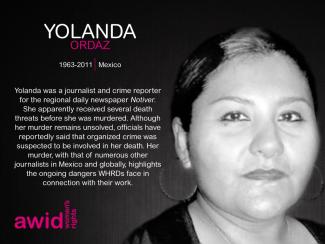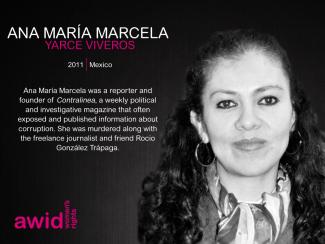
Ana Maria Marcela Yarce Viveros
Lxs defensorxs se identifican a sí mismas como mujeres y personas lesbianas, bisexuales, transgénero, queer e intersex (LBTQI) y otrxs que defienden derechos y que debido a su trabajo en derechos humanos están bajo riesgos y amenazas específicos por su género y/o como consecuencia directa de su identidad de género u orientación sexual.
Lxs defensorxs son objeto de violencia y discriminación sistemáticas debido a sus identidades y su inclaudicable lucha por derechos, igualdad y justicia.
El Programa Defensorxs colabora con contrapartes internacionales y regionales así como con lxs afiliadxs de AWID para crear conciencia acerca de estos riesgos y amenazas, abogar por medidas de protección y de seguridad que sean feministas e integrales, y promover activamente una cultura del autocuidado y el bienestar colectivo en nuestros movimientos.
lxs defensorxs enfrentan los mismos tipos de riesgos que todxs lxs demás defensorxs de derechos humanos, de comunidades y del medio ambiente. Sin embargo, también están expuestas a violencia y a riesgos específicos por su género porque desafían las normas de género de sus comunidades y sociedades.
Nos proponemos contribuir a un mundo más seguro para lxs defensorxs, sus familias y comunidades. Creemos que actuar por los derechos y la justicia no debe poner en riesgo a lxs defensorxs, sino que debe ser valorado y celebrado.
Promoviendo la colaboración y coordinación entre organizaciones de derechos humanos y organizaciones de derechos de las mujeres en el plano internacional para fortalecer la capacidad de respuesta en relación a la seguridad y el bienestar de lxs defensorxs.
Apoyando a las redes regionales de defensorxs y de sus organizaciones, tales como la Iniciativa Mesoamericana de Mujeres Defensorxs de Derechos Humanos y la WHRD Middle East and North Africa Coalition [Coalición de Defensorxs de Derechos Humanos de Medio Oriente y África del Norte], promoviendo y fortaleciendo la acción colectiva para la protección, poniendo el énfasis en establecer redes de solidaridad y protección, promover el autocuidado y la incidencia y movilización por la seguridad de lxs defensorxs.
Aumentando la visibilidad y el reconocimiento de lxs defensorxs y sus luchas, así como de los riesgos que enfrentan, a través de la documentación de los ataques que sufren, e investigando, produciendo y difundiendo información sobre sus luchas, estrategias y desafíos.
Movilizando respuestas urgentes de solidaridad internacional para lxs defensorxs que están en riesgo a través de nuestras redes internacionales y regionales y de nuestrxs afiliadxs activxs.
Ya está disponible nuestro programa final del Club de Cine Feminista: “Films from Nuestramérica” es una serie de películas sobre realidades feministas latinoamericanas / centroamericanas curada por Alejandra Laprea (Venezuela).
Par María Bonita - Venezuela
Nos ancêtres femmes forment un cercle
Sacré, vivant, puissant
Nous sommes au milieu
Et sentons leur force.
Le tambour bat le son de la terre
Notre peau s’habille de couleurs
Nous sommes vertes, rouges, oranges, bleues, violettes, noires
Le tambour bat le son de la terre
La voix vibre, le cri envahit, le chant retentit, berce le sommeil, éveille la conscience.
Le tambour bat le son de la terre
Et le regard se fait complice, ami, profond.
Le tambour bat le son de la terre
Nous ne sommes qu’un seul cœur battant au rythme de l’âme, il nous invite à bouger, nous inspire le désir, nous montre un chemin
Celle du rassemblement communautaire, celle du pouvoir populaire, celle de l’auto-gouvernement, celle de la révolution des femmes, celle du soin subversif.
Le tambour bat le son de la terre
Et je vous invite à entrer, à être voix, peau, regard, graine, feu, chanson, communion.
Le tambour bat le son de la terre
Et je vous invite à la découvrir, à l’aimer, la connaître et la défendre depuis le coeur de la communauté.
Cela fait 25 ans qu’elles habitent ces mêmes rues poussiéreuses, au sommet d’une colline qui porte le nom d’un lion; elles viennent d’endroits différents, beaucoup ont une tradition paysanne, elles ont la peau couleur rébellion, couleur cactus cardon, parce que l’esprit semi-aride de Lara vit en elles. C’est de là que leur vient leur amour de la vie, leur appréciation, le soin et la protection apportés à l’eau et au territoire, car elles sont les héritières des lignées de Gayón, Ayaman, des communautés autochtones qui ont vécu et vivent dans le nord de l'État de Lara.
Elles ont appris dès leur plus jeune âge que la maternité est un rôle auquel il n’est pas facile d’échapper. S’occuper des enfants, de la maison, du mari, laver, repasser, cuisiner, nettoyer - elles insistent: tout devait être impeccable.
Et c’était ça la vie, ça et la violence, les insultes, la maltraitance, les coups, les réclamations et les reproches auxquels il fallait s’attendre, cela semblait presque naturel, c’est ainsi que se déroulaient leurs journées, leur quotidien. Elles vivaient dans des petites maisons en tôle dans ces rues de terre battue, sans électricité ni eau courante, c’était la pauvreté, la précarité, quand un homme est arrivé, oui, un homme, un projet, une révolution inhabituelle parce qu’elle s’est faite sans guerre.
Alors on les invita à sortir, on les invita à descendre dans les rues et à occuper l’espace public. Au cours de ce processus, elles ont arraché des portes et des fenêtres, elles ont brisé des chaînes, ont lâché leurs cheveux, elles se sont senties libres, libres comme des esclaves en fuite, des rebelles des Caraïbes, des défenseuses de la liberté.
Et ces concepts d'indépendance et de souveraineté sont des notions que celleux qui ont eu la chance d'étudier connaissent, mais le sentir, se sentir comme les protagonistes d'un processus de transformation sociale - c'est une victoire importante que nous nous devons de mentionner et que nous ne pouvons pas oublier.
Au sommet de cette colline, on peut sentir la complicité des femmes, le feu partagé, les années de lutte. On raconte que l'une d'entre elles se promenait avec son ombrelle l'après-midi et s’arrêtait de maison en maison pour prendre un café et parler aux gens, les inviter à se joindre à la cause et les convaincre…
Nous allons créer un conseil communautaire !
Allons de l'avant ensemble en tant que communauté !
Élaborons des plans pour l'éducation, le sport, la santé, la nutrition, un comité pour les femmes et l'égalité des genres, l'économie !
Nous pouvons former notre propre gouvernement populaire pour que notre quartier soit beau !
Et c'est ainsi que les maisons sont arrivées, le cabinet médical, la garderie, l'électricité, l'eau potable. Ce sont là quelques-unes des réalisations de la communauté, quelques-uns de nos rêves communs devenus réalité.
Et vous pourriez vous demander comment une cuentera, une conteuse, est arrivée sur une colline portant le nom d'un lion...
Et je vous répondrai: je suis née turbulente, me battant sans cesse, «tu es née vagabonde» dirait ma grand-mère, «tu es née prête» ajouterait le Comandante Chávez, à force de marcher, de râler, de me battre et douter de cet homme militaire. Son projet communautaire, son concept d’autonomie gouvernementale et le fait que le peuple gère ses propres ressources, que tout le pouvoir aille aux communautés, ont fini par me convaincre.
Mais je savais qu'il manquait quelque chose, parce que les femmes, les femmes de la communauté continuent à construire le pouvoir du peuple et à se battre cœur et âme contre l’impérialisme et le capitalisme, mais il y a quelque chose qui fait mal et qui continue de nous affecter. Les blessures du patriarcat sont toujours présentes.
Alors un jour, je me suis retrouvée à pleurer, le tambour battit le son de la terre et nos ancêtres parlèrent.
Je me suis retrouvée entourée d’un groupe de femmes qui m’ont soutenue, qui m’ont contenue lorsque je débordais devant elles, lorsque j’avais mal et me libérais en même temps. C’est ainsi que j’ai découvert que l’amour entre femmes vous guérit, vous sauve, que notre amitié est profondément politique et que la sororité est une manière d’être, de vivre la vie. À partir de ce moment-là, je ne me suis plus jamais sentie seule, je ne me suis plus jamais sentie comme une île parce que je sais qu’il y a un groupe de femmes qui me portent, m’emmènent, m’aiment, prennent soin de moi et moi d’elles. Je sais que mon féminisme né de l’expérience mystique de femmes pour la vie me permet de me sentir connectée, aimée par des femmes que je ne reverrai peut-être pas. Alors comment ne pas souhaiter que cela arrive aux autres? Cet éveil, cette naissance d’un nouveau cœur est un don des déesses qui doit être partagé.
C'est pourquoi j'ai décidé de me joindre à ces femmes et parcourir les communes, je me suis mise à marcher, à faire d'autres expériences, nous avons commencé à débattre de la santé, de l'éducation, de l'alimentation, nous avons commencé à prêcher le verbe anti-patriarcal et à réclamer des communautés libres de machisme. Nous avons insisté pour récupérer la sagesse ancestrale, l’intuition, nous avons décidé de défendre la vie en parlant de l'avortement et nous nous retrouvons à rire, à pleurer, à débattre, à réfléchir, je retrouve macu, la china, yenni, carolina, maria, ramona, irma et même notre sœur yenifer qui nous a quittées il y a peu.
Ceci est mon hommage à ces femmes, les femmes de la colline, les femmes lionnes, elles qui ont semé leur graine tout au fond de moi avec une telle puissance qu’elles se mêlent dorénavant aux battements de mon cœur.
C’est certain, elles tracent un chemin, et sans elles il n’y aurait ni soins familiaux, ni soins collectifs. Elles sont aussi une force sur ce territoire qui se bat contre l’embargo, la violence patriarcale, la trahison politique, la bureaucratie et la corruption.
C’est certain, elles tracent un chemin
C’est certain, elles sont des boussoles
C’est certain, elles sont le coeur de la communauté
Merci.
Crear | Résister | Transform est fait pour vous et pour tou·te·s les superbes activistes féministes et de la justice sociale que nous connaissons. Rassemblons-nous pour partager nos stratégies de résistance, co-créer un peu de magie féministe, et transformer ce monde ensemble.

We’ve been together for over 20 years and how deeply I’ve treasured your love and support. It is interesting to think that you too are a similar age to AWID - both trying to figure out how to engage and support the community on a similar timeline. To the mothers in the movement, your leadership and guidance has been unmatched. I think of Prudence Mabele, Kate Thompson, Darien Taylor, Patricia Perez, Martha Tholanah, Deloris Dockery, Iris De La Cruise, Doris Peltier, Cecilia Chung and so many more. While not perfect (as none of us are), you always put your community first and champion the inclusion of ALL women living with HIV in feminist spaces.
I love the way you have held me when no one else has been able to, but more importantly how we hold each other. While you understand stigma, discrimination, violence and pain, you also understand joy, love and forgiveness. As feminists living with HIV, we are glorious and powerful in our intersectionality. We understand that feminism includes and is led by communities - our Black, Brown and Indigenous sisters, communities who are trans and gender diverse, sex workers, queer/lesbian, those who have been incarcerated, and those who use drugs - as set out in the GIPA (Greater Involvement of People Living with HIV) principles. Your feminism is all encompassing. We talk about the hard issues and about criminalized communities, because as people living with HIV, we ourselves are criminalized.
I would be remiss if I didn’t send special love to the young women living with HIV, the heartbeat of the movement. I see you Kia Lebejia, Keren Dunaway, Liz Onyango, Faith Ona, Sara Thapa Maga, Doreen Moraa, Yana Panfilova and millions of others incredible activists living with HIV. You are the power that will continue to propel us forward and allow us to be seen as important in mainstream feminst movements. Thank you for taking our movement further to ALWAYS include trans and gender diverse folks, to talk about the links between climate change and sexual and reproductive health and rights.
I love, love, love, love you so much. For better or for worse, let’s move forward together because this is our community - this is my community.
With love,
Jessica Whitbread
In 2023, feminist and women's rights organizations had a median annual budget of USD 22,000. Behind that median lies disparity and inequality: while a few groups access large-scale resources, the vast majority survive on shoestring budgets.
A closer look at actual budgets reveals major income diversity and inequality.
Avec jusqu'à 2 500 participant·e·s sur place et 3 000 participant·e·s virtuel·e·s/hybrides, il s'agira du plus grand Forum de l'AWID jamais organisé. Nous envisageons de mettre en place de multiples espaces qui vous permettront d'établir des liens significatifs, d'apprendre, d'échanger, d'avoir des échanges stratégiques, de guérir et de fêter. C'est la première fois que nous nous réunissons dans cet espace depuis la pandémie, et nous brûlons d’impatience.
Los discursos anti-derechos continúan evolucionando. Además de utilizar argumentos relacionados con la religión, la cultura y la tradición, los actores antiderechos cooptan el lenguaje de la justicia social y los derechos humanos para ocultar sus verdaderas agendas y ganar legitimidad.

¿Cómo comienza un movimiento?
los fantasmas nos expulsan de una casa, una familia, y una nación
llegamos fatigadas a un espacio (a veces un domicilio real) pero fundamentalmente a un estado de ser
precedidas por una estrella fugaz
quizás nuestra llegada no está acompañada por la fatiga,
quizás está acompañada por el miedo
quizás nuestra llegada no está acompañada por el miedo
quizás está acompañada por la rabia
ante cuestiones que siguen repitiéndose:
una puñalada en el corazón (léase pena)
una bala en la espalda (léase traición)
desapariciones forzadas
cuerpos sentenciados por el matrimonio, la desfiguración y la fatiga crónica,
sin embargo, llegamos, nos reunimos, susurramos, hablamos y lloramos.
Así es como nuestros movimientos comienzan cuando llegamos unas a otras
Nos convertimos en semillas,
Así es como nuestros movimientos comienzan cuando nos plantamos unas a otras
Convirtiéndonos en flores, a veces solo espinas, a veces frutas,
somos el oasis de las otras
para cantar por las batallas
para preparar remedios
para ubicar los rostros de nuestras amantes, la forma de sus sonrisas, el sonido de su risa
el secreto de convertir los silencios en lenguaje
las detalladas instrucciones de las brujas
nuestro movimiento es para todas nosotras,
cuando llegamos como semillas con el propósito de florecer.
Sara AbuGhazal
www.badiya.blog
Con 1773 cabilderos de los combustibles fósiles presentes en la COP29 del año pasado, nos dirigimos, junto con otres feministas a Belém (Brasil) del 10 al 21 de noviembre de 2025. Allí continuaremos denunciando las soluciones falsas, llamando la atención sobre la captura corporativa, y exigiendo que los Estados cumplan sus compromisos bajo las Responsabilidades Comunes pero Diferenciadas y las Capacidades Respectivas (en inglés) para impulsar las alternativas económicas feministas.
USD 2,7 billones para gasto militar. USD 300.000 millones para la justicia climática. Estamos aquí para dar vuelta el relato.
Our Access Fund will offer a limited number of scholarships to fund the participation of activists who cannot otherwise make it, and don’t have relationships with funders who could cover their participation. So if you have other possibilities, please explore them. We will do our best to offer as many scholarships as we can, and will share more information about this process and how to apply in early 2024.
Décideur·se politique à l’ONU, vous souhaitez apprendre à repérer les principaux groupes et discours antidroits au sein de l’institution ? Vous êtes un·e féministe, à la recherche de contre-arguments éclairs ? Ce résumé vous propose les informations essentielles en 8 pages seulement.