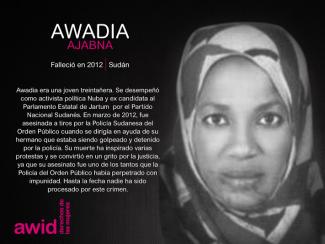
Awadia Ajabna
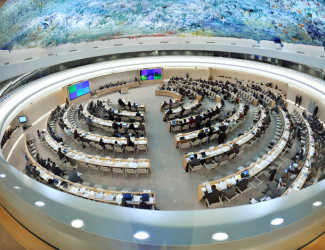
El Consejo de Derechos Humanos (CDH) es el cuerpo intergubernamental del sistema de las Naciones Unidas responsable de la promoción y protección de todos los derechos humanos en todo el mundo. El HRC se reúne en sesión ordinaria tres veces al año, en marzo, junio y septiembre. La La Oficina del Alto Comisionado para los Derechos Humanos (ACNUDH) es la secretaría del Consejo de Derechos Humanos.
Debate y aprueba resoluciones sobre cuestiones mundiales de derechos humanos y el estado de los derechos humanos en determinados países
Examina las denuncias de víctimas de violaciones a los derechos humanos o las de organizaciones activistas, quienes interponen estas denuncias representando a lxs víctimas.
Nombra a expertos independientes que ejecutarán los «Procedimientos Especiales» revisando y presentado informes sobre las violaciones a los derechos humanos desde una perspectiva temática o en relación a un país específico
Participa en discusiones con expertos y gobiernos respecto a cuestiones de derechos humanos.
A través del Examen Periódico Universal, cada cuatro años y medio, se evalúan los expedientes de derechos humanos de todos los Estados Miembro de las Naciones Unidas
Se está llevarando a cabo en Ginebra, Suiza del 30 de junio al 17 de julio de 2020.
AWID trabaja con socios feministas, progresistas y de derechos humanos para compartir conocimientos clave, convocar diálogos y eventos de la sociedad civil, e influir en las negociaciones y los resultados de la sesión.
Sanyu es una feminista que reside en Nairobi (Kenia). Ha dedicado los últimos 10 años a apoyar a los movimientos obreros, feministas y por los derechos humanos, promoviendo la rendición de cuentas empresarial, la justicia económica y la justicia de género. Ha trabajado con el Centro de Información sobre Empresas y Derechos Humanos, en International Women’s Rights Action Watch Asia y el Pacífico (IWRAW, Observatorio Internacional de los Derechos de las Mujeres) y la Iniciativa de Derechos Humanos de la Commonwealth. Posee una maestría en Leyes y Derechos Humanos y una licenciatura en Derecho de la Universidad de Nottingham. Sus escritos se han publicado en el Business and Human Rights Journal, Human Rights Law Review, y plataformas como Open Global Rights, Democracia Abierta, entre otras. En sus ratos libres, le gusta caminar por el bosque y perseguir mariposas.
Mientras el capitalismo heteropatriarcal continúa forzándonos al consumismo y el acatamiento, observamos que nuestras luchas están siendo compartimentadas y separadas por fronteras tanto físicas como virtuales.
Originaire des Fidji, Veena Singh est féministe et femme de couleur. Élevée dans une petite commune rurale de ces îles, elle tire sa force de la richesse de son héritage mixte (sa mère est une femme autochtone fidjienne et son père est de descendance indo-fidjienne). L’identité et le vécu de Veena ont largement façonné son engagement envers la justice, l’équité et l’inclusion. Avec plus d’une vingtaine d’années d’expérience dans les droits humains, l’égalité des genres, l’épanouissement de la communauté et l’inclusion sociale, Veena croit passionnément qu’il faut faire bouger les lignes du pouvoir pour provoquer le changement transformateur qui permettra de construire l’économie de la bienveillance. Elle travaille dans des domaines très divers, notamment l’épanouissement de la communauté ; les femmes, la paix et la sécurité ; les politiques sociales ; les droits humains ; et le plaidoyer politique.
Elle est profondément engagée à faire avancer l’inclusion, la paix et la justice, la santé et les droits sexuels et reproductifs, la justice climatique, la justice transitionnelle et les droits humains. Elle possède une vaste expérience des réseaux de terrain, des organisations internationales et des institutions gouvernementales, et elle place toujours au centre les approches pilotées à l’échelle locale et par les communautés ainsi que les principes féministes.
En dehors de sa « vie de bureau », Veena est une défenseuse de l’environnement, de la santé mentale et c’est aussi une écrivaine. Mère de 11 chats, elle ne jure que par les saris et a un gros faible pour le courrier traditionnel et les cartes postales. Observatrice attentive des mouvements féministes aux Fidji et dans le Pacifique, Veena est en plein parcours personnel pour « décoloniser sa pensée et soi-même, en entreprenant une introspection radicale ». Par-dessus tout, elle est animée par le désir et le rêve de livrer des écrits auxquels pouvoir s’identifier, qui résonnent auprès des autres, en connectant avec la diaspora du Pacifique et en amplifiant les voix marginalisées.
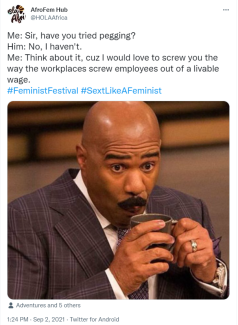
Yo: Señor, ¿probó por el culo?
Él: No, no probé.
Yo: Piénselo, porque me gustaría cogérmelo / joderlo tal como a lxs trabajadorxs nos cogen / joden en los trabajos cuando lo que nos pagan no alcanza para vivir.
Caroline ha estado de forma periódica en AWID; en fechas anteriores, organizó los foros de 2005 y 2008 en Bangkok y Ciudad del Cabo, y cumplió otras funciones institucionales. Antes de incorporarse a AWID, impartió clases de inglés de pregrado, luego abandonó el ámbito académico para dirigir el Festival Internacional de Cine Asiático de Toronto y trabajar en otros proyectos. En fechas más recientes, se ha desempeñado como Responsable de Operaciones en Spring Strategies. Fuera del plano laboral, Caroline generalmente puede ser hallada a su jardín, en comunión con sus queridas plantas e intentando hacer las paces con los insectos y los roedores que suelen aparecer.
Moriviví is a collective of young female artists, working on public art since April 2013. Based in Puerto Rico, we’ve gained recognition for the creation of murals and community led arts.
You can expect all the standard materials for workshops and presentations: flip charts, markers, sticky notes, in addition to projectors and audio-visual equipment. Any additional materials are the responsibility of the activity organizers. AWID’s logistics team will be available to answer questions and advise.
Ekaete Judith Umoh est une défenseure internationale des droits des personnes en situation de handicap et experte en développement inclusif. Elle analyse avec finesse les questions relatives au genre, au handicap et au développement inclusif. Son rêve est d’accroître la visibilité des femmes et des filles en situation de handicap au sein du mouvement féministe international et dans tous les efforts de développement à travers le monde.
Passionnée d’activisme et de politique, Ekaete devient la première femme élue présidente de l’Association nationale des personnes en situation de handicap (Joint National Association of Persons with Disabilities, JONAPWD), au Nigéria. À ce titre, elle dirige les organisations de personnes en situation de handicap dans la lutte pour la signature de la loi nigériane sur le handicap de 2019, qu’elle défendait sans relâche depuis plus de 17 ans. Par la suite, elle rejoint CBM Global en tant que directrice nationale et joue un rôle pionnier à la tête de son équipe pendant trois ans, pour briser le cercle de la pauvreté et du handicap au Nigéria. Outre son activisme dans le domaine du handicap, Ekaete a été consultante auprès de plusieurs agences de développement, proposant son expertise technique de l’inclusion des personnes en situation de handicap dans la conception de programmes et projets.
En colaboración con la artista Naadira Patel, creamos un álbum que resalta algunos momentos de las últimas cuatro décadas de apoyo a los movimientos feministas por parte de AWID.

ทุกสามถึงสี่ปี AWID จะเป็นเจ้าภาพงานประชุมนานาชาติที่สำคัญ โดยจะเป็นการประชุมขนาดใหญ่ระดับโลกที่หัวใจหลักอยู่ที่ขบวนการเฟมินิสต์และความเป็นธรรมทางเพศที่หลากหลาย เป็นการรวมตัวกันระดับโลกของนักกิจกรรมเฟมินิสต์ เครือข่ายพันธมิตร นักวิชาการ แหล่งทุน และผู้กำหนดนโยบาย โดยฟอรัมเปลี่ยนสถานที่จัดหมุนเวียนไปในต่างภูมิภาคและในประเทศต่างๆทั่วซีกโลกใต้
Alejandra se passionne pour les droits des femmes et la justice de genre. Elle rêve de créer un monde qui place le soin en son cœur, celui des personnes comme celui de la nature. Experte féministe en droits humains, elle a travaillé dans des domaines en lien avec le genre, le climat, la justice sociale et économique au sein de diverses organisations internationales. Ses domaines d’expertise comprennent le développement des connaissances et la co-création, la recherche, la facilitation et le plaidoyer. Elle est titulaire d’un master en droits humains de l’université d’Essex et a rédigé et co-élaboré de nombreuses publications, dont l’article «Enragée: Femmes et Nature». La campagne Activisme Féministe Sans Peur s’appuie sur des entretiens et des recherches menés par Alejandra.
Originaire d’Argentine, elle a vécu et travaillé dans plusieurs pays d’Europe et d’Amérique latine au cours des vingt dernières années. Alejandra aime la photographie, la mer, préparer des gâteaux avec sa fille et déguster des plats du monde entier. En tant que mère, elle met un point d’honneur à briser le cycle des schémas répétitifs transgénérationnels. Alejandra puise son énergie et son inspiration auprès des femmes extraordinaires qui font partie de sa vie, et qui vivent aux quatre coins du monde.
L’AWID, le Centre pour le leadership mondial des femmes (CWGL en anglais) et le Réseau de Développement et de Communication des Femmes Africaines (FEMNET), proposent ce document de réflexion pour questionner les concepts traditionnels liés au développement. Il inclut également une série de propositions pour un programme féministe en faveur de la justice de genre, de la justice économique et de la justice en matière de développement.
En savoir plus sur les origines du projet
Ces propositions sont formulées pour être discutées, débattues, mises en pièces, adaptées, adoptées ou encore pour en inspirer d’autres.