Jean-Marc Ferré | Flickr (CC BY-NC-ND 2.0)
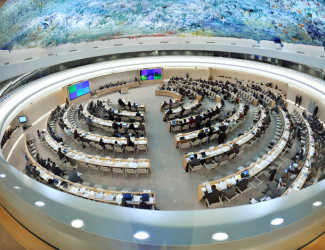
A general view of participants at the 16th session of the Human Rights Council in Geneva, Switzerland.

Análisis Especiales

AWID es un organización feminista internacional de membresía, que brinda apoyo a los movimientos que trabajan para lograr la justicia de género y los derechos de las mujeres en todo el mundo.

Consejo de Derechos Humanos (CDH)

El Consejo de Derechos Humanos (CDH) es el cuerpo intergubernamental del sistema de las Naciones Unidas responsable de la promoción y protección de todos los derechos humanos en todo el mundo. El HRC se reúne en sesión ordinaria tres veces al año, en marzo, junio y septiembre.  La La Oficina del Alto Comisionado para los Derechos Humanos (ACNUDH) es la secretaría del Consejo de Derechos Humanos.

El CDH  trabaja de la siguiente forma:

  • Debate y aprueba resoluciones sobre cuestiones mundiales de derechos humanos y el estado de los derechos humanos en determinados países

  • Examina las denuncias de víctimas de violaciones a los derechos humanos o las de organizaciones activistas, quienes interponen estas denuncias representando a lxs víctimas.

  • Nombra a expertos independientes que ejecutarán los «Procedimientos Especiales» revisando y presentado informes sobre las  violaciones a los derechos humanos desde una perspectiva temática o en relación a un país específico

  • Participa en discusiones con expertos y  gobiernos respecto a cuestiones de derechos humanos.

  • A través del Examen Periódico Universal, cada cuatro años y medio, se evalúan los  expedientes de derechos humanos de todos los Estados Miembro de las Naciones Unidas

Aprende más sobre el CDH


La Sesión actual - CDH44

Se está llevarando a cabo en Ginebra, Suiza del 30 de junio al 17 de julio de 2020.

AWID trabaja con socios feministas, progresistas y de derechos humanos para compartir conocimientos clave, convocar diálogos y eventos de la sociedad civil, e influir en las negociaciones y los resultados de la sesión.

Con nuestrxs socixs, nuestro trabajo será:


◾️ Monitorear, rastrear y analizar actores, discursos y estrategias anti-derechos y su impacto en las resoluciones

◾️ Desarrollar conjuntamente una labor de promoción conjunta para contrarrestar a los actores anti-derechos y debatir más a fondo las conclusiones del Informe de Tendencias de OUR de 2017

◾️ Apoyar, coordinar y desarrollar de manera colaborativa el Caucus feminista emergente en el CDH


Contenido relacionado

Snippet FEA Nadia Echazu (ES)

La Cooperativa Textil Nadia Echazú lleva el nombre de una pionera en la lucha por los derechos de las personas trans y travesti en Argentina. En muchos sentidos, el trabajo de la cooperativa celebra la vida y el legado de Nadia Echazú, que tuvo una notable trayectoria activista.

Era una de las cofundadoras de "El Teje", el primer periódico trans de América Latina, junto a Lohana Berkins, Diana Sacayán y Marlene Wayar. Nadia formó parte de la Asociación de Travestis, Transexuales y Transgéneros de Argentina (ATTTA) y fundó la Organización de Travestis y Transexuales de Argentina (OTTRA).

Poco después de su muerte, sus compañeras activistas fundaron la cooperativa en su nombre, para honrar la profunda huella que dejó en el activismo trans y travesti en Argentina.

Snippet - WITM to claim - RU

Чтобы заявить о себе как об эксперте по вопросам ресурсного обеспечения феминистских движений

Madiha El Safty

Madiha was a prominent Professor of Sociology who actively engaged with civil society as an advocate for women’s rights in the Arab region.

She chaired the Alliance for Arab Women and was a member of the Committee on Civil Society and the Committee on the Development of Minia Governorate with the National Council for Women. She produced numerous papers that shed light on, and analyzed, gender inequalities and discrimination against women.

She is remembered fondly by colleagues, students and friends.


Madiha El Safty, Egypt

Rapport Annuel 2011

Pour réaliser sa mission, l’AWID travaille par la voie de programmes pluriannuels et interreliés. 

Chaque programme comporte plusieurs volets, y compris le développement et la diffusion de connaissances, la recherche-action, les plaidoyers, l’établissement d’alliances et l’organisation de dialogues stratégiques.

Notre Rapport Annuel 2011 vous proposent un sommaire des principales réalisations pendant l'année, dans le cadre de chacune des programmes de l’AWID.  

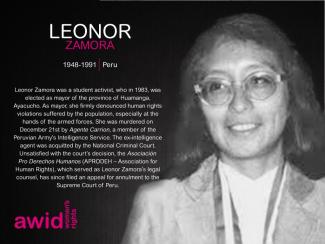
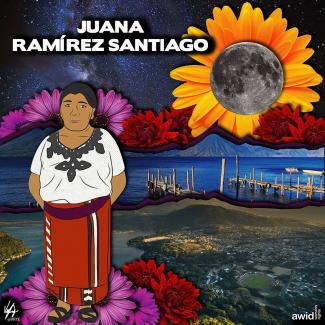
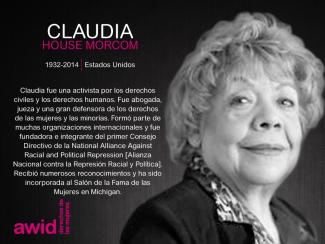
Mujeres indígenas por la defensa de los derechos

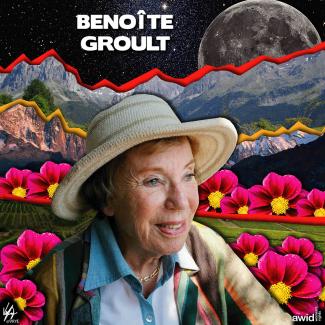
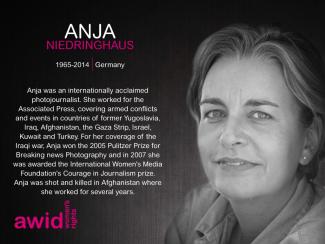
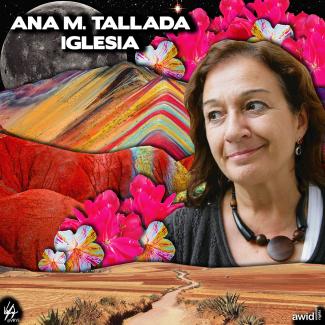
Estas defensoras lucharon por los derechos sobre la tierra, de las mujeres y de los pueblos indígenas; haciendo frente a las industrias extractivas, escribiendo poesía y promoviendo el amor. Una de ellas desapareció hace ya 19 años. Únete a nosotras para recordar y honrar a estas defensoras de derechos humanos, su trabajo y su legado, compartiendo los memes aquí incluidos; y tuiteando las etiquetas #WHRDTribute y #16Días.


Por favor, haz click en cada imagen de abajo para ver una versión más grande y para descargar como un archivo.  


Snippet FEA Georgia this is only the beginning (FR)

Géorgie

Syndicat Réseau Solidarité


ON NE FAIT QUE

COMMENCER

Snippet - WITM Why now_col 2 - RU

Обеспечение ресурсами феминистских движений имеет основополагающее значение для обеспечения более справедливого и мирного настоящего и свободного будущего.

За последнее десятилетие спонсоры выделили значительно больше средств на обеспечение гендерного равенства, однако лишь 1% средств, выделенных на благотворительность и развитие был направлен непосредственно на поддержку социальных изменений, проводимых под руководством феминисток.

В солидарности с движениями, которые по-прежнему остаются невидимыми, маргинализированными и не имеют доступа к основному, долгосрочному, гибкому и основанному на доверии финансированию, данный опрос освещает фактическое состояние ресурсного обеспечения, выявляет ошибочные решения и указывает на то, как необходимо изменить модели финансирования, чтобы движения процветали и решали сложные задачи современного мира.

Teresia Teaiwa

Retratada en The Guardian como uno de los íconos nacionales de Kiribati, Teresia fue una valiente activista.

Trabajó estrechamente con los grupos feministas en Fiji y que puso sus investigaciones al servicio de las cuestiones feministas y de género en el Pacífico. Además, fue coeditora de la publicación International Feminist Journal of Politics. Su influencia se extendió desde la frontera académica hasta los movimientos por la justicia social en la región de Oceanía.


Teresia Teaiwa, Fiji

AWID in 2016: Co-Creating Feminist Futures

AWID is pleased to share our 2016 Annual Report.

2016 was an incredible year for AWID, we convened the 13th International AWID Forum in Bahia, Brazil, a space for strategizing and alliance building with feminists and other justice movements, which was attended by over 1800 participants from 120 countries and territories across the globe.

We know that women’s rights and feminist movements are key actors in creating sustainable transformative change. Within our movements, organizing, resisting and responding to the challenging context is sharpening, and in our increasingly connected world, the potential for collective action across diverse movements has dramatically grown.

This is the crucial work that AWID seeks to amplify and support every day.


What we achieved in 2016

We expanded solidarity and joint action across diverse movements

A highlight of 2016 was our ground-breaking 13th International Forum with the theme: “Feminist Futures: Building Collective Power for Rights and Justice”, where we harnessed the thinking and energy of nearly 500 partners, presenters, panelists, moderators, artivists, writers, facilitators, IT innovators, and performers, many of them leaders in their movements. We also supported the convening of the first and historical Black Feminisms Forum (BFF) organised by a working group of Black Feminists from across the world.

We strengthened knowledge of issues and strategies

We contributed to collective advocacy

AWID, in partnership with other feminist and women’s rights organisations, engaged in advocacy and dialogue to explore better solutions for women’s rights agendas including our work with the Count Me In! consortium .

We increased the visibility of movements

The experiences of women with disabilities, Black and Afro-descendant women, sex workers, Indigenous women, trans and intersex people, domestic workers and how their lives are impacted by multiple oppressions and violence were placed front and center of the Forum process.

We also launched the 2016 WHRD Tribute to commemorate defenders who are no longer with us, during the 16 Days of activism, and thanks to the contributions from our members,

We drove attention to groups and issues that do not usually receive adequate mainstream media coverage through our partnership with The Guardian and Mama Cash.


Our members


Trans* rights require stronger protection

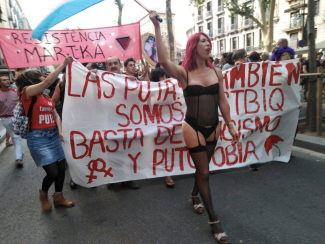
These transgender women were murdered because of their activism and their gender identity. There are insufficient laws recognizing trans* rights, and even where these laws exist, very little is being done to safeguard the rights of trans* people. Please join AWID in honoring these defenders, their activism and legacy by sharing the memes below with your colleagues, networks and friends and by using the hashtags #WHRDTribute and #16Days.


Please click on each image below to see a larger version and download as a file 


Snippet FEA collaborator and allies Photo 1 (EN)

The photo shows Sopo Japaridze, one of the co-founders of the Solidarity Network Union. Sopo has long brown hair, with bangs, and brown eyes, and wears a red mask of the Solidarity Network Union. The picture is taken at night.

Snippet - WITM Acknowledgements - RU

Слова благодарности

AWID выражает признательность всем тем, чьи идеи, аналитические работы и вклад в развитие легли в основу исследования «Где деньги?» и его дальнейшей адвокации.

Прежде всего, мы выражаем глубочайшую благодарность членам AWID и активисткам(-там), которые участвовали в консультациях, и провели этот опрос вместе с нами, щедро поделившись своим временем, аналитикой и теплом.

Мы выражаем признательность феминистским движениям, союзницам(-кам) и феминистским фондам, включая (но не ограничиваясь ими) Black Feminist Fund, Pacific Feminist Fund, ASTRAEA Lesbian Foundation for Justice, FRIDA Young Feminist Fund, Purposeful, Kosovo Women’s Network, Human Rights Funders Network, Dalan Fund and PROSPERA International Network of Women's Funds , за ваше тщательное исследование состояния ресурсного обеспечения, вдумчивый анализ и постоянную адвокацию для достижения более объемного и эффективного финансирования для феминистских организаций и движений за гендерную справедливость во всех контекстах.

Присоединяйтесь к глобальному феминистскому сообществу, которое освещает состояние ресурсного обеспечения, требуя большего финансирования и влияния для феминисток(-ов) во всем мире

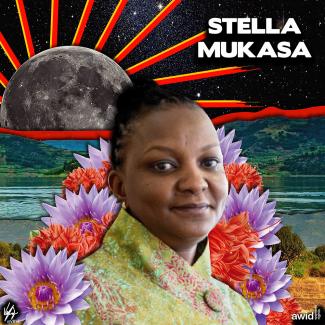
Stella Mukasa

Stella a commencé sa carrière au ministère du Genre et du Développement communautaire en Ouganda. Elle œuvrait auprès des décideurs-euses politiques, pour encourager des réformes législatives, dont celle de la Constitution ougandaise en 1995 qui a entériné certaines des réformes les plus progressives pour les femmes dans la région.

Elle était adorée dans la région tout entière pour ses incessants efforts pour la création et l’application de lois et politiques sensibles au genre. Elle a joué un rôle clé dans l’ébauche de la loi sur les violences domestiques en Ouganda. Elle a aussi contribué à une mobilisation importante en faveur de Constitutions sensibles au genre à la fois en Ouganda et au Rwanda.

Par son travail au Centre international de recherches sur les femmes (International Center for Research on Women, ICRW), elle a abordé les thématiques de la violence à l’égard des enfants. Stella s’est attachée à renforcer les organisations locales qui luttent contre les violences basées sur le genre. Conférencière en Droits genrés et loi à l’université Makerere, elle a également siégé aux conseils d’administration d’Akina Mama wa Afrika, ActionAid International Uganda et l’Open Society Initiative for Eastern Africa.


Stella Mukasa, Uganda

2021: Feminist Power in Action

In 2021, AWID, along with many other organizations, was coming to grips with the implications of the on-going global pandemic for how we work and our role in this particular time. The year taught us three critical lessons about navigating this moment as a global feminist movement-support organization.

Download the full 2021 Annual review


English language cover for the 2021 AWID Annual Report. It shows a collage of protests fists raised, along with flowers and a silhouette of a person with short hair in the back.

Through dialogue and exchanges critical to their work, AWID connected thousands to feminists from around the world.

Our experience in 2021 reaffirmed the importance of building and sustaining a global feminist community, and AWID’s core mission to support feminist movements as a whole. We believe that at this moment, a strong community bound by a shared vision and collective care is the foundation of all social change and transformation.

Download the full 2021 Annual review

1. Gather your resources

This section highlights key resources recommended by AWID so you can conduct your own WITM research.

In this section

People needed

  • 1 or more person(s) to lead overall implementation of research methodology and ensure all key pieces are on track (Sections 2-11)
  • 1 or more person(s) to conceptualize the key research objectives and guiding questions
  • 1 or more person(s) to refine and conduct the research methodology, including collecting data
  • 1 or more person(s) to conduct relevant qualitative and quantitative analysis of collected data
  • 1 or more person(s) to document and package research findings for desired audience(s)
  • 1 or more person(s) to serve as an editor to your final products
  • 1 or more person(s) to conduct outreach to spread the word about your survey and advocacy using your research results

Back to top


Potential expenses

  1. Staff and/or consultant salaries
  2. Data analysis software if conducting analysis of large dataset in-house. Options:
    - SPSS
    - Stata
    - R (this is free)
  3. Cost of producing publications and research products
  4. If desired, incentive prize that survey participants can win if they complete the survey
  5. If desired, incentives to offer your advisors

Back to top


Estimated time

  • For research process: 6 to 18 months, depending on size of dataset(s) and staff capacity
  • For advocacy: 1-2 years, as determined by your organizational goals

Back to top


Resources needed

  • List of advisor organizations, donors and activists
  • List of online spaces and events/networks to distribute your survey and present your survey results
  • List of donors, activists, and women’s rights organizations to interview
  • Prepared interview questions
  • List of publication sources to use for desk research

Back to top


Resources available

Online tools

Once you gather these resources, you can estimate the costs for your research using our “Ready to Go? Worksheet”

Back to top


Previous step

Before you begin

Next step

2. Frame your research


Previous step

Before you begin

Next step

2. Frame your research


The Ready to Go? Worksheet helps you estimate resources, staff and budget needed for your research

Download the toolkit in PDF

Snippet FEA Workers demonstrations in Georgia 2 (ES)

La imagen muestra una protesta en la que una multitud sostiene una pancarta en georgiano que dice: "8 de marzo para las mujeres trabajadoras".

O nosso grupo, organização e/ou movimento não está registado - devemos participar no inquérito mesmo assim?

É claro que sim, queremos saber mais sobre si e sobre a sua experiência com o financiamento.