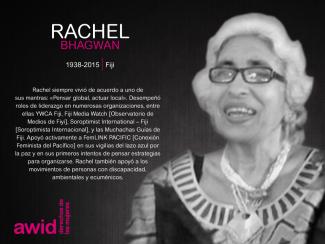
Rachel Bhagwan
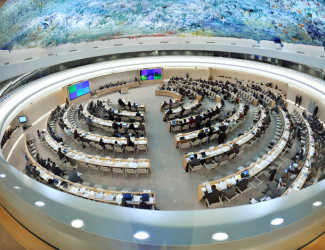
El Consejo de Derechos Humanos (CDH) es el cuerpo intergubernamental del sistema de las Naciones Unidas responsable de la promoción y protección de todos los derechos humanos en todo el mundo. El HRC se reúne en sesión ordinaria tres veces al año, en marzo, junio y septiembre. La La Oficina del Alto Comisionado para los Derechos Humanos (ACNUDH) es la secretaría del Consejo de Derechos Humanos.
Debate y aprueba resoluciones sobre cuestiones mundiales de derechos humanos y el estado de los derechos humanos en determinados países
Examina las denuncias de víctimas de violaciones a los derechos humanos o las de organizaciones activistas, quienes interponen estas denuncias representando a lxs víctimas.
Nombra a expertos independientes que ejecutarán los «Procedimientos Especiales» revisando y presentado informes sobre las violaciones a los derechos humanos desde una perspectiva temática o en relación a un país específico
Participa en discusiones con expertos y gobiernos respecto a cuestiones de derechos humanos.
A través del Examen Periódico Universal, cada cuatro años y medio, se evalúan los expedientes de derechos humanos de todos los Estados Miembro de las Naciones Unidas
Se está llevarando a cabo en Ginebra, Suiza del 30 de junio al 17 de julio de 2020.
AWID trabaja con socios feministas, progresistas y de derechos humanos para compartir conocimientos clave, convocar diálogos y eventos de la sociedad civil, e influir en las negociaciones y los resultados de la sesión.
En 2023, le budget annuel médian des organisations féministes et de défense des droits des femmes était de 22 000 USD. Cette médiane masque de profondes inégalités : quelques groupes accèdent à des ressources considérables, tandis que la grande majorité survit avec des budgets très limités.
Un examen plus attentif des budgets réels révèle une immense diversité et une grande disparité dans les revenus.
Explorez les données relatives à la taille des budgets féministes
The Forum was a key space for the Indigenous Women’s Movement (IWM) in its relationship to feminism. At AWID Forums, they developed engagement strategies that would then apply at other spaces like the United Nations. In that process, both indigenous women and feminists movements were transformed: new voices and issues emerged and feminists started to change their discourses and practices around land rights and spirituality, they understood collective rights better, and included the IWM in their events and agendas. Mónica Alemán and María Manuela Sequeira, from the IWM, shared this story of change.
Nous nous posons la même question et nous pensons qu'elle n’admet pas de réponse simple. Le Forum de l’AWID pourrait être, pour de nombreux participant·e·s, l'un des rares voyages internationaux qu'ils·elles effectueront au cours de leur vie. La pandémie nous a révélé les possibilités mais aussi les limites des espaces virtuels pour la construction de mouvements : rien ne vaut une rencontre en personne. Les mouvements ont besoin de connexions transfrontalières pour renforcer leur pouvoir collectif face aux menaces qui pèsent sur eux, notamment la crise climatique. Nous sommes d'avis que le prochain Forum de l'AWID pourrait ouvrir un espace stratégique afin d'organiser ces conversations et explorer les alternatives qui se posent aux voyages internationaux. L'élément hybride du Forum est une composante importante de cette exploration.
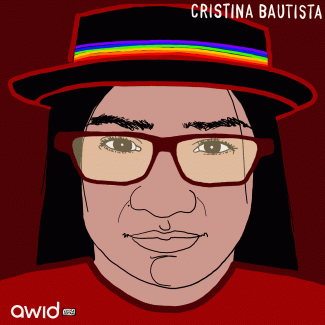
« Si nous nous taisons, ils nous tuent, et si nous parlons [ils nous tuent] aussi. Alors parlons. » - Cristina Bautista, 2019
Défenseuse infatigable des droits du peuple Nasa, Cristina s’est exprimée haut et fort contre la violence à l’égard de sa communauté. Dans un discours devant les Nations Unies, elle appelait à protéger les vies des femmes autochtones et à les impliquer dans différents domaines de la vie. En 2017, Cristina était membre du Bureau des Nations Unies pour les droits humains des personnes autochtones. Le Fonds de contributions volontaires des Nations Unies pour les populations autochtones lui a octroyé une subvention en 2019.
« J’aimerais mettre en lumière la situation actuelle du peuple autochtone en Colombie, le meurtre de leaders autochtones, la répression de la contestation sociale. Au lieu d’aider, l’accord de paix a renforcé la guerre et l’exploitation de territoires sacrés en Colombie… Actuellement, nous travaillons en tant que femmes, dans presque toutes les nations autochtones, à un avenir meilleur pour nos familles. Je ne veux pas voir plus de femmes vivre dans ces conditions en milieu rural. Il nous faut des opportunités qui permettent aux femmes autochtones de participer à la vie politique, à l’économie, à la société et à la culture. J’acquiers une réelle force aujourd’hui, en voyant toutes ces femmes ici, et en voyant que je ne suis pas seule. » - Cristina Bautista, 2019
Cristina a été assassinée le 29 octobre 2019, ainsi que quatre autres membres de la garde autochtone désarmée, dans une attaque potentiellement menée par des membres de « Dagoberto Ramos », un groupe dissident FARC.
D’après Global Witness, « le nombre d’assassinats de leaders communautaires et sociaux·les a terriblement augmenté en Colombie au cours de ces dernières années ».
« La communauté nasa a prévenu à maintes reprises les autorités au sujet des menaces qui pèsent sur leur sécurité. Malgré les efforts déployés par les gouvernements colombiens successifs, les peuples autochtones continuent de faire face à d'importants risques, surtout les dirigeants communautaires ou religieux comme Cristina Bautista.» - Point presse des Nations Unies, 1er novembre 2019
As heteropatriarchal capitalism continues to force us into consumerism and compliance, we are finding that our struggles are being siloed and separated by physical as well as virtual borders.
And with the additional challenges of a global pandemic to overcome, this divide-and-conquer strategy has been favorable for the proliferation of exploitation across many areas.
Yet, From September 1 to September 30, 2021, Crear | Résister | Transform: a festival for feminist movements! took us on a journey of what it means to embody our realities in virtual spaces. At the festival, feminist activists from across the world came together, not only to share experiences of hard-won freedoms, resistances, and cross-borders solidarities, but to articulate what a transnational form of togetherness could look like.
It is this togetherness that has the potential to defy borders, weaving a vision for a future that is transformative because it is abolitionist and anti-capitalist. Spread out over a month, across digital infrastructures that we occupied with our queerness, our resistance, and our imaginaires, the festival showed a way to deviate from the systems that make us complicit in the oppression of others and ourselves.
Though Audre Lorde taught us that the master’s tools will never dismantle the master’s house, Sara Ahmed showed us that we can misuse them. Because we had to make space for assembly, in spite of all the other demands on our time, it became possible to imagine a disruption to the reality of heteropatriarchal capitalism.
Now, if we understand assembly as a form of pleasure, then it becomes possible to make the link between transgressive pleasure and transnational/transdigital resistance. Between the kinds of pleasure that challenges borders on the one hand, and queerness, campiness, land and indigenous struggle, anti-capitalism, and anti-colonial organizing on the other.
This issue attempted to capture a sense of how the festival’s exercise in assembly took on multiple shapes and imaginations. Beyond direct collaborations with some of its speakers and dreamers, we brought on a plethora of other voices from the Global South to be in conversation with many of its themes and subjects. Below is a map of some of the festival’s panels that most inspired us.
Get started with these resources.
COP30 Political Education Toolbox Play the Climate Justice Organizing Deckgame
Read the Feminist Economic Alternatives Brief Download the Climate Justice Zine
Chaque année, à l’AWID, nous visons à renouveler et enrichir les points de vue et expériences que reflète notre Conseil d’administration (CA) en accueillant d’autres membres.
Nous sommes actuellement à la recherche de personnes pour servir des mandats de trois ans au CA de l’AWID, à partir du début de l’année 2024. Il s’agit d’une occasion de contribuer à la gouvernance de notre organisation, et d’intégrer un groupe extraordinaire de féministes du monde entier.
Merci de nous aider à identifier avant le 10 août 2023 des candidatures de féministes à la fois réfléchi·es et engagé·es .
Merci de transférer également cette invitation aux candidat·es dans vos réseaux
Nous recherchons avant tout des candidat·es engagé·es en faveur de la mission de l’AWID, qui peuvent faire le lien entre les luttes locales et mondiales. Ces personnes seront également en mesure de nous aider à tirer, de manière intentionnelle, le meilleur parti du positionnement et des atouts de l’AWID dans un contexte en constante évolution. Les candidat·es doivent être disposé·es à assumer les fonctions et endosser les responsabilités juridiques du CA de l’AWID, dans l’intérêt supérieur de l’organisation.
Il s’agit d’une fonction bénévole, qui nécessite une implication et un engagement tout au long de l’année. Il est attendu des membres du CA une participation à 10 à 15 journées de réunion par an minimum, en personne ou en ligne, et qu’elles et ils contribuent de leur temps et leur expertise, selon les besoins du CA.
Nous souhaitons que le CA reflète la diversité des mouvements féministes du monde entier, tant en matière d’identités que de géographies, de contextes et d’affiliations. Nous recherchons, en outre, des membres du CA ayant de l’expérience dans l’un des domaines de travail de l’AWID.
Nous invitons vivement tous les candidats à postuler. Nous étudierons toutes les candidatures reçues, mais compte tenu de la composition du CA actuel, nous accorderons la priorité à :
des candidatures démontrant une solide expérience dans les domaines suivants :
des candidatures des régions suivantes :
Le Conseil d’administration joue un rôle déterminant au niveau de la définition de l’orientation stratégique de l’AWID et du soutien à l’organisation dans l’accomplissement de sa mission, en cohérence avec le monde dans lequel nous vivons et les besoins de nos mouvements.
Les membres du CA contribuent au fonctionnement de l’organisation de diverses manières : en apportant une expérience d’autres espaces, des perspectives de divers mouvements féministes et un savoir-faire conséquent dans des domaines pertinents alignés sur la stratégie de l’AWID.
Les candidates élues et candidats élus rejoindront le CA de l’AWID en 2024 et nous accompagneront tout au long du tant attendu Forum international de l’AWID et de la mise en œuvre de notre plan stratégique.
(Vous pouvez déposer votre candidature ou celle d’une autre personne, avec son consentement.)
Merci de partager également cette invitation à candidatures au sein de vos réseaux !
D’avance, merci de votre aide à trouver les membres [MB2] extraordinaires de notre prochain Conseil d’administration, qui soutiendront l’AWID lors des étapes à venir !
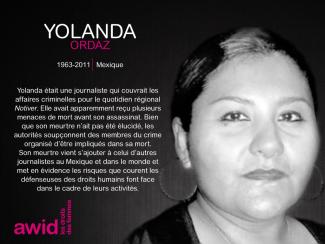
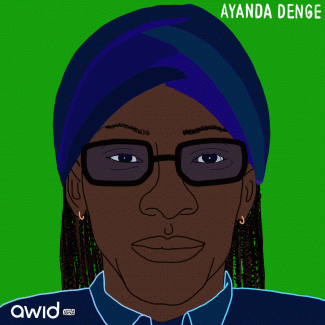
“I am a wonder… Therefore I have been born by a mother! As I begin to stutter, my life has been like no other…” - Ayanda Denge (read the whole poem below)
As a committed and fervent social justice activist, she fought for the rights of sex workers, trans persons, and for those of people living with HIV and AIDS. She was also a motivational speaker on cancer awareness, and campaigned for affordable and social housing, especially for poor and working-class people. Ayanda stood tall as a mountain against different and often abusive faces of discrimination.
“Being transgender is not a double dose, but it’s a triple dose of stigmatisation and discrimination. You are discriminated against for your sexual identity, you are discriminated against for your work, and you are discriminated against for your HIV status.” - Ayanda Denge, 2016
She was acting chairperson at the Sex Workers Education and Advocacy Taskforce (SWEAT) and also worked as an Outreach Coordinator at Sisonke, a national sex workers’ movement in South Africa.
“From us, from our regional head office, to SWEAT where I sit on the board, to Sisonke, a movement of sex workers in Cape Town. We all amalgamate, we have one cry and it’s a cry that is recognised internationally by international sex workers. We want decriminalisation of sex work.” - Ayanda Denge, 2016
She lived in the Ahmed Kathrada House, which was being occupied by the Reclaim the City campaign for social housing. In 2018, Ayanda was elected house leader. On 24 March 2019, she was stabbed to death in her room. The year prior, another resident was killed.
Reclaim the City draws a connection between the safety of the house residents and the Provincial Government withholding electricity and the human right to water:
“We cannot separate the safety of women and LGBTQI people living in the occupation from the refusal by the Western Cape Provincial Government to turn the electricity and water back on at Ahmed Kathrada House.
The house is pitch black at night. We need lights to keep each other safe. It is as if the Province wishes to punish poor and working class people, whose only crime is that we needed a home. While they may disagree with our reasons for occupying, they should be ashamed of themselves for putting politics before the safety and dignity of residents of this city.
Rest in Peace comrade Ayanda Denge, we shall remember you as we carry the torch forward in the struggle for decent well-located housing.”
Poem by Ayanda:
I am a wonder…
Therefore I have been born by a mother!
As I begin to stutter,
My life has been like no other.
Born in pain
Nourished by rain
For me to gain
Was living in a drain.
As I shed a tear
I stand up and hold my spear.
Voices echo, do not fear
Challenges within a year,
Challenges of hurt are on my case;
Community applauds as they assume I have won my race;
But in reality my work strides at a tortoise pace;
On bended knee I bow and ask for grace.
For the Lord
Is my Sword;
To remind humanity
That he provides sanity.
Why Lord am I this wonder?
The Lord answers me with the rain and thunder,
For questioning my father
Who has in the book of lambs
A name called Ayanda.
From the streets my life was never sweet
The people I had to meet;
At times I would never greet;
Even though I had to eat;
I’d opt to take a bow
Rather than a seat
Listen to the poem in Ayanda’s voice
“For my life represents that of a lotus flower, that out of murky and troubled waters I bloomed to be beautiful and strong...” - Ayanda Denge, watch and listen
“Ayanda, I want to say to you that you are still a survivor, in our hearts and minds. You are gone but you are everywhere, because you are love. How beautiful it is to be loved, and to give love. And Ayanda, that is the gift that you have given us. Thank you for all of the love, we truly did need you. Going forward, I promise to you that we will all commit to continue with the struggle that you have dedicated so much energy and your time to. And we will commit ourselves to pursuing justice in this awful ending to your life.” - Transcript of a message, in a farewell Tribute to Ayanda
“Ayanda was an activist by nature. She knew her rights and would not mind fighting for the rights of others. For me, it was no shock that she was involved with many organizations and it was known that she was a people’s person. It did not need to be the rights of LGBTI but just the rights of everyone that she stood for.” - Ayanda’s sister
con Nazik Abylgaziva, Amaranta Gómez Regalado, Cindy Weisner y Lucineia Freitas
Movements marching globally for climate justice.
📅 Saturday, November 15, 2025
📍 Multiple Locations
El Foro Internacional de AWID es un verdadero espacio de encuentro mundial que brinda, a quienes participan, la oportunidad de tejer redes, alianzas, de celebrar y aprender en una atmósfera estimulante, emotiva y segura.
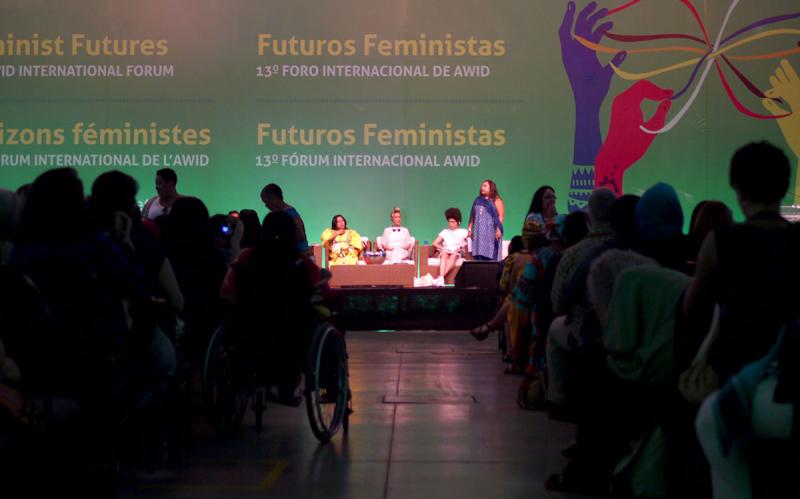
Como proceso, el Foro abarca mucho más que el momento en que nos reunimos. Durante todo el año estamos trabajando con organizaciones y grupos, profundizando nuestras relaciones con ellas, vinculándonos con movimientos locales para entender mejor sus problemas y crear soluciones juntxs.
Como evento, el Foro tiene lugar cada tres o cuatro años en una región diferente del mundo y cristaliza todas las alianzas que hemos venido construyendo como parte de nuestro trabajo.
El Foro de AWID disuelve nuestros límites internos y externos, alberga discusiones en profundidad, colabora con el crecimiento personal y profesional, y fortalece a los movimientos por los derechos de las mujeres y la justicia de género.
El Foro responde a la urgencia de promover una participación y acción más sólidas y coordinadas por parte de lxs feministas, defensorxs de los derechos de las mujeres y de la justicia social, sus organizaciones y movimientos. También creemos que el Foro es más que un evento, ya que puede facilitar procesos que influyen en las ideas y las agendas de los movimientos feministas y de otros actores con quienes nos vinculamos.
El Foro pasó de ser una conferencia nacional con 800 participantes a un encuentro que reúne alrededor de 2000 feministas, líderes comunitarixs, activistas por la justicia social y agencias de financiamiento de todo el mundo.
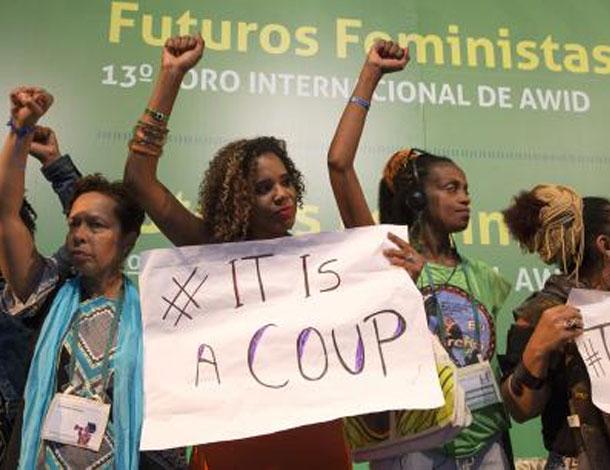
Dado el complejo mundo que enfrentamos hoy, el Foro de AWID 2016 no se centró en un ‘tema’ en particular, sino en la creación de formas más efectivas de trabajar juntxs.
Pese a las dificultades del contexto en el que se celebró este Foro (la epidemia del virus del Zika, una huelga de lxs trabajadorxs del servicio exterior brasileño, el juicio político a la presidenta Dilma Rousseff y la crisis que le siguió), se logró congregar a más de 1800 participantes de 120 países y territorios de todas las regiones del mundo.
Para el 96% de lxs participantes que respondieron a la encuesta de evaluación posterior al Foro, el evento fue una importante fuente de inspiración y energía.
El 98% de lxs participantes lo consideraron un importante espacio de convocatoria para los movimientos feministas, y manifestaron su esperanza de que AWID continúe organizado estos foros.
El 59% de quienes respondieron a la encuesta de evaluación del Foro declaró estar muy satisfechx con el Foro y el 34% algo satisfechx.
Se realizaron más de 150 sesiones en distintos formatos sobre diversos temas, desde la integridad y la libertad corporal, pasando por la violencia de género en el ámbito laboral, hasta estrategias de construcción de poder colectivo.
El primer Foro de Feminismos Negros, se celebró justo antes del Foro de AWID, y reunió a 250 feministas negrxs de todo el mundo, para crear colectivamente un espacio de poder desde donde construir y fortalecer las conexiones intergeneracionales y transnacionales.
Descargar el informe de evaluación del foro
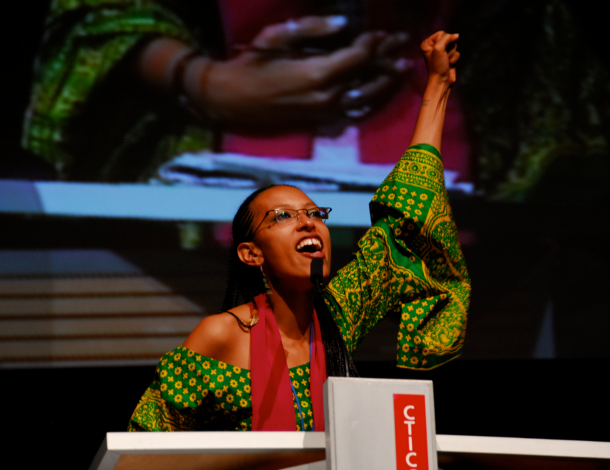
El 12° Foro de AWID se llevó a cabo en el año 2012 en Estambul, Turquía, bajo el título “Transformando el Poder Económico para Avanzar los Derechos de las Mujeres y la Justicia”. El Foro 2012 fue el más grande y diverso que hemos organizado hasta la fecha, con la participación de 2239 activistas por los derechos de las mujeres, de 141 países. El 65% provenía del sur global y casi el 15% eran mujeres jóvenes menores de 30 años, mientras que el 75% de las personas asistían a un Foro de AWID por primera vez.
El programa del Foro se enfocó en la transformación del poder económico para promover los derechos de las mujeres y la justicia. Se ofrecieron más de 170 sesiones de lo más diversas, incluyendo las sesiones de la caja de herramientas económicas feministas para forjar habilidades, sesiones interactivas que representaron los 10 temas del Foro, discusiones en profundidad y las mesas redondas de solidaridad.
Aprovechando el impulso del Foro, hemos transformado la página web en un centro de recursos y aprendizaje que se basa en el contenido generado por las participantes mediante recursos multimedia sobre todos los componentes del Foro.
Visita el archivo web del Foro 2012
Partout sur la planète, les défenseur·e·s féministes, des droits des femmes et de la justice de genre remettent en question les programmes des acteurs fascistes et fondamentalistes. Ces forces opprimantes prennent pour cibles les femmes, les personnes non conformes dans leur identité de genre, leur expression et/ou orientation sexuelle, ainsi que d’autres communautés opprimées.
Les idéologies discriminatoires sapent et s’emparent de nos systèmes et normes en termes de droits humains de manière à ce que seuls certains groupes aient l’exclusivité des droits. Face à cela, l’initiative Promotion des droits universels et de la justice (Advancing Universal Rights and Justice, AURJ) s’attache à promouvoir l’universalité des droits - le principe fondamental selon lequel les droits humains sont le bien de chaque être humain, quelle que soit son identité, et ce sans exception.
Nous créons un espace pour permettre aux mouvements et à nos allié·e·s féministes, en faveur des droits humains et de la justice de genre de se reconnaître, d’élaborer des stratégies et de recourir à des actions collectives afin de contrecarrer l’influence et l’impact des acteurs anti-droits. Nous cherchons également à faire avancer les cadres, les normes et les propositions féministes et relatifs aux droits des femmes, ainsi qu’à protéger et promouvoir l’universalité des droits.
Enrichir nos connaissances : Dans le cadre du rôle de premier plan que nous assurons sur la plateforme collaborative, l’Observatoire de l'universalité des droits (Observatory on the Universality of Rights, OURs), l’AWID soutient les mouvements féministes, en faveur des droits des femmes et de la justice de genre en diffusant et vulgarisant des connaissances et des messages clés concernant les acteurs anti-droits, leurs stratégies et leur impact au sein des organismes internationaux de protection des droits humains.
Promouvoir des programmes féministes : Nous faisons des alliances avec des partenaires au sein d’espaces internationaux dédiés aux droits humains, notamment le Conseil des droits de l’homme, la Commission de la population et du développement, la Commission de la condition de la femme et l’Assemblée générale de l’ONU.
Créer et élargir les alternatives : Nous impliquons nos membres afin de garantir que les engagements, les résolutions et les normes à l’échelle internationale sont reflétées et réintroduites dans l’organisation d’autres espaces à l’échelle locale, nationale et régionale.
Mobiliser des actions solidaires : Nous agissons aux côtés de défenseuses des droits humains (women human rights defenders, WHRD), y compris de défenseur·e·s trans et intersexes et de jeunes féministes, et oeuvrons à contester les fondamentalismes et les fascismes tout en attirant l’attention sur les situations à risque.