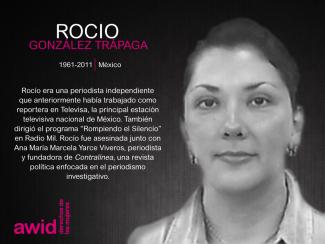
Rocio Gonzalez Trapaga
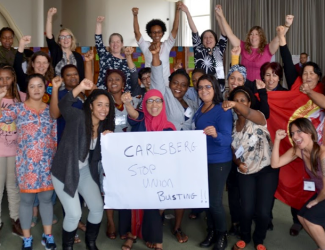
Defensoras de derechos humanos de todo el planeta defienden sus tierras, medios de subsistencia y sus comunidades ante las industrias extractivas y el poder corporativo. Ellas hacen frente a fuertes intereses económicos y políticos que promueven el robo de tierras, el desplazamiento de comunidades, la pérdida de los medios de subsistencia y la degradación del medioambiente.
El extractivismo es un modelo económico y político de desarrollo que mercantiliza la naturaleza y prioriza la ganancia por sobre los derechos humanos y el medioambiente. Arraigado en la historia colonial, refuerza las desigualdades sociales y económicas tanto a nivel local como global. Muchas veces, las mujeres negras, rurales e indígenas son las más afectadas por el extractivismo, y además son notablemente excluidas de la toma de decisiones. Desafiando estas fuerzas patriarcales y neocoloniales, las mujeres se alzan en defensa de los derechos, las tierras, las personas y la naturaleza.
Las defensoras que enfrentan a las industrias extractivas, experimentan una diversidad de riesgos, amenazas y violaciones, incluidas la criminalización, la estigmatización, la violencia y laintimidación. Sus historias dan cuenta de marcados aspectos de violencia sexual y de género. Entre los perpetradores se incluyen autoridades estatales y locales, las corporaciones, la policía, el ejército, las fuerzas paramilitares y de seguridad privada, y en algunos casos, sus propias comunidades.
AWID y la Coalición Internacional de Mujeres Defensoras de Derechos Humanos (WHRDIC por su sigla en inglés) tienen el placer de anunciar «Defensoras de derechos humanos confrontado al extractivismo y al poder corporativo»; un proyecto interregional de investigación que documenta las experiencias vividas por las defensoras de Asia, África y América Latina.
Alentamos a activistas, integrantes de movimientos sociales, la sociedad civil organizada, donantes y responsables de políticas públicas, a leer y utilizar estas producciones para el trabajo de incidencia, con fines educativos y como fuente de inspiración:
«Defensoras de derechos humanos confrontando a las industrias extractivas: un panorama de los riesgos críticos y las obligaciones en materia de derechos humanos» es un informe sobre políticas desde la perspectiva de género (en inglés, pronto disponible en español). Analiza las formas de violaciones y los tipos de perpetradores, hace referencia a las obligaciones relevantes en derechos humanos e incluye recomendaciones de políticas para los estados, corporaciones, la sociedad civil y donantes.
«Tejiendo la Resistencia a través de la Acción: Las Estrategias de las Defensoras de Derechos Humanos contra a las Industrias Extractivas» es una guía práctica que expone formas creativas y deliberadas de acción, tácticas exitosas e inspiradoras historias de resistencias.
El video «Defendiendo a las Personas y al Planeta: Mujeres Confrontando a las Industrias Extractivas» está protagonizado por defensoras de derechos humanos de África, Asia y América Latina, que comparten sus luchas por la tierra y la vida, y hablan de los riesgos y desafíos que enfrentan en su activismo.
«Desafiar al poder corporativo: Las luchas por los derechos de las mujeres, la justicia económica y de género» es un informe de investigación que explica los impactos del poder corporativo y ofrece ideas sobre estrategias de resistencia.
AWID reconoce con gratitud las invaluables contribuciones de cada Defensora de Derechos Humanos que ha sido parte de este proyecto. Esta guía ha sido posible gracias su generosidad y apertura al compartir sobre sus experiencias y lecciones. Su coraje, creatividad y resiliencia son una inspiración para todxs nosotrxs. ¡Muchas gracias!
Ya está disponible nuestro primer programa del Club de Cine Feminista: «Tenderness is the Sharpest Resistance» [«La ternura es la resistencia más intensa»], que es una serie de películas sobre realidades feministas de Asia-Pacífico curada por Jess X. Snow.

Be it core funding, programmes & projects or rapid response/ emergency grants.
«Yo no planeaba ser una cantante, el canto planeó estar en mí.» - Dorothy Masuka (entrevista de Mail & Guardian)
Una de estas canciones, titulada «Dr. Malan» (por el político pro-apartheid D.F. Malan) fue prohibida. Luego, en 1961, grabó «Lumumba», una canción sobre el asesinato del líder anticolonial Patrice Lumumba. El trabajo y el activismo de Dorothy atrajeron la atención de la División Especial de la policía sudafricana, y fue forzada a un exilio político que se prolongaría durante tres décadas. Durante ese tiempo, trabajó con grupos independentistas, incluido el Congreso Nacional Africano. En 1992, cuando el apartheid comenzó a desmoronarse y Nelson Mandela fue liberado de prisión, Dorothy regresó a Sudáfrica.
Su trabajo incluye la primera canción que grabó, en 1953, titulada «Hamba Notsokolo», que fue un éxito durante la década de 1950, y hoy es un clásico muy valorado. También escribió «El Yow Phata Phata», una canción que fue adaptada por Miriam Makeba, quien hizo de «Pata, Pata» un hit internacional.
Arraigados en la resistencia, la música y el activismo de Dorothy (popularmente conocida como «Auntie Dot» [«Tía Dot»]) estaban entretejidos, y dejaron un legado magnífico e inspirador.
Dorothy falleció en Johannesburgo el 23 de febrero de 2019 a la edad de 83 años, por problemas de salud.
Entrevista a Dorothy Masuka de Mail & Guardian (en inglés)
Escucha su música:
Hola de nuevo, y de nuevo, y de nuevo. Los he conocido y amado durante toda mi vida adulta, desde que los encontré, significativamente, después de graduarme de la universidad. Los había visto una vez antes. Fue cuando ustedes aparecieron como Betty Friedan en un programa de entrevistas de televisión en el Medio Oeste de los Estados Unidos, a finales de la década de 1960. En ese momento, la Sra. Wells (mi otra madre) y yo comentamos las ideas exageradas y disparatadas de las que esta mujer estaba tratando de convencernos. Desde entonces, década tras década, me he enamorado cada vez más profundamente de ustedes, mis amados movimientos, y he entendido y presenciado su genialidad política y teórica, su autoridad ética y moral, su creatividad, su alegría, y su amor, sobre todo. Casi sesenta años después, sé que somos compañerxs para siempre.
Los primeros años de nuestra relación fueron buenos. Yo estaba bastante autoinvolucrada (tratando de entender la identidad racial, de género y sexual; aclarando mis políticas, valores y ética fundamentales; completando mi educación formal), y ustedes me brindaron numerosos escenarios, centros sociales intelectuales y ambientes de contención acogedores donde y a través de los cuales pude elaborar los componentes fundamentales de la feminista y el ser humano en que me convertiría.
Los movimientos de mujeres predominantemente blancas de Cambridge y Boston, incluyendo Daughters of Bilitis [Hijas de Bilitis], fueron mi punto de partida. Eso me vino bien en ese momento, pero pronto me di cuenta de que deseaba algo más. ¡Poof! Mágicamente (descubrimiento casual), me conecté con un pequeño grupo de mujeres radicales, antiimperialistas, negras, socialistas y lesbianas y, pronto, nos convertimos en el Combahee River Collective [Colectivo del Río Combahee].
Esa temprana experiencia de Combahee -combinada con aprendizajes vitales críticos y, en particular, con las políticas raciales inmigrantes afroamericanas y coreanas de principios de la década de 1990 en los Estados Unidos- me prepararon para el viaje que me ha llevado a identificarme y a trabajar como feminista transnacional para enfrentar el militarismo y a dedicarme a imaginar otros mundos donde todos los seres vivos prosperen.
Los dos momentos críticos siguientes del movimiento de mujeres ocurrieron décadas después de los años de Combahee, pero estuvieron profundamente vinculados. Primero, fue conocer y ser invitada al movimiento feminista coreano que se estaba organizando contra las bases militares estadounidenses y apoyaba a las «mujeres kijichon» [«mujeres de confort»], las mujeres coreanas cuyas vidas (que para algunas incluía a sus hijxs mestizxs) giraban alrededor del variado servicio al personal militar estadounidense en las aldeas y los pueblos adyacentes a las bases. Las amadas feministas coreanas, especialmente Kim Yon-Ja y Ahn Il Soon (las primeras hermanas que conocí y con quienes viajé), me hicieron ver y comprender la importancia crítica de la nación como principio analítico y organizativo. El «toque final» fue vivir y trabajar en la Palestina ocupada. La difunta Maha Abu-Dayyeh me introdujo al movimiento de mujeres palestinas, con un comentario profundo: «puedes dejar Palestina, pero Palestina nunca te dejará». Cuánta verdad. Y todo mi trabajo y mis experiencias a través de muchas fronteras me llevaron a AWID, mi segundo hogar.
Como saben, amados movimientos, estar con ustedes no ha sido fácil ni simple. De hecho, son demandantes, están sistemáticamente plagados de contradicciones y, a veces, hasta resultan hirientes. No obstante, continúan creciendo y desarrollándose, a medida que sostienen mi propio crecimiento y desarrollo político, emocional y espiritual. Supongo que nos cultivamos mutuamente: un proceso muy profundo al cual dedicaré el resto de mi tiempo bajo mi forma actual.
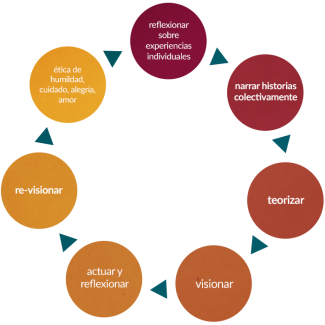
El eje de ser/estar con ustedes todas estas décadas es esto:
Feministas que comprometen colectivamente sus cabezas, corazones, manos y espíritus para transformar nuestros mundos
¡Mucho amor, movimientos feministas!
Su Margo
alias DJ MOR Love and Joy
Wellfleet, Massachusetts, Estados Unidos
Los movimientos feministas han cambiado y se han adaptado enormemente desde la última vez que nos reunimos de esta manera - así que para recordar por qué son importantes los Foros de AWID, pedimos a activistas de todo el mundo que reflexionaran y compartieran sus historias, impresiones y recuerdos. Esto es lo que aprendimos.
LA CARAPACE DE MON PÈRE raconte l'histoire d'un homme mystérieux dont la vie a été modelée par la fuite, l’expulsion, la vie en exil et un retour raté en Palestine. Le film comporte la quête d’une fille cherchant à obtenir des réponses de la part de son père.
¿Cuánto sabes sobre financiamiento feminista? 📊 Pon a prueba tu conocimiento sobre la movilización de recursos para el financiamiento de la organización feminista, respondiendo al cuestionario "¿Dónde está el dinero?":
Completa el quiz en línea Descarga la versión para imprimir
Queremos expresar nuestro más sincero agradecimiento a todos los diversos grupos, colectivos y organizaciones feministas de todo el mundo que respondieron a la encuesta WITM. Su participación y sus puntos de vista han sido inestimables y enriquecerán enormemente nuestra comprensión colectiva de los recursos feministas a nivel mundial.
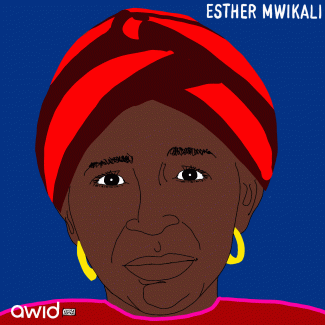
Esther Mwikali habitait dans le village de Mithini, dans le comté de Murang’a au Kenya. Activiste des droits fonciers, importante et appréciée, elle travaillait sur les abus à l’égard de squatters vivant sur des terres revendiquées par des magnats. Esther a participé à une enquête qui comprenait également des violations de droits fonciers à Makaya par de puissants individus.
Suite à l’absence d’Esther lors d’une réunion de village, une équipe de patrouille est partie à sa recherche. Le 27 août 2019, deux jours après sa disparition, on retrouva son corps dans une ferme proche de sa propriété, montrant des signes de torture. Elle fut sauvagement assassinée.
« Esther était reconnue pour son travail auprès des membres de la communauté, empêchant les évictions de terres revendiquées des magnats. Les activistes du coin n’ont aucun doute sur le lien entre son meurtre et les luttes constantes pour les terres dans la région. C’est un tragique rappel de la fréquence alarmante d’assassinats extrajudiciaires régulièrement menés au Kenya » - Global Wittness Report, juillet 2020
« Nous associons la mort de Mwikali aux luttes pour les terres par ici. Nous demandons au gouvernement de mener une enquête sur ce sujet au plus tôt. » - James Mburu, porte-parole des squatters
« Des mesures devraient être prises à l’égard des individus suspectés d’avoir menacé les squatters, et notamment la famille Mwikali. » - Alice Karanja, National Coalition of Human Rights Defenders (coalition nationale des défenseur·e·s des droits humains)
« L’impact de son travail et sa ténacité demeureront encore en vie pour les prochaines décennies au Kenya. CJGEA console avec les personnes endeuillées et appelle à la justice. » - Center for Justice and Governmental Action (Centre pour la justice et l’action gouvernementale, CJGEA) communiqué de presse, 13 septembre 2019
Le corps est une entité puissante. En tant que femmes, notre corps est contrôlé, opprimé et policé depuis l'utérus. Notre apparence, nos mouvements, nos vêtements, notre façon de marcher, de parler, nos gestes et notre rire. Je me suis souvent interrogée sur les raisons des peurs patriarcales liées au pouvoir du corps féminin.
Là d'où je viens, le travail du sexe et les travailleur.se.s du sexe étaient évoqué.e.s avec un mélange de mépris, de dégoût, de fascination, de pitié et de condamnation.
J'ai entré en contact avec le travail du sexe et les travailleur.se.s du sexe pour la première fois à l'âge de 22 ans. À partir de simples conversations, assis.e.s en cercle, autour d'un café ou d'un thé, nous avons exploré la vie, les expériences, les pensées et les sentiments de chacun.e.
Pour les travailleur.se.s du sexe, le travail du sexe était le choix le plus intéressant parmi toutes les autres options : payer les factures, soutenir la famille, bénéficier d’horaires de travail plus flexibles, avoir des relations sexuelles. Tout comme j'ai choisi mon travail comme étant le choix le plus intéressant pour payer les factures, soutenir la famille, avoir des heures de travail plus flexibles.
Ces personnes, femmes et hommes, m'ont appris que je prenais mes propres décisions concernant mon corps... duquel je concentre sa vie et son énergie, si je l'utilise pour le plaisir ou la douleur, si je l'échange ou le donne librement, et comment je veux m’y sentir. Cette prise de conscience était aussi excitante qu’autonomisante.
Crear | Résister | Transform : un festival pour les mouvements féministes - 2021... vous m'avez accompagnée dans une série de moments qui ont changé ma vie (!!!)
Nous appelons cela des « événements », mais en réalité, vos espaces d'apprentissage féministes sont selon moi des lieux où je prends un peu de ce que j'ai en moi, un peu de ce que disent vos intervenants et un peu des discussions pour approfondir notre compréhension.
Partager... Participer... S'immerger...
dans la force, dans la vulnérabilité, dans le plaisir.
Être simplement la féministe transformatrice que je suis, sans prétentions, sans appréhensions...
Accueillir la féministe transformatrice que j'ai toujours été, sans même connaître le terme ou le reconnaître de cette manière ou en ces termes...
Trouver un foyer pour la féministe transformatrice féroce qui vit en moi...
Malgré la colère, la rage et la frustration de ne pas être traitée sur un pied d'égalité et d'être traitée comme « moins __ que ».
Je ne me suis pas toujours considérée comme une féministe ni reconnue dans le mouvement ou le discours féministe... En réalité, j'apprécie que l'on m'ouvre les portes, que l'on me tire les chaises pour m'asseoir, que l'on reconnaisse ma féminité en tant que femme.
Parfois, j'ai rejeté le patriarcat avec agacement, parfois j'ai réagi avec frustration et colère, mais je ne l'ai pas abordé... Je n'ai pas remarqué sa toxicité sinistre et insidieuse... J'étais assez privilégiée de pouvoir travailler à travers lui, d'y survivre, de le surmonter, d'exceller malgré lui... Je n'ai pas suffisamment remis en question, pas suffisamment défié, pas suffisamment repoussé mes limites... Je n'en ai pas fait assez...
se connecter avec les travailleur.se.s du sexe, explorer la sexualité, et les femmes pour la paix et la sécurité....
Jusqu'à ce que je prenne pleinement conscience et comprenne que les implications des privilèges et de l'oppression étaient intersectionnelles.
Jusqu'à ce que je réalise ce que signifie se battre pour la justice de genre et pas seulement pour « l'égalité pour tous ».
Je ne suis plus une praticienne et une animatrice, mais bien une praticienne et une animatrice féministe transformatrice.
Être féministe signifie que je vais agir
Plonger dans un avenir incertain, fragile, complexe (et peut-être assez violent)...
Je vous suis profondément reconnaissante et je promets de rester féroce dans la prise en compte et le redressement des questions problématiques liées au genre, à la race, à l'ethnicité, à la classe sociale, à l'orientation sexuelle et aux capacités, et de rester présente et fidèle à la lutte pour l'inclusion, l'équité et la justice.
Khin Khin
Nous surveillons attentivement ce risque parmi d'autres, et nous publierons des informations détaillées concernant la santé et la sécurité dès l'ouverture des inscriptions afin que vous puissiez prendre une décision en toute connaissance de cause. En outre, le format hybride est conçu de façon à offrir une expérience de participation significative aux personnes qui préféreront ne pas voyager ou qui ne sont pas en mesure de le faire.
Notre force collective, notre sagesse et notre engagement sont illimités... mais pas nos comptes en banque.
Cette synthèse s’appuie sur les réponses de 1 174 organisations féministes, de défense des droits des femmes, LBTQI+ et alliées (désignées ci-après comme « organisations féministes et de défense des droits des femmes ») issues de 128 pays, ayant participé à l’enquête Où est l’argent pour l’organisation des mouvements féministes ?
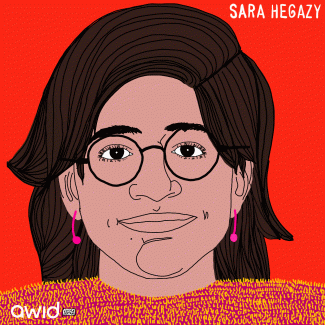
Sara Hegazy, a bold Egyptian LGBTQI+ rights activist, lived in a society where the members of her community, their bodies and lives often face lethal prejudice. The roots of Sara’s resistance were in the deconstruction of a dominant, oppressive and patriarchal system, and its anti-rights actors.
"[In Egypt], every person who is not male, Muslim, Sunni, straight, and a supporter of the system, is rejected, repressed, stigmatized, arrested, exiled, or killed. This matter is related to the patriarchal system as a whole, since the state cannot practice its repression against citizens without a pre-existing oppression since childhood." - Sara Hegazy wrote on March 6, 2020
The suppression of Sara’s voice by the Egyptian government reached its violent peak in 2017, when she was arrested for raising a rainbow flag at the Mashrou’ Leila (Lebanese band whose lead vocalist is openly gay) concert in Cairo. What followed were charges of joining an illegal group along with “promoting sexual deviancy and debauchery”.
"It was an act of support and solidarity — not only with the [Mashrou' Leila] vocalist but for everyone who is oppressed...We were proud to hold the flag. We wouldn't have imagined the reaction of society and the Egyptian state. For them, I was a criminal — someone who was seeking to destroy the moral structure of society." - Sara Hegazy
Sara was jailed for three months, where she was tortured and sexually assaulted. In January 2018, after being released on bail, she sought asylum in Canada where she was safe but imprisoned by the memories of the abuse and violence her body and soul had gone through.
"I left this experience after three months with a very intense, serious case of PTSD [post-traumatic stress disorder]. Prison killed me. It destroyed me." - Sara Hegazy told NPR
Sara took her own life on 14 June 2020, leaving a handwritten note in Arabic:
“To my siblings – I tried to find redemption and failed, forgive me.”
“To my friends – the experience [journey] was harsh and I am too weak to resist it, forgive me.
“To the world – you were cruel to a great extent, but I forgive.”
Her legacy and courage will be carried forward by those who love her and believe in what she fought for.
“To Sarah: Rest, just rest, spared from this relentless violence, this state-powered lethal patriarchy. In rage, in grief, in exhaustion, we resist.” - Rasha Younes, an LGBT rights researcher at Human Rights Watch. Read the complete text
Mashrou’ Leila’s lead vocalist sings tribute to Sara Hegazy
Across the world and social movements, those who want to innovate tend to feel lonely and powerless before the ‘movement status quo’. Historically, the AWID Forums have played a role in supporting these innovators by offering them a platform where their ideas and practices are welcomed and strengthened by the thoughts and actions of others – in different regions and communities – who have already explored them. Sara Abu Ghazal, Palestinian feminist in Lebanon, tells the story of what the Forums meant for a new generation of feminists in the MENA (Middle East and North Africa) region that introduced new ways of organising, new understandings of feminism and new issues to the regional women’s rights landscape.
No, you don't have to be an AWID member to participate but AWID members receive a discounted registration fee as well as a number of other benefits. Learn more on how to become an AWID member.
À la Commission africaine et au Système interaméricain, les antidroits promeuvent les notions essentialistes de culture et de genre pour miner les avancées en matière de droits et décrédibiliser la redevabilité. Les antidroits gagnent en influence dans les systèmes de protection des droits humains régionaux et internationaux.