Análisis Especiales

AWID es un organización feminista internacional de membresía, que brinda apoyo a los movimientos que trabajan para lograr la justicia de género y los derechos de las mujeres en todo el mundo.

Confrontando al extractivismo y al poder corporativo

Defensoras de derechos humanos de todo el planeta defienden sus tierras, medios de subsistencia y sus comunidades ante las industrias extractivas y el poder corporativo. Ellas hacen frente a fuertes intereses económicos y políticos que promueven el robo de tierras, el desplazamiento de comunidades, la pérdida de los medios de subsistencia y la degradación del medioambiente.


¿Por qué resistir a las industrias extractivas?

El extractivismo es un modelo económico y político de desarrollo que mercantiliza la naturaleza y prioriza la ganancia por sobre los derechos humanos y el medioambiente. Arraigado en la historia colonial, refuerza las desigualdades sociales y económicas tanto a nivel local como global. Muchas veces, las mujeres negras, rurales e indígenas son las más afectadas por el extractivismo, y además son notablemente excluidas de la toma de decisiones. Desafiando estas fuerzas patriarcales y neocoloniales, las mujeres se alzan en defensa de los derechos, las tierras, las personas y la naturaleza.

Riegos críticos y violencia específica de género

Las defensoras que enfrentan a las industrias extractivas, experimentan una diversidad de riesgos, amenazas y violaciones, incluidas la criminalización, la estigmatización, la violencia y laintimidación. Sus historias dan cuenta de marcados aspectos de violencia sexual y de género. Entre los perpetradores se incluyen autoridades estatales y locales, las corporaciones, la policía, el ejército, las fuerzas paramilitares y de seguridad privada, y en algunos casos, sus propias comunidades.

Actuar juntxs

AWID y la Coalición Internacional de Mujeres Defensoras de Derechos Humanos (WHRDIC por su sigla en inglés) tienen el placer de anunciar «Defensoras de derechos humanos confrontado al extractivismo y al poder corporativo»; un proyecto interregional de investigación que documenta las experiencias vividas por las defensoras de Asia, África y América Latina.

Alentamos a activistas, integrantes de movimientos sociales, la sociedad civil organizada, donantes y responsables de políticas públicas, a leer y utilizar estas producciones para el trabajo de incidencia, con fines educativos y como fuente de inspiración:

¡Comparte tu experiencia y tus preguntas!

Cuéntanos cómo estás utilizando la herramienta sobre las defensoras que confrontan a las industrias extractivas y al poder corporativo.

◾️ ¿De qué manera estos recursos pueden ayudarte en tu activismo y tu trabajo de defensa?

◾️ ¿Qué informaciones o conocimientos adicionales necesitas para la mejor utilización de estos recursos?

Comparte tus comentarios


¡Gracias!

AWID reconoce con gratitud las invaluables contribuciones de cada Defensora de Derechos Humanos que ha sido parte de este proyecto. Esta guía ha sido posible gracias su generosidad y apertura al compartir sobre sus experiencias y lecciones. Su coraje, creatividad y resiliencia son una inspiración para todxs nosotrxs. ¡Muchas gracias!

Contenido relacionado

Advancing Movements

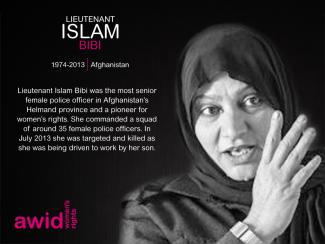
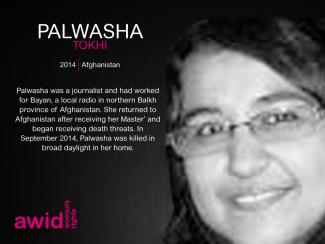
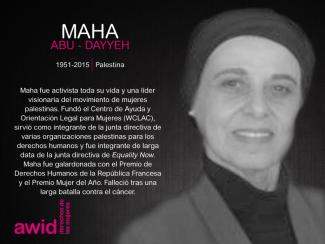
6 Women Human Rights Defenders (WHRDs) across Western and Southeastern Europe have in their lifetime researched, campaigned, participated in and advanced peace and women’s rights movements be it through political and social activism or through dance. We are grateful for the legacy they have left. Please join AWID in honoring these women, their activism and legacy by sharing the memes below with your colleagues, networks and friends and by using the hashtags #WHRDTribute and #16Days.


Please click on each image below to see a larger version and download as a file


Diakite Fatoumata Sire

Diakite was actively involved in advocating for women in political and public life in Mali.

She worked to support training of women candidates in elections, and spoke out against the practice of Female Genital Mutilation (FGM). She was a strong proponent of reproductive health and rights. 


Diakite Fatoumata Sire, Mali

إلى متى يمكن الإجابة على الاستطلاع؟

وسيكون التحقيق مفتوحًا حتى 31 أغسطس 2024. الرجاء تكملته خلال هذا الوقت للتأكد بأن تشمل ردودكم/ن في التحليل.

Snippet FEA Audio Land and Agroecology (EN)

Escucha esta historia aquí:

2. Frame your research

A framework for your research will guide throughout your research process, and the framing document you develop can also serve as a concept note to advisors and partners, and a funding proposal to potential donors.

Before conducting any research:

Your research framing may evolve over time as you refine your questions and gather new information. However, building an initial research framing will allow you to work from a solid foundation.


Goals

To create a strong foundation for your WITM research, it is important to clarify what you hope to accomplish.

For example, one goal of AWID’s WITM global research was to provide rigorous data to prove what we already knew anecdotally: that women’s rights organizations are discrepantly underfunded. With this data, we felt we would be better positioned to influence funders in their decision-making.

Your goals could be to:

  • Generate hard data on funding realities and trends to prove or disprove existing myths.
  • Gain deeper insight into differences between the perspectives of donors and women’s rights organizations.
  • Influence donors in grant-making.
  • Add crucial input to key funding debates.
  • Explore collaboration between donors and women’s rights organizations on issues that emerge from the research.

Back to top


Key questions

Frame your research process with key questions that only your research can answer and limit those questions to a specific time frame (e.g. past five years, past year, etc.).

Consider the following points:

  • What exactly do you want to learn more about and what is the hypothesis you would like to test? Writing this out will assist you in your thought process.
  • Is there existing research on this? If research already exists, it may not make sense to conduct new WITM research unless you feel like the existing research is not extensive or specific enough.  
  • What time frame do you want to cover in your analysis? For example, will your research analyze only the past year, or several previous years, such as the past five years?
  • Are you planning to repeat your survey to collect data in the future?

Choosing a specific timeframe for your research can result in more precise findings than working with an open-ended timeframe. Also, deciding whether you will repeat this research at regular intervals will allow you to set up data collection benchmarks for easy replication and comparison over time.

These were the key questions that guided AWID’s WITM research process:

  • What is the current state of women’s organizations’ financial sustainability across the world?
  • What external and internal trends are impacting donors’ funding decisions to support women’s organizations and movements?

Back to top


Type of data

Now that you determined your key questions, you can determine what kind of data will help you answer your key questions. This will allow you to plan the rest of your schedule for your WITM research.

For example, will you conduct a survey that covers an extensive portion of your priority population? Will you analyze the applications that funders are receiving from a certain region? Will you also conduct interviews (recommended)? By determining the types of data you need, you can reach out to external parties who will provide this data early on, and plot out your full schedule accordingly. Some suggested sources of data could be:

  • Surveys you create for women’s rights organizations and donors
  • Application and grantmaking data from donors funding cycles
  • Interviews of prominent activists, organizations, and donors
  • Donor data from membership organizations and networks, such as  the Foundation Center, regional or national donor affinity groups.

Diverse data sets are a great way to create robust and rich analysis.

The data from AWID’s 2011 Global Survey formed the backbone of our analysis in Watering the Leaves, Starving the Roots report. However, we also collected data from interviews and interactions with several actors in the field, ranging from donors to activists and women’s rights organizations.

Back to top


Final products

In addition to allowing you to set your schedule, creating an initial plan of what products you will develop will also allow you to work out what resources you need.

For example, will you only produce a long research report or will you also create infographics, brochures and presentations? Depending on your products, you may need to hire a design firm, plan events and so on.

These products will also be the tools you use to achieve your goals, so it is important to keep those goals in mind. For example, is your WITM research exclusively intended as an advocacy tool to influence funders? In that case, your products should allow you to engage with funders at a deep level.

 Some sample products:

  • Long report for dissemination with key funders and organizations.
    Historically, AWID WITM research has centered on a long report, from which AWID distilled other smaller products  - see rest of list.
  • Infographic for viral distribution online
  • Short animation demonstrating key findings
  • Short brochure(s) distilling your findings and messages
  • Articles and blog posts on key findings to draw interest to your larger report
  • Seminars or webinars presenting key findings.

Back to top


Conclusion: Framing your research will give you the big picture

Framing your research to cover goals, key questions, types of data, and final products will allow you to create a well-planned schedule, prepare your resources in advance, and plan a realistic budget.

This will make interactions with external partners easier and allow you to be nimble when unexpected setbacks occur.


Previous step

1. Gather your resources

Next step

3. Design your survey


Estimated time:

• 1 month

People needed:

• 1 or more Research person(s)

Resources available:

• AWID Research Framing: sample 1
• AWID Research Framing: sample 2


Previous step

1. Gather your resources

Next step

3. Design your survey


Ready to Go? Worksheet

Download the toolkit in PDF

Andaiye

Andaiye in Swahili means ‘a daughter comes home’. Born Sandra Williams on 11 September 1942 in Georgetown, Guyana, she changed her name to ‘Andaiye’ in 1970 as the Black Power movements swept her country and the wider Caribbean region. 

Andaiye was seen as a transformative figure on the frontlines of the struggles for liberation and freedom. She was an early member and active in the leadership of the Working People’s Alliance (WPA), a socialist party in Guyana which fought against authoritarian rule and continued throughout her life to focus on justice for the working-class and rural women’s rights and on bridging ethnic barriers between Indo and Afro-Guyanese women. 

Andaiye was a founding member of Red Thread Women, an organization that advocated for women’s care work to be fairly remunerated, worked at the University of the West Indies and with CARICOM. Never afraid to challenge governments, she pointed out gender imbalances in state boards, laws that discriminated against sex workers, called for abortion rights in Jamaica and spoke out against trade agreements such as the Caribbean Single Market and Economy (CSME) that allowed for the free movement of women domestic migrant workers but did not give their children the same rights.  

Andaiye published several scholarly essays, wrote newspaper columns and also edited the last books of Walter Rodney, the Guyanese political activist and fellow WPA leader, who was assassinated in 1980. A cancer survivor, Andaiye was one of the founders of the Guyana Cancer Society and the Cancer Survivors’ Action Group. She also served on the executive of the Caribbean Association for Feminist Research and Action (CAFRA), as a Director of Help and Shelter and as Board Member of the Guyana National Commission on Women. She received a number of awards, including the Golden Arrow of Achievement in Guyana (the fourth highest national award).

Andaiye passed away on 31 May 2019 at the age of 77. The subsequent tributes that flowed in from activists, friends and those inspired by her life spoke eloquently to her amazing legacy and her beautiful humanity.

Here are but a few: 

“Andaiye had a profound effect on me...she was so many things, an educator, fighter, she taught me to be self-critical, to think more clearly, she taught me about survival, about incredible courage, about compassion, about going beyond external appearances and treating people as people and not being distracted by status, class, race...anything.”
- Peggy Antrobus, Feminist Activist, Author, Scholar, Barbados

“The kind of confident idealism Andaiye expressed, this willingness to confront the world and a stubborn belief that you could actually change it... That politics of hope...How else to honour her life, legacy and memory but to keep doing the work ethically and with ongoing self-critique? And to put women’s caring work at the center of it.”
- Tonya Haynes, Barbados

“I can hear her quip at our collective keening. So through the tears I can laugh. Deep bows to you beloved Andaiye, thank you for everything. Love and light for your spirit’s journey. Tell Walter and all the ancestors howdy.” - Carol Narcisse, Jamaica

Read more tributes to Andaiye

Snippet - Home page promo WITM - FR

« Où est l’argent pour l’organisation des mouvements féministes? »

En s’appuyant sur nos 20 années d’efforts pour la mobilisation de davantage de financements de meilleure qualité pour des changements sociaux menés par des féministes, l’AWID vous invite à répondre à la nouvelle version de notre enquête phare intitulée WITM

JE PARTICIPE À L’ENQUÊTE! En savoir plus

Snippet FEA Objectives NSS Family Farming (FR)

L'AGRICULTURE FAMILIALE, L’AGROÉCOLOGIE ET LA SOUVERAINETÉ ALIMENTAIRE

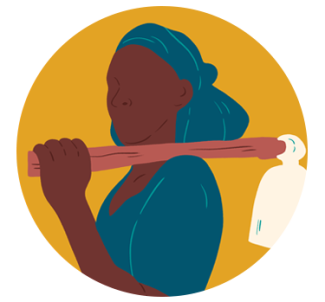
Circle in mustard yellow with the illustration of a rural woman with brown skin and a blue dress, with a hoe tool on her left shoulder.
Promouvoir l'agriculture familiale par l'agroécologie et la souveraineté alimentaire

6. Conduct desk research

Desk research can be done throughout your research. It can assist you with framing, help you to choose survey questions and provide insights to your results.

In this section

Giving context

Conducting desk research throughout your research process can assist you with framing, help you to choose survey questions and provide contextual clarity or interesting insights to your survey results, such as comparing similarities and differences between your survey results and information produced by civil society and donors.

Perhaps you notice trends in your survey data and want to understand them.

For example, your survey data may reveal that organization budgets are shrinking, but it cannot tell you why this is happening. Reviewing publications can give you context on potential reasons behind such trends.

Back to top


Building on existing knowledge

Desk research also ensures you are building your research on the existing knowledge regarding your topic, confirming the validity and relevance of your findings.

They may be complimentary or contradictory to existing knowledge, but they must speak to existing data on the topic.

To ensure comprehensive research of the entire funding landscape related to your topic, look at a diverse set of funding sectors.

You can consider:

  • Women’s Funds
  • Private and Public Foundations
  • International Non-Governmental Organizations (INGOs)
  • Bilateral and Multilateral Agencies
  • Private Sector Actors
  • Individual Philanthropists
  • Crowdfunders

Include any other relevant sectors to this research.

For example, you may decide that it is also important to research local non-governmental organizations (NGOs).

Back to top


Potential sources for desk research (non-exhaustive)

1. Donors’ websites and annual reports

These are direct sources of information about what funders are actually doing and generally contain information on policies and budgets. Researching this before interviewing donors can result in more focused questions and a stronger interview.

2. Online sources of information

Back to top


Previous step

5. Conduct interviews

Next step

7. Synthesize your research findings


Estimated time:

• 1-2 months

People needed:

• 1 or more research person(s)


Previous step

5. Conduct interviews

Next step

7. Synthesize your research findings


Ready to Go? Worksheet

Download the toolkit in PDF

Paula Andrea Rosero Ordóñez

"[Ella] era una persona que se caracterizaba por su arduo trabajo a favor de la defensa de los derechos humanos y la construcción de la paz en Nariño, especialmente en el municipio de Samaniego-Nariño". - Jorge Luis Congacha Yunda para Página10.

Paula Andrea Rosero Ordóñez fue abogada de primera instancia en la oficina del Ministerio Público en Samaniego, Nariño, la principal agencia de defensa de los derechos de la ciudadanía en Colombia.

Paula se  especializó en los derechos civiles y políticos, las  problemáticas de la impunidad y la justicia, y contribuyó a descubrir abusos de poder, incluida la corrupción. Paula participó también en proyectos para la consolidación de la paz en su ciudad natal, Samaniego, a través del Consejo Municipal de Paz y la Junta Municipal de Mujeres.

Paula recibió amenazas de muerte tras exponer el manejo irregular de los recursos y de denunciar actos de corrupción en el Hospital Lorencita Villegas del municipio nariñense. Fue asesinada el 20 de mayo de 2019, cuando dos hombres se acercaron y le dispararon a corta distancia. 

Body

Forum Homepage Banner

¡Inscríbete en el Foro!

Cuando la gente se reúne a escala global, como personas individuales y como movimientos, se genera una fuerza arrolladora. Únete a nosotrxs en Bangkok, Tailandia, y de manera virtual, en diciembre de 2024.

Conoce más Inscríbete

Snippet FEA Audio A Caring Economy (EN)

¿Cómo se originó este proyecto?

Pensamos que la economía, el mercado, el sistema financiero y las premisas sobre las que se basan son todas áreas fundamentales para la lucha feminista.


Por eso, nuestra visión de una economía justa va más allá de promover los derechos y el empoderamiento de las mujeres en una economía de mercado, sino que busca evaluar el rol que juegan las opresiones de género en dar forma al modelo económico y ver como podemos transformarlo para garantizar la justicia de género y económica.

El proceso

No estamos comenzando de cero ni estamos solas en nuestro intento de presentar propuestas feministas para una economía justa. Muchas de nuestras propuestas ya han sido presentadas o existen en la práctica de las diversas comunidades que confrontan y desafían a los sistemas económicos dominantes basados en el mercado y el  crecimiento.

También somos concientes de las limitaciones que algunas alternativas presentan para abordar las injusticias del actual sistema capitalista a escala global. No siempre las propuestas a nivel micro son la respuesta a los problemas macro, si bien representan espacios importantes de resistencia y construcción de movimientos.  

Metas

Sin embargo, las alternativas feministas para una economía justa son fundamentales para socavar el sistema y para aprender a generar cambios transformadores y sistémicos. No podemos presumir de ofrecer un relato exhaustivo ni completo acerca de cómo crear un modelo económico feminista justo, o varios modelos de esa clase. Lo que sí podemos hacer es recoger elementos de diálogos con otros movimientos (sindicales, ambientales, rurales y de campesinxs) para formular propuestas que nos permitan acercanos a esa visión.

¿Qué queremos cambiar?

El modelo neoliberal que dirige la economía global ha demostrado una y otra vez su incapacidad para hacer frente a las causas estructurales de la pobreza, las desigualdades y la exclusión. Lo que en realidad ha hecho el neoliberalismo ha sido contribuir a crear y exacerbar esas injusticias.

En estas últimas tres décadas, las políticas dominantes para el desarrollo se han caracterizado por la globalización, liberalización, privatizaciones, financialización y ayudas condicionadas, y han destrozado los medios de vida de la población. El recorrido de estas políticas también ha estado marcado por la profundización de desigualdades, las injusticias con marca de género y la destrucción ambiental que el mundo ya no puede continuar soportando.

Hay quienes no dudan en sostener que el crecimiento económico, que debe ser facilitado dando plena libertad a las grandes corporaciones y empresas, puede generar y sostener una una marea alta que (con el tiempo) levante todos los barcos.

Sin embargo, la noción de desarrollo que ha prevalecido durante las últimas décadas, construida sobre la premisa de un crecimiento económico ilimitado, está atravesando una crisis ideológica.

El mito del crecimiento económico como panacea para todos nuestros problemas está perdiendo cada vez más prestigio.


Ver también

5 grandes amenazas

Nuestra visión

Carol Thomas

Carol Thomas était une pionnière de la défense des droits sexuels et reproductifs des femmes en Afrique du Sud. Gynécologue aguerrie et fondatrice du WomenSpace, elle pratiquait et promouvait des modes de prestation de soins aux femmes non traditionnels, en proposant des soins à la fois de haute qualité, empathiques et accessibles.

« Elle inscrivait cela non seulement dans la joie de la grossesse et des nouveaux bébés, mais également dans les angoisses de la stérilité, des accouchements prématurés et des cancers féminins et dans le déchirement des fausses couches et des mortinaissances. » -Helen Moffett

Carol fonctionnait selon de nouveaux paradigmes, mettant au centre de sa pratique les besoins des femmes ayant le moins d’accès aux services et aux droits dans la société :

« L’environnement socioéconomique dans lequel nous nous trouvons majoritairement implique que les femmes supportent un fardeau disproportionné de maladies et du chômage... En tant que femme noire précédemment désavantagée, je comprends très bien ce qui se passe dans nos communautés. » - Carol Thomas

Son entreprise sociale innovante «iMobiMaMa», s’étant mérité de nombreux prix, prend appui sur les kiosques de téléphonie mobile et la technologie interactive pour connecter directement les femmes avec les services, l’information et le soutien en soins prénataux et de santé sexuelle dans les communautés de toute l’Afrique du Sud.

Carol soutenait les femmes à la fois lors des grossesses désirées et non désirées, et a encadré de nombreux·ses infirmier·ère·s et médecins au cours de sa vie.

On la décrivait également comme la gynécologue chez qui se rendre « pour les trans qui souhaitaient des soins trans affirmatifs. Elle savait y faire lorsque tant d’autres butaient sur les pronoms ou les mots à employer. Ses couvertures chaudes, son écoute attentive et ses mots qui tombaient toujours justes étaient vraiment réconfortants. » - Marion Lynn Stevens

On disait de Carol Thomas qu’elle était au point culminant de sa carrière lorsqu’elle est décédée, le 12 avril 2019, des complications d’une double transplantation pulmonaire.

Les très nombreux hommages qui lui ont été rendus suite à son décès inattendu faisaient mention qu’elle était, entre autres :

« un modèle à suivre, une guerrière, une innovatrice, une leader dynamique, une rebelle, une boule d’énergie, une brillante scientifique, une doctoresse bienveillante ».

Nul doute que Carol Thomas restera dans nos mémoires et que nous lui rendrons hommage pour avoir été tout cela, et bien plus.